Drake Drops Three Albums at Once

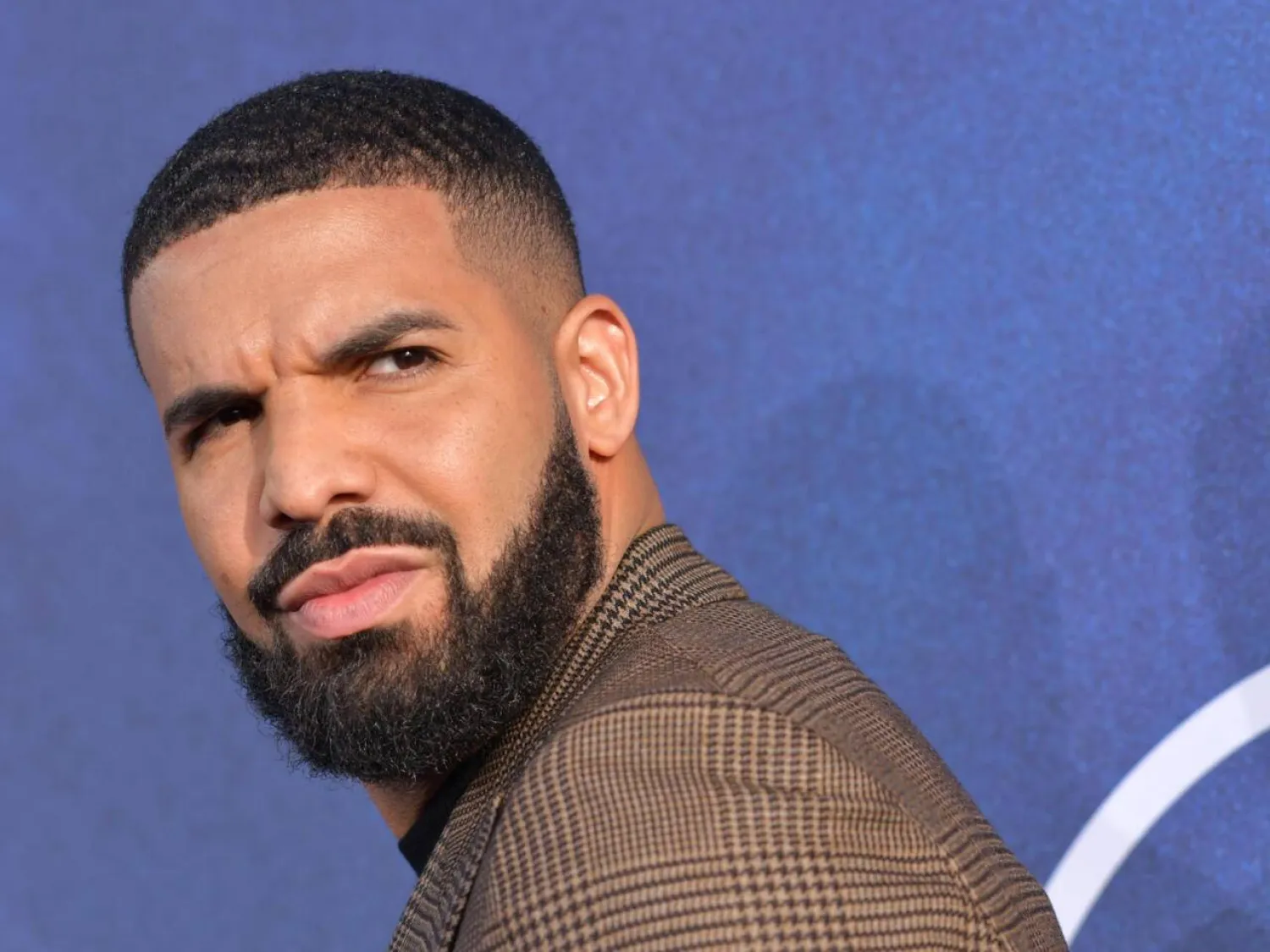
Canadian rapper Drake at a premiere of the TV series Euphoria in Hollywood, on June 4, 2019. Chris Delmas / AFP
TT

Drake Drops Three Albums at Once

Canadian rapper Drake at a premiere of the TV series Euphoria in Hollywood, on June 4, 2019. Chris Delmas / AFP

Canadian rapper Drake has dropped a new album, with two more surprise companion albums to boot -- a whopping 43 tracks that stretch over nearly two and a half hours.

Drake -- who has kept a relatively low profile since his diss battle with Kendrick Lamar ended with the American's knockout blow "Not Like Us" and his lawsuit against his own label was dismissed -- had announced the Friday release of "Iceman."

But along with it came "Habibti" and "Maid of Honour."

Future, 21 Savage and Sexyy Red are among the artists who were invited to collaborate with the chart-topping "Hotline Bling" rapper.

And of course, Drake could not let the beef with Lamar go.

On "Make Them Remember," he mocks the Pulitzer Prize-winning Lamar's modest height, a frequent source of ridicule during their battle.

But Lamar -- who performed the song to an audience of tens of millions at the Super Bowl halftime show in February 2025 -- was not the only one who came in for scorn.

Jay-Z, J. Cole, Pusha T, A$AP Rocky and even NBA legend LeBron James are also in Drake's crosshairs, according to several media reviews.


'Beyond the Oscar': Travolta Gets Surprise Cannes Prize

John Travolta with his honorary lifetime achievement Palme d'Or. Olivier CHASSIGNOLE / AFP
TT

'Beyond the Oscar': Travolta Gets Surprise Cannes Prize

John Travolta with his honorary lifetime achievement Palme d'Or. Olivier CHASSIGNOLE / AFP

Hollywood star John Travolta was given a surprise lifetime achievement award at the Cannes Film Festival Friday as he premiered the first movie he has ever directed.

The man who became an icon overnight with "Saturday Night Fever" was visibly moved as he accepted the honorary Palme d'Or before the screening of "Propeller One-Way Night Coach", which is based on a book about his first experience in an airliner.

"I just can't believe it. This is beyond the Oscar, really," he said as he accepted the tribute.

The festival has been laying on the love for Hollywood legends this year despite the big studios staying away, with honorary Palmes for Barbra Streisand and Peter Jackson as well as a gala screening for Vin Diesel and the stars of "The Fast and the Furious" franchise to mark its 25th anniversary.

Travolta -- who has never won an Oscar -- revived his flagging career with his iconic turn as hitman Vincent Vega in Quentin Tarantino's "Pulp Fiction", which won the festival's Palme d'Or top prize in 1994.

Many critics hailed it as his greatest performance, one that has since gone down in cinema history, said AFP.

"My favorite movies in the history of my life have always been the winners of the Palme d'Or," Travolta said.

- Behind the camera -

Cannes had kept the award under wraps until the actor walked on stage for the premiere wearing a black suit and a white beret.

The 72-year-old said he had been hugely surprised to have his directorial debut, which stars his daughter Ella Bleu as an air hostess, accepted at the world's most prestigious film festival.

When Cannes director Thierry Fremaux told him in November that "it would be the first film ever accepted that early I cried like a baby," he said.

"I had no expectation my film would be accepted," he added.

"Propeller One-Way Night Coach" is a one-hour self-financed autobiographical tale about Travolta's flight as an eight-year-old with his actress mother from New York to Los Angeles in 1962.

"This is the blueprint of my life," said the actor, a lifelong aeroplane nut, who narrates the story.

"What you'll see in the movie is completely my perspective on what I witnessed people go through.

"Everyone that was in the movie is sitting in the audience right there, my family," he added.

Travolta was bitten by the acting bug early.

Born in New Jersey to the an Irish mother and an Italian-American father who ran a tyre store, he left school at 16 to try his hand at acting and dancing.

Two years later he landed his first big stage role in the Broadway musical "Grease".

He was nominated for an Oscar in 1978 for playing disco-dancing champion Tony Manero in the low-budget "Saturday Night Fever" and was launched into the Hollywood stratosphere by his role in the movie version of "Grease" the same year.

The rights to "Propeller One-Way Night Coach" have been bought by Apple, Travolta said.

Asked if he would direct again, he said he had watched all sorts of directors as an actor.

"I really believe that I can navigate around all of that, and anything I would choose to do, but I really feel I have to have passion about the material to do again what I've done here," he said.


Eurovision: 70 Years of Geopolitics, Patriotism, Music and Glitter

Vienna is hosting the 2026 Eurovision Song Contest. Joe Klamar / AFP
TT

Eurovision: 70 Years of Geopolitics, Patriotism, Music and Glitter

Vienna is hosting the 2026 Eurovision Song Contest. Joe Klamar / AFP

It's been the crucible of music icons from ABBA to Celine Dion, a flashy symbol of European integration, the charged focal point for geopolitics and a stage for social change.

For seven decades, the Eurovision Song Contest -- which gathers performers from across Europe and further afield, selected by each country's public broadcasting service -- has delighted and, at times, baffled spectators.

Now the glitzy annual competition -- hit this year by a boycott over Israel's participation -- is gearing up for its 70th anniversary grand final in Vienna on Saturday.

So what makes Eurovision so unique?

- Geopolitical hotspot -

The contest has been rocked this year by the withdrawal of several European countries in protest over Israel's participation following its war in Gaza, with the global backlash hitting last year's competition also.

But it was far from the first time the competition had been affected by geopolitical tensions.

During the Cold War, the absence of Eastern Bloc countries reflected Europe's division. Protests also erupted in the 1960s over the participation of Spain under dictator General Francisco Franco, and Portugal under the dictatorship of Antonio de Oliveira Salazar.

The 1974 Turkish invasion of Cyprus prompted Greece to pull out, while tensions between Georgia and Moscow and the conflict over the Nagorno-Karabakh region between Armenia and Azerbaijan have also left their mark.

In 2022, Russia was excluded over its invasion of Ukraine. The Ukrainian contestant went on to win.

- Reuniting Europe -

On the other hand, since the contest expanded to the eastern part of the continent in the 2000s, Eurovision has served as a catalyst for European integration, said University of Glasgow expert Paul Jordan.

Participating in Eurovision has helped former Soviet republics such as Estonia and Ukraine cultivate their images as part of Europe, he added.

"Certainly for Ukraine, it was all about showing themselves as an independent Western, European country" while asserting opposition to Moscow, Jordan told AFP.

Galina Miazhevich from Cardiff University said that as much as countries have used "some ethnic elements and language elements to kind of declare: this is who we are", there has also been a melding of influences, with plenty of bilingual songs and homogenization.

- Social platform -

In 1961, Jean Claude Pascal won with "Nous les amoureux" ("We the Lovers"), a song about a forbidden love that was later interpreted as an allusion to homosexuality.

The contest then became an ever more progressive stage, notably with the victory of transgender singer Dana International for Israel in 1998.

In 2015, Finland nominated Pertti Kurikan Nimipaivat, a punk band of musicians with disabilities.

In 2021, Suriname-born artist Jeangu Macrooy addressed slavery, racism, and the colonial legacy in his performance.

That same year, Russia's Manizha performed a song about the pressures faced by women and women's emancipation, which stirred controversy in her home country.

- Hit factory -

Ever since the Swedish band ABBA rose to global fame after their victory in 1974, Eurovision has helped numerous stars, including Celine Dion and Italy's Maneskin, achieve stardom.

Following the rise of social media, singers and bands do not even have to win to make an international splash.

Armenia's Rosa Linn, who finished 20th in 2022, saw her song "Snap" go viral on Instagram and TikTok before scoring on international charts.

- Cultural touchstone -

Eurovision's vast archives rack up millions of views on YouTube, with performances that have become entrenched in popular culture.

Its fame has also expanded well beyond the world of music -- even breaching the United States, with the Will Ferrell-led 2020 comedy "Eurovision Song Contest: The Story of Fire Saga".

It was not always so.

The show was "not cool" in the 1980s and 1990s and was dismissed as unappreciated kitsch in the West when eastern European countries joined, Jordan said.

The turn came in 2014, with the highly publicized victory of Austrian bearded drag queen Conchita Wurst, Jordan added.

Even though some performances still leave audiences baffled as too vulgar, or with humor that is too niche, the show caters to a wide variety of tastes -- from pop to opera, rock to rap, folk to chanson.

And even those who do not like Eurovision have an opinion on it, said Jordan.

"It's a kind of cultural reference point that everyone has," he said.

"We're growing up with this television show. And I think there's maybe this nostalgia in a way that there isn't for other things."


Spain’s Eurovision Boycott Puts It on ‘the Right Side of History’, Says PM

People attend a song protest concert against Israel at the Maria Theresien Square in the city center of Vienna, Austria, during the 70th Eurovision Song Contest week, Friday, May 15, 2026. (AP)
TT

Spain’s Eurovision Boycott Puts It on ‘the Right Side of History’, Says PM

People attend a song protest concert against Israel at the Maria Theresien Square in the city center of Vienna, Austria, during the 70th Eurovision Song Contest week, Friday, May 15, 2026. (AP)

Spain's boycott of the Eurovision song contest over Israel's war in Gaza puts it "on the right side of history", Prime Minister Pedro Sanchez said on Friday, ahead of the final in Austria.

"In the face of illegal war and also genocide, silence is not an option. And we cannot remain indifferent to what continues to happen in Gaza and in Lebanon," Sanchez said in a video message posted on X.

"This year, therefore, will indeed be different. We will not be in Vienna, but we will do so with the conviction that we are on the right side of history."

Spain is one of the top financial contributors to Eurovision, the international song contest organized by the European Broadcasting Union (EBU).

Israel's KAN public broadcaster is in the EBU, so Israeli acts participate in the event.

Spain is boycotting the event this year along with Iceland, Ireland, the Netherlands and Slovenia over Israel's conduct in the war in Gaza, which was launched in retaliation for the October 7, 2023, attack in Israel by the Palestinian movement Hamas.

The countries' position reflects a view that Israel reacted with disproportionate deadly force against Gaza's civilian population.

The International Criminal Court in 2024 issued an arrest warrant for Israeli Prime Minister Benjamin Nethanyahu on charges of war crimes and crimes against humanity in Israel's offensive, including by intentionally targeting civilians and using starvation as a method of war.

Sanchez, in his video, drew a parallel with Israel's war in Gaza and Russia's war on Ukraine.

"When Russia invaded Ukraine, it was excluded from the contest and Spain supported that decision," he said.

He added: "Those principles must also be applied when we talk about Israel. There cannot be double standards."

The Eurovision finals typically reach more than 150 million viewers around the world. Israel's act will be among those competing in the competition on Saturday.