‘Not Easy, but Not Impossible’: Iraq’s Film Industry Sees Slow Revival

Street vendors gather outside the faded facade of the Granada Cinema, an early 1940s landmark, in the Bab al-Sharqi district of central Baghdad on May 26, 2026. (AFP)
TT

‘Not Easy, but Not Impossible’: Iraq’s Film Industry Sees Slow Revival

Street vendors gather outside the faded facade of the Granada Cinema, an early 1940s landmark, in the Bab al-Sharqi district of central Baghdad on May 26, 2026. (AFP)

In the heart of old Baghdad, legendary movie theaters stand abandoned and shrouded in dust, bearing witness to Iraq's once-vibrant cultural scene.

A few kilometers away, director Ali al-Bayati oversees his camera operators as they adjust their lenses for a scene in his upcoming horror film, which he hopes to showcase internationally as a new generation of Iraqi filmmakers drives an industry comeback.

Momentum is building, bolstered by recent international recognition for the Iraqi film "The President's Cake", which captures life under crippling sanctions during Saddam Hussein's rule.

"Reviving the cinema sector in Iraq is not easy, but it is not impossible either," Bayati told AFP.

For decades, Iraq's cultural and cinematic scenes flourished.

Film production in Iraq began in the 1940s -- notably with titles co-produced with Egypt -- reaching its peak in the 1950s.

Among the most celebrated productions of that era was Kameran Hosni's film "Said Effendi" (1956), a work recently restored as part of the Iraqi Cinematheque project supported by France, and screened at the Cannes Film Festival in 2025.

But then everything changed.

With Saddam Hussein's rise to power in the 1970s, cinema became a propaganda tool.

This was followed by decades of war, sectarian strife and an extremist insurgency after the 2003 US-led invasion that toppled Hussein, ultimately snuffing out the golden age of Iraqi cinema.

Baghdad's old movie theaters that once drew film enthusiasts are now barely standing, with their faded walls, old doors and broken signs.

Dilapidated shops crowd the entrance to the Granada Cinema, with clothes hanging directly on the street. Other theaters have been repurposed as warehouses, with a few old movie posters still clinging to their walls.

- The old and the new -

In recent years, a fragile stability has begun to revive Iraqis' appetite for entertainment and returned focus to Baghdad's cultural scene.

Authorities seized the opportunity last year, launching an initiative to support 58 film projects.

But the funding pool is just four million dollars, an amount that would fund only a single project in other countries, said Wareth Kwaish of the government-led initiative.

Authorities are also working to recover Iraq's historic cinema archive in the country and abroad.

And Baghdad has signed cinematic cooperation agreements with France to support its film industry.

Producer Haider Ibrahim inspects a film reel at the National Centre for Archives and Iraqi Memory in Baghdad on June 14, 2026. (AFP)

Still, the industry remains short on funding and support, making every production a gamble.

Filmmakers rely on small grants, said Bayati, who hopes to market his movie in the US and European countries and is among those who benefited from government funding.

The key for him is gaining the trust of Iraqi audiences to "generate revenues that would lead to sustainability in work and production", he said.

Most Iraqi moviegoers today frequent multi-screen theaters in shopping malls where Hollywood and Egyptian movies dominate the screens, rather than the classic venues.

Syrian filmmaker Abdulhadi al-Rakeb, who made a documentary about Iraq's old movie theaters, said their closure has led to "the disappearance of a culture of watching films in theaters and, as a result, a decline in the very idea of filmmaking".

- 'Cautiously optimistic' -

Recently, "The President's Cake", the Iraqi film that won a prize at the prestigious Cannes Film Festival last year, finally started screening in Iraq.

The movie follows the story of a young girl selected to bake a cake for Saddam's birthday at a time when sanctions made it almost impossible to find the ingredients.

Although the movie was shot in Iraq, the production faced many challenges.

Director Hasan Hadi said a shortage of experienced Iraqi film crews forced him to bring in European professionals.

"The local crew were not aware of international standards," and the foreign crew were unfamiliar with the local cultural context, which created "more problems for us", he said.

According to Hadi, the lack of local crews is one of several reasons Iraqi filmmakers have been unable to work in their own country.

He believes the sector needs workshops to develop local talent, increased funding and better overall organization.

"I am cautiously optimistic," Hadi said.

"There are more people who want to tell their stories and make films, but not enough resources."


'Star Trek', 'X-Men' Star Patrick Stewart Dead at 86

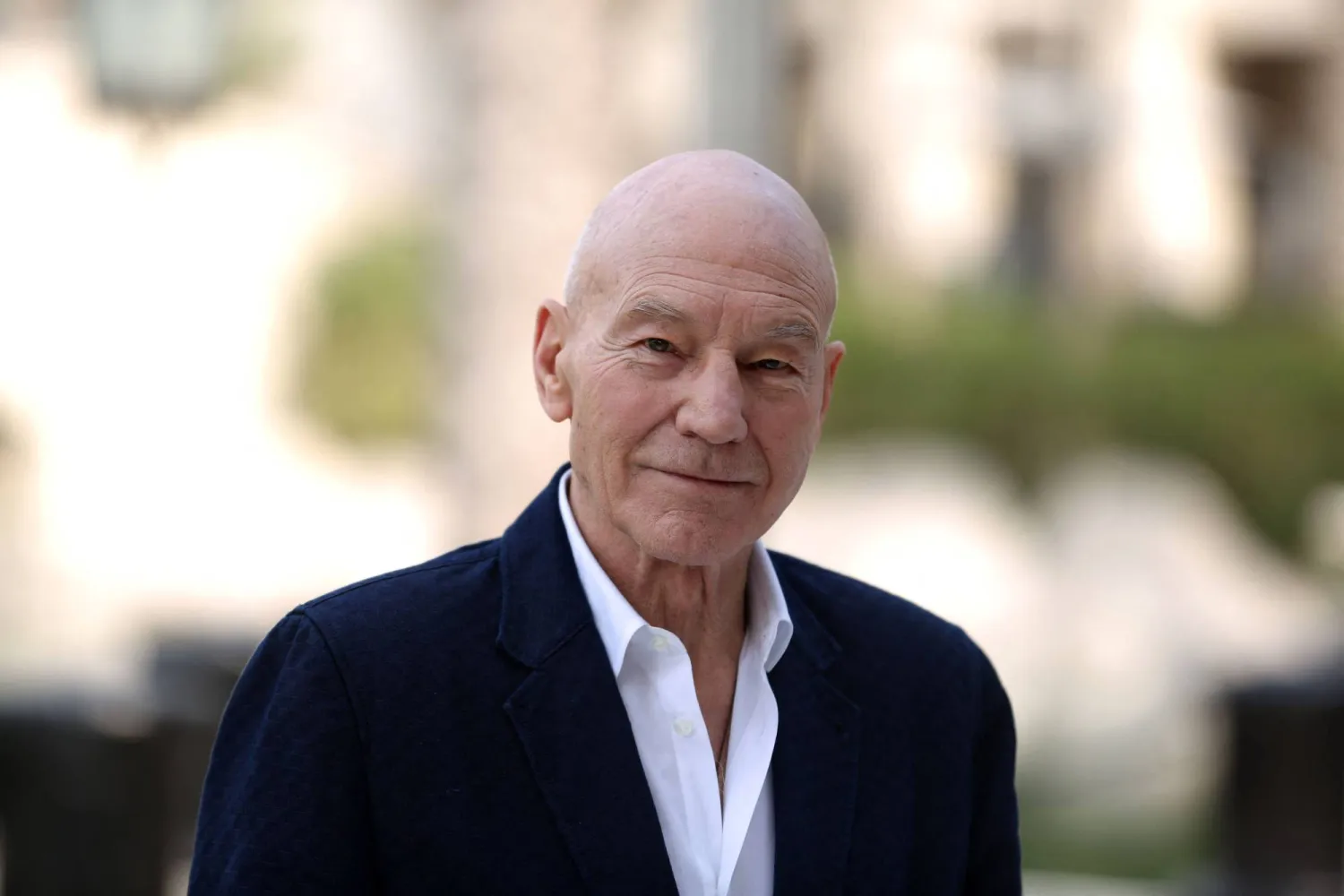
English actor Sir Patrick Stewart poses during a photo call at Dubai International Film Festival in Dubai on December 8, 2017. (AFP)
TT

'Star Trek', 'X-Men' Star Patrick Stewart Dead at 86

English actor Sir Patrick Stewart poses during a photo call at Dubai International Film Festival in Dubai on December 8, 2017. (AFP)

Patrick Stewart, the British Shakespearean actor who became a Hollywood megastar through roles in the "Star Trek" and "X-Men" franchises, has died at his home in Los Angeles. He was 86.

His death on Wednesday came after a "brief and poignant journey" with Alzheimer's disease and Lewy body dementia, according to an official statement on his social media accounts.

"His sonorous voice and singular talent will forever be synonymous with indelible performances in every genre," the statement said.

The actor, who hailed from the northern English region of Yorkshire, trod the boards in Britain with the Royal Shakespeare Company and the National Theatre in London, and worked on British television.

But he rocketed into the pop culture history books in his mid-40s when he was cast as Captain Jean-Luc Picard in "Star Trek: The Next Generation," and then again as Professor Charles Xavier in multiple "X-Men" and related Marvel films.

A proud Yorkshireman, Stewart "wore his heart on his sleeve, which made him a man to rely on, to admire and in my case, love," Ian McKellan said of his "X-Men" co-star and dear friend.

McKellan, 87, recounted meeting Stewart in London and hearing about his "Star Trek" offer, warning him he may get lost in Hollywood and to think of his stage career.

"Well, he took the risk and thank goodness for us all that he did."

- Aboard the Enterprise -

Stewart was 47 when he debuted as Picard in "Star Trek: The Next Generation," the first live-action television spinoff of the trailblazing late-1960s sci-fi series.

He effectively filled the boots of William Shatner's Captain Kirk -- to resounding success, both in the TV series and in several films.

Picard became known for a few catchphrases including "Make it so" and "Engage!"

But his move to America in 1987 was initially greeted with disdain by the Los Angeles Times, who wrote him off as an "unknown British Shakespearean actor."

Stewart later dubbed suggestions he was "slumming it" by moving into US television offensive.

He once called his Shakespearean bona fides "nothing but a preparation for sitting in the captain's chair of the Enterprise."

- 'Colossus of both stage and screen' -

Stewart found further acclaim in the "X-Men" series, debuting in 2000 as Professor Charles Xavier, the founder and mentor of the mutant superhero team.

"For more than 25 years, he brought a gravitas and profundity to the role, earning fans across the globe," Marvel Studios said Thursday.

Longtime co-star Hugh Jackman, who played Wolverine, remembered Stewart as both "one of the greats of stage and screen" and "a tremendous friend and man."

Stewart is to make his final on-screen film appearance as Professor Xavier in "Avengers: Doomsday," set for release in December.

"What a heartbreaking week it has been," posted Shatner.

Stewart's death marked the second in days from the "Star Trek" universe, following that of Walter Koenig, who played Chekov in the original series.

Shatner said Stewart -- who most recently played Picard in 2023 -- brought "intelligence, grace and a deep sense of humanity to everything he did."

Stewart earned four Emmy nominations but never won. He did nab a spoken word Grammy, for his narration of "Prokofiev: Peter And The Wolf."

And even as he found success in Hollywood, Stewart's love of theater, and the bard in particular, never left him.

Between filming, he would return to the stage, winning two Olivier awards.

The Royal Shakespeare Company called him "a colossus of both stage and screen and one of the finest classical Shakespearean actors of his generation."

- Troubled start -

Stewart was born on July 13, 1940 in the small West Yorkshire town of Mirfield, the third of three brothers in a working-class family.

His father, back from World War II and perhaps suffering from PTSD, would often beat Stewart's mother -- which prompted Stewart to later work with the charity Refuge, which specializes in domestic abuse.

The actor left school at 15, and studied at Bristol Old Vic Drama School beginning in 1957, making his professional acting debut two years later.

Prematurely balding, Stewart missed out on many of the young romantic leads but quickly slotted into theater life, joining the RSC in 1966 and staying there until 1982.

Any misgivings Stewart had about taking the Picard role in the "Star Trek" universe were mollified by the thought it would be a one-season failure.

He was wrong.

"It changed my life," he said.

Knighted in 2010, Stewart married three times: to Sheila Falconer, with whom he had two children; briefly to "Star Trek" producer Wendy Neuss; and most recently to American singer Sunny Ozell, 38 years his junior.


Iran Court Sentences Filmmaker Panahi to Five Years

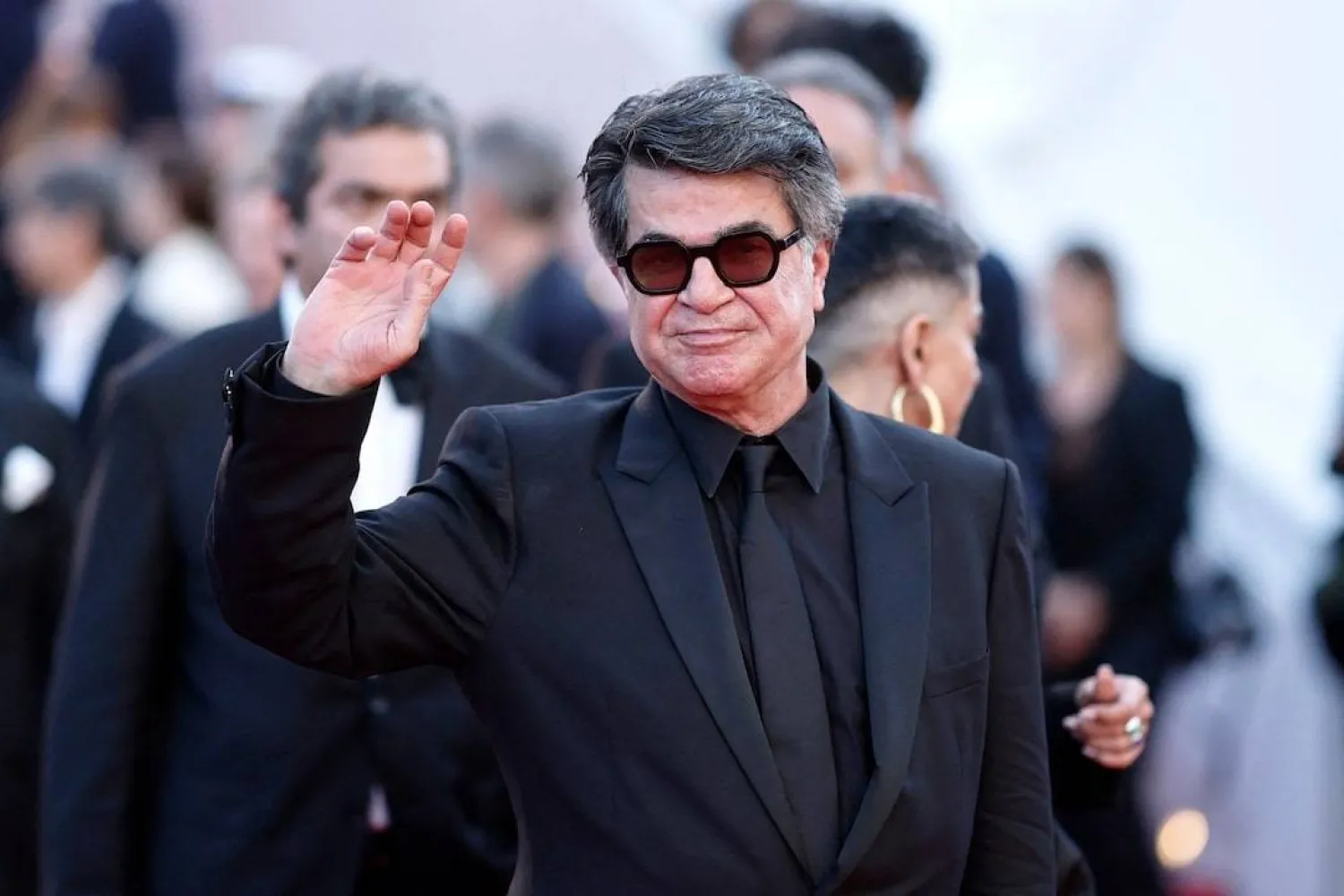
Director Jafar Panahi poses on the red carpet after the screening of the film "Un simple accident" (It Was Just an Accident) in competition at the 78th Cannes Film Festival in Cannes, France, May 20, 2025. (Reuters)
TT

Iran Court Sentences Filmmaker Panahi to Five Years

Director Jafar Panahi poses on the red carpet after the screening of the film "Un simple accident" (It Was Just an Accident) in competition at the 78th Cannes Film Festival in Cannes, France, May 20, 2025. (Reuters)

An Iranian court has sentenced renowned filmmaker Jafar Panahi in absentia to over five years in prison, Iranian media said quoting his lawyer, although the latest charges remain unclear.

"The Tehran Revolutionary Court sentenced my client to five years and one month in prison and ordered the confiscation of all his movable and immovable property," the ISNA news agency reported, citing his lawyer Mostafa Nili on Tuesday.

"The court also imposed a two-year ban on social media activity and a two-year travel ban," he added.

The ISNA report did not specify the charges.

Nili said he discovered the conviction after Panahi told him last week that his bank accounts had been frozen, prompting the lawyer to visit the sentence enforcement office of the Culture and Media Prosecutor's Office.

The lawyer said Panahi had returned to Iran during the war with Israel and the United States which broke out on February 28.

It remains unclear if Panahi has remained in Iran.

Panahi currently has three pending cases, Nili said, adding that his client had not been notified of the hearing date in the latest case.

In June, an Iranian court rejected Panahi's appeal against a one-year sentence in one of the cases, which was handed down in December on charges of "propaganda" against Iran.

Panahi, 66, won the top prize at last year's Cannes film festival for "It Was Just an Accident", a film in which five ex-inmates contemplate whether to exact revenge on a man they believe to be their former jailer.

He has won a host of prizes at European film festivals since showcasing his debut film "The White Balloon" in Cannes in 1995, which won an award for best first feature.

In 2010, Panahi was banned from making movies for 20 years, and from leaving the country, after supporting mass anti-government protests a year earlier and making a series of films that critiqued the state of modern Iran.

Convicted of "propaganda against the system", he was sentenced to six years in jail but served only two months behind bars before being released on bail.

A year later, he dispatched a documentary with the title "This is Not a Film" to the Cannes festival on a flash drive stashed in a cake.

His 2015 movie "Taxi" featured him acting as a taxi driver and was shot entirely in a car.

In 2022, he was arrested in connection with protests by a group of filmmakers but was released nearly seven months later.

Iranian filmmakers, prominent media figures and celebrities are closely monitored in Iran and their work reviewed for content deemed critical of the regime.


Susan Saint James, Emmy-Winning Actor of ‘McMillan & Wife’ and ‘Kate & Allie,’ Dies at 80

Susan Saint James attends the SNL50: The Anniversary Special in New York on Feb. 16, 2025. (AP)
TT

Susan Saint James, Emmy-Winning Actor of ‘McMillan & Wife’ and ‘Kate & Allie,’ Dies at 80

Susan Saint James attends the SNL50: The Anniversary Special in New York on Feb. 16, 2025. (AP)

Susan Saint James, who co-starred with Rock Hudson in the 1970s TV crime series “McMillan & Wife” and later co-starred with Jane Curtin in the sitcom “Kate & Allie” in the 1980s, has died. She was 80.

People magazine, citing a representative for the actor, said Saint James died Monday. She had been diagnosed with pancreatic cancer.

“She never met a stranger," her family said in a statement to People. "Every person she met became the most important person in the room at that moment, from a fellow board member to the clerk at the shoe store, who usually walked away knowing her entire life story."

Born Susan Jane Miller on Aug. 14, 1946, in Los Angeles, she was raised in the northern Illinois city of Rockford, where her father had transferred for work. She began modeling as a teenager in Paris.

At 20, she moved back to Los Angeles and landed a seven-year contract with Universal Studios. She made her television debut in the 1966 movie “Fame is the Name of the Game” with Tony Franciosa.

She got another break when it became a series called “The Name of the Game” in 1968, with rotating lead characters played by Franciosa, Gene Barry and Robert Stack. Saint James provided the show continuity in her role as Peggy Maxwell, a research assistant who worked for all three men. She won an Emmy Award for the part in 1969.

Before “The Name of the Game,” Saint James had a recurring role in the crime-caper series “It Takes a Thief” starring Robert Wagner. Her other early TV credits included “Ironside," “McCloud” and “Alias Smith and Jones.” In 1980, she guest-starred in an episode of “M(asterisk)A(asterisk)S(asterisk)H.”

Saint James, known for her unique, throaty voice, had a supporting role in the 1968 movie “Where Angels Go, Trouble Follows” starring Rosalind Russell and Stella Stevens.

She earned her biggest fame as Sally McMillan, the plucky wife of Hudson’s San Francisco police commissioner Stewart McMillan, in the hit series “McMillan & Wife” from 1971-76. She received three Emmy nominations for the role.

Saint James left the NBC show before its sixth and final season because of a contract dispute, with her character killed off in a plane crash. Saint James then turned to feature films.

She played opposite Peter Fonda in “Outlaw Blues” in 1977. She co-starred with George Hamilton in the 1979 vampire spoof “Love at First Bite” and joined Jessica Lange and Curtin in the 1980 comedy heist “How to Beat the High Cost of Living.” She co-starred in the 1981 romantic comedy “Carbon Copy,” in which Denzel Washington made his movie debut.

After middling success on the big screen, Saint James reunited with Curtin in the CBS sitcom “Kate & Allie,” which ran from 1984-89 and earned Saint James two Emmy nominations as the free-spirited Kate to Curtin’s straight-laced Allie.

While guest-hosting “Saturday Night Live” in 1981, Saint James met Dick Ebersol, the show’s then-executive producer and the future chairman of NBC Sports. They married barely six weeks after meeting and had three sons, Charlie, Willie and Teddy.

Teddy died at age 14 in a 2004 private plane crash that also killed the pilot and flight attendant; Ebersol and Charlie survived with serious injuries.

Saint James filed for divorce from Ebersol in 2002, but they reconciled later that year. “We had a second chance,” she told People magazine in 2002. “I’m amazingly happier, so that’s a good sign.”

In his 2022 memoir “From Saturday Night to Sunday Night,” Ebersol called Saint James “the greatest partner I’ve ever had by far.”

She retired when “Kate & Allie” ended, choosing to focus on raising her younger children in Litchfield, Connecticut, while Ebersol took the executive job at NBC Sports.

Saint James made occasional guest appearances after that, including as the mother of her real-life look-alike niece Christa Miller on “The Drew Carey Show,” as well as “Law & Order: Special Victims Unit” and “Suits.” In 1999, she starred in a production of “The Miracle Worker” in Torrington, Connecticut.

In 1998, Saint James, her sister, Mercedes Dewey, and a friend founded Seedling and Pip, a baby gift basket business with a focus on books based in Litchfield, Connecticut.

She was a longtime supporter of Special Olympics, volunteering and serving on its board of directors.

Besides her husband, she is survived by daughter Sunshine and son Harmony from her second marriage to makeup artist Tom Lucas, with whom she remained friends; sons Charlie and Willie with Ebersol; and Miller, whose first TV role was on “Kate & Allie.” Saint James’ first marriage to Richard Neubert ended in divorce.