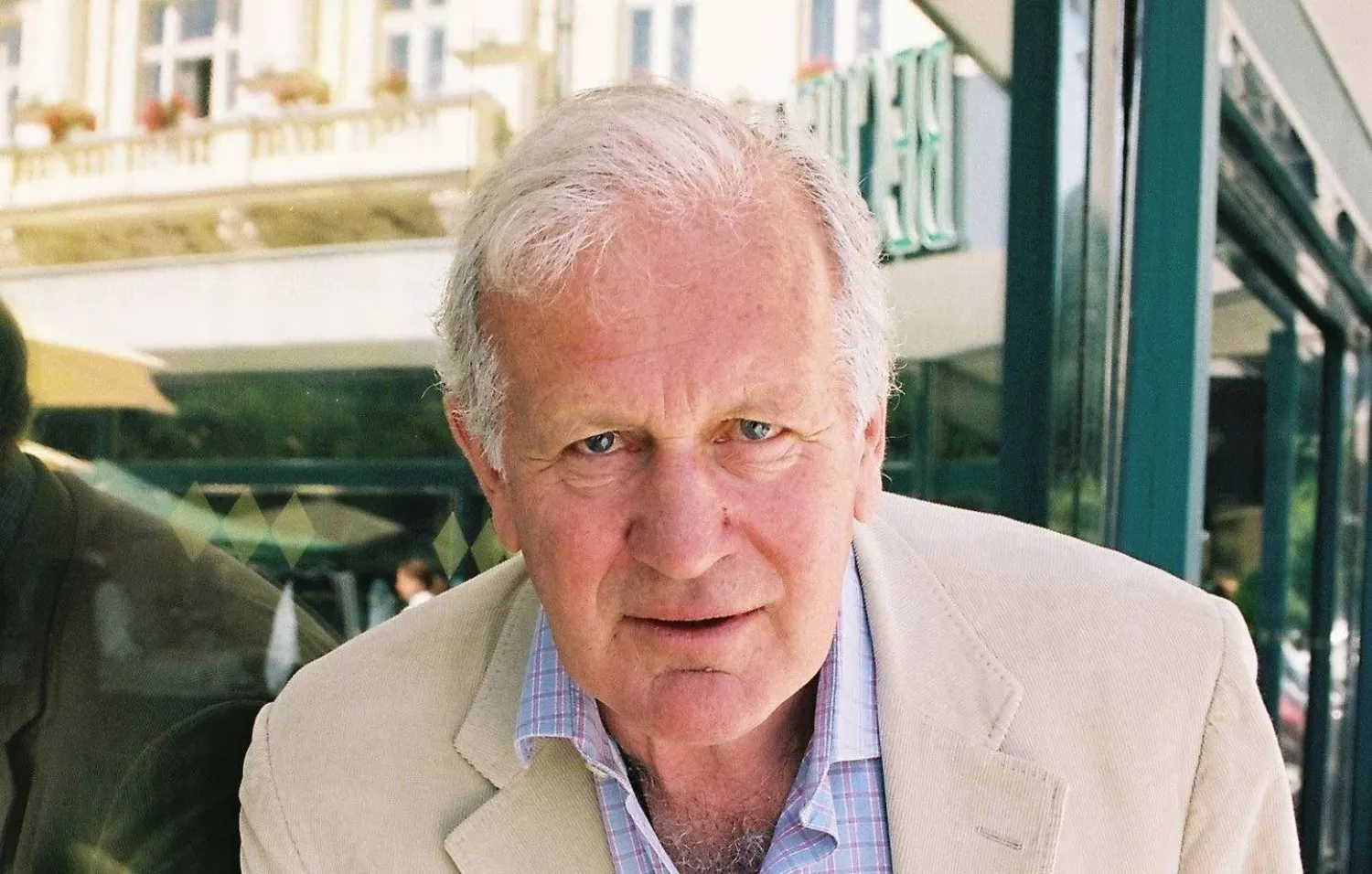
‘Tinker Tailor’ Filmmaker John Irvin Dies at 86

British filmmaker John Irvin. (AFP)
TT

‘Tinker Tailor’ Filmmaker John Irvin Dies at 86

British filmmaker John Irvin. (AFP)

British filmmaker John Irvin, best known for adapting John Le Carre's espionage classic "Tinker Tailor Soldier Spy" for television, has died aged 86, his producer Claire Evans told UK media Wednesday.

Irvin, who also directed a string of 1980s action movies including "The Dogs of War", "Raw Deal" and "Hamburger Hill", enjoyed a five-decade career that spanned TV, documentaries and cinema.

He died "peacefully at home" on August 11, surrounded by his family, Evans confirmed to The Guardian.

The pair worked together on the 2016 film "Mandela's Gun", which explored the South African ex-president's experience as a guerrilla fighter for the African National Congress.

Irvin, born in northern England in 1940, won two BAFTAs and an Emmy nomination for his 1979 BBC adaptation of Le Carre's spy novel, which cast Alec Guinness as the shy, monkish hero George Smiley.

Its success opened the doors to Hollywood, with Irvin making a number of action-packed movies and other films featuring a host of star names in the decade that followed.

They included Christopher Walken and Tom Berenger in "The Dogs of War", Fred Astaire in horror film "Ghost Story", Arnold Schwarzenegger in "Raw Deal" and Patrick Swayze and Liam Neeson in crime thriller "Next of Kin".

He is survived by three children and two grandchildren, according to reports.


A Viking Longship in ‘The Odyssey’? It’s a Case of History Meets Hollywood

The Draken Harald Harfagre, the ship used in the movie "The Odyssey", is docked outside Oslo Opera in the Norwegian capital on August 14, 2026. (AFP)
TT

A Viking Longship in ‘The Odyssey’? It’s a Case of History Meets Hollywood

The Draken Harald Harfagre, the ship used in the movie "The Odyssey", is docked outside Oslo Opera in the Norwegian capital on August 14, 2026. (AFP)

The eras of "The Odyssey" and the Vikings happened about 2,000 years apart -- so how did a Viking longship end up with a starring role in this year's blockbuster movie?

Look to director Christopher Nolan, and his obsession with bringing spectacle to life with real props, real scenes.

But also credit a team of Norwegian shipwrights and sailors who built a vessel that speaks to both history and Hollywood.

With its tar-soaked rigging, creaking oak deck and 50 spruce oars, Draken Harald Harfagre is the largest modern replica of a Viking ship.

It mattered little that it had to drop its Scandinavian roots for Greek mythology -- the anachronism blended into the service of Nolan's brand of realism.

For the film, though, Draken had to be stripped of the dragon figurehead at its bow -- typical of the Viking era, from the 8th to 11th centuries -- as it sailed for the cameras in Greek, Italian and Scottish waters.

"We found a Viking ship that had been built exactly according to those ancient specifications. And it was very much the whole shape and the rig that we needed to do a Bronze Age ship," Nolan told US television last month.

"We took the crew, and we put their crew all in our costumes. They became part of the movie crew, as it were. And Odysseus' guys, the actors, joined in with them, and they figured out how to raise the sail, how to rig it, how to row, all of this stuff."

For months, the longship's crew of seasoned sailors rubbed shoulders with Hollywood star Matt Damon, who plays Odysseus on-screen, and a host of professional actors.

- 'Doing the real thing' -

"There was one day where one of the actors who was sitting in front of me got seasick and threw up over the rail. It blew back on me," recalled sailor Trammell Hudson.

"I thought that would be my big scene, because the IMAX camera was very focused on him and me in the background dodging the debris. But I didn't see that particular scene in the film," he told AFP when the Draken and its crew made a recent visit to Oslo.

Based on Homer's epic, Nolan's film retraces the hero Odysseus in a perilous journey to his home on the island of Ithaca after the Trojan War in the 12th century BCE.

Rather than recreating a ship with computer-generated images, Nolan wanted a real one, capable of sailing on the open sea with flesh-and-blood men aboard.

"Most of the scenes would be completely different if it wasn't for us being there, doing the real thing with the real ship and the real crew in the real ocean and real weather," said Emanuel Persson, expedition director for Draken.

"I think the viewers can actually feel the genuine materials. I don't know if you can really smell the tar, but you can tell it's really genuine handicraft instead of being a digital creation," he said.

- All hands on deck -

On board, everyone played their part.

"Matt Damon was very nice and very good. Never complained. Every one of the actors was out for a long time and it was very cold and sometimes rough," recalled the longship captain, Bjorn Ahlander.

"No complaints, nothing, never. So that was fantastic to see."

With such a mixed crew on board, it wasn't always easy to row in perfect sync.

"It's very important that the hundred rowers coordinate because the oars are quite long and they will tangle with each other," Trammell Hudson stressed.

He recalled being thrown "a meter-and-a-half into the air", along with his rowing partner, when the blade of their oar hit a wave head-on.

The sweet memories from the shoot are in sharp contrast to those from neighboring Sweden.

Like Penelope waiting for Odysseus, the owners of another Viking ship used in the film had their patience tested: after the ship incurred damage during a shoot, they had to wait a year for compensation.


ByteDance Signs AI Copyright Pact with Hollywood Trade Group

The ByteDance logo is seen in this illustration taken February 8, 2025. (Reuters)
TT

ByteDance Signs AI Copyright Pact with Hollywood Trade Group

The ByteDance logo is seen in this illustration taken February 8, 2025. (Reuters)

ByteDance ‌and the Motion Picture Association on Monday signed an agreement to strengthen copyright safeguards on the Chinese company's AI video and image-generation models, months after the Hollywood trade group challenged its handling of ‌intellectual property.

The ‌deal, which covers ‌ByteDance's ⁠Seedance video and Seedream ⁠image-generation models, follows a cease-and-desist letter the MPA sent in February over these tools.

Disney and other studios in ⁠February raised concerns the ‌AI ‌tools could generate content featuring copyrighted ‌characters and celebrity likenesses ‌without authorization.

ByteDance said newer versions of the models include stronger intellectual-property protections.

Models ‌are offered through services including TikTok, CapCut and Dreamina.

The ⁠MPA's challenge came amid concerns that Seedance could generate content featuring copyrighted film and television characters without permission.

Both sides said they will continue collaborating on safeguards for copyrighted content as AI technology evolves.


Andrew Garfield Finds Wonder in Everyday Life in ‘The Magic Faraway Tree’

Andrew Garfield at a special screening of "The Magic Faraway Tree" in New York City on July 29. (Getty Images)
TT

Andrew Garfield Finds Wonder in Everyday Life in ‘The Magic Faraway Tree’

Andrew Garfield at a special screening of "The Magic Faraway Tree" in New York City on July 29. (Getty Images)

Andrew Garfield wants audiences to look up from their phones and remember that there is still plenty of magic in the world around them.

That idea drew the two-time Oscar nominee to “The Magic Faraway Tree,” a family adventure about Tim, a stay-at-home father whose family is forced to reconsider life after his wife, Polly, quits her job. They move to the countryside, where their children discover the magical Faraway Tree and its ever-changing worlds, sending the family into a series of fantastical adventures. The film, based on Enid Blyton’s children’s books, arrives in US theaters on Friday.

For Garfield, the story’s themes of nature, imagination and community feel especially timely as technology increasingly shapes everyday life. “I think people are craving connection and community and a kind of reconnection to the earth and to each other,” he said.

Garfield said he became passionate about the project after reading Simon Farnaby’s screenplay. “I really just adore his sense of whimsy and heartfeltness and magic and joy,” he said. “I felt very, very passionate about it.”

Tim’s journey reflects the film’s larger ideas about finding wonder outside the routine and distractions of modern life. For Garfield, that sense of wonder extends beyond fantasy. “I think it’s all around us,” he said. “There are so many things to be in awe of on this planet.”

The film, he said, is ultimately about recognizing that “there’s magic in the ordinary” as well as in the extraordinary.

Garfield, whose credits include playing Spider-Man, says he is drawn to roles with an element of play, community and the natural world. He focuses on “anything that keeps me awake to the remembering of the connection that we have to each other, the connection we have to nature, how we are all interconnected,” he said.

Garfield grew up reading Enid Blyton’s “The Famous Five” with his brother but did not read “The Faraway Tree” series as a child. His mother introduced him to another beloved literary adventurer: Bilbo Baggins, the hero of J.R.R. Tolkien’s “The Hobbit.”

“Any underdog story, really, those are the ones that get me,” Garfield said.

Another childhood escape was the video store. Garfield remembers being fascinated by the rows of VHS tapes and the possibilities behind their covers. The habit has survived in a new form in adulthood: spending an evening browsing streaming services without picking anything, enjoying the feeling of looking “into the windows of all these imaginary worlds.”

That may help explain why Garfield welcomes the resurgence of VHS and other analog technology among younger audiences.

“I dig that,” he said. “The regression to analog is looking good to me.”