


Australia’s Music Industry Bans AI-Generated Tracks from Official Charts

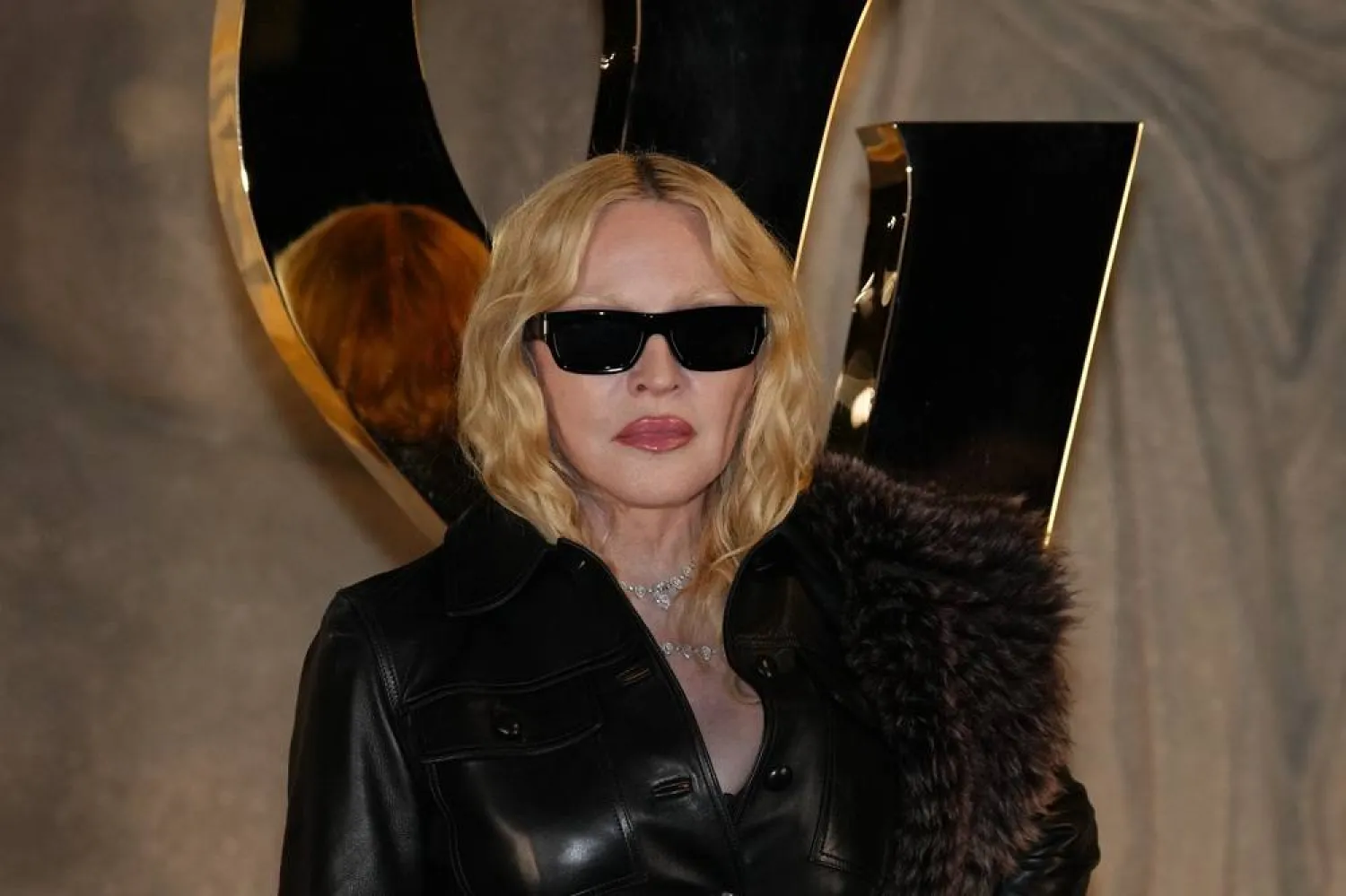
Madonna poses before the Saint Laurent Spring/Summer 2026 collection presented in Paris, on Sept. 29, 2025. (AP)
TT

Australia’s Music Industry Bans AI-Generated Tracks from Official Charts

Madonna poses before the Saint Laurent Spring/Summer 2026 collection presented in Paris, on Sept. 29, 2025. (AP)

Australia’s recorded music industry will bar tracks wholly generated by artificial intelligence from official charts as burgeoning generative technologies threaten artists’ livelihoods, a representative said on Tuesday.

The crackdown comes as a variation of Madonna’s pop hit “Like a Prayer” created by an Australian producer using AI-generated vocals and drums has spent 16 weeks in the Australian top 20, stoking debate about generative AI’s place in music. It peaked at number two on the Australian Record Industry Association’s top 20 Australian singles chart in May and remained in fourth place on Tuesday.

Wholly AI-generated tracks will be banned from the ARIA charts from Monday next week, but some AI-assisted music will remain eligible, an ARIA statement said.

Tracks can be eligible only if “humans wrote the song and performed the lead vocal and the primary instruments,” among other requirements, the statement said.

AI-generated music would also be ineligible for the Australian industry’s prestigious ARIA awards.

ARIA chief executive Annabelle Herd said: “These changes reflect our intent to remain dynamic and promote the human nature of artistry in what is — to say the least — a rapidly developing space.”

“The ARIA Charts will always remain a transparent measurement of the music Australia consumes, but a chart that rewards unlicensed AI output would undercut the very basis of the recorded music we exist to represent,” Herd added.

Eligible music must also be produced using legal AI services. Music was appearing on streaming services that had apparently been developed with AI tools trained on artists’ music without authorization.

The Australian rules are in step with new principles released in July by the London-based International Federation of the Phonographic Industry. The federation represents the recording industry worldwide.

The international guidelines state that to qualify for official music charts, a track must be “substantially human made.”

Sydney Conservatorium of Music composer and lecturer Alexis Weaver told Australian Broadcasting Corp. the debate around AI in music was “exceptionally fraught and very emotional for a lot of musicians and so everyone will have a different opinion.”

Weaver applauded ARIA’s move as a “wonderful step forward” that sent a message ARIA wanted to “prioritize and value human creativity.”

“It can be quite hard to avoid AI tools in the current landscape,” Weaver said. “There is a way to use it while you’re still steering the ship and making the main creative choices.”




Oasis Bring Swagger to Venice as Documentary Celebrates Reunion

 Noel Gallagher, left, and Liam Gallagher arrive at the 83rd edition of the Venice Film Festival in Venice, Italy, on Saturday, Sept. 5, 2026. (AP)
Noel Gallagher, left, and Liam Gallagher arrive at the 83rd edition of the Venice Film Festival in Venice, Italy, on Saturday, Sept. 5, 2026. (AP)
TT

Oasis Bring Swagger to Venice as Documentary Celebrates Reunion

 Noel Gallagher, left, and Liam Gallagher arrive at the 83rd edition of the Venice Film Festival in Venice, Italy, on Saturday, Sept. 5, 2026. (AP)
Noel Gallagher, left, and Liam Gallagher arrive at the 83rd edition of the Venice Film Festival in Venice, Italy, on Saturday, Sept. 5, 2026. (AP)

Liam Gallagher pumped his fist in the air and his brother Noel flashed a victory sign as the Oasis rock stars arrived by water taxi at the Venice Film Festival on Saturday ahead of a documentary chronicling their blockbuster reunion tour.

Asked by a Reuters reporter how it felt to be in Venice, Liam replied: "Biblical man, biblical." Noel opted for a more Italian response: "Bellissimo."

Later, Liam appeared less impressed by photographers yelling for attention. "Why all the shouting? Is this what you do at the Venice Film Festival? Scream at people?" he asked.

Oasis, the ‌Manchester band ‌whose anthems helped define the 1990s before feuding between the ‌two ⁠brothers tore it ⁠apart, reunited last year for a tour across Britain, Ireland, North and South America, Asia and Australia.

The documentary "Oasis: Don't Look Back in Anger" follows the gradual repair of one of music's most famous fractured relationships over weeks of rehearsal and months on the road.

"You sort of saw that reconciliation happen on stage in front of the world," said Dylan Southern, who directed the film alongside Will Lovelace.

The thaw takes time. ⁠When Liam arrives for his first rehearsal he doesn't acknowledge ‌anyone around him before leaving abruptly without saying ‌goodbye.

Underscoring their mutual animosity, Noel reveals that their respective children had never met before the ‌reunion tour but swiftly went on to become great friends. At the end ‌of the film, Noel describes Liam as "delightful" — something he admits he had never expected to hear himself say.

The filmmakers said they deliberately avoided interfering, keeping themselves largely invisible during the lengthy practice sessions and allowing events to unfold naturally.

As shooting moved into the concert stadiums, ‌Southern said the focus widened to include the fans whose affection became an integral part of the brothers' rapprochement.

Steven Knight, ⁠who wrote the ⁠script, said the filmmakers had no way of knowing whether the reunion would succeed, but always hoped the story would become one of forgiveness.

"From the beginning, we wanted to make this a film about reconciliation, redemption and forgiveness," he said, adding that neither Gallagher was likely to express emotion openly.

"They're British working-class men, so they're not going to high-five or hug or cry," he said.

Knight, who is writing the script for the next James Bond film, said the real-life story of the Oasis tour proved more compelling than anything he could have scripted.

"This is better than any fiction that you could write," he said. Southern chipped in: "And no one could play Liam Gallagher except Liam Gallagher."

The film is being shown out of competition at the Venice Film Festival, which runs until September 12.


Robert Pattinson and Oasis Bring Star Power to Venice Film Festival

 This image released by A24 shows Robert Pattinson, left, in a scene from the film "Primetime." (A24 via AP)
This image released by A24 shows Robert Pattinson, left, in a scene from the film "Primetime." (A24 via AP)
TT

Robert Pattinson and Oasis Bring Star Power to Venice Film Festival

 This image released by A24 shows Robert Pattinson, left, in a scene from the film "Primetime." (A24 via AP)
This image released by A24 shows Robert Pattinson, left, in a scene from the film "Primetime." (A24 via AP)

The worlds of rock and movie stardom are colliding at the Venice Film Festival, as both Robert Pattinson and Oasis frontmen Noel and Liam Gallagher arrive on the Lido for world premieres on Saturday.

Pattinson’s film, “Primetime,” is about the reality series “To Catch a Predator” and host Chris Hansen at the height of its success on Dateline NBC, while the Gallaghers are coming in support of a documentary about their 2025 reunion tour. Both films will be in US theaters in September.

With many movie star moments already in the rearview, from George Clooney’s lifetime achievement award to the emotional ovation for John Malkovich’s performance in “Wild Horse Nine,” the combination of Pattinson and Oasis on the same day could be a high-wattage pinnacle for this year’s festival.

Robert Pattinson plays Chris Hansen “Primetime,” which was written by Ajon Singh and directed by Lance Oppenheim, has already inspired discourse and headlines with just its trailer and subject matter. It’s based on journalist Luke Dittrich’s “Esquire” article “Tonight on Dateline This Man Will Die,” which explores a 2006 sting operation on Texas assistant district attorney Bill Conradt. He died by suicide as police officers descended on his home with the show’s television cameras outside.

Oppenheim, in his director’s statement, said that he “wanted to trace the disparate ambitions of people who existed inside this apparatus — a journalistic crusader, a mercenary TV producer and a wide-eyed Hollywood dreamer — converging into a moment of crisis.”

Hansen was not involved in the making of the movie and has made several public comments about it, including that he had always thought Denis Leary should have played him and questioning the motives of the filmmakers. He was invited to see the movie before the festival, but took issue with the NDA he was asked to sign beforehand.

Last year, the series was also the subject of an acclaimed documentary, “Predators,” from filmmaker David Osit. It's currently streaming on Paramount+.

For Pattinson, “Primetime,” in theaters Sept. 25, is one more buzzy performance in a banner year that’s already included memorable performances in hit films from “The Drama” to “The Odyssey” and with “Dune: Part Three” still to come.

The Oasis documentary, subtitled “Don’t Look Back in Anger,” is part concert film and part exploration of the contentious relationship between the Gallagher brothers, whose long-held feud led to Oasis disbanding in 2009. It includes never-before-seen rehearsals and what was then their first joint interview in 25 years.

“We set out to make a film about the reconciliation of two brothers, infamous for their volatile relationship, but we also wanted to make a film about the power of music and the way Oasis’ songs have continued to have a life of their own, as the band lay dormant for fifteen years,” co-directors Dylan Southern and Will Lovelace said in their directors' statement. “The documentary, like the reunion and the tour, took on a life of its own.”

It’ll be in theaters shortly after the festival. Disney is giving “Oasis: Don't Look Back in Anger” an IMAX release on Sept. 11, and it's expected to arrive on the Disney+ streaming service later this year.


Director Maggie Gyllenhaal Ditched AI for Marilyn Monroe Film

President of Venezia 83 Competition jury Maggie Gyllenhaal poses on the red carpet on the day of the opening ceremony of the 83rd Venice International Film Festival, in Venice, Italy, September 2, 2026. (Reuters)
TT

Director Maggie Gyllenhaal Ditched AI for Marilyn Monroe Film

President of Venezia 83 Competition jury Maggie Gyllenhaal poses on the red carpet on the day of the opening ceremony of the 83rd Venice International Film Festival, in Venice, Italy, September 2, 2026. (Reuters)

Actress-director Maggie Gyllenhaal said Friday she had abandoned using AI video-generation technology for her upcoming film about Marilyn Monroe because "it fundamentally did not work."

The American is head of the jury at this year's Venice Film Festival, but she is also premiering her new 17-minute film depicting 1950s screen icon Monroe.

The short movie imagines Monroe as a 100-year-old, with Dakota Johnson playing her before her death in 1962.

"The people who commissioned this project from me asked me to use AI," Gyllenhaal told a panel discussion about AI in Venice.

"They were using licensable AI, training it off of Marilyn Monroe films that we had licensed. And I went for it. I was like, 'All right, I'm curious. I don't know. Let's see'," Gyllenhaal told The Future of Creativity event.

"And it fundamentally did not work. We worked hard at it, and in the end, I threw it away because what was coming through Dakota playing Marilyn Monroe was so much more moving, human, alive."

Her statement underlines the current limitations of AI video technology, which has sparked fears about the impact on jobs throughout the film and TV industries.

The "Dark Knight" actress and director of "The Lost Daughter" also revealed how AI companies are seeking to license the images of actors in order to reproduce them through software.

"Someone who I respect a lot theoretically asked me to consider the idea of asking actors who trust me, because I have a lot of actors who trust me that I love, and they should trust me to give me their likeness and to make a film with them," she said.

"I thought it's completely and absolutely different paradigm than how I think, how I work," she added.