JCPenney is Spending $1 Billion on Store and Online Upgrades in Latest Bid to Revive Its Business

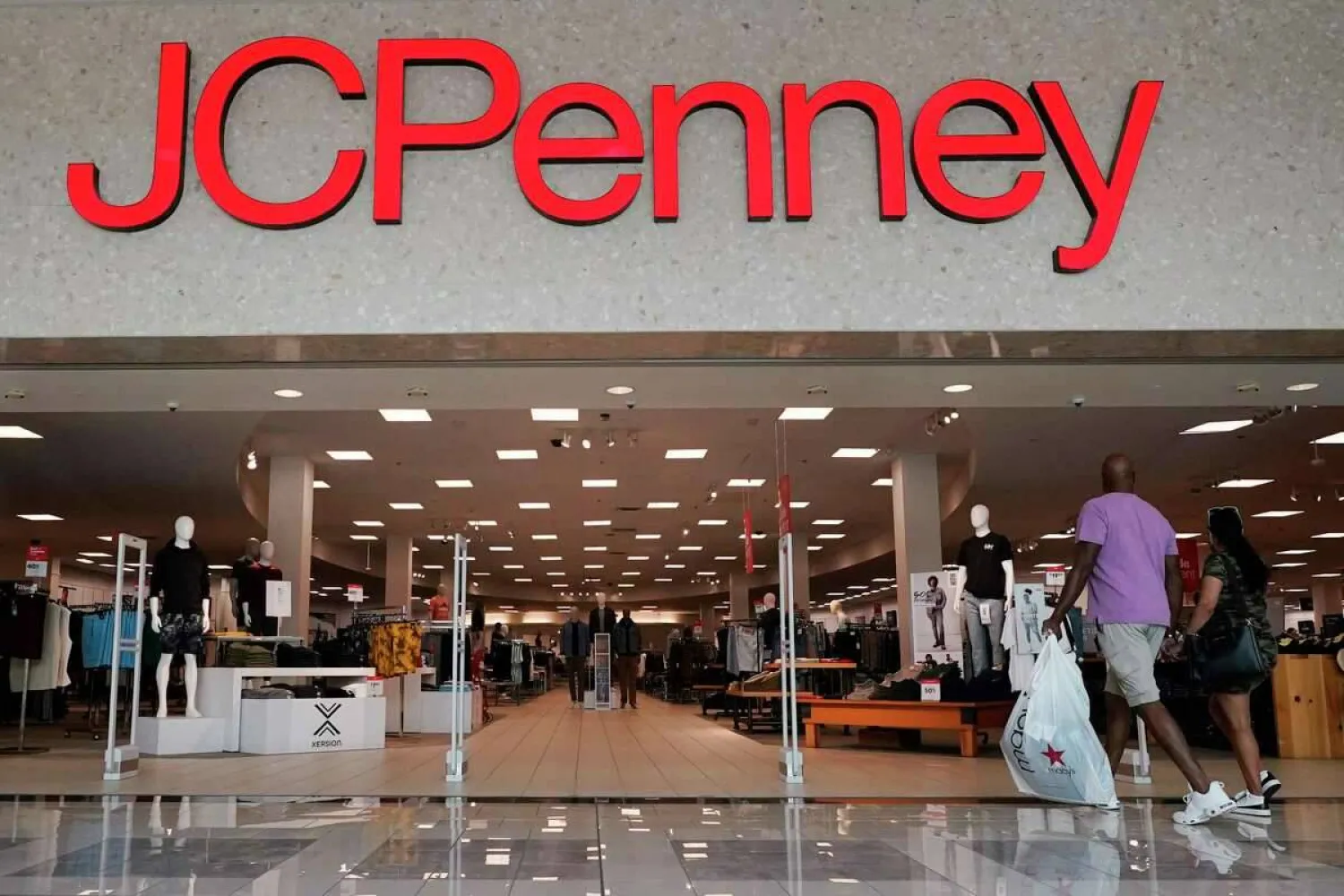
The JCPenney sign lights up the entrance to a store in Frisco, Texas, Wednesday, Aug. 30, 2023. LM Otero/AP
TT

JCPenney is Spending $1 Billion on Store and Online Upgrades in Latest Bid to Revive Its Business

The JCPenney sign lights up the entrance to a store in Frisco, Texas, Wednesday, Aug. 30, 2023. LM Otero/AP

JCPenney said Thursday it plans to spend more than $1 billion by the end of 2025 in a bid to revive the storied but troubled 121-year-old department store chain.
The money is going toward remodeling JCPenney stores, upgrading its online shopping site and app, and making its supply network more efficient so that online orders are delivered more quickly.
JCPenney’s CEO Marc Rosen, who took the company’s helm in November 2021 and has served as an executive at Levi Strauss and Walmart, is renewing the chain’s focus on its core middle-income shoppers with affordable fashion and housewares.
“Now is the time more than ever to lean into that and make sure that we’re delivering that experience for our customer,” Rosen said in an interview with The Associated Press. That’s a change of tactics from previous management teams that pursued wealthier shoppers with offers of trendy items and major appliances.
As part of the plans unveiled Thursday, check-out stations that had been located throughout JCPenney's stores will be replaced with a single area of cashiers. Shoppers will also see brighter lighting and a fresh coat of paint. Store employees will be equipped with mobile devices to scan inventory and ring up shoppers' purchases. And the chain is making upgrades to its Wi-Fi networks to speed up in-store connections.
But JCPenney is playing catch-up with its competitors — from discounters to department stores like Macy’s and Walmart — that have been upgrading their stores and online businesses, underscoring the challenges faced by the retailer based in Plano, Texas.
JCPenney, which emerged from Chapter 11 reorganization in December 2020 with new owners, not only has grappled with years of internal issues but also faces an uncertain economy that has challenged healthier department stores.
The chain's core customers are budget-conscious families, whose median income ranges from $50,000 to $75,000. They've been particularly hit hard by higher costs of basic items and high interest rates, making borrowing on credit cards and taking out a mortgage more expensive.
Rosen said JCPenney's customers are spending $700 more per month than two years ago just for basic necessities, like rent, gas and food. He noted they're seeking competitive prices as well as a good shopping experience.
But in this tough economy, JCPenney has a role, Rosen said. He believes shoppers are finding other department stores too expensive, while online retailers and off-price stores don't give them the customer service JCPenney shoppers are looking for.
The company filed for bankruptcy reorganization in May 2020 after the pandemic-induced temporary closing of stores put the already struggling retailer deeper in peril.
Under new owners — mall companies Simon Property Group Inc. and Brookfield Property Partners LP — JCPenney shuttered nearly a quarter of its 850 stores. It now has roughly 650 stores. It has less than $500 million in debt, down from nearly $5 billion at the time of its bankruptcy filing, Rosen said.
As part of the latest remodeling push, Rosen said 100 stores have been refurbished. The plan is to remodel anywhere from 50 to 100 per year, he said.
The retailer has been rebuilding its beauty business after Sephora announced a deal to leave the chain for rival Kohl's three years ago. As part of its overhaul, it has been highlighting beauty products that cover a wider range of skin tones. One third of its customers are of color.
The retailer launched new store label brands like Mutual Weave men’s clothing and reintroduced some national brands like Adidas. It launched national labels such as Forever 21, owned by Authentic Brands Group LLC, which has a minority stake in JCPenney. It also teamed up with celebrity stylist Jason Bolden to recreate collections for two of its store label brands, J. Ferrar and Worthington, a long-time brand it brought back.
Most importantly, Rosen said JCPenney has worked hard to keep the basics like jeans, white-T-shirts, and sheet sets in stock with the full size range or full color assortment, a problem that has plagued the chain and frustrated shoppers.
Rosen said the changes have helped increase the number of repeat visits of existing customers to both stores and online. More than 50 million customers have visited JCPenney in the past three years, he said. After about five years of declines, it’s now seeing customers coming to JCPenney more frequently — a 5% increase. As for its beauty departments,25% are new customers, he noted.
“That's showing us that if we get the basic relevant experience right, then they’re going to come to us more frequently because they know the brand, they’re shopping for us already and they’re now starting to shop across more areas of the store and come more frequently, ” he said.
Rosen arrived at JCPenney when its annual revenue was around $8 billion to $9 billion and that number was unchanged last year. He expects it could decline slightly this year because of all the economic uncertainty. It had annual sales of roughly $11.2 billion when it filed for bankruptcy.
Neil Saunders, managing director of GlobalData Retail, said he was recently at a JCPenney store in Phoenix, and the stores looked messy, and there were gaps on shelves. But he did praise the beauty area.
“They may have steadied the ship, but they have not revived the brand,” he said.



Scottish Fashion Seeks New Talent for Homespun Crafts 

Members of staff work at the Alex Begg mill in Ayr, southwest Scotland, on January 15, 2026. (AFP)
TT

Scottish Fashion Seeks New Talent for Homespun Crafts 

Members of staff work at the Alex Begg mill in Ayr, southwest Scotland, on January 15, 2026. (AFP)

Far from the glamor of fashion weeks in Paris, Milan and London, a nondescript cashmere mill on Scotland's western coast that supplies luxury labels hopes local training programs can attract new talent.

"It's a dying trade," 61-year-old Maria Wade said of her job as a "greasy mender" at Alex Begg, a semi-rural mill that has been based in Ayr in southwest Scotland for more than a century.

The weaving mill supplies cashmere to prestigious fashion brands, which cannot be named for confidentiality reasons, as well as its own luxury label, Begg x Co.

"You don't get many people mending raw cashmere," said Wade, whose role is to meticulously inspect and darn any defects in the fabric by hand, before it is washed, cut and shipped around the world.

Famed for its luxury tweeds, wools and cashmeres, Scotland's textile industry has seen a sharp decline in recent decades as high manufacturing costs struggle to compete with cheap production abroad, and an ageing workforce retires, taking traditional manufacturing skills with them.

When technical transformation director Lorna Dempsey joined Alex Begg more than 25 years ago, the average age was "quite old", she told AFP, "about 50-plus".

Since then, the company has made a "conscious effort to try and recruit younger people" and brought the average age down to around 40.

It's no easy task in the run-down former mining town, with those interested in fashion careers looking to places such as Glasgow, around an hour's drive away, or even further afield.

"We don't have a lot of skills within the Ayrshire area, so it's very difficult for us to try and find skilled staff," said Dempsey.

The rise of fast fashion has made it harder to find young people with manufacturing know-how.

"A lot of our operations are definitely a skill from the past," said Dempsey, adding that people don't learn how to "darn their socks anymore."

- 'On my doorstep' -

The mill's partnership with the King's Foundation -- a charity founded by King Charles III and headquartered in the nearby Dumfries House estate -- has helped turn things around.

The foundation runs programs aimed at addressing "a skills gap within the UK textile industry".

Trainees learn about production lines, supply chains, working with different materials and sustainable design -- skills that employers say are often not covered in fashion school.

They are then given work experience at Scottish mills such as Alex Begg, and some like Emma Hyslop manage to secure a job.

Sat behind a fringing machine at the mill, Hyslop, 28, deftly ran a dark cashmere fabric destined for a Spanish luxury brand through its frame, twisting the ends of the cloth into fringes.

After getting a fashion design diploma at a Glasgow college, Hyslop did a six-week course with the King's Foundation, through which she discovered the luxury mill in her backyard.

"I had no idea about the place beforehand, and it's on my doorstep," said Hyslop, from south Ayrshire.

"We're actually quite a hidden gem," said Dempsey.

"So it's our job, our legacy, to keep bringing people through our manufacturing businesses, and keep bringing the skills alive again."

- Heritage skills -

The mill currently has four apprentices and is hoping to add more this year.

Dempsey also gives talks to local primary school children with the King's Foundation.

It is an issue close to the king's heart, with the British monarch attending Thursday's opening of London Fashion Week and meeting apprentices "supporting heritage skills and sustainability" -- including students on King's Foundation programs.

Nicole Christie founded her own sustainable women's luxury brand, Ellipsis, after completing a textile program at Dumfries House in 2020.

Entering luxury fashion in Scotland is "difficult", said Christie, with other major brands usually based in London or other European cities.

"At one point, leaving university, I did think that I would have to move down south," said Christie, who instead decided to build her brand in Glasgow.

"I'm really proud that I'm doing it here, and I really hope one day that I'll actually be able to give other people opportunities."


London Fashion Week Opens with Tribute to One of Its Greats

London Fashion Week will pay tribute to iconic designer Paul Costelloe who died in November, and had been a stalwart of the British captial's catwalks since the show was launched in 1984. Niklas HALLE'N / AFP/File
TT

London Fashion Week Opens with Tribute to One of Its Greats

London Fashion Week will pay tribute to iconic designer Paul Costelloe who died in November, and had been a stalwart of the British captial's catwalks since the show was launched in 1984. Niklas HALLE'N / AFP/File

London Fashion Week, better known for nurturing new talent than for its big-name shows, kicks off on Thursday with a tribute to one of its stalwarts Paul Costelloe.

The Irish-American designer, who died aged 80 last November, was a regular fixture on the opening day of the British capital's fashion week since the inception of the show in 1984, AFP said.

Over four decades, his romantic, sartorial catwalks remained a constant: witness to the rise and fall of London Fashion Week (LFW) which has seen the departure of big fashion names to its counterparts in Milan, Paris and New York in recent years.

His son William Costelloe is now the creative director of the brand, which wrote on social media ahead of its LFW Autumn/Winter 2026 opening show: "A new season. A powerful moment. A legacy moving forward."

Tolu Coker, a British-Nigerian designer who launched her brand in 2018, will also show on Thursday her elegant, mainly-unisex designs inspired by diverse identities.

Notable names including Harris Reed and Richard Quinn will return to the catwalk in London, with Burberry closing the week in its usual fashion on Monday evening.

Other labels will bring a royal flavor to the runway, with brands worn by Princess Catherine including Emilia Wickstead, Edeline Lee and Erdem putting on shows.

However, there will be no show from the breakout Northern Irish designer Jonathan Anderson, who was one of the most eagerly awaited at London Fashion Week in recent seasons.

The 41-year-old took over at Dior last June, leaving him little time for his own brand, JW Anderson, which he founded in 2008.

For several years, London has been losing ground to its star-studded rivals in Paris and Milan, but it has clung onto its role as a breeding ground for young talent.

The British Fashion Council's NewGen initiative provides funding for emerging talent, with several up-and-coming designers finding their stride at LFW through the incubator.

'Great support'

Designers like Simone Rocha, Tolu Coker and Roksanda have become fashion week mainstays after making their debut on the NewGen catwalk.

Among the recent breakouts is Joshua Ewusie, a 27-year-old British creator born to Ghanaian parents who is due to put on his second fashion week show with his brand "E.W.Usie".

The young designer was supported by the King's Foundation, a charity founded by King Charles III, in partnership with Chanel, which gave him a studio space shortly after he graduated from the prestigious Central Saint Martins school.

His hometown London, which boasts several notable fashion schools, provides "great support for young designers," Ewusie told AFP ahead of his LFW presentation on Sunday.

"There's so many opportunities, I think, that London gives to help young brands start," he added.

His new collection is inspired by the 1980s, when his mother moved to London, says the designer. It's all about culture and identity, with leather as the star material.

French designer Pauline Dujancourt, known for her work with knitwear, also chose to stick with London Fashion Week after her studies at Paris's Ecole Duperre and Central Saint Martins in London.

"As much as Paris Fashion Week is incredible and I'm dreaming to be part of it one day, maybe there's a bit more room for younger brands in London at the start," said the 31-year-old designer, who will show her collection on Sunday.

"I think people have come to London Fashion Week expecting to see a bit of newness and younger generations as opposed to Paris and Milan, where it's more like established houses."


Online Seller eBay to Buy Secondhand Fashion Marketplace Depop from Etsy for $1.2B in Cash

FILE PHOTO: Ebay logo is seen in this illustration taken February 11, 2025. REUTERS/Dado Ruvic/Illustration/File Photo
TT

Online Seller eBay to Buy Secondhand Fashion Marketplace Depop from Etsy for $1.2B in Cash

FILE PHOTO: Ebay logo is seen in this illustration taken February 11, 2025. REUTERS/Dado Ruvic/Illustration/File Photo

Online seller eBay wants a bigger share of the Gen Z market.

The online seller has agreed to purchase secondhand fashion marketplace Depop from Etsy for about $1.2 billion in cash, the companies said Wednesday, according to The Associated Press.

The deal comes at a time when used clothing has become increasingly popular, sought out by shoppers searching for unique items that cost less than new ones and keep the old stuff from heading to the landfill.

In a statement, eBay's CEO Jamie Ianonne said that the acquisition is an opportunity to capture a younger demographic.

"We are confident that as part of eBay, Depop will be even more well-positioned for long-term growth, benefiting from our scale, complementary offerings, and operational capabilities,” Ianonne said.

As of Dec. 31, 2025, Depop's marketplace had 7 million active buyers, nearly 90% of which are under the age of 34, and more than 3 million active sellers, the joint release said.

The deal comes five years after Etsy bought Depop for $1.6 billion. The app was founded in 2011.

EBay, based in San Jose, California, said it intends to pay cash. Etsy, based in Brooklyn, New York, plans to utilize the proceeds for general corporate purposes, continued share repurchases and investment in its core marketplace, according to the release.

The transaction, which has been unanimously approved by eBay’s and Etsy’s boards, is currently expected to close in the second quarter, the companies said.

Depop is expected to retain its name, brand, platform, and its culture, the companies said.

EBay's shares rose more than 7%, while Etsy's share soared close to 15% in after-hours trading when the news was announced.