


Istituto Marangoni, Fashion Commission Partner on Fashion Education in Saudi Arabia

The Saudi Fashion Commission logo
TT

Istituto Marangoni, Fashion Commission Partner on Fashion Education in Saudi Arabia

The Saudi Fashion Commission logo

Istituto Marangoni is set to launch its Riyadh campus in August 2025, following in-depth market analysis and assessments conducted in synergy with the Saudi Fashion Commission.

The new Higher Training Institute will offer specialized programs designed to align with the needs of the Saudi fashion and luxury market and contribute to the Kingdom’s economic diversification goals.
The new campus of Istituto Marangoni will be based at King Abdullah Financial District (KAFD), at the Riyadh Creative District (RCD), the new initiative managed and overseen by the Royal Commission for Riyadh City (RCRC).

As the incubator for RCD, RCRC successfully attracted a series of prestigious companies and institutions from the creative industry as tenants for the district.

Instituto Marangoni chose Riyadh as the location of its new campus in the Kingdom because of its dynamic creative ecosystem, growing demand for high-level fashion education, and the city’s strategic role in shaping the future of the industry in the region.

Combining a rich cultural and historic heritage with ongoing technological development and rapid urban transformation, Riyadh is becoming the new hotspot for fashion and innovation, confirming Saudi Arabia’s growing influence on the global fashion industry.

As part of a strategic initiative to support the next generation of Saudi fashion professionals, the Ministry of Culture’s Fashion Commission is supporting Istituto Marangoni in the launch of its new three-year undergraduate Advanced Training Diploma. Istituto Marangoni will therefore provide 50 scholarships for Saudi students enrolling in the program. This opportunity is open to Saudi nationals holding a high school certificate or an equivalent qualification.

On March 17, the scholarship initiative was officially launched on the Istituto Marangoni website through a competitive selection process, giving aspiring Saudi fashion students the chance to receive partial funding for their three-year diploma programs, which will commence in late August 2025.

Istituto Marangoni group managing director Stefania Valenti expressed her gratitude. "A sincere thank you to the Fashion Commission, the Ministry of Culture, the Royal Commission for Riyadh City, and to Ministry of Investment for their invaluable support in establishing this Higher Training Institute,” she said.

“Our mission is to nurture local creative talent by combining global expertise with Saudi heritage, shaping the future leaders of the fashion and luxury industries in Saudi Arabia. This initiative will lay the foundation for developing a new generation of Saudi talents and managers, equipping them with the skills to connect with international markets while embracing the vision of the Fashion Commission and Saudi Vision 2030,” Valenti said.

According to Fashion Commission Chief Executive Burak Cakmak, the partnership “marks a pivotal moment for the Saudi fashion industry.”

“By investing in our local talent and providing them with world-class education, we are not only empowering the next generation of Saudi designers and leaders but also enriching the global fashion landscape with our unique cultural heritage. Together, we are building a sustainable and thriving fashion ecosystem that reflects the ambition of Saudi Vision 2030,” he said.

Strategically located in Riyadh, the institute will offer a diverse range of specialized programs that integrate Saudi heritage with advanced technical and managerial expertise. The three-year undergraduate courses will prepare students for careers in the fashion industry, with programs including "Fashion Design & Accessories,Fashion Communication & Image,Fashion Management,Digital Communication & Media,Fashion Product," and "Fragrances & Cosmetics Management."

The courses will be accredited by the Technical and Vocational Training Corporation (TVTC), the government agency overseeing technical and vocational education in Saudi Arabia.

In addition to undergraduate programs, the institute will provide upskilling and reskilling courses for industry professionals in both full-time and part-time formats. All programs will be delivered by a distinguished faculty composed of both international and local experts, ensuring a high-quality educational experience that meets global industry standards.

To mark this significant partnership, a special Suhoor was held at the prestigious La Petite Maison in Riyadh, bringing together key stakeholders from the Fashion Commission, Istituto Marangoni, and the Saudi creative community.



Estee Lauder Beats Quarterly Sales Estimates, to Cut More Jobs

Estee Lauder beat Wall Street estimates for third-quarter sales on Friday. (Getty Images via AFP)
TT

Estee Lauder Beats Quarterly Sales Estimates, to Cut More Jobs

Estee Lauder beat Wall Street estimates for third-quarter sales on Friday. (Getty Images via AFP)

Cosmetics maker Estee Lauder beat Wall Street estimates for third-quarter sales on Friday, driven by improving sales in China ‌and Europe ‌as CEO ‌Stephane ⁠de La Faverie's turnaround ⁠plan takes hold, sending its shares up 16% premarket.

The company, which has ⁠been in talks ‌to ‌merge with Jean ‌Paul Gaultier-owner Puig, posted ‌quarterly sales of $3.71 billion, compared with analysts' estimates of $3.69 billion, according to ‌data compiled by LSEG.

The company ⁠also ⁠revised its job cut target to a range of 9,000 to 10,000 from the previously estimated range of 5,800 to 7,000.


Armani 2025 Revenue Fell 2.8%, CEO Hasn't Met Potential Buyers

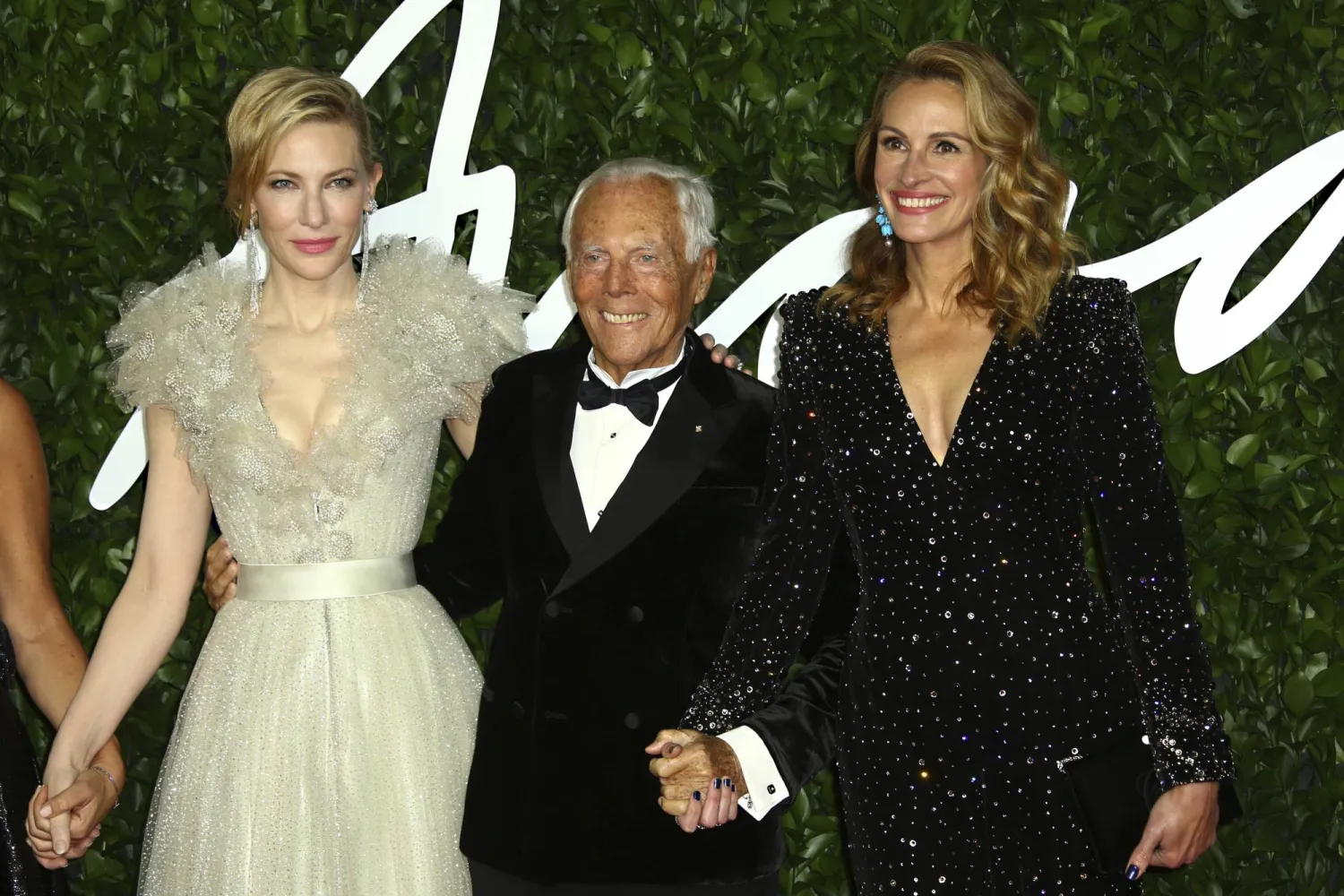
FILE - Actress Cate Blanchett, from left, designer Giorgio Armani, and actress Julia Roberts pose for photographers upon arrival at the British Fashion Awards in central London, Dec. 2, 2019. (Photo by Joel C Ryan/Invision/AP)
TT

Armani 2025 Revenue Fell 2.8%, CEO Hasn't Met Potential Buyers

FILE - Actress Cate Blanchett, from left, designer Giorgio Armani, and actress Julia Roberts pose for photographers upon arrival at the British Fashion Awards in central London, Dec. 2, 2019. (Photo by Joel C Ryan/Invision/AP)

Italian fashion group Armani said on Wednesday its revenue fell 2.8% at constant exchange rates last year, weighed by a weak performance of its wholesale channel.

In 2025, the company's revenue totaled 2.2 billion euros ($2.57 billion), while total turnover, including direct licensee sales, was 4 billion euros.

"We face a possible structural change in the approach to luxury and fashion ⁠by current consumers ⁠and potential, which must be taken into account," Reuters quoted Armani group CEO Giuseppe Marsocci as saying in a statement.

Earnings before interest, taxes, depreciation and amortization (EBITDA) rose 3.2% year-on-year to 152.7 million euros, while operating ⁠profit increased 2% to 52.6 million euros.

Trends in the first months of 2026 were in line with the previous year, with unfavorable currency movements weighing on performance.

Giorgio Armani, the group's founder who died last September, instructed his heirs to sell an initial stake in the company to players such as L'Oreal, EssilorLuxottica and French ⁠luxury ⁠giant LVMH.

In an interview with Italy's Sole 24 Ore published on Wednesday, Marsocci said there was no update on the group's shareholding structure, adding that interest in the Armani group remained strong.

"We have not started meetings with the three potential buyers, and there are no tensions among the family members," Marsocci said in a separate interview with WWD magazine.


Ferragamo Expands Leather Mapping Efforts as EU Sustainability Rules Take Shape

James Ferragamo, a chief product officer for the Salvatore Ferragamo group, talks with journalists during an interview with the Associated Press, in Milan, Italy, Wednesday, April 22, 2026. (AP Photo/Antonio Calanni)
TT

Ferragamo Expands Leather Mapping Efforts as EU Sustainability Rules Take Shape

James Ferragamo, a chief product officer for the Salvatore Ferragamo group, talks with journalists during an interview with the Associated Press, in Milan, Italy, Wednesday, April 22, 2026. (AP Photo/Antonio Calanni)

Italian luxury brand Ferragamo said it can map the country of origin for much of the leather used to make its coveted footwear and handbags, a first step in traceability according to experts.

The announcement comes during a wave of European Union sustainability rules that are increasing pressure on fashion brands to account for materials in their supply chains.

The family-run and publicly traded fashion house has been issuing sustainability reports for over a decade, but the 2025 report released March 31 is the first that contains figures on material traceability — notably for leather, which experts say is harder to trace than textile fibers such as cotton.

“We have been using leather in a more sustainable way,’’ James Ferragamo, the brand’s chief product officer and grandson of founder Salvatore Ferragamo, told The Associated Press in an interview last week. “I think it is one of the more sustainable materials in my point of view.”

Most of the tanneries working with the brand “control their water, have fair treatment of the workforce, monitor their supply chain ensuring that they’re buying leather from those who are not deforesting, and taking the right approach also in terms of breeding and animal welfare,” he said.

Traceability in fashion sustainability Traceability of materials is considered a first and necessary step for the fashion industry, which is facing a new EU framework that will require brands and their suppliers to ensure the items they produce are sustainable from the drawing board to end-of-life disposal. Precise terms are still being defined and compliance will be phased in over the coming years.

“Traceability is an essential factor, but it’s not sufficient,’’ said Francesca Romana Rinaldi, a sustainability expert and director of the Monitor for Circular Fashion at SDA Bocconi School of Management. “It enables the implementation of sustainability and circularity.”

She said that any company that is not tracing their materials “doesn’t know their supply chain” and “could be also criticized for greenwashing.”

EU regulations and directives are moving toward full circularity of materials to include measures extending the life cycle of garments, accessories and footwear through repairs and end-of-life management, including recycling and upcycling, she said.

The EU is also phasing in restrictions on destroying unsold apparel, accessories and footwear produced by companies with more than 250 employees and more than 40 million euros ($46.8 million) in annual revenues.

From breeding to assembly The family-run fashion house was founded in 1927 by Salvatore Ferragamo in Florence, after his return from Hollywood, where he had established himself as shoemaker to the stars with clients including Marilyn Monroe and Judy Garland. Material scarcity during World War II pushed Ferragamo to experiment with alternatives, substituting wicker for leather and using cork for soles, the younger Ferragamo said.

In keeping with its origins, Ferragamo remains primarily a footwear and leather goods maker. Together, they comprised 86% of 2025 sales of 976.5 million euros ($1.1 billion).

Ferragamo launched its initiative on leather traceability with the calf leather used for its Fiamma bag, tracing it from breeding to assembly, the group announced in its 2024 annual report.

In 2025, Ferragamo enlisted tanneries supplying 80% of the hides it buys in a project to identify the country of origin of raw materials through supplier declarations. When including textiles such as cotton, silk and nylon, the company says 81% of its materials are certified under third-party sustainability standards.

“Today there is not one single solution, one single technological solution to trace the leather to the birth farm of the cows,’’ said Davide Triacca, Ferragamo’s sustainability director. “We got to that result through a very dedicated and consistent approach and today we are able to trace more than 80% of the entire leather that we supply and the vast majority of which comes from Europe.”

The EU does not require leather to be traceable. Sustainability experts underscore that approaches based on country-level mapping and supplier declarations do not establish a full chain of custody and instead reflect an early stage of traceability.

Ferragamo previously included a capsule collection with silky textiles made from orange fibers in 2017, one of its first research investments. More recently it used nylon from castor oil instead of fossil oil for a men’s tote bag, and its Back to Earth collection featured the brand’s trademark Hug handbag treated with vegetable dyes.

“Research keeps on going. It’s something that we’re doing all the time,'' Ferragamo said.

“We’re trying to find different ways of creating different materials. And sometimes the materials that we produce are not ready for market. But it doesn’t mean that we don’t experiment.”