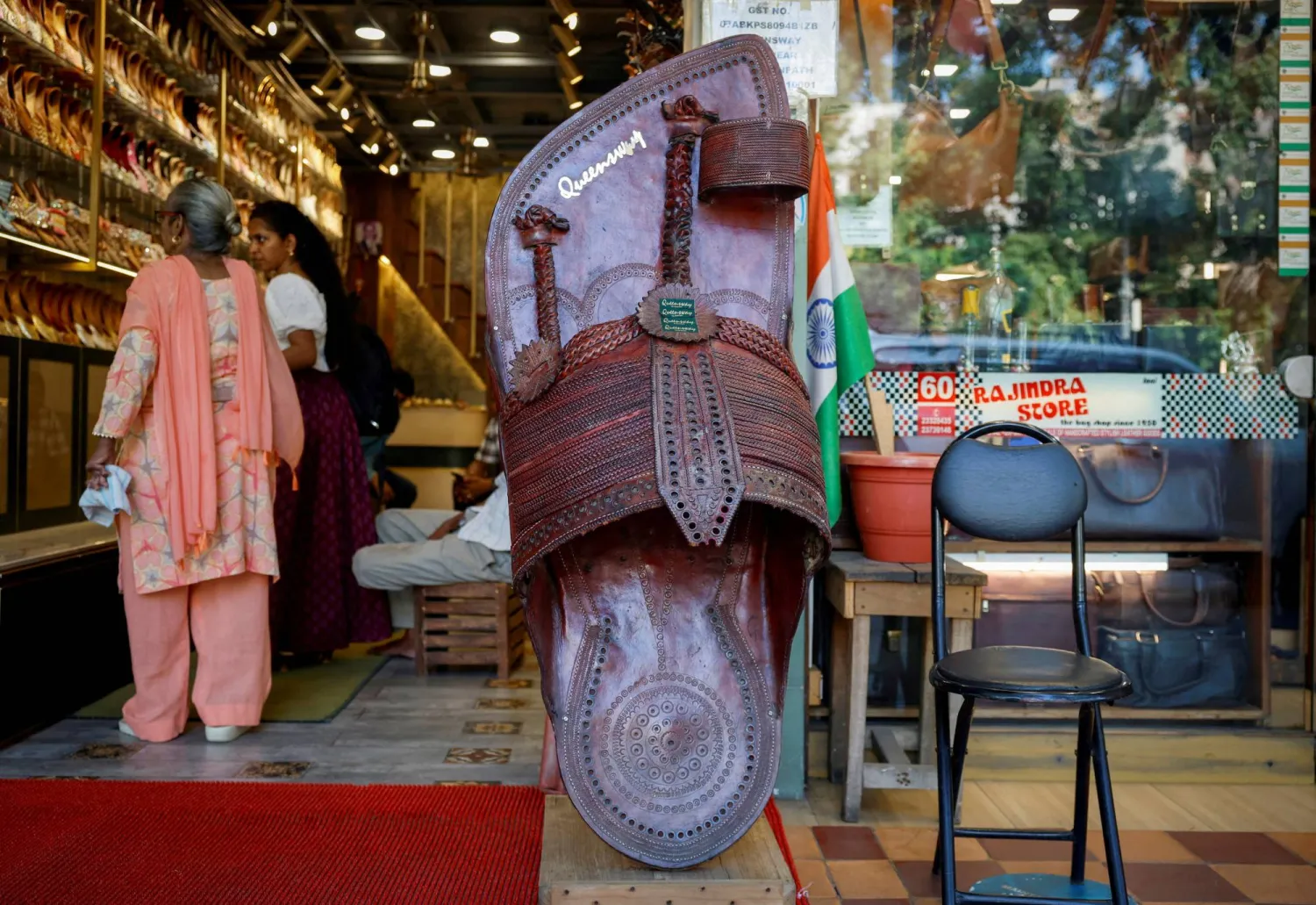

Prada will make a limited-edition collection of sandals in India inspired by the country's traditional footwear, selling each pair at around 800 euros ($930), Prada senior executive Lorenzo Bertelli told Reuters, turning a backlash over cultural appropriation into a collaboration with Indian artisans.
The Italian luxury group plans to make 2,000 pairs of the sandals in the regions of Maharashtra and Karnataka under a deal with two state-backed bodies, blending local Indian craftsmanship with Italian technology and know-how.
"We'll mix the original manufacturer's standard capabilities with our manufacturing techniques", Bertelli, who is chief marketing officer and head of corporate social responsibility, told Reuters in an interview.
The collection will go on sale in February 2026 across 40 Prada stores worldwide and online, the company said. Prada faced criticism six months ago after showing sandals resembling 12th-century Indian footwear, known as Kolhapuri chappals, at a Milan show.
Photos went viral, prompting outrage from Indian artisans and politicians. Prada later admitted its design drew from ancient Indian styles and began talks with artisan groups for collaboration.
It has now signed an agreement with Sant Rohidas Leather Industries and Charmakar Development Corporation (LIDCOM) and Dr Babu Jagjivan Ram Leather Industries Development Corporation (LIDKAR), which promote India’s leather heritage.
"We want to be a multiplier of awareness for these chappals," said Bertelli, who is the eldest son of Prada founders Miuccia Prada and Patrizio Bertelli.
A three-year partnership, whose details are still being finalized, will be set up to train local artisans. The initiative will include training programs in India and opportunities to spend short periods at Prada’s Academy in Italy.
Chappals originated in Maharashtra and Karnataka and are handcrafted by people from marginalized communities. Artisans hope the collaboration will raise incomes, attract younger generations to the trade and preserve heritage threatened by cheap imitations and declining demand.
"Once Prada endorses this craft as a luxury product, definitely the domino effect will work and result in increasing demand for the craft," said Prerna Deshbhratar, LIDCOM managing director.
Bertelli said the project and training program would cost "several million euros", adding that artisans would be fairly remunerated.