


Clothing Rental Services Promise a Sustainable Alternative to Fast Fashion. Experts Say It Depends

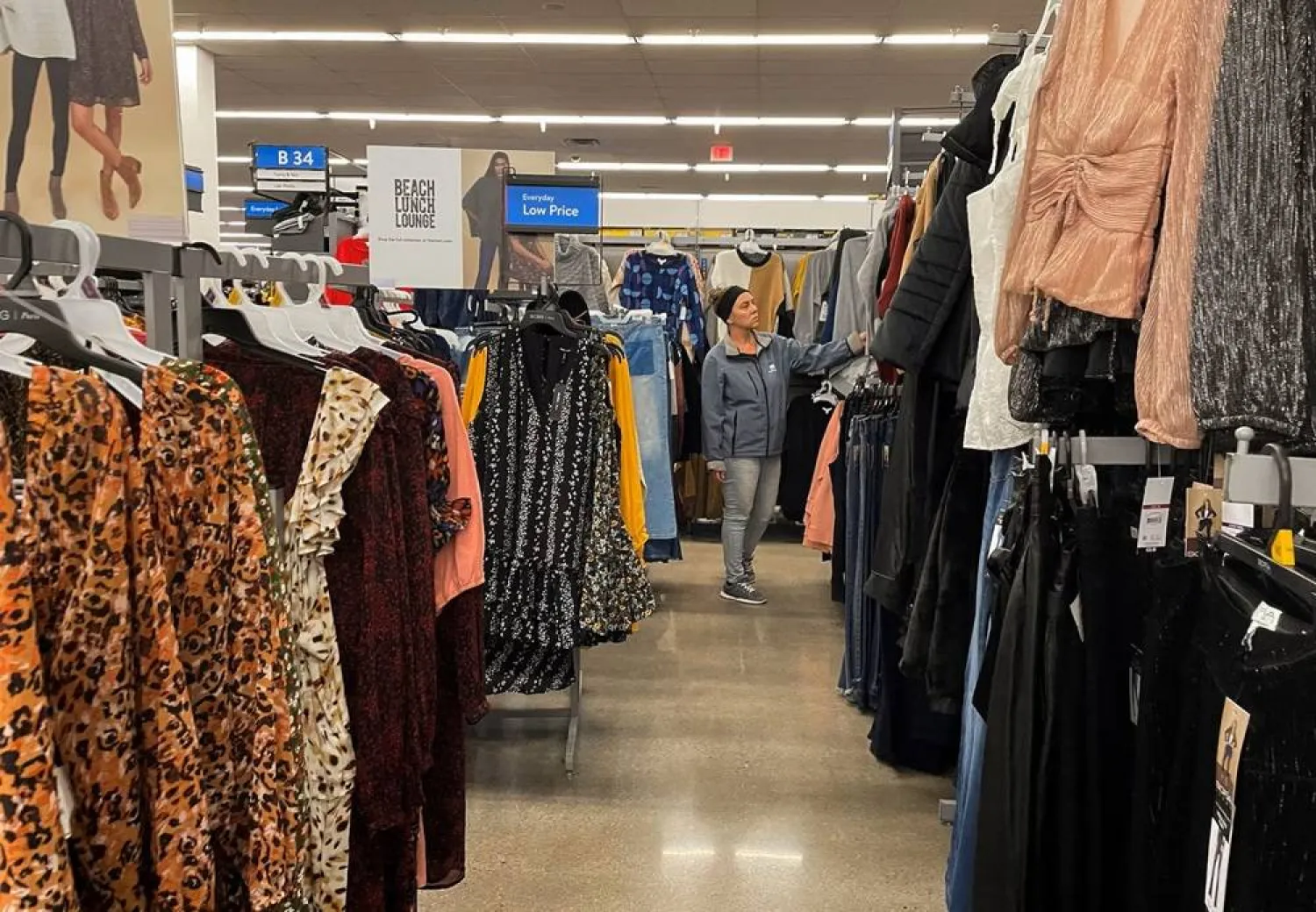
A shopper browses for clothing at a Walmart store in Flagstaff, Arizona, US, October 19, 2022. (Reuters)
TT

Clothing Rental Services Promise a Sustainable Alternative to Fast Fashion. Experts Say It Depends

A shopper browses for clothing at a Walmart store in Flagstaff, Arizona, US, October 19, 2022. (Reuters)

For weddings, vacations or other special occasions, more consumers are turning to clothing rental services instead of buying something new.

These subscription-based services, often marketed as a sustainable alternative to fast fashion, ship straight to customers everything from everyday and workwear to dresses, handbags and formalwear. Then, the items are returned for someone else to use.

“I haven’t bought anything for a big occasion since 2019,” said Sasha Eck, a user of clothing rental services.

Along with giving her continuous and affordable access to newer, trendier clothes, she said renting formalwear made more sense than spending the equivalent of a month's rent on a dress she would only wear once. A recent survey from ThredUp suggests others face the same predicament, with the resale platform finding 87% of wedding guests said they had purchased at least one outfit they wore only once.

Clothing rental services appear to be an environmentally ethical alternative: One garment can be worn by multiple people instead of being tethered to a single closet. But fashion and logistics experts say the reality of rental subscriptions is more complicated, especially once shipping, returns and consumer habits are factored in.

The promise (and problem) of rental fashion

Kate Fletcher, a professor of sustainability, design and fashion systems at Manchester Metropolitan University, said rental services can sometimes encourage the same mindset that drives fast fashion.

“In theory, the embodied resources within that garment get a chance to be worked harder by having that many more people wear it. And so that’s the sort of compelling argument of it,” she said.

But Fletcher said many of those environmental benefits can be undermined by repeated shipping, returns and cleaning.

Aja Barber, a sustainability consultant and writer, said people often overlook the footprint of those processes.

“When you think about rental, you don’t think about the packaging that comes every time you get something from rental. You don’t think about the carbon footprint of shipping the item to you. And you certainly don’t think about the carbon footprint of dry cleaning,” said Barber.

Still, both experts said rental services can have advantages in certain situations.

“If you are someone who occasionally has to wear occasion-wear and you don’t want to buy a dress that you’re going to wear just once, I think it can be really impactful,” said Barber.

Fletcher pointed to older, more localized rental models, like with suit or gown rentals, where customers visited a shop, were fitted in person and later returned the item. She said those systems often had a very different environmental profile than modern, app-based rental services that rely on repeated shipping.

Why shipping matters

The rise of online shopping has heightened the environmental affect of “last mile delivery" — the final stage of transporting a package from a fulfillment center to a customer’s home. Transportation is already one of the largest contributors to greenhouse gas emissions, said Johanna Amaya, assistant professor of supply chain management at Pennsylvania State University.

“The more deliveries going to our homes, the more delivery that goes to our preferred location, the more that impact on the environment,” said Amaya.

Rental services can also create an added logistical challenge because the process involves two trips — one to deliver the clothing and another to return it.

Amaya said fast shipping can also make delivery systems less efficient because companies have less time to consolidate packages into fuller routes.

“The longer they can wait to consolidate more orders and use the capacity of the delivery vehicles, the better,” said Amaya.

She added that returning items to centralized locations, like parcel lockers or post offices, may be less environmentally impactful than home pickup services.

So what should consumers do?

Experts say renting can still be a better option in some situations, particularly for special occasion outfits that may otherwise only be worn once. But they also said consumers should think carefully about how often they are ordering, shipping and returning clothing.

Fletcher encouraged people to “look within a wardrobe and yourself before you look without and try and get a new piece.”

Amaya said consumers can reduce the environmental impact by avoiding rush shipping and choosing consolidated or pickup delivery options when possible.

And the broader sustainability challenge in fashion cannot be solved by a single service or product alone, Fletcher said.

For consumers trying to shop more sustainably overall, experts said some of the simple options may still be the most effective, like re-wearing clothing, repairing items, swapping with friends, buying secondhand or donating pieces so they continue to be used.

“The best thing we can do is engage with fashion as a practice. So, a lived experience of what it is to be dressed — full of capabilities of who I can be in the world — and not as something to buy,” Fletcher said. “Fashion as shopping, that sort of idea of it, is something that industry has encouraged us to believe is the only way of engaging with fashion. And fundamentally, that’s only going to lead to more climate impacts.”




Hugo Boss Shares Jump after Frasers' $2.3 Billion Takeover Bid

FILE PHOTO: Men's shoes are on display at the Boss store in London, Britain, May 30, 2024. REUTERS/Chris J. Ratcliffe/File Photo
TT

Hugo Boss Shares Jump after Frasers' $2.3 Billion Takeover Bid

FILE PHOTO: Men's shoes are on display at the Boss store in London, Britain, May 30, 2024. REUTERS/Chris J. Ratcliffe/File Photo

Shares in Hugo Boss rose about 7% on Thursday after Britain’s Frasers Group launched a $2.3 billion takeover offer for the German fashion brand.

Frasers, already the largest shareholder of Hugo Boss with a stake of just over 26%, is offering €38 per share in cash for the remaining shares, a 4.3% premium to Wednesday’s close, Reuters reported.

Hugo Boss said late on Wednesday the approach was not coordinated ⁠with the company ⁠and that its board would review the offer, which values the stake not yet owned by Frasers at about €1.98 billion ($2.3 billion).

The deal would bring Hugo Boss into the retail empire controlled ⁠by British billionaire Mike Ashley, whose Frasers Group owns Sports Direct and House of Fraser and holds stakes in Asos, Debenhams and Currys.

J.P. Morgan said the bid likely sets a near-term floor for the shares but flagged limited scope for further upside, adding it did not expect a rival bidder to emerge.

Hugo Boss, ⁠whose ⁠shares are about half their level of three years ago, has been struggling with weaker sales and is pursuing a turnaround strategy focused on store revamps, a streamlined product range and expanding women's wear.

By 0713 GMT, Hugo Boss shares were up 6.2% at €38.7, above Frasers' offer price, taking their year-to-date gains to 7.2%. Frasers shares fell 2.5%.


Primark Names Lucy Slinger as Finance Chief Ahead of AB Foods Split


A Primark store is pictured in the Bullring shopping center in Birmingham, Britain, November 4, 2020. REUTERS/Andrew Boyers
TT

Primark Names Lucy Slinger as Finance Chief Ahead of AB Foods Split


A Primark store is pictured in the Bullring shopping center in Birmingham, Britain, November 4, 2020. REUTERS/Andrew Boyers

Fashion retailer Primark named Lucy Slinger as its chief financial officer on Thursday, strengthening its leadership team ahead of its split from Associated British Foods.

Slinger joins Primark from IKEA franchisee ⁠Ingka Group, where she ⁠has served as deputy CFO.

Prior to Ingka Group, she spent over two ⁠decades at Shell in a range of senior finance leadership roles.

Slinger's appointment follows that of Eoin Tonge as Primark chief executive and Filip Ekvall as chief commercial officer in March, Reuters reported.

⁠AB ⁠Foods said in April it would spin off Primark from its food businesses, telling investors that it will be better positioned to grow on its own.


NASA to Wear Prada as Luxury Group Pushes Into Space Industry

The inner-layer liquid cooling and ventilation garment designed by Prada and Axiom Space is unveiled at a press event in New York City, US, June 7, 2026. REUTERS/Heather Khalifa
TT

NASA to Wear Prada as Luxury Group Pushes Into Space Industry

The inner-layer liquid cooling and ventilation garment designed by Prada and Axiom Space is unveiled at a press event in New York City, US, June 7, 2026. REUTERS/Heather Khalifa

Italian fashion house Prada unveiled on Sunday the inner-layer garment set to be worn by NASA astronauts heading into space, underscoring the brand's push to be the first major luxury player to make inroads in the space industry.

The body-hugging suit, created in collaboration with Houston-based space infrastructure developer Axiom Space, features ventilation tubes knitted into the garment.

"We have really a broad spectrum of capability and know-how," Lorenzo Bertelli, Prada's chief marketing officer, said at an event at Prada's Manhattan store, sitting beside a mannequin donning the new Liquid Cooling and Ventilation Garment.

Expertise for developing space exploration products "can come from lots of seemingly unrelated industries," Reuters quoted Jonathan Cirtain, CEO of Axiom Space, as saying.

The new product follows Prada's splashy foray into space fashion in 2024 with the ⁠unveiling of a ⁠spacesuit that is expected to be used for NASA's Artemis 3 Earth orbit, set to launch in 2027, and the anticipated Artemis 4 moon landing in 2028. Luxury brands have long drawn inspiration from space travel.

But Prada has gone "beyond inspiration into an actual partnership" as the space exploration and tourism industries develop, said Thomai Serdari, a luxury brand strategist and marketing professor at New York University's Stern ⁠School of Business. Serdari pointed to two factors motivating Prada's interest in the space industry: to gain access to affluent consumers who are contemplating space travel, and to align the brand with avant-garde thought.

Companies from Jeff Bezos' Blue Origin to Elon Musk's SpaceX have leaned into space tourism for the wealthy.

The resumption of space exploration and human travel to the moon is "bound to attract a lot of eyeballs," said Luca Solca, global head of luxury goods at Bernstein. Luxury brands need to stay relevant and visible, he said. Prada's push comes against a backdrop of a struggling luxury goods sector.

After two years of contraction, the ⁠industry was showing signs ⁠of stabilization until the Iran war began at the end of February, disrupting travel and denting luxury spending far beyond the Middle East.

WILL LUXURY PEERS FOLLOW? Other fashion and apparel companies have jumped on the space bandwagon. Under Armour has partnered with spaceflight company Virgin Galactic to create space apparel, while Columbia Sportswear has worked with space exploration company Intuitive Machines on space fabric technology.

But it remains unclear whether other luxury players might follow Prada's lead. "In luxury, it is important to be the first to do something, to be a trend-setter," Serdari said, noting that LVMH's Louis Vuitton, Hermès and Chanel are all interested in space travel but that they would likely find new ways to make inroads.

"You will never see the upper crust of the luxury sector copying each other," she added.