Nike Plans More Job Cuts to Boost Sputtering Turnaround, Forecasts Steep Revenue Drop

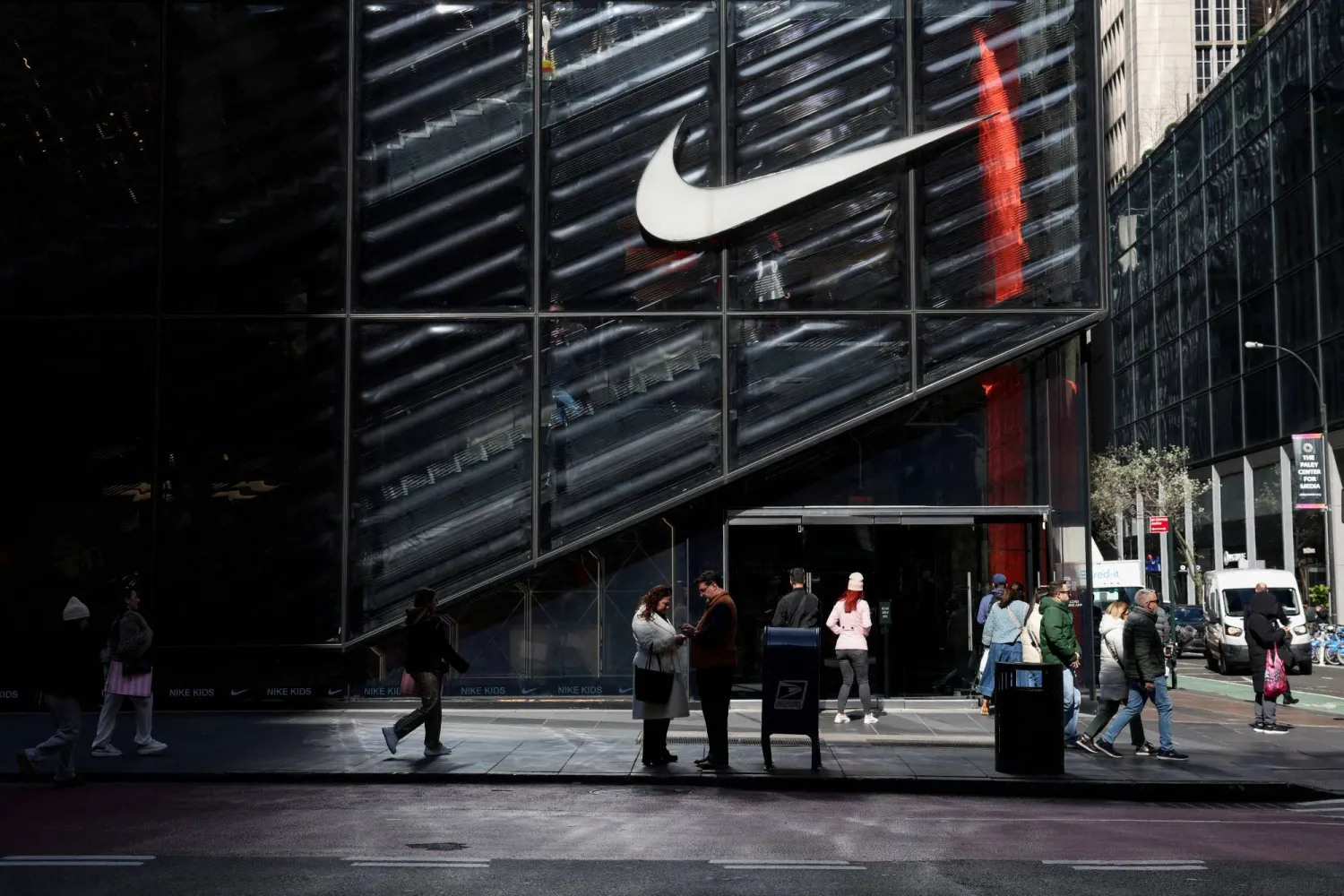
People walk past a Nike store in New York City, US, April 2, 2025. (Reuters)
TT

Nike Plans More Job Cuts to Boost Sputtering Turnaround, Forecasts Steep Revenue Drop

People walk past a Nike store in New York City, US, April 2, 2025. (Reuters)

Nike is deepening its restructuring under CEO Elliott Hill as its woes in China intensify, announcing a plan to cut more jobs and shake up its global business divisions after the sportswear giant projected a surprisingly steep drop in full-year revenue.

The tepid forecast on Thursday underscored that Nike's challenges will likely persist for at least several more quarters — especially in China, where sales tumbled 26% on a constant-currency basis in the first quarter — adding to investor unease about the pace of Hill's turnaround. Its shares fell 8.5% in extended trading.

The company has been working to revive growth during the first two years of Hill's tenure by refocusing on key sports such as running and by rebuilding relationships with wholesale retailers. But analysts say its worries have in large part stemmed from a failure to release enough new, compelling products, leading to an uptick in promotions and discounts.

"Our Nike performance business is not yet large enough to offset the pressure we're seeing in Nike sportswear, Jordan brand, and Greater ‌China," Hill said on ‌a post-earnings call. Reviving those weak areas of Nike's business "will take time," he said, pointing to a ‌deliberate ⁠reduction in the ⁠volume of Jordan retro launches.

The company, which also missed analysts' expectations for first-quarter revenue, unveiled changes to its operating model, including job cuts and a move to three geographic regions — Americas, Asia Pacific and Greater China, and EMEA — instead of four. It plans to open a new campus in India "with strong capabilities and access to talent."

Nike said the company does not yet know the number of roles that will be cut under the restructuring. It will begin notifying employees in 2027.

The program, building on previous rounds of layoffs, including one announced earlier this year, is expected to deliver about $2.5 billion in savings through fiscal 2031, with the majority set to be realized in fiscal years 2029 and 2030.

Nike expects its revenue to decline in the ⁠high single digit in fiscal 2027. Analysts, on average, estimate full-year revenue to drop about 2%, according ‌to data compiled by LSEG.

"There is nothing inherently wrong with the (restructuring) plans, but they do ‌suggest that Nike's current model is not really fit for purpose, which in turn raises the question of why these changes were not made sooner," ‌said Neil Saunders, managing director of GlobalData.

CHINA SALES PLUMMET, AGAIN

China, historically a profit-driver for Nike, has shown particular weakness in recent quarters ‌as international rivals and domestic sportswear groups gain traction. Investors remain focused on any signs of improvement, which analysts say will hinge in large part on local product innovation.

Sales in China have fallen for nine consecutive quarters, with the slowdown accelerating in the reported period. The region accounts for about 15% of Nike's annual revenue and is its third-largest market after North America and Europe, the Middle East and Africa.

The company recently said that starting in January, it will pull ‌online sales rights from some of its biggest retail partners in China — a high-stakes bet that tighter control over pricing and distribution can revive its fortunes.

But the digital cleanup will take "multiple seasons," ⁠Hill warned on Thursday, adding that near-term ⁠revenue and profitability in China will take a hit.

Analysts have also questioned whether the abrupt measures, though likely to help Nike address rampant discounting, will convince Chinese consumers that they want what Nike is selling.

"Nike does not have a channel problem in China, but rather a product problem," BNP Paribas senior analyst Laurent Vasilescu has said in a research note, adding that he was surprised by the company's short timeframe to shut down online wholesale in China.

Sales in North America, Nike's biggest region, rose 2% on a constant-currency basis, in one sign of relative strength in the first quarter. Nike's performance business, specifically, contributed to the growth, benefiting from the World Cup, Hill said.

Adding to the company's challenges, French soccer star Kylian Mbappe ended a two-decade-long partnership with Nike in September and joined Swiss-based rival On.

Nike's quarterly sales fell about 4% to $11.21 billion in the first quarter, compared with analysts' average estimate of $11.32 billion.

Its gross margin, however, rose 60 basis points to 42.8% in the quarter ended August 31, helped by lower warehousing and logistics costs.

Hill said Nike would update its targets through the fiscal year, beginning in November, as it works through the restructuring plan.

The company had withdrawn annual forecasts in October 2024 to provide then new-CEO Hill with some flexibility to assess its business.

S&P Dow Jones Indices removed Nike from the S&P 100 in September as part of a quarterly rebalancing after 18 years in the index of blue-chip companies.
Ralph Lauren Ties Executive Payouts to AI in Sign of Retail's Shifting Priorities

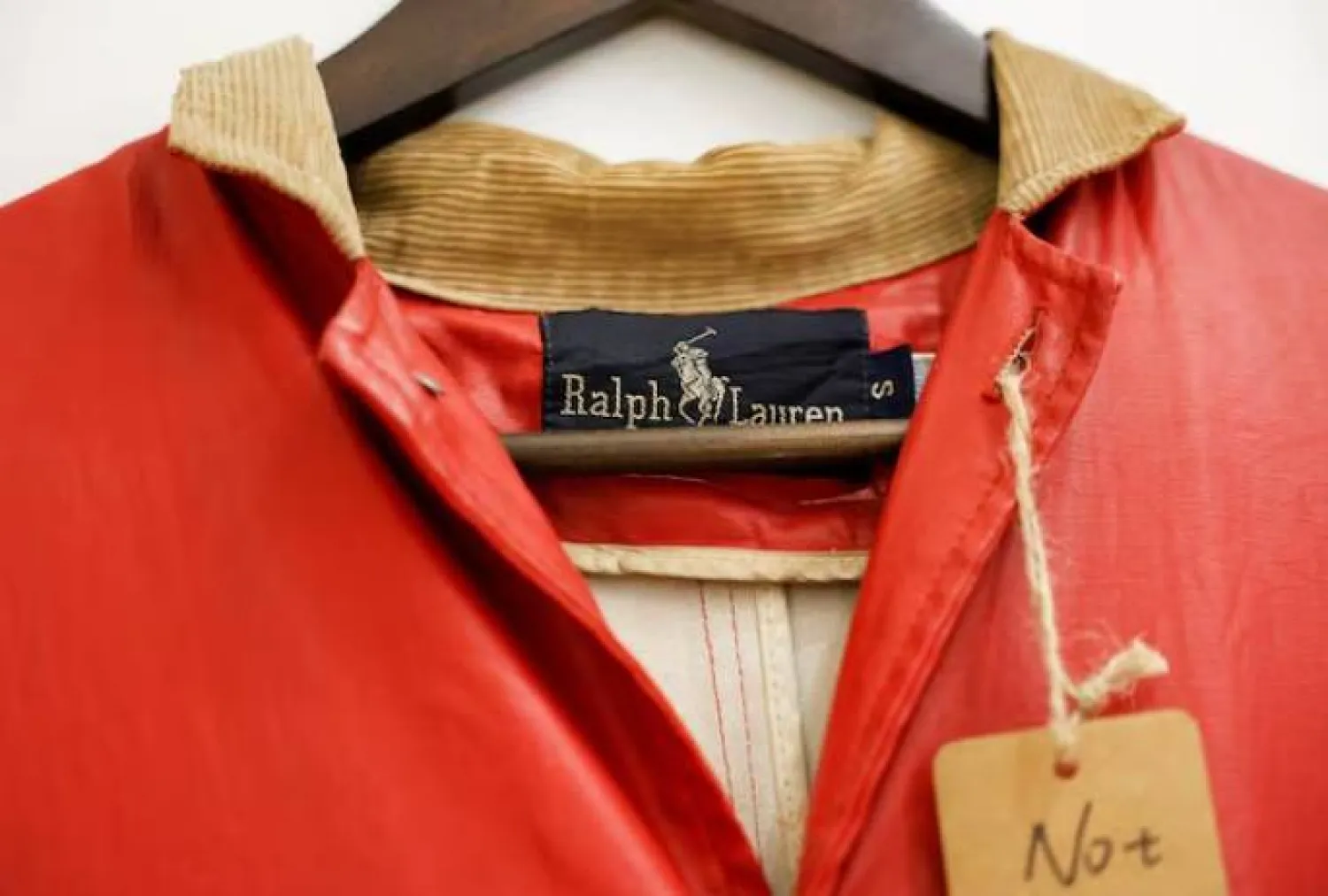
A Polo Ralph Lauren vintage logo on a jacket tag at Neng Vintage, a store specializing in Polo Ralph Lauren vintage clothing in Shanghai, China, June 23, 2026. REUTERS/Go Nakamura
TT

Ralph Lauren Ties Executive Payouts to AI in Sign of Retail's Shifting Priorities

A Polo Ralph Lauren vintage logo on a jacket tag at Neng Vintage, a store specializing in Polo Ralph Lauren vintage clothing in Shanghai, China, June 23, 2026. REUTERS/Go Nakamura

Ralph Lauren, like many companies in the retail space, had until last year tied part of its executives’ compensation to a warm-and-cuddly metric known as “citizenship and sustainability.” 

But in a sign of the times, the fashion label has replaced the sustainability measure with one linking a portion of its top leaders’ annual payout to “AI metrics.” 

The company's previously unreported move eliminates sustainability targets — a hallmark of the so-called ESG movement, which urged companies to find performance measures tied to environmental and social well-being — from its short-term incentive plan. Those targets had been in place for four years. 

Instead, AI goals were added to a series of other factors, such as sales growth and operational costs, as a basis to adjust annual incentive payouts for executives. Buried in a 131-page disclosure, the shift signals an emerging push in the retail sector to hold corporate leaders accountable for AI adoption. 

A Ralph Lauren spokesperson said the AI ‌target reinforced "opportunities for ‌leveraging AI to enhance our work." 

The company's prior sustainability metrics, she added, contributed to meaningful ‌progress ⁠on its goals. "Our ⁠work in this area has matured and is now operationalized throughout our business," she said. 

Ralph Lauren is among the few publicly listed retailers that have explicitly incorporated AI into incentive plans, joining companies beyond the retail sector including Salesforce and Textron, which also replaced its ESG metric. A handful of consumer companies, including PepsiCo, have cited advancing an "AI agenda" this year as a factor in setting annual payouts for specific executives. 

Compensation advisors say more of Ralph Lauren's peers might eventually follow suit as investors seek returns on AI spending and as consumer companies turn to the technology to boost margins. 

"I'd call it an emerging practice," said Cory Morrow, a partner at Korn Ferry who leads the firm's consumer ⁠and retail practice for executive pay. 

"The hard part, when you're putting something like AI in ‌a bonus plan, is quantifying what are you really measuring," he said. "It's still relatively ‌new at this point, so companies are just getting a baseline on anything that's measurable." 

A retailer's annual incentive plan is a "messaging device" to signal ‌what's important to the company, Morrow said, adding that financial metrics like sales growth and profitability will continue to form the ‌bulk of most bonus plans. 

RISE IN AI-RELATED GOALS 

About 12% of companies in the S&P 500 index disclosed AI-related goals in their executive incentive plans this year, up from 5% of companies in 2024, according to data from the Conference Board and ESGUAGE shared with Reuters. 

In its fiscal year 2026, which ran through this March, Ralph Lauren's short-term incentive plan was for the first time "tied to critical business priorities that focus our ‌executives on AI literacy and enablement," the company said in a proxy statement filed with the US Securities and Exchange Commission in June. 

The premium apparel company has reported strong growth in recent ⁠quarters as young shoppers in ⁠Asia and North America flock to its high-end collections. It said in the June filing that it saw "strong performance of our AI metrics" in fiscal 2026, which contributed to maximum payouts for top executives. 

Retailers from apparel brands to grocery chains are increasingly using AI tools for inventory and pricing decisions, while also creating consumer-facing AI shopping assistants. The focus on AI is changing C-suite charts: Ralph Lauren added AI to its chief digital officer's title last year, and big-box chain Target appointed its first-ever chief AI officer in August. 

EARLY STAGES 

Firms in the consumer sector — which have reported sharp declines in diversity and emission-reduction metrics over the past two years — still lag in incorporating AI metrics into bonus plans, compared to sectors such as communications and finance, the Conference Board data shows. 

That makes Ralph Lauren's decision "notable" among its peers in the retail and consumer goods industry, said Matteo Tonello, the head of data benchmarking and analytics at the Conference Board. He cautioned, however, that it does not appear to indicate a sector-wide shift at this stage. 

Only 2% of public companies across sectors have incorporated AI into executive incentive structures, according to a review by compensation advisory firm Pearl Meyer of 2,500 proxy statements filed this year. 

Ralph Lauren is "probably ahead of the curve in terms of what they are doing," said Patrick Haggerty, a managing director at Pearl Meyer. 


Boisterous Fashion Week Barnstorms 'Sleepy' Nigerian Capital

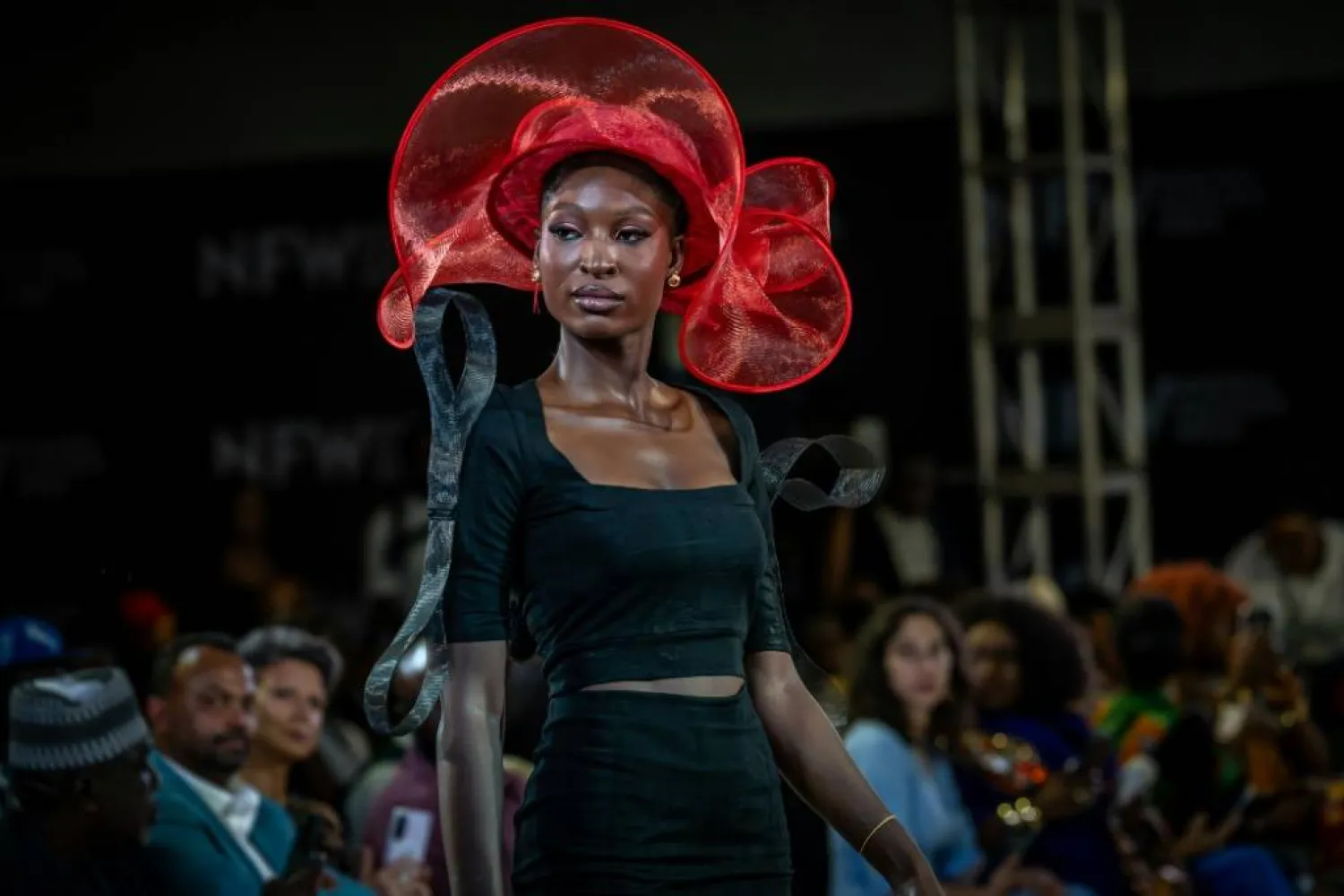
The Nigerian capital Abuja, which hosted Nigeria Fashion Week for the first time in 2026, has a small but developing arts scene — Light Oriye Tamunotonye / AFP
TT

Boisterous Fashion Week Barnstorms 'Sleepy' Nigerian Capital

The Nigerian capital Abuja, which hosted Nigeria Fashion Week for the first time in 2026, has a small but developing arts scene — Light Oriye Tamunotonye / AFP

Nigerian models donned outfits of seemingly impossible amounts of fabric folded and molded into massive silhouettes, or overlapping in shingled, feather-like patterns.

The colorful, detailed textiles evoked Carnival -- both Nigeria's own, in the southeastern city of Calabar, or that of Rio de Janeiro fame -- but were in fact splashing down a runway in Abuja, better known for being the sleepy seat of government than for avant-garde couture.

Nigeria Fashion Week, which wrapped up last Sunday, decamped from Lagos this year, trading the mega-city of more than 20 million for the centrally planned administrative center, which nonetheless has developed its own, smaller creative scene.

"Abuja is slow, slow in every way. People are very laid back," Lexy Mojo-Eyes, the dapper organizer of the fashion week, who cut his teeth in Lagos, told AFP.

"We want to change the dynamics, we want to build Abuja as a fashion city."

- A slowly changing city -

Nigeria officially moved its capital from thronging, crowded Lagos in 1991. But even in 2026, Abuja can still look half-built, its pockmarked downtown home to modern office buildings alongside empty lots and even farms that pre-date its founding.

It doesn't have Lagos's famous, and infamous, raucousness -- but neither does it have a riposte to the Lagos film industry, known as Nollywood, or its major corporate headquarters and roster of Afrobeats stars.

As Abuja has slowly filled in over the years, it has shed some of its sterile feel, hosting a photography festival, an international film festival and a burgeoning literary scene.

Part of the reason the show moved to Abuja was to increase dialogue between industry and government, organisers said.

"Government has to be that enabling environment," including by reforming tourism and intellectual property law, culture minister Hannatu Musa Musawa told AFP, wearing a metallic silver, pink and blue dress as she sat in the front row at a Friday runway show.

Libyan designer Rabia Ben Barka, whose models showed off similarly shimmering dresses, told AFP she found Abuja -- on her first trip to Nigeria -- "so clean" and organised.

"Anyone who comes by, they greet you with 'Good morning,'" said Ben Barka, considered the doyen of Libyan fashion and who once counted Muammar Gaddafi's wife among her clients.

Some of her boxy silhouettes evoked retro women's shoulder pads -- and then, down the runway, strutted a man in a metallic silver-and-black pinstripe suit, complete with heeled leather shoes: souped-up businesswear for a capital city shedding its stuffy image.

- Cost of living -

Abuja is also drawing longtime Lagos players, including Chinwe Ezenwa, a handbag designer who opened a second factory in the capital in 2021.

"It's a bit of a sleepy town," Ezenwa, the CEO of Le Look, told AFP. "But it's picking up."

Lagos, for its part, still retains its own, separate fashion week.

And whether Abuja can support the workers needed to run a creative sector -- designers, fashion students and entrepreneurs -- remains to be seen.

Many residents are already forced beyond the suburbs by brutal housing costs, and the government has come under fire for razing green areas, farms and "gardens" -- cheap, open-air restaurants situated in parks -- in favour of luxury development.

Despite the change in venue, some things are universal in Nigeria, whose creaking grid is as infamous as Lagos traffic: as the models prepared backstage Friday, the power briefly cut out.

As the lights flickered back on, baptism in blackout over, one attendee quipped that the show was now, officially, "very authentic".


LVMH Sales Edge Higher Despite Fashion Slide

FILE PHOTO: A Louis Vuitton logo is seen outside a store on the Champs-Elysees avenue in Paris, France, August 3, 2025. REUTERS/Stephanie Lecocq/File Photo
TT

LVMH Sales Edge Higher Despite Fashion Slide

FILE PHOTO: A Louis Vuitton logo is seen outside a store on the Champs-Elysees avenue in Paris, France, August 3, 2025. REUTERS/Stephanie Lecocq/File Photo

LVMH, the world's leading luxury group, said Monday its sales edged higher in the third quarter despite a slowdown in China hitting its fashion and leather goods segment.

The group, whose brands include Louis Vuitton, Dior, Celine and drinks maker Hennessy, took in 18.5 billion euros ($20.6 billion) in the three months to the end of September, beating the consensus of analysts polled by Factset financial data firm.

The 1.2 percent sales gain beat the marginal 0.1 percent increase registered in the second quarter. The group's sales slumped six percent in the first three months of the year.

"Backed by its diverse range of businesses, LVMH remained very solid in an uncertain geopolitical and economic environment," AFP quoted the company as saying in a statement.

But the fashion and leather goods segment saw sales drop five percent excluding currency effects and changes to the business as it was "affected in the third quarter by the slowdown in demand in China."

Louis Vuitton saw its public image take a hit in China after pursuing a local tea company for copying its logo. While it won the case, it provoked a wave of indignation on social media and a call to boycott the brand.

The drop for fashion and leather goods follows the segment posting its first sales gain in two years in the second quarter.

But LVMH's selective retailing division, which includes the Sephora perfume and cosmetics retail chain, posted an eight percent sales increase, while the watches and jewelry and wines and spirits segments both managed six percent gains.

LVMH's share price has dropped 40 percent since the start of the year, with the group losing its place as the leading company on the Paris CAC 40 index in terms of capitalization to L'Oreal.