Ralph Lauren Ties Executive Payouts to AI in Sign of Retail's Shifting Priorities

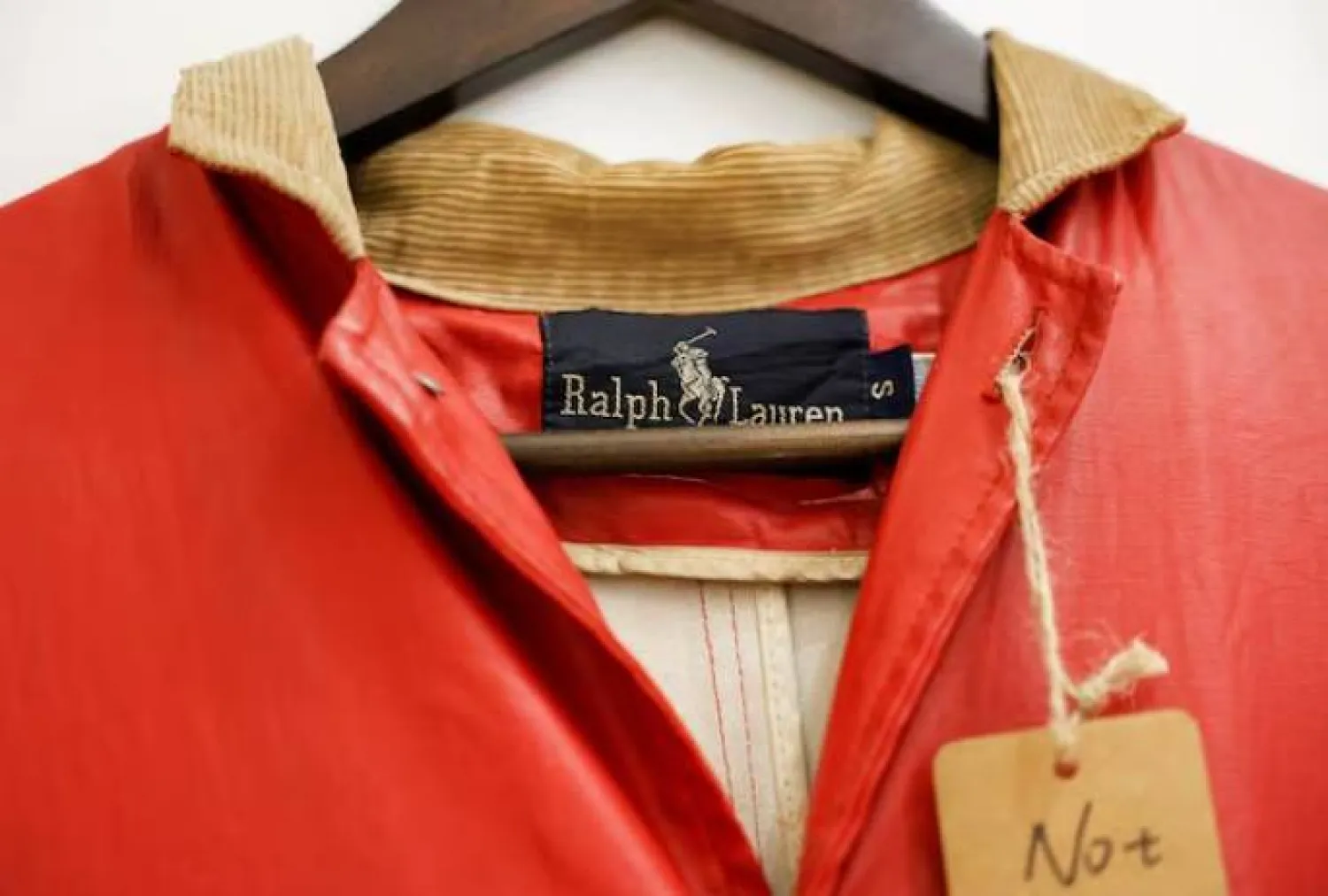
A Polo Ralph Lauren vintage logo on a jacket tag at Neng Vintage, a store specializing in Polo Ralph Lauren vintage clothing in Shanghai, China, June 23, 2026. REUTERS/Go Nakamura
TT

Ralph Lauren Ties Executive Payouts to AI in Sign of Retail's Shifting Priorities

A Polo Ralph Lauren vintage logo on a jacket tag at Neng Vintage, a store specializing in Polo Ralph Lauren vintage clothing in Shanghai, China, June 23, 2026. REUTERS/Go Nakamura

Ralph Lauren, like many companies in the retail space, had until last year tied part of its executives’ compensation to a warm-and-cuddly metric known as “citizenship and sustainability.” 

But in a sign of the times, the fashion label has replaced the sustainability measure with one linking a portion of its top leaders’ annual payout to “AI metrics.” 

The company's previously unreported move eliminates sustainability targets — a hallmark of the so-called ESG movement, which urged companies to find performance measures tied to environmental and social well-being — from its short-term incentive plan. Those targets had been in place for four years. 

Instead, AI goals were added to a series of other factors, such as sales growth and operational costs, as a basis to adjust annual incentive payouts for executives. Buried in a 131-page disclosure, the shift signals an emerging push in the retail sector to hold corporate leaders accountable for AI adoption. 

A Ralph Lauren spokesperson said the AI ‌target reinforced "opportunities for ‌leveraging AI to enhance our work." 

The company's prior sustainability metrics, she added, contributed to meaningful ‌progress ⁠on its goals. "Our ⁠work in this area has matured and is now operationalized throughout our business," she said. 

Ralph Lauren is among the few publicly listed retailers that have explicitly incorporated AI into incentive plans, joining companies beyond the retail sector including Salesforce and Textron, which also replaced its ESG metric. A handful of consumer companies, including PepsiCo, have cited advancing an "AI agenda" this year as a factor in setting annual payouts for specific executives. 

Compensation advisors say more of Ralph Lauren's peers might eventually follow suit as investors seek returns on AI spending and as consumer companies turn to the technology to boost margins. 

"I'd call it an emerging practice," said Cory Morrow, a partner at Korn Ferry who leads the firm's consumer ⁠and retail practice for executive pay. 

"The hard part, when you're putting something like AI in ‌a bonus plan, is quantifying what are you really measuring," he said. "It's still relatively ‌new at this point, so companies are just getting a baseline on anything that's measurable." 

A retailer's annual incentive plan is a "messaging device" to signal ‌what's important to the company, Morrow said, adding that financial metrics like sales growth and profitability will continue to form the ‌bulk of most bonus plans. 

RISE IN AI-RELATED GOALS 

About 12% of companies in the S&P 500 index disclosed AI-related goals in their executive incentive plans this year, up from 5% of companies in 2024, according to data from the Conference Board and ESGUAGE shared with Reuters. 

In its fiscal year 2026, which ran through this March, Ralph Lauren's short-term incentive plan was for the first time "tied to critical business priorities that focus our ‌executives on AI literacy and enablement," the company said in a proxy statement filed with the US Securities and Exchange Commission in June. 

The premium apparel company has reported strong growth in recent ⁠quarters as young shoppers in ⁠Asia and North America flock to its high-end collections. It said in the June filing that it saw "strong performance of our AI metrics" in fiscal 2026, which contributed to maximum payouts for top executives. 

Retailers from apparel brands to grocery chains are increasingly using AI tools for inventory and pricing decisions, while also creating consumer-facing AI shopping assistants. The focus on AI is changing C-suite charts: Ralph Lauren added AI to its chief digital officer's title last year, and big-box chain Target appointed its first-ever chief AI officer in August. 

EARLY STAGES 

Firms in the consumer sector — which have reported sharp declines in diversity and emission-reduction metrics over the past two years — still lag in incorporating AI metrics into bonus plans, compared to sectors such as communications and finance, the Conference Board data shows. 

That makes Ralph Lauren's decision "notable" among its peers in the retail and consumer goods industry, said Matteo Tonello, the head of data benchmarking and analytics at the Conference Board. He cautioned, however, that it does not appear to indicate a sector-wide shift at this stage. 

Only 2% of public companies across sectors have incorporated AI into executive incentive structures, according to a review by compensation advisory firm Pearl Meyer of 2,500 proxy statements filed this year. 

Ralph Lauren is "probably ahead of the curve in terms of what they are doing," said Patrick Haggerty, a managing director at Pearl Meyer. 


M&S Profit Rebounds from Cyberattack but Clothing Drags on Recovery

A shopper carries a Marks & Spencer shopping bag in London, Britain, January 2, 2025. (Reuters)
TT

M&S Profit Rebounds from Cyberattack but Clothing Drags on Recovery

A shopper carries a Marks & Spencer shopping bag in London, Britain, January 2, 2025. (Reuters)

British retailer Marks & Spencer said on Wednesday its first-half profit rebounded from last year's cyberattack-hit level, but was down on a two-year basis as strong trading in food failed to fully offset weakness in clothing.

The 142-year-old M&S, one of the biggest names on the UK high street, said its adjusted profit before ‌tax more than doubled ‌in the six months to September 26 ‌to £403.2 ⁠million ($542.4 million), on ⁠sales up 16.2% to £9.26 billion.

Analysts had on average forecast profit of £399 million.

Food sales increased 13.9% year-on-year, while sales in the fashion, home and beauty division, or FH&B, rose 17.5%.

But, while food profit was well ahead on a two-year basis, FH&B profit was nearly £93 million lower, reflecting a more challenging apparel market ⁠and a slower recovery from the cyberattack.

M&S said ‌fashion gained market share in ‌a declining market, despite "availability constraints".

CEO Stuart Machin said FH&B's results "fell short of their potential ‌and show there is a lot more to do."

"Although ‌we have much improved product, the end-to-end transformation is in the foothills," he said.

Analysts noted that this year's spring/summer clothing collections were ordered when many systems were down after the April 2025 hack.

M&S said market conditions ‌in FH&B "remain challenging", but said performance is expected to improve in the second half compared with the ⁠first, as ⁠availability has recovered, with a better balance between core and seasonal stock.

Shares in M&S were down 1% in early trading, paring 2026 gains to 24%.

M&S' food business was quick to recover from the cyberattack and is currently Britain's fastest-growing grocer, winning market share.

The group said its strategy of becoming "more of a shopping list (food) retailer" was working and its plan to double the size of its food business was on track.

M&S forecast full-year adjusted profit before tax in line with current market expectations. Analysts on average forecast £941 million.

"We enter the second half in a strong position, with a solid October under our belts," added Machin.


Jeweller Pandora Slightly Raises Outlook and Speeds up Launches

Pandora jewellery is displayed at its largest manufacturing unit, in Ho Chi Minh, Vietnam, October 1, 2026. (Reuters)
TT

Jeweller Pandora Slightly Raises Outlook and Speeds up Launches

Pandora jewellery is displayed at its largest manufacturing unit, in Ho Chi Minh, Vietnam, October 1, 2026. (Reuters)

Jewellery maker Pandora edged higher its near-term revenue and profitability targets on Wednesday, saying it expected a boost in demand from new collections and a shift to platinum-plated products.

Its Copenhagen-listed shares opened up 8% and by 0830 GMT were 6.7% higher, outperforming a flat pan-European STOXX index.

As it strives to keep ‌its brand ‌affordable, Pandora has accelerated launches and moved most ‌of ⁠its marketing online. ⁠It has also continued the transition announced in February to platinum-plated jewellery to limit the effect of high silver prices on the cost of solid silver bracelets.

"We are expanding into more designs, more styles, while we are also refreshing our traditional and heritage designs," Pandora Chief Executive Berta de Pablos-Barbier told Reuters.

PLATINUM-PLATED COMES TO NEW MARKETS

Silver prices ⁠have dropped from a January peak of $121 ‌per ounce to about $50 per ounce, ‌but remain higher than historic averages.

Platinum is more expensive than silver, but ‌Pandora uses a much smaller amount for plating over a metal ‌alloy core, making the end cost more predictable and easing pressure on margins.

Following a pilot for platinum-plated jewels in the Netherlands, Pandora said on Wednesday it would expand sales of the range into markets including the ‌US, Britain and Australia.

The pilot "confirmed that our initial assumptions about consumer acceptance were there," de Pablos-Barbier said.

MARKETING ⁠CUT HELPS ⁠PROFITABILITY

Pandora, whose charm bracelets start at $80, said it expects organic sales growth of between 2% and 3% in 2026, against guidance in August of 0% to 3%.

Its third-quarter organic revenue rose 6% to 6.69 billion crowns ($1 billion), beating a mean forecast of 6.58 billion in a poll of analysts provided by Pandora.

The company said a reduction in promotional activity helped its quarterly operating profit margins, which rose to 15.9%, beating analyst expectations for 13.1%.

It expects a full-year operating profit margin of 22.5% to 23%, against 22% to 23% previously, and a 2027 margin of 14% to 15% when including one-offs.


Retailer Zalando Launches AI Shopping Agent as Margins Squeezed

A person carries a shopping bag branded by Zalando in central Berlin, Germany, November 13, 2025. (Reuters)
TT

Retailer Zalando Launches AI Shopping Agent as Margins Squeezed

A person carries a shopping bag branded by Zalando in central Berlin, Germany, November 13, 2025. (Reuters)

Top European online fashion retailer Zalando on Tuesday launched its first AI shopping agent amid concerns that artificial intelligence could disrupt online retail, after reporting third-quarter gross margin below market expectations.

Shares in the German company fell 5% in early trading.

Zalando reported a gross profit margin of 38.7% in the quarter, missing expectations partly due to investments, analysts at Jefferies and JPMorgan said in notes to ‌clients.

The industry ‌is facing disruption from so-called agentic commerce, ‌in ⁠which autonomous AI ⁠agents execute the full purchase cycle for goods, from price comparison across multiple retailers to payment, on behalf of human shoppers.

"The stock could drift lower in the coming days given the lack of any incremental positives, in our view, and its current level, along with ongoing ⁠structural risk from agentic commerce development," JPMorgan said.

As ‌shoppers increasingly use AI ‌to compare prices, check product availability and get recommendations, retailers are racing ‌to adopt AI tools to remain competitive and ‌expand the range of products available on their platforms.

Zalando said it would launch Zalando Extended, a platform where users will buy products from other online shops ‌using AI agents on the Zalando app, with a pilot in collaboration with home retailer ⁠Westwing.

"Our ⁠shift to a platform business model is accelerating, with our partner business and retail media growing at a double-digit rate and B2B revenue up almost 28%," Zalando finance chief Anna Dimitrova said in a statement.

Zalando sells clothes, shoes and accessories from thousands of brands including Nike, Hugo Boss, and Coach.

It said its third-quarter revenues grew 5.1% year-on-year to €3.17 billion ($3.55 billion), above the €3.15 billion expected by analysts polled by LSEG. Gross merchandise value, a metric measuring the value of all goods sold, rose 7.5% to €4.54 billion.