


M&S Profit Rebounds from Cyberattack but Clothing Drags on Recovery

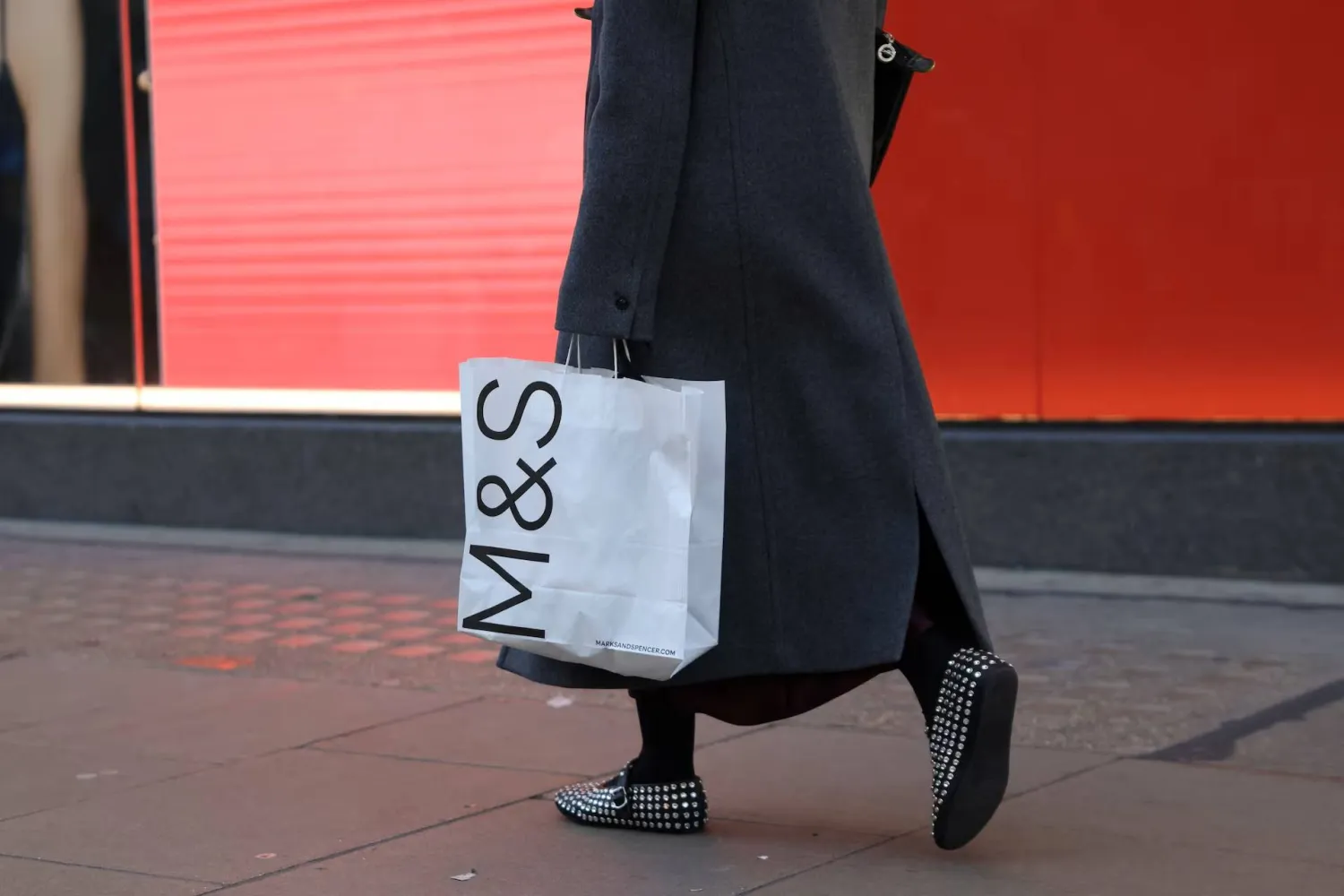
A shopper carries a Marks & Spencer shopping bag in London, Britain, January 2, 2025. (Reuters)
TT

M&S Profit Rebounds from Cyberattack but Clothing Drags on Recovery

A shopper carries a Marks & Spencer shopping bag in London, Britain, January 2, 2025. (Reuters)

British retailer Marks & Spencer said on Wednesday its first-half profit rebounded from last year's cyberattack-hit level, but was down on a two-year basis as strong trading in food failed to fully offset weakness in clothing.

The 142-year-old M&S, one of the biggest names on the UK high street, said its adjusted profit before ‌tax more than doubled ‌in the six months to September 26 ‌to £403.2 ⁠million ($542.4 million), on ⁠sales up 16.2% to £9.26 billion.

Analysts had on average forecast profit of £399 million.

Food sales increased 13.9% year-on-year, while sales in the fashion, home and beauty division, or FH&B, rose 17.5%.

But, while food profit was well ahead on a two-year basis, FH&B profit was nearly £93 million lower, reflecting a more challenging apparel market ⁠and a slower recovery from the cyberattack.

M&S said ‌fashion gained market share in ‌a declining market, despite "availability constraints".

CEO Stuart Machin said FH&B's results "fell short of their potential ‌and show there is a lot more to do."

"Although ‌we have much improved product, the end-to-end transformation is in the foothills," he said.

Analysts noted that this year's spring/summer clothing collections were ordered when many systems were down after the April 2025 hack.

M&S said market conditions ‌in FH&B "remain challenging", but said performance is expected to improve in the second half compared with the ⁠first, as ⁠availability has recovered, with a better balance between core and seasonal stock.

Shares in M&S were down 1% in early trading, paring 2026 gains to 24%.

M&S' food business was quick to recover from the cyberattack and is currently Britain's fastest-growing grocer, winning market share.

The group said its strategy of becoming "more of a shopping list (food) retailer" was working and its plan to double the size of its food business was on track.

M&S forecast full-year adjusted profit before tax in line with current market expectations. Analysts on average forecast £941 million.

"We enter the second half in a strong position, with a solid October under our belts," added Machin.

AI Helps Cosmetic Giants Overcome Perfume’s Nasal ‘Paradoxes’

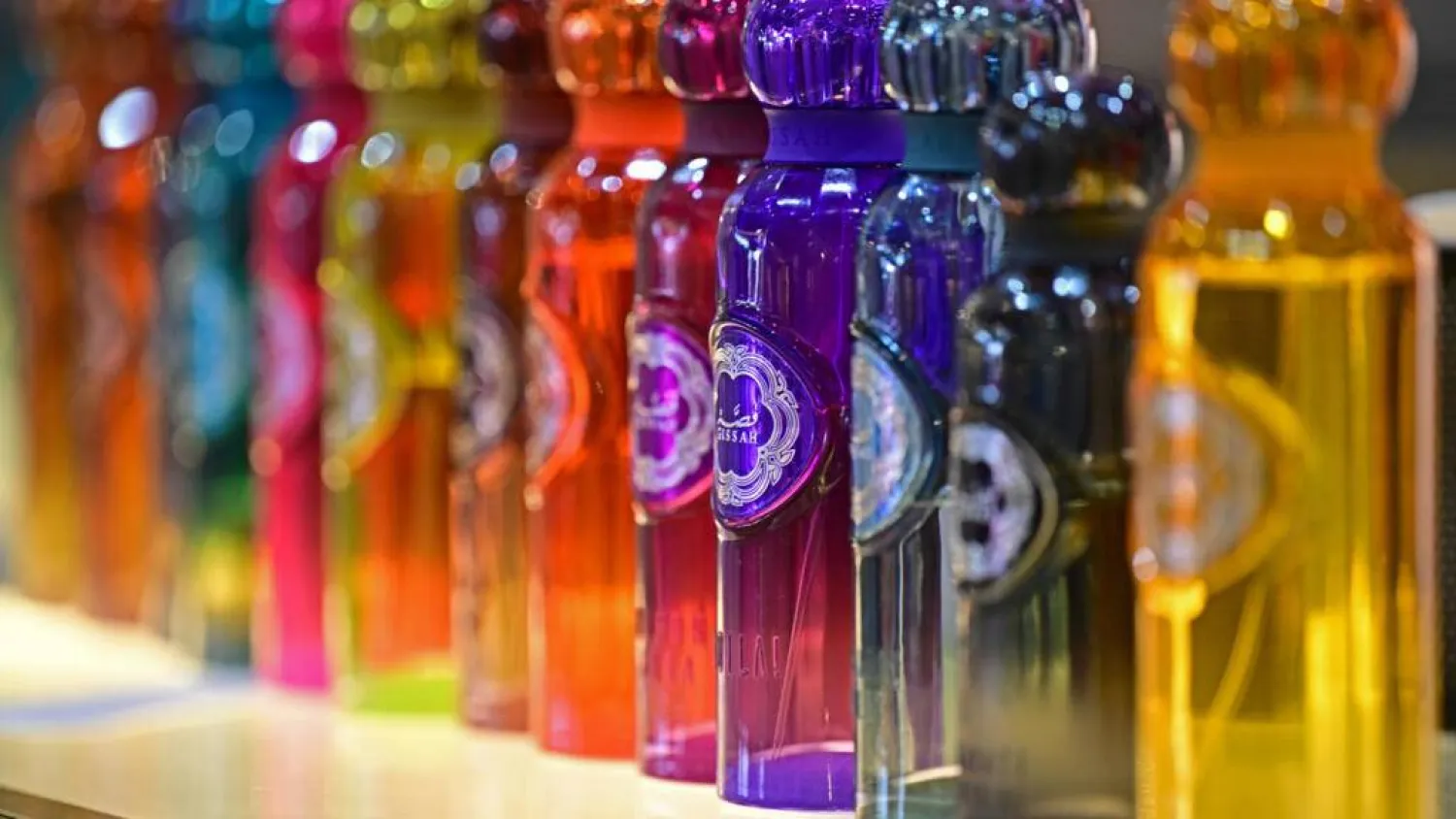
 Artificial intelligence is increasingly being used to develop new perfumes. (AFP)
Artificial intelligence is increasingly being used to develop new perfumes. (AFP)
TT

AI Helps Cosmetic Giants Overcome Perfume’s Nasal ‘Paradoxes’

 Artificial intelligence is increasingly being used to develop new perfumes. (AFP)
Artificial intelligence is increasingly being used to develop new perfumes. (AFP)

There may be a hint of bergamot in the top notes and sweet iris as a follow-up, but there is a noticeable dose of Artificial Intelligence emerging in new perfumes, according to industry specialists.

The traditional world of perfumes has not been able to turn up its nose to new technology and algorithms even though the industry insists that human sensorial expertise can never be fully replaced.

The US cosmetics giant Estee Lauder opened a perfume innovation center in Paris in 2025 that uses AI to mix savoir faire and cutting edge technology and help its billion dollars brands that include Jo Malone of London, Kilian Paris, Le Labo and Tom Ford Beauty, according to Lucas Nanini, the group's vice president for fragrance innovation.

He tests some of the new formulas uncovered on visitors to the Maison des Parfums.

"AI will allow us to work on what we call 'paradoxes'," Nanini told AFP. "For example, how can we create an oil that is rich, yet fine enough to be diffused?"

AI helps perfumers identify oils with properties that would take them years to develop by manual trial and error.

Machine intelligence also helps with regulatory tasks. Nanini highlighted the time it takes to check whether different countries allow each ingredient in a perfume.

With a single click he can now verify whether an ingredient from the one thousand-plus used is legal in a specific country as well as the maxium concentration allowed.

AI can also be used to find molecules to substitute for certain animal-derived ingredients.

Civet, taken from the glands of African civet and other cats in the species, was traditionally used to give perfume a musky tone but has been phased out in the face of animal rights protests.

- Fast fragrance -

International Flavors and Fragrances (IFF), another major US player, estimates that AI cuts between 25 and 30 percent of the time needed to develop and make a perfume.

With niche perfumes taking a bigger share of a growing market, enterprises like Givaudan of Switzerland and Robertet of France have heavily invested in tools to help them find new molecules.

IFF has developed its own AI tools using decades of internally collected data.

One suggests ingredients that complement each other and is used by IFF perfumer Tanguy Guesnet.

"Every perfumer is searching for that 'accord' -- that combination -- that will spark the emotion of tomorrow," he said.

The tool looks at the molecules in a single ingredient and suggests others with similar characteristics. Mint essence, for example, contains menthone, and the tool can propose other ingredients that also include the compound.

"Some pairings might seem obvious, while others might appear a bit outlandish, but that is precisely the richness of the tool," said Guesnet.

"It stimulates creativity and so I consider highly original combinations."

Not everyone is convinced by the AI revolution, however.

Guillaume Teule, co-founder of the French fragrance house Helius, insisted that he remains in control of how a scent develops. "I maintain my own vision."

"Much like in music, resonances and dissonances emerge when you start altering ingredients -- and it is precisely these dissonances that are interesting, and which only a human being knows how to leverage effectively," he said.

"I don't believe any AI would have suggested 'Angel'," he said of Thierry Mugler's so-called 'gourmand' fragrance launched in 1992 and considered revolutionary because of its sweet notes.

"It was like a stone thrown into a pond, when it was first released," commented Teule.


Cartier-Owner Richemont Quarterly Sales Beat Estimates as Jewellery Demand Continues

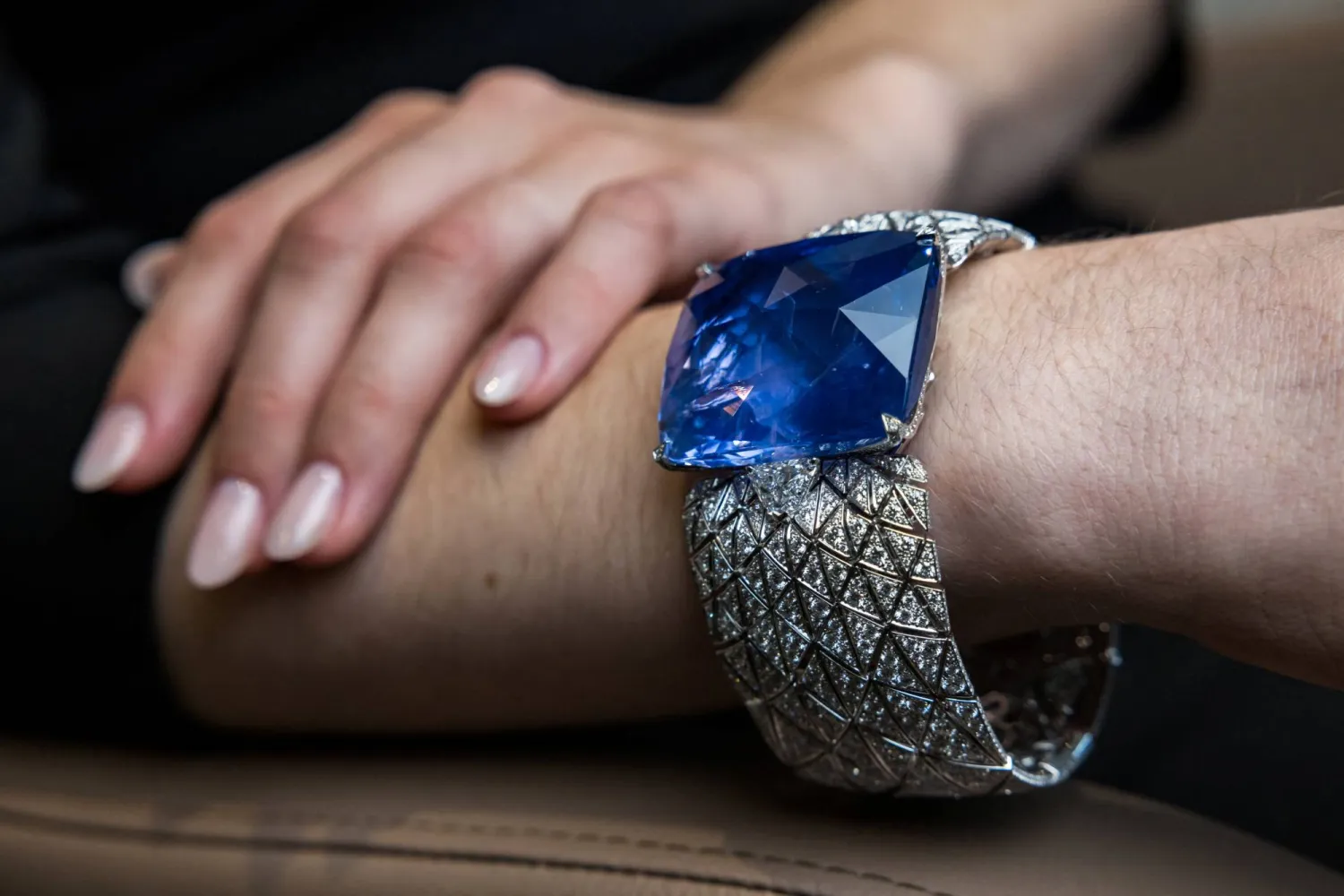
 A rock crystal and diamond bracelet by Cartier, estimated at US$1-2 million, during a preview ahead of Christie's auction in Geneva, Switzerland, November 5, 2026. (Reuters)
A rock crystal and diamond bracelet by Cartier, estimated at US$1-2 million, during a preview ahead of Christie's auction in Geneva, Switzerland, November 5, 2026. (Reuters)
TT

Cartier-Owner Richemont Quarterly Sales Beat Estimates as Jewellery Demand Continues

 A rock crystal and diamond bracelet by Cartier, estimated at US$1-2 million, during a preview ahead of Christie's auction in Geneva, Switzerland, November 5, 2026. (Reuters)
A rock crystal and diamond bracelet by Cartier, estimated at US$1-2 million, during a preview ahead of Christie's auction in Geneva, Switzerland, November 5, 2026. (Reuters)

Cartier-owner Richemont reported a faster-than expected quarterly sales increase on Friday, helped by continued demand for its jewellery and bumper growth in the United States and Japan.

The company, which also owns Swiss watch brands Piaget and IWC, said its sales rose by 13% when measured in constant currencies to €5.95 billion ($6.58 billion) in the three ‌months to the end ‌of September.

The figure beat analyst ‌forecasts ⁠for €5.89 billion in ⁠a consensus compiled by Visible Alpha.

Although a slowdown from the 20% growth rate in the prior quarter, the figure showed the resilience of Richemont's largely jewellery-based business and a strong performance in the United States, Japan and Europe, where sales ⁠increased by 15% or more.

The Swiss-based ‌company, which makes ‌brooches, earrings and necklaces under the Cartier, Buccellati, Van Cleef & ‌Arpels and Vhernier brands, has bucked the trend ‌in a struggling luxury industry thanks to its higher exposure to jewellery, with its jewellery brands accounting for about 75% of its revenues.

Sales of Richemont's jewellery ‌unit grew 14% in the quarter, while those of its specialist watchmakers division ⁠rose ⁠12%.

The company, which does not report quarterly earnings, said its first-half net profit improved to €2.53 billion from €1.81 billion a year earlier, ahead of analyst forecasts for €2.26 billion.

"The group delivered a strong first half, carried by sustained excellent performance of our Jewellery Maisons, robust growth at our specialist watchmakers and solid momentum at our fashion and accessories Maisons, despite a challenging fashion market," Richemont Chairman Johann Rupert said in a statement.


Frasers Executive David Epstein Becomes Hugo Boss CEO after Takeover

FILE PHOTO: Plastic toilet cabins are reflected in a window with the logo of Hugo Boss fashion company in central Moscow, Russia, May 8, 2025. REUTERS/Maxim Shemetov//File Photo
TT

Frasers Executive David Epstein Becomes Hugo Boss CEO after Takeover

FILE PHOTO: Plastic toilet cabins are reflected in a window with the logo of Hugo Boss fashion company in central Moscow, Russia, May 8, 2025. REUTERS/Maxim Shemetov//File Photo

Hugo Boss said on Thursday CEO Daniel Grieder would step down and leave the company at his own request, effective January 1, 2027.

The German fashion group said David Epstein from Frasers Group will ⁠succeed him as ⁠CEO, Reuters reported.

Frasers Group, already Hugo Boss's largest shareholder, took majority control of the company in October after raising its stake above 50%, months ⁠after an unsuccessful 2 billion euro takeover bid.

The move follows a series of leadership changes at Hugo Boss this year. In September, the company named Michael Murray, chief executive of Frasers Group, as chairman of its supervisory board.

The British retailer, ⁠controlled ⁠by billionaire Mike Ashley, has been expanding its presence in the premium and luxury segments.

Epstein has served as chief brand partnerships officer at Frasers Group since 2024, overseeing brand partnerships across its Sport, Premium, and Luxury businesses.