6 Months after a Devastating Earthquake, Türkiye’s Preparedness Is Still Uncertain

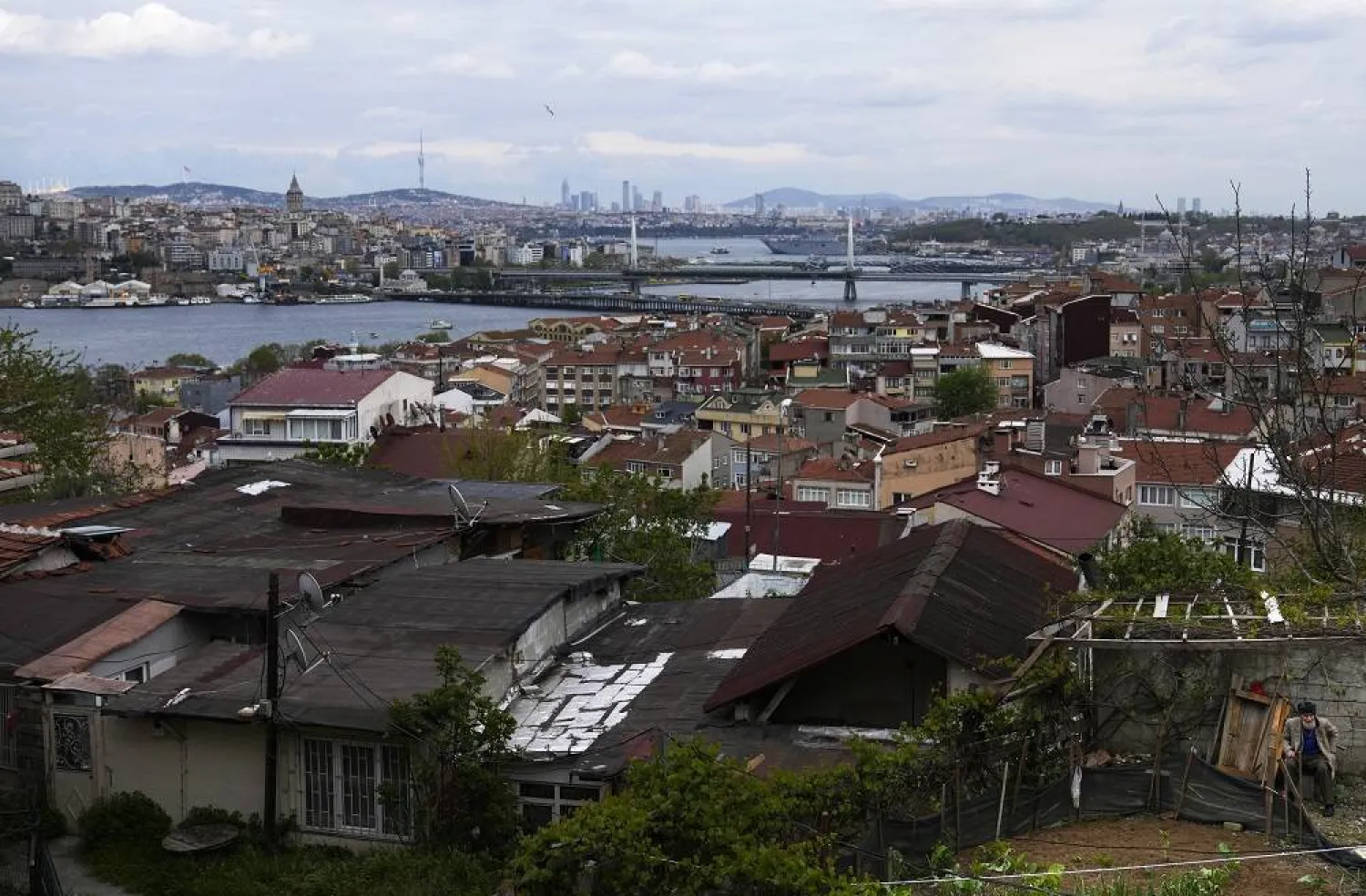
An elderly man sits in the backyard of a house in the Fatih old district of Istanbul, Türkiye, Tuesday, April 29, 2023. (AP)
TT

6 Months after a Devastating Earthquake, Türkiye’s Preparedness Is Still Uncertain

An elderly man sits in the backyard of a house in the Fatih old district of Istanbul, Türkiye, Tuesday, April 29, 2023. (AP)

Dust and rubble fill the street as an excavator tears off chunks of concrete from an old apartment building. Bystanders and former residents watch from afar as construction equipment tears down the structure. Among the bystanders is Ibrahim Ozaydin, 30, a former resident. He watches the demolition not with worry, but with relief, as his building was marked by officials as unsafe months ago.

Ozaydin and his family were shocked to learn that the municipality deemed his building uninhabitable. “We decided to build our own house,” he told The Associated Press as he watched his former home being torn down. “Instead of living in a poorly built house, let us take our own precautions.”

The sight of construction vehicles demolishing buildings became engrained in Turkish minds six months ago today, after a devastating 7.8-magnitude earthquake hit Kahramanmaras and 10 other provinces in southern Türkiye on the morning of Feb. 6.

Over 50,000 people died, and hundreds of thousands were left homeless, sheltering in tents and other temporary accommodation. The International Labor Organization estimates that some 658,000 people were left jobless. As for the material cost, some 300,000 buildings were damaged. Survivors needed to be rescued, rubble to be cleared and buildings on the verge of collapse torn down.

Yet this latest demolition is taking place in Istanbul, Türkiye’s largest metropolis, far away from the earthquake zone. This time the building wasn’t torn down as part of search-and-rescue efforts, but to prevent such harrowing scenes in the future.

The building was occupied only by Ozaydin and his extended family, who also owned a shop on the ground floor. The family managed to relocate their shop and build a new, sturdier house at a different location, but theirs is an exceptional story in a city where hundreds of thousands of buildings are at risk and property prices are soaring.

Istanbul lies atop a major fault line, one which experts warn could break at any moment. In a bid to prevent damage from any future quake, both the national government and local administrations are racing against time to alleviate the pain of the February quake while also preparing their cities for potential disasters in the future.

However, even preparedness can fall victim to political rivalry: the authorities in opposition-held Istanbul municipality and the national government in Ankara cannot agree on the exact number of buildings at risk of crumbling in the event of an earthquake. But both put the figure at hundreds of thousands.

After the February tragedy, the Istanbul municipality headed by Mayor Ekrem Imamoglu, a prominent figure in the opposition to President Recep Tayyip Erdogan, earmarked for demolition 318 buildings housing over 10,000 people.

Bugra Gokce, an official with the Istanbul municipality overseeing the demolition, said, “We are identifying buildings at risk of collapse and fortifying others, all to reduce the potential loss of life."

During a heated election campaign right before his re-election to a third decade in power, Erdogan pledged to construct 319,000 new homes within the year. He attended many groundbreaking ceremonies as he persuaded voters that only he could rebuild lives and businesses.

“It’s easy to say, ‘we are building this many square meters atop a hill’ or ’5,000 residences are being built somewhere’,” adds Gokce, in an apparent jab at the national government’s urban transformation programs. “We are also doing that. But if you’re not also reducing the risk to existing buildings in the city, it is nothing more than urban expansion.”

Both experts and Erdogan critics argue that the sheer scale of February’s destruction was due to the president’s weak enforcement of building codes amidst a construction boom that helped drive economic growth.

Ankara launched several programs aimed at inspecting damaged buildings both in and outside the 11 provinces hit by the earthquake. Meanwhile victims have been offered both financial aid and a chance to resettle in public housing projects built by the Housing Development Administration of Türkiye, or TOKI.

Although many promises were made by both the ruling party and the opposition in the leadup to the elections in May, those still in the earthquake-affected provinces are demanding faster action.

Lawyer Mehmet Ali Gumus in Hatay province, one of the worst hit by the earthquake, told The Associated Press that people were starting to lose hope. He said there were no signs of reconstruction in Hatay, and that the emergency shelter situation in Antakya, Hatay’s most populated city, was deteriorating by the day.

People are living in metal shipping containers and tents in sweltering heat that can reach up to 42 degrees Celsius (107 Fahrenheit) without any access to air conditioning. Residents must also contend with flies, snakes and other wildlife while living outdoors, according to Gumus.

Another health risk is the rubble from collapsed buildings, which is being dumped on farmland, shores, and even right outside encampments where survivors are staying. “Everyone around me says that we survived the earthquake, but they’ll be dealing with cancer in 5-10 years because of the asbestos (from the rubble),” adds Gumus.

In a social media post on July 15, the Hatay governor’s office stated that levels of asbestos in the rubble are safe and below the “regulatory limit.” Results showing low amount of asbestos taken from samples collected in debris dumping grounds were also posted.

While Hatay residents deal with the elements and other environmental hazards, their future remains uncertain.

“There were concrete statements before the elections, but afterwards we stopped hearing anything concrete,” continues Gumus, claiming that the government has not committed to securing new houses for victims or even to fortifying their existing residences. “Six months after the disaster we should be talking about newly built residences, not lines of people waiting for water,” he adds.

Another Hatay resident, Bestami Coskuner, was leaving for the western province of Izmir because of the power cuts and water shortages in his hometown.

“Tap water is not potable, but people use it to wash. Pipes burst daily, and power is cut two or three times a day,” Coskuner told The Associated Press. He said water was rationed, and some who drank from the tap came down with serious illnesses.

“You can’t easily drink water. In a place where you can’t easily drink water, how are you going to make any decisions? Even bottled water tastes bad in Hatay,” he added.

Victims of the earthquake have already had to deal with the aftermath of a disaster, the worst cost of living crisis in decades, and a highly polarizing election. They’ll have only had a brief break from politics as Türkiye heads to hotly contested municipal elections in March. Erdogan, fresh off his victory in national elections last May, has vowed to take back the metropolitan cities he lost in 2019.

One of Erdogan’s campaign strategies had been a focus on providing housing and aid in the earthquake regions. The government made sure to provide amenities, shelter, and financial aid for earthquake victims.

His perceived support for the victims was one of the factors that enabled Erdogan’s party to hold on to power in most of the provinces hit by the earthquake, despite accusations of being responsible for the devastation with his lax enforcement of building codes and the perception of poor emergency response by the government.

Experts like professor Naci Gorur, a geologist and member of the Science Academy, have been warning of a potential earthquake in Istanbul and other provinces for years. He told the Associated Press that the “steps taken were far outweighed by those not taken,” and that Istanbul is not ready for a potential earthquake with the current state of structures and building codes.

Gorur described the soil in the affected regions as causing buildings to “resonate,” making it even more difficult for such structures to stay intact during earthquakes. The quake occurred in a seismically active area known as the East Anatolian fault zone, which has produced damaging earthquakes in the past, such as the 7.4 magnitude quake near Istanbul in 1999, in which an estimated 18,000 people died.

“We could have prepared the whole of Türkiye for an earthquake, not just Istanbul, if we had started working with the ministry to make our at-risk provinces earthquake-resistant. If we had distanced ourselves from politics, if policies were not left to the whims of new administrations, and if there had been a serious budget and determination,” said Gorur.

“I have no doubts as to government’s good intentions, but if you are going to do something, do it properly. You don’t rush things like these,” he said, adding that instead of rushing permanent buildings, the government should have focused on maintaining temporary residences while conducting proper studies for the building of permanent structures which comply with “scientific principles.”


‘Nobody Heard us’ – Why Gen Z Are Leading Protests Across Europe

 People celebrate the victory of the Student List at parliamentary election after Aleksandar Vucic conceded defeat, at Slavija Square in Belgrade, Serbia, October 26, 2026. (Reuters)
People celebrate the victory of the Student List at parliamentary election after Aleksandar Vucic conceded defeat, at Slavija Square in Belgrade, Serbia, October 26, 2026. (Reuters)
TT

‘Nobody Heard us’ – Why Gen Z Are Leading Protests Across Europe

 People celebrate the victory of the Student List at parliamentary election after Aleksandar Vucic conceded defeat, at Slavija Square in Belgrade, Serbia, October 26, 2026. (Reuters)
People celebrate the victory of the Student List at parliamentary election after Aleksandar Vucic conceded defeat, at Slavija Square in Belgrade, Serbia, October 26, 2026. (Reuters)

Maya Gourdel, a 19-year-old student in Brussels, sits at a desk writing slogans against those running her country: “If we burn, you burn with us!” The slogan, taken from the 2012 film "The Hunger Games" that has been adopted as a symbol by many youth movements globally, reflects the anger, frustration and desire for change driving Gen Z-led protests around Europe.

From the suburbs of Paris to the squares of Belgrade, thousands have taken to the streets.

The demands are various but often overlapping – frustrations with shabby schooling facilities, perceived lack of economic opportunity, cost of living, corruption, housing and a sense of not being listened to. At times those protests triggered violence – with thousands of shops in France alone being damaged or looted in recent weeks – and police firing stun grenades and water cannons.

This weekend they also brought real change – student-led protests culminated in the toppling in an election of Serbia’s long-time leader Aleksandar Vucic after nearly two years of demonstrations against perceived corruption and creeping authoritarianism.

“Waking up, the first thing we felt was certainly a sense of relief and freedom," said student protester Stasa Piletic. "Personally, I feel a sense of victory. I feel that we finally moved from protests to responsibility."

‘AN EXPLOSION OF RAGE’

Chiara, a 21-year-old student ‌in protest-hit Milan, believes “it's ‌vital to take part in people's spontaneous movements born from an explosion of rage that made collective ‌action possible.”

"I ⁠think the worst ⁠damage this ruling class has done to my generation is stealing even the ability to imagine a future, to dream," she said.

She said Italian students were confronting a reality of schools without enough teachers and crumbling buildings.

“And all of this with the prospect of an underpaid job which we didn't qualify for and the prospect of living in a tiny, overpriced house, probably away from our city, which we didn't want to live in."

Protests led by Gen Z have caused ructions globally as the generation born roughly between 1997 and 2012 found its voice, from Bangladesh in 2024 and Nepal in 2025, to India this year. Now Europe has become a focal point.

Rising prices and the cost of living are a concern for 40% of 16-30-year-olds, according to a European Union survey published in 2025.

Among the 92.7 million people in the EU who faced ⁠the risk of poverty or social exclusion in 2025, the highest risk was recorded for young adults aged 18-24 years, ‌at 26.3%, while the lowest was recorded for adults aged 65 years or over, at 18.8%.

Younger ‌people are also wary of shouldering the financial burden of an older generation that tends to vote in greater numbers. People over 60 in France make up a quarter ‌of the population but own 60% of France's wealth, according to the OFCE think tank.

French pensions are by far the biggest public expense, on track to reach ‌14% of economic output, as the population ages and voters resist raising the retirement age or reducing benefits. That is still less than Greece or Italy, which spend the largest proportion of national income on public pensions among OECD countries, at around 16% of GDP, according to OECD figures in 2025. But it is much more than Australia, Chile, Iceland, Ireland or South Korea, which spent less than 4% of GDP on public pensions, according to the OECD.

‘YOUNG PEOPLE IN EUROPE ARE UNITED’

Bilal Narjissi, a 17-year-old high school student in ‌a suburb north of Paris, has been protesting against “deplorable” conditions and staff shortages at his school. “There used to be rats,” he said.

Students were evacuated last year when a roof collapsed on the courtyard, though no one was hurt, ⁠he said.

Protests showed “that young people in ⁠Europe are united”, he said, adding, "we all agree on one point: that young people are treated like children, far too much, and that they aren't listened to enough.”

A French government report in October said pension spending had risen by 2.5 percentage points of GDP between 2000 and 2023 while that for education had declined 0.5. It also showed 32% of the education ministry’s budget went towards pensions, crowding out money for other areas.

Gourdel, too, has been protesting for better conditions in schools in Belgium.

“We tried to do it passively. Nobody heard us. It's only when people started to burn trash or that kind of stuff that the media and cameras started showing us,” she said.

The protests are still spreading, with a demonstration planned in Germany this weekend over cost of living, inequality, war and the state of schools.

Unrest has also hit Albania, where student-led demonstrations against Prime Minister Edi Rama's government, fueled by anger over perceived corruption, a lack of jobs and poor education standards, engulfed Tirana and spread to other cities.

“Our Prime Minister spent 130 days not listening to us,” said Xyke Kurti, a 19-year-old architecture student.

“If you ask a student in Albania, 'where do you see your future?' Everyone says 'outside this country'," she said, arguing that at home, even if you have talent, someone with "connections is always going to beat you".

Serbia’s student movement did what demonstrators in other European capitals can only dream of.

Now, though, comes the gritty business of governing – something neither the students nor their candidates have any experience of.

Luka Stojakovic, another protester, brushes that aside. "We have seen where people with political experience have brought us."


In Israel, Eisenkot Tries Quiet Appeal to Oust Netanyahu

 Former military chief Gadi Eisenkot, leader of the Yashar party, visits a polling station, on the day of Israel’s national election, in Ofakim, southern Israel, October 27, 2026. (Reuters)
Former military chief Gadi Eisenkot, leader of the Yashar party, visits a polling station, on the day of Israel’s national election, in Ofakim, southern Israel, October 27, 2026. (Reuters)
TT

In Israel, Eisenkot Tries Quiet Appeal to Oust Netanyahu

 Former military chief Gadi Eisenkot, leader of the Yashar party, visits a polling station, on the day of Israel’s national election, in Ofakim, southern Israel, October 27, 2026. (Reuters)
Former military chief Gadi Eisenkot, leader of the Yashar party, visits a polling station, on the day of Israel’s national election, in Ofakim, southern Israel, October 27, 2026. (Reuters)

Gadi Eisenkot, the man who could unseat Israeli Prime Minister Benjamin Netanyahu, almost always dresses in black, speaks halting English and tends to respond in interviews with bullet-point lists, a reflection of the military culture that shaped him.

For some voters in Tuesday's general election, the 66-year-old's lack of charisma may be one of his greatest assets.

Serious and unassuming, Eisenkot is in many ways the opposite of Netanyahu, Israel's longest-serving prime minister, who has flawless American-accented English and is ever ready with headline-grabbing soundbites on US television or social media.

Eisenkot, the military chief of staff from 2015 to 2019, has vowed to unite Israelis after the divisive tenure of Netanyahu, who has moved the country sharply to the right.

"There is a large camp in Israel whose main goal in the coming election is just for things to be calmer," said Tal Elovits, a researcher at the Molad think tank.

"The middle class," he said, "is looking for someone who will look responsible, boring. I think Eisenkot has that appeal."

Eisenkot, who has been neck and neck with Netanyahu in polls, has promised to try to restore the international image of Israel, badly strained after three years of war in Gaza and violence in the occupied West Bank.

He has vowed to crack down on extremist West Bank settlers who have attacked Palestinians with impunity and recently beat up an American journalist and a French mayor, decrying the incidents as "Jewish terror" abetted by Netanyahu's government.

But the military man is no peacenik. He has even sought to play to the right of Netanyahu by vowing no Palestinian state, replaying clips from an earlier political era in which the long-serving prime minister begrudgingly voiced openness to the idea under US pressure.

Commanding the military during the 2006 war with Hezbollah, Eisenkot devised the so-called "Dahieh doctrine", named after Beirut’s southern suburb, in which Israel vowed massive force against civilian infrastructure in areas populated by the Lebanese group.

Israel has adopted the doctrine again in Gaza, causing destruction that critics say amounts to war crimes, an assertion disputed by Israel.

- Working-class roots -

Eisenkot has garnered broad public sympathy after his son Gal and two nephews were killed fighting in Gaza.

His working-class roots constitute another element of his appeal. He would be the first prime minister who is Sephardic, Jews who trace their recent origins to the Middle East and North Africa.

Unlike Netanyahu, who comes from an elite family and whose father was a prominent professor in the United States, Eisenkot is the son of Moroccan Jews, and grew up on Israel's geographic periphery.

His background came into the spotlight when a senior commentator on the pro-Netanyahu Channel 14 television station described Eisenkot as "a monkey" controlled by "Ashkenazi elitists". He was referring to Jews of European descent who have historically dominated Israel's political and economic institutions.

While the term is not necessarily a racial slur in Hebrew and can mean something akin to a "fall guy" taking the blame on behalf of others, the remark drew widespread condemnation from opposition politicians and from Netanyahu himself.

Eisenkot swiftly sought to turn the episode to his advantage.

His campaign erected billboards denouncing discrimination against the Sephardim, and his party accused Netanyahu of sidelining Sephardic members of Likud by limiting their media appearances during the campaign.

- Limited change on security -

In weekend appearances, Eisenkot met religious Jews to whom he defended Israeli control over the West Bank.

"Israeli settlement (of the West Bank) is a value, on condition that it serves the interests of the state of Israel, and it's done according to the law," he told representatives of the Religious Zionist movement on Sunday.

He appeared to be rejecting the establishment of unauthorized settlement outposts, which have fueled a recent rise in violence against Palestinians.

On Gaza, he has vowed to end Hamas rule within 18 months. He recently said this could be achieved either through the implementation of US President Donald Trump's ceasefire plan, which envisages Hamas's gradual disarmament and a transfer of power, or through "creative operations" aimed at destroying the movement's military wing.

Addressing a key source of resentment among Israelis following three years of war, Eisenkot has promised to curb exemptions from military service for religious students.

He promised a "universal national service law" requiring ultra-Orthodox Jews and Arab citizens to perform either military or civil service.

He has sought to appeal to centrist and liberal voters by pledging to "protect judicial independence, the rule of law, minority rights and a free press".

And in his final major rally before Tuesday's vote, he appealed directly to wavering Netanyahu supporters to change their vote.

"Deep down, you too know that Israel cannot go on like this," he said. "Israel needs change."


Benjamin Netanyahu: Israel’s Longest-Serving PM Fighting for Survival

 A man walks past a poster of Israeli Prime Minister and Likud party leader Benjamin Netanyahu and US President Donald Trump during the country's national elections in central Jerusalem, October 27, 2026. (Reuters)
A man walks past a poster of Israeli Prime Minister and Likud party leader Benjamin Netanyahu and US President Donald Trump during the country's national elections in central Jerusalem, October 27, 2026. (Reuters)
TT

Benjamin Netanyahu: Israel’s Longest-Serving PM Fighting for Survival

 A man walks past a poster of Israeli Prime Minister and Likud party leader Benjamin Netanyahu and US President Donald Trump during the country's national elections in central Jerusalem, October 27, 2026. (Reuters)
A man walks past a poster of Israeli Prime Minister and Likud party leader Benjamin Netanyahu and US President Donald Trump during the country's national elections in central Jerusalem, October 27, 2026. (Reuters)

Prime Minister Benjamin Netanyahu, Israel's consummate political survivor, faces the fight of his life in Tuesday's election as he tries to convince voters he is still the only candidate capable of keeping them safe.

The 77-year-old's security-first reputation was all but shattered by Hamas's October 7, 2023 attack, and his main rival -- ex-military chief Gadi Eisenkot -- has channeled public anger over the failure and is running neck and neck with Netanyahu in polls.

Now Israel's longest-serving premier is pulling out all the stops, touting an endorsement from Donald Trump, warning that hostile powers want him to lose, and stoking fears of a Palestinian state -- opposed by a majority of Israelis -- should his opponents triumph.

His election campaign has leaned heavily on a single slogan, visible on posters throughout the country: "Either the Right or Palestine."

Off the campaign trail, Netanyahu faces an international arrest warrant over alleged war crimes in Gaza, a long-running corruption trial, and a spiraling multi-front conflict that has dragged on for three years.

But Netanyahu is hoping to use the wars he waged after October 7 to paper over that glaring security lapse, touting the military blows dealt to Hamas in Gaza, Hezbollah in Lebanon and the groups' backer Iran, which Israel has twice launched wars against.

Last week, after two Israeli soldiers were killed by Palestinian gunmen near Hebron, Netanyahu launched a major military operation in the occupied West Bank and vowed to "pursue Hamas terrorists" everywhere.

- Long career -

Born in Tel Aviv on October 21, 1949, Netanyahu inherited his ideological background from his father Benzion, a former aide to Zeev Jabotinsky, leader of the so-called "Revisionist" strand of Zionism that advocates for a "Greater Israel".

Netanyahu opposed, and eventually helped to bury, the Israeli-Palestinian peace process of the 1990s, which held a two-state solution as its ultimate goal.

He now promotes a vision of an Israel whose borders extend as far as Jordan, voicing support for annexing parts of the occupied West Bank and undertaking measures to promote the growth of Israeli settlements which are illegal under international law.

As a younger man, Netanyahu served in an Israeli commando unit and fought in the 1973 Arab-Israeli war.

His early life's defining tragedy came when his elder brother Yonatan was killed leading the Entebbe hostage-rescue mission in Uganda.

"When the news reached me that Yoni had died, I felt as if my life had ended," Netanyahu later wrote.

Raised partly in the United States and a graduate of the Massachusetts Institute of Technology (MIT), he became one of Israel's most visible spokesmen abroad, showing an ease on US television that has never left him.

Elected to parliament in 1988, he took over leadership of the right-wing Likud party in 1993. In 1996, in the first election after the assassination of peace-negotiating Yitzhak Rabin, Netanyahu pulled off an upset victory by the tiniest of margins and at age 46 became the youngest prime minister in Israeli history.

He served as head of government from 1996 to 1999, then again from 2009 to 2021, before returning to power in late 2022 by cobbling together a coalition that includes once-shunned extremists.

For years, Netanyahu maintained that the foundations of Israel's security rested on military strength, but he also gained a reputation for caution.

Adamantly opposed to a Palestinian state, Netanyahu saw Hamas rule in Gaza as a way to divide Palestinians and weaken the West Bank-based Palestinian Authority, which enjoys strong European support.

The Hamas attack exposed the failures of this setup. As the war in Gaza widened, Netanyahu began to frame the conflict as a generational struggle intended to reshape the region and uproot the influence of Iran's clerical state.

In recent months, he has repeated the refrain that he "changed the face of the Middle East".

- 'He spreads hatred' -

His supporters credit him with responding to Israel's darkest hour with unprecedented military resolve, and confronting Tehran directly -- something none of his predecessors had done.

Critics, however, say his actions have mired the country in intractable conflicts and made it a pariah on the world stage.

His rival Eisenkot has declared that Netanyahu "is unfit to remain in office".

"He spreads hatred, fear and portrays his rivals as enemies of Israel," Eisenkot told public broadcaster Kan.

But Netanyahu still has a powerful ally in US President Trump, whom he has called "the greatest friend Israel has ever had" in the White House.

He received the US president's endorsement 10 days before the vote, with Trump assuring him that he was "the man I want by my side".

Polls show Netanyahu is unlikely to be able to form a government on his own. But for decades, he has defied predictions of his downfall.

On Channel 14, a private station that supports him unquestioningly, he recently declared that the stakes of these elections were "the continued existence of the Jewish state, and to guarantee that, you must vote for the person who will get the job done".