
Some Palestinians Displaced in 1948 Say Gaza War is 'Harder'

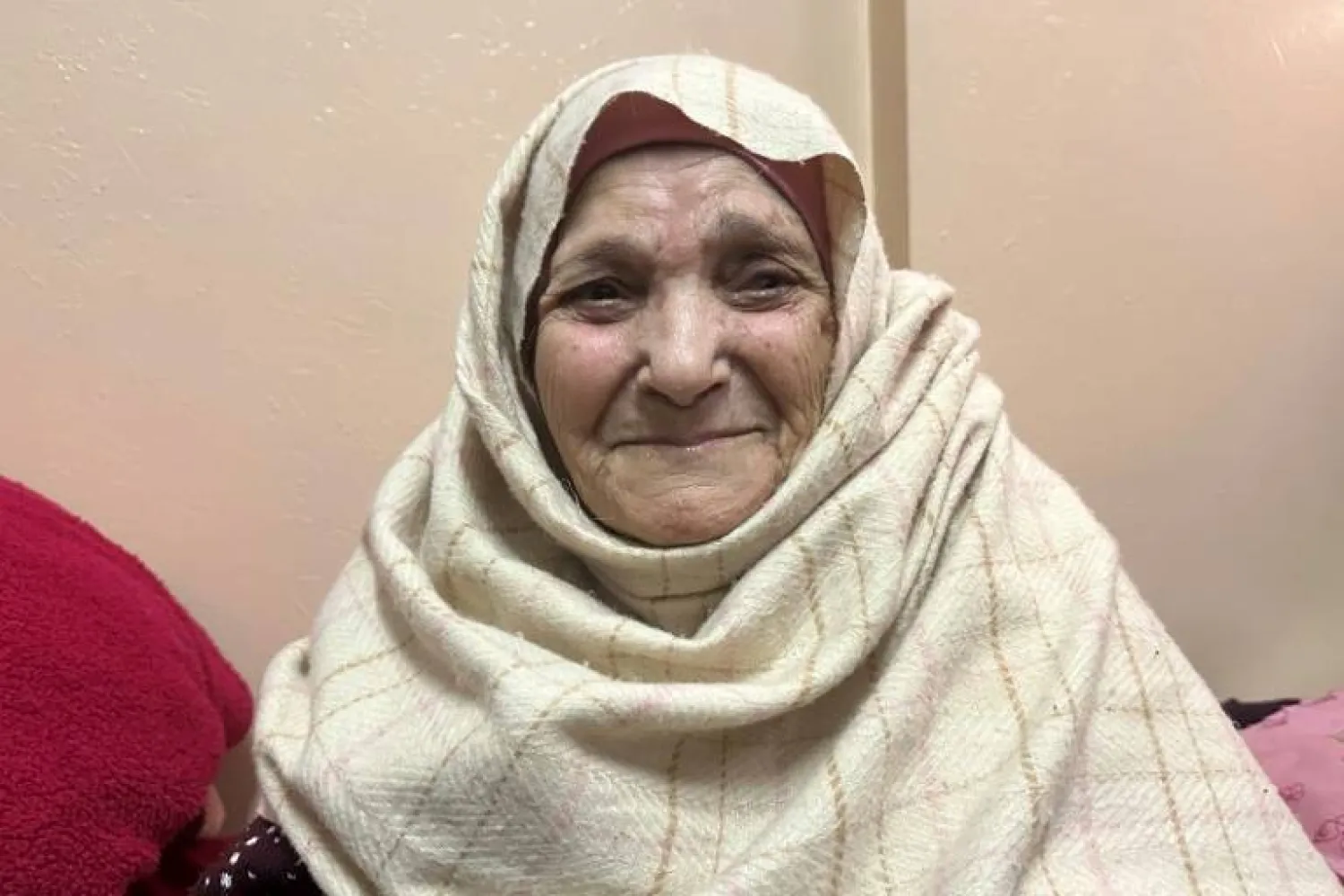
Palestinian Liga Jabr, 89, remembers well how conflict uprooted her family when she was just 13 - AFP
TT

Some Palestinians Displaced in 1948 Say Gaza War is 'Harder'

Palestinian Liga Jabr, 89, remembers well how conflict uprooted her family when she was just 13 - AFP

At age 89, Palestinian Liga Jabr remembers how conflict uprooted her family when she was a child. Now, 75 years later, she says the war raging in Gaza is even worse.

"This war is harder than any of the displacements" brought by previous conflicts, Jabr told AFP in Rafah refugee camp, on the besieged Gaza Strip's southern border with Egypt.

Staying with relatives after her home in central Gaza's Deir el-Balah was hit by a strike, Jabr is among an estimated 1.9 million Palestinians forced from their homes since war erupted on October 7 in Gaza.

Sitting by a small wooden table in a house crowded with family members, she said she has felt fear like never before as the war entered its 100th day.

"To be honest... I'm afraid," she said. "I have never seen a war like this one. This war is disgraceful."

Fighting began with Hamas's unprecedented attack on October 7. Israel in response vowed to destroy Hamas and launched a relentless military campaign that the Gaza health ministry says has killed nearly 24,000 people, most of them women and children.

The violence has spurred concerns that Israel is trying to expel Palestinians, but Israeli officials deny this.

That scenario evokes dark historical memories of what the Arab world calls the "Nakba" or catastrophe -- the mass displacement of Palestinians during the war that coincided with Israel's creation in 1948.

The majority of Gaza's 2.4 million inhabitants are descendents of some of the 760,000 Palestinians driven out during that war.

Some, like Jabr, have now lived through both conflicts.

In 1948 Israeli soldiers "did not kill us in the Nakba", she said, recalling how her family left on foot from the Palestinian village of Julis, now in southern Israel, just over 10 kilometres (six miles) north of the Gaza Strip.

"Now the Israelis are hitting people from the air and destroying entire houses," Jabr added as drones buzzed outside.

She lost about a dozen relatives when her house in Deir el-Balah was "demolished" in an air strike, she said.

Rayqa Abu Aweideh, a relative of Jabr who like her had to leave her home in what is now southern Israel in 1948, said the current war is "harder and crueller".

Seventy-five years after fleeing Al-Majdal with her family and two cows, and eventually settling in southern Gaza's Khan Yunis, Abu Aweideh was displaced again, taking shelter at her daughter's home in Rafah.

Born in 1935, Abu Aweideh said the Israel-Hamas war has extinguished any hope of ever returning to her hometown, and that now she wouldn't want to flee Gaza.

"Even if they tell me, 'take all the money in the world', I will never leave for Sinai or anywhere else," she said, referring to the Egyptian peninsula bordering the Palestinian territory.

"I want to stay here even if we die."

Juma Abu Qamar, 80, said he wanted to return to the Palestinian village of Yibna where he was born, now in central Israel, but admitted he didn't believe it would ever happen.

"We had a big house with a fig tree," he recalled.

During the 1948 war, "we didn't see the Jewish (soldiers). We walked along the shore until we reached Gaza".

The fighting since early October is "like nothing we've seen before," he said. "We have never faced such a war, a war of annihilation".

Abu Qamar said he had also never seen "so many tents" for displaced people.

Many families, fleeing the violence further in northern Gaza, have sheltered in makeshift tents in Rafah. Their already dire conditions have been exacerbated by the winter cold.

"We've returned to living like our ancestors, but they lived in safety," said Umm Sharif Kuhail, displaced from Gaza City.

"When we cook, we're afraid. We go out for shopping under bombardment. We do everything in fear."

The 48-year-old woman told AFP at a tent in Rafah: "We don't have any hope of returning to our homes."

Next to her, 51-year-old Alaa Bakheet shared her desperation.

"After 100 days (of war), our life has no soul left in it, we're waiting for martyrdom," said the man displaced from central Gaza's Nuseirat refugee camp.

"There's nothing left on this land. No schools, no universities, no hospitals," he lamented.

"The issue is not just the war, but what will follow it."


Ukrainians, Scattered across Europe, Trapped in Limbo by War

A man walks past snow-covered plants at the Gryshko National Botanical Garden of the National Academy of Sciences of Ukraine in Kyiv on February 11, 2026, amid the Russian invasion of Ukraine.  (Photo by Genya SAVILOV / AFP)
A man walks past snow-covered plants at the Gryshko National Botanical Garden of the National Academy of Sciences of Ukraine in Kyiv on February 11, 2026, amid the Russian invasion of Ukraine. (Photo by Genya SAVILOV / AFP)
TT

Ukrainians, Scattered across Europe, Trapped in Limbo by War

A man walks past snow-covered plants at the Gryshko National Botanical Garden of the National Academy of Sciences of Ukraine in Kyiv on February 11, 2026, amid the Russian invasion of Ukraine.  (Photo by Genya SAVILOV / AFP)
A man walks past snow-covered plants at the Gryshko National Botanical Garden of the National Academy of Sciences of Ukraine in Kyiv on February 11, 2026, amid the Russian invasion of Ukraine. (Photo by Genya SAVILOV / AFP)

Maryna Bondarenko says she has three suitcases packed in her apartment in Poland, waiting for the day when peace returns to Ukraine.

The 51-year-old journalist fled Kyiv with her son and mother after Russia launched its invasion on February 24, 2022. She thought they would be abroad for a month or two until the war ended, reported Reuters.

Four years later, she is still there, working in a Ukrainian-language newsroom that caters to a community of more than 1.5 million Ukrainians living in Poland.

"There were so many moments when we thought: 'This is it, we're finally going back.' We went to the post office several times, packed our belongings into boxes, absolutely certain that we were going back," she said.

Russia’s full-scale invasion of Ukraine has triggered the largest refugee crisis in Europe since World War Two. More than 5 million Ukrainians are scattered across Europe, according to UN figures, many of them in Central and Eastern Europe.

SEPARATED FROM ‌HUSBAND

Roughly three-quarters of ‌the refugees are women and children, after Ukraine imposed martial law prohibiting men of military ‌age from ⁠leaving the ⁠country.

Bondarenko longs to be reunited with her husband, Andrij Dudko, a 44-year-old former TV cameraman who is serving as a drone operator on the front line. But waves of Russian air strikes - which have cut power to tens of thousands of people in Kyiv during a bitter winter - convinced her to stay.

"We get ready to leave, and then there's another massive attack. We get ready again, and then cold winter comes and there is no heating, no power, no water. And I just can't bring my child there, under the rockets."

In Poland, large Ukrainian communities have sprung up in cities such as Warsaw and Krakow, sometimes prompting tensions with local residents ⁠who complain of the new arrivals taking welfare benefits and jobs.

"I want to go home, ‌I really do. I know it won’t be easy," said Bondarenko, adding ‌that the country she returns to will be profoundly changed.

Ukrainian President Volodymyr Zelenskiy’s government hopes that 70% of Ukrainians abroad will return, once ‌the war ends. But surveys have shown that, over time, the share of Ukrainians who say they want to go back ‌is declining.

For many among the younger generation of Ukrainians abroad - like Bondarenko's 11-year-old son Danylo - the country is a distant memory.

He likes Poland, despite experiencing some hostility toward Ukrainians in school.

"I don't really remember anyone from Ukraine. I remember I had one friend, but I do not really remember him and I’ve lost contact with him," he said. "I don't think that I will return to Ukraine."

'LIFE TURNED OUT DIFFERENTLY'

Iryna Kushnir ‌and Olga Yermolenko, who were friends at high school in the eastern Ukrainian city of Kharkiv, rekindled their friendship after they both fled to Istanbul at the start of ⁠the war, part of a ⁠far smaller number of Ukrainians who sought shelter in Türkiye.

"I thought the war would end quickly, so I didn't plan to stay in Istanbul for long," said Kushnir, 42, who left her 19-year-old daughter Sofia behind in Ukraine to study.

But four years later, she is married to a Turkish man and has a teaching job at the Ukrainian department of Istanbul University.

"Like all Ukrainians, I planned to return home, but life turned out differently," said Kushnir, who says she is proud that her daughter has chosen to remain in Ukraine.

Her friend, Yermolenko, 43, works remotely from Istanbul as a financial specialist for Ukrainian clients. Her mother Tetyana, 73, still lives in Kharkiv and they are constantly in touch.

"I cannot say I am involved 100% in Turkish life. It is a bit strange feeling to be caught between your previous life and a possible future life," said Yermolenko, who has started learning Turkish. She still closely follows events in Ukraine but tries not to think about how long the war will last.

"I open the news - there's a Telegram channel that reports what's happening in Kharkiv in real time - and I see a missile flying toward my home," she said. "In that moment, the feeling is terrifying. I’m very scared. And of course, I immediately call my mom to make sure she's okay."


Trump Pushes US Toward War with Iran as Advisers Urge Focus on Economy

FILE PHOTO: US President Donald Trump speaks during a press briefing at the White House, following the Supreme Court's ruling that Trump had exceeded his authority when he imposed tariffs, in Washington, D.C., US, February 20, 2026. REUTERS/Elizabeth Frantz REFILE
TT

Trump Pushes US Toward War with Iran as Advisers Urge Focus on Economy

FILE PHOTO: US President Donald Trump speaks during a press briefing at the White House, following the Supreme Court's ruling that Trump had exceeded his authority when he imposed tariffs, in Washington, D.C., US, February 20, 2026. REUTERS/Elizabeth Frantz REFILE

President Donald Trump has pushed the United States to the brink of war with Iran even as aides urge him to focus more on voters' economic worries, highlighting the political risks of military escalation ahead of this year's midterm elections.

Trump has ordered a huge buildup of forces in the Middle East and preparations for a potential multi-week air attack on Iran. But he has not laid out in detail to the American public why he might be leading the US into its most aggressive action against Iran since its 1979 revolution.

Trump's fixation on Iran has emerged as the starkest example yet of how foreign policy, including his expanded use of raw military force, has topped his agenda in the first 13 months of his second term, often overshadowing domestic issues like the cost of living that public opinion polls show are much higher priorities for most Americans.

A senior White House official said that despite Trump's bellicose rhetoric there was still no "unified support" within the administration to go ahead with an attack on Iran.

Trump's aides are also mindful of the need to avoid sending a "distracted message" to undecided voters more concerned about the economy, the official told Reuters on condition of anonymity because they were not authorized to speak to the press.

White House advisers and Republican campaign officials want Trump focused on the economy, a point ‌that was stressed ‌as the top campaign issue at a private briefing this week with numerous cabinet secretaries, according to a person who ‌attended. Trump was ⁠not present.

A second ⁠White House official, responding to Reuters questions for this story, said Trump's foreign policy agenda "has directly translated into wins for the American people."

"All of the President's actions put America First – be it through making the entire world safer or bringing economic deliverables home to our country," the official said.

November's election will decide whether Trump's Republican Party continues to control both chambers of the US Congress. Loss of one or both chambers to opposition Democrats would pose a challenge to Trump in the final years of his presidency.

Rob Godfrey, a Republican strategist, said a prolonged conflict with Iran would pose significant political peril for Trump and his fellow Republicans.

"The president has to keep in mind the political base that propelled him to the Republican nomination - three consecutive times - and that continues to stick by him is skeptical of foreign engagement and foreign entanglements because ending the era of 'forever wars' was an explicit campaign promise," Godfrey said.

Republicans plan ⁠to campaign on individual tax cuts enacted by Congress last year, as well as programs to lower housing and some ‌prescription drug costs.

TOUGHER FOE THAN VENEZUELA

Despite some dissenting voices, many in Trump's isolationist-minded "Make America Great Again" movement supported the ‌lightning raid that deposed Venezuelan President Nicolas Maduro last month. But he could face more pushback if he steers the US into war with Iran, which would be a much more formidable ‌foe.

Trump, who has repeatedly threatened to strike Iran if it does not reach an agreement on its nuclear program, reiterated his warning on Friday, saying Tehran "better negotiate a ‌fair deal."

The US targeted nuclear sites in Iran in June, and Iran has threatened to retaliate fiercely if attacked again.

Trump won reelection in 2024 on his 'America First' platform in large part because of his promise to reduce inflation and avoid costly foreign conflicts, but he has been struggling to convince Americans that he is making inroads in bringing down high prices, public opinion polls show.

Still, Republican strategist Lauren Cooley said Trump's supporters could support military action against Iran if it is decisive and limited.

"The White House will need to clearly connect any action to protecting American security and ‌economic stability at home," she said.

Even so, with polls showing little public appetite for another foreign war and Trump struggling to stay on message to fully address voters' economic angst, any escalation with Iran is a risky move by a president ⁠who acknowledged in a recent interview with Reuters ⁠that his party could struggle in the midterms.

VARIED WAR REASONS

Foreign policy, historically, has rarely been a decisive issue for midterm voters. But, having deployed a large force of aircraft carriers, other warships and warplanes to the Middle East, Trump may have boxed himself in to carrying out military action unless Iran makes major concessions that it has so far shown little willingness to accept. Otherwise he may risk looking weak internationally.

The reasons Trump has given for a possible attack have been vague and varied. He initially threatened strikes in January in reaction to the Iranian government's bloody crackdown on nationwide street protests but then backed down.

He has more recently pinned his military threats to demands that Iran end its nuclear program and has floated the idea of "regime change," but he and his aides have not said how air strikes could make that happen.

The second White House official insisted that Trump "has been clear that he always prefers diplomacy, and that Iran should make a deal before it is too late." The president, the official added, has also stressed that Iran "cannot have a nuclear weapon or the capacity to build one, and that they cannot enrich uranium."

What many see as a lack of clarity stands in stark contrast to the extensive public case made by then-President George W. Bush for the 2003 invasion of Iraq, which he said was meant to rid the country of weapons of mass destruction. Though that mission ended up being based on bad intelligence and false claims, Bush's stated war aims were clear at the outset.

Godfrey, the Republican strategist, said independent voters - crucial in deciding the outcomes of close elections - will be scrutinizing how Trump handles Iran.

"Midterm voters and his base will be waiting for the president to make his case," he said.


Iran’s Khamenei Faces Gravest Crisis of His Rule as US Strike Force Gathers

A handout picture made available by Iran's Supreme Leader Office shows Iranian Supreme Leader Ali Khamenei addressing a ceremony in Tehran, Iran, 17 February 2026, amid heightened regional tensions following an increased US military presence in the Middle East. (EPA/Iran’s Supreme Leader Office Handout)
TT

Iran’s Khamenei Faces Gravest Crisis of His Rule as US Strike Force Gathers

A handout picture made available by Iran's Supreme Leader Office shows Iranian Supreme Leader Ali Khamenei addressing a ceremony in Tehran, Iran, 17 February 2026, amid heightened regional tensions following an increased US military presence in the Middle East. (EPA/Iran’s Supreme Leader Office Handout)

Ali Khamenei has crushed unrest and survived foreign pressure before but, with his envoys racing to avert threatened American airstrikes through ongoing talks, Iran's Supreme Leader faces the gravest crisis of his 36-year rule.

An embittered population toils under a sanctions-hit economy. Huge protests in January were crushed at a cost of thousands of lives. Israeli and US. strikes last year smashed prized nuclear and missile facilities. Iran's regional policy lies in tatters, with old allies and proxies weakened or gone.

With the risk of war hanging over the Middle East, the 86-year-old's fierce devotion to the Islamic Republic, his implacable hostility to the West and his record of guile in spinning out negotiations will shape the fate of the region.

PRESERVING IRAN'S ISLAMIC REPUBLIC AT ALL COSTS

Already this year, he has ordered the deadliest crackdown since the 1979 revolution, saying protesters "should be put in their place" before security forces opened fire on demonstrators chanting "Death to the dictator!".

US President Donald Trump's threats to bomb Iran again come only months after Khamenei was forced into hiding last June by strikes that killed several close associates and Revolutionary Guard commanders.

That assault was among the many indirect results of the attack on Israel by the Iran-backed Palestinian group Hamas on October 7, 2023, which not only triggered the war in Gaza but also spurred Israel to hammer Tehran's other ‌regional proxies.

With Hezbollah weakened ‌in Lebanon and Syria's Bashar al-Assad toppled, Khamenei's reach across the Middle East has been stunted. Now he faces ‌US demands ⁠to abandon Iran's ⁠best remaining strategic lever, its arsenal of ballistic missiles.

Iran has even offered apparent concessions on its nuclear program, which it says is purely civilian but is seen by the West and Israel as a path to an atomic bomb.

But Khamenei refuses to even discuss giving up missiles, which Iran sees as its only remaining deterrent to Israeli attack, a display of intransigence that may itself invite US airstrikes.

As the US military buildup intensifies, Khamenei's calculations will draw on a character molded by revolution, years of turmoil and war with Iraq, decades of sparring with the United States, and a ruthless accumulation of power.

Khamenei has ruled since 1989 and holds ultimate authority over all branches of government, the military and the judiciary.

While elected officials manage day-to-day affairs, no major policy - especially one concerning the United States - proceeds without his explicit approval; Khamenei's mastery of Iran's complex system of clerical rule combined with limited democracy ensures that no ⁠other group can challenge his decisions.

AS LEADER, KHAMENEI WAS ONCE FAR FROM SUPREME

Early in his rule, Khamenei was ‌often dismissed as weak and an unlikely successor to the Islamic Republic's late founder, the charismatic Khomeini.

When he was appointed Supreme Leader, Khamenei had difficulty wielding power through religious authority, as the theocratic system foresaw. After struggling for a long time to ‌emerge from the shadow of his mentor, it was by forging a formidable security apparatus devoted solely to him that he finally imposed himself.

Khamenei distrusts the West, ‌particularly the US, which he accuses of seeking to topple him.

In a typically pugnacious speech after January's protests, he blamed Trump for the unrest, saying: "We consider the US president criminal for the casualties, damages and slander he inflicted on the Iranian nation." Yet despite his ideological rigidity, he has shown a willingness to bend when the survival of the republic is at stake.

The concept of "heroic flexibility", first mentioned by Khamenei in 2013, permits tactical compromises to advance his goals, mirroring Khomeini's choice in 1988 to embrace a ceasefire after eight years of war with Iraq.

Khamenei’s guarded ‌endorsement of Iran's 2015 nuclear deal with six world powers was another such moment, as he calculated that sanctions relief was necessary to stabilize the economy and buttress his grip on power.

Trump quit the 2015 pact during his first ⁠term in 2018 and reimposed crippling sanctions on ⁠Iran. Tehran reacted by gradually violating all agreed curbs on its nuclear program.

LOYAL SECURITY STRUCTURE KEY TO KHAMENEI'S POWER

At times of increasing pressure, Khamenei has repeatedly turned to the Iranian Revolutionary Guard Corps (IRGC) and the Basij, a paramilitary force numbering hundreds of thousands of volunteers, to snuff out dissent.

It was they who crushed the protests that exploded after Mahmoud Ahmadinejad's re-election as president in 2009 amid allegations of vote fraud.

In 2022, Khamenei was just as ruthless in arresting, imprisoning or executing protesters enraged by the death in custody of the young Iranian-Kurdish woman Mahsa Amini.

And it was again the Guards and Basij who crushed the latest round of protests in January.

His power also owes much to the parastatal financial empire known as Setad, which is under Khamenei's direct control. Worth tens of billions of dollars, it has grown hugely during his rule, investing billions in the Revolutionary Guards.

Scholars outside Iran paint a picture of a secretive ideologue fearful of betrayal - an anxiety fueled by an assassination attempt in June 1981 with a bomb hidden in a tape recorder that paralyzed his right arm.

Khamenei himself suffered severe torture, according to his official biography, in 1963, when at 24 he served the first of many terms in prison for political activities under the rule of the shah.

After the revolution, as deputy defense minister, Khamenei became close to the Guards during the 1980-88 war with Iraq, which claimed a million lives from both sides.

He won the presidency with Khomeini's support but was a surprise choice as successor when the supreme leader died, lacking both his popular appeal and his superior clerical credentials.

Karim Sadjadpour at the Carnegie Endowment for International Peace said that "accident of history" had transformed a "weak president to an initially weak supreme leader to one of the five most powerful Iranians of the last 100 years".