Abed Rabbo to Asharq Al-Awsat: Hamas’ Sinwar Was Stunned by Extent of Oct. 7 Breach

Veteran Palestinian politician Yasser Abed Rabbo speaks to Asharq Al-Awsat. (Asharq Al-Awsat)
TT

Abed Rabbo to Asharq Al-Awsat: Hamas’ Sinwar Was Stunned by Extent of Oct. 7 Breach

Veteran Palestinian politician Yasser Abed Rabbo speaks to Asharq Al-Awsat. (Asharq Al-Awsat)

Operation Al-Aqsa Flood, mounted by Hamas on Oct.7, has left Palestinians at a critical juncture, torn between a potential new disaster and the hope for a Palestinian state.

Many questions linger: What about Hamas’ recent actions? How will Israel respond? What conditions does Hamas have for joining a peaceful settlement? And what about the Palestinian Authority’s plans for the future?

Speaking to Asharq Al-Awsat, Yasser Abed Rabbo, a key figure in Palestinian politics since the late 1960s, shared his insights into the current situation: “Palestinians are facing an unprecedented crisis, surpassing even the historic Nakba (the catastrophe) of the past.”

“Back then, the Palestinian national movement was fractured, replaced by Arab initiatives that fell short of truly safeguarding Palestinian rights,” he added.

A fresh ‘Nakba’ in a changed landscape

In this new crisis, with its flaws laid bare by recent tragedies like the war in Gaza and the Operation Al-Aqsa Flood, the Palestinian national movement endures.

This movement, according to Abed Rabbo, can’t be wiped out or replaced, regardless of military outcomes. It’s not just about comparing past Israeli brutality to today’s. The tools for killing and destruction are far more advanced now, but the aim remains unchanged.

Back in 1948, around 500 Palestinian villages, towns, and cities were destroyed, with a harshness no less than what we see today.

But now, Palestinians have a stronger memory than before.

Back in 1948, they couldn't imagine being completely removed from their homeland. Today, Palestinians of all ages fear being forced out of their land again, seeing this threat as real and tangible. They’re determined to defend their land, despite the destruction in Gaza.

Among the rubble, Palestinians declare: “I won't leave my homeland.” These words reflect the awareness built up over seventy years. Palestinian self-reliance can make a significant difference now.

The world isn't entirely pro-Israel. Some Western political circles support Israel, but with hesitance and, at times, shame, said Abed Rabbo.

Even those sympathetic to Israel acknowledge that a Palestinian state is the solution. They try to downplay Israeli crimes in Gaza, past and present. Today, some call Palestinians “subhuman,” while others openly advocate for expelling Gazans and expanding settlements, he added.

Nevertheless, the world is pressing Israel for accountability like never before. The International Criminal Court’s actions are significant. Despite Israel’s history of crimes against Palestinians, it has never faced trial for genocide, remarked Abed Rabbo.

What role for Hamas?

When asked if Hamas can help solve the problem, he noted that it is hard to say unless the Palestinian group is willing to rethink some of its approaches. While Hamas has been a strong Palestinian force and a key player in past uprisings, it needs to reconsider some of its strategies for real progress.

For Hamas to stay relevant, it needs to rethink its game plan, especially after the recent Gaza tragedy, stressed Abed Rabbo.

Israel’s aim to devastate Gaza completely raises serious questions. Despite potential accusations and sanctions, Hamas must decide its next move, he went on to say.

Consider this: While Hamas faces terrorism charges, Israeli settler activities in Palestinian territories go unchecked, involving killings and destruction.

However, there’s still room for Hamas to adapt, as history has shown with other Palestinian factions like Fatah. They managed to bounce back despite setbacks. Hamas needs to engage with the world and learn from the Palestinian experience, which can’t endure repeated tragedies indefinitely, clarified Abed Rabbo.

Sinwar and Arafat’s influence

When asked if Yahya al-Sinwar, the Hamas leader in Gaza, could accept what Yasser Arafat agreed to in the 1993 Oslo Accords, Abed Rabbo’s response was straightforward: “Yes.”

According to the veteran politician, learning from past experiences, Sinwar, unlike some ideologues, can adapt to changing situations.

Sinwar had joined Hamas during the first intifada in 1987 as part of its Islamic and resistance movement.

Another point is that the outcome of the Palestinian breach of Gaza’s borders on Oct. 7 was unexpected. It was perhaps meant to be a limited operation, involving the capture of some soldiers and minor clashes, said Abed Rabbo.

The aim was to initiate a limited confrontation with Israel, with minimal shelling and destruction, to improve conditions in Gaza under the suffocating Israeli blockade.

Abed Rabbo explained that Hamas had hoped to enhance livelihoods, economics, and possibly even secure geographical terms like a port or airport. Additionally, the movement sought conditions for Israel to accept Hamas leadership in Gaza politically.

This unexpected explosion, termed a failure by Israelis, may have surprised Sinwar and others, revealed Abed Rabbo.

Operation Al-Aqsa Flood: A military move

Regarding if he was aware of any regional timing when the Al-Aqsa Flood operation began, Abed Rabbo said no. He believes it wasn’t orchestrated by Iran or any other external force.

Hamas, according to Abed Rabbo, has ties with Iran but also seeks relations beyond that.

The Hamas leadership outside Gaza was caught off guard, leaving others, like himself, surprised, acknowledged Abed Rabbo.

Some tried to justify it as a decision by the internal military leadership, deflecting responsibility from the political leadership.

Hamas didn't anticipate Israel exploiting the situation to launch a destructive campaign, emphasized Abed Rabbo.

External forces, including Hezbollah in Lebanon, were surprised by the operation’s launch, asserted Abed Rabbo, adding that Iranian and Hezbollah leaders immediately tried to distance themselves from the operation mounted by Hamas.

Abed Rabbo also believes that the decision for launching the attack came from Hamas leaders in Gaza. They expected a smaller-scale operation and a limited Israeli response. But they were surprised by their own success and quickly capitalized on it by obtaining weapons from captives, causing a shock within Israel.

Need for renewing the Palestinian Authority

The recent events in Gaza highlight the urgent need for a fresh start in Palestinian leadership.

Keeping frank, Abed Rabbo pointed to the growing international talk about the need for a new Palestinian Authority. While some may see this as an excuse by global powers to dodge their responsibility, it's worth considering.

With a unified Palestinian leadership, including Hamas, Palestinians could have handled the situation more effectively, using all available resources to protect Palestinian interests.

It’s time to rethink priorities and strategies for a better outcome, stressed Abed Rabbo.

Missing chances to unite Palestinian forces has led to unilateral actions that caught others off guard, he lamented.

Palestinians need to seriously rebuild their unity under a single leadership and revive leadership within the national authority to navigate the current situation and seize diplomatic opportunities, advised Abed Rabbo.

Reforming the Palestinian Authority and Hamas: Are they willing?

As for whether the Palestinian Authority and Hamas could change for the better, Abed Rabbo said he thinks it is possible.

He believes Hamas needs to adapt to avoid a dire fate. Currently, the movement enjoys widespread support among Palestinians and in the Arab world.

Some argue that the conflict predates recent events, going back to the shortcomings of the 1993 Oslo Accords, which failed to curb Israeli occupation and settlement expansion.

Hamas and Fatah both have the potential, but it needs a real commitment from both sides to rethink their political approaches, said Abed Rabbo.

What Palestinians need is a government that represents national unity, not one faction over another.

Not a Hamas-led government in Gaza or a Fatah-led government in the West Bank, but a unified government embraced by all parties and trusted by Palestinians and the international community to work towards the goal of an independent Palestinian state, urged Abed Rabbo.

13 Years Since 'June 30' in Egypt... The Muslim Brotherhood Has Suffered Severe Setbacks

The Muslim Brotherhood headquarters burning in Cairo in summer 2013 (Getty)
TT

13 Years Since 'June 30' in Egypt... The Muslim Brotherhood Has Suffered Severe Setbacks

The Muslim Brotherhood headquarters burning in Cairo in summer 2013 (Getty)

Thirteen years after the ouster of the Muslim Brotherhood's rule in Egypt during the events of "June 30" 2013, the group has suffered major setbacks locally and internationally.
The group, whose rule lasted for one year since its member Mohamed Morsi ascended to the presidency in 2012, is now experiencing a domestic blow amidst judicial and security prosecutions.

Its international presence has also shrunk due to decisions by Western countries to pursue and label it as terrorist, with observers and analysts predicting that "the organization and its ideology will soon disappear.”

A Pivotal Day

June 30, 2013, is considered a pivotal day in modern Egyptian history. One year after Morsi assumed the presidency, massive demonstrations erupted across Egypt's governorates demanding the removal of the Muslim Brotherhood from power and Morsi's ouster. On July 3 of that year, his removal was announced in response to these demands.

In the same year, Egyptian authorities banned the Muslim Brotherhood and placed it on the list of "terrorist entities." Now, hundreds of its leaders and supporters are imprisoned, headed by its Supreme Guide Mohammed Badie.

Some have received sentences of execution, harsh imprisonment, and life in prison. The group's presence is now only known in cyberspace through platforms abroad, mainly in Türkiye and the United Kingdom.

Disappearance Domestically

Egyptian researcher specializing in extremist groups Munir Adib states that when discussing the disappearance of the Muslim Brotherhood on the thirteenth anniversary of the June 30 events, "it is necessary to differentiate between two things: the disappearance of the organization and the disappearance of the ideology."

"In both cases, the Egyptian state and its security agencies have succeeded over 13 years in dismantling, neutralizing the organization, and refuting many of its ideas to the extent that it no longer has the influence it had before 2013 or even before 2011,” he adds in a statement to Asharq Al-Awsat.

He predicted that the organization would disappear soon, saying: "The organization, which is now 98 years old, has only two more years left, for its hundredth year to be its last... to become merely a line in history books."

Ahmed Ban, an analyst specializing in religious and extremist groups, states that the group has shifted from a tangible existence to a mere presence on media platforms, specifically non-traditional media such as social media platforms, digital platforms, and artificial intelligence technologies to spread messages of frustration and chaos.

International Moves

Internationally, the organization's situation is no different than in Egypt, with official movements in Austria, Germany, France, and the Netherlands witnessing radical shifts in their stances over the past years, moving from a phase of monitoring and caution to prosecution.

In May 2026, the administration of US President Donald Trump unveiled a new national counter-terrorism strategy, which at its core focused on the Muslim Brotherhood as the ideological source of modern "militant terrorism."

This was preceded last January by Washington's designation of the Muslim Brotherhood in Egypt, as well as its branches in Jordan and Lebanon, as "terrorist organizations." This was followed in March by placing its Sudanese branch on the same list.

Moreover, a majority in the French Parliament agreed last January to call on the European Commission to add the Brotherhood and its leaders to the list of terrorist organizations. This was followed in March by the Dutch Parliament's approval of a proposal calling for a ban on the Muslim Brotherhood and its affiliated organizations, though it has not yet been implemented.

Adib believes that these international moves are "an essential part of the confrontation that will lead to the disappearance of the organization, especially since the international community, Europe, and the United States represented the lifeline it breathed from."

He noted that the situation has now changed with the European move to re-evaluate the presence of the Muslim Brotherhood and its institutions, which has tightened the noose on the group, contributed to its neutralization, and consolidated predictions of its complete disappearance, along with its ideology, within the coming years.


US Sees Lebanon and Israel Framework Agreement as a Step Toward ‘Lasting Peace’

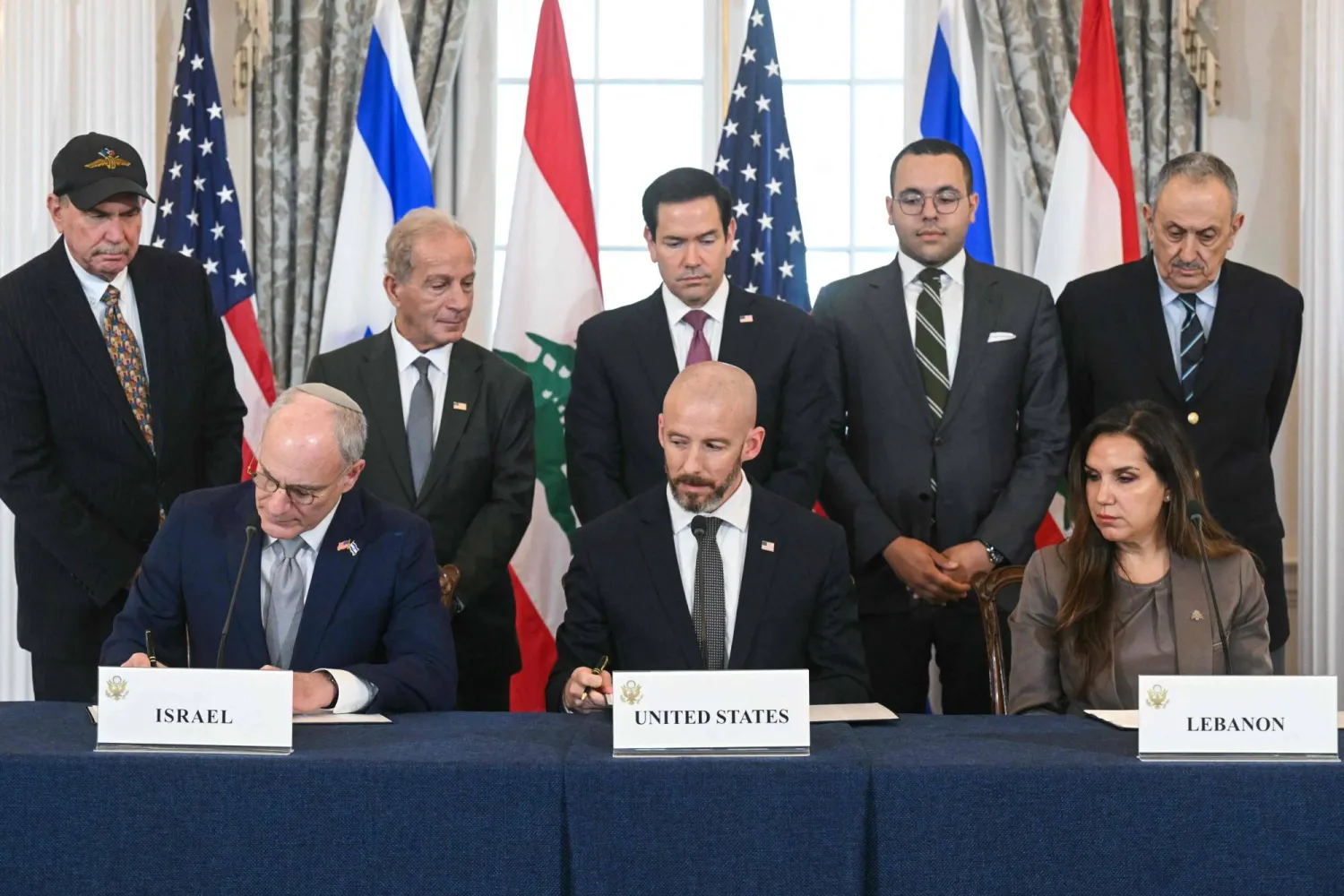
US Secretary of State Marco Rubio (C, back) looks on as (L/R, front row) Israeli Ambassador to the US Yechiel Leiter, State Department Chief of Staff Daniel Holler, and Lebanese Ambassador to the US Nada Hamadeh sign a framework agreement at the US Department of State in Washington, DC, on June 26, 2026. (AFP)
TT

US Sees Lebanon and Israel Framework Agreement as a Step Toward ‘Lasting Peace’

US Secretary of State Marco Rubio (C, back) looks on as (L/R, front row) Israeli Ambassador to the US Yechiel Leiter, State Department Chief of Staff Daniel Holler, and Lebanese Ambassador to the US Nada Hamadeh sign a framework agreement at the US Department of State in Washington, DC, on June 26, 2026. (AFP)

The fifth round of Lebanese-Israeli negotiations ended in Washington on Friday with the signing of a framework agreement that US Secretary of State Marco Rubio said could help lay the foundation for “lasting peace and security” between the two countries.

At a ceremony where the flags of the United States, Lebanon and Israel stood side by side, Rubio announced a framework agreement between the sovereign government of Lebanon and the government of Israel, mediated and supported by Washington.

The US-sponsored talks shifted the discussion from a ceasefire to a field-based model under which Israel would gradually withdraw from areas it occupies in southern Lebanon. The Lebanese Army would then take control of those areas and prevent the return of Hezbollah’s military presence.

Behind closed doors, and despite talk from Tehran and its allies about “victories” and “resistance,” leaks from negotiating rooms in Washington and Switzerland point to a different picture: firm US pressure, Israeli efforts to secure substantial security gains, and Iranian concessions that could reshape Tehran’s regional influence from Beirut to Baghdad.

Before the agreement was announced, Rubio said Israel and Lebanon had made progress and were close to a “declaration of intentions.” Lebanese President Joseph Aoun said the talks focused on security measures needed to restore stability and extend state authority to Lebanon’s internationally recognized borders. Israeli and Lebanese officials, however, denied US claims that Israel had withdrawn from part of the “buffer zone” as a goodwill gesture.

What emerged on Friday was an initial understanding on direction, not an agreement on implementation. The talks therefore appear to mark the start of a new political and security track rather than the end of the current military phase.

The Lebanese track has also become connected, though not fully merged, with US negotiations with Iran. Washington insists Lebanon’s future is being discussed with its government, while also holding Tehran responsible for restraining Hezbollah and ending its funding and armament. The round has thus become part of a broader test of a regional order that did not exist before the war.

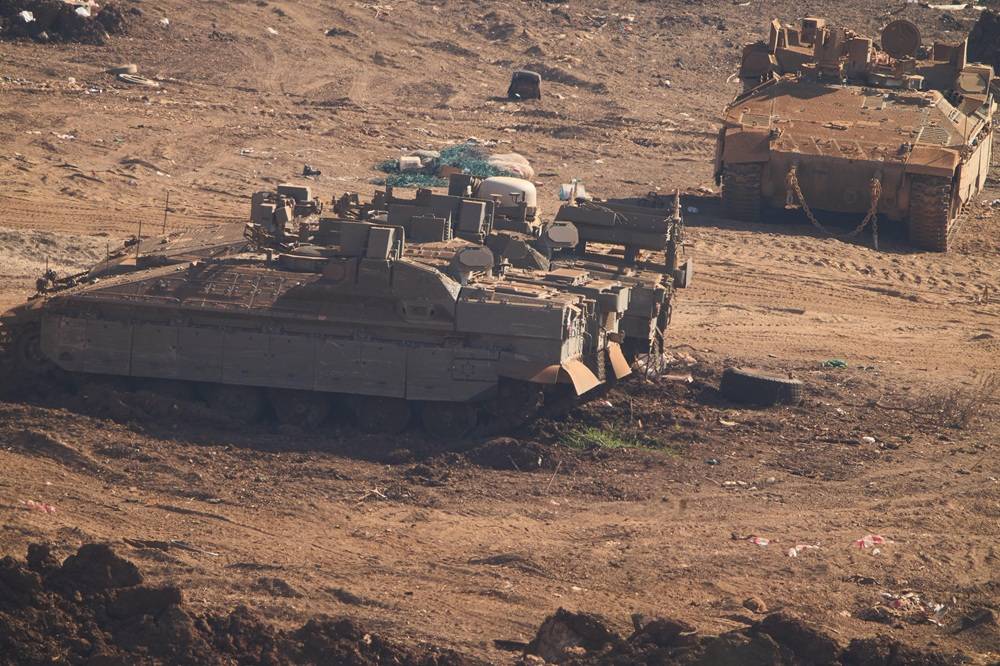
Israeli military APCs parked in northern Israel, near the border with Lebanon, Saturday, June 27, 2026 after Israel and Lebanon sign a framework agreement, described as a first step toward peace following months of conflict between Israel and the Lebanese group Hezbollah. (AP)

Army deployment

The main outcome was preliminary acceptance of “pilot zones.” The plan calls for selecting a defined area from which Israeli forces would withdraw after Hezbollah’s military infrastructure is removed. Lebanese Army units would then deploy and secure the area before the model is repeated elsewhere.

The formula combines Lebanon’s demand for withdrawal and restored sovereignty with Israel’s demand that evacuated territory not become a platform for Hezbollah to rebuild its capabilities.

But Rubio’s phrase “commitment of intentions” also reveals the limits of the achievement. It signals agreement on the broad goal, not on maps, timetables or monitoring rules.

Disagreement also remains over the location of the first zone: whether it begins north of the Litani River, as Lebanese information suggests, or inside the buffer zone established by Israel.

Another unresolved question is whether withdrawal would be part of a comprehensive roadmap or decided case by case according to Israeli security assessments.

The confusion over withdrawal underscored that these questions remain unsettled.

A US official said Israel had pulled forces from part of the area without specifying where. An Israeli security official noted that the army had not withdrawn, while a senior Lebanese official stressed that Beirut knew nothing about such a step.

This may mean Washington announced Israeli political approval before implementation, or that a limited redeployment took place that Israel does not consider a withdrawal and that Lebanon has no information about.

Either way, Washington appears to be trying to prevent the talks from collapsing under the pressure of skirmishes and strikes.

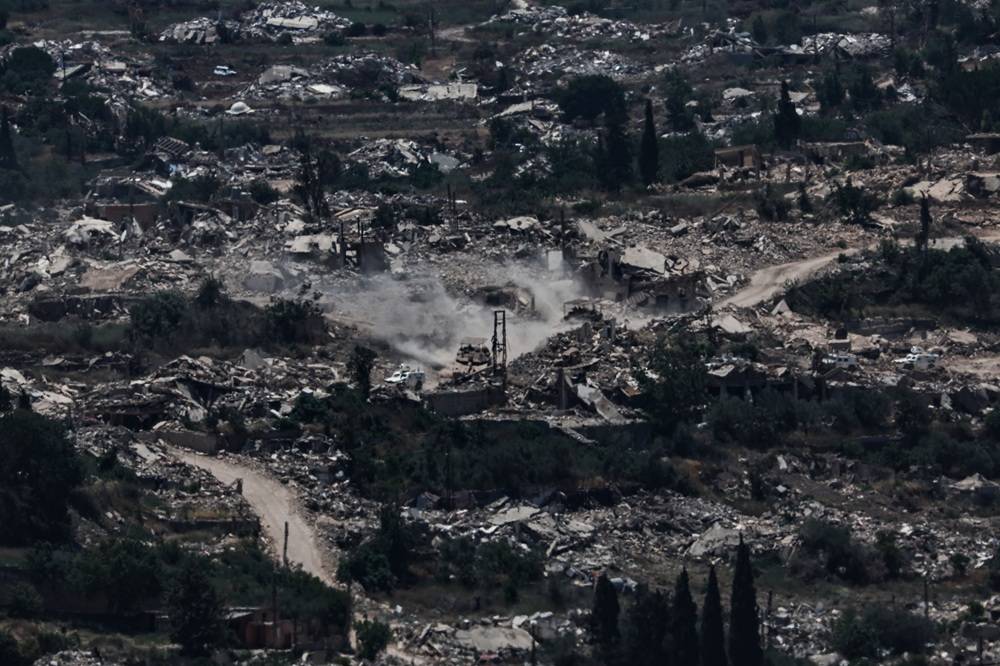
Southern Lebanon remains, in practice, a war zone for tens of thousands of displaced residents unable to return because of Israeli forces or widespread destruction. The success of the agreement will be measured by whether it produces the first clear, documented handover of land to the Lebanese army.

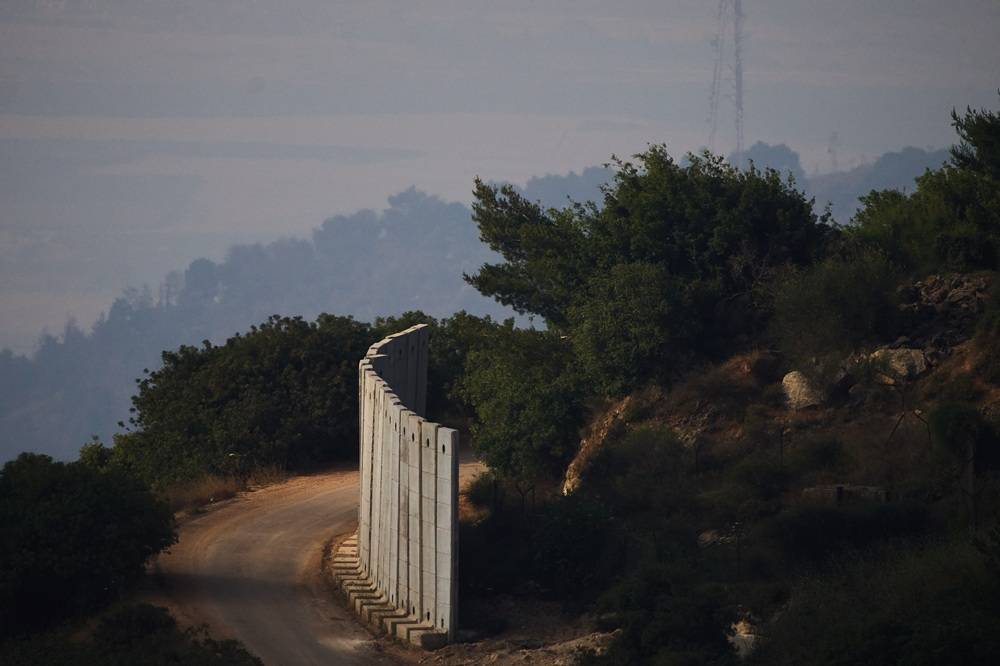
A security wall in northern Israel on the border with Lebanon , Saturday, June 27, 2026 after Israel and Lebanon sign a framework agreement, described as a first step toward peace following months of conflict between Israel and the Lebanese group Hezbollah. (AP)

‘Pilot zones’

The plan means different things to each side. For Lebanon, a pilot zone should be the first step toward full Israeli withdrawal, an end to strikes and assassinations, the return of residents, and the deployment of the state up to the international border.

For Israel, it is a test of the Lebanese army’s ability to dismantle Hezbollah infrastructure, control supply routes and prevent the group’s fighters from returning under civilian cover.

Israel is therefore insisting on a “zone-by-zone” approach. It does not want to commit in advance to a comprehensive withdrawal before seeing the results of the first phase.

It is also linking any pullback to Hezbollah’s disarmament, or at least to clearing the relevant area of military infrastructure and weapons capable of threatening northern Israeli communities.

Beirut fears the plan could yield another form of the occupation: withdrawal from secondary positions while Israel keeps a narrower security strip.

This leaves a central question unanswered: what does Hezbollah’s disarmament actually mean? Does the first phase only require removing weapons and fighters from areas where the state deploys, or does it include Hezbollah’s arsenal across Lebanon? Which weapons come first: precision and long-range missiles, drones, air defenses, anti-tank missiles, tunnels or command centers?

Nothing announced so far proves there is a final agreement on the type of weapons to be collected or the timetable.

Washington appears to be trying to break the problem into stages: first establishing areas free of military presence, then moving to heavy and strategic weapons, while leaving small arms and organizational structures to a longer Lebanese process.

Israel fears this approach will give Hezbollah time to regroup. Lebanon fears a domestic confrontation the army cannot contain.

The US guarantee

This is where the US guarantee becomes essential. The model requires a verification mechanism that determines who decides an area is weapons-free, how violations are monitored, what happens if Hezbollah tries to return, and what limits are placed on Israel’s right to act.

Without agreement on these rules, every violation could become a pretext for renewed Israeli strikes, and every strike could trigger a return to fighting.

Separating Lebanon from Iran’s influence

At first glance, US policy toward Lebanon appears dual-track. Rubio says Lebanon-Israel negotiations are separate from talks with Iran because Lebanon is a sovereign state with a government Washington deals with directly.

In parallel, Vice President JD Vance is leading talks with Tehran that include ending the fighting in Lebanon, while President Donald Trump has threatened to strike Iran again if it fails to stop Hezbollah from “causing trouble.”

Rubio’s track identifies the legitimate decision-maker: the Lebanese government, not Iran or Hezbollah. Vance’s track deals with the actor capable of obstructing the US efforts.

In that sense, Washington is negotiating Lebanon’s future with Beirut, while negotiating with Tehran over support for the force that could derail any arrangement. It is using Iran’s need to stabilize the ceasefire and ease sanctions to pressure it on Hezbollah without granting it guardianship over Lebanon.

Trump’s warnings are therefore more than just threats. They shift responsibility for Hezbollah’s actions to its sponsor, Iran, suggesting that continued violence in Lebanon could carry a direct cost for Tehran.

The strategy is risky. Including Lebanon in a US-Iran understanding could allow Tehran to claim that any Israeli withdrawal resulted from its pressure, not from the Lebanese track.

It also raises fears in Beirut and Tel Aviv that Lebanese security details could become bargaining chips in talks over the nuclear file, sanctions and the Strait of Hormuz.

That is why Rubio insists publicly on separation, even as he acknowledges that Iran’s relationship with Hezbollah cannot be ignored.

Washington may be unable to separate the two tracks completely, but it is trying to prevent their political merger.

Its success depends on using Iranian influence to restrain Hezbollah without turning Iran into a partner in shaping the Lebanese state or its arrangements with Israel.

Israeli tank maneuvers as United Nations Interim Force in Lebanon (UNIFIL) convoy drive between destroyed houses in the south Lebanon village of Mais al-Jabal, as seen from the Israeli side of the border in the upper Galilee, 26 June 2026. (EPA)

Israeli concerns

Israel’s concern is that a US-Iran understanding could save Hezbollah from the consequences of the war. Israeli officials fear Washington’s priority may shift from dismantling the group and reducing Iranian influence to simply preserving a ceasefire and preventing conflict, while pressuring Israel to withdraw before durable security guarantees are in place.

Israel therefore is insisting on freedom to act against what it sees as rearmament or imminent threats and has not offered an unconditional commitment to return to the border. The buffer zone has become both a negotiating card and a security guarantee. Giving it up without disarmament would expose Prime Minister Benjamin Netanyahu to domestic criticism.

The Lebanese army, meanwhile, faces a test that goes beyond entering territory vacated by Israel. It must prove it can remain there, control it, prevent Hezbollah’s return, deal with weapons depots and tunnels, and avoid being dragged into civil strife.

It also needs manpower, equipment, funding and political cover, all of which remain uncertain, especially amid widespread destruction and the need to protect returning residents and secure the border.

The United States is studying training for Lebanese units and ways to verify their readiness and reliability. Reports have suggested a possible role for US Central Command, or CENTCOM, in supervision or monitoring, but no final announcement has clarified whether CENTCOM would directly vet personnel or limit itself to support and coordination.

Analysts say the deeper problem is that army deployment is not the same as disarmament.

The army may be able to control a specific area after an Israeli withdrawal if it receives enough support. But dismantling Hezbollah’s network across Lebanon requires a national political decision, a gradual mechanism, guarantees for the Shiite community and steps to prevent Iran from rebuilding funding and weapons channels.

If Washington burdens the army with more than it can carry, the model may turn from a test of state sovereignty into a test that exposes the limits of the state.


Through Lebanon… Is a New Regional Order Taking Shape?

Esmail Qaani 
Esmail Qaani 
TT

Through Lebanon… Is a New Regional Order Taking Shape?

Esmail Qaani 
Esmail Qaani 

Iran is portraying the outcome of the current war as a “victory” that forced Israel to consider withdrawal. That narrative was reinforced by a warning from Esmail Qaani, commander of the Quds Force, who said Israel would either withdraw voluntarily or “flee in defeat”, a clear attempt to present the negotiating process as the result of the resilience of Tehran’s regional axis.

While Qaani’s remarks are unmistakably mobilizing rhetoric aimed at domestic audiences and Iran’s regional allies, one fact cannot be overlooked: Tehran succeeded in making a ceasefire in Lebanon part of its understandings with Washington. Despite the military blows it has sustained, Iran has preserved both its political system and a key regional bargaining chip.

Measured against the concessions, Tehran has been forced to accept, however, the picture looks different. Lebanon is engaged in direct negotiations with Israel over the deployment of the Lebanese Army and the disarmament of Hezbollah, Iran’s most prominent regional ally. Washington has also publicly held Iran responsible for Hezbollah’s actions, while Iran-aligned factions in Iraq are facing pressure to integrate into state institutions or reduce their independent armed presence. At the same time, negotiations over sanctions and Iran’s nuclear program have become linked, to some extent, to Tehran’s ability to rein in its regional network.

Writing in Foreign Affairs, former US ambassador James Jeffrey argues that failing to achieve maximum objectives does not amount to an Iranian victory. In his view, the conflicts since 2023 have weakened Iran’s capabilities, eroded its network of proxies, and strengthened Washington’s position. That assessment remains open to debate, however, given that Hezbollah has not disappeared, Iraqi armed factions have not been disarmed, and Iran has demonstrated an ability to use the Strait of Hormuz and other regional flashpoints to compel direct negotiations.

It may therefore be more accurate to say the region is entering a transitional phase rather than witnessing the definitive end of Iran’s regional axis. Tehran appears to be shifting from reliance on large, openly organized groups with extensive arsenals to smaller, more clandestine networks, or accepting the formal integration of some factions into state institutions while preserving its influence within them.

The success of the Lebanese model will therefore carry significance far beyond Lebanon itself. If Israel withdraws, the Lebanese Army deploys, and Hezbollah is prevented from re-establishing its presence, it would set a precedent for placing arms exclusively in the hands of the state. Only then could it be said that the fifth round of negotiations marked the beginning of a new phase for Lebanon and the wider region. If, however, withdrawal remains stalled or Hezbollah returns to evacuated areas, the fifth round will amount to little more than another negotiated truce.