‘Sami’: ‘Caesar’ Approached Me with Photos of Torture Victims, We Teamed up Against the Dangers

Asharq Al-Awsat publishes the whole story of "Sami" and "Caesar".

Osama Othman sits down for an interview with Asharq Al-Awsat Editor-in-Chief Ghassan Charbel. (Asharq Al-Awsat)
TT

‘Sami’: ‘Caesar’ Approached Me with Photos of Torture Victims, We Teamed up Against the Dangers

Osama Othman sits down for an interview with Asharq Al-Awsat Editor-in-Chief Ghassan Charbel. (Asharq Al-Awsat)

For ten years, the world was eager to uncover the real identity of two men: “Sami” and “Caesar”, who had smuggled photos of victims of torture in the jails of Syria’s ousted President Bashar al-Assad. Their documentation of the torture led the United States to issue the Caesar Act and for trials against Syrian regime members to be held in Europe.

After Assad’s downfall on December 8, Sami chose to reveal his identity – Osama Othman – to Asharq Al-Awsat. Asharq Al-Awsat sat down with him in Paris to recount how Caesar and Sami were born and their journey from the Damascus countryside to world courts in pursuit of justice.

*How did you feel when you learned that Assad had fled Syria?

The truth is we were denied the joy of seeing Assad personally declare that he was leaving power. He never announced his resignation or that he was leaving the country. He simply got on a plane and left Syria. His ouster was not confirmed by a decisive moment, but we had to wait several days for confirmation that he was indeed no longer in Syria and that Syria was now “free Syria” not “Assad’s Syria.” So, our joy took place over stages and an extended period of days that were tinged with hope, fear and anticipation.

*What was your partner Caesar’s reaction to the news?

I haven’t been able to contact Caesar because we were so frantic to confirm that Assad had indeed been toppled and because we were waiting to see what happens next. The truth is that the rapid unfolding of developments and my concerns prevented me from contacting Caesar. This is the moment that we have been waiting for and it has finally been realized. I will use your platform to say to him: “We made it, Caesar.” We achieved what we had sought out to accomplish. We have toppled Assad. “Sami” and Caesar” didn’t do it, but it is the blood of the martyrs in the jails and outside of them. It is the efforts of all Syrians who paid so dearly in blood to reach this moment. We are free. Syria is free.

*So you feel that your work over those long years has not gone to waste?

I believe that the Syrian people have paid a greater price than what a criminal like Assad deserved. He hadn’t remained in his position for all those years due to his intelligence, strength or love of his people. We all know that he remained in power through his regime’s oppressive security apparatus, his allies and all members of his criminal militias, which he brought to Syria to slaughter the people and rob the country.

*Are Assad’s allies partners in the torture?

Assad’s partners are partners in Syria’s destruction. In my position in a rights organization with scores of files on detainees killed under torture, I cannot pin blame on this side or that without evidence. But logically, of course, they were partners in killing everyone who was killed in Syria. They are responsible for every drop of blood spilled. Assad’s allies are partners in his. Everyone who raised their hand at the United Nations Security Council to veto a resolution that liberates the Syrians from Assad’s rule and oppressive regime are complicit as well.

A man stands underground at Seydnaya prison as prisoners' relatives and members of the Syrian civil defense group, known as the White Helmets, search for prisoners in Seydnaya, Syria, December 9, 2024. (Reuters)

The First Photo

*When did you get the idea to gather the evidence of torture in Syrian jails?

It was during the early days of the revolution, perhaps May 2011. I agreed with Caesar to gather photos that he had obtained and which he had told me at the time showed evidence of extreme torture. Before the revolution, the department concerned with gathering legal evidence received photos of accidents involving members of state and security institutions and the army. The photos were taken regularly and routinely.

When the revolution erupted, photos emerged of people who had come under extreme torture and it was evident that they had not died under normal circumstances or in an accident. At this point Caesar did not want to be involved in even capturing these atrocities. He wanted to distance himself completely from this criminal machine, either by defecting, which would have exposed him or his family to extreme danger or by somehow retiring or resigning from the army.

During this time, my memory of the people who had gone missing in the 1982 Hama massacre was still raw. There are thousands of cases of missing people whose death or detention the state has never acknowledged. Under the law, they are deemed missing, which created a lot of legal problems for families. This was a major problem that had persisted for decades. So, I thought about how gathering evidence would provide our Syrian people proof of what happened to their loved ones, who had been detained during protests, on the streets or during raids.

Despite how horrific the situation was, it would at least provide clear legal evidence and offer the families some form of relief. Relief as in they would no longer live in agony of not knowing whether their loved ones are alive or not.

We decided to gather the data. Since the Egyptian and Tunisian revolts were only a few months in at the time, we believed that the Syrian revolution would perhaps end in a few months as well and we would be able to reveal these documents to our people in Syria. But the months stretched on and the regime grew more brutal and scores of Syrians were killed. We started to routinely collect the documents, not thinking about what we would do with them next. We lived in fear of the regime attacks and its random raids.

*How did you respond when Caesar showed you the first photo? You had to make a choice, either forget about it or forge ahead. What did you feel in that moment?

You can expect anything from the Syrian regime. We were mentally prepared from the start to confront this criminal regime. The arrests and deaths under torture were nothing new to the regime and to us. What was new was the rate of the killing, which reached dozens daily. Caesar would take photos of a large number of corpses every day. The regime had for decades committed these crimes against the Syrian people, but the difference was that today, we had the technology to collect evidence.

*What did you say to Caesar when you first saw the photos?

At first, I was worried about Caesar because he could at any moment become a victim like those in his photos. I told him that we must collect these photos. Caesar’s job at the military allowed him to collect a lot of data that would help us. We didn’t believe at the time that the issue would develop into a global case to criminally pursue the regime.

*How did Caesar feel about this?

Caesar had two choices: either quit his job, which would expose him and his relatives to danger, or find a legal way out of his work. However, he believed that quitting wouldn’t do us or our people justice. Obviously, I didn’t pressure Caesar into continuing his work. We made the decision together out of our conviction. We shared the danger, concerns and work.

*Did you think that your actions could cost you your life at any moment?

The Assad regime was a threat and danger to every human being in Syria, whether they had done anything wrong or not. We were under constant danger, even before the revolution erupted. It is the revolt that helped speed up the process of collecting evidence and exposing the regime’s crimes.

What we did was archive the data, which defintely came with its risks. But, amid the revolt, everyone was paying in blood for freedom, so I never thought that what I am doing was more dangerous than what everyone else was going through. On the contrary, I thought I was playing my own role in this uprising.

A damaged picture of Syria's Bashar al-Assad lies on the floor inside Qamishli international airport, after Syrian opposition factions announced that they have ousted Assad, in Qamishli, Syria December 9, 2024. (Reuters)

Team Grows

*So at the beginning it was just you and Caesar?

In the first months, yes. We kept our work secret from our families. Afterwards, we had to build a team around us to protect me and Caesar and provide assistance that would prevent the data, should one or both of us get killed, from being lost. The team began to expand after two or three months.

*How did you maintain secrecy?

Secrecy was not absolute. I can’t claim to have been surrounded by complete secrecy at the beginning. Before we left the country, only six people, including my brother and Caesar, knew about what we were doing. My wife, of course, knew. In the end, it was seven people.

Missing Eyes

*Where was the first photo taken from?

The photos came from the legal evidence department at the military police branch, meaning the victims in the photos were killed under torture at the security branches across Damascus. There were no photos that indicated the victims were from Seydnaya prison.

*What was the most brutal branch? Did torture differ from one branch to another?

When I started sorting the photos according to which branch they came from, I realized that around 50 percent of the victims came from “Branch 215.” At another branch, 227, I noticed that the majority of the victims had missing eyes. I can’t say that the eyes were removed or became decomposed after death. Insects were eating the eyes in their sockets. This was evident in a large number of photos. Perhaps the decomposition of the body made it seem that eyes were missing or maybe the insects were what ate them.

*Where the victims shot dead or killed by sharp objects?

I leave this for the experts. I may have my own opinion, but since this is a legal file, I won’t say it. German authorities have a full copy of the file and they are examining the data. When I say that the data incriminates Assad, my statements are worthless because I don't have the legal expertise. So, I sought to keep the files away from the media and political debates and entrusted them to German and French authorities. I gave them my testimony so that if anything happens to Sami and Caesar, the information will not be lost.

One Woman

*Were there woman and children among the victims?

We found one woman only. As for the children, we found many under the age of 18. Not just that. We also found patients. It was evident that they were taken out of hospitals or were killed while they were receiving treatment. I cannot be conclusive, but you can see medical equipment, such as tubes in arms, catheters, serum bags, and others, still attached to the body. This was all evidence that they were receiving some form of treatment.

*Were there any labels on the victims after they were killed? How did they give a cause of death?

They would simply state “death of detainee numbered so and so”. That’s all.

*So no cause of death is given?

I will leave this to Caesar to explain himself when he chooses to reveal himself. This is at the heart of his work at the military departments.

*How many photos have been obtained?

There could be up to six photos taken of a single victim, based on their injuries or physical traits. So we have some 27,000 photos of some 7,000 victims.

Posters of missing people hang on a monument in the center of Marjeh Square in Damascus on December 26, 2024. (AFP)

Leaving Syria

*When did you stop collecting evidence?

By the end of 2013, the situation had grown too dangerous for the people involved. We could have stayed and collected more, but weighing the danger, we believed it was best to get out of Syria before being busted and losing all the work we accomplished and even our families.

I was not wanted by the regime, so I was able to normally leave Syria to Lebanon in the end of 2013. My family and Caesar left Syria soon after and we ended our work of documenting the victims. We don’t have anything from after September 2013. I spent less than two weeks in Beirut. I managed to get our families and Caesar out of Syria. We eventually settled for a while in Qatar.

Caesar never accompanied me when I left. It was just me and another person. Caesar was still at his job in Syria when I left. He never went to Beirut. I will leave it to him to answer how he left Syria.

*What happened in Qatar?

I was in Doha with Caesar and others. We verified again that this man was indeed working for the regime’s military institution and that these photos were genuine and not fakes. This was before I handed the file to the German authorities. This was the beginning of “Sami” and “Caesar”.

Caesar is the “king witness” as they say in Arabic. The term seemed a bit long. One of the gatherers suggested “Caesar” as in king, and so it was. The gatherers said I also needed a name. I chose “Sami” after a dear close friend, who I haven’t seen in 15 years. Sami is an easy name in different languages.

After Doha, I headed to Türkiye and then Europe.

*Did you receive any support from countries or organizations?

We never received any such support. At that time, we were working with a group of Syrian dissidents and we never came in contact with our hosts in Qatar or elsewhere. We are simply people who are not part of any organization.

When we arrived in Europe, we sensed the burden we were carrying. Soon after, the world started to become less interested in Syria and the regime started to reclaim territory after Russia’s intervention. At that moment, I asked myself: why did I take on such dangers? Why did I expose my relatives to them? What was the point? Was the point heading to Europe where I would become a refugee? This is not why I did all of this and this is not what I want for myself and my children. I sensed that my mission and goals were slipping away from me, so I decided to take action.

I contacted French authorities and informed them that I wanted them to have a copy of the file. I said I wanted to testify before the war crimes court and so it was. But it turned out that France could do nothing if the criminal or victim weren’t French or residing on its territories. Germany did so and so we took our case to it.

Our work was based on consolidating a main principle that the regime was criminal and had committed human rights violations and genocide. We were also motivated by preventing the regime from being allowed to polish its images in any way, shape or form, regardless of the developments in Syria. We threw a wrench in efforts to normalize ties with the regime. So, for years, the “Caesar file” was the main obstacle for the regime to end its international isolation.

A Syrian military defector using the pseudonym “Caesar” wears a hood as he testifies before the Senate Foreign Relations Committee during a hearing titled, Nine Years of Brutality: Assad's Campaign Against the Syrian People on Capitol Hill in Washington, US, March 11, 2020. (Reuters)

Caesar Act

*Whose idea was it to go to the United States?

We never had plans to go to the US, but some Syrian organizations working there pressured us into presenting the case to the American administration. I was persuaded that Barack Obama’s administration was not interested in even opening the file due to an incident when I was in Jordan. At the time, some of the earliest photos of the file were sent to the State Department through a defected Syrian lawmaker. The State Department never showed any form of interest in the issue.

Around a year later, the Syrian groups in the US pressured us to approach Washington. They knew how things worked in the administration and how to use this file to make a difference, even if the man in the White House didn’t want to. It was a long battle we waged with our Syrian brothers in the US that was crowned with the issuing of the “Caesar Syria Civilian Protection Act”, or “Caesar Act”.

*Do you believe the Caesar Act helped curb the work of the regime?

We may have to examine closely what impact the Act had on the regime, but it certainly made it difficult for it to rebuild its military machine. It was still able to support its forces and Shabiha (thugs), even the militias it brought in from other countries, to commit more killing and exercise more oppression in Syria.

In the end, this is an American law that meets the interests of the Syrian people in several aspects. I don’t want to say that the Caesar Act was the sole crowning achievement of the Caesar file. Several great efforts were exerted by Syrian organizations in the US and the file was named in honor of this man.

*The interview continues on Wednesday.


First Ramadan After Truce Brings Flicker of Joy in Devastated Gaza 

Worshippers perform evening Tarawih prayer on the first night of the holy fasting month of Ramadan at the Al-Kanz Mosque, which was damaged during the Israel-Hamas war, in Gaza City, Tuesday, Feb. 17, 2026. (AP)
TT

First Ramadan After Truce Brings Flicker of Joy in Devastated Gaza 

Worshippers perform evening Tarawih prayer on the first night of the holy fasting month of Ramadan at the Al-Kanz Mosque, which was damaged during the Israel-Hamas war, in Gaza City, Tuesday, Feb. 17, 2026. (AP)

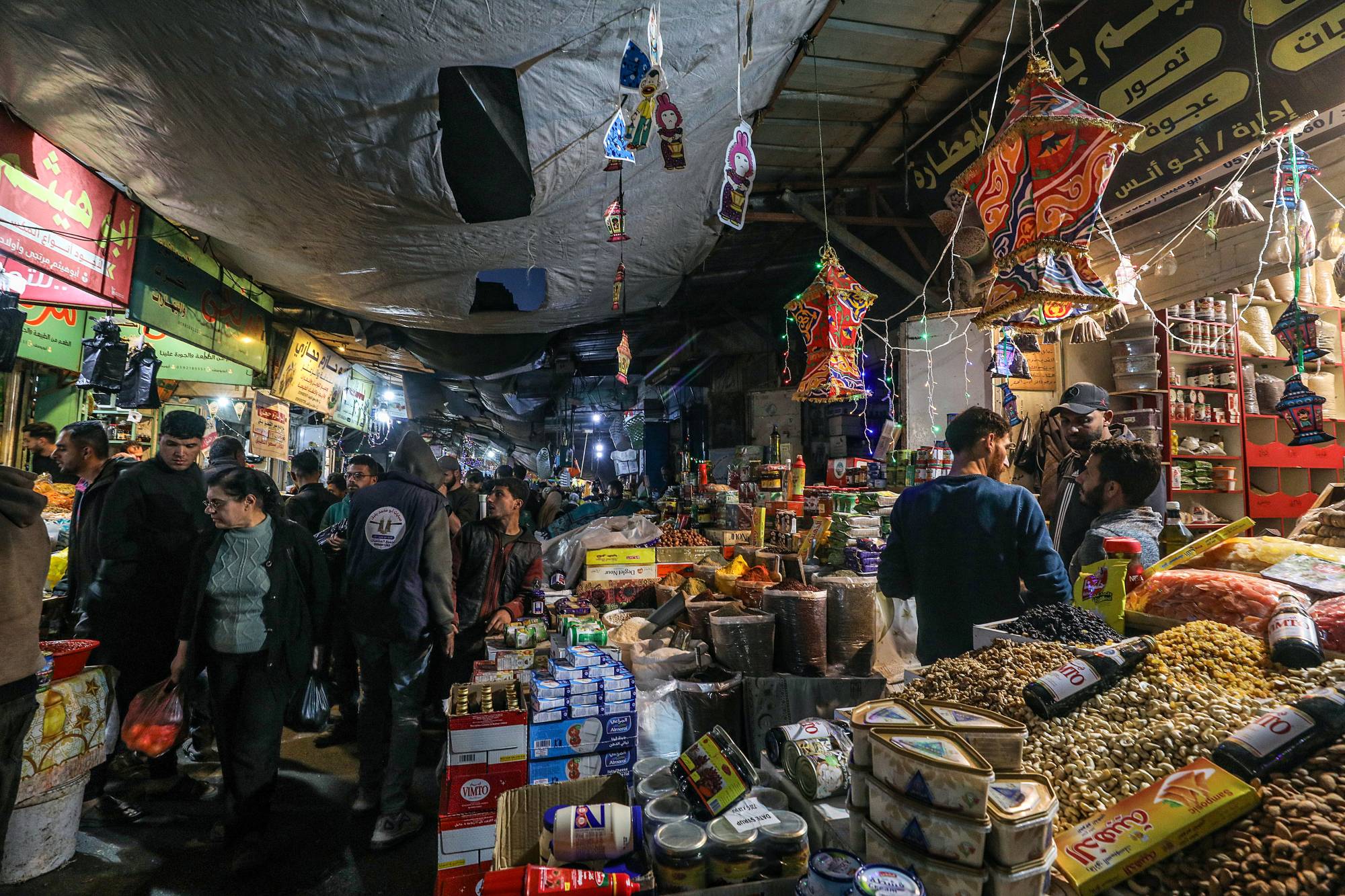
Little Ramadan lanterns and string lights appeared on streets lined with collapsed buildings and piles of rubble in Gaza City, bringing joy and respite as Islam's holiest month began -- the first since October's ceasefire.

In the Omari mosque, dozens of worshippers performed the first Ramadan morning prayer, fajr, bare feet on the carpet but donning heavy jackets to stave off the winter cold.

"Despite the occupation, the destruction of mosques and schools, and the demolition of our homes... we came in spite of these harsh conditions," Abu Adam, a resident of Gaza City who came to pray, told AFP.

"Even last night, when the area was targeted, we remained determined to head to the mosque to worship God," he said.

A security source in Gaza told AFP Wednesday that artillery shelling targeted the eastern parts of Gaza City that morning.

The source added that artillery shelling also targeted a refugee camp in central Gaza.

Israel does not allow international journalists to enter the Gaza Strip, preventing AFP and other news organizations from independently verifying casualty figures.

A Palestinian vendor sells food in a market ahead of the holy month of Ramadan in Gaza City, 17 February 2026. (EPA)

- 'Stifled joy' -

In Gaza's south, tens of thousands of people still live in tents and makeshift shelters as they wait for the territory's reconstruction after a US-brokered ceasefire took hold in October.

Nivin Ahmed, who lives in a tent in the area known as Al-Mawasi, told AFP this first Ramadan without war brought "mixed and varied feelings".

"The joy is stifled. We miss people who were martyred, are still missing, detained, or even travelled," he said.

"The Ramadan table used to be full of the most delicious dishes and bring together all our loved ones," the 50-year-old said.

"Today, I can barely prepare a main dish and a side dish. Everything is expensive. I can't invite anyone for Iftar or suhoor," he said, referring to the meals eaten before and after the daily fast of Ramadan.

Despite the ceasefire, shortages remain in Gaza, whose battered economy and material damage have rendered most residents at least partly dependent on humanitarian aid for their basic needs.

But with all entries into the tiny territory under Israeli control, not enough goods are able to enter to bring prices down, according to the United Nations and aid groups.

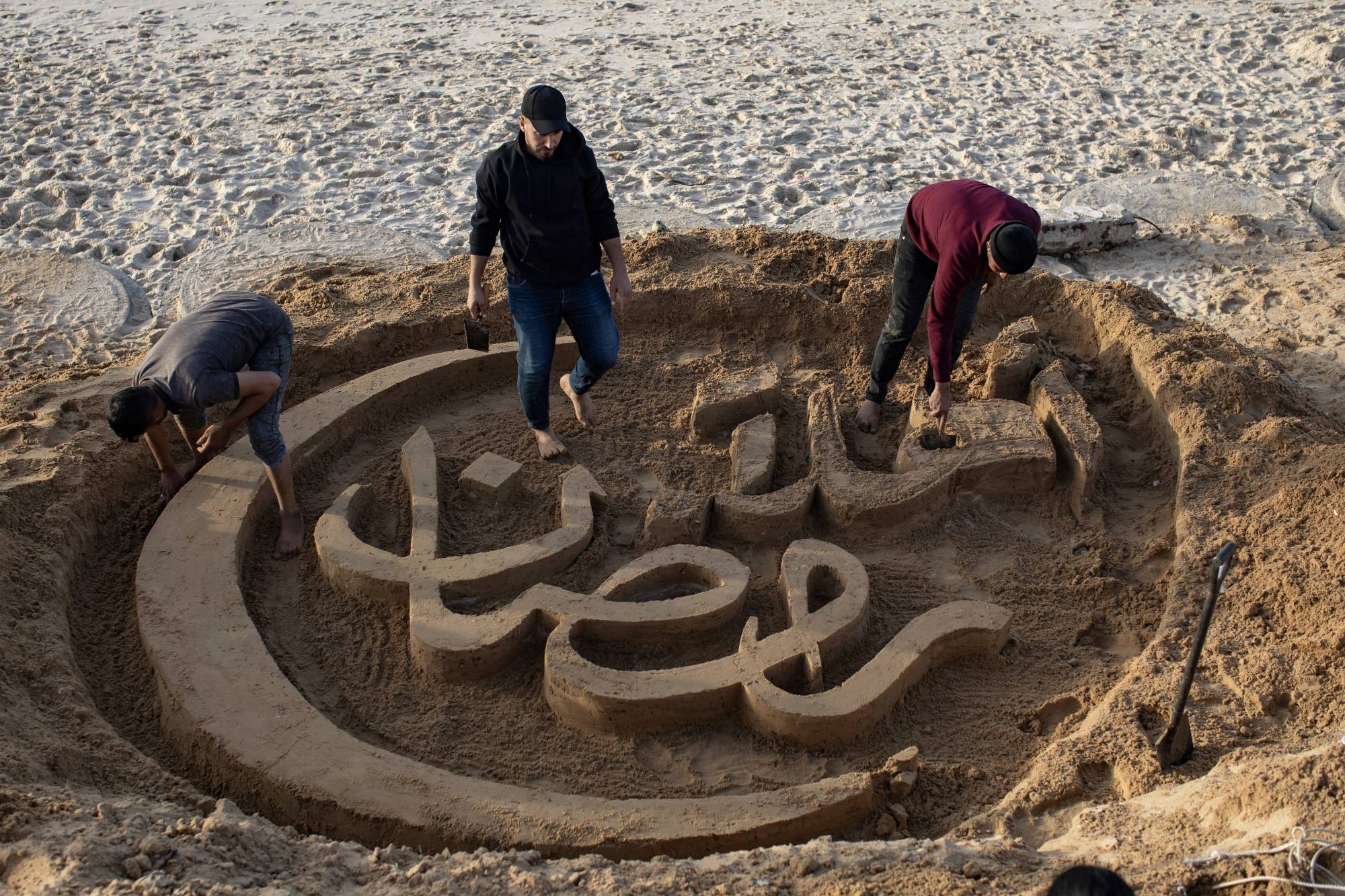
A sand sculpture bearing the phrase "Welcome, Ramadan," created by Palestinian artist Yazeed Abu Jarad, on a beach in Khan Younis, southern Gaza Strip, 17 February 2026, amid a ceasefire between Israel and Hamas. (EPA)

- 'Still special' -

Maha Fathi, 37, was displaced from Gaza City and lives in a tent west of the city.

"Despite all the destruction and suffering in Gaza, Ramadan is still special," she told AFP.

"People have begun to empathize with each other's suffering again after everyone was preoccupied with themselves during the war."

She said that her family and neighbors were able to share moments of joy as they prepared food for suhoor and set up Ramadan decorations.

"Everyone longs for the atmosphere of Ramadan. Seeing the decorations and the activity in the markets fills us with hope for a return to stability," she added.

On the beach at central Gaza's Deir al-Balah, Palestinian artist Yazeed Abu Jarad contributed to the holiday spirit with his art.

In the sand near the Mediterranean Sea, he sculpted "Welcome Ramadan" in ornate Arabic calligraphy, under the curious eye of children from a nearby tent camp.

Nearly all of Gaza's 2.2 million residents were displaced at least once during the more than two years of war between Israel and Hamas, sparked by the latter's unprecedented October 7 attack on Israel.

Mohammed al-Madhoun, 43, also lives in a tent west of Gaza City, and hoped for brighter days ahead.

"I hope this is the last Ramadan we spend in tents. I feel helpless in front of my children when they ask me to buy lanterns and dream of an Iftar table with all their favorite foods."

"We try to find joy despite everything", he said, describing his first Ramadan night out with the neighbors, eating the pre-fast meal and praying.


Bleak Future for West Bank Pupils as Budget Cuts Bite

Private tutoring makes up some, but not all of the teaching shortfall for the Hajj twins. Jaafar ASHTIYEH / AFP
TT

Bleak Future for West Bank Pupils as Budget Cuts Bite

Private tutoring makes up some, but not all of the teaching shortfall for the Hajj twins. Jaafar ASHTIYEH / AFP

At an hour when Ahmad and Mohammed should have been in the classroom, the two brothers sat idle at home in the northern West Bank city of Nablus.

The 10-year-old twins are part of a generation abruptly cut adrift by a fiscal crisis that has slashed public schooling from five days a week to three across the Israeli-occupied Palestinian territory.

The Ramallah-based Palestinian Authority's deepening budget shortfall is cutting through every layer of society across the West Bank.

But nowhere are the consequences more stark than in its schools, where reduced salaries for teachers, shortened weeks and mounting uncertainty are reshaping the future of around 630,000 pupils.

Unable to meet its wage bill in full, the Palestinian Authority has cut teachers' pay to 60 percent, with public schools now operating at less than two-thirds capacity.

"Without proper education, there is no university. That means their future could be lost," Ibrahim al-Hajj, father of the twins, told AFP.

The budget shortfall stems in part from Israel's decision to withhold customs tax revenues it collects on the Palestinian Authority's behalf, a measure taken after the war in Gaza erupted in October 2023.

The West Bank's economy has also been hammered by a halt to permits for Palestinians seeking work in Israel and the proliferation of checkpoints and other movement controls.

- 'No foundation' for learning -

"Educational opportunities we had were much better than what this generation has today," said Aisha Khatib, 57, headmistress of the brothers' school in Nablus.

"Salaries are cut, working days are reduced, and students are not receiving enough education to become properly educated adults," she said, adding that many teachers had left for other work, while some students had begun working to help support their families during prolonged school closures.

Hajj said he worried about the time his sons were losing.

When classes are cancelled, he and his wife must leave the boys alone at home, where they spend much of the day on their phones or watching television.

Part of the time, the brothers attend private tutoring.

"We go downstairs to the teacher and she teaches us. Then we go back home," said Mohammad, who enjoys English lessons and hopes to become a carpenter.

But the extra lessons are costly, and Hajj, a farmer, said he cannot indefinitely compensate for what he sees as a steady academic decline.

Tamara Shtayyeh, a teacher in Nablus, said she had seen the impact firsthand in her own household.

Her 16-year-old daughter Zeena, who is due to sit the Palestinian high school exam, Tawjihi, next year, has seen her average grades drop by six percentage points since classroom hours were reduced, Shtayyeh said.

Younger pupils, however, may face the gravest consequences.

"In the basic stage, there is no proper foundation," she said. "Especially from first to fourth grade, there is no solid grounding in writing or reading."

Irregular attendance, with pupils out of school more often than in, has eroded attention spans and discipline, she added.

"There is a clear decline in students' levels -- lower grades, tension, laziness," Shtayyeh said.

- 'Systemic emergency' -

For UN-run schools teaching around 48,000 students in refugee camps across the West Bank, the picture is equally bleak.

The territory has shifted from "a learning poverty crisis to a full-scale systemic emergency," said Jonathan Fowler, spokesman for the UN agency for Palestinian refugees, UNRWA.

UNRWA schools are widely regarded as offering comparatively high educational standards.

But Fowler said proficiency in Arabic and mathematics had plummeted in recent years, driven not only by the budget crisis but also by Israeli military incursions and the lingering effects of the Covid-19 pandemic.

"The combination of hybrid schooling, trauma and over 2,000 documented incidents of military or settler interference in 2024-25 has resulted in a landscape of lost learning for thousands of Palestinian refugee students," he said.

UNRWA itself is weighing a shorter school week as it grapples with its own funding shortfall, after key donor countries - including the United States under President Donald Trump - halted contributions to the agency, the main provider of health and education services in West Bank refugee camps.

In the northern West Bank, where Israeli military operations in refugee camps displaced around 35,000 people in 2025, some pupils have lost up to 45 percent of learning days, Fowler said.

Elsewhere, schools face demolition orders from Israeli authorities or outright closure, including six UNRWA schools in annexed east Jerusalem.

Teachers say the cumulative toll is profound.

"We are supposed to look toward a bright and successful future," Shtayyeh said. "But what we are seeing is things getting worse and worse."


Security Issues Complicate Tasks of ‘Technocratic Committee’ in Gaza Strip

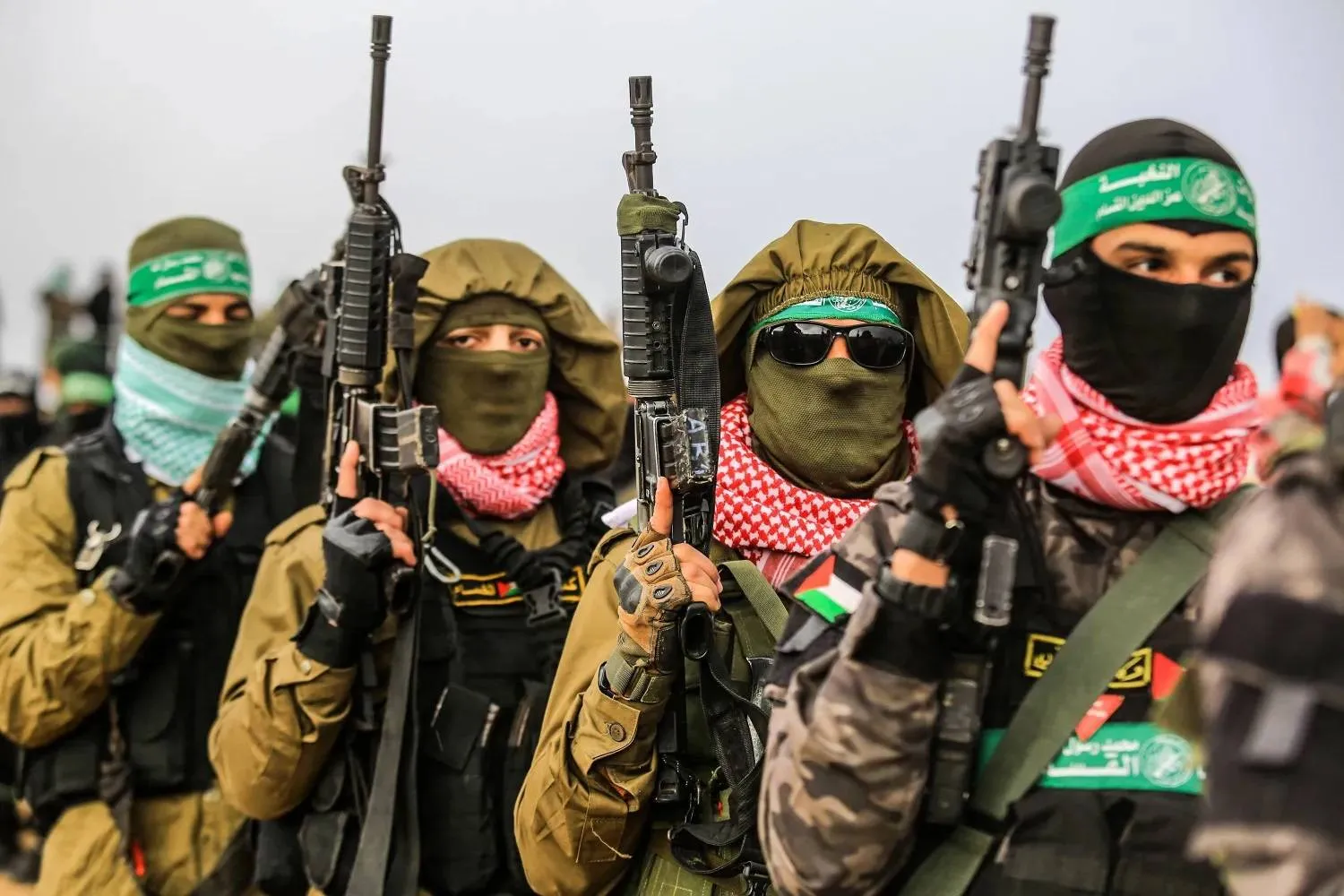
Fighters from the Izz ad-Din al-Qassam Brigades, the armed wing of Hamas, in Khan Younis, Gaza Strip, Feb. 20, 2025. (dpa)
TT

Security Issues Complicate Tasks of ‘Technocratic Committee’ in Gaza Strip

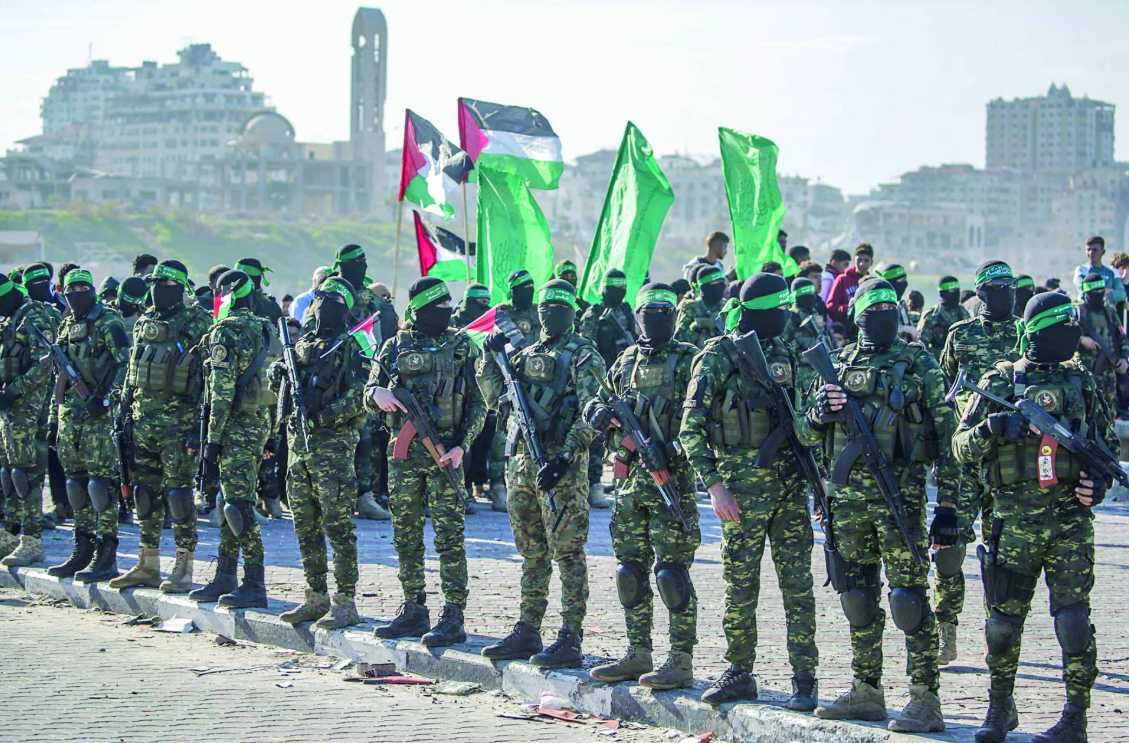
Fighters from the Izz ad-Din al-Qassam Brigades, the armed wing of Hamas, in Khan Younis, Gaza Strip, Feb. 20, 2025. (dpa)

The Palestinian National Committee tasked with administering the Gaza Strip is facing a number of challenges that go beyond Israel’s continued veto on its entry into the enclave via the Rafah crossing. These challenges extend to several issues related to the handover of authority from Hamas, foremost among them the security file.

Nasman and the Interior Ministry File

During talks held to form the committee, and even after its members were selected, Hamas repeatedly sought to exclude retired Palestinian intelligence officer Sami Nasman from the interior portfolio, which would be responsible for security conditions inside the Gaza Strip. Those efforts failed amid insistence by mediators and the United States that Nasman remain in his post, after Rami Hilles, who had been assigned the religious endowments and religious affairs portfolio, was removed in response to Hamas’s demands, as well as those of other Palestinian factions.

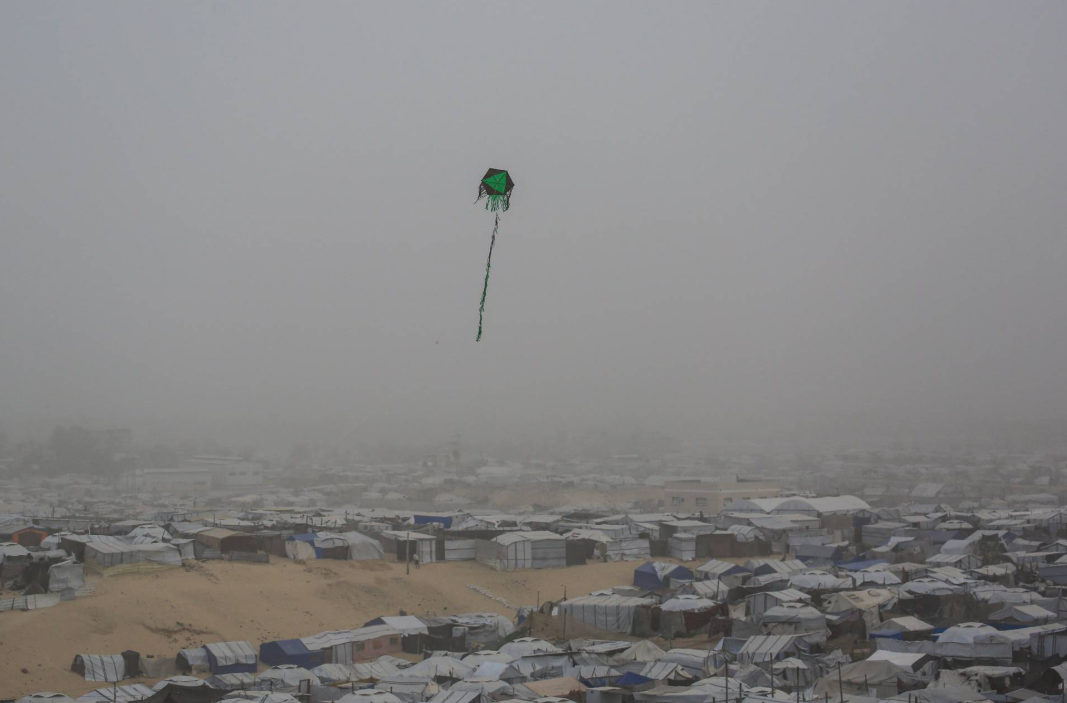
A kite flies over a camp for displaced people in Khan Younis, in the Gaza Strip, on Saturday. (AFP)

Sources close to the committee told Asharq Al-Awsat that Hamas continues to insist that its security personnel remain in service within the agencies that will operate under the committee’s supervision. This position is rejected not only by the committee’s leadership, but also by the executive body of the Peace Council, as well as other parties including the United States and Israel.

The sources said this issue further complicates the committee’s ability to assume its duties in an orderly manner, explaining that Hamas, by insisting on certain demands related to its security employees and police forces, seeks to impose its presence in one way or another within the committee’s work.

The sources added that there is a prevailing sense within the committee and among other parties that Hamas is determined, by all means, to keep its members within the new administrative framework overseeing the Gaza Strip. They noted that Hamas has continued to make new appointments within the leadership ranks of its security services, describing this as part of attempts to undermine plans prepared by Sami Nasman for managing security.

The new logo of the National Committee for the Administration of Gaza, published on its page on X.

Hamas Denies the Allegations

Sources within Hamas denied those accusations. They told Asharq Al-Awsat that Sami Nasman, “as we understand from multiple parties, does not plan to come to Gaza at this time, which raises serious questions about his commitment to managing the Interior portfolio. Without his presence inside the enclave, he cannot exercise his authority, and that would amount to failure.”

The sources said the movement had many reservations about Nasman, who had previously been convicted by Hamas-run courts over what it described as “sabotage” plots. However, given the current reality, Hamas has no objection to his assumption of those responsibilities.

The sources said government institutions in Gaza are ready to hand over authority, noting that each ministry has detailed procedures and a complete framework in place to ensure a smooth transfer without obstacles. They stressed that Hamas is keen on ensuring the success of the National Committee for the Administration of Gaza.

The sources did not rule out the possibility that overarching policies could be imposed on the committee, which would affect its work and responsibilities inside the Gaza Strip, reducing it to merely an instrument for implementing those policies.

Hamas has repeatedly welcomed the committee’s work in public statements, saying it will fully facilitate its mission.

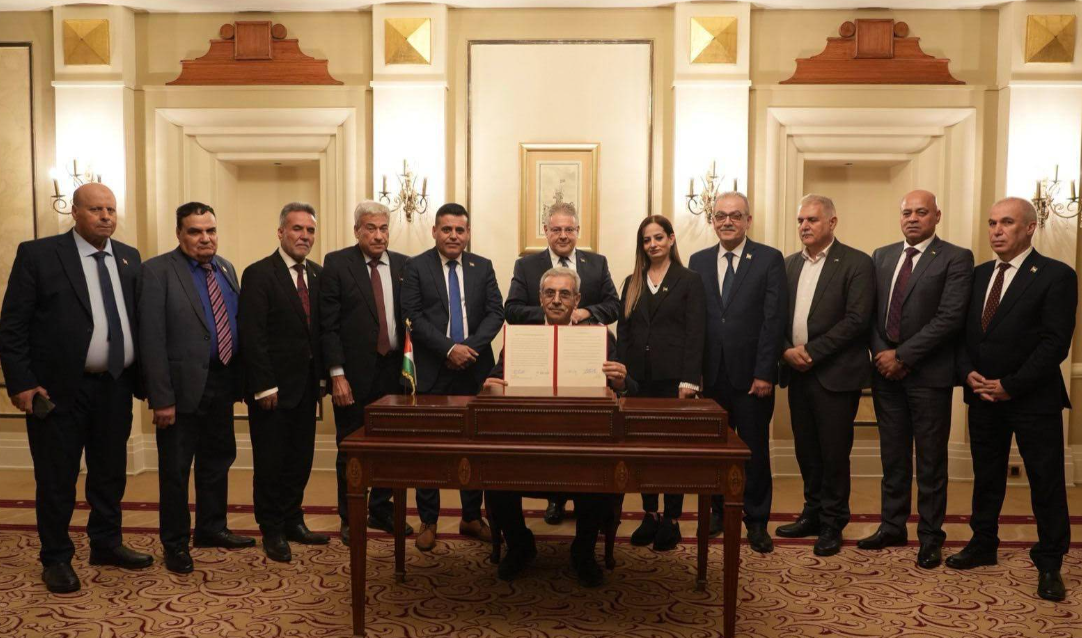
A meeting of the Gaza Administration Committee in Cairo. (File Photo – Egyptian State Information Service)

The Committee’s Position

In a statement issued on Saturday, the National Committee for the Administration of Gaza said that statements and declarations from inside the enclave regarding readiness to transfer the management of all institutions and public facilities represent a step in the interest of citizens and pave the way for the committee to fully assume its responsibilities during the transitional phase.

The committee said that the announcement of readiness for an orderly transition constitutes a pivotal moment for the start of its work as the interim administration of the Gaza Strip, and a real opportunity to halt the humanitarian deterioration and preserve the resilience of residents who have endured severe suffering over the past period, according to the text of the statement.

“Our current priority is to ensure the unimpeded flow of aid, launch the reconstruction process, and create the conditions necessary to strengthen the unity of our people,” the committee said. “This path must be based on clear and defined understandings characterized by transparency and implementability, and aligned with the 20-point plan and UN Security Council Resolution 2803.”

Fighters from Hamas ahead of a prisoner exchange, Feb. 1, 2025. (EPA)

The committee stressed that it cannot effectively assume its responsibilities unless it is granted full administrative and civilian authority necessary to carry out its duties, in addition to policing responsibilities.

“Responsibility requires genuine empowerment that enables it to operate efficiently and independently. This would open the door to serious international support for reconstruction efforts, pave the way for a full Israeli withdrawal, and help restore daily life to normal,” it said.

The committee affirmed its commitment to carrying out this task with a sense of responsibility and professional discipline, and with the highest standards of transparency and accountability, calling on mediators and all relevant parties to expedite the resolution of outstanding issues without delay.

Armed Men in Hospitals

In a related development, the Hamas-run Ministry of Interior and National Security said in a statement on Saturday that it is making continuous and intensive efforts to ensure there are no armed presences within hospitals, particularly involving members of certain families who enter them. The ministry said this is aimed at preserving the sanctity of medical facilities and protecting them as purely humanitarian zones that must remain free of any tensions or armed displays.

The ministry said it has deployed a dedicated police force for field monitoring and enforcement, and to take legal action against violators. It acknowledged facing on-the-ground challenges, particularly in light of repeated Israeli strikes on its personnel while carrying out their duties, which it said has affected the speed of addressing some cases. It said it will continue to carry out its responsibilities with firmness.

Local Palestinian media reported late Friday that Doctors Without Borders decided to suspend all non-urgent medical procedures at Nasser Hospital in Khan Younis starting Jan. 20, 2026, due to concerns related to the management of the facility and the preservation of its neutrality, as well as security breaches inside the hospital complex.

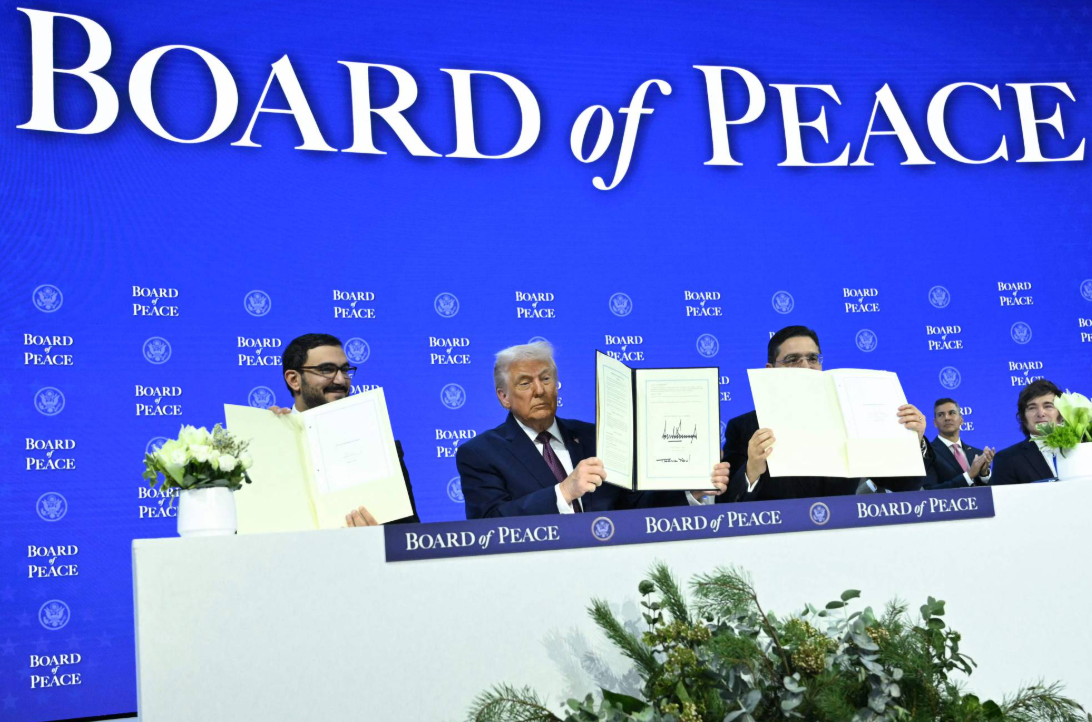
US President Donald Trump holds a document establishing the Peace Council for Gaza in Davos, Switzerland, Jan. 27, 2026. (Reuters)

The organization said in a statement attributed to it, not published on its official platforms or website, that its staff and patients had, in recent months, observed the presence of armed men, some masked, in various areas of the complex, along with incidents of intimidation, arbitrary arrests of patients, and suspected weapons transfers. It said this posed a direct threat to the safety of staff and patients.

Asharq Al-Awsat attempted to obtain confirmation from the organization regarding the authenticity of the statement but received no response.

Field Developments

On the ground, Israeli violations in the Gaza Strip continued. Gunfire from military vehicles and drones, along with artillery shelling, caused injuries in Khan Younis in the south and north of Nuseirat in central Gaza.

Daily demolition operations targeting infrastructure and homes also continued in areas along both sides of the so-called yellow line, across various parts of the enclave.