Syria’s New Rulers Overhaul Economy with Firing ‘Ghost Employees’

A government employee works at a government building in Damascus suburbs, Syria January 8, 2025.REUTERS/Khalil Ashawi
TT

Syria’s New Rulers Overhaul Economy with Firing ‘Ghost Employees’

A government employee works at a government building in Damascus suburbs, Syria January 8, 2025.REUTERS/Khalil Ashawi

Syria's new leaders are undertaking a radical overhaul of the country's broken economy, including plans to fire a third of all public sector workers and privatizing state-run companies dominant during half a century of Assad family rule, Reuters reported.
The pace of the declared crackdown on waste and corruption, which has already seen the first layoffs just weeks after opposition fighters toppled Assad on Dec. 8, has triggered protests from government workers, including over fears of a sectarian jobs purge.
Reuters interviewed five ministers in the interim government formed by former opposition group the Hayat Tahrir al-Sham (HTS). All described the wide scope of plans to shrink the state, including removing numerous "ghost employees" - people who got paid for doing little or nothing during Assad's rule.
Under Assad and his father, Syria was organized as a militarized, state-led economy that favored an inner circle of allies and family members, with members of the family's Alawite sect heavily represented in the public sector.
There is now a major shift to "a competitive free-market economy," Syria's new economy minister, 40-year-old former energy engineer Basil Abdel Hanan, told Reuters. Under transitional president Ahmed al-Sharaa, the government will work on privatizing state-run industrial companies, which Hanan said totaled 107 and were mostly loss making. However, he vowed to keep "strategic" energy and transport assets in public hands. He did not provide names of companies to be sold off. Syria's main industries include oil, cement and steel.
Some state companies appeared to exist solely to embezzle resources and would be closed, Finance Minister Mohammad Abazeed said in an interview.
"We expected corruption, but not to this extent," Abazeed said.
Only 900,000 of 1.3 million people on the government payroll actually come to work, Abazeed said, citing a preliminary review.
"This means there are 400,000 ghost names," Abazeed, an energetic 38-year-old, said in his office. "Removing these will save significant resources."
Mohammad Alskaf, the minister for Administrative Development who oversees public sector headcount, went further, telling Reuters the state would need between 550,000 and 600,000 workers - less than half the current number.
The goal of the reforms, which also aim to simplify the tax system with an amnesty on penalties, was to remove obstacles and encourage investors to return to Syria, Abazeed said.
"So that their factories within the country can serve as a launchpad" for global exports, said Abazeed, previously an economist at the Al-Shamal private university before serving as a treasury official in the opposition stronghold of Idlib in 2023.
IDLIB MODEL
Until sweeping into Damascus in the lightening offensive that ousted Assad, HTS had ruled Idlib as an opposition breakaway province since 2017, attracting investment and the private sector with less red tape and by clamping down on hard-line religious factions.
The new government hopes for a nationwide increase in foreign and domestic investment to generate new jobs as Syria rebuilds from 14 years of conflict, three ministers told Reuters.
However, to replicate the Idlib model, HTS will have to overcome widespread challenges, not least international sanctions that severely impinge on foreign trade.
Maha Katta, a Senior Resilience and Crisis Response Specialist for Arab States at the International Labor Organization, said the economy was currently in no condition to create enough private jobs.
Restructuring the public sector "makes sense," Katta said, but she questioned whether it should be a top priority for a government that needs first to revive the economy.
"I'm not sure if this is really a wise decision," she said.
While acknowledging the interim leaders' imperative to move fast to get a grip on the country, some critics see the scale and pace of the planned changes as overreach.
"They are talking about a transitional process but they are making decisions as if they were a government that was legitimately installed," said Aron Lund, a fellow at Middle East-focused think-tank Century International.
Transitional president al-Sharaa has promised elections, but said they could take four years to organize.
SHOCK ABSORBED
Economy minister Hanan said economic policy would be designed to manage the fallout of rapid market reforms, to avoid the chaos of recession and unemployment that followed 'shock therapy' imposed in the 1990s on post-Soviet nations in Europe.
"The goal is to balance private sector growth with support for the most vulnerable," Hanan said. The government has announced a 400% increase to state salaries, currently around $25 a month, starting February. It is also cushioning the blow of layoffs with severance, or by asking some workers to stay home while needs are assessed.
"To employees who were hired just to receive a salary, we say: please take your salary and stay home, but let us do our job," said Hussein Al-Khatib, Director of Health Facilities at the Ministry of Health. However, discomfort is already visible. Workers showed Reuters lists circulating in the labor and trade ministries that pared Assad-era employment programs for former soldiers who fought on the government's side in the civil war.
One such veteran, Mohammed, told Reuters he had been laid off on Jan. 23 from his data entry job at the labor ministry and given three months paid leave. He said around 80 other former fighters received the same notice, which he shared with Reuters. In response to Reuters questions the labor ministry said that "due to administrative inefficiencies and disguised unemployment" a number of employees had been placed on three-month paid leave to assess their job status, after which their situation will be reviewed.
The plans spurred protests in January in cities including Daraa in southern Syria, where the rebellion against Assad first erupted in 2011, and Latakia on the coast. Such protests were unthinkable under Assad, who responded to rebellion with repression that sparked the civil war.
Employees at the Daraa Health Directorate held placards declaring "No to arbitrary and unjust dismissal" during a demonstration by some two dozen people.
Adham Abu Al-Alaya, who took part, said he feared losing his job. He supported eradicating ghost employment, but denied he or his colleagues were paid for doing nothing. He was hired in 2016 to manage records and settle utility bills.
"My salary helps me manage basic needs, like bread and yoghurt, just to sustain the household," Abu Al-Alaya said, adding that he also works another job to make end meet.
"If this decision goes through, it will increase unemployment across society, which is something we cannot afford," he said.
MILES OF FILES
Finance Minister Abazeed said that since taking over, the former opposition fighters had found monumental corruption and waste, including at Syrian Trading Establishment, a public consumer goods distributor he said received government money for a decade, until a few days before Assad's departure, without ever providing official statements of revenues.
He did not disclose how much money was involved. Reuters could not verify the allegations.
The new government has closed the company, Abazeed said.
For now, the administration has no reliable record of government employees. It is building a database of public sector staff, asking employees to complete an online form. Alskaf, the minister for Administrative Development, said it would take about six months to set up, with a team of 50 people on the job.
Acknowledging the difficulties of the task ahead, Labor Minister Fadi al-Qassem said "renovations are more difficult than new building."
The government also plans to digitize employee records, currently stored in about 60 dusty and neglected rooms containing over a million folders, many tied with string and dating back to the Ottoman era that ended more than a century ago.
To Hiba Baalbaki, 35, a labor ministry digitization specialist, the drive was surprising and encouraging.
Under the previous administration, management shunned her efforts to bring record keeping into the 21st century, including an online platform she had been working on for two years, she said.
"It introduced unwelcome changes and closed avenues for corruption and bribes," she said.



Where Do Ukraine and Russia Stand After Four Years of War? 

A person walks alongside The Wall of Remembrance of the Fallen for Ukraine in Kyiv on February 23, 2026, as the conflict with Russia reaches its four-year mark. (AFP)
TT

Where Do Ukraine and Russia Stand After Four Years of War? 

A person walks alongside The Wall of Remembrance of the Fallen for Ukraine in Kyiv on February 23, 2026, as the conflict with Russia reaches its four-year mark. (AFP)

Russia launched its full-scale invasion of Ukraine on February 24, 2022, unleashing the deadliest war in Europe since World War II.

As the conflict reaches its four-year mark, AFP looks at the state of the conflict and some of the consequences for both countries:

- Destruction -

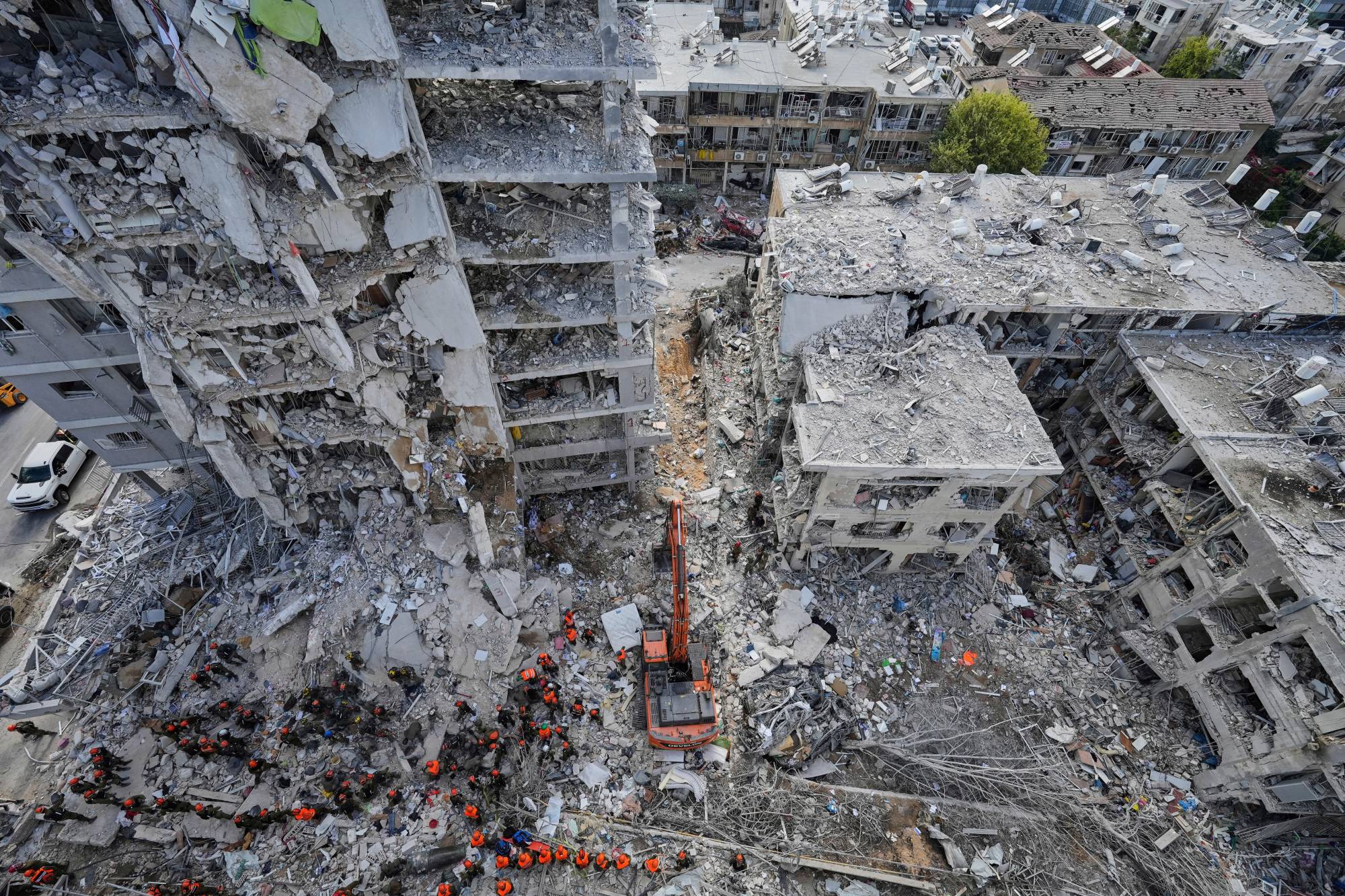
The war has resulted in widespread destruction in Ukraine.

Entire cities in Ukraine's east and south, among them Bakhmut, Toretsk and Vovchansk, have been reduced to rubble by fighting.

The World Health Organization has verified more than 2,800 attacks on healthcare facilities since 2022, while Russian attacks on energy infrastructure have cut heating and power to millions.

Around a fifth of Ukraine is contaminated by mines or unexploded ordnance, according to the UN's Mine Action Service.

The total cost of reconstruction in Ukraine is estimated at around $588 billion over the next decade, the World Bank reported Monday.

- Death -

The United Nations has verified over 15,000 civilian deaths in Ukraine since 2022, although it says the actual number is likely considerably higher as it has no access to areas under Russian occupation, like the port city of Mariupol where thousands are reported to have died in a Russian siege.

Ukrainian retaliatory attacks on Russian border regions have also killed hundreds.

Around 20,000 children have been forcibly displaced or kidnapped from Russian-occupied Ukrainian land, according to estimates by Kyiv.

Forced to flee when Russia invaded, around 5.9 million Ukrainian refugees live outside the country and another 3.7 million are displaced internally, the UN Refugee Agency says.

Neither side releases reliable data on military casualties.

Ukrainian President Volodymyr Zelensky said earlier this month 55,000 of his soldiers had been killed -- a toll widely believed to be an underestimate.

Russia has not given an official update on losses since September 2022.

The BBC and Mediazona, an independent Russian site, have verified the deaths of at least 177,000 Russian soldiers through public obituaries and announcements by family and local officials -- a toll also believed to be below the real number.

The Center for Strategic and International Studies (CSIS) think tank estimates as many as 325,000 Russian soldiers may have been killed since 2022, while putting the number of Ukrainian soldiers killed at 100,000-140,000.

- Frontline and diplomacy -

Moscow occupied around 19.5 percent of Ukraine as of mid-February, according to data from the Institute for the Study of War (ISW).

Around seven percent -- the Crimean peninsula and part of the eastern Donbas region -- was already occupied before the invasion.

Moscow's advances were the biggest since 2022 last year, although they have slowed considerably since the opening months of its campaign, according to ISW data.

The Kremlin is pushing for full control of Ukraine's eastern Donetsk region and a ban on Western military support for Kyiv.

Ukraine says giving in would leave it vulnerable to future attack, is constitutionally impossible, and unacceptable to much of Ukrainian society.

Since Donald Trump returned to the White House, several rounds of talks -- in Istanbul, Abu Dhabi and Geneva -- have failed to secure a deal.

- Economy -

The war has decimated Ukraine's economy and put Russia's under massive strain.

After growing strongly on the back of massive military spending -- up to nine percent of GDP -- Russia's economy has slowed, posting just a one percent expansion last year.

Oil and gas revenues -- which provide roughly a quarter of state budget income -- fell to a five-year low last year, as a wave of Western sanctions and Ukrainian attacks on oil facilities crimped exports.

Ukraine's economy shrank by almost a third in the year after Russia's invasion. It has clawed a little of that back, but its government now depends on the International Monetary Fund and other foreign lenders to cover day-to-day spending.

- Politics and society -

The war has had a deep impact on politics and society in both countries.

Ukraine has suspended elections due to martial law and lately been rocked by a corruption scandal in the war-battered energy sector.

In Russia, authorities have orchestrated a domestic crackdown on dissent unprecedented since the Soviet era.

Russian prosecutors have opened more than 10,000 cases against people accused of criticizing its armed forces, Russian news site Mediazona reported in 2024.

Returning veterans in Russia, many of them former convicts recruited to fight, have been blamed for an increase in violent crime.

- Allies -

Ukraine is heavily dependent on Western weapons, intelligence and finance.

Europe has delivered 201 billion euros in aid since 2022, according to figures from Germany's Kiel Institute.

The United States has supplied $115 billion in total, but Trump has partially suspended arms deliveries and is pushing Europe to pick up the tab.

North Korea sent thousands of soldiers to fight with the Russian army and is widely reported to have sent millions of artillery shells to Moscow.

Iran has supplied drone technology to Moscow, and China has become its vital economic partner, accused in the West of helping the Kremlin avoid sanctions.


What Does Trump Want in Iran? 

An anti-US mural on a building in Tehran, Iran, January 24, 2026. Majid Asgaripour/WANA (West Asia News Agency) via Reuters
TT

What Does Trump Want in Iran? 

An anti-US mural on a building in Tehran, Iran, January 24, 2026. Majid Asgaripour/WANA (West Asia News Agency) via Reuters

President Donald Trump's threats to attack Iran provide little detail on what the long-term US goal would be in the event of a sustained or even brief conflict.

Trump sent warships and dozens of fighter planes to the Middle East and has several options to choose from that could destabilize the region.

Will Trump order surgical strikes targeting Iran's Revolutionary Guard Corps, the backbone of the clerical regime in power, try to take out its missile program -- as Israel wants him to do -- or even try to force regime change in Tehran?

Iran has threatened severe reprisal if it is attacked.

- What are the options? -

Trump said Thursday he would decide in 10 or 15 days whether to order strikes on Iran if no nuclear deal is reached.

The news outlet Axios has reported that Trump was presented with an array of military options that include a direct attack on Iran's supreme leader, Ali Khamenei.

Trump has said many times he prefers a diplomatic route leading to an agreement that addresses not only Iran's nuclear program but also its ballistic missile capability and its support for armed groups such as Hezbollah and Hamas. Iran has said no to making such concessions.

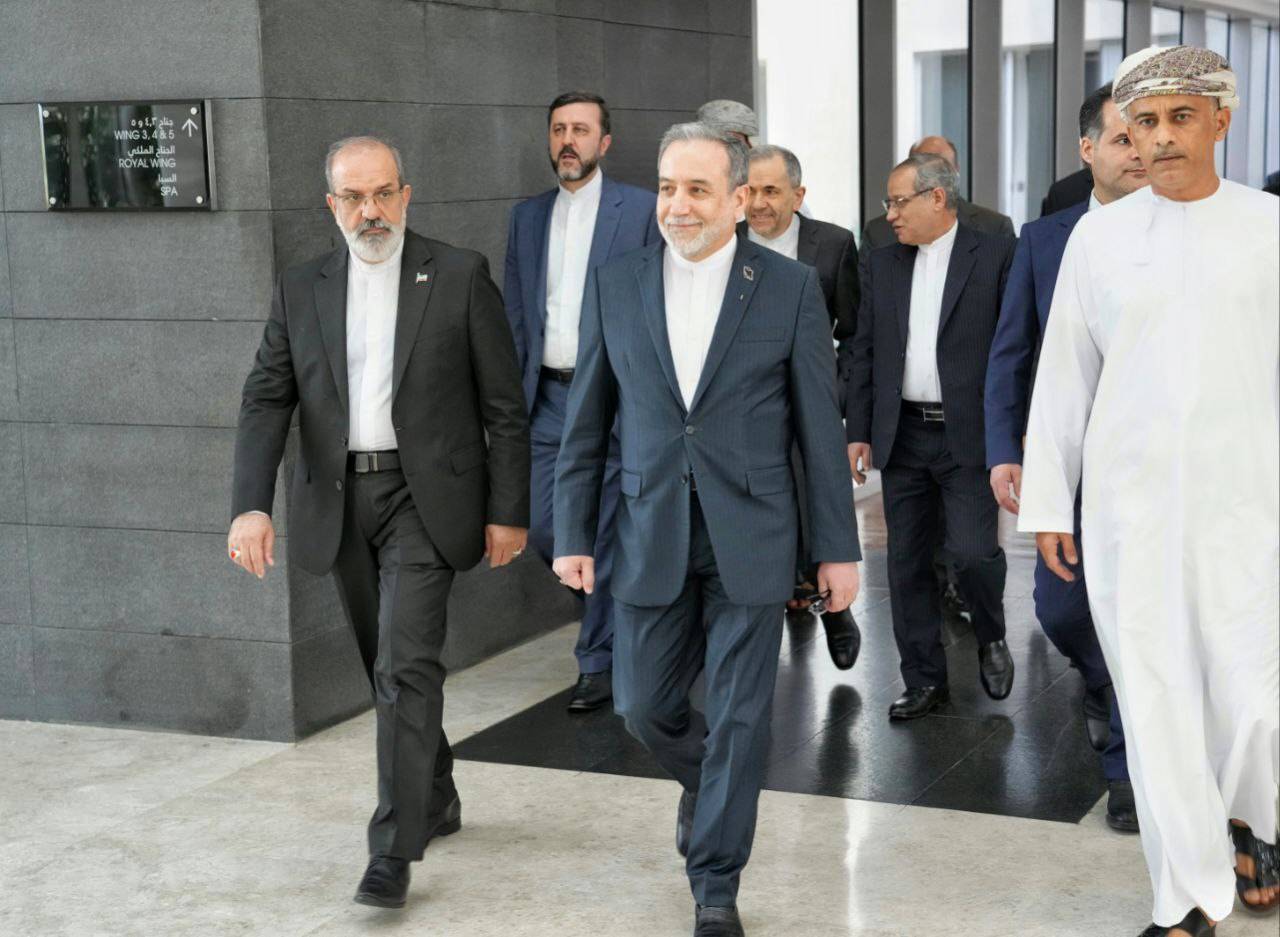
The United States and Iran recently held two rounds of indirect talks, in Oman and Switzerland. They have not brought the two sides' position closer, with talks set to resume Thursday in Switzerland.

Trump is "surprised" that Iran has not "capitulated" given the massive US military buildup, his envoy Steve Witkoff has said.

"The Trump administration most likely aims for a limited conflict that reshapes the balance of power without trapping it in a quagmire," said Alex Vatanka, an analyst at the Middle East Institute in Washington.

Vatanka said Iran is now expecting "a short, high-impact military campaign that would cripple Iran's missile infrastructure, undermine its deterrent, and reset the balance of power after the 12-day war with Israel in June 2025."

- What is the justification? -

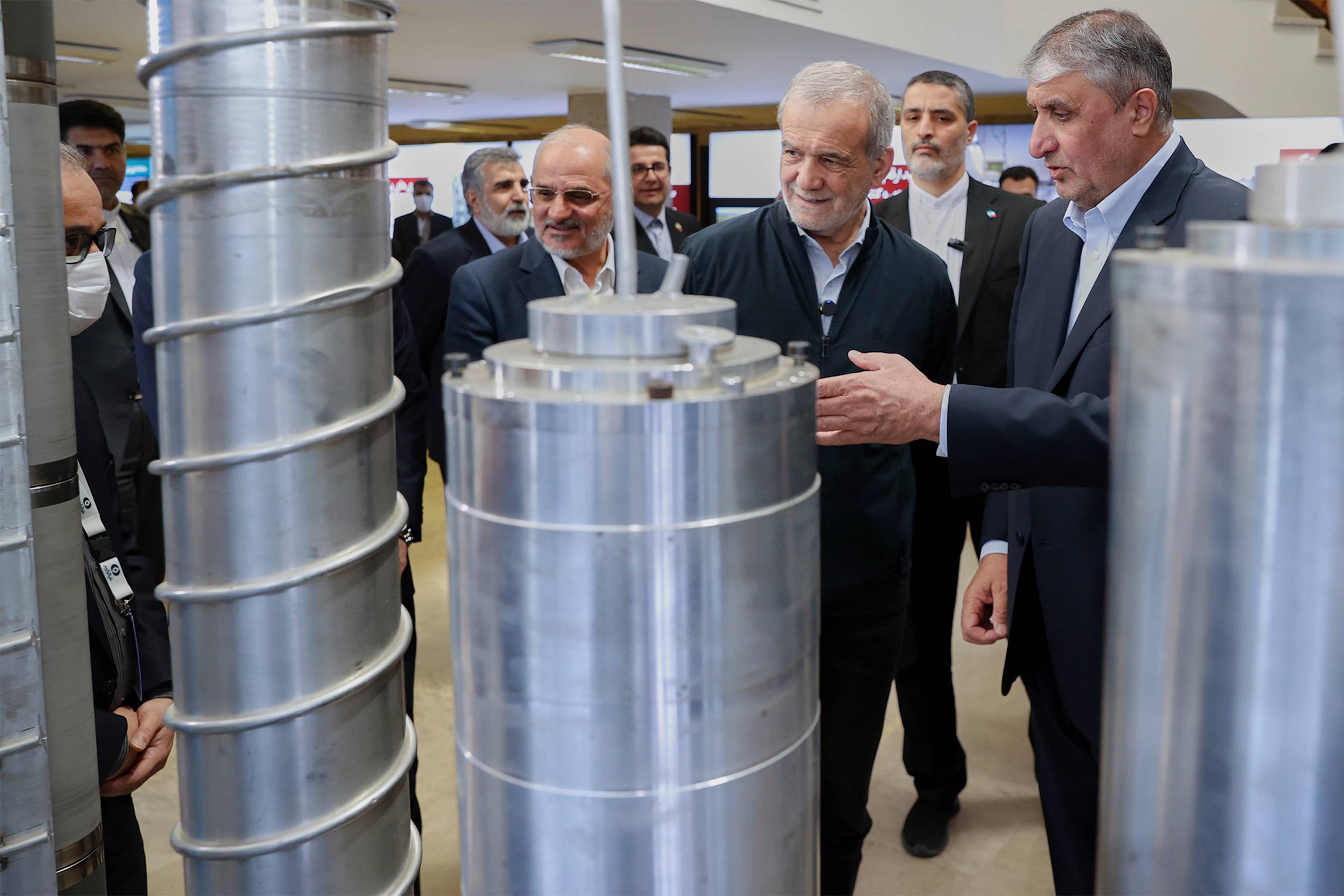
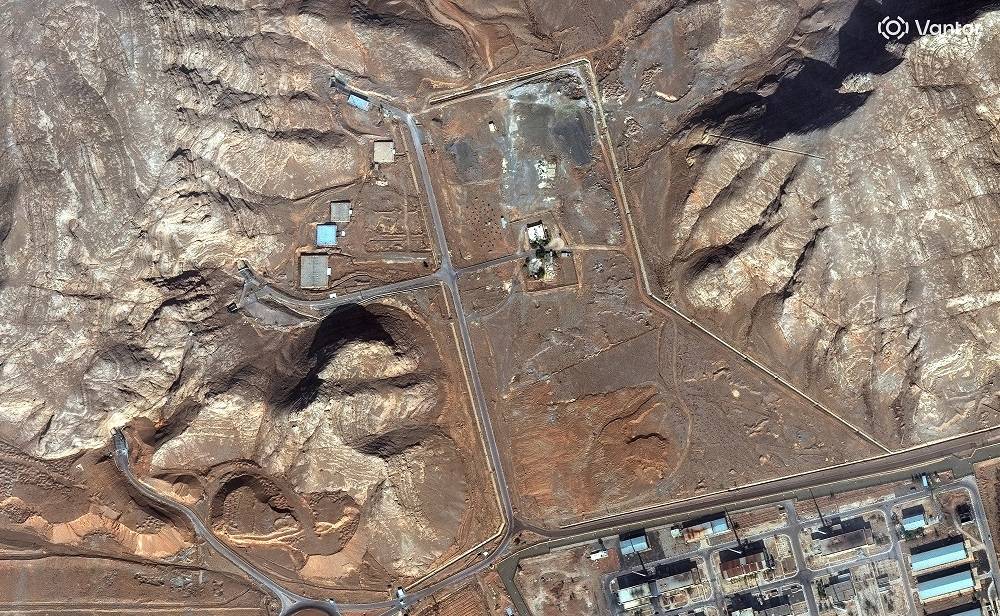
Trump has insisted US forces destroyed Iran's nuclear program in attacks targeting uranium enrichment facilities.

Things changed with the January protest movement in Iran that security forces put down with huge loss of life.

Trump threatened several times to intervene to "help" the Iranian people, but did not act.

Trump boasts often of having brought peace to the Middle East, citing the oft-violated ceasefire he engineered in Gaza between Hamas and Israel.

And he has argued that regime change in Iran would strengthen what he calls a dynamic toward peace in the region.

But opposition Democrats are worried that Trump is leading America into a violent mess and demanding that he consult Congress, the only body in the United States with the authority to declare war.

- US firepower in the region? -

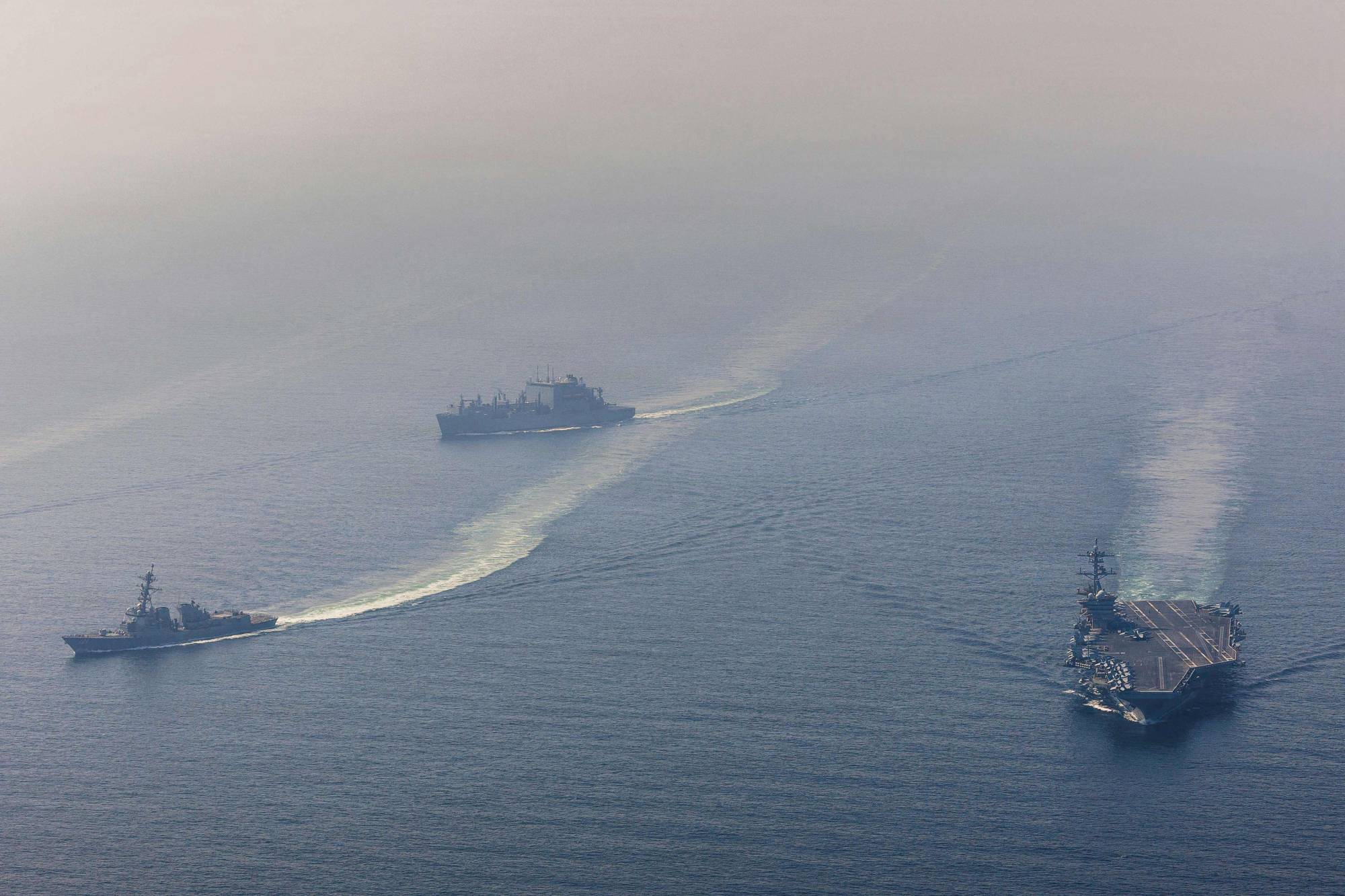
The US military now has 13 warships stationed in the Middle East: the aircraft carrier USS Abraham Lincoln, which arrived late last month, nine destroyers and three frigates.

More warships are on the way. The world's largest vessel, the US aircraft carrier USS Gerald Ford, was photographed sailing through the Strait of Gibraltar to enter the Mediterranean on Friday.

Besides the many planes parked on the aircraft carriers, the United States has sent a powerful force of dozens of warplanes to the Middle East, and tens of thousands of US troops are stationed across the Middle East.

These are potential targets for attack by Iran.

- To what end? -

Richard Haas, the former president of the Council on Foreign Relations, said it is not clear what impact a conflict of any duration and scale would have on Iran's government.

"It could just as easily strengthen it as weaken it. And it is impossible to know what would succeed this regime if it were to fall," Haas wrote recently on Substack.

Secretary of State Marco Rubio told a Senate hearing late last month that no one really knows what will happen if Iran's Supreme leader falls "other than the hope that there would be some ability to have somebody within their systems that you could work towards a similar transition."

Mona Yacoubian, of the Center for Strategic and International Studies, recently told AFP that Iran is much more complex than Venezuela, which the United States attacked January 3 as it captured its leader Nicolas Maduro.

She said Iran has more diffuse centers of power and a "decapitation strike" could end up "really unleashing a mess inside of Iran."


Saudi Arabia Revives Centuries of Heritage in Founding Day Celebrations

The Riyadh Municipality decorates the capital's roads and squares with more than 5,000 aesthetic illuminations in celebration of Founding Day (SPA)
TT

Saudi Arabia Revives Centuries of Heritage in Founding Day Celebrations

The Riyadh Municipality decorates the capital's roads and squares with more than 5,000 aesthetic illuminations in celebration of Founding Day (SPA)

As streets across Saudi cities were adorned in green and traditional attire, a series of major cultural and entertainment events were under way on Sunday across the Kingdom to mark Founding Day. Riyadh and cities nationwide were transformed into cultural and tourism destinations, attracting thousands of citizens, residents, and visitors who came to witness the legacy and impact of the epic nation-building journey that shaped the history of the Arabian Peninsula.

This year’s Founding Day coincided with the nights of the holy month of Ramadan, giving the celebrations a distinct national and cultural character, with evening events held in a Ramadan atmosphere. Cities across Saudi Arabia commemorated Founding Day by expressing pride in the state’s deep-rooted origins, its historical depth, and the enduring bond between citizens and their leaders since the establishment of the First Saudi State three centuries ago.

Academic sessions on the history of the Saudi state (Diriyah Development Authority)

Diriyah...The Beating Heart of History

Historic Diriyah took center stage in the celebrations, as the At-Turaif district, listed as a UNESCO World Heritage Site, hosted a range of distinctive events organized by the Diriyah Gate Development Authority.

Founding Day activities in At-Turaif brought visitors closer to history through immersive experiences set in the birthplace of the Saudi state. At the At-Turaif Majlis, children were introduced to the stories of Diriyah through dedicated workshops, while storyteller Nawaf Al-Huwaimil captivated audiences with rich historical narratives delivered in a distinctive style.

In the “Misyan Sessions,” Dr. Faisal Al-Amer led in-depth academic discussions on Diriyah’s legacy and the expansion of the Saudi state. The program also included Arabian horse displays and specialized Founding Day guided tours along a historical route highlighting leadership, community partnership, and collective contribution during the founding era.

Saudi regions decorated in celebration of Founding Day (SPA)

The Capital...Where Modernity Meets Heritage

In the heart of Riyadh, the Qasr Al-Hukm district and Al-Adl Square hosted national events under the patronage of the Royal Commission for Riyadh City. Activities included the “Mikhayal Hal Al-Awja” exhibition, which showcased the stages of state formation using contemporary visual techniques.

Prince of Hail sponsors the region’s education sector celebration of Founding Day (SPA).

The Riyadh Municipality decorated streets and major roads to mark Founding Day, installing more than 5,000 decorative light features across key routes, squares, and public spaces. The initiative enhanced the visibility of the occasion across neighborhoods, creating a cohesive visual identity that reflects pride in the Kingdom’s history and underscores the significance of Founding Day.

Street decorations conveyed a deep sense of belonging and pride, as light blended with national identity across the capital. Roads and squares became living canvases of national pride, marking 299 years of building and achievement and expressing loyalty to the leadership and the nation’s enduring journey.

Saudi regions decorated in celebration of Founding Day (SPA)

The municipality also continued its Founding Day activities in parks and public squares, reinforcing the occasion’s presence in communal spaces, strengthening pride in historical roots, and encouraging community engagement across Riyadh

Celebrations across the Kingdom

Celebrations were not limited to the capital. Festivities took place across 13 regions of Saudi Arabia as the country marked Founding Day for the fifth time since King Salman issued a royal order designating February 22 each year as Founding Day.

In Jeddah, a multi-day program was launched, featuring decorations across main roads, squares, gates, and parks throughout the city. Prince Majed Park hosted on-the-ground events on February 22, including falconry and horse displays, handicrafts, children’s activities, drawing, and henna.

The celebrations reflected the historical depth of Founding Day and reinforced pride in national identity.

In the Tabuk region, Founding Day was marked through 23 national, cultural, and heritage events across cities and governorates, with participation from government and private entities. The activities highlighted the historical significance of the occasion and strengthened values of belonging and pride in Saudi identity.