Asharq Al-Awsat Tours Homs, the ‘Capital’ of Syria’s Revolution, to Witness its Revival

People are seen in the historic market in Homs. (Asharq Al-Awsat)
TT

Asharq Al-Awsat Tours Homs, the ‘Capital’ of Syria’s Revolution, to Witness its Revival

People are seen in the historic market in Homs. (Asharq Al-Awsat)

In the heart of Homs, Syria’s third-largest city, the new Clock Square, nestled between the governorate building, the Teachers' Syndicate, and the Atassi Tower, reflects a slow yet noticeable return to life. The bustling markets, the flow of pedestrians and the modern vehicles all paint a picture of gradual recovery in the region.

However, just a few meters away, stark contrasts and remnants of war are visible in the neighborhoods of Khalidiya, Jouret al-Shiah, Baba Amr, Deir Ballaba and Al-Bayyadah.

Some of these areas were once the epicenter of peaceful protests, filled with music and dance, before the ousted regime’s security crackdown turned into all-out war.

In areas like Al-Wa’ar, from which the last batch of fighters withdrew, the price paid by the opposition to topple ousted President Bashar al-Assad is still etched in the city’s landscape.

At the crossroads of Al-Hamidiyah, Homs’ historic markets, the sounds of street vendors, the hustle of pedestrians and the blaring horns of cars and motorcycles fill the air amid heavy traffic. Trucks and vehicles are seen moving in and out of the gates of Old Homs, signaling the city’s recovery and return to the spotlight after years of war.

Eyad Abdullah, originally from Baba Amr, has just returned from 13 years of exile in Türkiye.

Members of the military operations command are seen at the new Clock Square in Homs. (Asharq Al-Awsat)

Strolling with his wife and children near the Clock Square, he spoke with joy to Asharq Al-Awsat: “I have three children - two sons and a daughter, who is 12 years old. They were all born outside Syria in refugee camps. Today, we are walking near the Clock Square, and we’re about to visit the old market.”

“It was all a dream, and now it’s come true,” Abdullah explained.

Sectarian tensions

Eng. Mihyar Khaddour, another individual Asharq Al-Awsat stopped to speak with, shared his concerns about the sectarian tensions left by the Baath regime.

Homs, a major hub of the revolution against Assad, was one of the cities where the regime used overwhelming force to silence opposition voices.

Khaddour emphasized: “If Homs remains trapped in sectarian divisions, we will not know peace. But if its people manage to restore it to its former state as a symbol of coexistence and diversity, it will be the greatest victory the people could achieve.”

Damaged buildings are seen in the Khalidiya neighborhood in Homs. (Asharq Al-Awsat)

Over 60% destroyed

Homs is one of the most devastated cities due to the shelling by forces loyal to Assad. In neighborhoods like Khalidiya, Deir Ballaba, Al-Bayyadah and Jouret al-Shiah, the destruction has surpassed 60%.

The city ranks third in terms of damage from military operations, following Aleppo and Eastern Ghouta near Damascus respectively.

The devastation is evident in the heavily damaged buildings, many of which have not seen their residents return, with only a few returning more than two months after the fall of the regime.

The return of stability to Homs has opened a new chapter for local shop owners and artisans, allowing them to resume businesses passed down through generations.

Abdel Bastet Al-Frawati, who owns a shop in the historic Arab fur market, shared that many business owners and tradespeople returned after the fall of the regime.

“We went through difficult days and months, with little work and challenges in purchasing leather from abroad or shipping it from Damascus,” he said.

“But today, the markets are once again connected, and traders can buy and sell across Syria and neighboring areas,” he explained.


Falih al-Fayadh, a ‘Cunning’ Player Who Survived Saddam and the US

PMF chief Falih al-Fayadh and his chief of staff Abdulaziz al-Muhammadawi. (PMF file photo)
TT

Falih al-Fayadh, a ‘Cunning’ Player Who Survived Saddam and the US

PMF chief Falih al-Fayadh and his chief of staff Abdulaziz al-Muhammadawi. (PMF file photo)

Despite his “modest and calm” appearance, Iraq’s Popular Mobilization Forces chief Falih al-Fayadh is widely seen, including by rivals, as a “cunning” operator with a keen ability to seize opportunities and wage “fierce” battles against his opponents, traits that have kept him in power for more than a decade atop the PMF despite deep polarization and intense internal rivalries.

An airstrike on Tuesday, believed to be carried out by the US, targeted a house used by Fayadh in Mosul’s al-Arabi neighborhood. Reuters, citing sources, said he was not at the site at the time.

Who is Fayadh?

Fayadh was born in Baghdad in 1956 and holds a bachelor’s degree in electrical engineering from the University of Mosul, obtained in 1977.

He belongs to the Albu Amer (Albu Khamis) tribal leadership, which owns large agricultural lands in the Rashidiya and Tarmiyah areas north of Baghdad.

It is widely believed that this tribal affiliation helped him avoid execution during Baath Party rule.

His family was said to enjoy a degree of favor with former Iraqi President Saddam Hussein, who pardoned him during a visit to the family and commuted a death sentence issued in 1980, on charges of belonging to the then-banned Dawa Party, to 20 years in prison.

Fayadh entered politics early after 2003, joining the movement of former Prime Minister Ibrahim al-Jaafari. He remained a low-profile figure before moving into the security establishment, first through the National Security advisory and later the PMF.

He was appointed head of the PMF Committee in 2014, ahead of the body’s formal establishment, alongside the “jihad of Sufficiency” fatwa issued by top Shiite cleric Ali al-Sistani to confront ISIS. He was formally confirmed in 2016, when the parliament passed the PMF law.

Fayadh served as national security adviser until he was dismissed in 2018 by then Prime Minister Haider al-Abadi.

In 2020, then Prime Minister Mustafa al-Kadhimi reappointed him as PMF chief in full capacity, after he had previously held the post in an acting role.

Firmly in control

Despite internal power struggles, including open opposition from the Asaib Ahl al-Haq faction, and US sanctions imposed on him in 2021 over alleged human rights violations, Fayadh has retained firm control of the PMF.

Sources familiar with his career say he built his security and political clout on close ties with Iran and with slain Revolutionary Guard Corps commander Qassem Soleimani, who was killed in a US airstrike in Baghdad in early 2020.

Leveraging his central role in the PMF, Fayadh has secured financial gains through various partnerships and contracts, the sources said.

His success in mobilizing tribal Sunni forces and consolidating their loyalty has helped him build a political foothold in Sunni provinces, particularly Nineveh and the city of Mosul.

The sources said Fayadh also capitalized on tribal mobilization groups, often aligned with Sunni lawmakers or politicians, who pledged loyalty to him as a figure capable of delivering benefits.

Through a network of alliances and loyalties across Sunni-majority areas, including Nineveh, Fayadh has emerged as a leading political player, with notable representation on the local council.

However, rivals accuse him of dominating most projects and investments in Mosul and of using the PMF to place members of his tribe in sensitive positions within the organization.


‘A Top Person’: Who Is the US Dealing with in Iran?

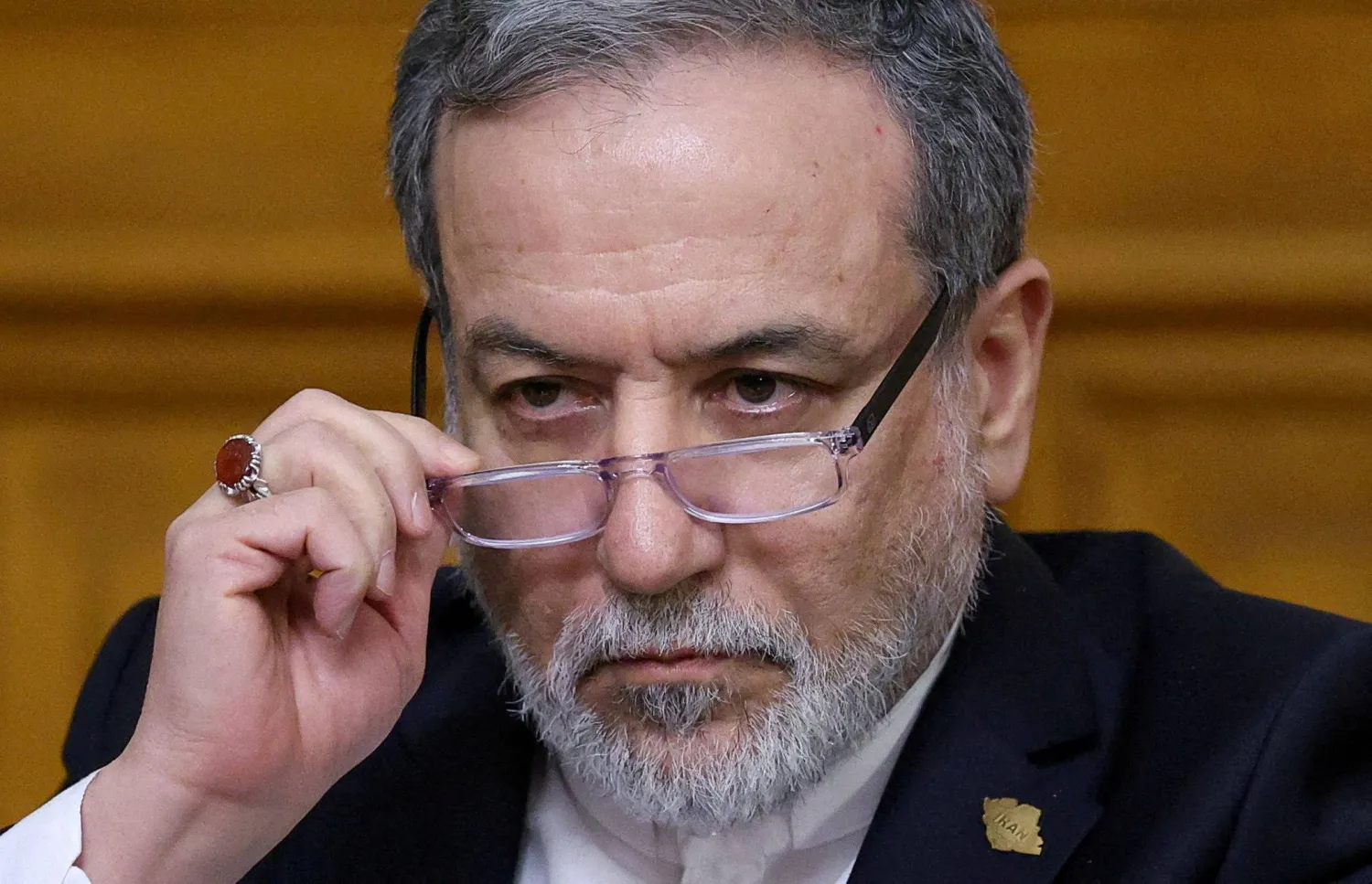
Iranian Foreign Minister Abbas Araqchi adjusts glasses during a press conference following talks with Russian Foreign Minister Sergei Lavrov in Moscow, Russia, December 17, 2025. (Reuters)
TT

‘A Top Person’: Who Is the US Dealing with in Iran?

Iranian Foreign Minister Abbas Araqchi adjusts glasses during a press conference following talks with Russian Foreign Minister Sergei Lavrov in Moscow, Russia, December 17, 2025. (Reuters)

He is, according to President Donald Trump, a "top person" in the Iranian system who is "most respected" and is in an unenviable position.

But who is the senior figure talking with the United States on the future of Iran after over three weeks of the Israeli-US war against the country?

The individual, said Trump, is not supreme leader Mojtaba Khamenei who succeeded his father, Ali Khamenei, after the killing of the ex-number one at the start of the war on February 28.

After the killing of national security chief Ali Larijani in an Israeli strike last week, attention has focused on parliament speaker Mohammad Bagher Qalibaf, who has survived the war so far.

But Trump gave no names, saying: "I don't want him to be killed."

Here are five possible figures.

- Parliament speaker Mohammad Bagher Qalibaf

Qalibaf has been pinpointed by several analysts as the de-facto wartime leader of Iran following the killings of Khamenei and Larijani and the failure of Mojtaba Khamenei to make any public appearance.

During three decades at the center of the Iranian system he has held posts straddling civilian and military life, as commander of the aerospace forces of the Revolutionary Guards, Tehran police chief, Tehran mayor and now parliament speaker.

Regarded as deeply ambitious, he stood for president on three occasions but was never successful. After a report in Israeli media said he was the interlocutor of the US, he posted on X that "no negotiations have been held with the US" and denounced "fakenews".

- President Masoud Pezeshkian

President since 2024 after an election held following the death of former president Ebrahim Raisi in a helicopter crash, Pezeshkian is seen as belonging to the more moderate wing of politics in the country.

However, his position as president in no way makes him Iran's number one, with the supreme leader having the final say on all key matters, although how the power structures work in the post-Ali Khamenei era remains unclear.

Seeking to promote himself as an ordinary man of the people, Pezeshkian took to the streets earlier this month for a mass pro-government rally in favor of the Palestinian cause, taking selfies with well-wishers. Larijani also took part in the same event, only to be killed days later.

- Foreign Minister Abbas Araghchi

A veteran diplomat, Araghchi has held the post since 2024 following the death of former foreign minister Hossein Amir Abdollahian in the same helicopter crash that killed Raisi.

He acted as Iran's representative in talks last month with US envoys Steve Witkoff and Jared Kushner in Oman that were mediated by the Gulf sultanate and failed to stop the march to war.

The New York Times said Tuesday, citing US and Iranian officials, that Araghchi and Witkoff had "direct communication" in recent days which according to Iranian officials amounted to "essentially probes on how to de-escalate the conflict".

Araghchi, who holds a doctorate in political thought from the University of Kent in England, has vigorously defended Iran's position in TV interviews including with American media. But his position as foreign minister seems unlikely to equate to that of a "top person".

- Revolutionary Guards Commander-in-Chief Ahmad Vahidi

A former interior and defense minister, Vahidi is the third commander-in-chief of Iran's ideological army in less than a year after his predecessor Mohammad Pakpour was killed on the first day of the war and Hossein Salami was killed during Israel's 12-day war against Iran in June 2025.

Possibly for this reason, Vahidi has kept a very low profile in this war, making no public appearance.

Only one statement has been issued in his name as commander on March 19, expressing his condolences for the killing of the commander of the Guards' Basij militia, Gholamreza Soleimani, in an airstrike.

- Quds force commander Esmail Ghaani

An extremely shadowy figure, Ghaani became commander of the force responsible for the external operations of the Revolutionary Guards after the killing of Qassem Soleimani in a US strike in Iraq in 2020.

Ghaani was reportedly killed in the June 2025 war but then later re-emerged in public. Intense speculation has since surrounded his whereabouts and standing, amid reports he has come under pressure due to alleged intelligence lapses including the 2024 killing in Lebanon by Israel of Hezbollah chief Hassan Nasrallah.

On March 20, Iranian state media issued the first, and so far only, message in Ghaani's name of the war, predicting that Iran would "soon witness the shameful defeat" of its enemies in the war.


Iran’s Parliament Speaker Is Floated as a Possible US Contact in Talks as War Rages

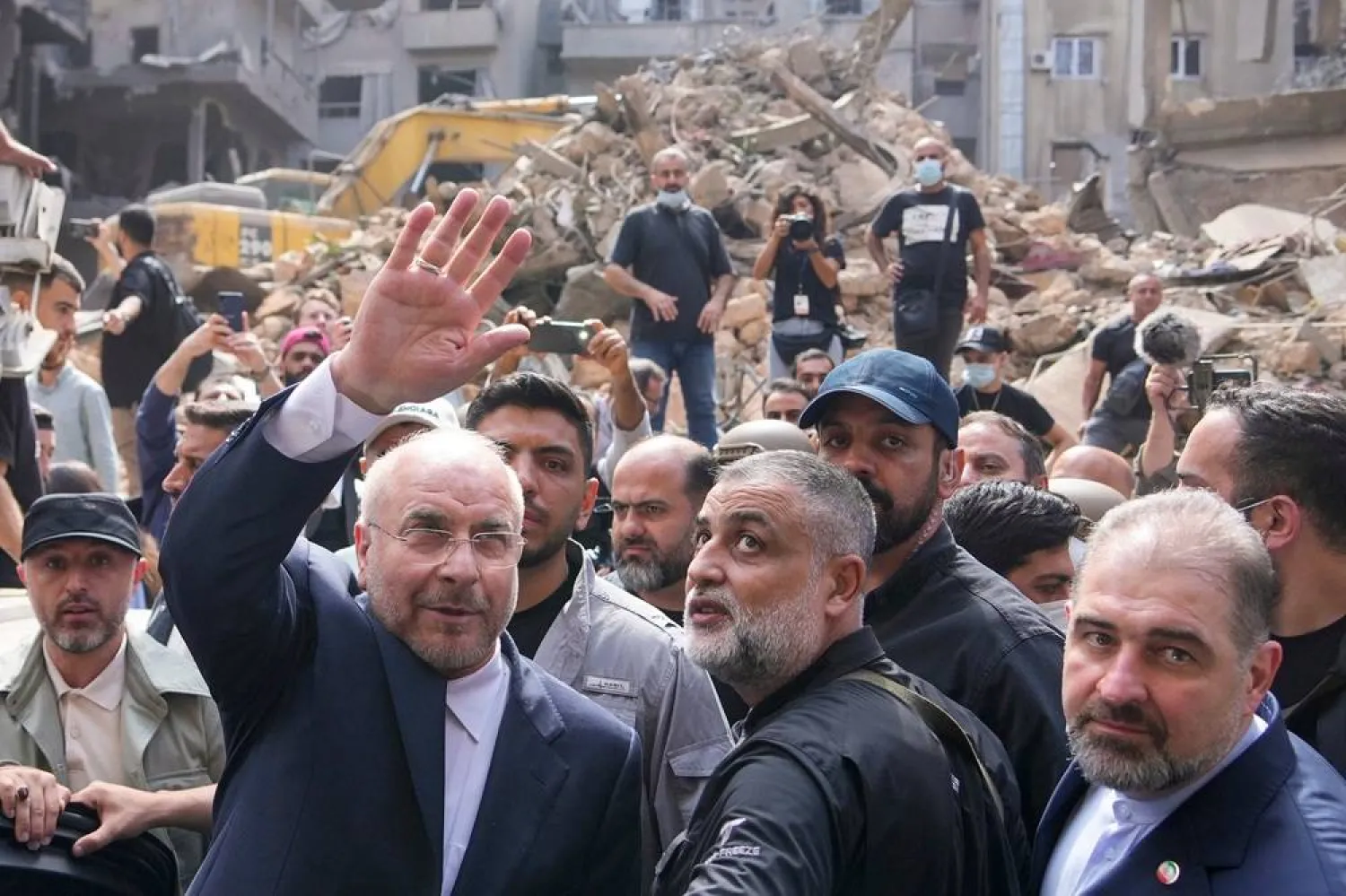
 Iran's parliament speaker Mohammad Bagher Qalibaf, left, waves to residents as he visits the site of an Israeli airstrike in Beirut, Lebanon, on Oct. 12, 2024. (AP)
Iran's parliament speaker Mohammad Bagher Qalibaf, left, waves to residents as he visits the site of an Israeli airstrike in Beirut, Lebanon, on Oct. 12, 2024. (AP)
TT

Iran’s Parliament Speaker Is Floated as a Possible US Contact in Talks as War Rages

 Iran's parliament speaker Mohammad Bagher Qalibaf, left, waves to residents as he visits the site of an Israeli airstrike in Beirut, Lebanon, on Oct. 12, 2024. (AP)
Iran's parliament speaker Mohammad Bagher Qalibaf, left, waves to residents as he visits the site of an Israeli airstrike in Beirut, Lebanon, on Oct. 12, 2024. (AP)

Long before he became Iran's parliament speaker, Mohammad Bagher Qalibaf went on a charm offensive for almost two decades, portraying himself as a hard-liner the West could do business with in the country.

"I would like the West to change its attitude to Iran and trust Iran, and rest assured that there’s an attitude in Iran to advance issues through dialogue," he told The Times newspaper of London in 2008.

With the US and Israel's war with Iran in its fourth week, the 64-year-old pilot and former Revolutionary Guard commander has denied there have been talks with the United States amid reports that he was floated as Washington's negotiating partner in talks.

Questions also remain as to what power Qalibaf has within Iran's theocracy, shattered after the Feb. 28 Israeli airstrike that killed 86-year-old Supreme Leader Ali Khamenei.

Khamenei's son, Mojtaba, now Iran's new supreme leader, has backed Qalibaf through his repeated and failed presidential campaigns. Still, multiple centers of power within Iran's theocracy now likely vie for control of the country — and uncertainties remain over Mojtaba Khamenei's status as he has yet to be seen after reportedly being wounded.

Meanwhile, Qalibaf has been tied to the crackdown against protesters calling for change within Iran's government and has seen corruption allegations swirl around him during his time in office.

US President Donald Trump may just be looking for an Iranian version of Venezuela’s acting President Delcy Rodríguez, who took over as the US military seized former Venezuelan leader Nicolás Maduro in January.

"Many Iranians despise Ghalibaf; diplomats see him as pragmatic," wrote analyst Michael Rubin, using a different transliteration for the politician's last name. "Those diplomats confuse pragmatism with opportunism. Ghalibaf is a survivor. He sees in Trump someone who can help him achieve what late Supreme Leader Ali Khamenei denied him: the presidency or some equivalent interim leadership role."

Iran's semiofficial Tasnim news agency, believed close to the Guard, on Tuesday described reports in Western media as a "political bomb" meant to put the country's leaders in disarray.

"Qalibaf was introduced as a negotiating party in order to present a contradictory and non-unified image of Iran," Tasnim said. "The mention of Qalibaf’s name was clearly intended to create internal divisions within Iran and to provoke conflict among political forces."

Qalibaf's rise within Iran's theocracy

Qalibaf was born in the city of Torqabeh in Iran's northeastern Razavi Khorasan province to a father who was a shopkeeper — not a member of the Shiite clergy that seized power in the 1979 revolution.

Like many young men of his generation, he joined the paramilitary Guard during the country’s bloody 1980s war with Iraq, quickly rising through the ranks. After the conflict, he served as the head of the Guard’s construction arm, Khatam al-Anbia, for several years leading efforts to rebuild.

Trained as a pilot, he then served as the head of the Guard’s air force. In 1999, he co-signed a letter to reformist President Mohammad Khatami amid student protests in Tehran over the government closing a reformist newspaper and a subsequent security force crackdown. The letter warned Khatami the Guard would take action unilaterally unless he agreed to putting down the demonstrations.

Violence around the protests, the first in a string of widening demonstrations over the last decades, saw several people killed, hundreds wounded and thousands arrested.

Qalibaf then became the head of Iran’s police, modernizing the force and implementing the country’s 110 emergency phone number. However, a leaked recording of a later meeting between Qalibaf and members of the Guard’s volunteer Basij force, had him claiming that he ordered gunfire be used against demonstrators in 2003 and praising the violence used in Iran’s 2009 Green Movement protests.

Iran's then-President Hassan Rouhani hinted at the 2003 incident when the two sparred in a 2017 presidential election debate.

"There was an argument that you were saying that the students should come then we can pincer attack them and finish the job," Rouhani said at the time.

Qalibaf offered himself as alternative to Ahmadinejad

As Tehran's mayor from 2005 to 2017, Qalibaf faced corruption allegations, including over some $3.5 million being donated to a foundation run by his wife.

However, he also used his prominence to travel to the World Economic Forum and even praised New York City in an interview with The Financial Times, undoubtedly raising eyebrows among other hard-liners. His opponents claimed Qalibaf was like Reza Pahlavi, a hard-charging soldier who became shah in 1925 and rapidly pushed to Westernize Persia and rename it Iran before handing power to his son Shah Mohammad Reza Pahlavi.

Qalibaf didn't outright reject the comparison.

"If authoritarianism means when collective sense reaches a plan and decision, I’m very determined and firm in carrying it out," Qalibaf told The Financial Times in 2008, casting himself as an alternative to the hard-line President Mahmoud Ahmadinejad. "When the expediency of the society is in carrying a project, then I’m very firm and show little flexibility and don’t let that collective sense be marred or disarrayed."

Qalibaf ran in presidential elections in 2005, 2013, 2017 and 2024 but despite the failures of those campaigns, US diplomats suggested he enjoyed the support of Mojtaba Khamenei, according to diplomatic cables published by WikiLeaks.

"Mojtaba reportedly has long maintained a very close relationship with Tehran Mayor and presidential hopeful Mohammad Baqr Qalibaf; Mojtaba was reportedly the ‘backbone’ of Qalibaf’s past and continuing election campaigns," an August 2008 cable read. "Mojtaba is said to help Qalibaf as an advisor, financier, and provider of senior-level political support. His support for and closeness to Qalibaf reportedly remains undiminished."

With Khamenei now Iran’s new supreme leader, Qalibaf’s position may be significantly boosted.

Qalibaf's name floated as a possible negotiator

Trump pulled back from a 48-hour deadline for Iran to open the Strait of Hormuz, media reports suggested Qalibaf may be a possible Iranian contact for the US government. Qalibaf himself has denied any talks are ongoing.

"No negotiations have been held with the US, and fake news is used to manipulate the financial and oil markets and escape the quagmire in which the US and Israel are trapped," he wrote Monday on X.

Surprisingly, unlike many officials within Iran's government, Qalibaf's name is not on any US bounty.

It remains unclear whether the Israelis view Qalibaf as a target. As parliament speaker, Qalibaf praised the Oct. 7, 2023, Hamas attack on Israel, saying that it showed the "Zionist regime will never have peace until the day it is annihilated."

Trump as well apparently appeared concerned Monday that his unnamed negotiating partner could jeopardize the safety of any talks.

Asked why he wouldn't name the Iranian negotiator, Trump told journalists: "Because I don’t want them to be killed, OK? I don’t want them to be killed."