What to Know About Bunker-Buster Bombs and Iran’s Fordo Nuclear Facility

 In this photo released by the US Air Force on May 2, 2023, airmen look at a GBU-57, or the Massive Ordnance Penetrator bomb, at Whiteman Air Base in Missouri.(US Air Force via AP, File)
In this photo released by the US Air Force on May 2, 2023, airmen look at a GBU-57, or the Massive Ordnance Penetrator bomb, at Whiteman Air Base in Missouri.(US Air Force via AP, File)
TT

What to Know About Bunker-Buster Bombs and Iran’s Fordo Nuclear Facility

 In this photo released by the US Air Force on May 2, 2023, airmen look at a GBU-57, or the Massive Ordnance Penetrator bomb, at Whiteman Air Base in Missouri.(US Air Force via AP, File)
In this photo released by the US Air Force on May 2, 2023, airmen look at a GBU-57, or the Massive Ordnance Penetrator bomb, at Whiteman Air Base in Missouri.(US Air Force via AP, File)

If the US decides to support Israel more directly in its attack on Iran, one option for Washington would be to provide the "bunker-buster" bombs believed necessary to significantly damage the Fordo nuclear fuel enrichment plant, built deeply into a mountain.

Such a bomb would have to be dropped from an American aircraft, which could have wide-ranging ramifications, including jeopardizing any chance of Iran engaging in Trump's desired talks on its nuclear program. Israeli officials have also suggested that there are other options for it to attack Fordo as it seeks to destroy Iran's nuclear capabilities.

But aside from a commando attack on the ground or a nuclear strike, the bunker buster bomb seems the most likely option.

What is the bunker-buster bomb? "Bunker buster" is a broad term used to describe bombs that are designed to penetrate deep below the surface before exploding. In this case, it refers to the latest GBU-57 A/B Massive Ordnance Penetrator bomb in the American arsenal. The roughly 30,000 pound (13,600 kilogram) precision-guided bomb is designed to attack deeply buried and hardened bunkers and tunnels, according to the US Air Force.

It's believed to be able to penetrate about 200 feet (61 meters) below the surface before exploding, and the bombs can be dropped one after another, effectively drilling deeper and deeper with each successive blast.

The bomb carries a conventional warhead, but the International Atomic Energy Agency has confirmed that Iran is producing highly enriched uranium at Fordo, raising the possibility that nuclear material could be released into the area if the GBU-57 A/B were used to hit the facility.

However, Israeli strikes at another Iranian nuclear site, Natanz, on a centrifuge site have caused contamination only at the site itself, not the surrounding area, the IAEA has said.

How tough a target is Fordo? Fordo is Iran's second nuclear enrichment facility after Natanz, its main facility. So far, Israeli strikes aren’t known to have damaged Natanz’s underground enrichment hall, nor have the Israelis targeted tunnels the Iranians are digging nearby.

Fordo is smaller than Natanz, and is built into the side of a mountain near the city of Qom, about 60 miles (95 kilometers) southwest of Tehran. Construction is believed to have started around 2006 and it became first operational in 2009 — the same year Tehran publicly acknowledged its existence.

In addition to being an estimated 80 meters (260 feet) under rock and soil, the site is reportedly protected by Iranian and Russian surface-to-air missile systems. Those air defenses, however, likely have already been struck in the Israeli campaign.

Still, Israeli Prime Minister Benjamin Netanyahu has said the goal of attacking Iran was to eliminate its missile and nuclear program, which he described as an existential threat to Israel, and officials have said Fordo was part of that plan.

"This entire operation ... really has to be completed with the elimination of Fordo," Yechiel Leiter, Israel's ambassador to the US, told Fox News on Friday.

Why does the US need to be involved? In theory, the GBU-57 A/B could be dropped by any bomber capable of carrying the weight, but at the moment the US has only configured and programed its B-2 Spirit stealth bomber to deliver the bomb, according to the Air Force.

The B-2 is only flown by the Air Force, and is produced by Northrop Grumman.

According to the manufacturer, the B-2 can carry a payload of 40,000 pounds (18,000 kilograms) but the US Air Force has said it has successfully tested the B-2 loaded with two GBU-57 A/B bunker busters — a total weight of some 60,000 pounds (27,200 kilograms).

The strategic long-range heavy bomber has a range of about 7,000 miles (11,000 kilometers) without refueling and 11,500 miles (18,500 kilometers) with one refueling, and can reach any point in the world within hours, according to Northrop Grumman.

Whether the US would get involved is another matter.

At the G7 meeting in Canada, Trump was asked what it would take for Washington to become involved militarily and he said: "I don't want to talk about that."

In a weekend interview with ABC News, Israeli Ambassador Leiter was asked about the possibility of the US helping attack Fordo and he emphasized Israel has only asked the US for defensive help.

"We have a number of contingencies ... which will enable us to deal with Fordo," he said.

"Not everything is a matter of, you know, taking to the skies and bombing from afar."


First Ramadan After Truce Brings Flicker of Joy in Devastated Gaza 

Worshippers perform evening Tarawih prayer on the first night of the holy fasting month of Ramadan at the Al-Kanz Mosque, which was damaged during the Israel-Hamas war, in Gaza City, Tuesday, Feb. 17, 2026. (AP)
TT

First Ramadan After Truce Brings Flicker of Joy in Devastated Gaza 

Worshippers perform evening Tarawih prayer on the first night of the holy fasting month of Ramadan at the Al-Kanz Mosque, which was damaged during the Israel-Hamas war, in Gaza City, Tuesday, Feb. 17, 2026. (AP)

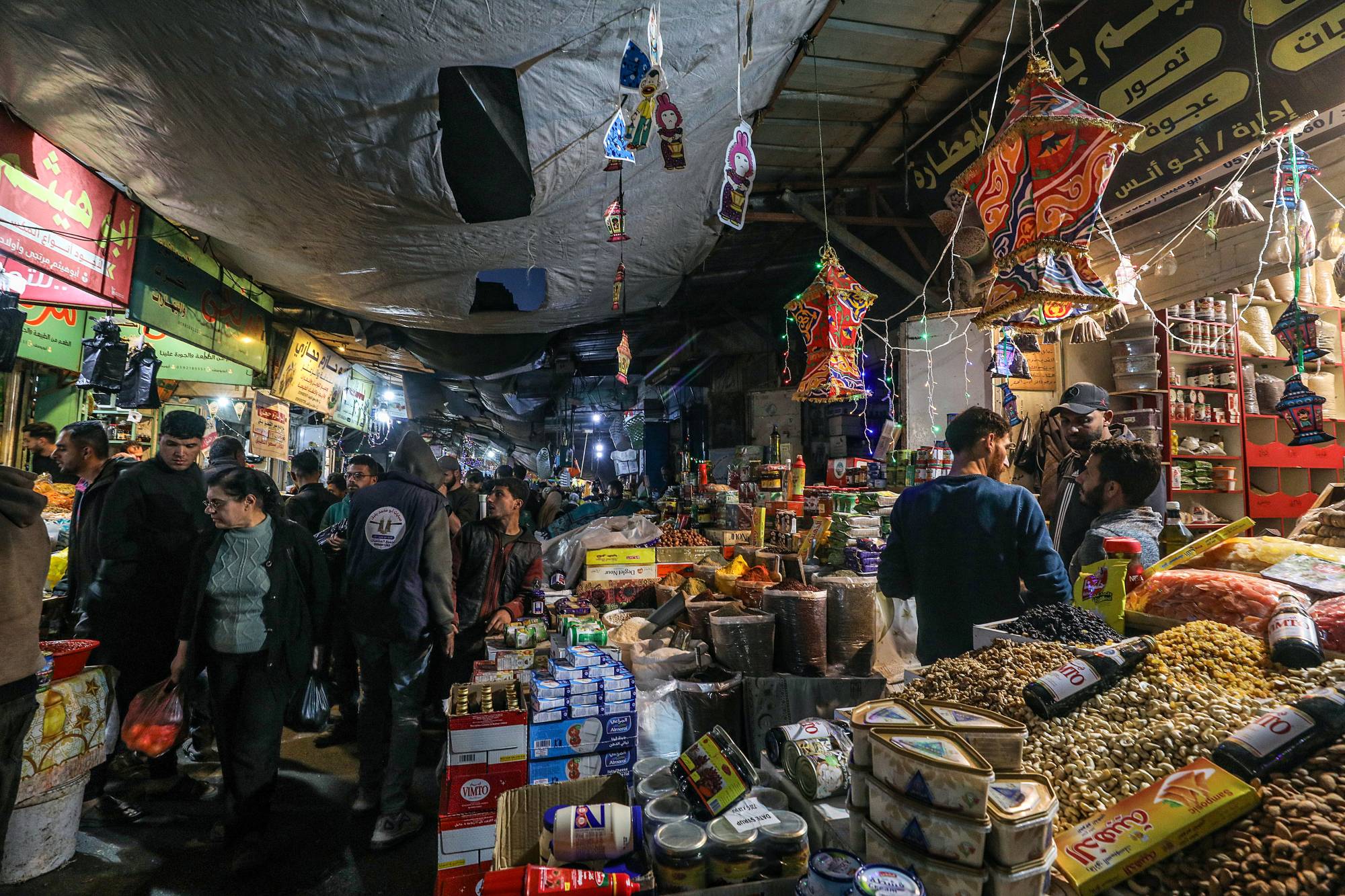
Little Ramadan lanterns and string lights appeared on streets lined with collapsed buildings and piles of rubble in Gaza City, bringing joy and respite as Islam's holiest month began -- the first since October's ceasefire.

In the Omari mosque, dozens of worshippers performed the first Ramadan morning prayer, fajr, bare feet on the carpet but donning heavy jackets to stave off the winter cold.

"Despite the occupation, the destruction of mosques and schools, and the demolition of our homes... we came in spite of these harsh conditions," Abu Adam, a resident of Gaza City who came to pray, told AFP.

"Even last night, when the area was targeted, we remained determined to head to the mosque to worship God," he said.

A security source in Gaza told AFP Wednesday that artillery shelling targeted the eastern parts of Gaza City that morning.

The source added that artillery shelling also targeted a refugee camp in central Gaza.

Israel does not allow international journalists to enter the Gaza Strip, preventing AFP and other news organizations from independently verifying casualty figures.

A Palestinian vendor sells food in a market ahead of the holy month of Ramadan in Gaza City, 17 February 2026. (EPA)

- 'Stifled joy' -

In Gaza's south, tens of thousands of people still live in tents and makeshift shelters as they wait for the territory's reconstruction after a US-brokered ceasefire took hold in October.

Nivin Ahmed, who lives in a tent in the area known as Al-Mawasi, told AFP this first Ramadan without war brought "mixed and varied feelings".

"The joy is stifled. We miss people who were martyred, are still missing, detained, or even travelled," he said.

"The Ramadan table used to be full of the most delicious dishes and bring together all our loved ones," the 50-year-old said.

"Today, I can barely prepare a main dish and a side dish. Everything is expensive. I can't invite anyone for Iftar or suhoor," he said, referring to the meals eaten before and after the daily fast of Ramadan.

Despite the ceasefire, shortages remain in Gaza, whose battered economy and material damage have rendered most residents at least partly dependent on humanitarian aid for their basic needs.

But with all entries into the tiny territory under Israeli control, not enough goods are able to enter to bring prices down, according to the United Nations and aid groups.

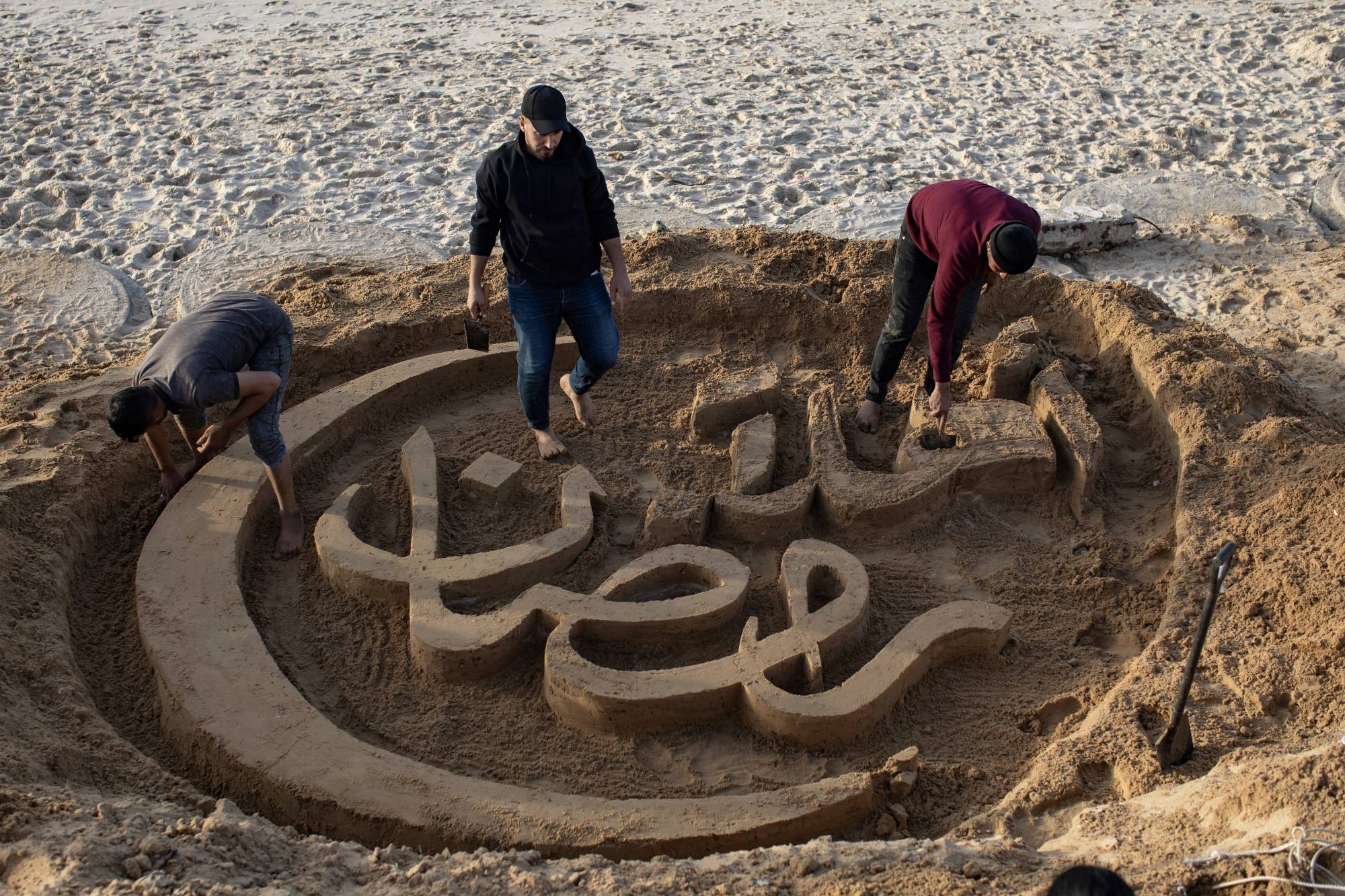
A sand sculpture bearing the phrase "Welcome, Ramadan," created by Palestinian artist Yazeed Abu Jarad, on a beach in Khan Younis, southern Gaza Strip, 17 February 2026, amid a ceasefire between Israel and Hamas. (EPA)

- 'Still special' -

Maha Fathi, 37, was displaced from Gaza City and lives in a tent west of the city.

"Despite all the destruction and suffering in Gaza, Ramadan is still special," she told AFP.

"People have begun to empathize with each other's suffering again after everyone was preoccupied with themselves during the war."

She said that her family and neighbors were able to share moments of joy as they prepared food for suhoor and set up Ramadan decorations.

"Everyone longs for the atmosphere of Ramadan. Seeing the decorations and the activity in the markets fills us with hope for a return to stability," she added.

On the beach at central Gaza's Deir al-Balah, Palestinian artist Yazeed Abu Jarad contributed to the holiday spirit with his art.

In the sand near the Mediterranean Sea, he sculpted "Welcome Ramadan" in ornate Arabic calligraphy, under the curious eye of children from a nearby tent camp.

Nearly all of Gaza's 2.2 million residents were displaced at least once during the more than two years of war between Israel and Hamas, sparked by the latter's unprecedented October 7 attack on Israel.

Mohammed al-Madhoun, 43, also lives in a tent west of Gaza City, and hoped for brighter days ahead.

"I hope this is the last Ramadan we spend in tents. I feel helpless in front of my children when they ask me to buy lanterns and dream of an Iftar table with all their favorite foods."

"We try to find joy despite everything", he said, describing his first Ramadan night out with the neighbors, eating the pre-fast meal and praying.


Bleak Future for West Bank Pupils as Budget Cuts Bite

Private tutoring makes up some, but not all of the teaching shortfall for the Hajj twins. Jaafar ASHTIYEH / AFP
TT

Bleak Future for West Bank Pupils as Budget Cuts Bite

Private tutoring makes up some, but not all of the teaching shortfall for the Hajj twins. Jaafar ASHTIYEH / AFP

At an hour when Ahmad and Mohammed should have been in the classroom, the two brothers sat idle at home in the northern West Bank city of Nablus.

The 10-year-old twins are part of a generation abruptly cut adrift by a fiscal crisis that has slashed public schooling from five days a week to three across the Israeli-occupied Palestinian territory.

The Ramallah-based Palestinian Authority's deepening budget shortfall is cutting through every layer of society across the West Bank.

But nowhere are the consequences more stark than in its schools, where reduced salaries for teachers, shortened weeks and mounting uncertainty are reshaping the future of around 630,000 pupils.

Unable to meet its wage bill in full, the Palestinian Authority has cut teachers' pay to 60 percent, with public schools now operating at less than two-thirds capacity.

"Without proper education, there is no university. That means their future could be lost," Ibrahim al-Hajj, father of the twins, told AFP.

The budget shortfall stems in part from Israel's decision to withhold customs tax revenues it collects on the Palestinian Authority's behalf, a measure taken after the war in Gaza erupted in October 2023.

The West Bank's economy has also been hammered by a halt to permits for Palestinians seeking work in Israel and the proliferation of checkpoints and other movement controls.

- 'No foundation' for learning -

"Educational opportunities we had were much better than what this generation has today," said Aisha Khatib, 57, headmistress of the brothers' school in Nablus.

"Salaries are cut, working days are reduced, and students are not receiving enough education to become properly educated adults," she said, adding that many teachers had left for other work, while some students had begun working to help support their families during prolonged school closures.

Hajj said he worried about the time his sons were losing.

When classes are cancelled, he and his wife must leave the boys alone at home, where they spend much of the day on their phones or watching television.

Part of the time, the brothers attend private tutoring.

"We go downstairs to the teacher and she teaches us. Then we go back home," said Mohammad, who enjoys English lessons and hopes to become a carpenter.

But the extra lessons are costly, and Hajj, a farmer, said he cannot indefinitely compensate for what he sees as a steady academic decline.

Tamara Shtayyeh, a teacher in Nablus, said she had seen the impact firsthand in her own household.

Her 16-year-old daughter Zeena, who is due to sit the Palestinian high school exam, Tawjihi, next year, has seen her average grades drop by six percentage points since classroom hours were reduced, Shtayyeh said.

Younger pupils, however, may face the gravest consequences.

"In the basic stage, there is no proper foundation," she said. "Especially from first to fourth grade, there is no solid grounding in writing or reading."

Irregular attendance, with pupils out of school more often than in, has eroded attention spans and discipline, she added.

"There is a clear decline in students' levels -- lower grades, tension, laziness," Shtayyeh said.

- 'Systemic emergency' -

For UN-run schools teaching around 48,000 students in refugee camps across the West Bank, the picture is equally bleak.

The territory has shifted from "a learning poverty crisis to a full-scale systemic emergency," said Jonathan Fowler, spokesman for the UN agency for Palestinian refugees, UNRWA.

UNRWA schools are widely regarded as offering comparatively high educational standards.

But Fowler said proficiency in Arabic and mathematics had plummeted in recent years, driven not only by the budget crisis but also by Israeli military incursions and the lingering effects of the Covid-19 pandemic.

"The combination of hybrid schooling, trauma and over 2,000 documented incidents of military or settler interference in 2024-25 has resulted in a landscape of lost learning for thousands of Palestinian refugee students," he said.

UNRWA itself is weighing a shorter school week as it grapples with its own funding shortfall, after key donor countries - including the United States under President Donald Trump - halted contributions to the agency, the main provider of health and education services in West Bank refugee camps.

In the northern West Bank, where Israeli military operations in refugee camps displaced around 35,000 people in 2025, some pupils have lost up to 45 percent of learning days, Fowler said.

Elsewhere, schools face demolition orders from Israeli authorities or outright closure, including six UNRWA schools in annexed east Jerusalem.

Teachers say the cumulative toll is profound.

"We are supposed to look toward a bright and successful future," Shtayyeh said. "But what we are seeing is things getting worse and worse."


Security Issues Complicate Tasks of ‘Technocratic Committee’ in Gaza Strip

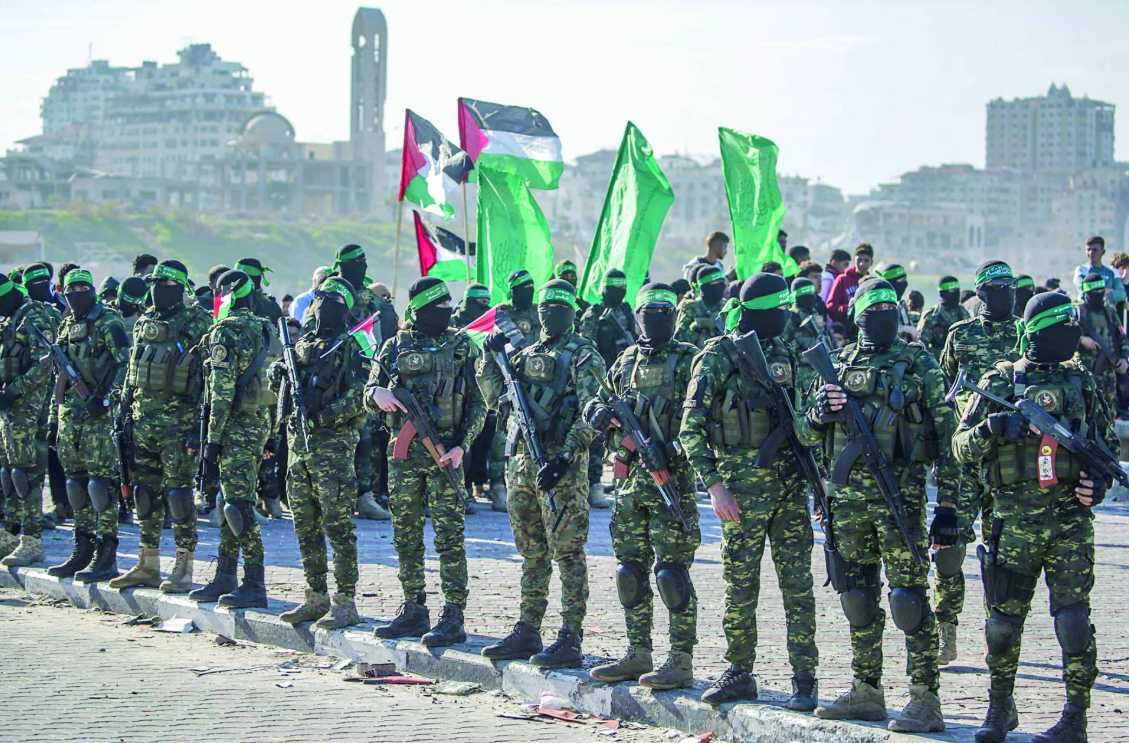
Fighters from the Izz ad-Din al-Qassam Brigades, the armed wing of Hamas, in Khan Younis, Gaza Strip, Feb. 20, 2025. (dpa)
TT

Security Issues Complicate Tasks of ‘Technocratic Committee’ in Gaza Strip

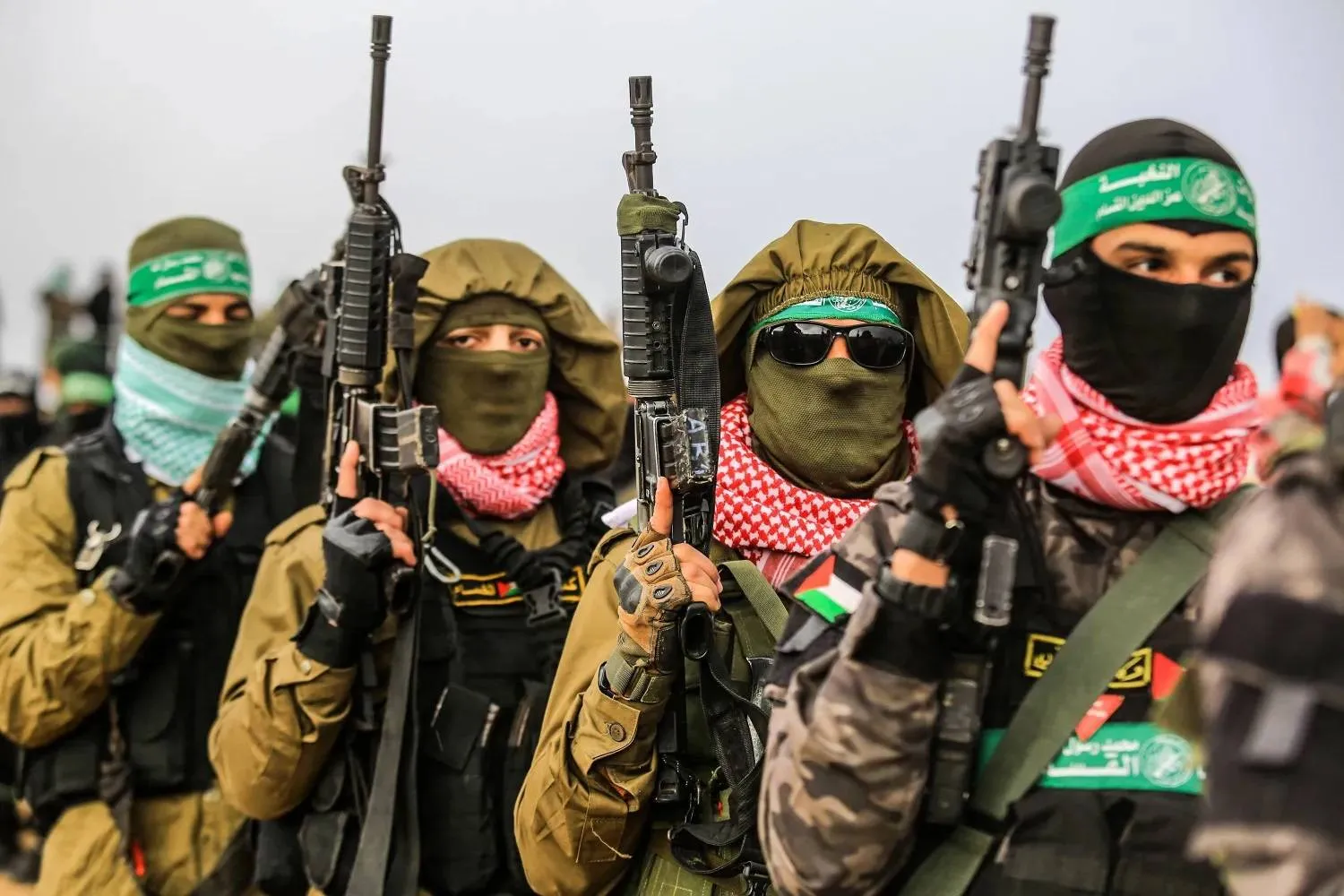
Fighters from the Izz ad-Din al-Qassam Brigades, the armed wing of Hamas, in Khan Younis, Gaza Strip, Feb. 20, 2025. (dpa)

The Palestinian National Committee tasked with administering the Gaza Strip is facing a number of challenges that go beyond Israel’s continued veto on its entry into the enclave via the Rafah crossing. These challenges extend to several issues related to the handover of authority from Hamas, foremost among them the security file.

Nasman and the Interior Ministry File

During talks held to form the committee, and even after its members were selected, Hamas repeatedly sought to exclude retired Palestinian intelligence officer Sami Nasman from the interior portfolio, which would be responsible for security conditions inside the Gaza Strip. Those efforts failed amid insistence by mediators and the United States that Nasman remain in his post, after Rami Hilles, who had been assigned the religious endowments and religious affairs portfolio, was removed in response to Hamas’s demands, as well as those of other Palestinian factions.

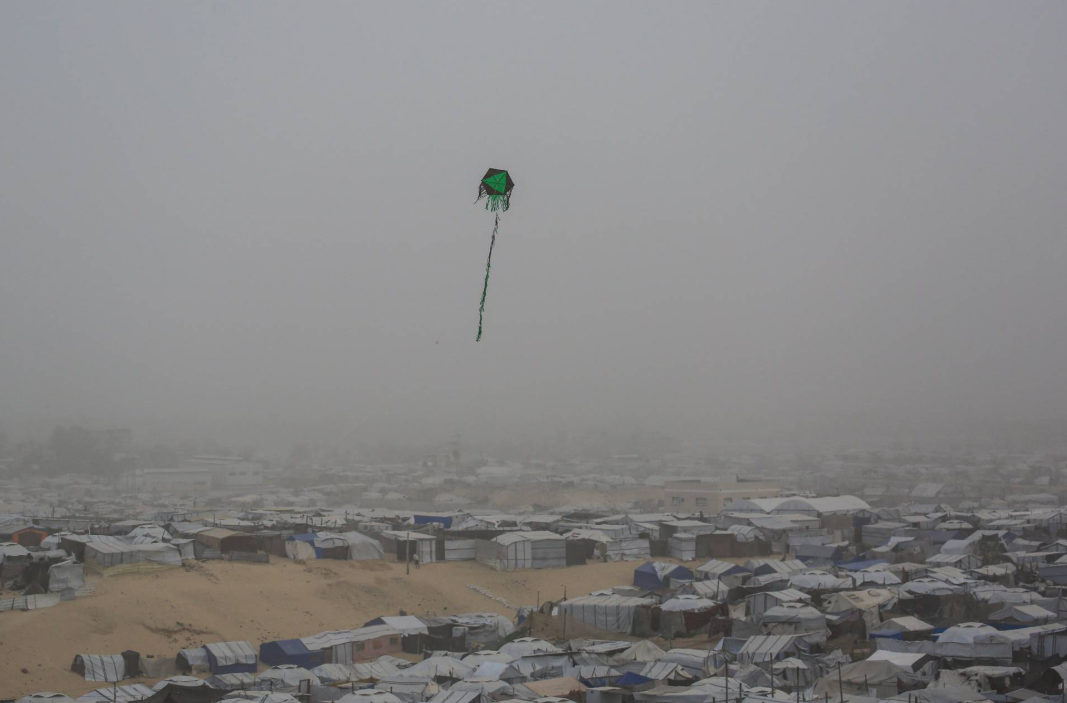
A kite flies over a camp for displaced people in Khan Younis, in the Gaza Strip, on Saturday. (AFP)

Sources close to the committee told Asharq Al-Awsat that Hamas continues to insist that its security personnel remain in service within the agencies that will operate under the committee’s supervision. This position is rejected not only by the committee’s leadership, but also by the executive body of the Peace Council, as well as other parties including the United States and Israel.

The sources said this issue further complicates the committee’s ability to assume its duties in an orderly manner, explaining that Hamas, by insisting on certain demands related to its security employees and police forces, seeks to impose its presence in one way or another within the committee’s work.

The sources added that there is a prevailing sense within the committee and among other parties that Hamas is determined, by all means, to keep its members within the new administrative framework overseeing the Gaza Strip. They noted that Hamas has continued to make new appointments within the leadership ranks of its security services, describing this as part of attempts to undermine plans prepared by Sami Nasman for managing security.

The new logo of the National Committee for the Administration of Gaza, published on its page on X.

Hamas Denies the Allegations

Sources within Hamas denied those accusations. They told Asharq Al-Awsat that Sami Nasman, “as we understand from multiple parties, does not plan to come to Gaza at this time, which raises serious questions about his commitment to managing the Interior portfolio. Without his presence inside the enclave, he cannot exercise his authority, and that would amount to failure.”

The sources said the movement had many reservations about Nasman, who had previously been convicted by Hamas-run courts over what it described as “sabotage” plots. However, given the current reality, Hamas has no objection to his assumption of those responsibilities.

The sources said government institutions in Gaza are ready to hand over authority, noting that each ministry has detailed procedures and a complete framework in place to ensure a smooth transfer without obstacles. They stressed that Hamas is keen on ensuring the success of the National Committee for the Administration of Gaza.

The sources did not rule out the possibility that overarching policies could be imposed on the committee, which would affect its work and responsibilities inside the Gaza Strip, reducing it to merely an instrument for implementing those policies.

Hamas has repeatedly welcomed the committee’s work in public statements, saying it will fully facilitate its mission.

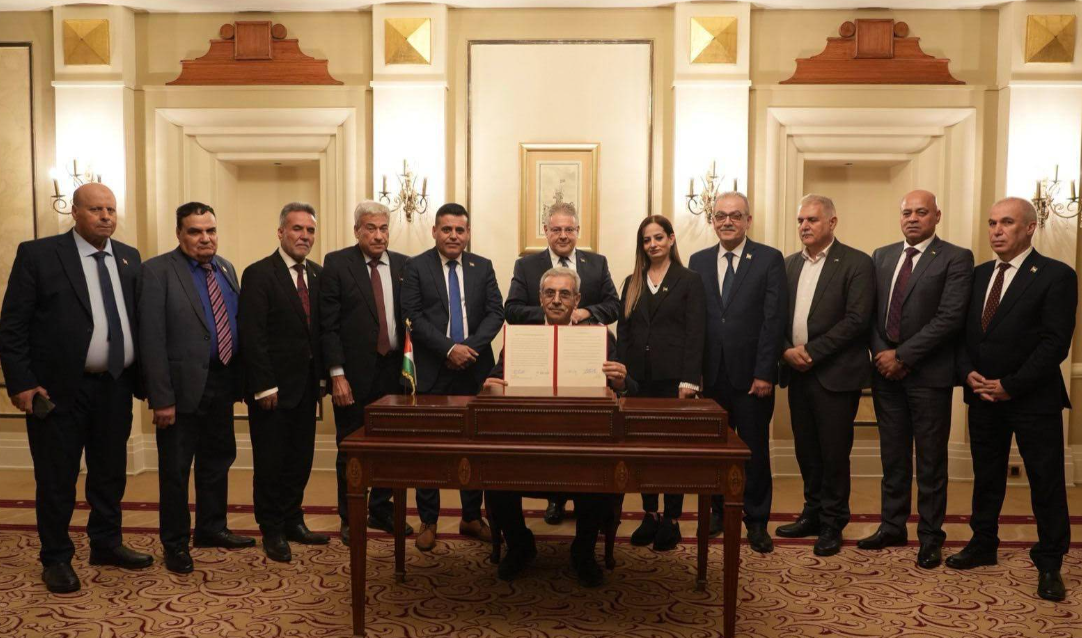
A meeting of the Gaza Administration Committee in Cairo. (File Photo – Egyptian State Information Service)

The Committee’s Position

In a statement issued on Saturday, the National Committee for the Administration of Gaza said that statements and declarations from inside the enclave regarding readiness to transfer the management of all institutions and public facilities represent a step in the interest of citizens and pave the way for the committee to fully assume its responsibilities during the transitional phase.

The committee said that the announcement of readiness for an orderly transition constitutes a pivotal moment for the start of its work as the interim administration of the Gaza Strip, and a real opportunity to halt the humanitarian deterioration and preserve the resilience of residents who have endured severe suffering over the past period, according to the text of the statement.

“Our current priority is to ensure the unimpeded flow of aid, launch the reconstruction process, and create the conditions necessary to strengthen the unity of our people,” the committee said. “This path must be based on clear and defined understandings characterized by transparency and implementability, and aligned with the 20-point plan and UN Security Council Resolution 2803.”

Fighters from Hamas ahead of a prisoner exchange, Feb. 1, 2025. (EPA)

The committee stressed that it cannot effectively assume its responsibilities unless it is granted full administrative and civilian authority necessary to carry out its duties, in addition to policing responsibilities.

“Responsibility requires genuine empowerment that enables it to operate efficiently and independently. This would open the door to serious international support for reconstruction efforts, pave the way for a full Israeli withdrawal, and help restore daily life to normal,” it said.

The committee affirmed its commitment to carrying out this task with a sense of responsibility and professional discipline, and with the highest standards of transparency and accountability, calling on mediators and all relevant parties to expedite the resolution of outstanding issues without delay.

Armed Men in Hospitals

In a related development, the Hamas-run Ministry of Interior and National Security said in a statement on Saturday that it is making continuous and intensive efforts to ensure there are no armed presences within hospitals, particularly involving members of certain families who enter them. The ministry said this is aimed at preserving the sanctity of medical facilities and protecting them as purely humanitarian zones that must remain free of any tensions or armed displays.

The ministry said it has deployed a dedicated police force for field monitoring and enforcement, and to take legal action against violators. It acknowledged facing on-the-ground challenges, particularly in light of repeated Israeli strikes on its personnel while carrying out their duties, which it said has affected the speed of addressing some cases. It said it will continue to carry out its responsibilities with firmness.

Local Palestinian media reported late Friday that Doctors Without Borders decided to suspend all non-urgent medical procedures at Nasser Hospital in Khan Younis starting Jan. 20, 2026, due to concerns related to the management of the facility and the preservation of its neutrality, as well as security breaches inside the hospital complex.

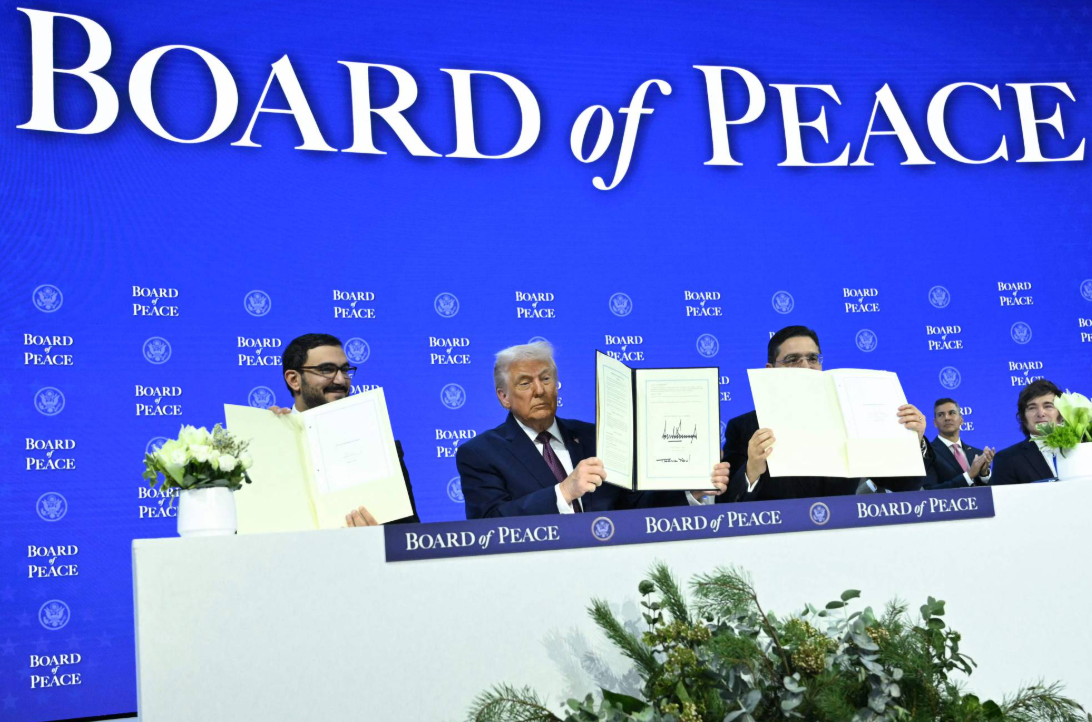
US President Donald Trump holds a document establishing the Peace Council for Gaza in Davos, Switzerland, Jan. 27, 2026. (Reuters)

The organization said in a statement attributed to it, not published on its official platforms or website, that its staff and patients had, in recent months, observed the presence of armed men, some masked, in various areas of the complex, along with incidents of intimidation, arbitrary arrests of patients, and suspected weapons transfers. It said this posed a direct threat to the safety of staff and patients.

Asharq Al-Awsat attempted to obtain confirmation from the organization regarding the authenticity of the statement but received no response.

Field Developments

On the ground, Israeli violations in the Gaza Strip continued. Gunfire from military vehicles and drones, along with artillery shelling, caused injuries in Khan Younis in the south and north of Nuseirat in central Gaza.

Daily demolition operations targeting infrastructure and homes also continued in areas along both sides of the so-called yellow line, across various parts of the enclave.