


How Moscow Might Respond if Trump Stops Russian Oil to India

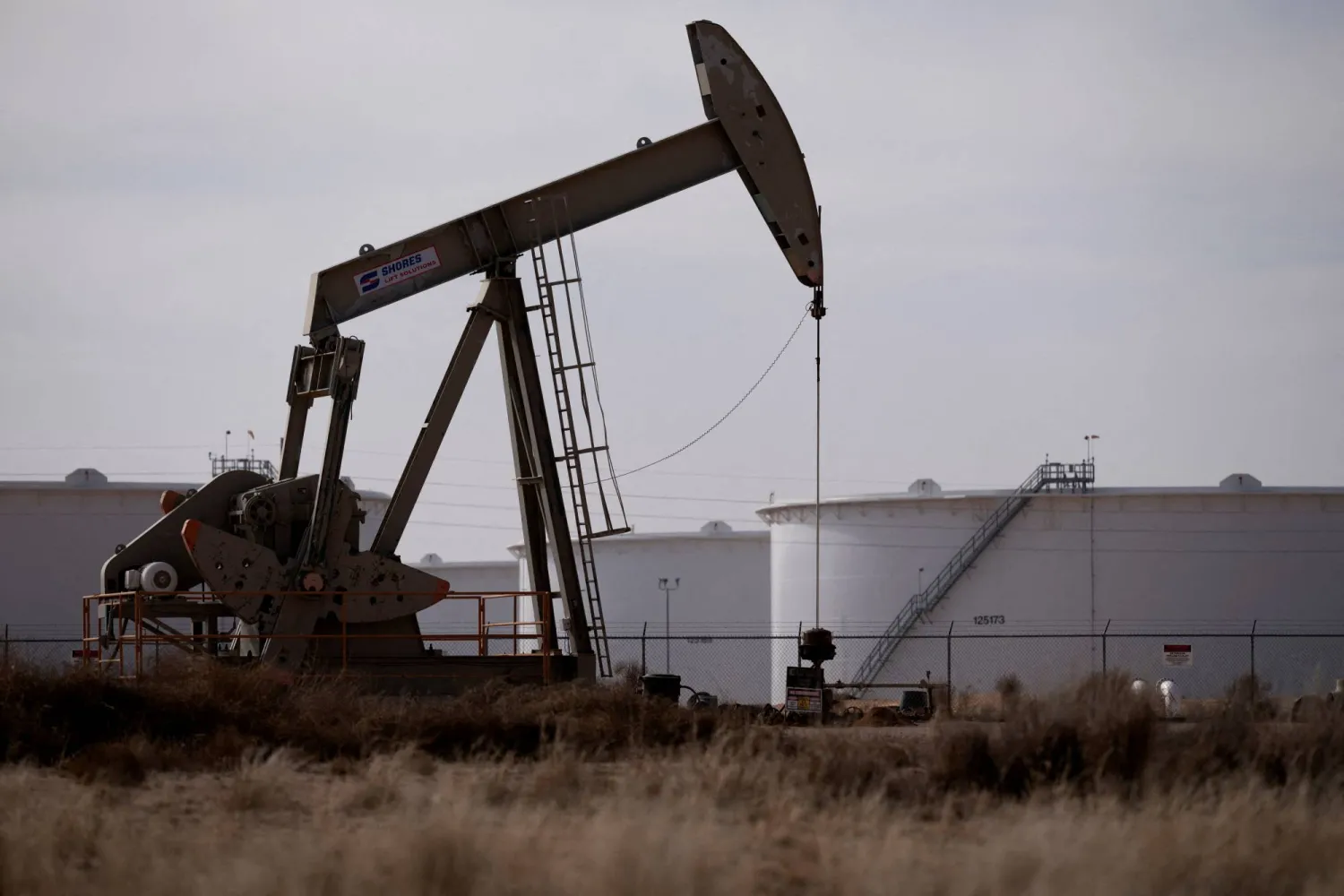
FILE PHOTO: A pump jack operates near a crude oil reserve in the Permian Basin oil field near Midland, Texas, US February 18, 2025.  REUTERS/Eli Hartman/File Photo
FILE PHOTO: A pump jack operates near a crude oil reserve in the Permian Basin oil field near Midland, Texas, US February 18, 2025. REUTERS/Eli Hartman/File Photo
TT

How Moscow Might Respond if Trump Stops Russian Oil to India

FILE PHOTO: A pump jack operates near a crude oil reserve in the Permian Basin oil field near Midland, Texas, US February 18, 2025.  REUTERS/Eli Hartman/File Photo
FILE PHOTO: A pump jack operates near a crude oil reserve in the Permian Basin oil field near Midland, Texas, US February 18, 2025. REUTERS/Eli Hartman/File Photo

US President Donald Trump's demand on India to halt Russian oil imports could threaten billions in Russian revenues, prompt Moscow to retaliate by stopping a major US-led oil pipeline and potentially lead to a new global supply crisis.

India, the world's third largest oil importer, has become the biggest buyer of Russian oil since 2022, purchasing up to 2 million barrels per day of oil accounting for 2% of global supply. Other top buyers are China and Türkiye.

The Indian route is so important for the Kremlin that if disrupted it could prompt it to retaliate by closing the CPC pipeline from Kazakhstan, where US oil majors Chevron and Exxon hold big stakes, analysts at JP Morgan said this week.

"Russia is not without leverage," the US bank said.

Trump has threatened to slap tariffs of up to 100% on countries that buy Russian oil unless Moscow reaches a peace deal with Ukraine by August 7-9. A 25% tariff on all US goods imports from India starts on Friday.

Reuters reported on Thursday that Indian state refineries had paused purchases of Russian oil this week amid Trump's threats.

REALIGNMENT

India only began buying large quantities of oil from Russia, the world's second largest oil exporter, since 2022. It became a top importer after Europe, Russia's former top client, imposed a ban on Russian oil over its military actions in Ukraine. Russia's oil giant Rosneft has a major stake in one of India's biggest oil refineries.

India is now 35% reliant on Russian oil imports worth $50.2 billion in the 2024-25 fiscal year, according to India's government data.

"Cutting off this flow would require a massive realignment of trade flows," said Aldo Spanjer from BNP Paribas, adding that the global supply was already stretched.

India buys all varieties and grades of Russian oil - including Urals from Western ports, ESPO and Sokol from the Pacific and some grades from the Arctic, according to LSEG data.

Urals would be hit hardest if India stops buying as it purchases up to 70% of Russia's biggest export grade by volume. India's oil minister said the country can find alternative supply.

India would need to raise imports of US and Middle Eastern crude or cut refining runs, leading to a spike in diesel prices, especially in Europe, which imports fuel from India.

"Indian refiners will still struggle to replace the heavy quality of Russian crude so they may end up paring runs," said Neil Crosby from Sparta Commodities.

FALLING INCOME

Russia has managed to continue selling oil since 2022 despite international sanctions, although it sells it at discounts to global prices.

Falling global prices mean Russia's income is already under pressure. Its oil and gas revenue fell 33.7% year-on-year in June to its lowest since January 2023, finance ministry data showed. Revenues will fall 37% in July due to weaker global oil prices and a strong rouble, Reuters calculations show.

Russian firms will need to store oil on tankers if India stops buying, paying extra money for shipping charges and being forced to offer wide discounts to new buyers, traders said.

A loss of 2 million bpd of exports might also gradually prompt Russia to start reducing oil production from the current levels of 9 million bpd, traders said. Russia's current production is regulated by OPEC+ quotas.

HOW CAN RUSSIA RESPOND?

Russia could potentially divert some 0.8 million bpd of oil to Egypt, Malaysia, Pakistan, Peru, Brunei, South Africa and Indonesia, JP Morgan said.

Moscow could also disrupt the CPC pipeline to make sure the West feels the pain from higher oil prices. Western oil firms Exxon, Chevron, Shell, ENI and TotalEnergies ship up to 1 million bpd via CPC, which has total capacity of 1.7 million bpd.

"If we get a visible and substantial difficulty in clearing Russian crude and Putin shuts off CPC, oil prices might get well over $80 per barrel, possibly a lot more," said Crosby.

The CPC pipeline crosses Russian territory and the consortium has clashed with Moscow, which ordered it to suspend operations for several days in 2022 and 2025 citing environmental and tanker regulations.

A combined stoppage of CPC and Russian flows to India would create a disruption of 3.5 million bpd or 3.5% of global supply.

"The Trump administration, like its predecessors, will likely find sanctioning the world’s second-largest oil exporter unfeasible without spiking oil prices," JP Morgan said.



The Saudi Riyal: Tracing Three Centuries from Diriyah’s Markets to Global Financial Icon

The Saudi riyal serves as a living record of three centuries of progress, representing not merely a unit of value but a document of the nation’s journey and renaissance. (SPA)
TT

The Saudi Riyal: Tracing Three Centuries from Diriyah’s Markets to Global Financial Icon

The Saudi riyal serves as a living record of three centuries of progress, representing not merely a unit of value but a document of the nation’s journey and renaissance. (SPA)

The history of the Saudi riyal is deeply intertwined with the evolution of the Saudi state, evolving from its early days as a fluctuating medium of exchange to its modern, regulated form through significant political, social, and economic transformations, reported the Saudi Press Agency on Saturday.

A comprehensive overview of this trajectory begins with the diverse currencies of the First Saudi State, passes through the regulatory milestones of the unification era, and culminates in today’s sophisticated monetary structure.

First Saudi State: Vibrant markets and multiple currencies

With the establishment of the First Saudi State in the mid-12th century AH (mid-18th century CE), the Arabian Peninsula lacked a unified monetary system, and a variety of currencies circulated, driven by trade across a vast geography.

According to the historical guide for Founding Day published by the King Abdulaziz Foundation for Research and Archives (Darah), First Saudi State founder Imam Muhammad bin Saud bin Muhammad bin Muqrin focused on building a robust economic foundation by securing financial resources and encouraging trade between Diriyah and other regions. Consequently, markets in Diriyah and Najd flourished, attracting merchants who traded in gold, silver, and barter.

As noted in Dr. Abdullah Al-Saleh Al-Uthaimin’s "History of the Kingdom of Saudi Arabia," popular currencies included the Austrian silver Maria Theresa thaler, locally known as Al-Riyal Al-Fransi (literally the French riyal), which became a staple due to its consistent purity and weight.

According to Dr. Mohammed Al-Manshat’s "Organizations of the First Saudi State," Diriyah’s markets reached a peak of prosperity during the reign of Imam Saud bin Abdulaziz. Political and security stability allowed merchants to move freely, facilitating smooth and reliable financial transactions.

The history of the Saudi riyal is deeply intertwined with the evolution of the Saudi state. (SPA)

Regional diversity and variety of coins

Monetary patterns varied by region. In Najd, denominations such as Al-Jadeeda, Al-Khurda, Al-Muhammadiya, and Al-Mushakhas were used according to market needs. Al-Khurda served as the smallest unit, while Al-Jadeeda was used for everyday transactions.

In Al-Ahsa, an agriculturally vital hub, a local currency called Al-Tawila, a bent copper bar combined with silver, was commonly used. Meanwhile, the Hijaz experienced a high degree of currency diversification, as Makkah and Madinah welcomed pilgrims carrying various coins from across the Muslim world.

The reign of King Abdulaziz: Foundations of organization

The entry of King Abdulaziz bin Abdulrahman Al Saud into Riyadh in 1319 AH (1902) marked a pivotal economic turning point. Initially, he maintained the existing currencies to preserve market stability while gradually introducing a unified currency.

According to the Saudi Central Bank (SAMA), an early significant step was counterstamping circulating coins with the word "Najd" to indicate official adoption. After the unification of the Hijaz and Najd in 1343 AH (1925), the word "Hijaz" was added to reflect the expanding political unity.

By 1343 AH, monetary reform shifted from stamping to minting. SAMA records show the issuance of the first Saudi copper coins in half- and quarter-qirsh denominations, bearing King Abdulaziz’s name and the mint location, Umm Al-Qura. These were the first legal-tender coins of the Saudi state.

In 1346 AH (1927), King Abdulaziz abolished all foreign circulating currencies and introduced the first pure Saudi silver riyal. To support this, he issued a royal decree - published in the Umm Al-Qura gazette - outlining the state’s new monetary policies. After the formal unification of the Kingdom in 1351 AH (1932), the riyal became the official currency. By 1354 AH (1935), a new silver riyal bearing the name "Kingdom of Saudi Arabia" was issued, symbolizing national unity and stability.

Saudi Arabian Monetary Agency: Regulation and supervision

To manage the expansion of economic activity, King Abdulaziz issued two royal decrees in 1371 AH (1952) establishing the Saudi Arabian Monetary Agency (SAMA), now the Saudi Central Bank. SAMA was tasked with regulating currency issuance, maintaining its value, and supervising the banking system. It began operations in 1372 AH (1953), focusing on introducing the Saudi gold pound and completing the minting of the silver riyal.

With the establishment of the First Saudi State in the mid-18th century CE, the Arabian Peninsula lacked a unified monetary system. (SPA)

Pilgrim receipts and paper currency

Recognizing that heavy coins were becoming impractical for a modernizing economy and burdensome for pilgrims, King Abdulaziz sought a more efficient solution. This led to the introduction of "pilgrim receipts" by SAMA in 1372 AH (1953). Initially issued in 10-riyal denominations, these receipts were printed in Arabic, Persian, English, Urdu, Turkish, and Malay.

Though intended as a temporary convenience to be exchanged for silver, the receipts quickly gained the trust of merchants, citizens, and pilgrims alike. This success led SAMA to issue five-riyal notes in 1373 AH (1954) and one-riyal notes in 1375 AH (1956).

The public’s preference for these receipts over heavy coins paved the way for a permanent transition to paper currency. In 1381 AH (1961), the first official paper issue of the Saudi riyal was released during the reign of King Saud bin Abdulaziz, featuring enhanced security and depictions of historical landmarks.

The sixth issue: Trust and security

The sixth issue of the Saudi currency was released in 1438 AH (2016) under the reign of Custodian of the Two Holy Mosques King Salman bin Abdulaziz Al Saud, bearing the slogan "Trust and Security." This series incorporated the latest global technologies and security standards for both paper and metal denominations.

Furthermore, the adoption of the official Saudi Riyal Symbol on February 20, 2025, reinforced the Kingdom’s financial and national identity. The symbol’s design, inspired by Arabic calligraphy, reflects pride in the cultural heritage that defines the nation.

From the barter systems of Diriyah to the internationally recognized symbol of today, the Saudi riyal serves as a living record of three centuries of progress, representing not merely a unit of value but a document of the nation’s journey and renaissance.


Ukrainians, Scattered across Europe, Trapped in Limbo by War

A man walks past snow-covered plants at the Gryshko National Botanical Garden of the National Academy of Sciences of Ukraine in Kyiv on February 11, 2026, amid the Russian invasion of Ukraine.  (Photo by Genya SAVILOV / AFP)
A man walks past snow-covered plants at the Gryshko National Botanical Garden of the National Academy of Sciences of Ukraine in Kyiv on February 11, 2026, amid the Russian invasion of Ukraine. (Photo by Genya SAVILOV / AFP)
TT

Ukrainians, Scattered across Europe, Trapped in Limbo by War

A man walks past snow-covered plants at the Gryshko National Botanical Garden of the National Academy of Sciences of Ukraine in Kyiv on February 11, 2026, amid the Russian invasion of Ukraine.  (Photo by Genya SAVILOV / AFP)
A man walks past snow-covered plants at the Gryshko National Botanical Garden of the National Academy of Sciences of Ukraine in Kyiv on February 11, 2026, amid the Russian invasion of Ukraine. (Photo by Genya SAVILOV / AFP)

Maryna Bondarenko says she has three suitcases packed in her apartment in Poland, waiting for the day when peace returns to Ukraine.

The 51-year-old journalist fled Kyiv with her son and mother after Russia launched its invasion on February 24, 2022. She thought they would be abroad for a month or two until the war ended, reported Reuters.

Four years later, she is still there, working in a Ukrainian-language newsroom that caters to a community of more than 1.5 million Ukrainians living in Poland.

"There were so many moments when we thought: 'This is it, we're finally going back.' We went to the post office several times, packed our belongings into boxes, absolutely certain that we were going back," she said.

Russia’s full-scale invasion of Ukraine has triggered the largest refugee crisis in Europe since World War Two. More than 5 million Ukrainians are scattered across Europe, according to UN figures, many of them in Central and Eastern Europe.

SEPARATED FROM ‌HUSBAND

Roughly three-quarters of ‌the refugees are women and children, after Ukraine imposed martial law prohibiting men of military ‌age from ⁠leaving the ⁠country.

Bondarenko longs to be reunited with her husband, Andrij Dudko, a 44-year-old former TV cameraman who is serving as a drone operator on the front line. But waves of Russian air strikes - which have cut power to tens of thousands of people in Kyiv during a bitter winter - convinced her to stay.

"We get ready to leave, and then there's another massive attack. We get ready again, and then cold winter comes and there is no heating, no power, no water. And I just can't bring my child there, under the rockets."

In Poland, large Ukrainian communities have sprung up in cities such as Warsaw and Krakow, sometimes prompting tensions with local residents ⁠who complain of the new arrivals taking welfare benefits and jobs.

"I want to go home, ‌I really do. I know it won’t be easy," said Bondarenko, adding ‌that the country she returns to will be profoundly changed.

Ukrainian President Volodymyr Zelenskiy’s government hopes that 70% of Ukrainians abroad will return, once ‌the war ends. But surveys have shown that, over time, the share of Ukrainians who say they want to go back ‌is declining.

For many among the younger generation of Ukrainians abroad - like Bondarenko's 11-year-old son Danylo - the country is a distant memory.

He likes Poland, despite experiencing some hostility toward Ukrainians in school.

"I don't really remember anyone from Ukraine. I remember I had one friend, but I do not really remember him and I’ve lost contact with him," he said. "I don't think that I will return to Ukraine."

'LIFE TURNED OUT DIFFERENTLY'

Iryna Kushnir ‌and Olga Yermolenko, who were friends at high school in the eastern Ukrainian city of Kharkiv, rekindled their friendship after they both fled to Istanbul at the start of ⁠the war, part of a ⁠far smaller number of Ukrainians who sought shelter in Türkiye.

"I thought the war would end quickly, so I didn't plan to stay in Istanbul for long," said Kushnir, 42, who left her 19-year-old daughter Sofia behind in Ukraine to study.

But four years later, she is married to a Turkish man and has a teaching job at the Ukrainian department of Istanbul University.

"Like all Ukrainians, I planned to return home, but life turned out differently," said Kushnir, who says she is proud that her daughter has chosen to remain in Ukraine.

Her friend, Yermolenko, 43, works remotely from Istanbul as a financial specialist for Ukrainian clients. Her mother Tetyana, 73, still lives in Kharkiv and they are constantly in touch.

"I cannot say I am involved 100% in Turkish life. It is a bit strange feeling to be caught between your previous life and a possible future life," said Yermolenko, who has started learning Turkish. She still closely follows events in Ukraine but tries not to think about how long the war will last.

"I open the news - there's a Telegram channel that reports what's happening in Kharkiv in real time - and I see a missile flying toward my home," she said. "In that moment, the feeling is terrifying. I’m very scared. And of course, I immediately call my mom to make sure she's okay."


Trump Pushes US Toward War with Iran as Advisers Urge Focus on Economy

FILE PHOTO: US President Donald Trump speaks during a press briefing at the White House, following the Supreme Court's ruling that Trump had exceeded his authority when he imposed tariffs, in Washington, D.C., US, February 20, 2026. REUTERS/Elizabeth Frantz REFILE
TT

Trump Pushes US Toward War with Iran as Advisers Urge Focus on Economy

FILE PHOTO: US President Donald Trump speaks during a press briefing at the White House, following the Supreme Court's ruling that Trump had exceeded his authority when he imposed tariffs, in Washington, D.C., US, February 20, 2026. REUTERS/Elizabeth Frantz REFILE

President Donald Trump has pushed the United States to the brink of war with Iran even as aides urge him to focus more on voters' economic worries, highlighting the political risks of military escalation ahead of this year's midterm elections.

Trump has ordered a huge buildup of forces in the Middle East and preparations for a potential multi-week air attack on Iran. But he has not laid out in detail to the American public why he might be leading the US into its most aggressive action against Iran since its 1979 revolution.

Trump's fixation on Iran has emerged as the starkest example yet of how foreign policy, including his expanded use of raw military force, has topped his agenda in the first 13 months of his second term, often overshadowing domestic issues like the cost of living that public opinion polls show are much higher priorities for most Americans.

A senior White House official said that despite Trump's bellicose rhetoric there was still no "unified support" within the administration to go ahead with an attack on Iran.

Trump's aides are also mindful of the need to avoid sending a "distracted message" to undecided voters more concerned about the economy, the official told Reuters on condition of anonymity because they were not authorized to speak to the press.

White House advisers and Republican campaign officials want Trump focused on the economy, a point ‌that was stressed ‌as the top campaign issue at a private briefing this week with numerous cabinet secretaries, according to a person who ‌attended. Trump was ⁠not present.

A second ⁠White House official, responding to Reuters questions for this story, said Trump's foreign policy agenda "has directly translated into wins for the American people."

"All of the President's actions put America First – be it through making the entire world safer or bringing economic deliverables home to our country," the official said.

November's election will decide whether Trump's Republican Party continues to control both chambers of the US Congress. Loss of one or both chambers to opposition Democrats would pose a challenge to Trump in the final years of his presidency.

Rob Godfrey, a Republican strategist, said a prolonged conflict with Iran would pose significant political peril for Trump and his fellow Republicans.

"The president has to keep in mind the political base that propelled him to the Republican nomination - three consecutive times - and that continues to stick by him is skeptical of foreign engagement and foreign entanglements because ending the era of 'forever wars' was an explicit campaign promise," Godfrey said.

Republicans plan ⁠to campaign on individual tax cuts enacted by Congress last year, as well as programs to lower housing and some ‌prescription drug costs.

TOUGHER FOE THAN VENEZUELA

Despite some dissenting voices, many in Trump's isolationist-minded "Make America Great Again" movement supported the ‌lightning raid that deposed Venezuelan President Nicolas Maduro last month. But he could face more pushback if he steers the US into war with Iran, which would be a much more formidable ‌foe.

Trump, who has repeatedly threatened to strike Iran if it does not reach an agreement on its nuclear program, reiterated his warning on Friday, saying Tehran "better negotiate a ‌fair deal."

The US targeted nuclear sites in Iran in June, and Iran has threatened to retaliate fiercely if attacked again.

Trump won reelection in 2024 on his 'America First' platform in large part because of his promise to reduce inflation and avoid costly foreign conflicts, but he has been struggling to convince Americans that he is making inroads in bringing down high prices, public opinion polls show.

Still, Republican strategist Lauren Cooley said Trump's supporters could support military action against Iran if it is decisive and limited.

"The White House will need to clearly connect any action to protecting American security and ‌economic stability at home," she said.

Even so, with polls showing little public appetite for another foreign war and Trump struggling to stay on message to fully address voters' economic angst, any escalation with Iran is a risky move by a president ⁠who acknowledged in a recent interview with Reuters ⁠that his party could struggle in the midterms.

VARIED WAR REASONS

Foreign policy, historically, has rarely been a decisive issue for midterm voters. But, having deployed a large force of aircraft carriers, other warships and warplanes to the Middle East, Trump may have boxed himself in to carrying out military action unless Iran makes major concessions that it has so far shown little willingness to accept. Otherwise he may risk looking weak internationally.

The reasons Trump has given for a possible attack have been vague and varied. He initially threatened strikes in January in reaction to the Iranian government's bloody crackdown on nationwide street protests but then backed down.

He has more recently pinned his military threats to demands that Iran end its nuclear program and has floated the idea of "regime change," but he and his aides have not said how air strikes could make that happen.

The second White House official insisted that Trump "has been clear that he always prefers diplomacy, and that Iran should make a deal before it is too late." The president, the official added, has also stressed that Iran "cannot have a nuclear weapon or the capacity to build one, and that they cannot enrich uranium."

What many see as a lack of clarity stands in stark contrast to the extensive public case made by then-President George W. Bush for the 2003 invasion of Iraq, which he said was meant to rid the country of weapons of mass destruction. Though that mission ended up being based on bad intelligence and false claims, Bush's stated war aims were clear at the outset.

Godfrey, the Republican strategist, said independent voters - crucial in deciding the outcomes of close elections - will be scrutinizing how Trump handles Iran.

"Midterm voters and his base will be waiting for the president to make his case," he said.