


From Barracks to Palace: Soldiers Who Led Military Coups to Become State Leaders

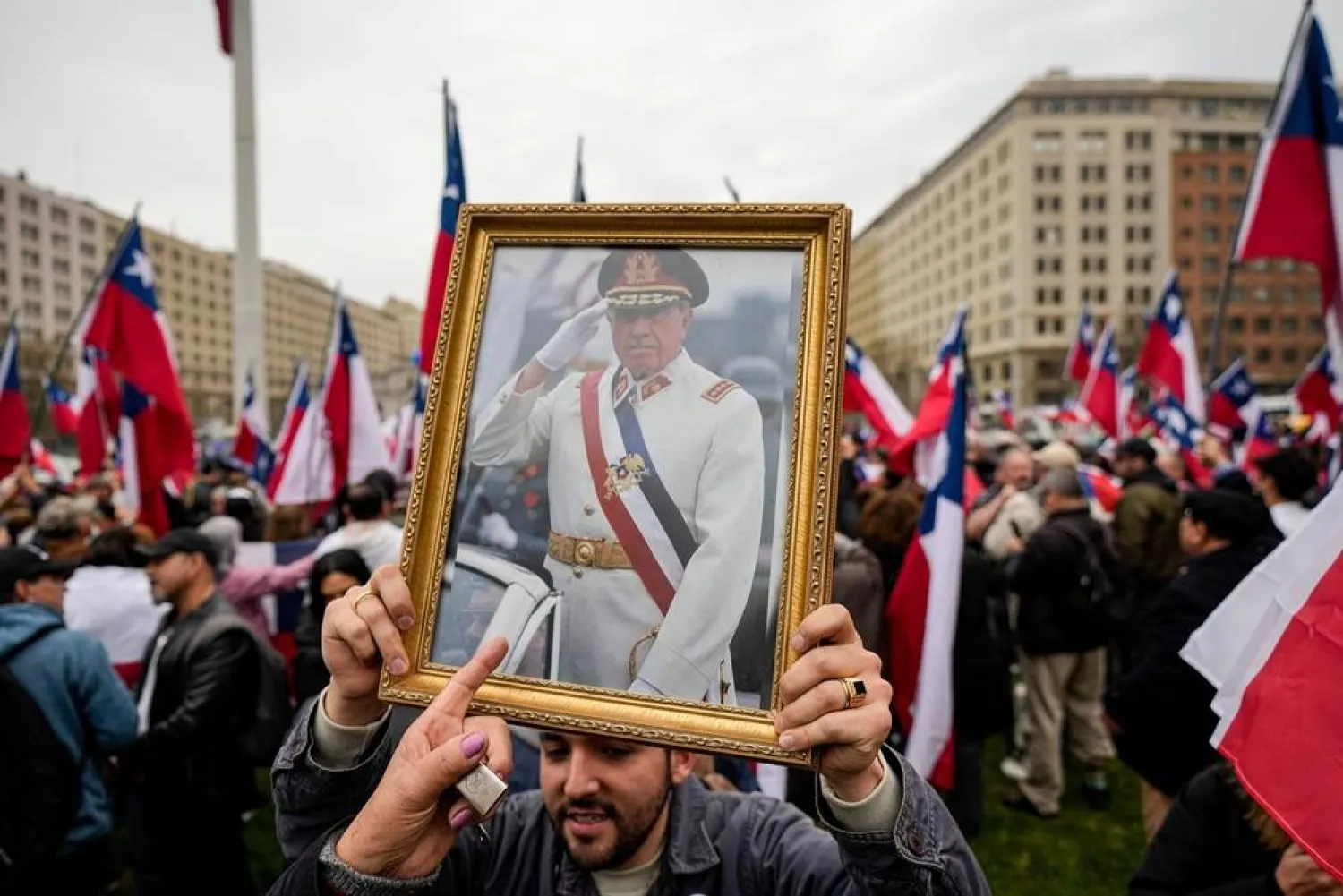
A group in favor of Gen. Augusto Pinochet celebrate the 50th anniversary of a military coup led by Pinochet, near La Moneda presidential palace, in Santiago, Chile, Sept. 9, 2023. (AP)
TT

From Barracks to Palace: Soldiers Who Led Military Coups to Become State Leaders

A group in favor of Gen. Augusto Pinochet celebrate the 50th anniversary of a military coup led by Pinochet, near La Moneda presidential palace, in Santiago, Chile, Sept. 9, 2023. (AP)

Weeks of nationwide Gen Z protests in Madagascar sparked by power and water shortages escalated and led to a military coup that forced President Andry Rajoelina into exile. Army officer Col. Michael Randrianirina has been sworn in as the new leader of the Indian Ocean nation.

The colonel is not the first in history to rise from the barracks to the presidential palace.

Here are five other famous military leaders who followed a similar trajectory:

Myanmar — Min Aung Hlaing

After decades of a gradual, deliberate ascent through the Myanmar military, Min Aung Hlaing was appointed joint chief of staff of the army, navy, and air force, the military’s third-highest position, in 2010. A year later, he was appointed commander-in-chief and would spend the next decade consolidating his power and influence.

Facing mandatory retirement in July 2021, Min Aung Hlaing seized power through a military coup in February that year, declaring a state of emergency, transferring all state power to himself and establishing a military government, the State Administration Council (SAC). Since then, he has ruled Myanmar under various titles. The military government has announced plans to hold a general election by year’s end.

Uganda — Idi Amin

Idi Amin began his military career as a cook and served in the British colonial army. After Uganda's 1962 independence, he rose quickly through its military ranks under President Milton Obote’s guidance to become commander of the army. In January 1971, Obote was in Singapore for a Commonwealth summit when Amin took control in a military coup. Obote fled to neighboring Tanzania after the coup, which was the result of the two men’s growing political and personal animosity.

Ugandans initially welcomed Amin’s rise to power, as he promised to release political prisoners and restore democracy. However, his regime rapidly descended into a brutal dictatorship characterized by violence and human rights abuses.

Amin was himself overthrown in April 1979 by an invasion force composed of the Tanzanian military and Ugandan rebels.

Türkiye — Kenan Evren

Kenan Evren began his military career as an officer from a military academy, rising through the ranks over several decades until he reached the highest rank of general, serving as the chief of the general staff. He led a military coup in Türkiye in September 1980 after months of violence between left-wing and right-wing militants that nearly brought the country to civil war.

The leader of the coup took over the presidency and then rewrote the constitution to guarantee the military’s political power. The military dissolved Parliament and ruled through a National Security Council, which Evren was the head of, effectively running the country as a dictator.

His period of sole military rule ended when he formally assumed the title of the seventh president of Türkiye in November 1982, after a new constitution was approved by referendum, and he served until November 1989.

In 2012, he was put on trial for leading the coup and later sentenced to life imprisonment for crimes against the state.

Ghana — Jerry Rawlings

Jerry Rawlings rose to power through two military coups, first in June 1979 and then in December 1981, before transitioning to a democratically elected president.

Rawlings, a pilot in the Ghanaian Air Force, became well-known for the successful first coup he led. He briefly held the position of ruler of Ghana before ceding it.

In a second coup in 1981, he toppled the civilian government and commanded the Provisional National Defense Council military dictatorship in the early 1990s. Following the drafting of a new constitution in 1992, he was democratically elected as president and held office for two four-year terms, from January 1993 to January 2001.

His legacy is complex, with both praise for his economic reforms and criticism for human rights abuses, including arbitrary detentions and forced disappearances.

Chile — Augusto Pinochet

Augusto Pinochet was a career military officer who had risen through the ranks and was appointed commander-in-chief of the army by Chile President Salvador Allende in August 1973. The following month, Allende, the democratically elected socialist president, was overthrown in a bloody military coup led by Pinochet. The military surrounded and bombed the presidential palace, La Moneda, where Allende remained until his death by suicide.

In the aftermath, the military imposed a junta where Pinochet emerged to establish himself as its single head before instituting a cruel, 17-year dictatorship. Until 1990, Chileans lived in a period marked by systematic human rights abuses and the implementation of radical free-market economic policies.



Defying Trump with Brief Iran Fight, Israel Seeks Sway over Peace Talks

 An Israeli security personnel inspects an impact site, after Iran launched missiles towards Israel, in an Israeli settlement in the Israeli-occupied West Bank, June 8, 2026. (Reuters)
An Israeli security personnel inspects an impact site, after Iran launched missiles towards Israel, in an Israeli settlement in the Israeli-occupied West Bank, June 8, 2026. (Reuters)
TT

Defying Trump with Brief Iran Fight, Israel Seeks Sway over Peace Talks

 An Israeli security personnel inspects an impact site, after Iran launched missiles towards Israel, in an Israeli settlement in the Israeli-occupied West Bank, June 8, 2026. (Reuters)
An Israeli security personnel inspects an impact site, after Iran launched missiles towards Israel, in an Israeli settlement in the Israeli-occupied West Bank, June 8, 2026. (Reuters)

In launching renewed strikes on Iran on Monday in apparent open defiance of Donald Trump, Israel has tried to make its case to have a say at the peace negotiating table, where it has so far been kept at arm's length by the US president.

Despite Trump publicly calling for Israel to hold fire, it struck targets in Iran for the first time since a ceasefire in April, after Iran fired missiles at Israel in what Tehran said was retaliation for Israeli strikes on Lebanon's capital.

Israel and Iran both called a halt to the exchange on Monday shortly after Trump told them to stop shooting, although they each left the door open to a possible resumption.

But in launching the strikes, Israel had sent a message to Washington that no final ‌agreement with Iran ‌can be reached if Israel's interests are ignored, said Danny Orbach, a military historian at ‌Israel's ⁠Hebrew University.

"Because if ⁠it tramples too heavily on Israeli interests, Israel can overturn the table."

TRUMP EXCLUDES ISRAEL FROM NEGOTIATIONS

Trump, who launched the war alongside Israel in February, has been trying to reach a negotiated settlement with Iran, while excluding Israel from those talks.

He has publicly prodded Israeli Prime Minister Benjamin Netanyahu to refrain from actions that could scupper the talks, including by holding fire in Lebanon, which Israel invaded in March in pursuit of the Iran-aligned Hezbollah movement.

Iran says it will not agree to any peace deal with Washington unless a ceasefire also holds in Lebanon.

Last week Netanyahu called off airstrikes on Beirut after a phone call with Trump. Trump later confirmed he ⁠had called the Israeli leader "[expletive] crazy" in the heated exchange, although he also said they ‌still get along well.

Netanyahu's domestic critics accused him of effectively surrendering sovereignty by ‌restricting Israeli military actions to sustain US negotiations, without a seat at the table.

ISRAEL SEEKS TO RETAIN ABILITY TO ATTACK IN LEBANON

After ‌Israel's strike on Lebanon on Sunday, and Iran's decision to fire at Israel in response, Trump made clear he believed ‌that should be the end of the matter.

"Each of them had their fun," he told the Axios website. "Israel had its strike and Iran had its strike. We don't need another one," Trump said.

But Israel concluded that only by striking Iran itself in response could it establish that Iran should not be granted future say over Israeli actions in Lebanon.

Israel could not accept a scenario in which Iranian ‌strikes on Israel were considered a justifiable "tit-for-tat response" to Israeli strikes on Lebanon, a senior Israeli defense official told Reuters.

Before deciding to strike Iran, Netanyahu convened a meeting of top security ⁠and defense officials to discuss ⁠goals of a potential short-term escalation, according to the senior defense official and two other Israeli officials familiar with the deliberations.

One goal was to establish that any future US-Iran deal would not remove Israel's right to attack Hezbollah in southern Lebanon and keep its troops deployed there, the senior defense official said.

Netanyahu had raised this consideration in weekend phone calls with Trump, the senior defense official said.

Netanyahu has not made any public comments or appearances since resuming attacks on Iran early on Monday. His office did not immediately respond to a request for comment.

ISRAEL CANNOT SUSTAIN LONG IRAN AIR CAMPAIGN ALONE, ANALYSTS SAY

The brief resumption of Israel-Iran fighting and Netanyahu's defiance of Trump's demands are the latest episode to lay bare the strains that have at times emerged between the two conservative leaders.

In private, Netanyahu has acknowledged difficulty influencing Trump's thinking on Iran, telling aides he has "no maneuver" to steer the president's decision-making.

But although Israel has the capability to strike Iran without US support, it would still need Washington's blessing and support to sustain such an air campaign for more than a few weeks, say military experts.

"There's no doubt that Israel (cannot) go alone in this war for a long, long time, because (the) ammunition is consumable," said Yehoshua Kalisky, a senior researcher at Israel's Institute for National Security Studies.


A Timeline of the Escalating Tensions Between Iran and Israel over Lebanon

Pro-government Iranian demonstrators wave flags of Iran and Lebanon's Hezbollah movement after Israeli strikes on Beirut's southern suburbs in Tehran on June 7, 2026. (AFP)
TT

A Timeline of the Escalating Tensions Between Iran and Israel over Lebanon

Pro-government Iranian demonstrators wave flags of Iran and Lebanon's Hezbollah movement after Israeli strikes on Beirut's southern suburbs in Tehran on June 7, 2026. (AFP)

The Middle East is suddenly bracing for war again. Iran fired missiles at Israel late Sunday in the first such bombardment in the two months since a ceasefire. Israel launched airstrikes early Monday targeting central and western Iran in response.

The truce in the Iran war that was reached in April has not spread to Lebanon, where Israel has been battling the Iranian-backed Hezbollah group. Israel says it is defending its northern communities that face Hezbollah drone and rocket fire.

Iran sees Israel’s ground invasion, with thousands of troops, and airstrikes in Lebanon as a ceasefire violation. It insists that any deal with the United States must end the fighting there. Israel disagrees.

Here’s a timeline of key events.

Feb. 28 The United States and Israel attack Iran. War begins.

March 2 Hezbollah enters the war by firing rockets at Israel. Israel retaliates.

April 7 A fragile ceasefire in the Iran war is announced, with talks to continue. Israel is not included in them.

April 8 Israel bombards Lebanon’s capital, Beirut, killing over 300 people in a 10-minute attack.

April 14 Lebanon and Israel hold their first direct diplomatic talks in decades in Washington.

April 17 A fragile ceasefire is announced between Israel and Lebanon, but Hezbollah plays no part. Fighting soon resumes from both sides.

May 31 Israel’s ground invasion of Lebanon makes its deepest incursion in over a quarter-century.

June 1 Israeli Prime Minister Benjamin Netanyahu threatens to strike Beirut if Hezbollah attacks don’t stop. US President Donald Trump says Israel and Hezbollah agree to calm the fighting.

June 2 Israeli drone strikes in Lebanon kill 11 people.

June 3 Israel and Lebanon say they agree to renew the fragile ceasefire and create security zones that exclude Hezbollah.

June 4 Hezbollah’s leader rejects the ceasefire agreement and demands that Israel withdraw from Lebanon.

June 5 Iran’s paramilitary Revolutionary Guard says “there will be no calm in the region ” if Israel doesn’t withdraw.

June 6 Israeli airstrikes on southern Lebanon kill three members of the Lebanese military.

June 7 Hezbollah again fires at Israel. Israel strikes Beirut’s southern suburbs. Iran fires at Israel.

June 8 Israel launches airstrikes in the early morning targeting central and western Iran in response to Iranian missile fire. Iranian state television reports the sound of explosions being heard in Isfahan, Tabriz and Tehran, without elaborating.


Health Workers at the Epicenter of Congo’s Ebola Outbreak Labor with Little Pay or Rest

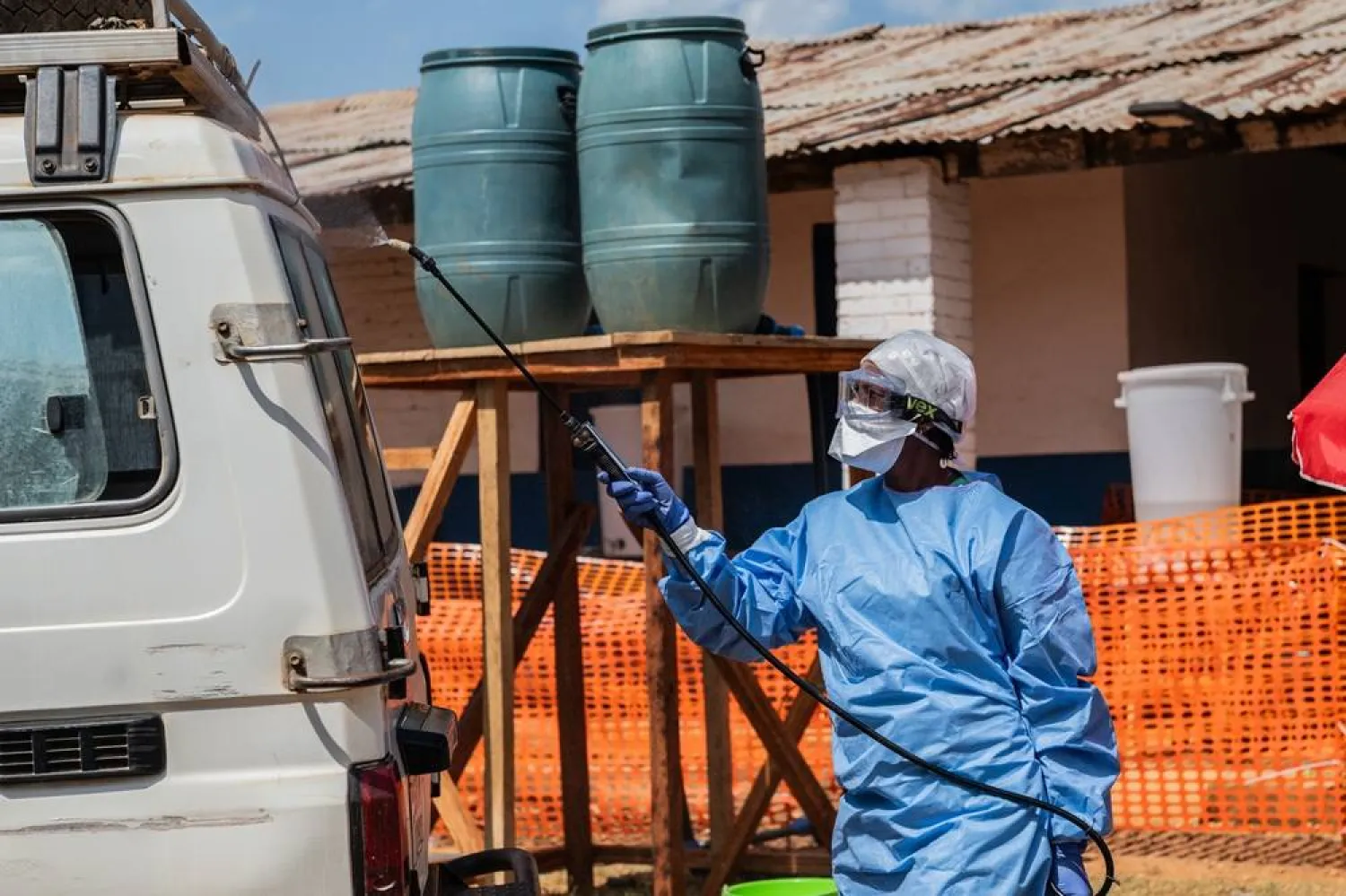
A health worker disinfects an ambulance at the Mongbwalu treatment center that transported a suspected Ebola patient in Mongbwalu, Congo, Friday, June 5, 2026. (AP)
TT

Health Workers at the Epicenter of Congo’s Ebola Outbreak Labor with Little Pay or Rest

A health worker disinfects an ambulance at the Mongbwalu treatment center that transported a suspected Ebola patient in Mongbwalu, Congo, Friday, June 5, 2026. (AP)

Dr. Richard Lokudu, the medical director of Mongbwalu General Referral Hospital, has received barely any compensation for his work on the front line of one of Congo's deadliest Ebola virus outbreaks.

Lokudu and several of his colleagues work all day at the hospital treating an influx of patients. Notifications of suspected cases come even late at night.

“I have not received my allowance (and) what happened to others could happen to me as well,” Lokudu told The Associated Press. “Despite all the infection prevention and control measures we are implementing, we do not know what may happen.”

Health authorities believe the outbreak, which took the eastern region of Congo by surprise after spreading silently for weeks without detection, started in the bustling mining area of Mongbwalu in Ituri province.

Mining conditions conducive to virus spread Mongbwalu has emerged as the epicenter of the rare Bundibugyo type. The town attracts large numbers of laborers who work in large gold mines with muddy pools of gold deposits, narrow pits and caves. They live in low-income areas including crowded camps and have little access to proper health protocols.

The conditions increase the possibility of transmitting the disease, which spreads through close contact with bodily fluids of the sick and deceased such as sweat, blood, feces and vomit.

There also has been widespread skepticism regarding the disease, making the job of medical treatment more difficult for Lokudu and his colleagues, while some of the health workers and first responders have died from the disease.

“It is one thing to be far away and hear statistics being reported, but what is happening on the ground is enormous,” Lokudu said. “People are sacrificing their rest and comfort for this cause. There should be recognition that they deserve compensation. These workers should receive their salaries regularly.”

The Congolese government did not respond to a request for comment from the AP.

Minimal resources available

Congolese authorities have confirmed 452 cases including 82 deaths. On Thursday, the Central African nation recorded 71 new cases in a day, which authorities said is a sign of “active community transmission.”

The rare Bundibugyo type has no approved vaccines or treatment, so health workers have been targeting symptoms. The government said at least five people have recovered from Ebola since the outbreak was officially confirmed by Congo's Ministry of Health on May 15.

The disease “had a big head start,” according to World Health Organization Director-General Tedros Adhanom Ghebreyesus. Hospitals in the region could not test for the right type of Ebola that had begun spreading several weeks before confirmation.

Health workers are handling the disease with minimal resources as agencies have been scrambling to bring aid into the region. Masks, gloves, boots and medications were initially all in short supply.

“There has been an erosion of the health system,” said Heather Kerr, country director for the International Rescue Committee in Congo. “There has not been investment in the health system, and this has been going on for years.”

Tough conditions for health workers

“During the first week, we did not even have time to go home and eat. The second week was the same. We only eat once a day, what amounts to breakfast in the evening,” said Alice Bamuhinga, a nurse at the Mongbwalu hospital.

Even with widespread skepticism and disregard for health protocols, many in the town are becoming aware of the outbreak's grave reality.

Asero Jeanne had five children. Two died from the disease within two weeks. When her daughter became ill, the family thought it was malaria and neighbors advised them to avoid the hospital, saying “anyone who went there would die immediately,” according to Jeanne, 52.

The daughter died after three weeks of moving between hospitals and home, followed by a son who died days after. Then Jeanne became sick.

“I saw about 20 people die,” Jeanne said. “I watched them being taken to the morgue, yet God is allowing me to leave here alive. I thank the doctors.”

World Health Organization offers a plan

Tedros, the WHO director-general, on Friday launched a $518 million plan to combat the outbreak, saying “containing Ebola depends on political commitment, sustained financing, and the trust and engagement of communities.”

Efforts to contain the disease also have been hindered by the conflict between the government and Rwanda-backed M23 rebel group, in addition to attacks by extremist militants.

For health workers on the front line of Congo's Ebola outbreak, the work has become harder as the disease spreads faster than their current treatment capacity.

“Despite the alerts we receive and the teams we have on site, we lack the means to travel into the field,” Lokudu said. “As a result, there are alerts we are unable to investigate.”