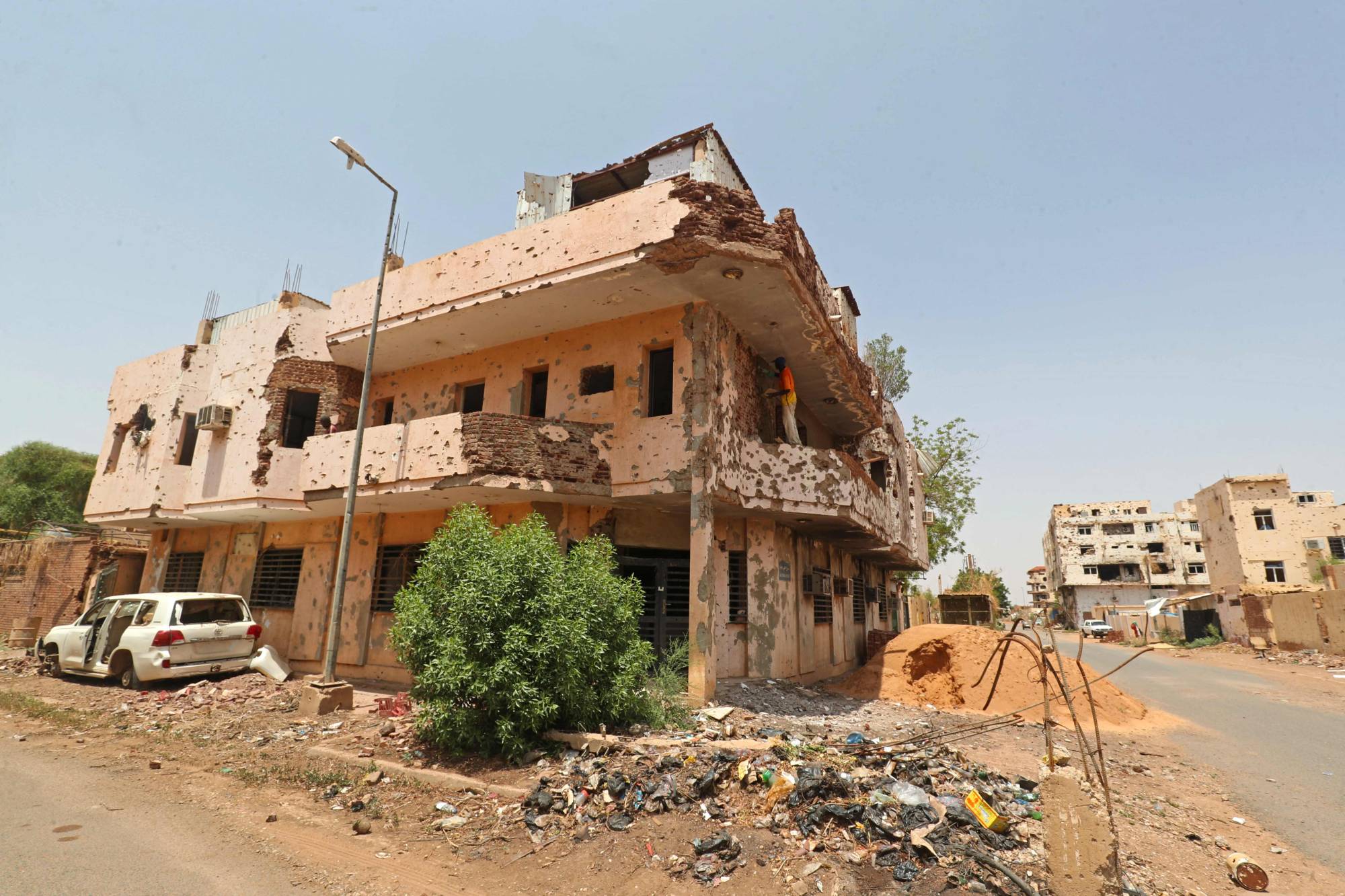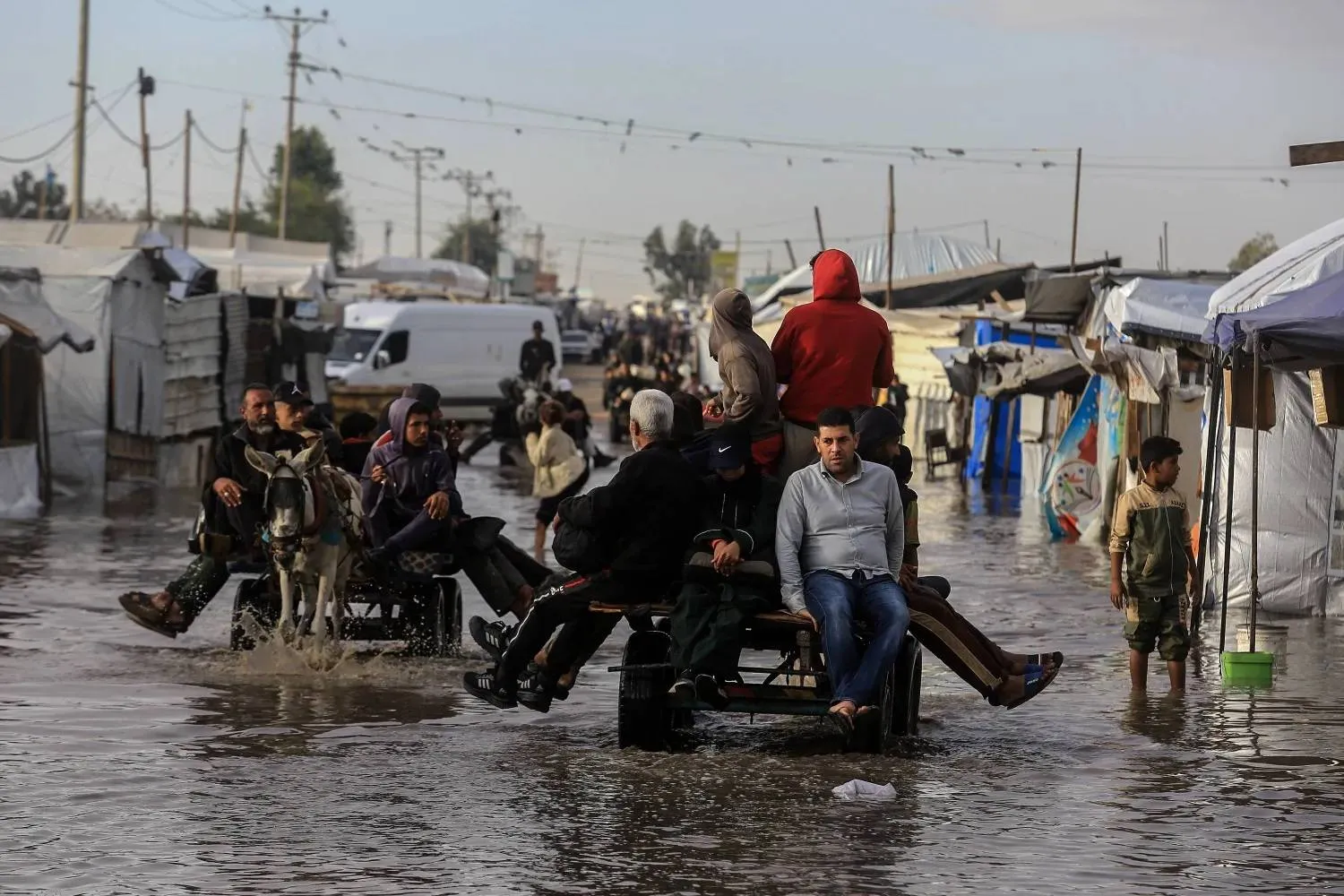

Palestinian territories, particularly the Gaza Strip, were hit by a winter storm that piled new hardship on residents, especially those living in tents that have frayed after two years of displacement and the Israeli war that destroyed their homes and even shelters.
With no alternative, families were left with tents that flooded along with the clothes, bedding and belongings inside, as rainwater swept through the makeshift encampments.
Hundreds, and likely thousands, of tents were submerged over recent days, Thursday, Friday and Saturday, as heavy rain accompanied the storm system that is expected to taper off Sunday evening.
It is the first winter storm to strike Gaza this season, and it appears set to be a harsh one for an estimated one million three hundred and seventy thousand displaced people living in tents across the enclave.
In Gaza’s port, once a gathering point for fishermen and a popular spot where residents would sit, eat and drink, the war turned the area into a command site for Israeli operations before the troops withdrew. It later became a refuge for tens of thousands of Gazans who pitched their tents there.
Testimonies of hardship
Riham al-Kafarneh, 49, from Beit Hanoun in northern Gaza, lives with her family of seven in a tent that filled with rainwater, soaking bedding, blankets and clothes. She said she barely managed, with one of her sons, to pull three of her grandchildren to safety as the water nearly swept them out of the tent.
“It was extremely difficult for us at dawn on Saturday as the storm intensified and the rain grew heavier. We were flooded even more than on Friday,” she told Asharq Al-Awsat, noting that waves had risen sharply and hit the edges of the port’s breakwater before parts of the water pushed into the tents. This made conditions worse for her family and for thousands of others living along the exposed edge of the port, compared with those deeper inside.
Al-Kafarneh said that after the war halted, she believed conditions would improve and that caravans and proper tents would be brought in, but “we saw nothing except more destruction of homes.”
Switching to her local dialect, she added: “We are exhausted and fed up with this life. We want to live like other people. Winter is just beginning and harder days are coming, and that is why we need someone to help us.”
The United Nations Relief and Works Agency (UNRWA) said the rains have made conditions even harsher for Gaza’s residents, forcing families to seek shelter anywhere available, including fragile temporary tents. It stressed its urgent need for shelter supplies already stockpiled and called for permission to bring them into Gaza.
Ahmed al-Kafarneh, Riham’s 19-year-old middle son, said the scenes remind him of what he once saw in Syria.
“We thought those images on the news were just distant pictures, but now I understand what those displaced Syrians went through, living in tents and watching them flood,” he said.
Ahmed said international and local organizations, as well as self-styled “initiators” who collect money abroad to assist residents, have fallen far short.
Israeli restrictions
The UN Office for the Coordination of Humanitarian Affairs (OCHA) said that since the ceasefire began on October 11, Israeli authorities have refused 23 requests from nine partners to bring in nearly four thousand pallets of essential supplies, including tents, insulation and framing materials, mattresses, kitchen sets and blankets.
The Israeli war has damaged more than 90 percent of residential buildings in Gaza, either fully or partially, leaving about one and a half million Palestinians in tents that barely shield them from summer heat or winter cold. Several thousand others live in partially damaged homes that have also flooded, raising fears that some structures could collapse.
On the western edge of Shujaiya, east of Gaza City, more than 120 families, with an average of five members each, live in torn and worn-out tents that are barely suitable even in summer. All of them were completely flooded during the latest rains.
Rami Abu Sakran, 31, said he, his wife and two children live in a tent no larger than three meters, but they have no choice since he cannot afford rent for one of the few remaining houses or even an empty storage room to protect his family from winter and illness.
“My children already had the flu before the storm, and now with winter and the cold, their health is even worse,” he told Asharq Al-Awsat.
His tent was fully flooded, forcing him to spend Friday night in a small, partially damaged room inside an empty house he fears could collapse at any moment, which is why he had avoided staying there before.
Abu Sakran returned to his tent Saturday morning to find it submerged in rain and sewage water amid a completely ruined infrastructure and no functioning drains.
Standing outside, he said: “We do not know where to go or what to do. Life’s crises are chasing us, and nobody sees us or is willing to stand with us.” He said the sand barrier he built before the storm to stop water from seeping in failed to spare his family a harsh winter.
UN spokesperson Stéphane Dujarric said he feared that “thousands of displaced families are now fully exposed to severe weather conditions, raising serious health and protection concerns.”
The Association of Gaza Strip Municipalities said the storm has worsened an already catastrophic situation. Drainage networks are destroyed, causing sewage to overflow, and garbage is piling up near tents, homes and shelters. It called for urgent international intervention.
The association said it has wide plans to handle storm systems and assist residents, but a lack of equipment has prevented action, contributing to damage to thousands of tents and the soaking of displaced people’s clothes and bedding amid a total absence of basic living conditions.
Gaza’s Civil Defense said its teams cannot handle flooding cases because equipment was destroyed by Israel, while municipal services are makeshift and unable to meet needs. “This storm is only the beginning of a harsh winter that may witness major tragedies, with the risk of collapsing cracked and damaged homes under heavy rain,” it warned.
Disappointment over truce agreement
Gaza residents had pinned hopes on rapid implementation of the ceasefire agreement, which would allow caravans, proper tents and other relief supplies to enter. But Israel continues to stall and has delayed moving to the second phase, which includes reconstruction.
Hamas said the “tragic situation underlines the urgent need for relief and shelter,” calling on guarantors of the agreement, the United Nations, the Arab League and the Organization of Islamic Cooperation to act quickly to deliver humanitarian, medical and shelter supplies to Gaza, and to increase field, popular and official support to protect displaced families and secure a minimum standard of dignity amid catastrophic conditions.
The Palestinian presidency urged the international community, particularly the United States and the countries guaranteeing the ceasefire, to pressure Israel to speed up entry of prefab homes and tents to protect civilians from severe weather.
It called for lifting Israeli restrictions that prevent the Palestinian government from bringing mobile homes, tents and shelter materials into Gaza, saying the dire humanitarian situation exposes children, women and the elderly to grave danger.