
How Israel’s Multi-Ton Truck Bombs Ripped Through Gaza City

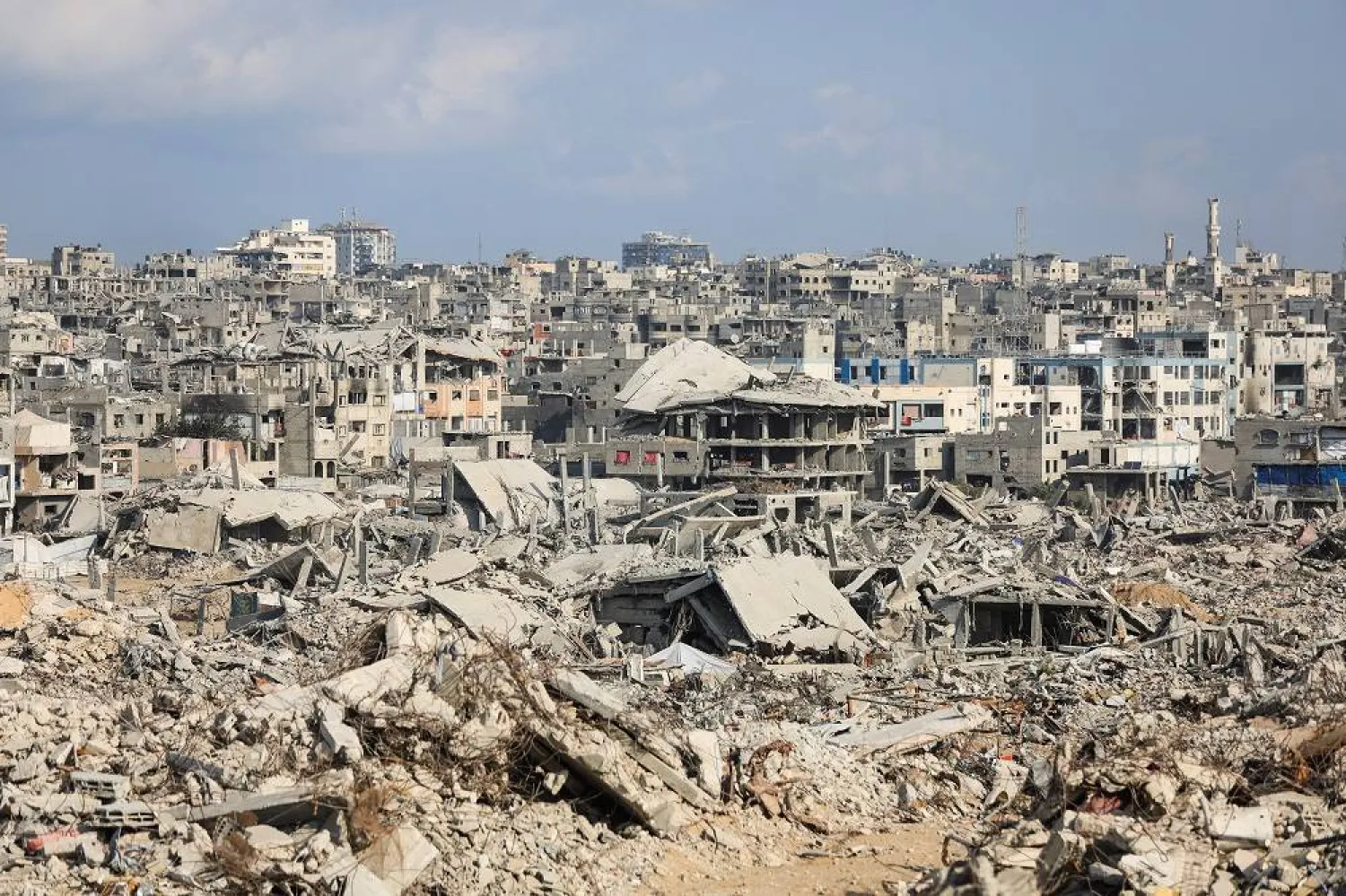
Destroyed buildings after Israeli military operations in Gaza City, November 12, 2025. (Reuters)
TT

How Israel’s Multi-Ton Truck Bombs Ripped Through Gaza City

Destroyed buildings after Israeli military operations in Gaza City, November 12, 2025. (Reuters)

In the weeks before the Gaza ceasefire on October 10, Israel widely deployed a new weapon: M113 Armored Personnel Carriers repurposed to carry between 1 and 3 tons of explosives, Reuters found.

As Israeli troops pushed toward the center of Gaza City, these powerful bombs, along with airstrikes and armor-plated bulldozers, leveled swathes of buildings, drone footage and satellite images show.

In most cases, but not all, the inhabitants fled ahead of demolitions after Israeli warnings, residents, Israeli security sources and Gaza authorities said.

Hesham Mohammad Badawi’s five-storey home on Dawla Street in the affluent Tel-al-Hawa suburb, damaged by an airstrike earlier in the war, was completely destroyed by an APC explosion on September 14, he and a relative said, leaving him and 41 family members homeless.

Badawi, who was a few hundred meters away, said he heard at least five APCs detonate in roughly five-minute intervals. He said he received no ​evacuation warning before the demolition and family members escaped “by a miracle” amid explosions and heavy gunfire.

Several buildings in the same block were demolished around that time, satellite images show.

The family is now staying with relatives in different parts of the city, Badawi said, while he lives in a tent by his former home. Israel’s military did not respond to Reuters questions about the incident. Reuters could not establish what Israel targeted in the attack or independently verify all the details of Badawi’s account of the events.

When Reuters visited in November, remains of at least one of the vehicles were strewn among large piles of rubble.

"We could not believe this was our neighborhood, this was our street," Badawi said.

To compile a detailed account of the role of APC-based bombs by the Israeli military in Tel-al-Hawa and the neighboring Sabra district in the six weeks before the ceasefire, Reuters spoke to three Israeli security sources, a retired Israeli military brigadier, an Israeli reservist, Gazan authorities and three military experts.

Seven Gaza City residents said their homes or those of neighbors were levelled or severely damaged by the explosions, which several likened to an earthquake. Analysis of Reuters footage by two of the military experts confirmed wreckage of at least two exploded APCs among the rubble at sites in Gaza City.

Israel packed 1 to 3 tons of ordnance in APCs, three military experts estimated, based on cabin space and wreckage of vehicle armor. Some of the ordnance was likely non–military ammonium nitrate or emulsion, though without chemical testing that conclusion is not certain, they said.

Such a multi-ton explosion could approach an equivalent power to Israel’s largest airborne bombs, the 2,000-pound US-made Mark 84, said two experts, who examined Reuters footage of the blast area and vehicle remains.

It could scatter vehicle fragments hundreds of meters and break close-by exterior walls and building columns. The blast wave would be strong enough to potentially collapse a multi-storey building, they said.

HIGHLY UNUSUAL

APCs generally transport troops and equipment on the battlefield. The three military experts ‌consulted by Reuters said use of ‌the vehicles as bombs was highly unusual and risked excessive damage to civilian dwellings.

In response to detailed Reuters questions for this story, Israel’s military said it was committed to the rules of war. Regarding ‌allegations of ⁠destruction of civilian ​infrastructure, it said it used ‌what it called engineering equipment only for “essential operational purposes,” without disclosing further details.

Decisions are guided by military necessity, distinction, and proportionality, it said.

In an interview with Reuters in Gaza for this story, Hamas spokesman Hazem Qassem said Israel’s demolitions with armored vehicles were aimed at the large-scale displacement of the city's residents, which Israel has denied.

The reporting provides new evidence of the power of these low-tech weapons and how they came to be widely used.

Retired reservist Brigadier-General Amir Avivi, founder of the Israel Defense and Security Forum (IDSF), a think tank, called the weapon an “innovation of the Gaza War.” One of the security sources said its increasing use partly responded to US restrictions on transfers of heavy Mark-84 airborne bombs and Caterpillar bulldozers.

Israel’s military and Prime Minister’s Office also did not respond to questions about the reasons for the shift in tactics. The US State Department, White House and Department of War did not respond to Reuters questions for this story.

Before the war, Tel-al-Hawa and Sabra, a historic area of modest houses in south-central Gaza City, bustled with bakeries, shopping malls, mosques, banks and universities.

Now, large parts lie in ruins.

Satellite imagery analysis by Reuters showed that about 650 buildings in Sabra, Tel-al-Hawa and surrounding areas were destroyed in the six weeks between September 1 and October 11.

MILITARY NECESSITY?

Two international law scholars, the UN human rights office and two of the military experts who reviewed Reuters findings said use of such large explosives in dense residential urban areas may have failed one or more principles of humanitarian law that prohibit attacking civilian infrastructure and using disproportionate force.

"The basis that some of it may be booby-trapped" or once used by Hamas snipers is not enough to justify mass destruction, Ajith Sunghay, head of the UN Human Rights Office in ⁠the Occupied Palestinian Territory, told Reuters, referring to Israel’s allegation that Hamas placed improvised explosive devices in houses, which Hamas denies.

In some circumstances, buildings could lose legal protection and become targets if Israel had evidence Hamas used them for military advantage, said Afonso Seixas Nunes, Associate Professor in the School of Law at Saint Louis University.

Israel’s military did not respond to Reuters requests to provide such evidence.

If not the result of military necessity, the ‌demolition of civilian infrastructure could amount to wanton destruction of property, which is a war crime, Sunghay said.

The level of ruin reflects a broader trend: 81% of Gaza’s buildings suffered damage or destruction ‍during the war, according to the UN Satellite Center. The area including Gaza City experienced most damage since July, with approximately 5,600 newly affected structures, it said ‍in October.

In August, Israeli Prime Minister Benjamin Netanyahu told reporters Israel was packing tons of explosives into APCs because Hamas had placed explosive devices in “just about every single building” in evacuated areas.

"We detonate them, and they set off all the booby traps. That's why you see the destruction," Netanyahu said.

In response ‍to questions for this story, Qassem, the Hamas spokesman, denied booby trapping buildings, and said Hamas did not have the capacity to set devices at the scale Israel claimed.

FORCES ENTER GAZA CITY

Later in August, Israeli forces entered Gaza City with the declared aim of eliminating Hamas and freeing hostages held by fighters since the October 7, 2023 attack on Israel that triggered the war.

Israel ordered a full evacuation of the city in September.

As troops advanced, backed by tanks and airstrikes, they extensively damaged eastern suburbs before approaching central areas of the city, where most displaced people were sheltering.

Hundreds of thousands fled south. The UN estimated 600,000-700,000 people remained in the city.

Israel’s defense minister has said soldiers demolished 25 towers that Israel said had Hamas tunnels underneath or were used as lookout points. The UN human rights office says Israel has provided no evidence the buildings were military targets.

Among the destruction visible in Sabra, Tel-al-Hawa and South Rimal between September 1 and October 11, Reuters identified al-Roya tower, which housed the Palestinian Center for Human Rights, a prominent human rights office that worked with charity Christian ​Aid, and al-Roya 2, a mixture of business and flats, brought down by airstrikes on September 7 and 8.

Two wings of the Islamic University of Gaza and a mosque on the campus were destroyed. In one six-block corner of Tel-al-Hawa almost every building was demolished - more than 60 in total.

Beyond the two cases of APC explosions analyzed in detail for this story, and airstrikes on towers caught on video, Reuters could not establish what weapons Israel deployed to demolish buildings, or the total number of APCs detonated ⁠from August until the ceasefire.

Gaza’s Civil Defense spokesperson Mahmoud Basal said the army detonated hundreds of APCs in that period, as many as 20 daily. Israel’s military did not reply to a question on numbers.

BADAWI’S HOUSE

Among the buildings destroyed was Badawi’s family home of four decades, along with more than 20 neighboring buildings in the same period.

"We didn’t recognize this as our house," he said.

Two military experts said Reuters footage of the area showed remains of at least one detonated APC.

The explosion had torn one APC caterpillar track from its running gear and “physically thrown it onto the roof” of a multi-storey building, a retired senior British military bomb disposal officer said, noting that M113 tracks each weigh hundreds of kilograms.

A thick, ripped piece of metal and a wheel torn in half, both scattered at the property, were consistent with a detonation from within the APC, said Gareth Collett, a retired British Brigadier General and leading authority on explosives and bomb disposal. He said the large size of the fragments was indicative of a commercial low energy explosive.

THE RETURN OF THE M113

Bought from the US after the Yom Kippur War in the 1970s, thousands of M113s were deemed to insufficiently protect soldiers and were mothballed, military historian Yagil Henkin said.

FMC Corp, originally the M113’s primary manufacturer, did not respond to Reuters’ requests for comment about its use as a weapon and potential associated human rights concerns.

BAE Systems, which currently provides maintenance for the vehicle globally, did not reply to Reuters questions about Israel's new use of the M113 other than to say it currently had no direct military sales to the country. It said equipment it sold to the US government could reach other countries indirectly.

In May, Israel posted a public tender seeking to sell an unspecified number of M113s internationally, public documents show.

The tender was later cancelled, according to an undated posting on the Ministry of Defense website. The cancellation allowed Israel to scale up repurposing M113s, one of the security sources told Reuters. The military did not respond to Reuters’ questions about the tender.

The first media reports of an APC detonating in Gaza date to mid-2024.

Use accelerated this year when Israel rationed stocks after the US paused deliveries of Mark-84 bombs over concerns about the bombs use in residential areas, the source said.

CATERPILLAR D9

The increased role of APC-based bombs also coincided with shortages in Israel of US company Caterpillar's giant D9 bulldozer, long used by Israel’s military for demolition, one of the security sources said.

Hamas heavily targeted D9s earlier in the war, killing or injuring soldiers and damaging the vehicles, the source said. Alarmed by their use to demolish homes, the US paused D9 sales to Israel in November 2024, adding to the shortage. Under President Donald Trump, D9 transfers resumed.

Caterpillar did not respond to questions from Reuters about the military ‌use of its machines in Gaza demolitions and has not publicly commented on the matter.

Amid the shortages, the military began using other methods of demolition, including APCs, another of the security sources said.

Danny Orbach, an Israeli military historian, told Reuters demolitions were normal in war, made necessary in Gaza due to tunnels and booby traps. He said Israel’s military was underprepared for the complex fighting, leading to the conclusion there was “no other way to fight such a war except destroying all buildings above ground.”

Israel's military told Reuters targets were reviewed prior to attack and the munition selected “to achieve the military objective while minimizing collateral damage” to civilians and civilian infrastructure.




A Look at the UK’s Royal Navy, Which Has Faced Jibe After Jibe from Trump and Hegseth

Indonesian soldiers stand guard as Royal Navy offshore patrol vessel HMS Spey is docked at Tanjung Priok Port during a port visit in Jakarta, Indonesia, Wednesday, Jan. 15, 2025. (AP Photo/Tatan Syuflana, File)
TT

A Look at the UK’s Royal Navy, Which Has Faced Jibe After Jibe from Trump and Hegseth

Indonesian soldiers stand guard as Royal Navy offshore patrol vessel HMS Spey is docked at Tanjung Priok Port during a port visit in Jakarta, Indonesia, Wednesday, Jan. 15, 2025. (AP Photo/Tatan Syuflana, File)

US President Donald Trump and his Defense Secretary Pete Hegseth have been damning of the UK's naval capabilities. Their jibes may have stung in a country with a long and proud maritime history, but they do carry some substance.

The UK has been at the forefront of Trump’s ire since the onset of the Iran war on Feb. 28, when British Prime Minister Keir Starmer refused to grant the US military access to British bases.

Though that decision has been partly reversed with the decision to permit the US to use the bases, including that of Diego Garcia in the Indian Ocean, for so-called defensive purposes, Trump is adamant he was let down. He has repeatedly lashed out at Starmer and branded the Royal Navy’s two aircraft carriers as “toys.”

“You don’t even have a navy,” he told Britain's Daily Telegraph in comments published Wednesday. "You’re too old and had aircraft carriers that didn’t work.”

Hegseth, meanwhile, said sarcastically that the “big, bad Royal Navy” should get involved in making the Strait of Hormuz safe for commercial shipping.

For numerous reasons, the Royal Navy is not as big and bad as it used to be when Britannia ruled the waves. But it's not as feeble as Trump and Hegseth imply and is largely similar with the French navy, which it is often compared with.

“On the negative side, there is a grain of truth, with the Royal Navy being smaller than it has been in hundreds of years,” said professor Kevin Rowlands, editor of the Royal United Services Institute Journal. “On the positive side, the Royal Navy would say that it’s entering its first period of growth since World War II, with more ships set to be built than in decades.”

Capabilities and preparedness

It’s not that long ago that Britain could muster a task force of 127 ships, including two aircraft carriers, to sail to the south Atlantic after Argentina’s invasion of the Falkland Islands. That 1982 campaign, which then-US President Ronald Reagan was lukewarm about, marked the final hurrah of Britain’s naval pedigree.

Nothing on that scale, or even remotely, could be accomplished now. Since World War II, Britain’s combat-ready fleet has declined substantially, much of it linked to changing military and technological advances and the end of empire. But not all.

The number of vessels in the Royal Navy fleet, including aircraft carriers, destroyers frigates and submarines has fallen from 166 in 1975 to 66 in 2025, according to The Associated Press' analysis of figures from the Ministry of Defense and the House of Commons Library.

Though the Royal Navy has two aircraft carriers at its command, there was a seven-year period in the 2010s when it had none. And the number of destroyers has halved to six while the frigate fleet has been slashed from 60 to just 11.

Diminished state

The Royal Navy faced criticism for the time it took to send the HMS Dragon destroyer to the Middle East after the war with Iran broke out. Though naval officials worked night and day to get it shipshape for a different mission than the one it was readying for, to many it symbolized the extent to which Britain’s military has been gutted since the fall of the Berlin Wall in 1989.

For much of the Cold War, Britain was spending between 4% and 8% of its annual national income on its military. After the Cold War, that proportion steadily dropped to a low of 1.9% of GDP in 2018, fuel to Trump's fire.

Like other countries, Britain, largely under the Labour governments of Tony Blair and Gordon Brown, sought to use the so-called “peace dividend” following the collapse of the Soviet Union to divert money earmarked for defense to other priorities, such as health and education.

And the austerity measures imposed by the Conservative-led government in the wake of the global financial crisis of 2008-9 prevented any pickup in defense spending despite the clear signs of a resurgent Russia, especially after its annexation of Crimea and parts of eastern Ukraine.

No quick fix

In the wake of Russia's full-blown invasion of Ukraine in 2022, and with another Middle East war underway, there's a growing understanding across the political divide that the cuts have gone too far.

Following the Ukraine invasion, the Conservatives started to turn the military spending tide around. Since the Labour Party returned to power in 2024, Starmer is seeking to ramp up British defense spending, partly at the cost of cutting the country's long-vaunted aid spending.

Starmer has promised to raise UK defense spending to 2.5% of gross domestic product by 2027, and the updated goal is now for it to rise to 3.5% of GDP by 2035, as part of a NATO agreement pushed by Trump. That, in plain terms, will mean tens of billions pounds more being spent — a lot more kit for the armed forces.

The pressure is on for the government to speed that schedule up. But with the public finances further imperiled by the economic consequences of the Iran war, it's not clear where any additional money will come.

The jibes will likely keep coming even though the critiques are unfair and far from the truth, said RUSI's Rowlands, who was a captain in the Royal Navy.

“We are dealing with an administration that doesn’t do nuance,” he said.


Back to Israeli Occupation of South Lebanon?

Smoke rises from explosions during Israeli military operations in the Lebanese village of Taybeh on April 1, 2026. (AFP)
TT

Back to Israeli Occupation of South Lebanon?

Smoke rises from explosions during Israeli military operations in the Lebanese village of Taybeh on April 1, 2026. (AFP)

A month into Israel's war against Hezbollah, invading Israeli troops are gradually advancing in south Lebanon, raising fears for the area's fate following the last Israeli occupation that lasted nearly two decades.

Since war erupted last month, Israeli officials have said Israel intends to establish a "security zone" inside Lebanon.

More recently, Defense Minister Israel Katz said the military "will establish itself in a security zone inside Lebanon ... and will maintain security control over the entire area up to the Litani" river, around 30 kilometers (20 miles) from the border.

What is happening on the ground and how far could Israel go?

- What's happening in south Lebanon? -

The Israeli military previously issued unprecedented evacuation orders for swathes of the country's south, where Iran-backed Hezbollah holds sway.

An Israeli military source told AFP that four army divisions are currently deployed across the country's northern border.

A Western military source in south Lebanon said "the Israelis are advancing one axis at a time" and destroying border villages as they go.

The source told AFP on condition of anonymity that Israeli forces had taken the strategic town of Khiam, located along the eastern stretch of the shared border.

Hezbollah, which drew Lebanon into the Middle East war last month with rocket fire towards Israel, has been claiming repeated attacks on Israeli troops in south Lebanon, where Israel's military says 10 soldiers have been killed in combat.

The Iran-backed group is not halting Israeli troops' advance "but is seeking symbolic victories such as the destruction of Merkava tanks", the Western military source said.

David Wood, senior Lebanon analyst at the International Crisis Group, told AFP that as Israel pushes further inside Lebanon, "it is entering a style of warfare that might actually suit Hezbollah better, in this sort of guerrilla hit-and-run style of fighting".

Lebanon's army has announced troop "repositioning and redeployment" in parts of the south where Israel is advancing.

A Lebanese military source said Israeli soldiers have advanced up to 10 kilometers (six miles) in some places, and Lebanon's army, which has limited means, fears it will be targeted or encircled.

Israeli fire has killed one on-duty Lebanese soldier.

United Nations peacekeepers deployed in south Lebanon have been powerless to stop the fighting, with three of their troops also killed.

- What does Israel want? -

Katz has said Israel would control south Lebanon up to the Litani, and vowed that hundreds of thousands of south Lebanon residents will not return until northern Israel's security is guaranteed.

Lebanese Defense Minister Michel Menassa this week denounced "a clear intention to impose a new occupation of Lebanese territory".

UN aid chief Tom Fletcher has warned that south Lebanon could become another occupied territory in the Middle East.

But Eyal Zisser, a Lebanon expert at Tel Aviv University, cautioned against taking Katz's announcements at face value.

"He's good at making statements, but you always have to check first of all if it is in full agreement" with what Israeli Prime Minister Benjamin Netanyahu says, he told AFP's Jerusalem bureau.

Netanyahu has ordered troops to "further expand" a so-called security zone in south Lebanon "to definitively neutralize the threat of invasion (by Hezbollah) and to keep anti-tank missile fire away from the border".

Military analyst and retired Lebanese army general Khalil Helou told AFP that Hezbollah has "recruited people from southern towns" for decades, giving the group "local power" that Israel fears could be further exploited if southerners return.

- New occupation? -

Israel has previously tried to create a buffer zone in southern Lebanon.

Following a first invasion in 1978, Israeli troops returned four years later, entering Lebanon all the way to Beirut to drive out Palestinian fighters.

Hezbollah was born in response to the 1982 invasion.

Israel withdrew gradually but kept an area up to 20 kilometers deep inside Lebanese territory until 2000, when it pulled out under persistent pressure from Hezbollah.

Lebanese are increasingly concerned about a return to a similar scenario.

In its last war with Hezbollah and even after a November 2024 ceasefire, Israeli troops damaged or destroyed swathes of border villages and towns through strikes, controlled demolitions and the wrecking of agricultural areas.

Zisser said Israel maintaining control of the area south of the Litani was technically feasible.

"But you need to make a decision and you need to decide how to do it, (whether) to occupy the entire territory and establish yourself there" or not, he said.

Wood meanwhile cautioned that an occupation would create "new security threats" for Israel.

"If Israel denies people the right to return to their ancestral homes, then armed resistance groups will emerge or will continue to take up this struggle," he said.


Al-Tanf Crossing Opens Iraqi Energy Lifeline to Counter Hormuz Disruption

Iraqi fuel tankers heading to enter Syrian territory (Syrian General Authority for Land and Sea Ports)
TT

Al-Tanf Crossing Opens Iraqi Energy Lifeline to Counter Hormuz Disruption

Iraqi fuel tankers heading to enter Syrian territory (Syrian General Authority for Land and Sea Ports)

In a step reflecting a strategic shift in regional energy routes, Baghdad has officially begun exporting crude oil via Syria, in an effort to bypass the paralysis that has affected traditional maritime trade corridors. The move, which Damascus described as a return to its role as a “transit compass” and a vital platform for global energy, comes amid sweeping geopolitical shifts in the region that are imposing a new economic reality based on overland integration between the two countries.

The first convoys of Iraqi fuel tankers set off through the Al-Tanf–Al-Waleed border crossing, heading toward the Baniyas refinery on Syria’s Mediterranean coast, marking the effective launch of a new phase of economic cooperation. The Syrian Arab News Agency (SANA) reported that the cargo of 299 fuel tankers will later be loaded for export.

The Al-Tanf crossing had been closed since 2015, when ISIS took control of it. In 2016, US-backed forces established a military base in Al-Tanf. Syrian forces took control of the base last month, paving the way for the crossing to reopen.

"Transit Compass"

With the first convoys entering Syrian territory through the Al-Tanf–Al-Waleed crossing en route to Baniyas, Syrian Energy Minister Mohammed Al-Bashir wrote on X: “From the Syrian-Iraqi border to the maritime carriers in Baniyas... Syria is returning as a transit compass and a strategic export platform for global energy.” He said the step “enhances national interests and advances Arab economic integration toward broader horizons.”

The General Authority for Land and Sea Ports said the move represents “an important milestone in developing economic cooperation between the two countries by activating trade and energy routes, enhancing opportunities for economic integration, and supporting trade flows in the coming phase,” stressing its readiness to provide all necessary facilitation and ensure efficient procedures.

Mazen Alloush, director of public relations at the authority, announced Tuesday via Facebook the reopening of the Al-Tanf–Al-Waleed crossing, confirming the entry of the first Iraqi oil tanker convoys toward the Baniyas terminal.

In parallel, a delegation from the authority conducted a field tour to assess readiness at the Al-Yarubiyah–Rabia crossing ahead of plans to resume operations in early May, while also reviewing the status of the Semalka–Fishkhabour crossing as part of procedures to integrate it into the authority’s operational system. Passenger traffic has resumed at the Al-Bukamal–Al-Qaim crossing.

Alongside the reopening of Al-Waleed, Syrian government efforts are focused on activating Al-Yarubiyah–Rabia in early May and completing procedures at Semalka–Fishkhabour to strengthen the broader cross-border connectivity network.

For his part, the Iraqi subdistrict head of Al-Waleed, Mujahid Mardhi Al-Dulaimi, told the Iraqi News Agency (INA) that the crossing has entered a trial reopening phase with crude oil tankers beginning to move between Iraq and Syria. He said more than 150 tankers are currently waiting to enter Syrian territory, expecting daily traffic to reach at least 500 tankers.

Oil cooperation between Syria and Iraq has the backing of President Donald Trump’s administration. US Special Envoy to Syria Tom Barrack said last week at the Atlantic Council that Syria could be “the solution” to the energy crisis stemming from the situation in the Strait of Hormuz, highlighting the potential development of pipeline networks, including from Iraq.

Iraqi fuel tankers heading to enter Syrian territory (Syrian General Authority for Land and Sea Ports)

"Syria a Vital Option"

The move gains added significance amid escalating regional tensions and intensifying confrontation between the United States and Israel on one side and Iran on the other, which has resulted in direct threats to navigation in the Strait of Hormuz, through which about 20 percent of global energy supplies pass.

In this context, economic expert Dr. Fadi Ayash said Iraq, as a major oil producer, has found in Syria a vital and available option to sustain export flows, especially given the difficulty of secure maritime exports. He said the current direction aims to raise tanker traffic to between 500 and 700 per day at a minimum.

Amid drone attacks and shelling targeting the Syrian side of the border since the outbreak of the unprecedented regional war- including a drone strike last Saturday launched from Iraq on the Al-Tanf base in southeastern Syria, questions arise about the sustainability of keeping crossings open and continuing Iraqi oil exports through Syrian territory under these security conditions.

Ayash said: “There is no doubt that Iraq is among the Gulf countries most affected by the current war, given that it is a major oil producer and exporter heavily dependent on export revenues. It therefore had to look for alternatives to sustain exports, and Syria was a viable option. However, sustainability depends on balancing financial and oil needs- especially with continued disruption in the Strait of Hormuz- against on-the-ground security challenges in active conflict zones.”

Iraq is seeking to increase exports through Syria to between 600 and 700 trucks per day, making it a vital and mutually agreed option. According to Ayash, this represents “a practical application of spatial economics as a temporary solution to sustain exports, allowing time and resources to revive the pipeline linking Iraq and Syria to the Baniyas oil terminal on the Mediterranean. Pipeline exports are more efficient, less costly, and more secure, particularly as border areas are subject to intermittent security tensions and shelling, posing direct risks to trucks and crews.”

Iraq had reduced oil production by about 80 percent, to 800,000 barrels, due to shipping difficulties.

Operations Despite Risks

Despite the risks, initial convoys have begun moving, indicating an effort to proceed despite regional conditions. Ayash said continuation depends primarily on the ability of security forces in both countries to secure tanker routes, as well as the availability of financial, technical, and logistical resources needed to rehabilitate pipelines and pumping stations in both Iraq and Syria.

Economic Returns for Syria

According to current estimates and agreements under implementation, exporting Iraqi oil through Syrian territory is expected to generate direct and indirect financial and technical benefits for Syria. Transit fees alone could reach between $150 million and $200 million annually if operations run at high capacity.

The Syrian treasury would also benefit from port fees, storage and unloading charges, and road service revenues for trucks. Operating between 600 and 700 trucks daily would drive significant spending on fuel, maintenance, and road fees, stimulating economic activity along transit routes.

Ayash added that the arrangement could allow Syria to obtain shares of oil or derivatives at preferential prices or as part of transit compensation, easing its energy import bill. These revenues, he said, are vital under current conditions, contributing to economic recovery and foreign currency inflows, although final returns depend on export volumes and border security stability, which remains essential for sustaining exports through the Syrian route.