Who Is Behind the Killing of Seif al-Islam Gadhafi, and Why Now?

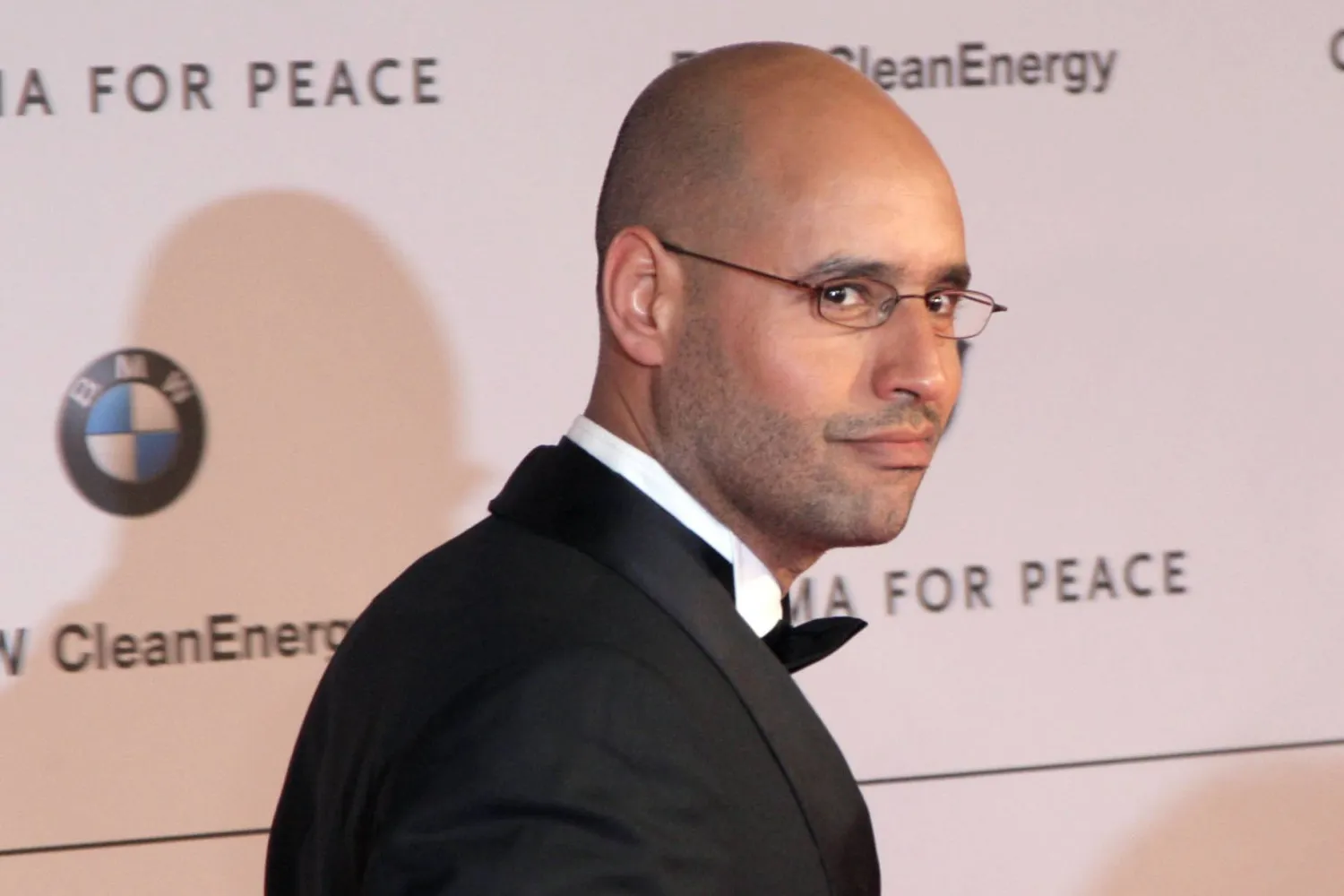
11 February 2008, Berlin: Seif al-Islam Gadhafi, son of then Libya's leader Moammar Gadhafi, arrives at the charity gala "Cinema for Peace" at the Konzerthaus am Gendarmenmarkt. (dpa)
TT

Who Is Behind the Killing of Seif al-Islam Gadhafi, and Why Now?

11 February 2008, Berlin: Seif al-Islam Gadhafi, son of then Libya's leader Moammar Gadhafi, arrives at the charity gala "Cinema for Peace" at the Konzerthaus am Gendarmenmarkt. (dpa)

Seif al-Islam, the son of Libya's slain longtime ruler Moammar al-Gadhafi and once seen by some as his likely heir, has been killed.

Targeted by a warrant from the International Criminal Court for alleged crimes against humanity, and still a player in Libya's turbulent political scene, the 53-year-old was no stranger to violence.

But his sudden assassination has raised many questions:

- Who is behind it? -

Very little has emerged about the identity or motives of the assailants.

Seif al-Islam's lawyer, Marcel Ceccaldi, told AFP he was killed by an unidentified "four-man commando" who stormed his house on Tuesday afternoon in the city of Zintan, western Libya.

His adviser, Abdullah Othman Abdurrahim, told Libyan media the four unidentified men had stormed the home before "disabling surveillance cameras, then executed him".

Libyan prosecutors said Wednesday they were probing the killing after establishing that "the victim died from wounds by gunfire".

- Why now? -

Claudia Gazzini, a senior Libya analyst at International Crisis Group, described the timing of Seif al-Islam's death as "odd".

"He had been living a relatively quiet life away from the public eye for many years now," she told AFP.

Seif al-Islam had announced his bid to run for president in 2021. Those elections were indefinitely postponed, and he had barely made any major public appearances since.

His whereabouts had been largely unknown. Aside from a small inner circle -- and probably the Libyan authorities -- few people knew he lived in Zintan.

Ceccaldi said "he often moved around" but "had been in Zintan for quite some time".

Anas El Gomati, head of the Tripoli-based Sadeq Institute think tank, said the timing was "stark".

Libya is divided between the Tripoli-based Government of National Unity and its rival administration in the east.

- What Seif al-Islam represented -

Experts differ over the extent of Seif al-Islam's political influence. But there is broad agreement on his symbolic weight as the most prominent remaining figure associated with pre-2011 Libya.

" Seif al-Islam had become a cumbersome actor" in Libyan politics after announcing his bid for office in 2021, said Hasni Abidi, director of the Geneva-based Centre for Studies and Research on the Arab and Mediterranean World.

His killing "benefits all political actors" currently competing for power in the North African country, Abidi said.

For Gomati, his death "eliminates Libya's last viable spoiler to the current power structure".

"He wasn't a democrat or reformer, but he represented an alternative that threatened” current powers, Gomati added. "The pro-Gadhafi nostalgia bloc now has no credible leader."

Libya expert Jalel Harchaoui offered a more cautious assessment, saying Seif al-Islam's death was "no major upheaval".

"He was not at the head of a unified, cohesive bloc exerting real weight in the competition for power, rivalries, or the allocation of territory or wealth," Harchaoui explained.

Still, "he could have played a decisive role under specific circumstances," Harchaoui said, arguing that his mere name on a presidential ballot would have had a substantial impact.

- How has the public reacted? -

Among the public, speculation is rife.

Some have suggested the involvement of a local Zintan-based armed group that may no longer have wanted Seif al-Islam on its territory.

Others suspect foreign forces may have been involved.

"The operation's sophistication -- four operatives, inside access, cameras disabled -- suggests foreign intelligence involvement, not militia action," said Gomati.


The Secret Courage of Australia’s Bondi Shooting Hero, One Year On

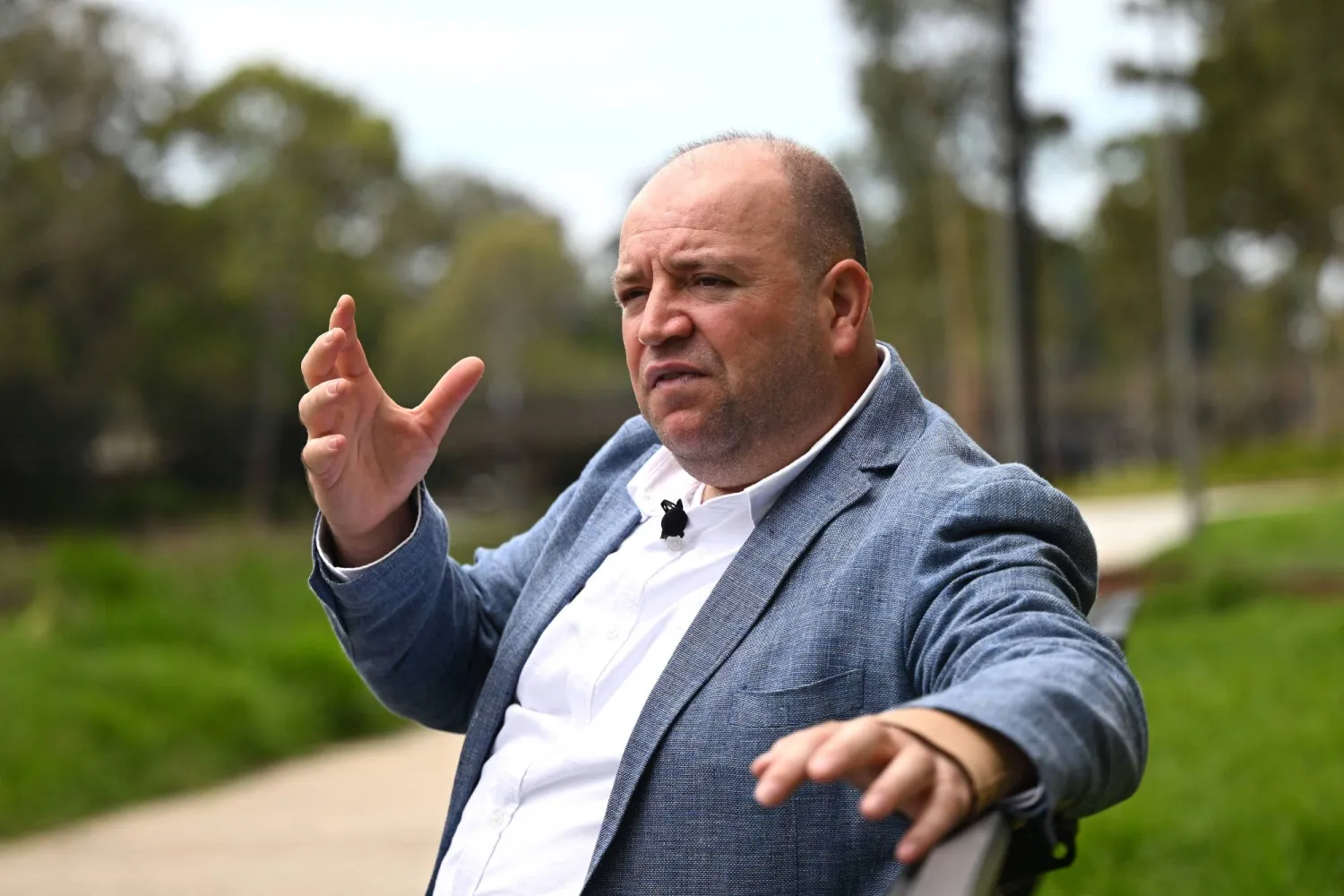
Ahmed al-Ahmed, who helped tackle and disarm one of the attacker during the Bondi terror attack, recalls the events of the day during an interview with AFP in Sydney on November 20, 2026, ahead of the first anniversary of the attack. (AFP)
TT

The Secret Courage of Australia’s Bondi Shooting Hero, One Year On

Ahmed al-Ahmed, who helped tackle and disarm one of the attacker during the Bondi terror attack, recalls the events of the day during an interview with AFP in Sydney on November 20, 2026, ahead of the first anniversary of the attack. (AFP)

A man who heroically tackled a gunman at a Jewish festival on Bondi Beach said his wounds still ache as he issued a plea for unity almost a year after Australia's worst mass shooting in decades.

Fruit seller Ahmed al-Ahmed, who was born in Syria and moved to Australia in 2006, was visiting the Sydney beach with his cousin on a Sunday afternoon last December when he heard shots ring out.

He rushed to tackle one of the gunmen as they fired round after round into a crowd of men, women and children.

"I didn't think about it," he told AFP.

"Because to save people's lives, there's no need to think, when you hear the kids and the women and old people and men and everyone asking for help."

"Every human has a secret courage in his heart. It comes in the time when needed, when it's asked.

"I heard people asking, and I did it."

Fifteen people were killed and dozens were wounded on December 14, 2025, as crowds gathered at the world-famous beach to celebrate Hanukkah.

An elderly woman also died this month from complications linked to her wounds.

Ahmed's actions have been credited with stopping many more from dying after video of his act of bravery taken by a bystander went viral.

The father of two was lauded as a "true Australian hero" by Prime Minister Anthony Albanese, and a fundraising campaign raised millions of dollars.

But Ahmed said much of the initial fame passed him by -- he was too focused on recovering from the devastating wounds he suffered.

- Face to face with a killer -

Tackling the gunman and wrestling the rifle from his hands, Ahmed said he found himself face to face with the killer -- a memory that still haunts him "day by day, night by night".

"He was thinking he's a god, and no one can touch him," he said.

In that moment Ahmed was aiming the gun at the shooter.

"I asked him: 'leave, leave'," he said.

"I don't wanna shoot."

The shooter retreated, leaving Ahmed to take cover behind a tree, where he came under fire.

"I start feeling my whole clothes get wet, you know, similar like someone taking a bucket of blood and threw it on you," he said.

"And then I start feeling: 'Oh, I'm gonna die. Oh my God, my kids, my family, my wife. What's happened?'"

The man he tackled, Sajid Akram, was killed by police at the scene.

His son, Naveed, remains in custody facing a total of 78 charges, including terrorism and murder. He has yet to enter a plea.

Two of the five bullets that struck Ahmed that day are still inside him.

He is on medication for nerve pain and to help him sleep, with the mobility of his left hand still limited.

"I'm still suffering," said Ahmed, who focused his energies on writing a book -- "Light Will Win" -- that was released this month.

He is also setting up a foundation to help women and children trapped in violence, inspired by his own difficult upbringing as the son of a police officer in Syria.

He told AFP he wouldn't do it any differently if he relived that fateful day, despite his wounds.

"I've been chosen. God chose me for that and to lead our community not to be divided," Ahmed said.

- 'We are human beings' -

The Bondi shooting -- one of the worst attacks on Jews worldwide since the October 7 killings by Hamas in Israel -- changed Australia forever.

The ruling Labor Party announced a crackdown on gun ownership and new laws allowing them to ban extremist political groups.

However, Australia has also since seen a surge in support for Pauline Hanson's far-right One Nation party, which has vowed sweeping cuts to immigration, especially from "radical Islamic countries".

For Ahmed -- a Muslim and an immigrant -- such politics have no place in the country he calls home.

"I'm a proud Aussie," he said.

"One Nation -- it's wrong, wrong, wrong, wrong."

"We have to respect each other. We have to care about each other."

"You know, we are human beings. No matter where you come from, no matter what your color, what you are, what's your religion, we have to treat each other with respect, and don't judge and blame others."

"Australia is multicultural."

Equating the actions of the two shooters at Bondi with his religion -- as many have -- is unthinkable for Ahmed.

"This is not a Muslim," he said. "I'm a Muslim, and I put my life in danger."

"I never heard my religion say to kill innocent people. That's not right."

"We are human beings. This is me, Ahmed al-Ahmed."


Xi-Putin-Trump Summit: What Comes Next?

19 November 2026, China, Shenzhen: (L-R) Russian President Vladimir Putin, Chinese President Xi Jinping and US President Donald Trump pose for a photo as they arrive for a trilateral meeting at Kylin Villa, on the sidelines of the APEC Summit. (Kremlin/dpa)
TT

Xi-Putin-Trump Summit: What Comes Next?

19 November 2026, China, Shenzhen: (L-R) Russian President Vladimir Putin, Chinese President Xi Jinping and US President Donald Trump pose for a photo as they arrive for a trilateral meeting at Kylin Villa, on the sidelines of the APEC Summit. (Kremlin/dpa)

An unprecedented summit between Chinese, US and Russian leaders this week in Shenzhen was light on substance but immensely symbolic, analysts say.

From nuclear weapons to reforming the United Nations and cancelling international arrest warrants, AFP looks at what was announced, its significance and what might come next:

- Substance or hot air? -

The three leaders jointly declared lofty goals to "reduce nuclear risks" and reform the United Nations, as well as commitments to immunity for state officials.

Their "Declaration toward Peace" also said the countries plan to boost oil supply and reaffirmed the importance of "stable energy flows".

The promise of dialogue on nuclear risks and non-proliferation "creates an opening for cooperation despite disagreements over arsenal reductions", said Sun Chenghao, senior fellow at the Center for International Security and Strategy at Tsinghua University.

"Implementation is now the main test," he told AFP.

Progress could be signaled by dates for nuclear talks or the appointment of designated officials.

Beijing previously rebuffed Trump's invitations to nuclear arms talks, arguing the US and Russia should first cut their giant arsenals before it agreed to discuss its smaller stockpiles.

The four-point declaration contains few details on future actions, with Germany's Chancellor Friedrich Merz calling the meeting a "photo op".

The "fairly sparse" points were "least common denominators" among the leaders, said Ryan Hass at the Brookings Institution.

Trump told reporters he would give a press conference on Friday, where he may provide more details.

- A new Yalta? -

The symbolism of three powerful leaders gathering to discuss global security issues -- including Putin's invasion of Ukraine and Trump's war with Iran -- had raised comparisons to the 1945 Yalta Conference.

Then-leaders of Britain, the United States and the Soviet Union met to hash out the post-World War II settlement and re-draw European borders.

Ukraine's Volodymyr Zelensky and European powers worried Thursday's summit would push for a peace settlement favorable to Moscow without them at the table.

The format "suggests the creation of conditions where Beijing, Moscow, and Washington call the shots for the rest of the world", said Chong Ja Ian, an associate professor at the National University of Singapore.

But "a functioning 'G3' would require much greater agreement among the three countries and cooperation from many other governments," Tsinghua University's Sun told AFP.

"The Yalta analogy also overlooks today's economic interdependence and the influence of regional actors," he said.

- Should Europe, others worry? -

Other US allies such as Japan, South Korea and Taiwan -- which unlike China and Russia are vibrant democracies -- will also have eyed the summit with unease.

"From South Korea's perspective, this inevitably raises questions about whether it can continue to rely on its alliance with the United States," said Lee Jae-mook, a political science professor at Hankuk University of Foreign Studies.

"The pillars of South Korea's foreign and security policy that it has long taken for granted are being shaken," Lee told AFP.

Japan, too, may reconsider its relationships with China and the US.

"If China and Russia really draw the United States together, I think Japan will have a huge pressure to... make a better relationship with China," said Tzeng Wei-feng, an associate research fellow at Taiwan's National Chengchi University.

However, Tokyo and Washington maintain a bilateral defense pact, so there will likely be "no substantial change" in their ties, he added.

The US has roughly 54,000 military personnel stationed in Japan -- whose relations with China are poor -- and 28,500 in South Korea.

Despite the bonhomie between Xi, Trump and Putin displayed in Shenzhen, major strategic differences remain between their countries.

Washington has curbed Beijing's access to US technologies, while Moscow is fighting a Ukraine that still relies in large part on American intelligence.

Diverging national interests between China, the US and Russia means the rest of Asia won't be "overly concerned" yet, according to Dylan Loh of Singapore's Nanyang Technological University.

The format may not stick, especially after Trump leaves office in two years, he said.

- What next? -

"Perhaps the most noteworthy aspect is the absence of any commitment to reconvene or continue meeting at the leader-level," said Brookings' Hass.

With no follow-up announced, eyes will turn to next month's G20 summit in Miami, where Xi and Trump are due to hold their fourth meeting of the year, and Putin could make his first appearance at the grouping since his war in Ukraine began.

He has been shunned by most Western leaders since Russia's full-scale invasion in 2022.

Still, "there is little chance that such a meeting will be held again", said Shen Dingli, a Shanghai-based scholar of international relations.

International Criminal Court (ICC) members -- which exclude the US -- are obliged to detain Putin if he travels to their territory after the court issued a warrant for him for war crimes associated with the Ukraine invasion.

"Putin has been ruled an international criminal by the ICC, and most APEC and G20 members are signatories to the Rome Statute. So, there are few opportunities for the three countries' leaders to convene," said Shen.


Turkish Investments in Egypt Strengthen Ties Despite Political Differences

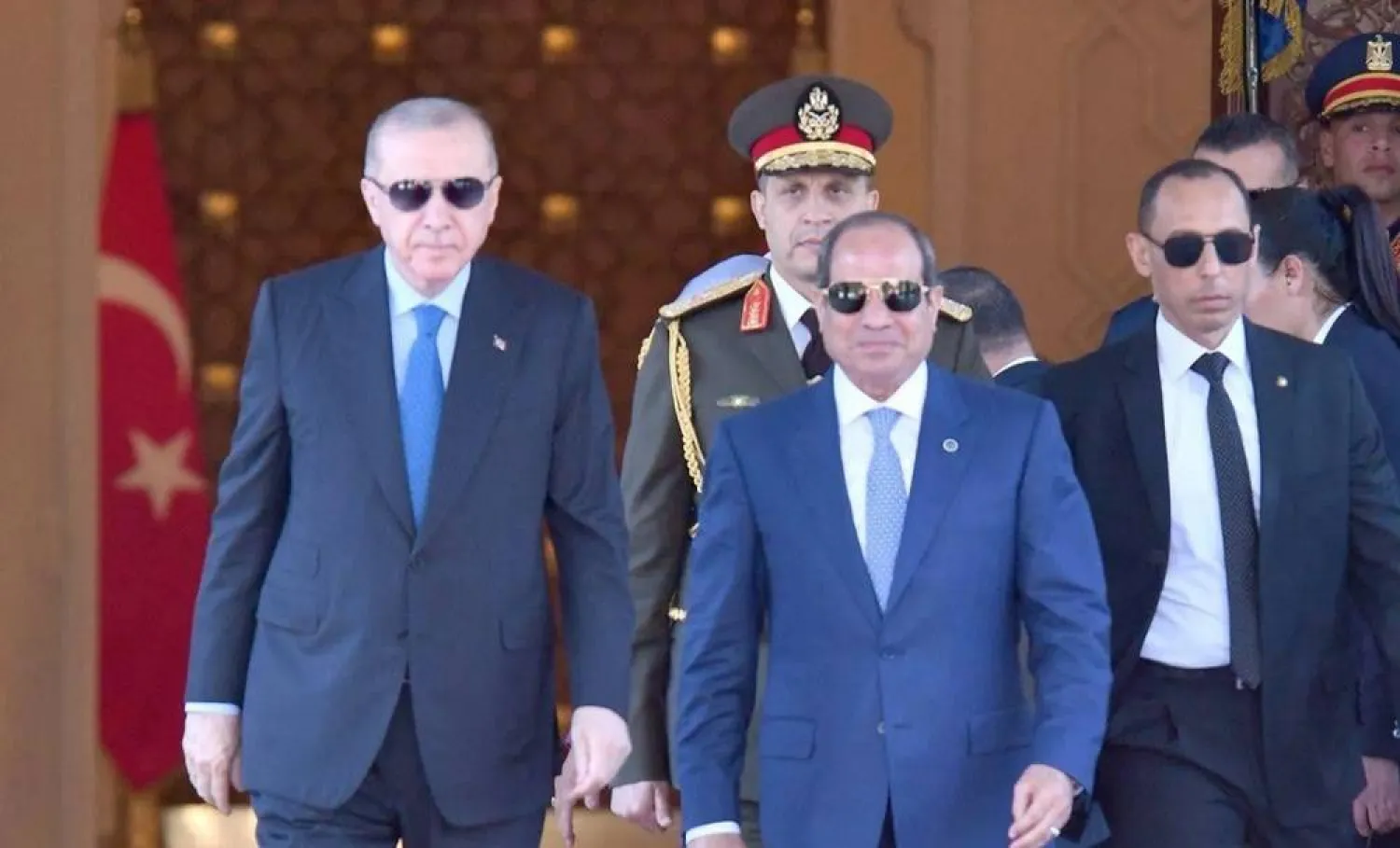
Egyptian President Abdel Fattah al-Sisi welcomes his Turkish counterpart Recep Tayyip Erdogan in Cairo last February. (Egyptian Presidency)
TT

Turkish Investments in Egypt Strengthen Ties Despite Political Differences

Egyptian President Abdel Fattah al-Sisi welcomes his Turkish counterpart Recep Tayyip Erdogan in Cairo last February. (Egyptian Presidency)

Growing Turkish investment in Egypt is strengthening economic ties between Cairo and Ankara despite ongoing disagreements over a maritime deal between Türkiye and Libya, according to analysts.

The Egyptian government highlighted the expanding Turkish business presence in the country on Wednesday, releasing figures that analysts interpreted as a sign of both sides’ determination to deepen economic cooperation while managing political disputes.

According to the Egyptian Cabinet’s Media Center, Turkish investment has expanded across manufacturing, trade, services and other economic activities in recent years. Turkish companies have contributed around $921.5 million in investment through 1,869 businesses established in Egypt, creating around 43,900 jobs.

Annual Turkish investment inflows surged 393.2% over eight years, reaching $175.1 million in the 2024-2025 fiscal year, compared with $35.5 million in 2016-2017.

The increase came despite a period of strained relations before Cairo and Ankara restored ambassador-level diplomatic ties in 2023.

Bilateral trade rose 44.7%, reaching $6.8 billion in 2025, up from $4.7 billion in 2016, according to the government figures, which highlighted major Turkish projects in the garment and food-processing industries.

Economic interests

Bashir Abdel Fattah, a Türkiye affairs specialist at the Al-Ahram Center for Political and Strategic Studies, said the growth in Turkish investment reflects Ankara’s determination to strengthen its strategic partnership with Cairo.

Speaking to Asharq Al-Awsat, Abdel Fattah described economic cooperation as a key component of the rapprochement, adding that Türkiye is seeking to capitalize on investment opportunities in Egypt while broadening the partnership across multiple sectors.

Egypt also provides Turkish companies with access to Arab and African markets through trade arrangements, including the free trade agreement with members of the Common Market for Eastern and Southern Africa (COMESA), enabling businesses to manufacture goods in Egypt for export across the continent.

Hani al-Gamal, deputy director of the Tafkir Center for Political Affairs, said that the government figures demonstrate how closely Turkish capital has become integrated into Egypt’s economy, particularly in manufacturing, employment and exports, generating benefits for both countries.

While acknowledging the importance of investment in strengthening bilateral cooperation, al-Gamal cautioned that economic ties alone could not resolve geopolitical disputes.

He attributed the broader improvement in relations to political and regional circumstances that have also facilitated closer military cooperation and notable progress in defense industries.

Military cooperation

Egyptian and Turkish naval forces participated in the Sea of Friendship exercises this month. The Egyptian military described the drills as part of growing cooperation between the two countries’ armed forces, aimed at sharing expertise and strengthening naval coordination.

The exercises took place despite Cairo’s repeated rejection of the Libyan parliament’s ratification in October of a maritime boundary agreement with Ankara.

Egypt and Türkiye have nevertheless continued consultations aimed at reducing regional tensions.

Abdel Fattah identified the separation of contentious political issues from areas of cooperation as a key factor behind the recent improvement in relations.

Disagreements over maritime boundaries and the Libyan crisis have not prevented Cairo and Ankara from developing ties in other sectors, he explained.

He viewed this approach as evidence of political maturity and a shared determination to avoid a return to tensions.

He said that rapprochement and cooperation could build confidence, narrow disagreements and create more favorable conditions for resolving outstanding issues.

Al-Gamal similarly emphasized that translating political rapprochement into tangible economic interests could deepen mutual trust and broaden the foundations of cooperation.