


The Saudi Riyal: Tracing Three Centuries from Diriyah’s Markets to Global Financial Icon

The Saudi riyal serves as a living record of three centuries of progress, representing not merely a unit of value but a document of the nation’s journey and renaissance. (SPA)
TT

The Saudi Riyal: Tracing Three Centuries from Diriyah’s Markets to Global Financial Icon

The Saudi riyal serves as a living record of three centuries of progress, representing not merely a unit of value but a document of the nation’s journey and renaissance. (SPA)

The history of the Saudi riyal is deeply intertwined with the evolution of the Saudi state, evolving from its early days as a fluctuating medium of exchange to its modern, regulated form through significant political, social, and economic transformations, reported the Saudi Press Agency on Saturday.

A comprehensive overview of this trajectory begins with the diverse currencies of the First Saudi State, passes through the regulatory milestones of the unification era, and culminates in today’s sophisticated monetary structure.

First Saudi State: Vibrant markets and multiple currencies

With the establishment of the First Saudi State in the mid-12th century AH (mid-18th century CE), the Arabian Peninsula lacked a unified monetary system, and a variety of currencies circulated, driven by trade across a vast geography.

According to the historical guide for Founding Day published by the King Abdulaziz Foundation for Research and Archives (Darah), First Saudi State founder Imam Muhammad bin Saud bin Muhammad bin Muqrin focused on building a robust economic foundation by securing financial resources and encouraging trade between Diriyah and other regions. Consequently, markets in Diriyah and Najd flourished, attracting merchants who traded in gold, silver, and barter.

As noted in Dr. Abdullah Al-Saleh Al-Uthaimin’s "History of the Kingdom of Saudi Arabia," popular currencies included the Austrian silver Maria Theresa thaler, locally known as Al-Riyal Al-Fransi (literally the French riyal), which became a staple due to its consistent purity and weight.

According to Dr. Mohammed Al-Manshat’s "Organizations of the First Saudi State," Diriyah’s markets reached a peak of prosperity during the reign of Imam Saud bin Abdulaziz. Political and security stability allowed merchants to move freely, facilitating smooth and reliable financial transactions.
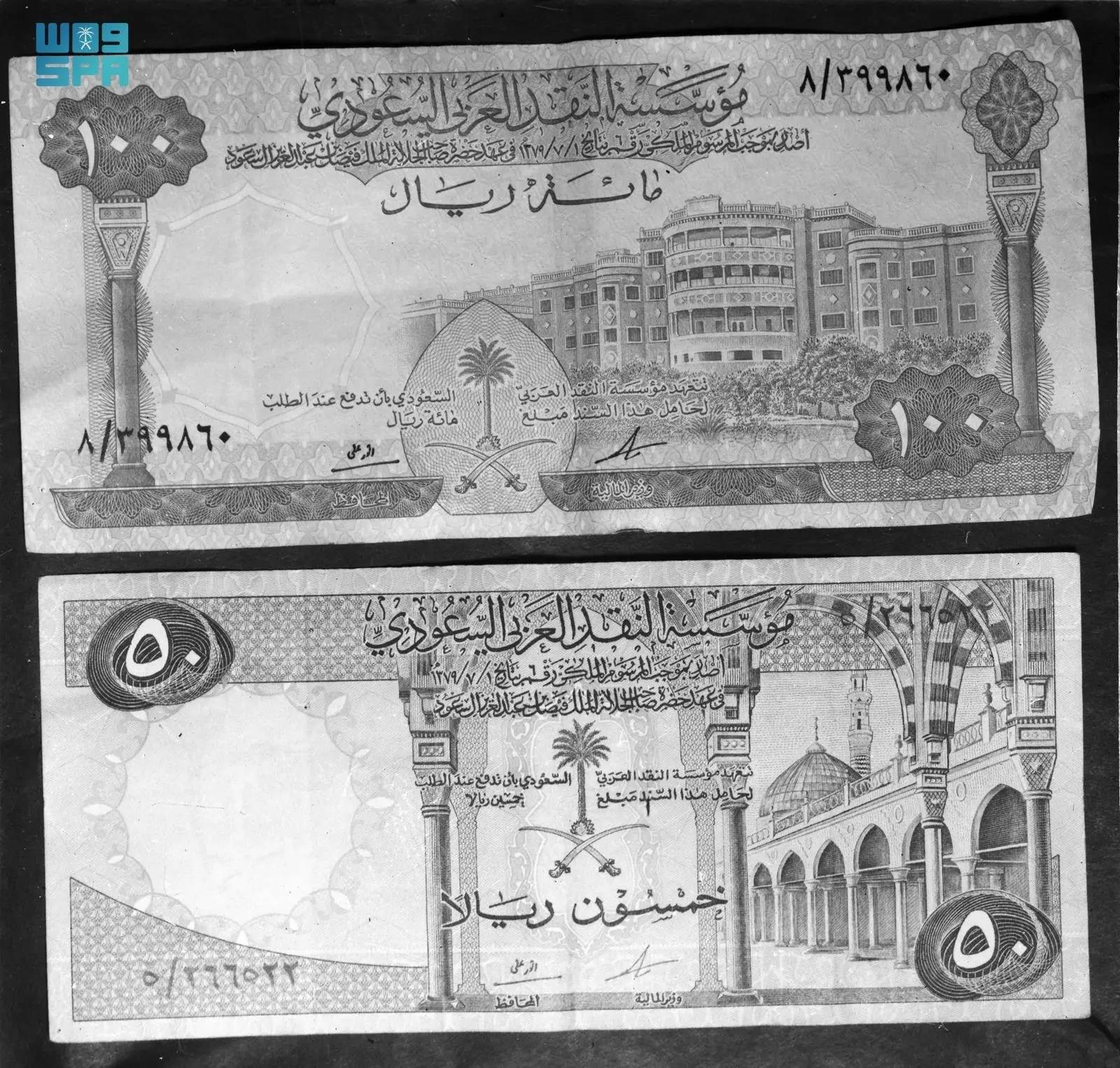
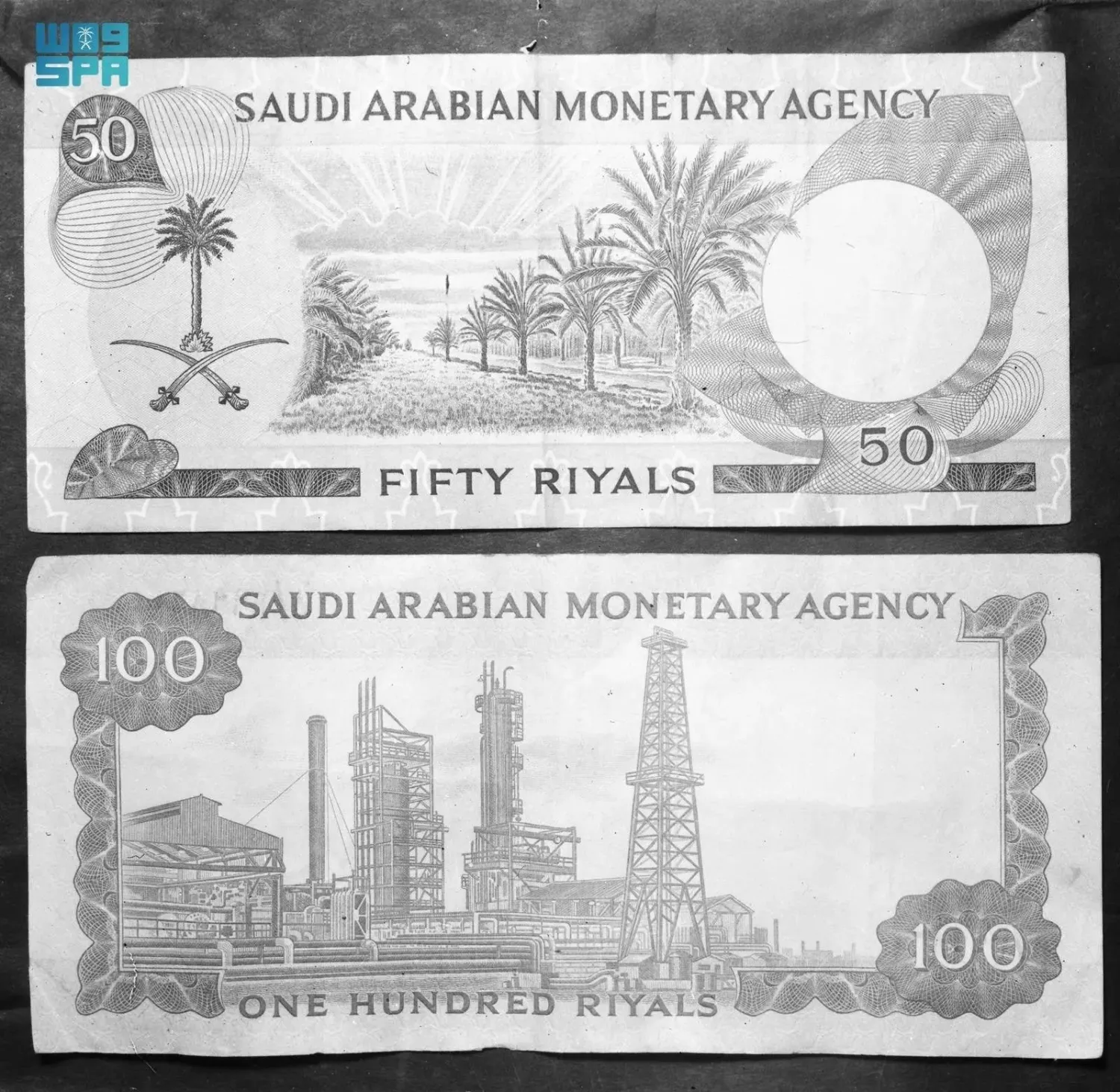
The history of the Saudi riyal is deeply intertwined with the evolution of the Saudi state. (SPA)

Regional diversity and variety of coins

Monetary patterns varied by region. In Najd, denominations such as Al-Jadeeda, Al-Khurda, Al-Muhammadiya, and Al-Mushakhas were used according to market needs. Al-Khurda served as the smallest unit, while Al-Jadeeda was used for everyday transactions.

In Al-Ahsa, an agriculturally vital hub, a local currency called Al-Tawila, a bent copper bar combined with silver, was commonly used. Meanwhile, the Hijaz experienced a high degree of currency diversification, as Makkah and Madinah welcomed pilgrims carrying various coins from across the Muslim world.

The reign of King Abdulaziz: Foundations of organization

The entry of King Abdulaziz bin Abdulrahman Al Saud into Riyadh in 1319 AH (1902) marked a pivotal economic turning point. Initially, he maintained the existing currencies to preserve market stability while gradually introducing a unified currency.

According to the Saudi Central Bank (SAMA), an early significant step was counterstamping circulating coins with the word "Najd" to indicate official adoption. After the unification of the Hijaz and Najd in 1343 AH (1925), the word "Hijaz" was added to reflect the expanding political unity.

By 1343 AH, monetary reform shifted from stamping to minting. SAMA records show the issuance of the first Saudi copper coins in half- and quarter-qirsh denominations, bearing King Abdulaziz’s name and the mint location, Umm Al-Qura. These were the first legal-tender coins of the Saudi state.

In 1346 AH (1927), King Abdulaziz abolished all foreign circulating currencies and introduced the first pure Saudi silver riyal. To support this, he issued a royal decree - published in the Umm Al-Qura gazette - outlining the state’s new monetary policies. After the formal unification of the Kingdom in 1351 AH (1932), the riyal became the official currency. By 1354 AH (1935), a new silver riyal bearing the name "Kingdom of Saudi Arabia" was issued, symbolizing national unity and stability.

Saudi Arabian Monetary Agency: Regulation and supervision

To manage the expansion of economic activity, King Abdulaziz issued two royal decrees in 1371 AH (1952) establishing the Saudi Arabian Monetary Agency (SAMA), now the Saudi Central Bank. SAMA was tasked with regulating currency issuance, maintaining its value, and supervising the banking system. It began operations in 1372 AH (1953), focusing on introducing the Saudi gold pound and completing the minting of the silver riyal.
With the establishment of the First Saudi State in the mid-18th century CE, the Arabian Peninsula lacked a unified monetary system. (SPA)

Pilgrim receipts and paper currency

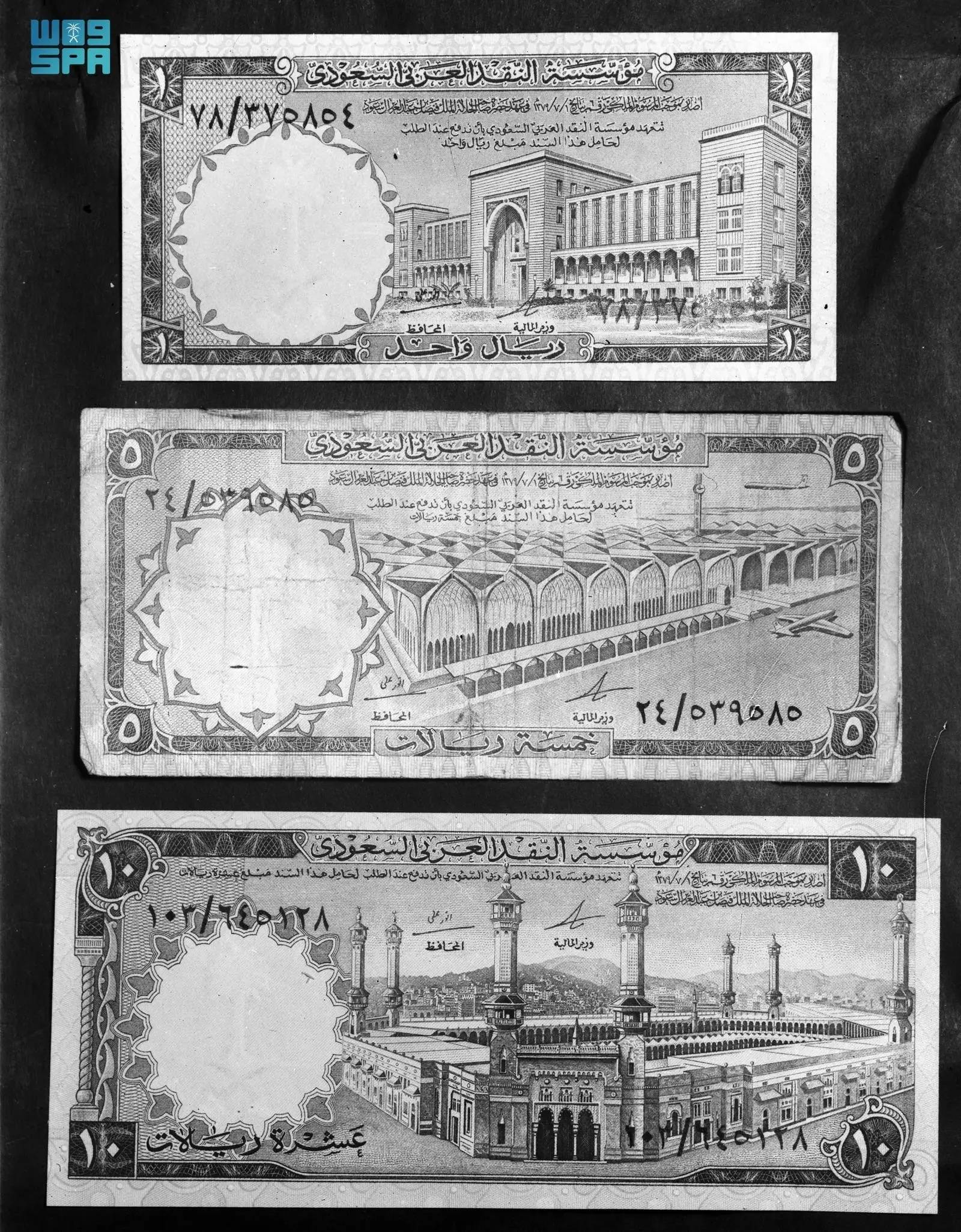
Recognizing that heavy coins were becoming impractical for a modernizing economy and burdensome for pilgrims, King Abdulaziz sought a more efficient solution. This led to the introduction of "pilgrim receipts" by SAMA in 1372 AH (1953). Initially issued in 10-riyal denominations, these receipts were printed in Arabic, Persian, English, Urdu, Turkish, and Malay.

Though intended as a temporary convenience to be exchanged for silver, the receipts quickly gained the trust of merchants, citizens, and pilgrims alike. This success led SAMA to issue five-riyal notes in 1373 AH (1954) and one-riyal notes in 1375 AH (1956).

The public’s preference for these receipts over heavy coins paved the way for a permanent transition to paper currency. In 1381 AH (1961), the first official paper issue of the Saudi riyal was released during the reign of King Saud bin Abdulaziz, featuring enhanced security and depictions of historical landmarks.

The sixth issue: Trust and security

The sixth issue of the Saudi currency was released in 1438 AH (2016) under the reign of Custodian of the Two Holy Mosques King Salman bin Abdulaziz Al Saud, bearing the slogan "Trust and Security." This series incorporated the latest global technologies and security standards for both paper and metal denominations.

Furthermore, the adoption of the official Saudi Riyal Symbol on February 20, 2025, reinforced the Kingdom’s financial and national identity. The symbol’s design, inspired by Arabic calligraphy, reflects pride in the cultural heritage that defines the nation.

From the barter systems of Diriyah to the internationally recognized symbol of today, the Saudi riyal serves as a living record of three centuries of progress, representing not merely a unit of value but a document of the nation’s journey and renaissance.

What Does Removing Syria from the US List of State Sponsors of Terrorism Mean for Its Economy?

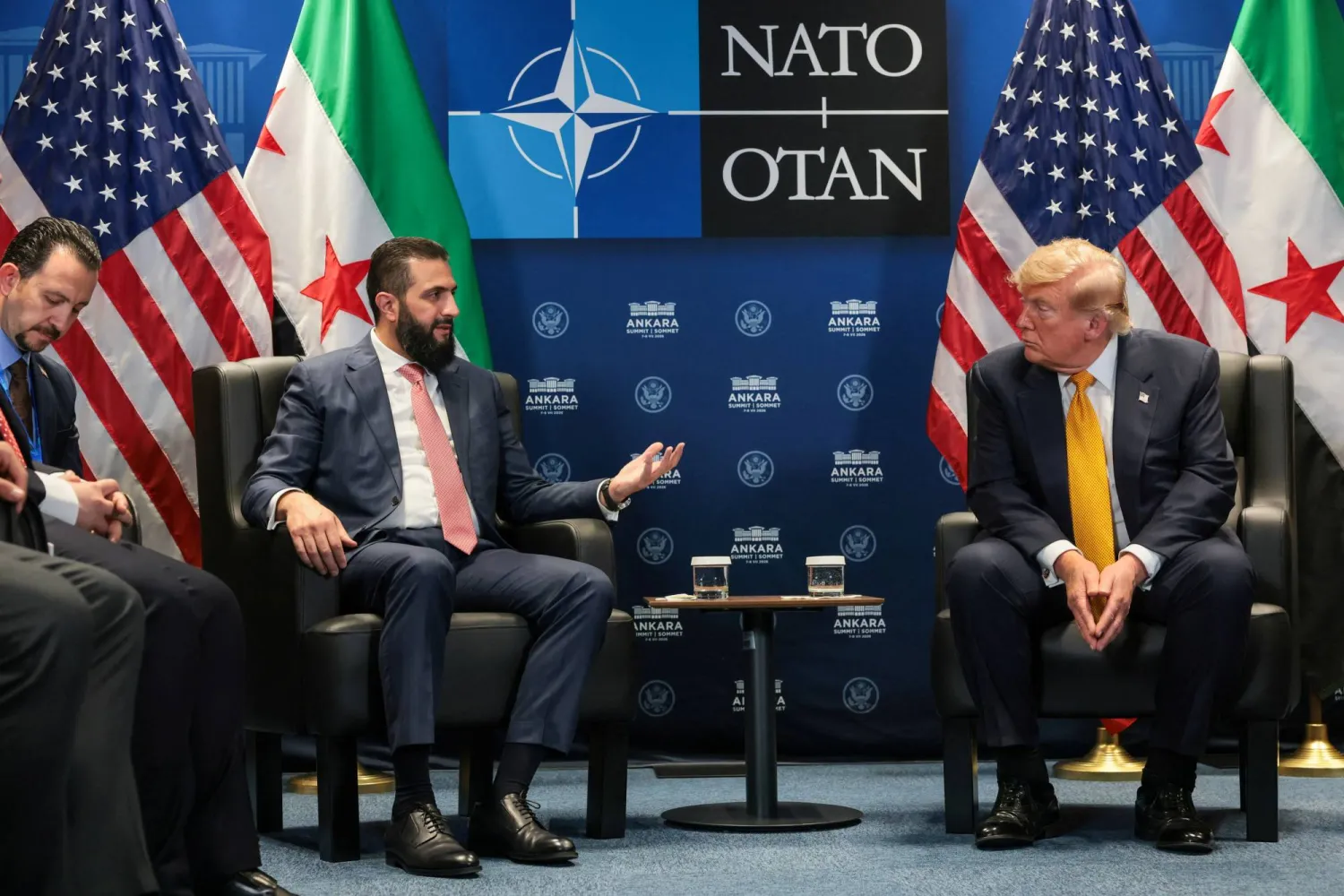
US President Donald Trump holds a bilateral meeting with Syrian President Ahmed al-Sharaa alongside the NATO leaders summit at the Bestepe Presidential Compound in Ankara, Türkiye, July 8, 2026. REUTERS/Jonathan Ernst
TT

What Does Removing Syria from the US List of State Sponsors of Terrorism Mean for Its Economy?

US President Donald Trump holds a bilateral meeting with Syrian President Ahmed al-Sharaa alongside the NATO leaders summit at the Bestepe Presidential Compound in Ankara, Türkiye, July 8, 2026. REUTERS/Jonathan Ernst

The US administration’s decision to begin the process of removing Syria from its list of State Sponsors of Terrorism (SST) - where it has remained since 1979 - marks the country’s most significant political and economic shift in decades.

The designation was more than a political label; it served as the legal cornerstone of the extensive US sanctions architecture imposed on Syria. Its removal could reopen the door to trade, investment, and large-scale reconstruction.

The announcement followed what Washington described as “positive changes” by the Syrian government and formal assurances from Syrian President Ahmed al-Sharaa that Syria would not support acts of international terrorism in the future.

Secretary of State Marco Rubio subsequently notified Congress of President Donald Trump’s intention to rescind the designation after the required 45-day congressional notification period, describing the move as “historic” and saying it offers Syria a genuine opportunity to rebuild and open a new chapter for its people.

Syrian officials welcomed the decision. Finance Minister Mohammad Yosr Barnieh called it “a historic moment” heralding a new era of prosperity, investment, and economic recovery. He said the move would open a new chapter for the Syrian economy, accelerate recovery, encourage investment, and facilitate Syria’s reintegration into the global economy.

Central Bank Governor Safwat Raslan likewise described the decision as “a positive turning point” that would strengthen confidence, attract investment, and help reintegrate Syria into the global financial system. He reaffirmed the central bank’s commitment to reforms, monetary stability, and long-term economic recovery.

Reconnecting to the Global Financial System

In practical terms, the decision paves the way for Syrian banks to gradually reconnect with the global financial system, correspondent banking networks, and the SWIFT international payments system. The terrorism designation had effectively prevented foreign correspondent banks from dealing with Syrian financial institutions for fear of US legal penalties.

Reintegration could improve access to trade finance and sharply reduce the cost of remittances from Syrians abroad. For years, expatriates have relied on costly informal channels to circumvent sanctions. Easier remittance flows would provide a direct boost to household incomes and financial stability.

Removing Barriers to Investment

For years, US secondary sanctions linked to the terrorism designation discouraged foreign companies from participating in reconstruction projects, fearing hefty fines or exclusion from the US market.

Highlighting the policy shift, the US administration quoted Trump as telling Al-Sharaa: “I promised to remove all the barriers preventing you from rebuilding your country, and very soon you will finally be able to do so.” Trump also said US companies are already interested in investing in Syria.

Removing the designation significantly reduces reputational risk and gives multinational companies greater legal and procedural certainty to invest in infrastructure, real estate, telecommunications, and other sectors.

Reviving Trade and the Energy Sector

Foreign trade is also expected to benefit. Previous restrictions limited imports of advanced industrial equipment and technology classified as “dual-use” goods with potential civilian and military applications. Easing those restrictions would allow Syrian manufacturers to import production lines, agricultural equipment, and medical supplies with far fewer regulatory hurdles.

The energy sector, which has suffered years of severe deterioration, could also benefit. International companies would be able to provide spare parts, technical expertise, and technology needed to rehabilitate damaged oil and gas fields and repair aging power plants, helping ease chronic electricity shortages and support industrial production.

Restoring Access to International Financing

Syria’s designation as a State Sponsor of Terrorism also triggered an effective US veto on loans, grants, technical assistance, and other support from international financial institutions, particularly the World Bank and the International Monetary Fund.

With the designation removed, Damascus could theoretically begin negotiations with these institutions to secure development financing, support economic restructuring, and implement monetary and fiscal reforms.

From Blanket Prohibition to Risk-Based Assessment

Legal experts say the decision fundamentally changes how international companies and financial institutions assess Syria.

Previously, US law effectively imposed a blanket prohibition on doing business with Syria, leaving banks and corporations with virtually no room for discretion. Now, the automatic legal barrier is removed. Banks and companies can independently assess the remaining legal and commercial risks and proceed with transactions that comply with other applicable sanctions. This represents a fundamental shift, giving investors and financial institutions flexibility that has not existed since Syria was added to the terrorism list in 1979.

Why the Economic Crisis Will Not End Overnight

Despite the significance of Rubio’s announcement and the June 30, 2025 executive order easing certain restrictions, the economic impact is unlikely to be immediate.

The biggest constraint is that removing Syria from the terrorism list does not dismantle the broader sanctions regime. Numerous US laws and executive orders targeting key economic sectors, entities, and individuals remain in force.

In addition, Syria is likely to face prolonged caution from international banks — a phenomenon known as “over-compliance.” Many financial institutions are expected to spend months, if not years, conducting extensive legal reviews before reopening accounts or facilitating trade with Syria, seeking to avoid penalties under the sanctions that remain in place.

Ultimately, Syria’s economic recovery will depend not only on the easing of US restrictions but also on its ability to implement deep structural and institutional reforms, improve the business environment, and maintain monetary stability.

Removing Syria from the State Sponsors of Terrorism list is a major step toward reducing reputational risk and reopening international markets. But a full recovery remains a long-term process that will require the gradual dismantling of the remaining sanctions, which continue to pose the greatest obstacle to Syria’s reintegration into the global economy.


Who Benefits from the Damascus Bombings at Such a Sensitive Time?

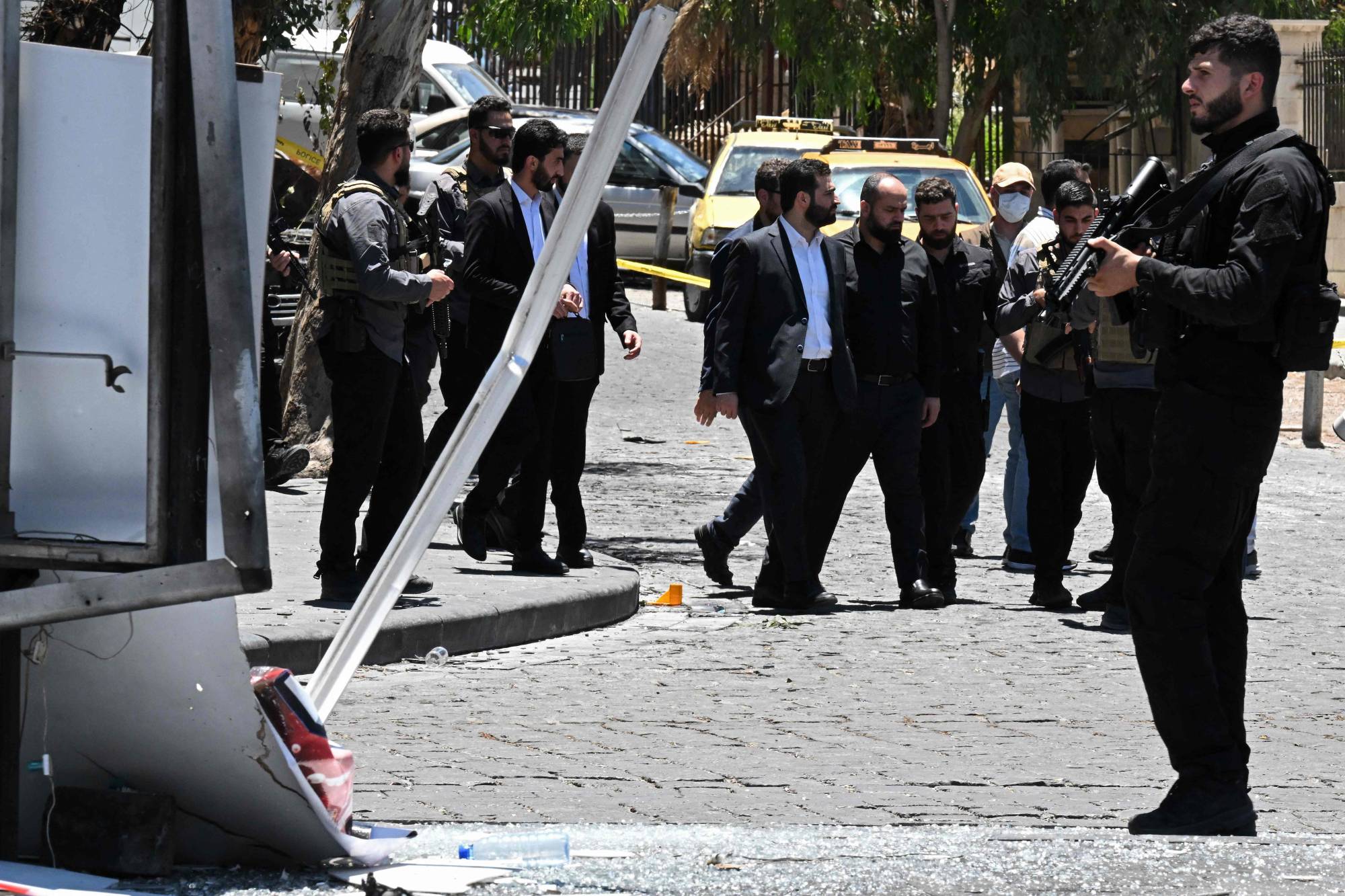
Syrian security personnel inspect a burned vehicle near the Four Seasons Hotel after two explosions rocked the area earlier while Syrian President Ahmed al-Sharaa was meeting French President Emmanuel Macron at the presidential palace, in Damascus, Syria, Tuesday, July 7, 2026. (AP)
TT

Who Benefits from the Damascus Bombings at Such a Sensitive Time?

Syrian security personnel inspect a burned vehicle near the Four Seasons Hotel after two explosions rocked the area earlier while Syrian President Ahmed al-Sharaa was meeting French President Emmanuel Macron at the presidential palace, in Damascus, Syria, Tuesday, July 7, 2026. (AP)

Two successive explosions struck one of Syria’s most sensitive locations at a particularly delicate moment for the country’s authorities, occurring about 10 kilometers (6 miles) from where French President Emmanuel Macron was staying during his visit to Damascus.

Sources close to the Syrian government told Asharq Al-Awsat that several parties could stand to benefit from the attack, foremost among them remnants of the former regime and those opposed to the growing French-Syrian rapprochement.

Other sources monitoring the security situation, however, said initial indications point more toward ISIS, which remains Syria’s foremost security challenge.

At least 18 people were injured, including the assistant tourism minister and four police officers, in twin explosions near the Ministry of Tourism, close to the Four Seasons Hotel Damascus, where Macron was staying.

The attack came less than a week after a bombing at a lawyers’ cafe near the Palace of Justice that killed 10 civilians and wounded about 20 others.

Security expert Abdullah Al-Najjar told Asharq Al-Awsat that the bombings bore the hallmarks of remnants of the former regime seeking to derail the transitional justice process, “which will certainly reach them.”

The attack also aims to portray Syria as unsafe. He said the improvised explosive devices were crude and indiscriminate, targeting civilians and security personnel alike. Their purpose was to create the impression of weak security control rather than expose a genuine collapse in security.

Syria's Interior Minister Anas Khattab (C) inspects an area near the Four Seasons Hotel following two blasts in Damascus on July 7, 2026. (AFP)

He noted that any criminal could plant a crude explosive device in a trash container and another in a parked vehicle, like what happened in Tuesday’s attack.

Former diplomat and political analyst Bassam Barabandi told Asharq Al-Awsat that whenever Syria shows “serious signs” of recovery, forces threatened by the country’s improving fortunes respond.

In his view, the interests of remnants of the former regime converge with those of ISIS, Hezbollah, Iran, and Israel.

Barabandi noted that many individuals who served under the former regime remain embedded throughout Syrian society, while state institutions are still being rebuilt and newly recruited security personnel have yet to acquire the experience needed to fully maintain security.

The scale of the bombings suggests either individuals or small groups seeking revenge, or an organization capable of mounting larger operations whose objective is not widespread destruction in a country already devastated by war, but rather to spread instability across Syria, he remarked.

Barabandi also stressed that international support for stabilizing Syria remains strong and is likely to translate into greater assistance for rebuilding the country’s security institutions.

Major investments are unlikely to be affected because they are driven largely by political considerations, although local economies and small businesses are expected to bear the brunt of the impact, he added.

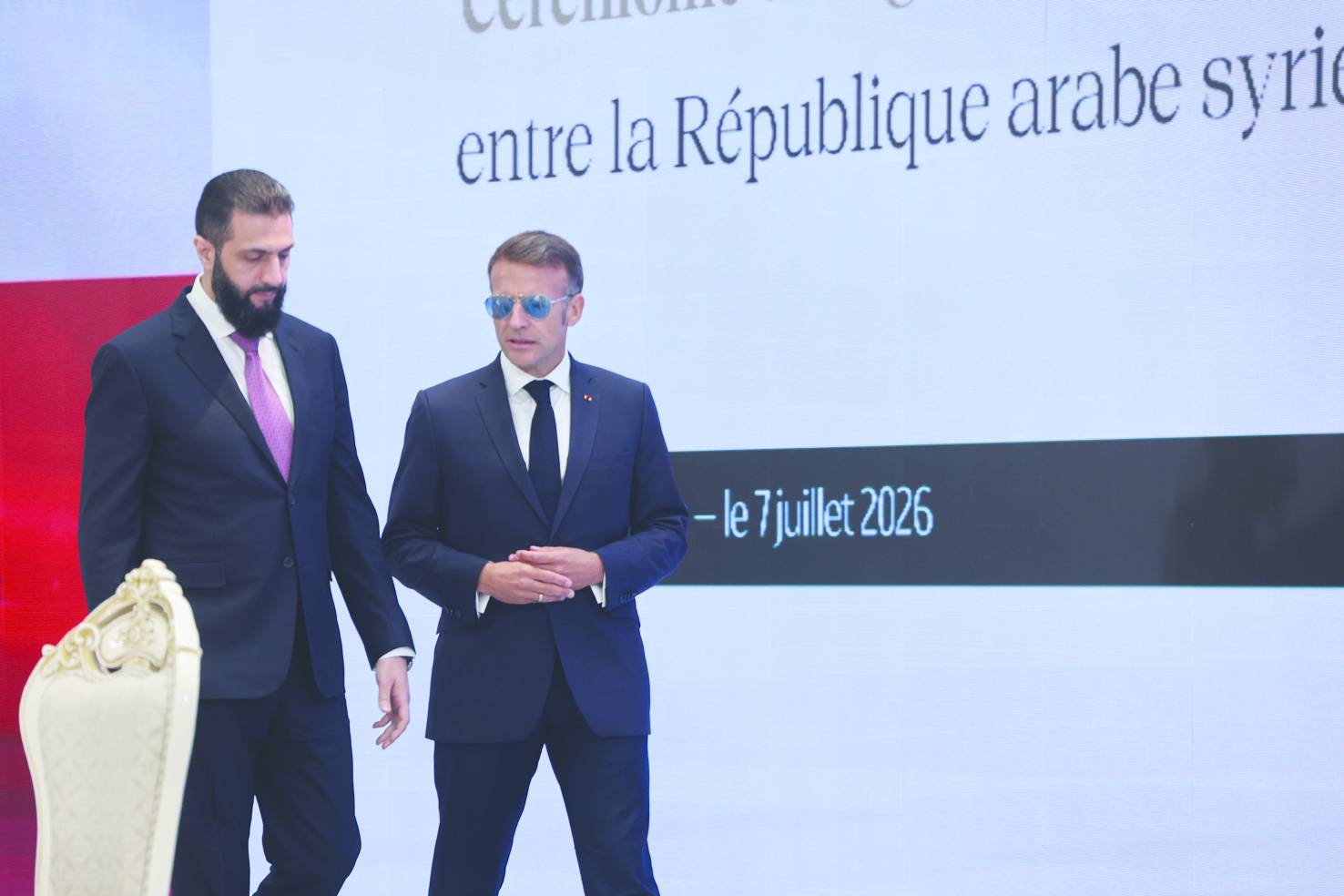
Syrian President Ahmed al-Sharaa, left, and French President Emmanuel Macron arrive for an agreement signing ceremony in Damascus, Syria, Tuesday, July 7, 2026. (AP)

Sources close to the government told Asharq Al-Awsat that crude explosive devices of this kind often evade explosives detection and are intended more for political messaging than military effect.

They added that preliminary assessments point more toward remnants of the former regime than ISIS, whose attacks typically target security personnel, soldiers, and those it considers apostates. ISIS operations also tend to inflict far greater casualties, unless the group has radically changed its tactics.

Security expert Diaa Qaddour described such assessments as speculative because so many parties could benefit from bombings at such a sensitive moment for Syria.

Nevertheless, he said it was impossible to ignore that ISIS remains “the largest and most prominent security challenge in Syria.”

Qaddour told Asharq Al-Awsat that Tuesday’s coordinated bombing resembled an attack in Damascus’ Bab Sharqi district in May near a Defense Ministry building that killed a soldier and wounded several civilians. ISIS claimed responsibility for that attack.

He stressed that the greater danger lies not only in the existence of an experienced ISIS cell operating in the heart of the capital and one of its most sensitive districts, but also in its ability to strike whenever it chooses despite extensive counterterrorism efforts by the Interior Ministry.

The recent rise in attacks has tarnished the image of the relative stability Syria had enjoyed in recent months, precisely the outcome sought by those behind the bombings, Qaddour said.

He urged the Interior Ministry and intelligence services to undertake a thorough review of their approach to security threats and develop a comprehensive strategy to eliminate or at least contain them.


What to Know About China’s Rare Ballistic Missile Test and Why It Raises Concerns

 In this photo released by Xinhua News Agency, a long-range ballistic missile bursts out of the sea during a test launched from a Chinese nuclear-powered submarines in the South Pacific on Monday, July 6, 2026. (Li Xiangchao/Xinhua via AP)
In this photo released by Xinhua News Agency, a long-range ballistic missile bursts out of the sea during a test launched from a Chinese nuclear-powered submarines in the South Pacific on Monday, July 6, 2026. (Li Xiangchao/Xinhua via AP)
TT

What to Know About China’s Rare Ballistic Missile Test and Why It Raises Concerns

 In this photo released by Xinhua News Agency, a long-range ballistic missile bursts out of the sea during a test launched from a Chinese nuclear-powered submarines in the South Pacific on Monday, July 6, 2026. (Li Xiangchao/Xinhua via AP)
In this photo released by Xinhua News Agency, a long-range ballistic missile bursts out of the sea during a test launched from a Chinese nuclear-powered submarines in the South Pacific on Monday, July 6, 2026. (Li Xiangchao/Xinhua via AP)

China's navy test-launched a long-range ballistic missile Monday from a nuclear-powered submarine — a move that experts said showed Beijing's increasing skill and capability as part of its nuclear deterrence strategy.

The move also drew protests from the US, as well as countries in Asia and the Pacific. It was the second time China had fired a ballistic missile into international waters in recent years.

While it gave some countries in the region prior notice, some said it was not enough notice, and experts say the launch exacerbates tensions around increasing militarization in Asia.

Here's what we know, and what we don't, about the missile launch.

Experts think it could be a JL-2 or a JL-3 ballistic missile

China announced the missile test publicly on Monday only after the launch, saying that it was fired into the Pacific Ocean. In a brief statement, the official Xinhua News Agency said the launch was part of routine annual training, complied with international law and practice, and was not directed against any country or target. It didn't provide details about the type of missile.

The missile was carrying a dummy warhead, not a nuclear one. The act of launching in international waters was rare, although the US has also done so with its own missile testing.

Xinhua published a photo of the missile on Tuesday without additional details. Experts say it could be either a JL-2 or a JL-3, both submarine-launched ballistic missiles, though most said the available imagery was not clear enough to tell.

The state-owned tabloid Global Times said it was “most likely” a JL-3 missile with a range exceeding 10,000 kilometers (6,200 miles). The JL-2 has a shorter range.

The New Zealand government said the missile was launched into treaty waters in the South Pacific Nuclear Free Zone, violating the intention of the agreement.

The zone was established by the 1986 Treaty of Rarotonga, which prohibits nuclear weapons throughout the region. China ratified the protocols in 1987, pledging not to test nuclear weapons within the zone or threaten to use them against signatories with territory in the region.

Australia, Japan, and other countries protest While China has told other countries to “avoid over-interpretation” in response to the criticism, experts say the concerns from other countries have some basis.

Much of the concern is a result of lack of clear information, said Drew Thompson, a senior fellow at the S. Rajaratnam School of International Studies in Singapore. “China’s military modernization and buildup have occurred without concurrent increases in openness and transparency, resulting in uncertainty about China’s intentions.”

Australian Prime Minister Anthony Albanese said that China did not provide enough notice to the government.

“There is no doubt that this is a provocative act by China which does destabilize the region,” he told reporters Tuesday while in Honiara, in the Solomon Islands.

“This was a test of a nuclear-capable intercontinental ballistic missile fired from a nuclear-powered submarine. That is of real concern because what we need is less nuclear weapons, certainly not more. And the fact that this test took place yesterday with very little notice is of real concern,” Albanese added.

New Zealand had said the same Monday, with Foreign Minister Winston Peters calling it “unwelcome and concerning.”

Solomon Islands Prime Minister Matthew Wale, also speaking to reporters in Honiara Tuesday, said that “China is a good friend of Solomon Islands, but this is not something a friend does. This is not ... good in our region.”

“We don’t want to see any more countries — China, America, anybody — we don’t want anybody testing their ICBMs in the Pacific Islands region. Be our friend, but don’t threaten us,” Wale added.

Test comes amid increasing militarization in Asia

China's leader Xi Jinping has made modernization of the People's Liberation Army a top priority in his rule.

China already has the largest standing army in the world and the world's largest navy. While its nuclear arsenal lags that of the US and Russia, it has been actively expanding its stock of nuclear warheads. It has also actively been developing new longer-range missiles and advanced drones.

China’s defense budget, which is projected to be at $270 billion in 2026, has grown at roughly 7% for the past four years, and hovers below 2% of its gross domestic product. However, independent analysis suggests the real spending could be much higher. For example, the Stockholm International Peace Research Institute estimates the overall figure for 2024 at $313.7 billion.

Much of the security worries about whether or not China's military would get involved in a war centers on Taiwan, the self-ruled island that China claims as its own and for which it has not ruled out the use of force to bring it under its control.

China also regularly sends warplanes and navy ships in the waters around the island in what it says are military exercises.

In response to China's expanding military and activity, countries in the region have increased their own defense spending, including Japan which is breaking with its long-held cap of 1% of GDP to double the budget to 2%.

Meanwhile, the Philippines agreed to allow the US to expand its military presence in the country by adding access to four more bases.

“The Chinese launch exacerbates already deeply strained relations between Beijing and Tokyo. Since (Prime Minister Sanae) Takaichi’s comments last year suggesting that Japan would engage in a conflict over Taiwan, China has tightened export controls on Japan and accused it of embracing a ‘new time of militarism,’” said Emma Chanlett-Avery, director of Political-Security Affairs at the Asia Society Policy Institute.
