


Mohammad Baqer Zolghadr: A Man with Strong Connections at the Heart of Iran’s Revolutionary Guards

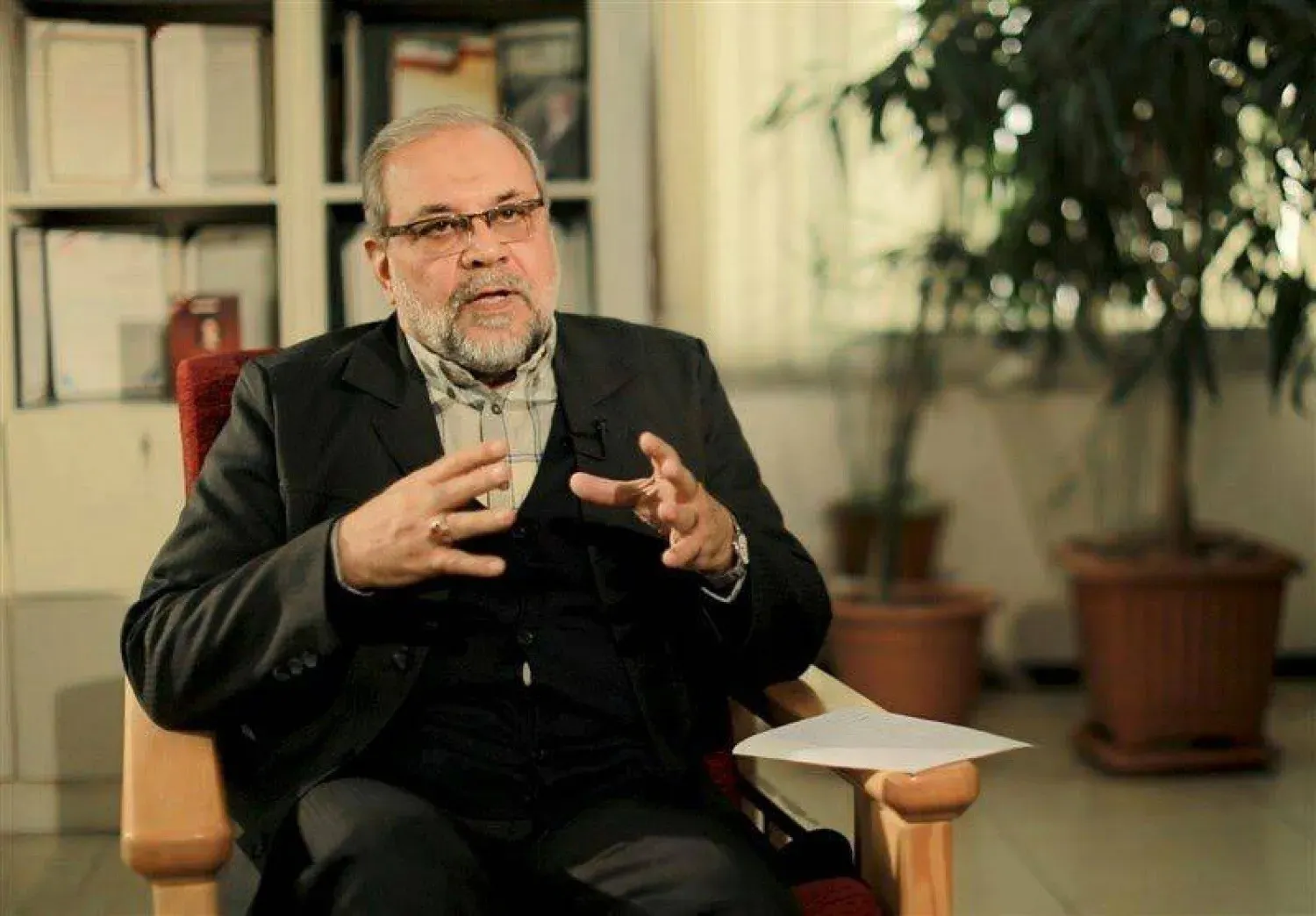
Zolghadr speaks in an interview with the Tasnim News Agency, December 2020.
TT

Mohammad Baqer Zolghadr: A Man with Strong Connections at the Heart of Iran’s Revolutionary Guards

Zolghadr speaks in an interview with the Tasnim News Agency, December 2020.

Mohammad Baqer Zolghadr was not an unfamiliar figure when he was appointed on Tuesday as secretary of Iran’s Supreme National Security Council. One week after the killing of Ali Larijani, and amid a war that has thinned the ranks of Iran’s top leadership, authorities turned to a man shaped within one of the deepest layers of the “Islamic Republic’s” power structure.

Mehdi Tabatabaei, the Iranian president’s deputy communications director, said on Tuesday that General Zolghadr had been appointed to replace Larijani. He wrote on X that Iran’s new Supreme Leader Mojtaba Khamenei had approved the decision.

The Supreme National Security Council, formally headed by President Masoud Pezeshkian, coordinates security and foreign policy. It includes senior military, intelligence and government officials, as well as representatives of the Supreme Leader, who has final authority in state affairs.

Zolghadr’s appointment appears to reflect state priorities in a time of crisis. A further decree is expected to name him as the Supreme Leader’s representative on the council, allowing him to vote under the constitution.

Unlike politicians who rise through elections or public platforms, Zolghadr belongs to a different category: a figure who boasts internal networks that predate the state and later embedded themselves within it. He accumulated power within the agencies instead of confronting them. His career resembles less a sequence of administrative posts and more a continuous thread linking some of the most entrenched centers of power in Iran.

His elevation to one of the country’s top security posts is significant not only for the positions he has held, but for the role he has played within the system. A veteran of the Iran-Iraq war, he developed expertise in organization and network-based operations, consolidating his position within the Iranian Revolutionary Guard Corps (IRGC) and later extending his influence through the interior ministry, judiciary and Expediency Council.

The appointment signals a broader logic within Iran’s ruling establishment: in moments of heightened pressure, figures rooted in institutional networks tend to take precedence over those with a public political profile.

Early career

Zolghadr’s career is closely tied to the political environment from which he emerged. He belongs to a generation associated with the “Mansouroun” network, an early group that later produced influential figures within the IRGC, including Mohsen Rezaei, Ali Shamkhani, Gholam Ali Rashid, and Mohammad and Ahmad Forouzandeh.

The significance of this affiliation lies not only in early organizational ties, but in the nature of the group itself: an ideologically driven pre-revolutionary network that repositioned itself within the state through the IRGC.

Zolghadr’s rise was not an individual climb through institutional ranks, but growth within a web of relationships and loyalties embedded at the core of the system. He emerged not simply as a professional military officer, but as part of a generation that viewed security and politics as intertwined domains in safeguarding the regime. This gave him the rare ability to “reposition” himself and retain power as successive government ruled Iran.

War and the ‘Ramadan’ headquarters

After the fall of the Shah, Zolghadr, like other members of Mansouroun, initially operated through revolutionary committees before joining the IRGC. His most defining wartime role was leading the “Ramadan Headquarters,” a key unit during the Iran-Iraq war.

This post was central to his political and security development. The Ramadan Headquarters served as a nucleus for external operations, coordinating cross-border activities with Iraqi Kurdish and Shiite groups opposed to Saddam Hussein and managing operations inside Iraq. It later evolved into what became the Quds Force, the IRGC’s current foreign arm.

There, Zolghadr developed a hallmark approach: operating at the intersection of military, intelligence and political spheres. The role involved not only managing battlefield operations, but also building networks, cultivating allies and leveraging conflict to generate long-term influence.

This model — combining military structure, indirect operations and proxy management — became a defining feature of Iran’s regional strategy. Within this environment, Zolghadr gained a reputation as a manager and strategist rather than a public-facing commander.

Rise within the IRGC

Following the end of the war in the late 1980s, Zolghadr spent 16 years at the top of the IRGC hierarchy: eight years as chief of the joint staff and eight years as deputy commander-in-chief.

These roles emphasized administration, coordination and institutional discipline rather than field command. His influence was rooted not in public charisma but in his position within the IRGC’s internal machinery.

Over time, he became firmly aligned with Iran’s conservative camp. His political role became more visible during the reformist presidency of Mohammad Khatami, when tensions between reformists and hardline institutions intensified.

Reform era

During the late 1990s, Zolghadr was among military figures associated with the conservative bloc within the IRGC. His name was linked to a letter sent by IRGC commanders to President Khatami, widely seen as a signal of military intervention in political affairs at a time of unrest. He was also associated with hardline opposition to the reform movement and the student protests of that period.

This phase highlighted a structural aspect of his career: his political role did not begin after leaving the military, but was embedded within the IRGC itself as it became increasingly politicized during its confrontation with reformists.

Interior Ministry under Ahmadinejad

When Mahmoud Ahmadinejad became president in 2005, Zolghadr was appointed deputy interior minister for security affairs. The position placed him at the heart of internal security, overseeing provincial governors and managing crises, protests and local tensions. It marked a transition from military service to the executive branch, while maintaining a focus on security.

His move illustrated a broader pattern: shifting from protecting the system through force to safeguarding it through security bureaucracy, expanding his network within the state apparatus.

Basij

Zolghadr left the interior ministry in 2007 amid reports of differences with Ahmadinejad, but his departure did not signal a loss of influence. In December of that year, Supreme Leader Ali Khamenei appointed him deputy chief of staff of the armed forces for Basij affairs, a newly created role.

The Basij, a paramilitary force, plays a key role in ideological mobilization and maintaining the IRGC’s presence in Iranian society. The decree emphasized strengthening and expanding the Basij’s reach, underlining the importance of Zolghadr’s assignment.

Judiciary and expanding influence

In 2010, Zolghadr moved to the judiciary, serving first as deputy for social prevention and crime reduction, and later as strategic deputy to the head of the judiciary until 2020.

The shift did not represent a departure from security work, as Iran’s judiciary operates closely under the authority of the Supreme Leader. Instead, it broadened his influence across another pillar of the state.

In September 2021, he was appointed secretary of the Expediency Council, succeeding Mohsen Rezaei. The role involves overseeing the council’s committees and acting as a link to the highest levels of decision-making.

Zolghadr also has family ties that extend his influence. He is the father-in-law of Kazem Gharibabadi, Iran’s deputy foreign minister for legal and international affairs and a prominent figure in nuclear negotiations.

Gharibabadi previously served as Iran’s ambassador to international organizations in Vienna, including the International Atomic Energy Agency.

From Larijani to Zolghadr

Larijani’s death deprived Iran of a political figure skilled in navigating between power centers. The choice of Zolghadr suggests a shift in priorities.

While Larijani represented balance and negotiation, Zolghadr embodies institutional discipline and internal cohesion. His selection follows speculation over other candidates, including former defense minister Hossein Dehghan, who was ultimately not appointed.

The decision reflects the system’s preference, in wartime conditions, for figures trusted by security networks over those known for political flexibility.

He may not be a prominent public figure, but he represents a type of official often relied upon in times of crisis: a man with internal networks, brought back to the forefront as Iran faces one of its most challenging periods.

Arafat and Tehran: From Revolutionary Embrace to Open Hostility

Yasser Arafat during a visit to Tehran on February 17, 1979. He was the first official figure to visit Iran after the "Islamic Revolution" (Getty).
TT

Arafat and Tehran: From Revolutionary Embrace to Open Hostility

Yasser Arafat during a visit to Tehran on February 17, 1979. He was the first official figure to visit Iran after the "Islamic Revolution" (Getty).

Yasser Arafat was the first foreign leader to visit Iran after Khomeini’s 1979 Iranian Revolution. At the time, he believed the Palestinian cause was gaining a powerful new ally in revolutionary Iran, which immediately closed the Israeli embassy and handed it over to the Palestine Liberation Organization (PLO). But Arafat soon discovered that Tehran’s public support for Palestine was neither unconditional nor straightforward. What began as a honeymoon quickly unraveled into a lasting rupture.88888

Associates of Arafat, who was known for his wit and political sharpness, recalled his surprise when Khomeini insisted on using a Persian translator during their meeting despite speaking fluent Arabic. Arafat was even more unsettled when Khomeini urged him to declare the Palestinian revolution an Islamic one. Those moments deepened Arafat’s suspicions that Iran’s support came with ideological and political conditions attached.

Arafat’s ties with Iranian revolutionaries had predated the revolution, and he responded cautiously. He told Khomeini that the Palestinian struggle was not an Islamic revolution but a national movement representing all Palestinians, Muslims and Christians alike. Later, he would joke about the irony of the leader of the Islamic Revolution pretending not to speak Arabic—the language of the Quran—even though the two men had previously spoken in Arabic before the revolution succeeded.

Arafat–Tehran: Open Hostility

Despite his reservations, Arafat initially maintained cordial relations with Tehran. But the relationship collapsed after the outbreak of the Iran-Iraq War in 1980. Iranian leaders demanded that Arafat publicly support them against Iraqi President Saddam Hussein. Instead, Arafat leaned toward Iraq. From that point on, relations spiraled into open confrontation.


Iran increasingly sought to weaken Arafat and the PLO by cultivating rival Palestinian factions. Palestinians still remember that Tehran did little to help Arafat during Israel’s siege of Beirut in 1982, while he was simultaneously confronting Syria, then one of Iran’s closest regional allies. Damascus supported and financed a major split within Fatah led by Said Moussa Muragha, better known as Abu Musa, who later founded the breakaway movement Fatah al-Intifada and settled in Syria. Tehran also encouraged divisions within other factions operating under the PLO umbrella.

Palestinians also remember the role played by Lebanese Shiite militias affiliated with the Amal Movement, which had pledged allegiance to Khomeini and later participated in massacres inside Palestinian refugee camps in Lebanon.

From that point onward, relations between Iran and the PLO, and later the Palestinian Authority, remained deeply strained. Mutual accusations continued even after Arafat’s death, eventually evolving into something close to declared hostility.

Between periods of tension and cautious rapprochement, Iran eventually found an opening with the establishment of the Palestinian Authority through its growing ties with Hamas and Palestinian Islamic Jihad. Tehran initially offered the two groups public political support, then financial and military backing, eventually integrating them into a broader regional axis. That axis remained intact until the Hamas-led October 2023 attack on Israel, which triggered devastating consequences not only for Hamas but for Iran’s entire regional network, ultimately reverberating back to Tehran itself.

Supporting Rival Factions to Undermine Fatah

Hamas and Palestinian Islamic Jihad established relations with Iran in the late 1980s, shortly after both movements were founded. Those ties deepened throughout the 1990s and intensified during the Second Intifada, which erupted in late 2000. Iranian support expanded further after Hamas seized control of Gaza in 2007.

That takeover gave Iran unprecedented influence inside the Palestinian territories. Tehran intensified military cooperation with Hamas and Islamic Jihad through joint meetings, strategic coordination, and training programs. Fighters from Gaza were sent to Iran and to Hezbollah camps in Lebanon for military training under the supervision of Iran’s Revolutionary Guard Corps (IRGC).

Iran poured money into both groups and trained their operatives to manufacture and launch rockets and other weapons, significantly strengthening their military capabilities. At the same time, the Palestinian Authority and Fatah accused Tehran of fueling Palestinian division through its limitless support for Islamist factions.

Two Hamas sources, one inside Gaza and one abroad, told Asharq Al-Awsat that Hamas’ takeover of Gaza opened the door to an entirely new relationship with Tehran. According to the source outside Gaza, Iran provided extensive financial and military support while helping improve the movement’s combat expertise.

A source inside Gaza said Iran proposed establishing training facilities inside the enclave, but Hamas rejected the idea and instead limited cooperation to sending selected operatives abroad for training. Even so, the relationship substantially enhanced Hamas’ military capabilities.

Islamic Jihad’s relationship with Tehran was even older and stronger. A source from the movement said Iran played a decisive role in arming Palestinian factions during that period, supplying ready-made Grad rockets and Iranian-made Fajr missiles before local production capabilities were later developed using Iranian technical expertise.

Iran’s influence became so visible in Gaza that smaller armed groups also received funding, while some organizations openly embraced Shiite ideology or even called themselves “Palestinian Hezbollah.”

Although Hamas and Islamic Jihad insisted that their political decisions remained independent, Iranian influence became impossible to conceal. Neither movement directly answered questions about whether Tehran had deliberately encouraged Palestinian fragmentation. Instead, sources maintained that Iran’s primary objective was to strengthen the “resistance” against Israel and reinforce Gaza’s front line.

The Turning Point of the Syrian Revolution

The Syrian uprising against President Bashar al-Assad in 2011 exposed the fragility of the Hamas-Iran alliance. Hamas sided against Assad and left Damascus in 2012, enraging Tehran. Iran sharply reduced its financial support to the movement, a fact later acknowledged publicly by Hamas political leader Khaled Meshaal.

Meshaal admitted that Hamas’ dispute with Assad severely damaged ties with Iran and that Tehran was no longer the movement’s primary financial backer. Iran had expected Hamas to support Assad during the uprising, and Hamas’s refusal cost the group both its Syrian base and substantial Iranian funding.

Still, Tehran did not abandon its efforts. Instead, it tried to cultivate influence within Hamas itself. Sources said Iran shifted toward providing limited support directly to Hamas’ armed wing, the Izz ad-Din al-Qassam Brigades, in an apparent attempt to create tension with the movement’s political leadership.

At minimum, Iran succeeded in deepening internal debates within Hamas over regional alliances and political loyalties. The period proved difficult for both sides, and repeated attempts at reconciliation angered Hamas’s Sunni support base because of Iran’s growing regional role.

Abu Marzouk Debunks Iran’s Claims

As Hezbollah worked behind the scenes to repair relations, a leaked phone call revealed unprecedented criticism from within Hamas itself. In January 2012, Asharq Al-Awsat obtained and published a recording of Mousa Abu Marzouk, then deputy head of Hamas’s political bureau, sharply attacking Iran and denying Iranian claims that it had significantly supported Palestinian resistance since 2009.

In the recording, Abu Marzouk criticized Tehran’s regional policies, including its role in Yemen, and described Iranian diplomacy as manipulative. He also claimed Iran conditioned its support on Hamas helping improve Tehran’s relations with countries such as Sudan, describing that as part of Iran’s pressure tactics. He accused Iranian officials of exaggerating their support, saying: “Every ship they lose, they claim was heading to Gaza. A ship was seized in Nigeria and they said it was for us. I told them: apparently every intercepted ship in the world belongs to us.”

A Hamas source abroad told Asharq Al-Awsat that the leaked recording infuriated Iran and forced Hamas leaders to provide explanations to Tehran during an already dangerous turning point in the relationship. The crisis was eventually contained, but it exposed the deep mistrust underlying the alliance.

Building the Axis and the “Unity of Fronts”

Within months of that incident, efforts to restore ties resumed. Relations steadily improved as Hamas’ Gaza leadership tightened its grip over the movement’s political bureau elected in 2017, headed by Ismail Haniyeh, with Yahya Sinwar leading in Gaza and the military wing gaining unprecedented influence.

A source said Iran had strong incentives to preserve the relationship with Hamas because it remained “the largest Sunni Islamist movement in Palestine, with broader reach and capabilities than any other faction.” The relationship, he noted, never completely broke down, and once Hamas’s military leadership gained prominence, ties deepened further in ways that served both sides’ interests.

Relations continued to improve as Hezbollah and Iranian officials worked to restore Hamas’ ties even with the Syrian regime, though reconciliation was never fully completed before Bashar al-Assad’s government collapsed.

Hamas regained Iranian backing, and Tehran consolidated a regional axis in which the movement became a central pillar. Iran also promoted the idea of the “unity of fronts,” convincing its allies that all arenas confronting Israel were interconnected. That appears to have helped persuade Sinwar that Tehran would stand firmly behind Hamas after the October 7 attack, something that did not happen.

Iran, which denied prior knowledge of the attack, chose not to intervene directly, raising serious doubts about the cohesion of the so-called “axis,” the credibility of the “unity of fronts,” and the true extent of coordination among its members.

Even Palestinian Islamic Jihad, despite receiving substantial Iranian support alongside Hamas, reportedly had no prior knowledge of the attack. The movement was generally viewed as more closely aligned with Tehran, or at least more willing to accommodate Iranian political priorities.

The October 7 Turning Point

Islamic Jihad was not immune to Iranian demands that went beyond support for “the resistance.” In 2015, the two sides entered a serious but short-lived crisis over Yemen after the Palestinian movement refused to issue a statement backing the Houthis and their seizure of large parts of the country, including the capital, Sanaa.

Iran responded by cutting support to Islamic Jihad, much as it had previously done with Hamas, and redirected funding to the Sabireen Movement, a splinter faction formed by former Islamic Jihad figures with Iranian backing.

A source from Islamic Jihad told Asharq Al-Awsat that the sharp decline in Iranian support marked one of the most difficult periods the movement had ever faced.

Ultimately, Iran could not escape paying a price itself. It found itself pulled into confrontation with the United States and Israel after wars had already engulfed Hamas and Hezbollah. Those cascading conflicts were set in motion by the October 7 attack, which reshaped not only Iran’s regional axis but the broader Middle East.

The War’s Endgame

The war is still ongoing, and it remains unclear whether Iran will eventually abandon Hamas, Islamic Jihad, Hezbollah, and the Houthis to protect itself. Tehran continues to assure the Palestinian factions that support will continue, although that support has slowed in recent months because of the war, regional instability, and intensified Israeli and American efforts targeting Iranian financial and logistical networks.

Israel has assassinated several Iranian officials responsible for managing ties with Palestinian factions, while Washington has increasingly demanded that Tehran halt support for its regional proxies.

The Palestinian Authority Cuts the Final Thread

Throughout the war, Hamas and Islamic Jihad publicly sided with Iran, signaling their desire to preserve the relationship, though it remained unclear how much control they truly had over that decision, or what the alliance’s future might look like.

The Palestinian Authority, however, appears to have decisively severed what Arabs often call the “Muawiya thread,” the final strand holding a relationship together.

During the Gaza war, the Authority not only attacked Iran’s supreme leader, Ali Khamenei, for praising Hamas’s October 7 operation — accusing him of sacrificing Palestinian lives and land to serve Iran’s agenda — but also said Hamas was serving Iranian interests rather than Palestinian national ones.

At the same time, the Palestinian Authority refrained from condemning the joint American-Israeli strikes on Iran while later condemning Iranian attacks on Arab countries.

The war pushed the Authority more firmly into alignment with the so-called “moderate Arab axis” in opposition to the Iranian-led camp, abandoning much of the ambiguity that had long characterized its political posture.

A well-informed source told Asharq Al-Awsat that the Palestinian Authority had not changed its position so much as clarified it. “Its stance is not new,” the source said, “but it is now more explicit. The Authority is strengthening its place within the moderate camp against the Iranian axis.”

The Palestinian Authority believes everything changed after October 7. But it also believes the wars unleashed by the attack will ultimately vindicate its own political strategy while weakening Iran and its regional allies.


What to Know About Trump-Xi Summit with Trade, Taiwan and Iran on the Agenda

President Donald Trump, left, and Chinese President Xi Jinping, shake hands after their US-China summit talk at Gimhae International Airport Jinping in Busan, South Korea, Oct. 30, 2025. (AP)
TT

What to Know About Trump-Xi Summit with Trade, Taiwan and Iran on the Agenda

President Donald Trump, left, and Chinese President Xi Jinping, shake hands after their US-China summit talk at Gimhae International Airport Jinping in Busan, South Korea, Oct. 30, 2025. (AP)

As Presidents Xi Jinping and Donald Trump prepare for a highly anticipated summit, both China and the United States say their ties have been broadly stable in recent months and they are planning on keeping it that way.

But a long list of issues are at stake in one of the world’s most consequential relationship, with no easy end in sight.

Few expect major breakthroughs to the long-running frictions between China and the US, which range from competition in technology to the thorny question of Taiwan, whose main ally is the US. Ending the war with Iran is likely to be added to the agenda, with Beijing being one of the unofficial mediators in the conflict.

“On both sides there is a consensus that US-China stability is important,” said Henrietta Levin, senior fellow for the Freeman Chair in China Studies at the Center for Strategic and International Studies in Washington. “Once you get past the question of stability, the ‘what’s next’ in the relationship gets a little more complicated, and so for that reason, the most likely thing to come out of the meeting is very little.”

Here's what to know about the summit:

There may be a trade deal, but not a resolution

The China-US trade war started with Trump’s first term, but turned up a notch in April last year, on Trump’s so-called “Liberation Day,” when he announced 34% tariffs on all Chinese goods. China retaliated with counter tariffs and other measures, such as restrictions on rare earth exports. Tariffs reached as high as 145% in the escalating back and forth.

The two sides, realizing the sky-high tariffs weren’t sustainable, then called for a trade truce, halting many of the punitive economic measures. The two leaders met in South Korea in October and extended the truce for another year. China promised to purchase soybeans from American farmers, while the US dropped tariffs by more than half.

“China’s strategy was to promote stability by fighting back,” said Fudan University professor Zhao Minghao, an expert in international relations. “Both sides could very well issue a comprehensive trade agreement this time. But this doesn’t mean the war is over, and the agreement will have conditions.”

Last year’s trade truce did not resolve any of the bigger picture issues, and it did not mean a return to how things were. China now has a new export permit requirement for rare earth exports that it can tighten at any time.

Further, this time around, “there’s been a lack of the intensive type of engagement that has characterized past summits,” said Wendy Cutler, vice president of the Asia Society, and a former trade negotiator for the US.

China in April issued new regulations that built out a framework for identifying and countering foreign measures targeted at Chinese companies. Under the new rules, for example, China’s Ministry of Commerce told impacted companies, such as one petroleum refinery that bought Iranian crude oil, to ignore US sanctions.

Although some say the sides could announce a continuation of the trade truce, they note they have continued to take targeted actions. “It’s a fragile truce,” said Cutler.

The White House said Sunday they are also planning to discuss creating a new “Board of Trade” to keep their countries talking on economic issues.

China's ability to buy high-tech chips is still a thorny issue

The US imposed restrictions on exports to China of advanced computer chips and related tech, such as the machines to make the chips, as early as Trump’s first term in office.

Nvidia, a California company and the leading designer of advanced chips, has pressed Trump to allow it to export them to China. Nvidia founder Jensen Huang has argued that selling the chips will build reliance on American tech for Chinese AI firms.

But the increasing list of restrictions on chip exports may only push China deeper in its drive for self-reliance. “China’s attitude has changed subtly, it seems more focused on advancing its domestic chip industry rather than continuing to rely on advanced chips from the United States,” Zhao said in written comments.

China sees Taiwan as the ‘biggest risk’ in ties with the US

Two weeks before the meeting, Chinese Foreign Minister Wang Yi said in a call with US Secretary of State Marco Rubio that the bilateral relationship has remained generally stable, but Taiwan remains the “biggest risk” to their ties. China signaled again on Thursday that Taiwan would be a top priority for discussion.

Few expect a resolution to the Taiwan issue, lingering since China and Taiwan split in a civil war in 1949. While Beijing claims Taiwan, the island is a self-ruled democracy.

Tensions have only risen since Taiwan first elected Tsai Ing-wen as president in 2016. Her Democratic Progressive Party says Taiwan is functionally independent and its own sovereign state. Beijing has broken off communication with Taiwan’s government, and in recent years, started sending warplanes and warships closer to the island in almost daily drills.

The island’s current President Lai Ching-te is also from the DPP. Beijing has criticized Lai repeatedly, even depicting him as a “parasite” in propaganda imagery for its military exercises.

The US is required by law to ensure Taiwan can defend itself but officially maintains a position of what has been called strategic ambiguity, leaving it a question of whether the US would get involved militarily if China decided to reclaim Taiwan by force. Trump has also said recently that he discussed arms sales to Taiwan with Xi, which led to further questions of whether the US would support Taiwan.

“One possibility is that China and the US can take the strategy of a sort of ‘reciprocal restraint’, such as reducing the number of American arms sales to Taiwan, in exchange for fewer military exercises from the mainland aimed at Taiwan,” said Zhao.

The US wants China to put pressure on Iran

As the world awaits an end to the war in Iran that has shaken the global economy, the conflict is likely to surface in the talks.

China has openly criticized the United States and Israel over the war. In addition, given its close political and economic ties with Iran, it is seen by some as an unofficial mediator that could influence Tehran. So far, Beijing has remained cautious, preferring to not get deeply involved.

“I don’t think China has any interest in solving the problems the US has created for itself in the Middle East,” Levin, of the Center for Strategic and International Studies, said.

A few days before the trip, US Treasury Secretary Scott Bessent called on China to pressure Iran to open the Strait of Hormuz, and said that by buying Iranian oil, Beijing is funding terrorism.

“Let’s see if China — let’s see them step up with some diplomacy and get the Iranians to open the strait,” Bessent said on Fox News. “Iran is the largest state sponsor of terrorism, and China has been buying 90% of their energy, so they are funding the largest state sponsor of terrorism.”


Why Hantavirus Is Not the New Covid, According to Experts

 The hantavirus-stricken cruise ship MV Hondius is seen at anchor at the port of Granadilla in Tenerife, Canary Islands, Spain, Monday, May 11, 2026. (AP)
The hantavirus-stricken cruise ship MV Hondius is seen at anchor at the port of Granadilla in Tenerife, Canary Islands, Spain, Monday, May 11, 2026. (AP)
TT

Why Hantavirus Is Not the New Covid, According to Experts

 The hantavirus-stricken cruise ship MV Hondius is seen at anchor at the port of Granadilla in Tenerife, Canary Islands, Spain, Monday, May 11, 2026. (AP)
The hantavirus-stricken cruise ship MV Hondius is seen at anchor at the port of Granadilla in Tenerife, Canary Islands, Spain, Monday, May 11, 2026. (AP)

A deadly hantavirus outbreak on a cruise ship has revived bitter memories of when Covid-19 first emerged, but health experts have emphasized the two viruses are very different -- and have sought to assuage fears of another pandemic.

Here is what you need to know.

- New or old? -

After the first cases of Covid in late 2019, it was referred to as the "novel coronavirus" because it was a brand new pathogen.

The virus rapidly engulfed the world, sending countries into punishing lockdowns and crippling the global economy.

The exact number of people killed by Covid is difficult to determine, but the World Health Organization estimates it was at least 20 million.

Unlike Covid, hantavirus is not a new pathogen.

It was first described among soldiers fighting in the Korean War in the early 1950s.

Cases of hantavirus are regularly recorded across the world, particularly in Asia and Europe. It has long been monitored in areas where the virus is endemic.

- Transmission and symptoms -

Humans almost always catch hantavirus by being exposed to the saliva, urine or droppings of wild rodents. The most common way is to inhale dust from droppings.

The Andes hantavirus strain, which caused the recent outbreak on the MV Hondius cruise ship, is the only one out of more than 30 species known to be able to transmit between humans.

But even this is rare, with only a handful of previously documented cases.

After being infected with Andes, it takes between one and six weeks for symptoms to appear. This is vastly shorter than for Covid, which has an incubation period of seven to 10 days.

Human-to-human transmission of Andes "requires very specific conditions of close proximity, overcrowding, or an underlying health condition -- far beyond what is known for other respiratory viruses," including Covid, Virginie Sauvage, the head of France's National Reference Center for Hantaviruses, told AFP.

The last major outbreak in 2018 killed at least 11 people in Argentina, where the Andes species is endemic. Two of the three people who died in the latest outbreak travelled to Argentina before boarding the cruise ship.

Research into the 2018 outbreak found that the majority of transmission occurred on the first day the infected person showed symptoms.

Hantaviruses in the Americas such as Andes can cause severe respiratory and cardiac distress, as well as hemorrhagic fever.

In comparison, Covid is solely a respiratory illness, and can cause fever, shortness of breath, body aches, fatigue and loss of smell.

- Too lethal for a pandemic? -

The Andes hantavirus may be too rapidly fatal to spark a pandemic, explained biologist Raul Gonzalez Ittig of Argentina's scientific research agency Conicet.

"For a pandemic to occur, the virus cannot be so lethal that it kills 50 percent of the population, because it quickly kills everyone and runs out of opportunities to spread," Ittig told AFP.

The Andes hantavirus is thought to have a mortality rate of around 40 percent.

"So deaths start appearing quickly, isolation measures are put in place quickly, and the chain of transmission is rapidly stopped," Ittig said.

Covid, on the other hand, "infects thousands of people and only later do deaths start to accumulate," he said.

"Everything happens much faster: One person transmits it, 10 people become infected, and they die if they do not receive proper treatment," he said.

"That is why there is not as much chance of a hantavirus pandemic."

- Treatment and vaccines? -

There are currently no treatments or vaccines specifically targeting hantavirus, so doctors treat the symptoms it causes, such as breathing problems.

"The faster people receive treatment, the better their prognosis," Sauvage said.

Patients with severe lung damage may need a machine to help them breathe. Kidney failure may lead them to require dialysis.

There have been trials for vaccines targeting some hantavirus strains, "but their effectiveness has not yet been proven against all hantaviruses," French infectious disease specialist Vincent Ronin told AFP.

During the pandemic, new Covid treatments and vaccines were developed in record time.

With billions of vaccines administered worldwide, the effectiveness of these jabs has been thoroughly demonstrated -- though vaccination rates have fallen steeply in recent years.
