


Questions Over Israel’s Interceptor Stockpiles as Middle East War Drags on

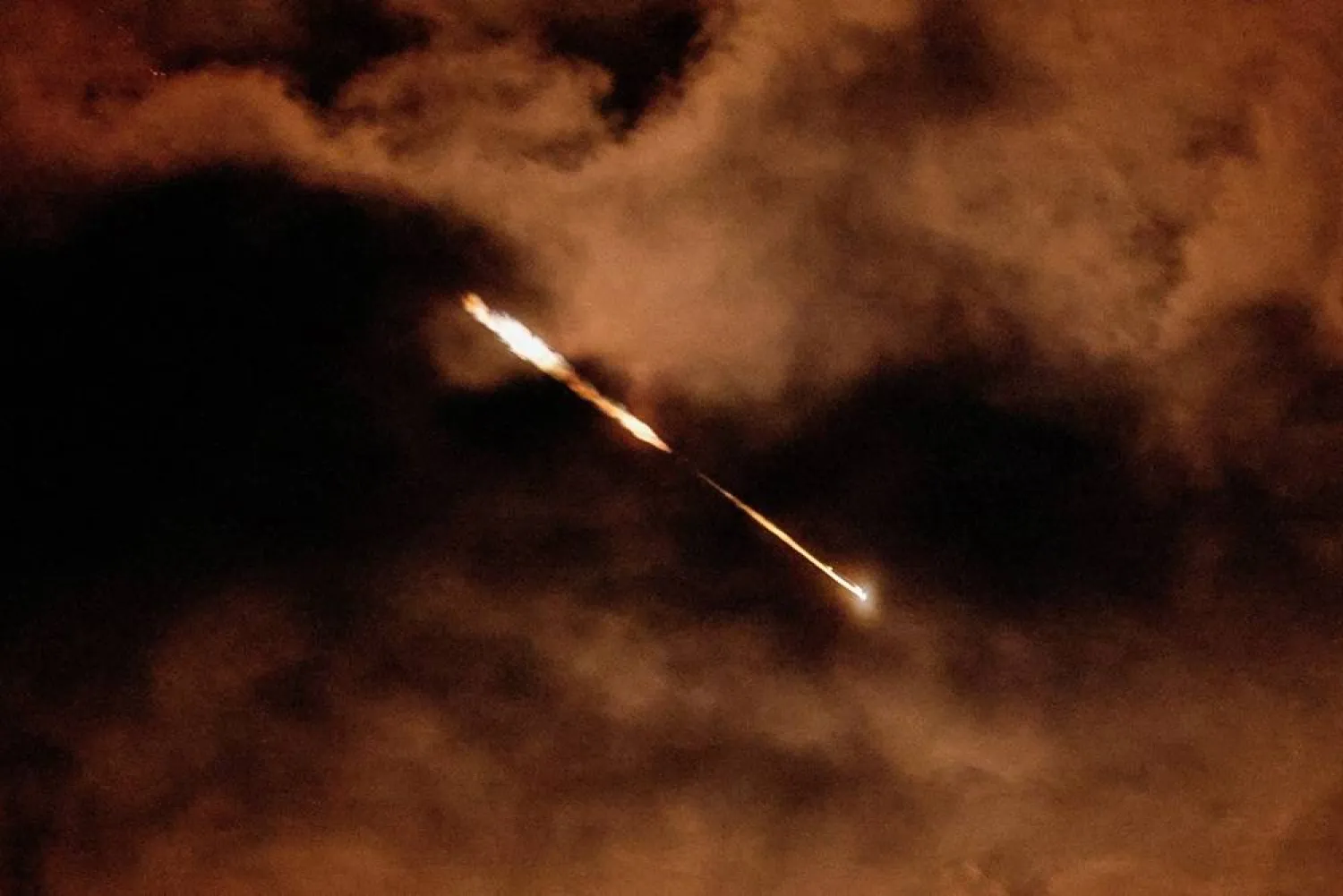
Streaks of light illuminate the sky during an interception attempt, amid the US-Israeli conflict with Iran, as seen from Ashkelon, Israel, March 28, 2026. (Reuters)
TT

Questions Over Israel’s Interceptor Stockpiles as Middle East War Drags on

Streaks of light illuminate the sky during an interception attempt, amid the US-Israeli conflict with Iran, as seen from Ashkelon, Israel, March 28, 2026. (Reuters)

The ability of Israel's highly sophisticated air defenses to keep intercepting Iranian attacks is coming under scrutiny as the Middle East war drags on into a second month.

The military has dismissed reports that it is running low on the interceptors used to shoot down the steady stream of Iranian missiles and Hezbollah rockets fired at Israel.

However, some analysts suggest that the war against Iran has significantly drained allied resources, with long-range interceptors among the most severely depleted, reported AFP.

Israel has a multi-layered air defense array, with a variety of systems intercepting threats at different altitudes.

The top tier consists of the anti-ballistic missile Arrow systems, with Arrow 2 operating both within the Earth's atmosphere and in space and Arrow 3 intercepting above the Earth's atmosphere.

Below that sits David's Sling, which was created to target medium-range threats including drones, shorter-range ballistic missiles and cruise missiles.

Israel's famed Iron Dome system is the third tier and was originally designed to intercept short-range rockets and artillery shells.

US systems also complement Israel's air defenses with some THAAD anti-missile batteries reportedly in Israel.

"There is no area in Israel that is not under multi-layer defense," said reservist Brigadier General Pini Yungman, who played a key role in developing the country's air defenses and is now president of defense company TSG.

But "there is no 100 percent in defense," he told AFP.

"To get the 92 percent that we are getting all together with all the systems, it's outstanding".

The Israeli military, which reveals few details about its air defenses, says Iran has launched more than 400 ballistic missiles since the start of the war on February 28 -- sparked by US and Israeli strikes on Iran.

Spokesman Lieutenant Colonel Nadav Shoshani recently lauded the interception rate as "exceeding expectations".

Most damage in Israel has been caused by falling debris, but among the 19 civilians killed in the country since the start of the war, more than half died when Iranian missiles broke through.

- 'Nearing exhaustion' -

Around two weeks after the war began, news outlet Semafor first reported that Israel was "running critically low on ballistic missile interceptors", citing unnamed US officials.

An Israeli military source at the time denied the reports, saying there was no shortage "as of now" and that the military was "prepared for prolonged combat".

But analysis published by the London-based RUSI defense think tank on Tuesday indicates that the US, Israel and regional allies have burned through vast quantities of missiles and interceptors since the end of February.

Researchers estimated that in the first 16 days of conflict, allied forces expended 11,294 munitions costing roughly $26 billion.

Stockpiles of long-range interceptors and precision munition in particular, it said, were "nearing exhaustion".

"This basically means that if the war continues, coalition aircraft have to fly deeper into Iranian airspace -- and on the defensive side it means absorbing more Iranian missiles and drones," one of the co-authors, US Air Force Lieutenant Colonel Jahara Matisek, told AFP.

Long and costly production timelines make the depletion of high-end interceptors, like Israel's Arrows, particularly critical.

Each Arrow 2 interceptor costs an estimated $1.5 million, with Arrow 3s around $2 million.

"The bottleneck isn't just money. It's industrial physics," Matisek said, pointing to issues including capacity constraints at the supplier level.

These are "production lines that don't scale like an iPhone factory," he said.

These are munitions "you save for the worst threats" he said, and the supply "is never going to be huge".

The RUSI analysis estimated that 81.33 percent of Israel's pre-war Arrow interceptor stocks had already been depleted, and that they would likely "be completely expended by the end of March".

- Accelerated production -

Yungman insisted that, taking into account all its air defense systems, Israel could produce interceptors faster than Iran could produce ballistic missiles.

He added that Israel accelerated its interceptor production after Hamas's October 7, 2023, attack and upgraded its systems to deal with ballistic missiles.

The military confirmed on Monday that it was a malfunction in David's Sling that had allowed Iranian ballistic missiles to strike the southern towns of Dimona and Arad last week.

Dimona is widely believed to hold Israel's undeclared nuclear arsenal.

Israeli financial newspaper Calcalist reported that the military had chosen to use David's Sling in a bid to preserve Arrow interceptor stocks.

Faced with the challenges posed by Iranian missiles, Israel has three options to conserve interceptor stocks, Jean-Loup Samaan, a senior researcher at the Middle East Institute of the National University of Singapore, told AFP.

"Mixing the different missile systems in order to avoid massive shortages; not intercepting missiles or drones if they land in unpopulated areas; and increasing the pressure on the offensive campaign, hoping that they are able to degrade Iran's capabilities before the Israeli amilitary’s air defense resources run out".


How Israel’s Regional Neighbors See Its Upcoming Elections

 Israeli right-wing activists supporting Prime Minister Benjamin Netanyahu gather for the Jewish holiday of Sukkot, the Feast of the Tabernacles, in a field outside Kibbutz Nir-Am by the Israel-Gaza border on September 27, 2026. (AFP)
Israeli right-wing activists supporting Prime Minister Benjamin Netanyahu gather for the Jewish holiday of Sukkot, the Feast of the Tabernacles, in a field outside Kibbutz Nir-Am by the Israel-Gaza border on September 27, 2026. (AFP)
TT

How Israel’s Regional Neighbors See Its Upcoming Elections

 Israeli right-wing activists supporting Prime Minister Benjamin Netanyahu gather for the Jewish holiday of Sukkot, the Feast of the Tabernacles, in a field outside Kibbutz Nir-Am by the Israel-Gaza border on September 27, 2026. (AFP)
Israeli right-wing activists supporting Prime Minister Benjamin Netanyahu gather for the Jewish holiday of Sukkot, the Feast of the Tabernacles, in a field outside Kibbutz Nir-Am by the Israel-Gaza border on September 27, 2026. (AFP)

Israel's upcoming elections are being followed closely by its regional neighbors, who are aware that any outcome will have ramifications far beyond the country's borders.

In his Likud party's campaign launch this month, Prime Minister Benjamin Netanyahu repeated his refrain that he "has changed the face of the Middle East" and vowed to continue doing so.

He has been unapologetic about keeping Israeli troops in neighboring Lebanon and Syria, while his ministers tout plans to displace Palestinians from the West Bank and Gaza, creating a refugee crisis for Jordan and Egypt and making a future Palestinian state impossible.

Opinion polls show the October 27 elections are likely to be close. The bloc led by Netanyahu and his far-right and ultra-Orthodox allies are squaring off against that of his main opponent, centrist Gadi Eisenkot.

AFP correspondents around the region take a look at how different countries are following the contest:

- Jordan -

While Netanyahu has stopped short of formally annexing the West Bank, observers say unofficial annexation is creeping in, as his government -- the most right-wing in Israel's history -- approves an unprecedented number of settlements.

Government officials repeatedly call for the expulsion of over three million Palestinians across the Jordan River, posing "an existential threat" to the Hashemite kingdom, according to Oraib Rantawi, founder of Amman's Al-Quds Center for Political Studies.

At the UN on Tuesday, King Abdullah II said "the Israeli government's expansionist appetite is now a regional threat".

"In the medium and long term, Jordan and Israel are on a collision course," Rantawi said, as right-wing politicians try to push responsibility for "dealing with the Palestinian population" onto Amman.

Jordan signed a peace treaty with Israel in 1994, and "is maintaining a minimum level of political engagement" Rantawi said is unlikely to change, no matter the outcome.

- Egypt -

Israel's other neighbor, most often threatened by what Israeli ministers describe as "voluntary emigration", has kept a "cold peace" since it first recognized Israel in 1978.

Cairo maintains extensive security collaboration, but ties have been increasingly strained as Egypt says it has had to resist repeated efforts to force more than two million Palestinians into its territory.

The best-case scenario is "a government that is less ideologically driven and more focused on security, which could help lower the temperature around Gaza, even without changing the fundamental Israeli position," said former ambassador El-Sayed Shalaby.

Asked by AFP, Foreign Minister Badr Abdelatty said Egypt "will deal with any government that is coming," before blaming Netanyahu for obstructing the Trump ceasefire plan, which Egypt brokered.

- Lebanon -

Israel's attacks on and invasion of southern Lebanon have killed more than 4,300 people and left 329,000 displaced since March, while Beirut pursues gradual talks with Israel centered on the disarmament of Hezbollah.

Parliament Speaker Nabih Berri said this month that Israel "is turning southern Lebanon, its people and their properties into a ballot box soaked in blood" ahead of the vote.

"We are not optimistic," a former Lebanese minister and diplomat told AFP on condition of anonymity.

"The style may change... perhaps Eisenkot has a less radical discourse, but on the ground, the policy will remain unchanged. It is the far right that remains in power."

In an interview with AFP, Lebanese President Joseph Aoun said the elections were an internal matter.

"But the question we want to ask the Israeli people, the State of Israel and all future governments is the following: do they want stability, security and no wars on their border, or not?" he said.

- Syria -

Since the December 2024 ousting of longtime ruler Bashar al-Assad, Israel has launched hundreds of strikes into Syria, sent troops into a UN-patrolled buffer zone on the Israeli-annexed Golan Heights and carried out regular incursions.

"For Damascus, the stakes are not whether the Israeli elections will completely change the rules of the game, but whether they will produce a government that is less inclined toward escalation and more willing to listen to Washington," a Syrian diplomatic source told AFP.

"A more centrist government, or a right-wing government that does not revolve around Netanyahu... could be less inclined to make political capital out of escalation," and work towards gradual security understandings.


From Jeddah to New York: Why Do Sudan's Truces Fail?

Members of the Quintet and Quad after their first joint meeting on Sudan. (African Union)
TT

From Jeddah to New York: Why Do Sudan's Truces Fail?

Members of the Quintet and Quad after their first joint meeting on Sudan. (African Union)

Sudanese doctor "S" needed a truce to get out of a health center where she and her colleagues were trapped in the first days of the war. She took a long route from Nile Street, crossing the Fiteihab and Halfaya bridges, until she reached her family in Kober.

She said she found bullet holes in the walls of her bedroom. Her siblings were waiting for her so they could leave together. The family fled and remains displaced today.

A brief halt in fighting in May 2023 allowed S to escape, but it did not last long enough for her family to remain in their home. Since that brief truce, initiatives and agreements have followed, while the hardest question has remained: How can mediators bring the two sides to agree to a cessation of fighting that is implemented and sustained?

The question returned to the fore on Sept. 23, when the Quad and Quintet met together for the first time in New York, under the co-chairmanship of the African Union and the United States. Participants called for a humanitarian truce and an end to hostilities.

They agreed to coordinate efforts to protect civilians and prepare to monitor and verify the implementation of any agreement. But the meeting's statement announced no agreement with the army or the Rapid Support Forces (RSF), and set no date for talks between them.

A worker repairs a damaged building in Khartoum on September 20, 2026 (Photo by Ebrahim HAMID / AFP)

The sticking point lies in the terms of the truce itself. According to Reuters, the army-led government accepted most of a US proposal for a 90-day truce but rejected a provision that would limit the RSF's withdrawal to specified areas.

It demanded that the RSF withdraw from all cities it had seized. Sudan's Foreign Ministry said this week that it rejected any negotiating process it believed would legitimize a reality imposed by the RSF through force. The RSF, meanwhile, welcomed the truce proposal, but the fighting continued.

Even when the two sides signed an agreement, it did not guarantee its implementation. In Jeddah, Saudi Arabia, the army and the RSF signed a declaration committing them to protecting civilians on May 11, 2023. On May 20, they signed an agreement on a short ceasefire and humanitarian arrangements.

But the ceasefire did not hold. In June, the army suspended its participation in the talks, accusing the RSF of violating the agreement.

Other efforts faced different obstacles. In December 2023, the Intergovernmental Authority on Development (IGAD), a regional organization involved in peace efforts in the Horn of Africa, announced that army chief Abdel Fattah al-Burhan and RSF leader Mohamed Hamdan Dagalo, known as Hemedti, had agreed to meet face to face under its auspices. IGAD renewed the invitation in January, but the meeting never took place.

In Manama, Bahrain, a document titled "Principles and Foundations for a Comprehensive Solution to the Sudanese Crisis" was initialed on Jan. 20, 2024, in the names of Shams al-Din Kabbashi for the army and Abdel Rahim Dagalo for the RSF, according to the published text. But the initialing was not followed by a final agreement or a sustained negotiating process. Dagalo accused Kabbashi of backing away from the document, while Kabbashi did not comment on the reasons for the process coming to a halt.

In August 2024, the absence of one of the warring sides prevented direct ceasefire talks in Switzerland, shifting the focus to facilitating the delivery of aid and protecting civilians.

Rosalind Marsden, a researcher at Chatham House, wrote in an analysis published by the institute on Sept. 18, 2024, that the main reason the August 2024 ceasefire talks in Switzerland failed was that both the army and the RSF continued to seek a military victory. Their continued hopes of making military gains were a major reason for the negotiations' failure to make progress, despite limited progress in delivering aid to Darfur.

In September 2025, the Quad proposed a roadmap beginning with a three-month humanitarian truce, during which aid would reach areas across Sudan, followed by a permanent ceasefire and a political transition.

But the Quad's roadmap remained a proposal by the mediators and did not become an agreement between the warring parties. The dispute over withdrawal in the latest US proposal shows that the two sides have yet to agree on the terms under which a new truce could be tested.

Researcher Ahmed Soliman says the multiplicity of mediation groups and weak coordination among them make it necessary to link ceasefire efforts to a Sudanese political process led by civilian forces.

Hubert Kinkoh, a researcher at Chatham House, argued in an analysis published by the institute on Feb. 13, 2026, that the multiplicity of mediation tracks on Sudan, along with the absence of clear leadership and effective coordination among them, had allowed the army and the RSF to resist making serious concessions.

The New York meeting may help address the fragmentation of mediation efforts. Its real value, however, will become clear if it can bring the warring parties to a clear agreement and establish a mechanism to monitor compliance and address violations.

A brief truce allowed S to reach her family, but the family was then forced to leave their home. The truce that displaced people and refugees are waiting for today would allow aid to reach them and mark the beginning of a lasting end to the fighting, making a safe return to their homes and communities possible.


Trump's State Dinner for Xi to Feature Sea Bass and a Long List of Tech Titans

24 September 2026, US, Washington: US President Donald Trump and First Lady Melania Trump welcome Chinese President Xi Jinping and his wife, Peng Liyuan, to the White House for a state dinner in Washington, DC. Photo: Joey Sussman/ZUMA Press Wire/dpa
TT

Trump's State Dinner for Xi to Feature Sea Bass and a Long List of Tech Titans

24 September 2026, US, Washington: US President Donald Trump and First Lady Melania Trump welcome Chinese President Xi Jinping and his wife, Peng Liyuan, to the White House for a state dinner in Washington, DC. Photo: Joey Sussman/ZUMA Press Wire/dpa

A tech-heavy guest list, the fashion choices of those on it, who sits where, their body language throughout the night and what’s on the menu: these are the softer — often and glitzier — details of diplomacy.

Thursday's state dinner for China’s leader Xi Jinping featured a cavalcade of billionaires, Washington powerbrokers, business leaders and the type of festivities that excite President Donald Trump, who has a reputation for reveling in hosting parties, said The Associated Press.

OpenAI CEO Sam Altman signed autographs as he arrived at the White House. Nvidia CEO Jensen Huang chose a tuxedo over his trademark black leather jacket. Bernard Arnault, the CEO of French luxury goods company LVMH, walked through black security fencing to get to the White House.

Trump, clad in a tuxedo, and first lady Melania Trump, in a tuxedo-style outfit with a large necktie bow, greeted Xi and his wife, Peng Liyuan, out in front of the White House.

Xi, in a black suit, and Peng, in a red gown, emerged from their limousine onto a red carpet at the North Portico, where they shook hands with the Trumps.

“Everyone wants to be there,” Trump said during this week's UN General Assembly session. “It's the hottest ticket in town.”

Xi and Trump face tensions over Taiwan, trade and artificial intelligence during business hours — even as an ongoing, First Amendment fight over press access at the White House has unfolded. But Trump publicly chose to focus on showing Xi his White House updates on Thursday afternoon, before attention quickly turned to the flashy details of the swanky meal honoring Xi and his wife in the White House East Room.

Asked on Monday night who'd be in attendance, the president responded, “sort of everybody,” adding, “I would say you have the entire tech world, the entire banking world and a lot more.”

The dinner was expected to showcase “the positive vibes surrounding the visit” and indicate that “the president is very focused on signaling warmth and a close personal connection with Xi,” said Edgard Kagan, senior adviser and chair in China studies at the Center for Strategic and International Studies.

The first lady’s menu is being served on the red china service from Ronald Reagan’s presidency. It features a first course of yellow squash velouté with wild mushrooms, fresh herbs, crispy pancetta and drizzled scallion oil.

After that, guests will get sesame-crusted sea bass with braised baby bok choy, roasted garden eggplant and a sauce verte. Dessert is vanilla crémeux with sour cherry confit and walnut frangipane, as well as ice cream with honey from the White House.

Trump has already sought to one-up Xi after Beijing

The dinner comes after the president took the unusual step of personally greeting Xi and his wife on Wednesday as they arrived at Joint Base Andrews outside Washington. Normally, presidents wait for their state visit guests to arrive at the White House itself before offering a formal welcome.

During Thursday's arrival ceremony, Trump and Xi reviewed troops as trumpets blared, with the US president saying, “From the time of my first election in 2016, President Xi and I have forged a friendship.”

Thursday's dinner will include an abundance of technology industry titans, including Amazon founder Jeff Bezos, Tesla and SpaceX CEO Elon Musk, Google and Alphabet CEO Sundar Pichai, OpenAI President and co-founder Greg Brockman, and Dell Technologies chairman and CEO Michael Dell.

During his own visit to Beijing in May, Xi hosted Trump for a state dinner that unfolded beneath grand chandeliers in the Great Hall of the People. That event included many tech luminaries who are likely to be at the White House this time, such as Tim Cook, formerly Apple's CEO, and Musk.

Trump has since begun referring to the White House ballroom he’s building as the “Great Hall of the United States,” to rival the place where he dined in China.

“This is a very large hall,” Trump recently said of the Great Hall of the People before adding, “But we’re gonna top it.”

Trump used to decry the pomp he now revels in

In 2015, as then-President Barack Obama was preparing to host Xi for a state visit, Trump — in the midst of his first presidential run — criticized all the hubbub.

“Just take them to McDonald’s and go back to the negotiating table,” Trump said then, during a rally in South Carolina. He later conceded on Fox News Channel that Xi might at least be worthy of getting “probably a double-size Big Mac.”

Xi visited Trump for the first time in 2017. But the White House said the Chinese wanted the meeting to take place at Trump's Mar-a-Lago residence in Florida, which is viewed as a more relaxed setting that might defuse some of the high expectations of a formal summit in Washington.

A dearth of pageantry didn't mean a lack of extraordinary moments, however, underscoring just how important it is for China's leader to dine with Trump.

Later recounting the incident to Fox News Channel, Trump said he sprung a surprise on Xi just after dinner, noting that the US was striking Syria as the pair was having “the most beautiful piece of chocolate cake that you’ve ever seen, and President Xi was enjoying it.”

Trump said he told Xi that US forces had “just fired 59 missiles” and that China's president “was eating his cake. And he was silent.”
