


The Iran War Has Revealed Trump's Pressure Point: The Economy

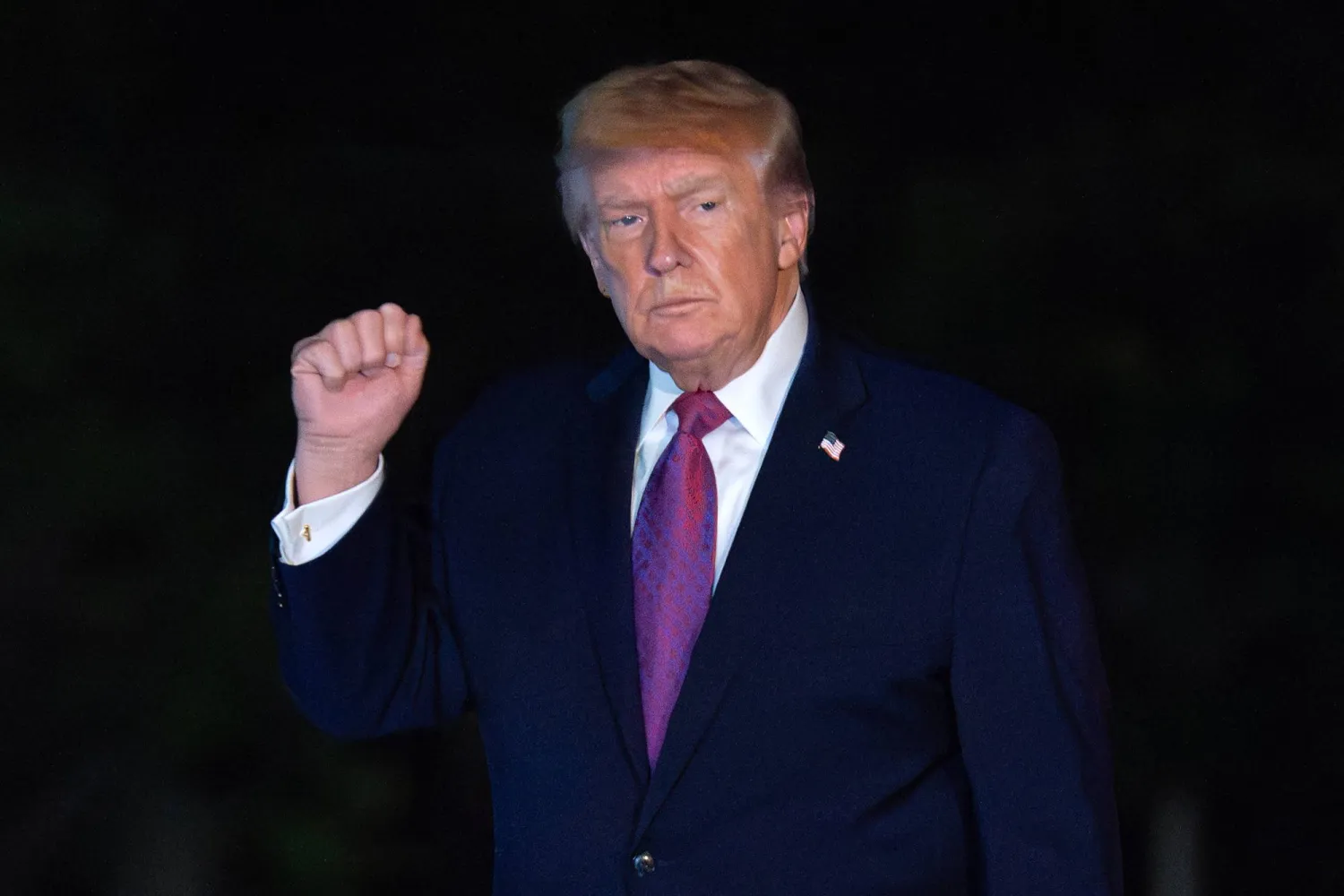
President Donald Trump waves to reporters as he walks on the South Lawn upon his arrival to the White House, Friday, April 17, 2026, in Washington. (AP Photo/Jose Luis Magana)
TT

The Iran War Has Revealed Trump's Pressure Point: The Economy

President Donald Trump waves to reporters as he walks on the South Lawn upon his arrival to the White House, Friday, April 17, 2026, in Washington. (AP Photo/Jose Luis Magana)

Seven weeks of war have failed to topple Iran’s theocratic rulers or force them to meet all of President Donald Trump's demands, but for US adversaries and allies it has cast a spotlight on one of his central vulnerabilities: economic pressure.

Even with Iran’s announcement on Friday that it was reopening the Strait of Hormuz to shipping, the Middle East crisis has revealed the limits of Trump's willingness to tolerate domestic economic pain.

Trump joined Israel in attacking Iran on February 28 based on what he said were imminent security threats, especially over its nuclear program. But now, with US gasoline prices high, inflation rising and his approval ratings down, Trump is racing to secure a diplomatic deal that could stem the fallout at home.

Iran has taken a beating militarily, but demonstrated it can exact economic costs that Trump and his aides underestimated, unleashing the worst-ever global energy shock, analysts say.

RISING ENERGY COSTS, RECESSION RISK

Trump has often publicly shrugged off domestic economic concerns driven by the war. But he can hardly ignore that though the US does not depend on the one-fifth of global oil shipments that were effectively blocked by Iran’s chokehold on the strait, surging energy costs have hit US consumers. The International Monetary Fund’s warning of a risk of global recession adds to the gloom.

Pressure for a way out of the unpopular war has mounted as Trump’s fellow Republicans defend narrow majorities in Congress in the November midterm elections.

None of this has been lost on Iran's leaders, who have used their grip on the strait to push Trump's team to the negotiating table.

Analysts say US rivals China and Russia may draw their own lesson: while Trump has shown an appetite for military force in his second term, he looks for a diplomatic off-ramp as soon as the economic heat becomes uncomfortable at home.

“Trump is feeling the economic pinch, which is his Achilles heel in this war of choice,” said Brett Bruen, a former foreign policy adviser in the Obama administration who heads the Global Situation Room strategic consultancy.

White House spokesman Kush Desai said that while working toward a deal with Iran to resolve "temporary" energy market problems, the administration "has never lost focus on implementing the president’s affordability and growth agenda."

FEELING THE PRESSURE

Trump’s abrupt shift on April 8 from airstrikes to diplomacy followed pressure from financial markets and parts of his base.

Some of the economic pain is borne by US farmers, a key Trump constituency, due to disrupted fertilizer shipments, and is also reflected in higher airfares from increased jet fuel prices.

With the clock ticking on a two-week ceasefire, it remains to be seen whether a president who embraces unpredictability will reach a deal that meets his war goals, extend the truce beyond April 21, or relaunch the bombing campaign.

But global oil prices fell sharply and financial markets, which Trump often sees as a barometer of his success, flourished on Friday after Iran said the strait would be open for the remainder of a separate US-brokered 10-day truce between Israel and Lebanon.

Trump was quick to declare the strait safe as he touted a deal-in-the-making with Iran that he said would be completed soon and mostly on his terms. But Iranian sources told Reuters gaps remained to be resolved. Experts have warned that even if the war ends soon, the economic damage could take months if not years to fix. A key question is whether any deal achieves the objectives Trump has laid out, including closing Iran’s path to a nuclear weapon, which Tehran has long denied it is seeking.

Iran has a stockpile of highly enriched uranium believed buried by US-Israeli strikes in June. Trump told Reuters on Friday the emerging deal calls for the US to work with Iran to recover the material and bring it to the US. Iran denied agreeing to a transfer anywhere outside its territory.

A senior Trump administration official said the US was maintaining "several redlines" in negotiations with Iran. At the same time, Trump’s call at the war’s outset for Iranians to overthrow their government has gone unheeded. Allies from Europe to Asia were initially stunned by Trump’s decision to go to war without consulting them or seeming to take into account the risk to them of Iran closing the strait.

“The alarm bell ringing for allies right now is how the war has highlighted that the administration can act erratically, without much regard for consequences,” said Gregory Poling, an Asia expert at the Center for Strategic and International Studies in Washington.

After Russia’s 2022 invasion of Ukraine, former Democratic President Joe Biden was cautious about imposing sanctions on Moscow’s energy sector out of concern for reducing oil supplies and inflating US gas prices.

But Trump, who ran for a second term on promises of cheap gas and low inflation, has shown himself sensitive to accusations that his policies raise prices. An example was when he reduced tariffs on China last year after it retaliated.
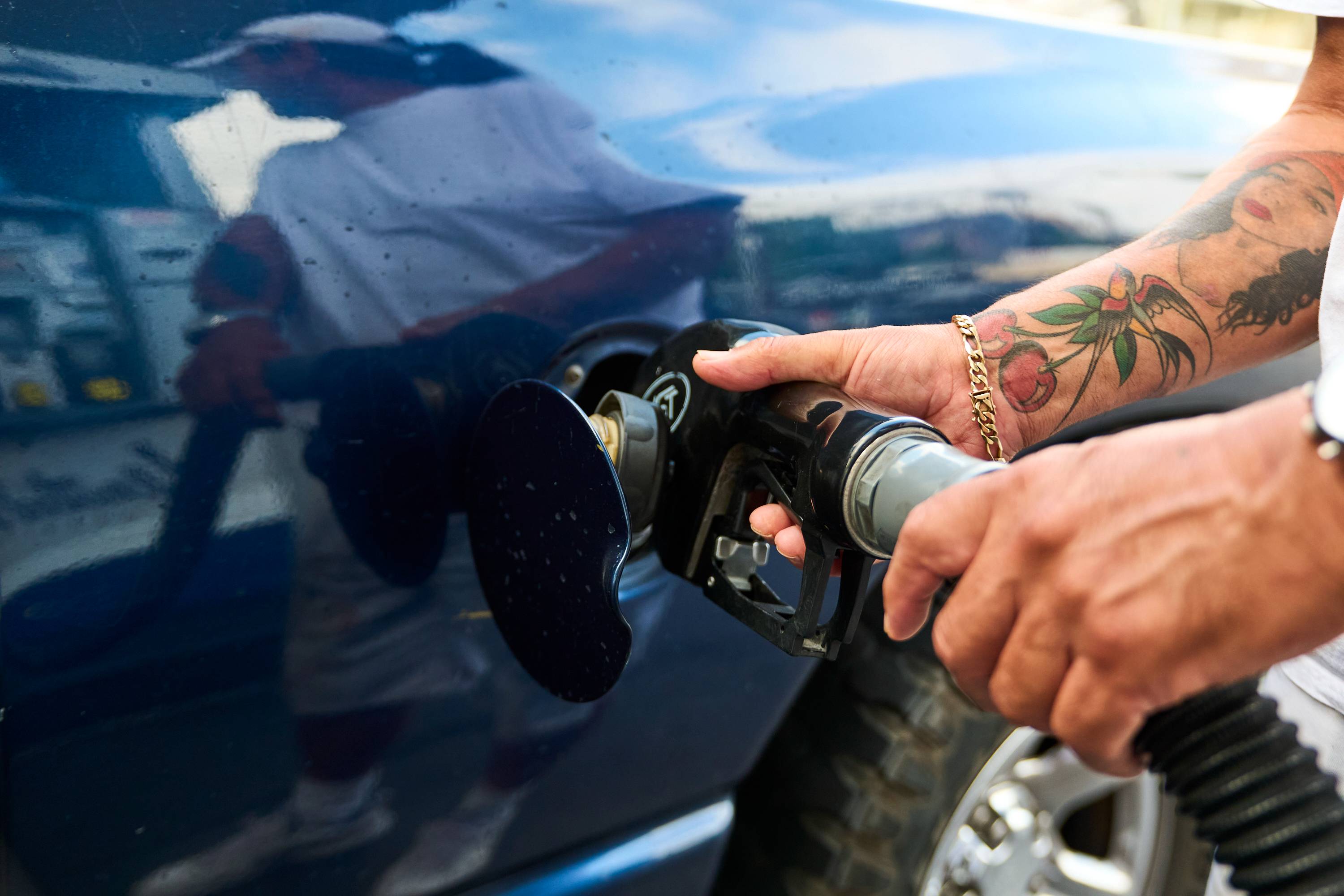
A motorist fills up his truck for over a $100 at a gas station in Los Angeles on Friday, April 17, 2026. (AP Photo/Damian Dovarganes)

MISCALCULATIONS

Just as Trump misjudged Beijing’s response in a trade war, he seems to have miscalculated how Iran might strike back economically in a shooting war by attacking energy infrastructure in Gulf states and blocking the strategic waterway between them.

Trump mistakenly believed the war would be a limited operation like the January 3 lightning raid in Venezuela and June’s strikes on Iran’s nuclear sites, US officials have said privately. But this time the repercussions are more far-reaching.

The message to Asian allies such as Japan, South Korea and Taiwan may be that Trump, who is looking for warmer ties with China, can be expected to pursue his regional goals with less regard for their geopolitical and economic security.

Analysts believe those governments will adjust for any contingency, such as a Chinese bid to seize Taiwan, out of concern over Trump’s reliability.



Netanyahu’s Coalition Alliances with Religious Parties Put His Reelection at Risk

Israel's Prime Minister Benjamin Netanyahu attends a ceremony at the Military Cemetery on Mount Herzl in Jerusalem, April 21, 2026. (AFP)
TT

Netanyahu’s Coalition Alliances with Religious Parties Put His Reelection at Risk

Israel's Prime Minister Benjamin Netanyahu attends a ceremony at the Military Cemetery on Mount Herzl in Jerusalem, April 21, 2026. (AFP)

Israeli Prime Minister Benjamin Netanyahu has remained in power for most of the past 17 years due in part to a tight alliance with ultra-Orthodox religious parties.

But that alliance is tearing apart his governing coalition and proving to be another major liability for the long-serving Israeli leader as the country heads to elections later this year. The Oct. 7, 2023, attack — and the inconclusive wars that have followed — are also weighing on him.

After 2 1/2 years of active fighting in multiple countries, much of it involving reservists, many Israelis are tired of a longstanding system that has allowed ultra-Orthodox men to skip military service. That anger has spread to Netanyahu’s own base.

The ultra-Orthodox are meanwhile furious at his failure to legalize their exemptions. They withdrew their support for the coalition two weeks ago, leading to an initial vote to dissolve parliament, known as the Knesset, on Wednesday.

That set in motion a process that could move elections up from October to September.

Here’s a closer look.

The clock is ticking

Netanyahu is still trying to pass a bill that would legalize the exemptions and fulfill a promise to his religious partners, but that appears to be a long shot given the strident opposition of many within his own coalition.

Deputy Foreign Minister Sharren Haskel, who served for three years in a combat unit and is a vocal supporter of Netanyahu, said she was among at least seven members of the coalition who will not support the draft bill, rendering it impassable.

“The ultra-Orthodox are trying to extort us. It’s immoral. It’s not fair,” said Haskel, who wore her military uniform at the dissolution vote on Wednesday to highlight her opposition and highlight her own service.

Two major ultra-Orthodox parties deserted Netanyahu earlier this month after he told them he did not expect to be able to pass the exemptions bill. That left his coalition without a parliamentary majority, and is one of the main reasons for the bill to dissolve the Knesset.

“He made a promise to his most loyal allies in the coalition, and he could not deliver, he kept postponing,” said Shmuel Rosner, a senior fellow at the Jewish People Policy Institute, a Jerusalem think tank.

Yitzhak Pindrus, a lawmaker from one of the factions, told The Associated Press on Tuesday that it has no plans to return to the coalition.

“We need the draft bill,” he said.

The ultra-Orthodox can make or break Netanyahu's coalition

Israel's political landscape is highly fragmented, and no one party has ever won a majority in the 120-member Knesset.

Instead, parties must build alliances to cobble together a majority, which often involves bargaining that gives smaller parties outsized influence.

The ultra-Orthodox currently have 18 seats in the Knesset, a similar number to previous years, but have long been indispensable to Netanyahu. In exchange for his support for government subsidies and the draft exemptions, they have stood by him through regional crises and longstanding corruption allegations.

Netanyahu has long relied on “automatic support” from the ultra-Orthodox, said Gilad Malach, an expert on the ultra-Orthodox at the Israel Democracy Institute, a research group in Jerusalem.

That support helped Netanyahu remain in power through the worst attack in Israel’s history.

The coalition, which also includes ultra-nationalist parties, “was much more stable than I ever imagined,” said Rosner. “Maybe it's because they realized in a new election, they're going to get defeated, and that's why they stuck together.”

Imploding the coalition from within If

Netanyahu somehow passes some form of the draft exemption bill, it could dramatically alter the electoral map. It would push large sectors of the population, who have previously supported Netanyahu but are buckling under hundreds of days of reserve duty, to vote for rival parties that promise equal service, Malach said.

Netanyahu appears to stand little chance of remaining prime minister after October's elections without ultra-Orthodox support. And he is probably their only hope of a bill that would avoid mandatory enlistment coming up for discussion in the next government.

But sticking with the ultra-Orthodox risks harming Netanyahu's standing with the broader public, leaving him in a bind as the country heads toward elections.

Why the ultra-Orthodox reject military service

Most Jewish men are required to serve nearly three years of military service, followed by years of reserve duty. Jewish women serve two mandatory years.

Each year, roughly 13,000 ultra-Orthodox men reach the conscription age of 18, but less than 10% enlist, according to a parliamentary committee.

Faced with a severe shortages of soldiers, the military is looking to extend the period of mandatory service.

The ultra-Orthodox, who make up roughly 13% of Israeli society and are the fastest growing sector, have traditionally received exemptions if they are studying full-time in religious seminaries. The exemptions date back to the birth of the state in 1948, when a small number of students sought to revive the Jewish scholarship system after it was decimated by the Holocaust.

Those exemptions — and the government stipends many seminary students receive up to the age of 26 — have infuriated many Israelis.

Israel is currently maintaining a simultaneous military presence in Gaza, Lebanon, and Syria, in addition to fighting a war with Iran, which has stretched its robust military to the breaking point.

The Supreme Court said the exemptions were illegal in 2017, but repeated extensions and government delay tactics have left them in place.

Among Israel’s Jewish majority, mandatory military service is largely seen as a melting pot and rite of passage. Many in the insular ultra-Orthodox community fear that military service would expose young people to secular influences.


Shot for Throwing Stones: Israeli Forces Killing West Bank Teens Weekly

Palestinian Sameh Shtayyeh, the father of 15-year-old Youssef Sameh Shtayyeh who was killed on April 23, by Israeli soldiers in the city of Nablus, hugs his son as they visit his grave at the cemetery in the village of Till, west of Nablus, in the Israeli-occupied Palestinian West Bank on May 12, 2026. (AFP)
TT

Shot for Throwing Stones: Israeli Forces Killing West Bank Teens Weekly

Palestinian Sameh Shtayyeh, the father of 15-year-old Youssef Sameh Shtayyeh who was killed on April 23, by Israeli soldiers in the city of Nablus, hugs his son as they visit his grave at the cemetery in the village of Till, west of Nablus, in the Israeli-occupied Palestinian West Bank on May 12, 2026. (AFP)

Youssef Shtayyeh came home from school on an April afternoon, dropped his bag in the hallway and headed straight back out to join his friends.

Minutes later, he was dead -- shot by an Israeli soldier, just 100 meters (yards) from his home.

He was 15. His is not an isolated case.

Since Israel launched a major military operation against armed Palestinian groups in the northern West Bank in January 2025, one Palestinian minor has been killed every week on average across the territory, up from one every three weeks in 2021, according to UNICEF.

Seventy teenagers, mostly aged 15 to 16, have been killed to date, 65 of them by Israeli forces, according to a UNICEF report dated May 12.

Then came Youssef Kaabnah, 16, killed on May 13.

Then Fahd Oweis, 15, two days later.

The Israeli military said both had "hurled stones" at soldiers.

It is almost certainly what Shtayyeh had been doing too, on April 23, in Nablus -- the largest city in the northern West Bank, a Palestinian territory occupied by Israel since 1967.

Youssef and his friends were on a side street above a main road when a couple passing in a car spotted them throwing stones -- and the military convoy below.

One jeep stopped. Then the others.

"A soldier got out, then two more. They started shooting at the kids," the passing driver told AFP, declining to be named for safety reasons.

- 'Designed to kill' -

A neighbor filmed what followed.

Two shots. Then screams. Youssef grabbed the car door.

"He said, 'Please don't leave me, I'm scared. Take me to my father, take me home,'" the driver recalled.

Youssef's father Sameh Shtayyeh, a 48-year-old building contractor, told AFP he had no idea what had caused the soldiers to open fire on his son as he "wasn't there".

In a panic, the driver told the boy to get in the car and sped to the hospital.

By the time they reached the facility, the boy was silent. Youssef's heart had stopped.

"A gunshot wound -- entry in the back, exit through the chest," surgeon Bahaa Fattouh, who treated him, told AFP.

Doctors resuscitated him and rushed him to the operating theater. His heart stopped again.

This time, it did not revive.

"Earlier, we used to treat minor injuries -- legs, arms, rubber bullets," said Fattouh.

But since the Hamas attack on Israel on October 7, 2023, "we only see lethal wounds -- chest, head."

Wounds, Fattouh said, that were "designed to kill".

"Most patients die on the operating table."

- 'Standard procedure' -

AFP contacted the Israeli military on the day of the incident, and again after returning from Nablus last week.

The response was identical, word for word: "A terrorist threw stones at soldiers. The soldiers applied the standard arrest procedure, which ended with fire being directed at the suspect."

Israeli daily Haaretz recently quoted the military's commander for the West Bank, Major General Avi Bluth, saying troops had killed 42 Palestinians for throwing stones in 2025.

He described stone-throwing as "terrorism".

Standing at the spot where his son fell, Sameh Shtayyeh stares down at the road below.

"Whether he threw stones or not -- what does it matter? Where is the danger to an army patrol?" he asks bitterly.

In protests "in Israel, in France, people throw stones and bins" and face nothing worse than arrest, he said.

He buried Youssef in the family village of Tell, five kilometers (three miles) from Nablus.

Weeks later, women were still holding a vigil at the flower-covered grave, topped with a portrait of the teenager showing him on a football pitch with a ball at his feet.

His father had promised to take him to Saudi Arabia to watch Cristiano Ronaldo play.

Now, each time Sameh comes home, Youssef is not there to greet him.

His eldest son returns from school -- but Youssef is not there. He glances at the back seat of his car. Youssef is not there.


Russia's Growing Energy Ties with China since the Ukraine War

Flags of China and Russia are displayed in this illustration picture taken March 24, 2022. REUTERS/Florence Lo/Illustration Purchase Licensing Rights
TT

Russia's Growing Energy Ties with China since the Ukraine War

Flags of China and Russia are displayed in this illustration picture taken March 24, 2022. REUTERS/Florence Lo/Illustration Purchase Licensing Rights

China has increased purchases of Russian oil and gas since ‌the start of the conflict with Ukraine in 2022, with Moscow and Beijing declaring a "no limits" partnership just days before the war began. The energy relationship between the two countries is expected to be an important topic when presidents Vladimir Putin and Xi Jinping meet in Beijing on Wednesday.

Here are some facts about the energy ties between the two countries:

GAS

Russia's energy giant Gazprom supplies natural gas to China through a 3,000-km (1,865 mile) pipeline called Power of Siberia under a 30-year, $400 billion deal launched at the end of 2019.

In 2025, exports jumped by around a quarter to 38.8 billion cubic meters (bcm), exceeding the pipeline's planned annual capacity of 38 bcm.

During Putin's visit to China in September, the countries agreed to increase annual volumes on the route by an additional 6 bcm, to 44 bcm, a year. In February 2022, China also agreed to buy up to 10 bcm of gas annually ‌by 2027 via ‌a pipeline from Sakhalin Island in Russia's Far East. The countries later ‌agreed ⁠to raise the ⁠volumes to 12 bcm.

Russia's gas exports to China are still a small fraction of the record 177 bcm it delivered to Europe in 2018-19 annually.

Russia's share in European Union gas imports has shrunk during the Ukraine war, particularly in pipeline flows. Russia remained the EU's second-largest liquefied natural gas supplier last year with a 16% share but the gap with the EU's main LNG partner, the United States, widened considerably. Russia and China are still in talks about a new Power of Siberia 2 pipeline capable of delivering 50 bcm of gas per year ⁠from Russia to China via Mongolia.

Gazprom began a feasibility study for the ‌pipeline in 2020, but the project has gained urgency as Russia ‌turns to China to replace Europe as its major gas customer. Gazprom CEO Alexei Miller said in September that the ‌countries signed a "legally binding memorandum" on the pipeline, but a firm contract is still elusive.

Russia's liquefied natural ‌gas exports to China rose last year by 18.2% to 9.79 million metric tons, according to China's customs data, cited by TASS news agency.

Russia was, after Australia and Qatar, the third-largest supplier of LNG to China, which is the world's largest buyer of seaborne gas.

OIL China is Moscow's top client for oil shipments via the sea and pipelines. Exports have been ‌high amid Western sanctions on Russia over the war in Ukraine. China's imports from Russia were at 2.01 million barrels per day (bpd) in 2025 (or 100.72 ⁠million metric tons in ⁠total), a decline of 7.1%, according to China's General Administration of Customs. That represented 20% of China's total imported oil by volume.

Yury Ushakov, Putin's foreign policy aide, said Russian oil exports to China grew by 35% in the first quarter of 2026 to 31 million tons.

China, which is the world's top oil importer, primarily buys Eastern Siberia-Pacific Ocean (ESPO) crude exported via the Skovorodino-Mohe spur of the 4,070-km (2,540-mile) ESPO pipeline, which connects Russian oil fields to refineries in China and from the Russian Far East port of Kozmino. Russia's oil pipeline operator Transneft has said it was expanding the ESPO pipeline to increase exports via Kozmino, seeking to complete the expansion work in 2029. China also imports oil from the Pacific island of Sakhalin, taking Sakhalin Blend and Sokol oil grades. The availability of ESPO Blend oil has remained high since July 2025, when exports had been expanded to 1 million barrels per day. Transneft has kept exports via Kozmino at around this level.

Russia has also agreed to raise its oil exports to China via Kazakhstan through the Atasu-Alashankou pipeline by 2.5 million tons per year to 12.5 million tons.