
Petraeus Hands Washington 'Executive Plan' to Disarm Iraq's Armed Factions

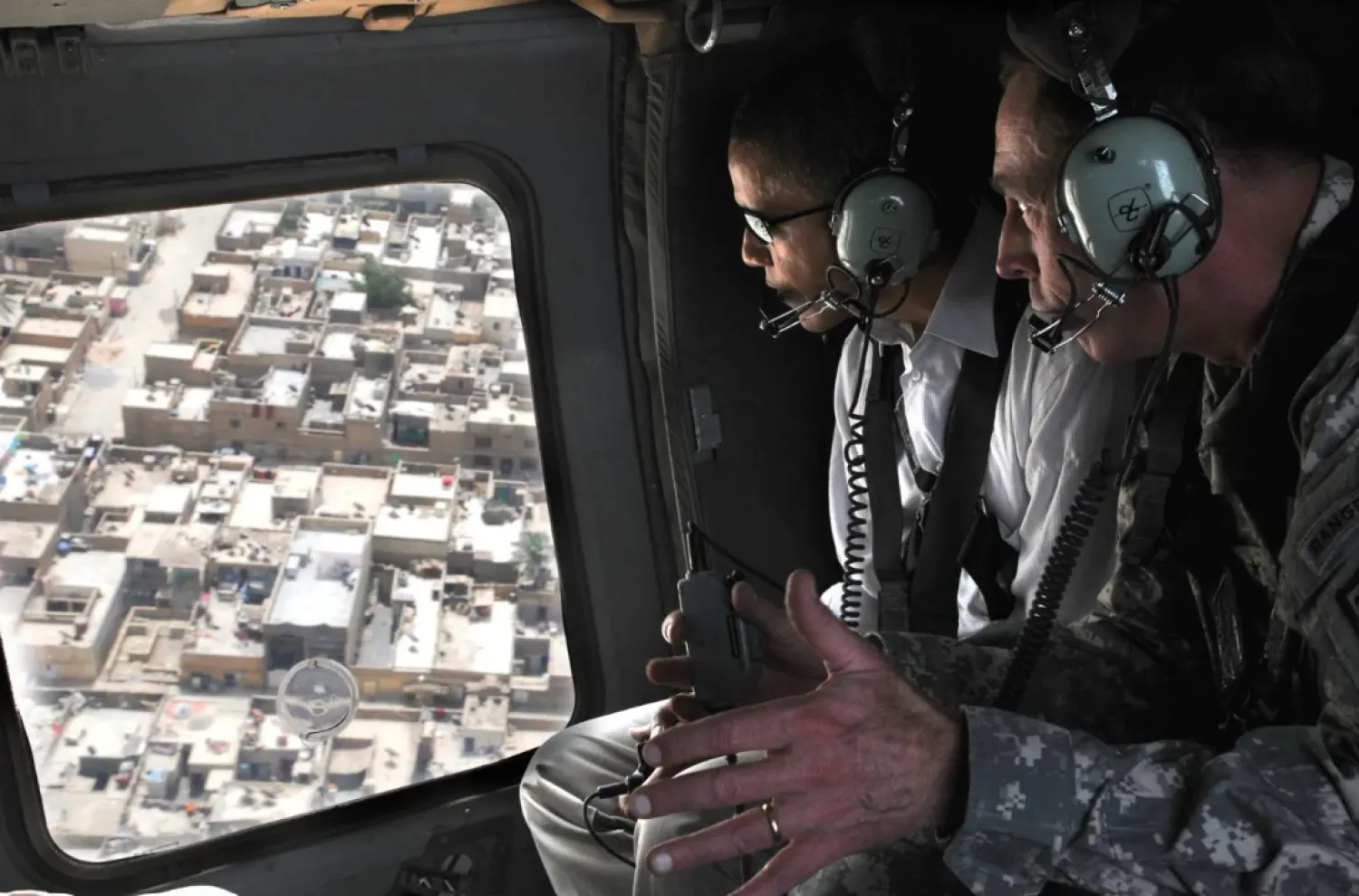
A 2008 photo released by the Pentagon shows David Petraeus briefing Barack Obama, then a US senator, on a plan to secure Sadr City in eastern Baghdad during an aerial tour over the area.
TT

Petraeus Hands Washington 'Executive Plan' to Disarm Iraq's Armed Factions

A 2008 photo released by the Pentagon shows David Petraeus briefing Barack Obama, then a US senator, on a plan to secure Sadr City in eastern Baghdad during an aerial tour over the area.

Iraqi officials said the United States has conditioned the integration of the Popular Mobilization Forces (PMF) on disarming armed factions, sidelining their leaders, and appointing professional officers to oversee the PMF’s infrastructure, a step Washington says is necessary because the force remains a major obstacle to restoring normal relations with Baghdad.

But Shiite groups said implementing the “bold plan,” which remains under discussion, would place Prime Minister Ali al-Zaidi’s government in an unequal confrontation with Iran and the factions linked to it, amid a lack of guarantees, warning of “internal divisions and unrest.”

What did Petraeus do in Baghdad?

The information disclosed by officials involved in technical and political discussions on the future of the PMF coincided with a visit by retired US General David Petraeus to Baghdad last week in his capacity as an “independent expert” providing advisory services to the White House.

After leaving Baghdad, Petraeus wrote on LinkedIn on May 17, 2026, that Iraqi officials he met “recognized the importance of ensuring that the Iraqi Security Services have a monopoly on the use of force in Iraq.” He added that he left Iraq “encouraged by what I heard, while also realistic about the dynamics with Iran.”

Asharq Al-Awsat learned that Petraeus spent five days in Baghdad, where he met senior Iraqi officials. The fate of PMF fighters was at the center of “serious discussions,” according to sources.

A US State Department spokesperson told Asharq Al-Awsat that Petraeus visited Baghdad as “a private citizen, nothing more.”

However, the level of meetings he held there, including with Iraq’s Chief Justice Faiq Zidan, Prime Minister Ali al-Zaidi, Parliament Speaker Haibat al-Halbousi, and Counter Terrorism Service chief Staff Lieutenant General Karim al-Tamimi, went beyond the nature of a personal visit.

An informed Iraqi source told Asharq Al-Awsat that “Petraeus’s meetings revolved around a single objective: reforming the military institution and ending the current PMF structure, while discussing realistic and practical mechanisms for integrating its members into the security institutions.”

Petraeus is among the most prominent commanders associated with the Iraq war after 2003. He gained experience through a range of field and strategic roles, most notably commanding the 101st Airborne Division during the invasion that toppled Saddam Hussein’s regime.

Petraeus now serves as partner and chief operating officer at KKR, a global investment management firm. Information available on the company’s website indicates that its activities are expanding across Middle Eastern countries, with no reference to Iraq.

KKR did not respond to Asharq Al-Awsat’s requests for comment on the nature of Petraeus’s visit to Baghdad or whether the White House had assigned him an advisory mission there.

However, three government and political figures told Asharq Al-Awsat that the US general “has been tasked with drafting an actionable executive paper to be submitted to the White House at a later stage through US envoy to Syria Tom Barrack.”

People close to the new prime minister in Baghdad told Asharq Al-Awsat that “Ali al-Zaidi will discuss this sensitive issue with US President Donald Trump if a planned visit to the White House takes place.”

An Iraqi official who declined to be identified said that “the preliminary date could be set after Eid al-Adha in June,” noting that “the timing could be affected by the course of negotiations between Washington and Tehran.”
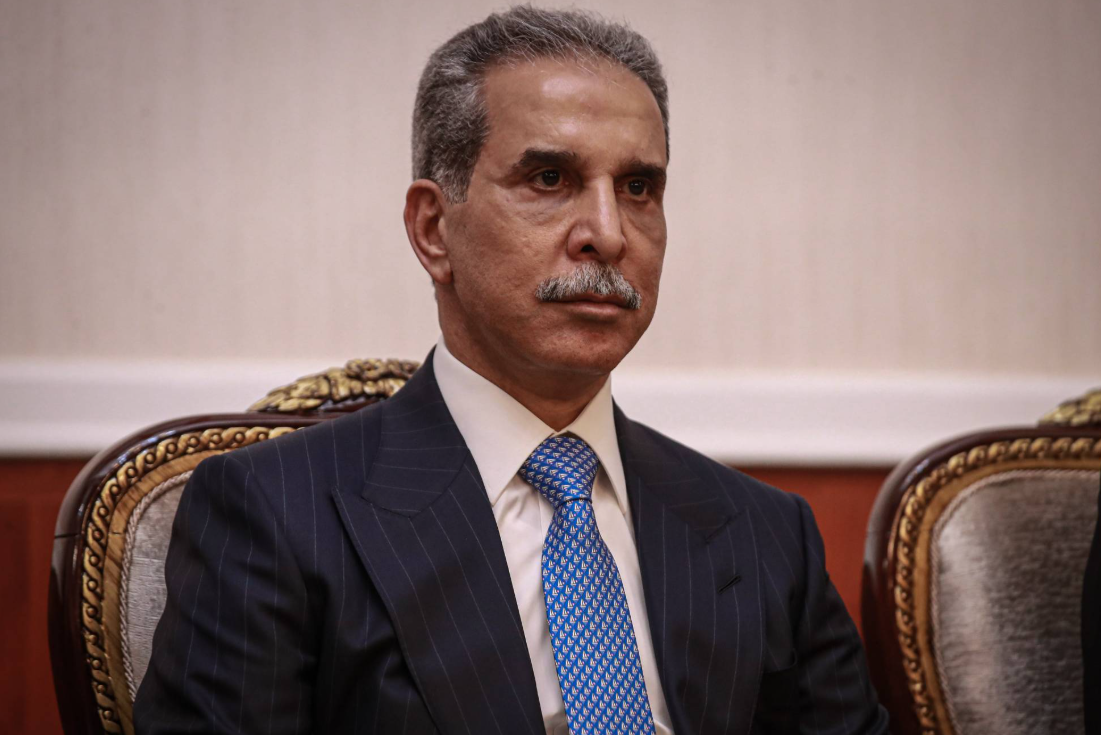
General David Petraeus began his visit to Baghdad with a meeting with Iraq’s Chief Justice, Faiq Zidan (DPA).

“A Danger That Could Blow Up in Your Face”

A person familiar with the discussions held during Petraeus’s meetings said that “some Iraqi officials spoke to the US general as though they were speaking directly to President Trump. They displayed unusual candor about their concerns over the potential consequences of plans for the Popular Mobilization Forces that remain largely theoretical at this stage.”

Another source said that “the US general listened more than he spoke during his meetings with Iraqi officials, but he was clear about what Washington wants: eliminating the source of the regional threat.” Nevertheless, “the general left Baghdad without complete confidence in Baghdad’s ability to resolve the problem in line with the US vision.”

Two Western diplomats, who spoke to Asharq Al-Awsat on condition of anonymity, said that “US confidence declined sharply during the final months of Sudani’s government because of what was viewed as leniency toward attacks by armed factions during the war. The current prime minister may now pay the price when he is asked to provide stronger security and political guarantees regarding the enforcement of state sovereignty.”

As attacks on Gulf states continued, and with the United States accusing the previous Iraqi government of providing official cover for these groups, the Popular Mobilization Forces and the armed factions associated with them have become “a knot that is difficult to untangle.” An Iraqi official said the issue is “a danger that must be dealt with, but when you get close to it, it could blow up in your face.”

Washington hopes that the new prime minister, Ali al-Zaidi, a businessman whose commercial activities are rumored to have prospered under the shadow of politics, will be able to distance his government from Iranian influence. It sees the issue of weapons outside state control as a test of whether trust can be maintained and support resumed, but the task will not be easy, according to a person close to him.

A person familiar with political consultations concerning the Popular Mobilization Forces said that “Petraeus did not answer questions raised by Iraqi officials about whether there would be sufficient backing to confront Iran if the Popular Mobilization Forces were dissolved.”
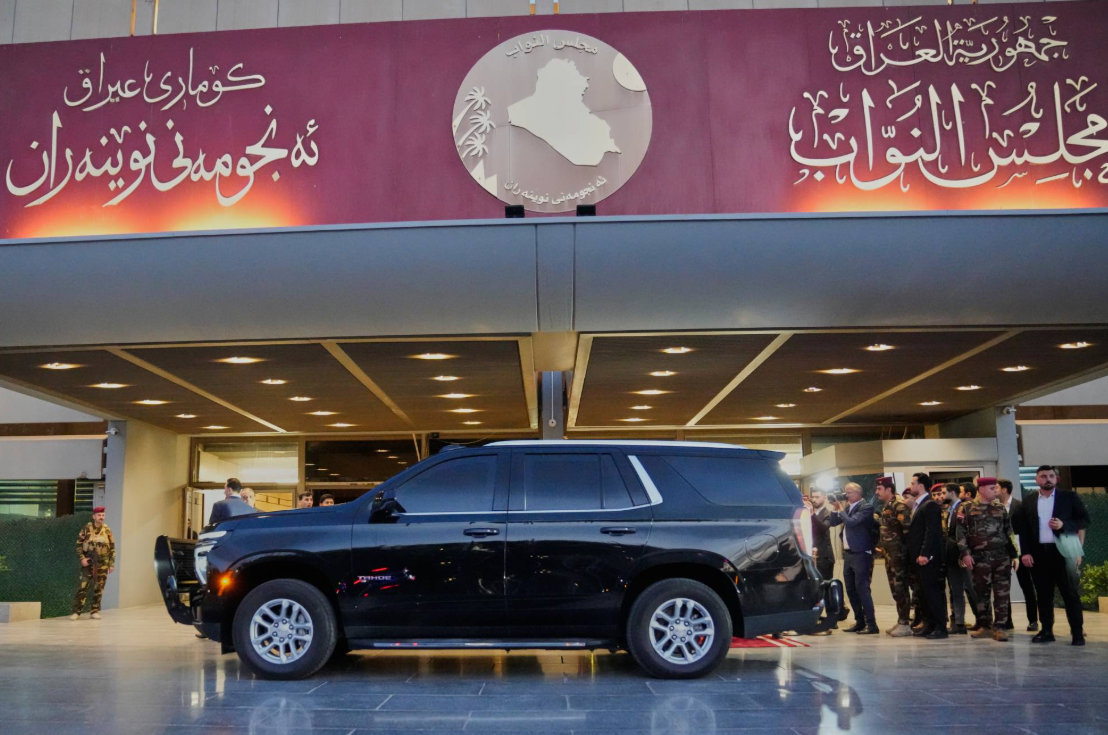
Shiite forces are pushing to refer the future of the Popular Mobilization Forces to parliament for discussion rather than addressing it under US pressure (AP).

Baghdad ‘Buys Time’

For Shiite leaders in Iraq, the Popular Mobilization Forces (PMF) are “a matter of destiny” and “a red line that cannot be crossed,” according to officials close to the factions. But the organization has become caught in intense regional polarization since the events of Oct. 7, 2023, and has been directly involved in the recent conflict between the United States and Iran.

Figures close to the armed factions have appeared on television warning of “retaliation against any government or political official who participates in a project to integrate or dissolve the PMF.”

A leader of an armed faction told Asharq Al-Awsat that “Iran recently urged them to resist the US effort aimed at dismantling the largest military force safeguarding its interests in the region.”

He added: “Generals from the Revolutionary Guards who play supervisory roles within Shiite factions, including those who run the Islamic Resistance in Iraq operations room, will put obstacles in the way if moves are made toward dissolving the PMF.”

According to an Iraqi lawmaker close to Kataib Hezbollah, the PMF is an institution operating under a law passed by the Iraqi parliament in 2016, and dissolving it would now require a parliamentary vote.

Shiite armed groups maintain influential political wings in the Iraqi parliament. Estimates suggest they hold around 80 seats, while the ruling Shiite alliance, the Coordination Framework, enjoys a comfortable majority of about 180 seats in the 329-member legislature, giving it substantial influence over the legislative process.

Two members of the Coordination Framework told Asharq Al-Awsat that “most leaders of the Shiite alliance informed the prime minister that they agree on the risks posed by the factions, but resolving the issue requires national dialogue and an incentives plan as part of a broader strategy involving the religious authority in Najaf, given the sensitivity of the political and security balances associated with it.”

A Western adviser working in Iraq told Asharq Al-Awsat that “Washington has come to view such ideas as attempts to buy time, and warnings about the risks of dissolving the PMF are being used as a form of counterpressure against the United States.”

An Iraqi official also said that “US officials who held discussions with local officials before Petraeus’s talks in Baghdad made it clear that overlooking the PMF issue carries an extremely high cost.”
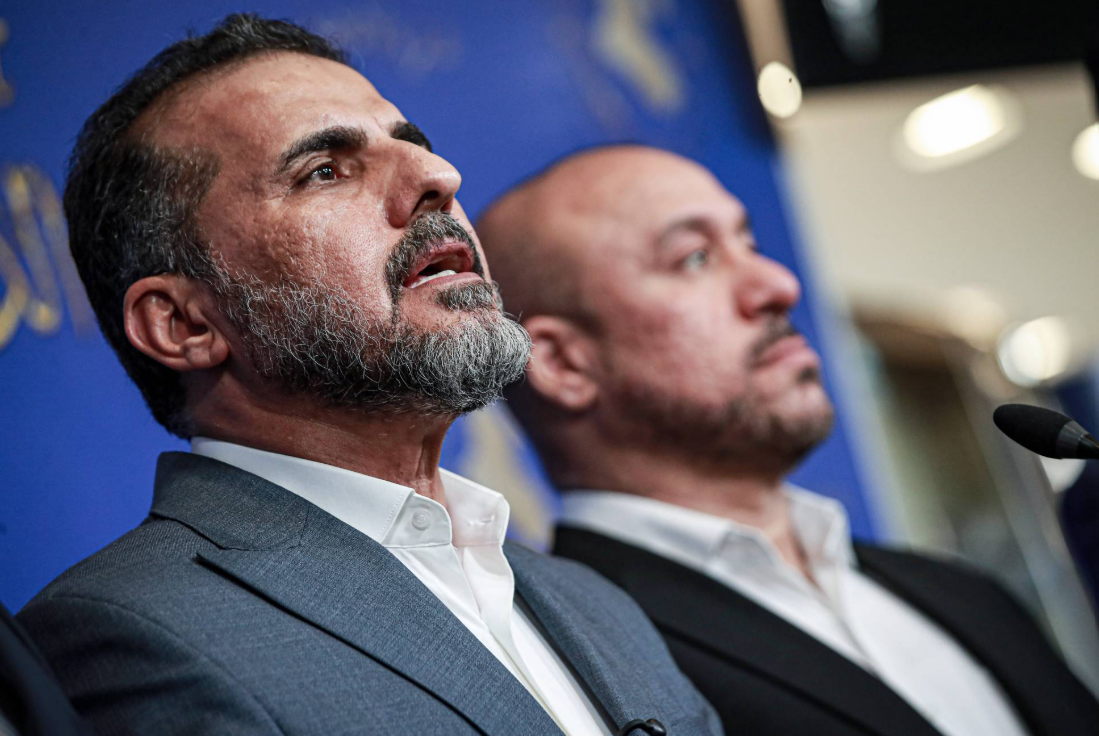
Hussein Mounes (left), head of the Huqooq Movement affiliated with Kataib Hezbollah, speaks to journalists in Baghdad on May 14, 2026, to announce his opposition to Ali al-Zaidi’s government (DPA).


“Fell on Deaf Ears”

On that basis, according to sources, the United States dismissed Iraqi proposals it viewed as cosmetic measures to integrate the Popular Mobilization Forces (PMF), restructure the organization, or change its leadership.

The Iraqi government, in its program approved by parliament, pledged to “define the responsibilities of the PMF within the military and security system.”

Al-Zaidi’s office declined to answer Asharq Al-Awsat’s questions about how the government intends to implement its program regarding the PMF and whether it has participated with the United States in any executive plans related to the issue.

According to five Iraqi and Western figures who spoke to Asharq Al-Awsat, proposals put forward by members of the Coordination Framework aimed at elevating the PMF and other factions into a new ministry or restructuring them within an administrative framework under the supervision of the prime minister “fell on deaf ears” in Washington.

Over the past week, figures close to Shiite groups appeared on local television channels promoting a proposal to establish a “Federal Security Ministry,” claiming it would serve as an umbrella for the PMF and other security formations, including the Rapid Response Forces and the Border Guards.

Informed sources told Asharq Al-Awsat that the United States is seriously focused on ensuring full Iraqi sovereignty over political and security decision-making and eliminating sources of threat that it describes as terrorist, so that Baghdad can live in peace with its neighbors.

It is widely believed in Baghdad that the recent attacks against Saudi Arabia and the United Arab Emirates are part of a dual-track campaign within the Revolutionary Guards’ regional strategy: linked to the ongoing conflict on one hand, and on the other an attempt at deterrence aimed at protecting the PMF’s position and preventing any reduction in its influence.

On May 18, 2026, Abu Mujahid al-Assaf, a security official in Kataib Hezbollah, said in a press statement that the faction was “prepared to respond to the United States on all fronts if leaders of the resistance and the Popular Mobilization Forces are targeted.”
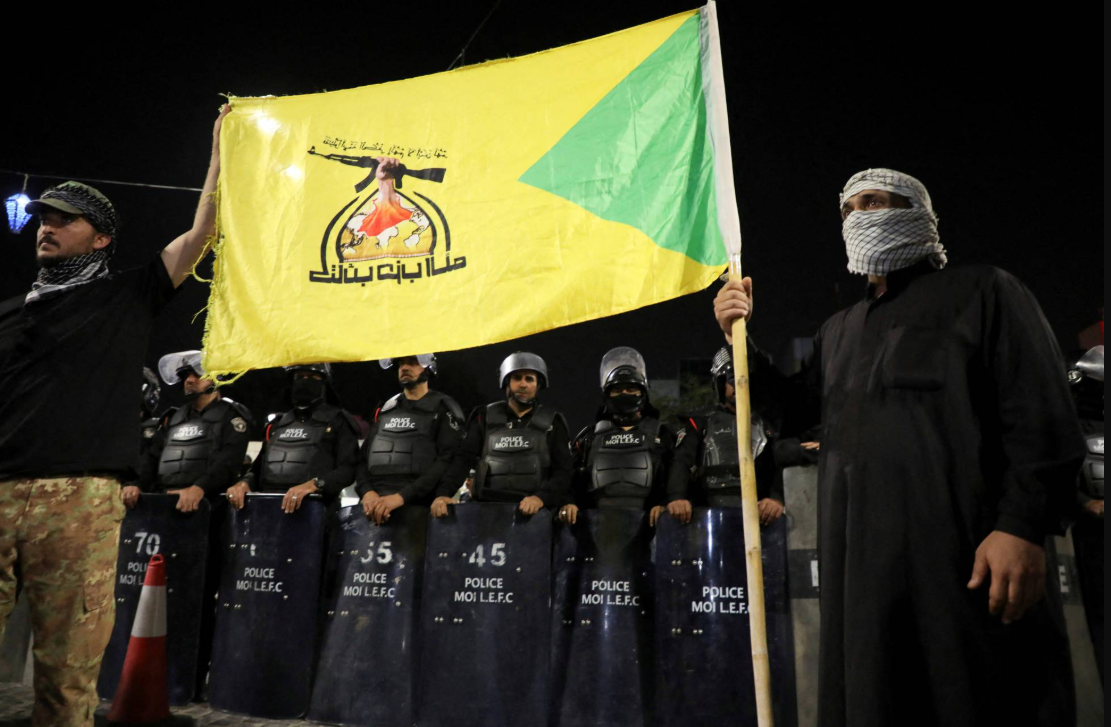
Two members of the Kataib Hezbollah faction carry the group’s flag in front of a riot police checkpoint in Baghdad (Reuters).


What Comes Next in Baghdad?

Nevertheless, two Iraqi figures said they expect “an initial phase to begin in the coming period,” involving the transfer of heavy and medium weapons to a trusted Iraqi security body agreed upon by the Iraqi government and the United States.

According to one of the two figures, the first phase would also include removing figures involved in attacks against the United States and its allies in the region, and appointing Iraqi generals to oversee the infrastructure associated with the Popular Mobilization Forces.

Asharq Al-Awsat learned that armed groups with political wings represented in parliament are negotiating to regain their share of positions in the Iraqi government after surrendering their weapons, but are seeking firm guarantees that they will be removed from the list of groups barred from participating in government.

Several ministerial posts in Ali al-Zaidi’s government remain vacant because of disputes within the Coordination Framework. However, some positions have been postponed indefinitely because of a US veto on election winners who maintain armed wings and have ties to Iran.



Lebanon-Israel Deal May Entrench Stalemate Rather Than End War, Analysts Say

An Israeli helicopter flies on patrol near the Israel-Lebanon border, 23 June 2026, amid a ceasefire between Israel and Hezbollah. (EPA)
TT

Lebanon-Israel Deal May Entrench Stalemate Rather Than End War, Analysts Say

An Israeli helicopter flies on patrol near the Israel-Lebanon border, 23 June 2026, amid a ceasefire between Israel and Hezbollah. (EPA)

A security deal between Lebanon and Israel risks entrenching a stalemate rather than resolving Israel's underlying conflict with Hezbollah by tying Israel's pullout from southern Lebanon to the Iran-aligned group's disarmament, a condition regional analysts and politicians say is unattainable.

At its core is a bargain few see as workable: Hezbollah has flatly rejected disarmament, and no Lebanese government has the power to enforce it.

With Hezbollah unlikely to disarm, analysts say Israel has political cover to keep an open-ended military presence in southern Lebanon, which it invaded after Hezbollah fired at Israel on March 2 in solidarity with Tehran over the war in Iran.

The deal leaves the Lebanese state trapped between obligations it cannot meet and sovereignty it cannot fully reclaim, the analysts say.

The framework deal also collides with Lebanon’s political realities, asking a fragile sectarian state to confront the most powerful armed faction in the country despite a post–civil war system built on power-sharing rather than coercion.

"This is not an agreement, it is an imposed settlement," said a senior Lebanese politician who ‌declined to be ‌named, according to Reuters.

The Lebanese army, he said, was neither structured nor equipped to disarm Hezbollah, and expecting it ‌to do ⁠so ignored both the ⁠group’s entrenched military capacity and the fragile sectarian balance on which Lebanon's stability rests.

'BURDEN' PLACED ON LEBANON

Political analysts say the imbalance is built into the agreement’s design, with sweeping obligations placed on Lebanon but no reciprocal guarantee of Israeli withdrawal.

"This agreement has put all the burden on Lebanon," said Michael Young, a Beirut-based analyst, adding that it "creates a structure that allows the Israelis to remain (in southern Lebanon) indefinitely."

Fawaz Gerges, a Lebanese scholar at the London School of Economics and Political Science, said the deal was "born dead" and is structurally flawed, hinging on a condition that is impossible to meet in practice.

Gerges said Israel had already occupied a buffer zone in southern Lebanon about eight to 10 km (five to six miles) deep while tying any future withdrawal to Hezbollah’s ⁠disarmament.

The terms of the deal risk the buffer zone becoming long-term and giving it diplomatic legitimacy, he ‌said, describing it as a political "gift" to Israel.

The conflict in Lebanon has been a ‌central part of diplomacy towards ending the wider US-Iran war.

Gerges said Washington’s deliberate decoupling of the conflicts gave Israel greater freedom of action in Lebanon.

FEAR OF ‌CIVIL CONFLICT

The framework agreement signed in Washington affirms that Israel has no claim to Lebanese territory and makes Lebanese army authority in the ‌south contingent on the verified disarmament of non-state armed groups, including Hezbollah.

Israeli Prime Minister Benjamin Netanyahu portrays the deal as a historic achievement that could lead to broader peace, while Israeli troops remain deployed in a so-called security zone which Israel says is designed to protect its north from potential attack.

"We will continue to hold it (territory in the security zone) until Hezbollah and other terrorist organizations are disarmed, and until no further threat to Israel is posed from Lebanon," Netanyahu said on Saturday.

Three senior Israeli ‌officials said Israel has little faith in Lebanon's ability to disarm Hezbollah but sees the deal as a vital diplomatic step towards building peace with Lebanon in the long run.

About 4,000 people have been ⁠killed in Lebanon and a ⁠million displaced during Israel’s military campaign against Hezbollah.

Lebanese President Joseph Aoun welcomed the agreement as a first step towards restoring Lebanon's sovereignty, saying it should allow Lebanese people to return to fully liberated land.

Parliament Speaker and key Hezbollah ally Nabih Berri said it amounted to an "agreement of dictates, not one that preserves Lebanon's rights" and said it would not be implemented.

Hezbollah chief Naim Qassem declared the deal "null and void" and a "surrender" and said his group would keep fighting until Israel is forced to leave. Hezbollah lawmaker Hassan Fadlallah warned of "internal conflict" in Lebanon.

Any attempt to forcibly disarm Hezbollah would risk deepening sectarian tensions.

Young said the deal "won't lead us anywhere except to civil conflict, and maybe an insurrection by the Shiite community."

DEAL'S IMPLEMENTATION IN QUESTION

Danny Citrinowicz, a regional analyst and former Israeli military intelligence officer, said Hezbollah's dismantlement was "something that would never happen" and the deal in effect legitimized an open-ended Israeli military presence.

"Nothing will happen. Israel won't withdraw, and Hezbollah won't dismantle," he said.

Citrinowicz said no Israeli prime minister has the domestic political space to withdraw while Hezbollah is still armed and northern Israeli communities remain displaced.

A narrower pact focused on Hezbollah's pullout from south of the Litani River, an expanded Lebanese army deployment and an extension of state authority, would have stood a better chance of success, he said.

Pro-Hezbollah analyst Mohammed Obeid also said the deal was unlikely to be implemented, adding that its provisions were "like explosives", capable of detonating Lebanon's internal stability, as they hinge on state action to disarm Hezbollah.


13 Years Since 'June 30' in Egypt... The Muslim Brotherhood Has Suffered Severe Setbacks

The Muslim Brotherhood headquarters burning in Cairo in summer 2013 (Getty)
TT

13 Years Since 'June 30' in Egypt... The Muslim Brotherhood Has Suffered Severe Setbacks

The Muslim Brotherhood headquarters burning in Cairo in summer 2013 (Getty)

Thirteen years after the ouster of the Muslim Brotherhood's rule in Egypt during the events of "June 30" 2013, the group has suffered major setbacks locally and internationally.
The group, whose rule lasted for one year since its member Mohamed Morsi ascended to the presidency in 2012, is now experiencing a domestic blow amidst judicial and security prosecutions.

Its international presence has also shrunk due to decisions by Western countries to pursue and label it as terrorist, with observers and analysts predicting that "the organization and its ideology will soon disappear.”

A Pivotal Day

June 30, 2013, is considered a pivotal day in modern Egyptian history. One year after Morsi assumed the presidency, massive demonstrations erupted across Egypt's governorates demanding the removal of the Muslim Brotherhood from power and Morsi's ouster. On July 3 of that year, his removal was announced in response to these demands.

In the same year, Egyptian authorities banned the Muslim Brotherhood and placed it on the list of "terrorist entities." Now, hundreds of its leaders and supporters are imprisoned, headed by its Supreme Guide Mohammed Badie.

Some have received sentences of execution, harsh imprisonment, and life in prison. The group's presence is now only known in cyberspace through platforms abroad, mainly in Türkiye and the United Kingdom.

Disappearance Domestically

Egyptian researcher specializing in extremist groups Munir Adib states that when discussing the disappearance of the Muslim Brotherhood on the thirteenth anniversary of the June 30 events, "it is necessary to differentiate between two things: the disappearance of the organization and the disappearance of the ideology."

"In both cases, the Egyptian state and its security agencies have succeeded over 13 years in dismantling, neutralizing the organization, and refuting many of its ideas to the extent that it no longer has the influence it had before 2013 or even before 2011,” he adds in a statement to Asharq Al-Awsat.

He predicted that the organization would disappear soon, saying: "The organization, which is now 98 years old, has only two more years left, for its hundredth year to be its last... to become merely a line in history books."

Ahmed Ban, an analyst specializing in religious and extremist groups, states that the group has shifted from a tangible existence to a mere presence on media platforms, specifically non-traditional media such as social media platforms, digital platforms, and artificial intelligence technologies to spread messages of frustration and chaos.

International Moves

Internationally, the organization's situation is no different than in Egypt, with official movements in Austria, Germany, France, and the Netherlands witnessing radical shifts in their stances over the past years, moving from a phase of monitoring and caution to prosecution.

In May 2026, the administration of US President Donald Trump unveiled a new national counter-terrorism strategy, which at its core focused on the Muslim Brotherhood as the ideological source of modern "militant terrorism."

This was preceded last January by Washington's designation of the Muslim Brotherhood in Egypt, as well as its branches in Jordan and Lebanon, as "terrorist organizations." This was followed in March by placing its Sudanese branch on the same list.

Moreover, a majority in the French Parliament agreed last January to call on the European Commission to add the Brotherhood and its leaders to the list of terrorist organizations. This was followed in March by the Dutch Parliament's approval of a proposal calling for a ban on the Muslim Brotherhood and its affiliated organizations, though it has not yet been implemented.

Adib believes that these international moves are "an essential part of the confrontation that will lead to the disappearance of the organization, especially since the international community, Europe, and the United States represented the lifeline it breathed from."

He noted that the situation has now changed with the European move to re-evaluate the presence of the Muslim Brotherhood and its institutions, which has tightened the noose on the group, contributed to its neutralization, and consolidated predictions of its complete disappearance, along with its ideology, within the coming years.


US Sees Lebanon and Israel Framework Agreement as a Step Toward ‘Lasting Peace’

US Secretary of State Marco Rubio (C, back) looks on as (L/R, front row) Israeli Ambassador to the US Yechiel Leiter, State Department Chief of Staff Daniel Holler, and Lebanese Ambassador to the US Nada Hamadeh sign a framework agreement at the US Department of State in Washington, DC, on June 26, 2026. (AFP)
TT

US Sees Lebanon and Israel Framework Agreement as a Step Toward ‘Lasting Peace’

US Secretary of State Marco Rubio (C, back) looks on as (L/R, front row) Israeli Ambassador to the US Yechiel Leiter, State Department Chief of Staff Daniel Holler, and Lebanese Ambassador to the US Nada Hamadeh sign a framework agreement at the US Department of State in Washington, DC, on June 26, 2026. (AFP)

The fifth round of Lebanese-Israeli negotiations ended in Washington on Friday with the signing of a framework agreement that US Secretary of State Marco Rubio said could help lay the foundation for “lasting peace and security” between the two countries.

At a ceremony where the flags of the United States, Lebanon and Israel stood side by side, Rubio announced a framework agreement between the sovereign government of Lebanon and the government of Israel, mediated and supported by Washington.

The US-sponsored talks shifted the discussion from a ceasefire to a field-based model under which Israel would gradually withdraw from areas it occupies in southern Lebanon. The Lebanese Army would then take control of those areas and prevent the return of Hezbollah’s military presence.

Behind closed doors, and despite talk from Tehran and its allies about “victories” and “resistance,” leaks from negotiating rooms in Washington and Switzerland point to a different picture: firm US pressure, Israeli efforts to secure substantial security gains, and Iranian concessions that could reshape Tehran’s regional influence from Beirut to Baghdad.

Before the agreement was announced, Rubio said Israel and Lebanon had made progress and were close to a “declaration of intentions.” Lebanese President Joseph Aoun said the talks focused on security measures needed to restore stability and extend state authority to Lebanon’s internationally recognized borders. Israeli and Lebanese officials, however, denied US claims that Israel had withdrawn from part of the “buffer zone” as a goodwill gesture.

What emerged on Friday was an initial understanding on direction, not an agreement on implementation. The talks therefore appear to mark the start of a new political and security track rather than the end of the current military phase.

The Lebanese track has also become connected, though not fully merged, with US negotiations with Iran. Washington insists Lebanon’s future is being discussed with its government, while also holding Tehran responsible for restraining Hezbollah and ending its funding and armament. The round has thus become part of a broader test of a regional order that did not exist before the war.

Israeli military APCs parked in northern Israel, near the border with Lebanon, Saturday, June 27, 2026 after Israel and Lebanon sign a framework agreement, described as a first step toward peace following months of conflict between Israel and the Lebanese group Hezbollah. (AP)

Army deployment

The main outcome was preliminary acceptance of “pilot zones.” The plan calls for selecting a defined area from which Israeli forces would withdraw after Hezbollah’s military infrastructure is removed. Lebanese Army units would then deploy and secure the area before the model is repeated elsewhere.

The formula combines Lebanon’s demand for withdrawal and restored sovereignty with Israel’s demand that evacuated territory not become a platform for Hezbollah to rebuild its capabilities.

But Rubio’s phrase “commitment of intentions” also reveals the limits of the achievement. It signals agreement on the broad goal, not on maps, timetables or monitoring rules.

Disagreement also remains over the location of the first zone: whether it begins north of the Litani River, as Lebanese information suggests, or inside the buffer zone established by Israel.

Another unresolved question is whether withdrawal would be part of a comprehensive roadmap or decided case by case according to Israeli security assessments.

The confusion over withdrawal underscored that these questions remain unsettled.

A US official said Israel had pulled forces from part of the area without specifying where. An Israeli security official noted that the army had not withdrawn, while a senior Lebanese official stressed that Beirut knew nothing about such a step.

This may mean Washington announced Israeli political approval before implementation, or that a limited redeployment took place that Israel does not consider a withdrawal and that Lebanon has no information about.

Either way, Washington appears to be trying to prevent the talks from collapsing under the pressure of skirmishes and strikes.

Southern Lebanon remains, in practice, a war zone for tens of thousands of displaced residents unable to return because of Israeli forces or widespread destruction. The success of the agreement will be measured by whether it produces the first clear, documented handover of land to the Lebanese army.

A security wall in northern Israel on the border with Lebanon , Saturday, June 27, 2026 after Israel and Lebanon sign a framework agreement, described as a first step toward peace following months of conflict between Israel and the Lebanese group Hezbollah. (AP)

‘Pilot zones’

The plan means different things to each side. For Lebanon, a pilot zone should be the first step toward full Israeli withdrawal, an end to strikes and assassinations, the return of residents, and the deployment of the state up to the international border.

For Israel, it is a test of the Lebanese army’s ability to dismantle Hezbollah infrastructure, control supply routes and prevent the group’s fighters from returning under civilian cover.

Israel is therefore insisting on a “zone-by-zone” approach. It does not want to commit in advance to a comprehensive withdrawal before seeing the results of the first phase.

It is also linking any pullback to Hezbollah’s disarmament, or at least to clearing the relevant area of military infrastructure and weapons capable of threatening northern Israeli communities.

Beirut fears the plan could yield another form of the occupation: withdrawal from secondary positions while Israel keeps a narrower security strip.

This leaves a central question unanswered: what does Hezbollah’s disarmament actually mean? Does the first phase only require removing weapons and fighters from areas where the state deploys, or does it include Hezbollah’s arsenal across Lebanon? Which weapons come first: precision and long-range missiles, drones, air defenses, anti-tank missiles, tunnels or command centers?

Nothing announced so far proves there is a final agreement on the type of weapons to be collected or the timetable.

Washington appears to be trying to break the problem into stages: first establishing areas free of military presence, then moving to heavy and strategic weapons, while leaving small arms and organizational structures to a longer Lebanese process.

Israel fears this approach will give Hezbollah time to regroup. Lebanon fears a domestic confrontation the army cannot contain.

The US guarantee

This is where the US guarantee becomes essential. The model requires a verification mechanism that determines who decides an area is weapons-free, how violations are monitored, what happens if Hezbollah tries to return, and what limits are placed on Israel’s right to act.

Without agreement on these rules, every violation could become a pretext for renewed Israeli strikes, and every strike could trigger a return to fighting.

Separating Lebanon from Iran’s influence

At first glance, US policy toward Lebanon appears dual-track. Rubio says Lebanon-Israel negotiations are separate from talks with Iran because Lebanon is a sovereign state with a government Washington deals with directly.

In parallel, Vice President JD Vance is leading talks with Tehran that include ending the fighting in Lebanon, while President Donald Trump has threatened to strike Iran again if it fails to stop Hezbollah from “causing trouble.”

Rubio’s track identifies the legitimate decision-maker: the Lebanese government, not Iran or Hezbollah. Vance’s track deals with the actor capable of obstructing the US efforts.

In that sense, Washington is negotiating Lebanon’s future with Beirut, while negotiating with Tehran over support for the force that could derail any arrangement. It is using Iran’s need to stabilize the ceasefire and ease sanctions to pressure it on Hezbollah without granting it guardianship over Lebanon.

Trump’s warnings are therefore more than just threats. They shift responsibility for Hezbollah’s actions to its sponsor, Iran, suggesting that continued violence in Lebanon could carry a direct cost for Tehran.

The strategy is risky. Including Lebanon in a US-Iran understanding could allow Tehran to claim that any Israeli withdrawal resulted from its pressure, not from the Lebanese track.

It also raises fears in Beirut and Tel Aviv that Lebanese security details could become bargaining chips in talks over the nuclear file, sanctions and the Strait of Hormuz.

That is why Rubio insists publicly on separation, even as he acknowledges that Iran’s relationship with Hezbollah cannot be ignored.

Washington may be unable to separate the two tracks completely, but it is trying to prevent their political merger.

Its success depends on using Iranian influence to restrain Hezbollah without turning Iran into a partner in shaping the Lebanese state or its arrangements with Israel.

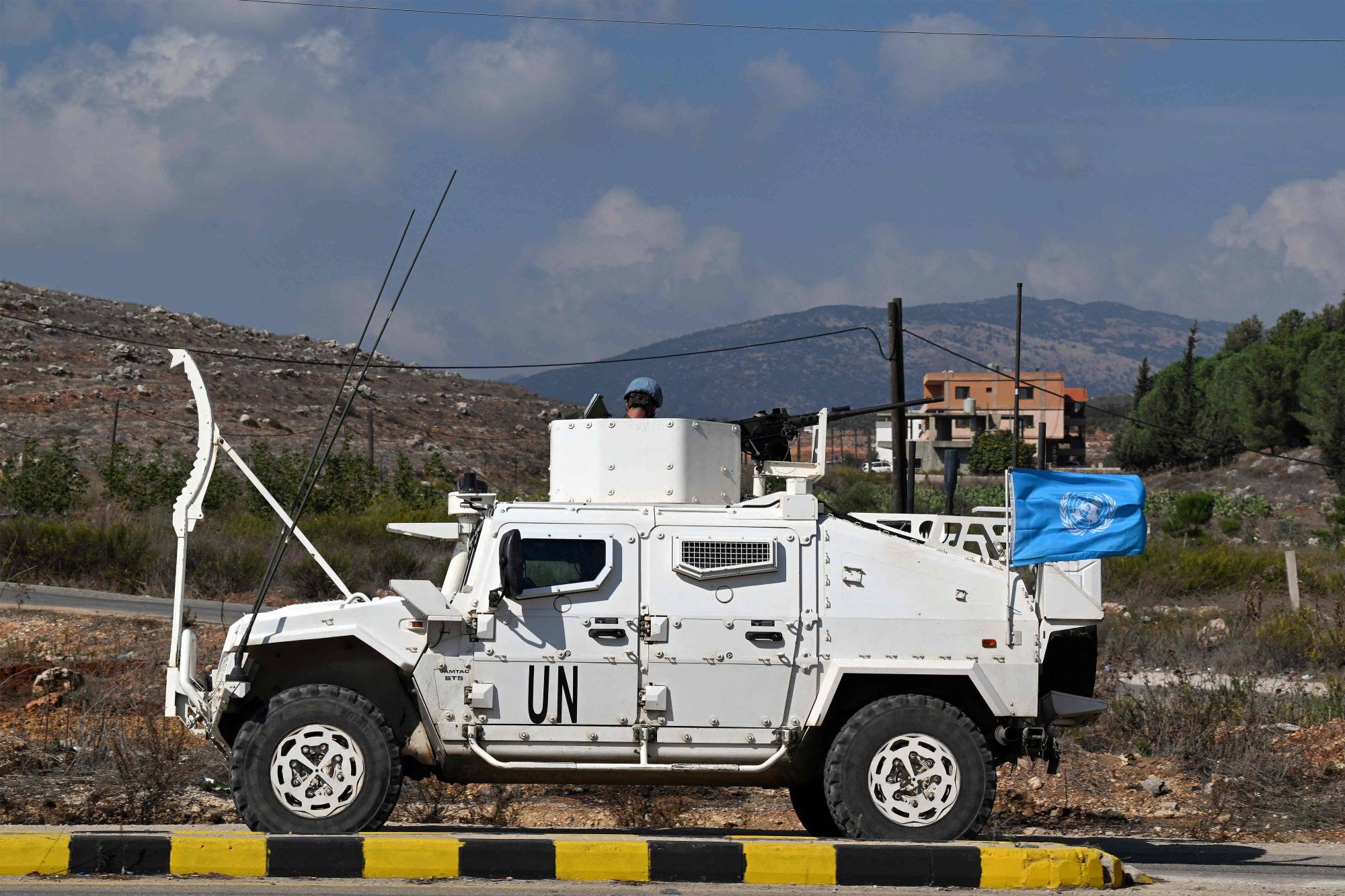
Israeli tank maneuvers as United Nations Interim Force in Lebanon (UNIFIL) convoy drive between destroyed houses in the south Lebanon village of Mais al-Jabal, as seen from the Israeli side of the border in the upper Galilee, 26 June 2026. (EPA)

Israeli concerns

Israel’s concern is that a US-Iran understanding could save Hezbollah from the consequences of the war. Israeli officials fear Washington’s priority may shift from dismantling the group and reducing Iranian influence to simply preserving a ceasefire and preventing conflict, while pressuring Israel to withdraw before durable security guarantees are in place.

Israel therefore is insisting on freedom to act against what it sees as rearmament or imminent threats and has not offered an unconditional commitment to return to the border. The buffer zone has become both a negotiating card and a security guarantee. Giving it up without disarmament would expose Prime Minister Benjamin Netanyahu to domestic criticism.

The Lebanese army, meanwhile, faces a test that goes beyond entering territory vacated by Israel. It must prove it can remain there, control it, prevent Hezbollah’s return, deal with weapons depots and tunnels, and avoid being dragged into civil strife.

It also needs manpower, equipment, funding and political cover, all of which remain uncertain, especially amid widespread destruction and the need to protect returning residents and secure the border.

The United States is studying training for Lebanese units and ways to verify their readiness and reliability. Reports have suggested a possible role for US Central Command, or CENTCOM, in supervision or monitoring, but no final announcement has clarified whether CENTCOM would directly vet personnel or limit itself to support and coordination.

Analysts say the deeper problem is that army deployment is not the same as disarmament.

The army may be able to control a specific area after an Israeli withdrawal if it receives enough support. But dismantling Hezbollah’s network across Lebanon requires a national political decision, a gradual mechanism, guarantees for the Shiite community and steps to prevent Iran from rebuilding funding and weapons channels.

If Washington burdens the army with more than it can carry, the model may turn from a test of state sovereignty into a test that exposes the limits of the state.