Beaufort Castle: Israel’s Geographic Gateway to South Lebanon

 Smoke rises near the Beaufort Castle, as seen from Marjeyoun, southern Lebanon, May 29, 2026. (Reuters)
Smoke rises near the Beaufort Castle, as seen from Marjeyoun, southern Lebanon, May 29, 2026. (Reuters)
TT

Beaufort Castle: Israel’s Geographic Gateway to South Lebanon

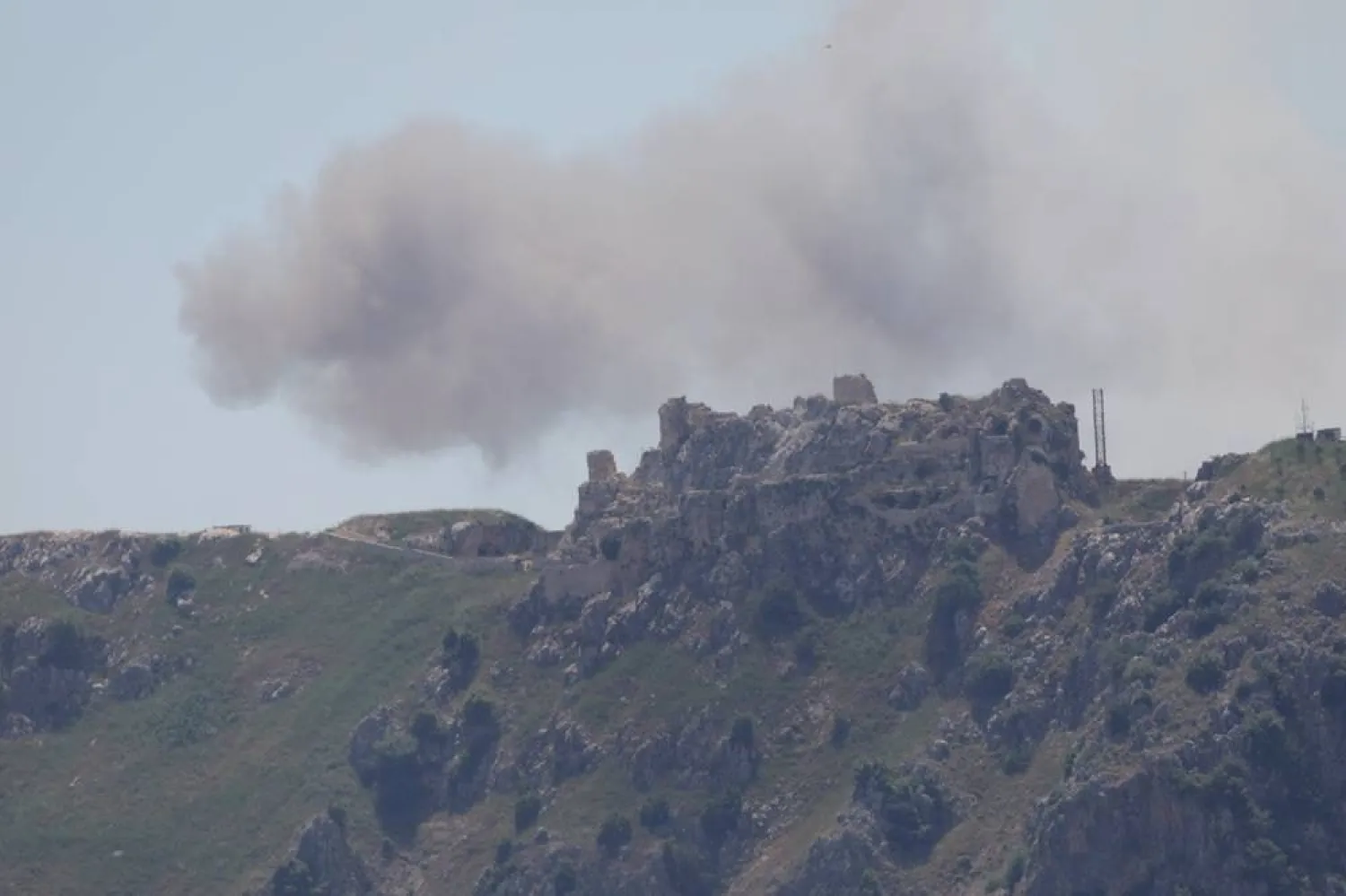
 Smoke rises near the Beaufort Castle, as seen from Marjeyoun, southern Lebanon, May 29, 2026. (Reuters)
Smoke rises near the Beaufort Castle, as seen from Marjeyoun, southern Lebanon, May 29, 2026. (Reuters)

Repeated Israeli strikes on the medieval Beaufort Castle and its surroundings east of Nabatieh have revived debate over one of southern Lebanon’s most sensitive sites due to its elevated position overlooking Palestinian territories, Syria and Lebanon.

For decades, the Crusader fortress was a commanding military position and a battlefield etched into Israeli and Lebanese memory. Now, as fighting escalates in the south, it is back at the center of events. Military assessments say its battlefield value remains, despite major changes in warfare over recent decades.

The renewed focus on Beaufort Castle comes as Israel intensifies strikes around the site and the heights overlooking Nabatieh. The attacks have raised fresh questions about the military value of a position that has remained present in major confrontations in southern Lebanon since Israel's 1982 invasion.

Heritage landmark

Beaufort Castle, known in Arabic as Qalaat al-Shaqif, is one of southern Lebanon’s most prominent historical and heritage landmarks, and among the most important Crusader castles in the Levant.

The Crusaders named it Beaufort, meaning “beautiful fortress.” It later fell to Salaheddine after a long siege. The Crusaders then retook it for a period, and the Knights Templar inhabited it, before the Mamluks, led by Sultan al-Zahir Baybars, seized it in 1268.
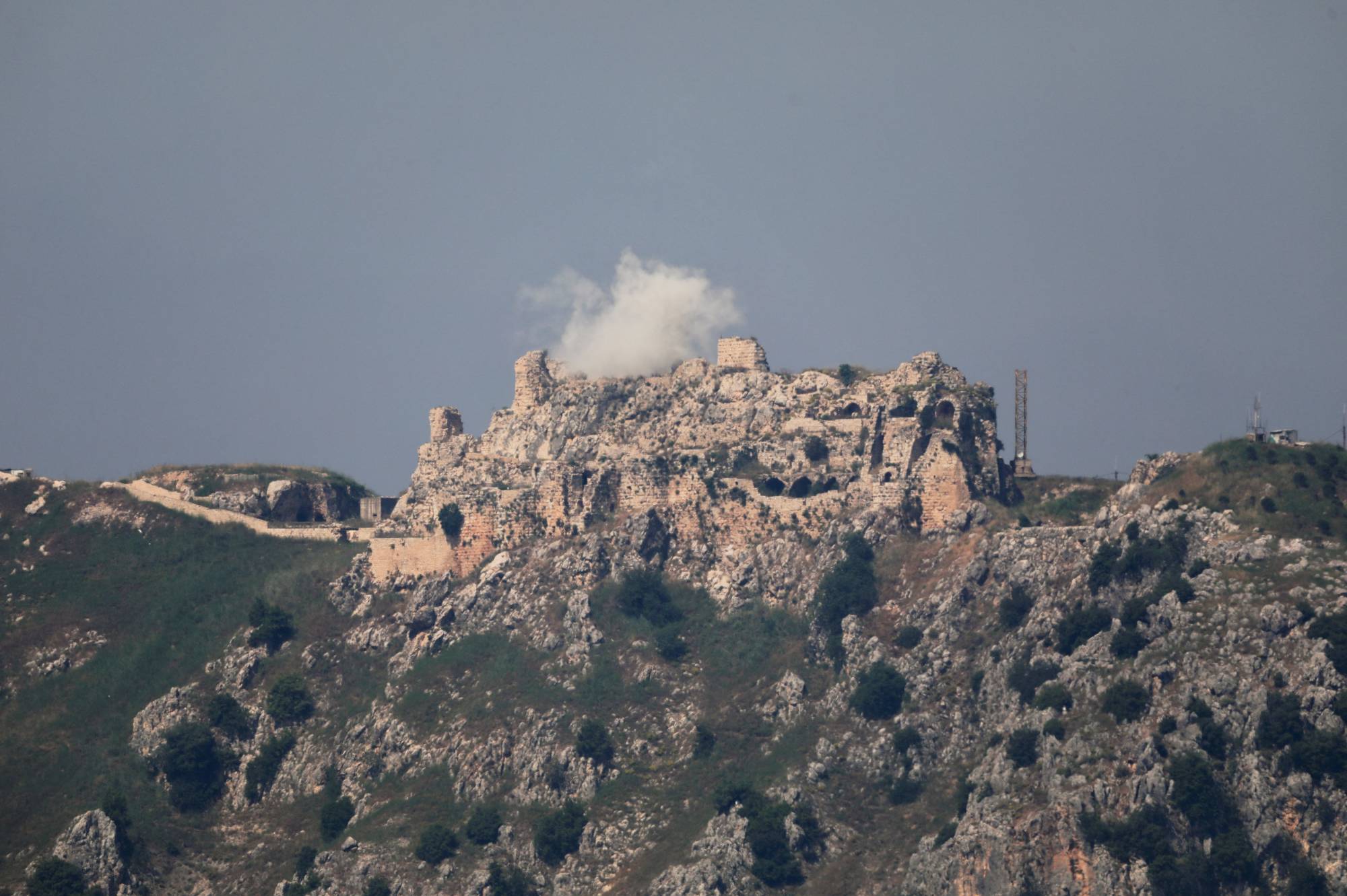
Smoke rises from Beaufort Castle following strikes, as seen from Marjeyoun, southern Lebanon, May 27, 2026. (Reuters)

Although the Romans first built initial fortifications at the strategic site, the Crusaders greatly expanded it and built most of its existing structures.

Since 2024, the castle has held “enhanced protection” status under the Second Protocol to the Hague Convention for the Protection of Cultural Property in the Event of Armed Conflict, Lebanon's Arnoun municipality said in a statement.

The municipality warned that repeated Israeli strikes could damage the castle and urged Lebanese authorities and relevant international organizations to act to protect the landmark and prevent further harm.

Battlefield advantage

Claiming the castle has long been seen as a battlefield advantage. In the 1970s, it came under heavy Israeli airstrikes after the Palestine Liberation Organization used it as a position to fire at Israel. In 1982, it was the scene of one of the fiercest battles between Israeli forces and Palestinian fighters and their Lebanese allies. Israel occupied it until 2000.

Retired Brigadier General Bassam Yassine said Beaufort Castle’s importance today is little different from the value that made it a focus of battles since the 1982 invasion. The site, he said, remains one of southern Lebanon’s most prominent commanding military positions.

“Beaufort Castle has been present in all wars and battles with Israel from 1982 until today because of its strategic location,” Yassine told Asharq Al-Awsat, saying it offers a commanding view over wide areas of southern Lebanon and northern occupied Palestine.

“Beaufort Castle overlooks the settlement of Metula, which is less than four kilometers away. It overlooks the area between the Litani and Zahrani rivers and is considered the highest hill in this sector,” he said.

The site gives whoever controls it a major military advantage, Yassine said.

“From Beaufort Castle, one can observe Taybeh, Deir Seryan and Qantara, where the Israeli army is present today. That is why it cannot leave it outside its control if it wants to remain in the area where it is deployed,” he said.

Yassine said this importance is not new. Before Israel withdrew from southern Lebanon in 2000, it controlled hills and heights around the area, including Beaufort Castle, to secure battlefield superiority and maintain observation over its surroundings.
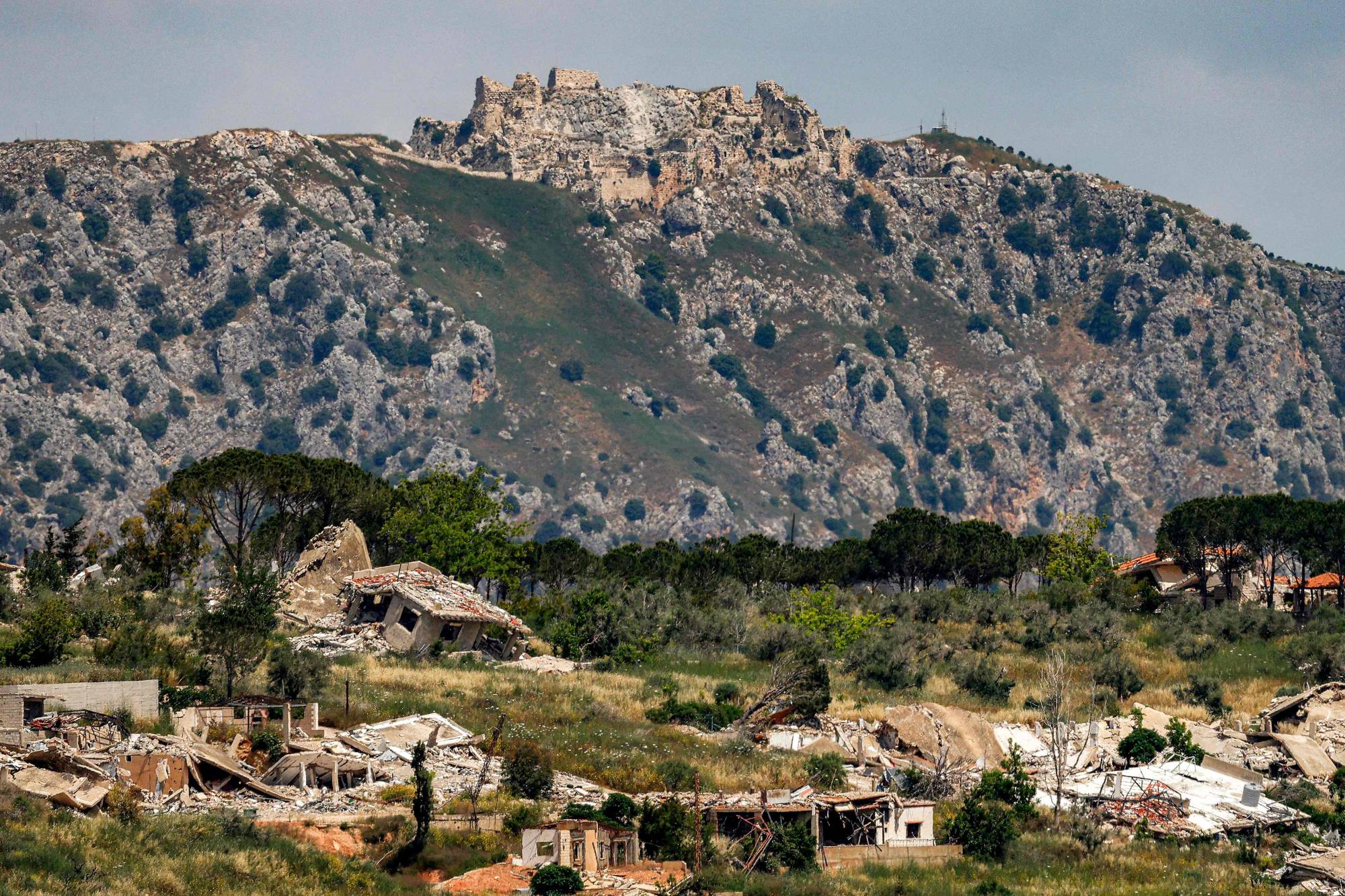
Destroyed buildings are pictured in the village of Kfar Kila in southern Lebanon as seen from across the border in the Upper Galilee region of northern Israel on May 29, 2026, with the Crusader-period Beaufort Castle pictured in Lebanon in the background. (AFP)

Asked which sectors the castle exposes, he said: “It directly overlooks Yohmor al-Shaqif, eastern Zawtar, western Zawtar, Kfar Tebnit and Nabatieh al-Fawqa. All these areas are exposed from the castle.”

“It also protects forces on the Yohmor and Zawtar axes, and provides cover for troops deployed in Taybeh, Deir Seryan and Qantara, and across this entire sector,” he added.

Yassine said the castle’s military value also lies in its defensive terrain.

“If any resistance force managed to infiltrate the castle and possess anti-armor missiles there, it would become very difficult to remove it from the site or destroy it because of the geography of the location,” he explained.

He said Israel had faced that problem before, during the period of Palestinian armed presence in the south.

“The Israelis tried many times to destroy the castle during the Palestinian period, but they did not succeed because of its geography,” he said.

Yassine said the site includes old historical passages and tunnels.

“The castle has tunnels that reach the Litani River below. They have existed since the Crusader era and are not newly built tunnels, which gives the site additional defensive value,” he said.

Control of the castle does not mean control of the area

Retired Brig. Gen. Dr. Bahaa Halal said Beaufort Castle is one of southern Lebanon’s most important military and geopolitical sites because of its strategic location.

“Israeli military doctrine views Beaufort Castle as a key point for achieving visual and intelligence superiority, which forms part of fire superiority, as it allows the monitoring of movements between south and north of the Litani, the tracking of routes toward the western Bekaa and Iqlim al-Tuffah, as well as monitoring the operational environment of attack drones and FPV aircraft,” Halal told Asharq Al-Awsat.

Any “resistance force that is able to deploy freely around Beaufort Castle gains a tactical advantage in missile maneuvering, managing ambushes and concealing combat infrastructure inside the mountainous terrain,” he added, making the area a constant Israeli security concern.

“Israel can theoretically reach the surroundings of Beaufort Castle through air cover, prior destruction and special forces. But there is a major difference between reaching the area and maintaining stable control,” he remarked.

Holding it, he said, would require secure supply lines, fire control over the castle’s surroundings, preventing flanking moves and ambushes, and ensuring permanent superiority in observation.

Such conditions are difficult to secure in an area geographically connected to Arnoun, Yohmor, Zawtar, Iqlim al-Tuffah and the valleys leading to the Litani, he stressed.

Gaza Teen Amputees Recount Hopes, Lost Dreams in Jordan Center

Mahmoud Abou Nusair, a 15-year-old Palestinian boy who lost his right leg during the war in Gaza, sits for an interview at a medical center where he receives treatment in Amman on October 13, 2026 as part of the "Jordanian medical corridor" initiative. (AFP)
TT

Gaza Teen Amputees Recount Hopes, Lost Dreams in Jordan Center

Mahmoud Abou Nusair, a 15-year-old Palestinian boy who lost his right leg during the war in Gaza, sits for an interview at a medical center where he receives treatment in Amman on October 13, 2026 as part of the "Jordanian medical corridor" initiative. (AFP)

At 15 years old, Mahmoud Abou Nusair recalls the love he had for football, before Israeli fire in Gaza took his leg and his dreams away.

He is one of more than 450 Palestinian amputees receiving care and prosthetic limbs at a center in Amman and in Gaza, part of an initiative run by Jordan's Restoring Hope Society.

- Mahmoud, 15 -

On October 31, 2025, during the ongoing Gaza ceasefire agreed that month, Mahmoud Abou Nusair was looking for firewood in Deir al-Balah, in the central Gaza Strip, when a bullet struck his right leg.

With Gaza's healthcare system decimated after three years of war, he had to undergo an amputation below the knee after his injury worsened.

"The doctor came to see me and told me, 'We have to amputate your foot'," he told AFP.

"My mother said, 'No, doctor, that's his soul. What will he do if he wants to go out, play football, skate or go to the beach? It's a sin to cut off his foot'."

"My first reaction was to scream," he said. "Then I took a look at the injured people around me in the hospital. They all had amputated arms and legs, so I told myself: my injury is better.

"Then I said, 'Amputate it, doctor'."

After his injury, he recalls having to wait half an hour until a horse-drawn cart picked him up and took him to Al-Aqsa hospital.

He was taken to Nasser hospital in Khan Younis in southern Gaza, where he spent two weeks.

He still mourns the loss of his sports equipment and his five balls, all of which he lost when his home was destroyed.

- Zuhdi, 17 -

At the facility in Amman, Zuhdi Abou Shanab, 17, says he lost his entire right leg in a strike that killed nine people and injured 28 others on September 8, 2025.

"I was on my way to buy groceries for my mother, and I ran into a friend, so we stopped to talk," he told AFP.

"When they struck the building, we were standing next to, I lost consciousness and when I woke up, I found myself wounded and bleeding.

"A week later, the doctors told me that I was suffering from an infection in the artery in my leg and that three veins and three arteries in my leg had been severed," he continued.

"I underwent an operation to reattach the arteries and veins, but it failed, so they decided to amputate my leg."

"The war has devastated us and torn us away from our friends... there is nothing left," he added.

But he still holds on to hope that his condition will improve, dreaming of "returning to Gaza".

"I miss my mother, my brothers and my sisters."

- Abdulrahman, 16 -

Abdulrahman Rihan lost the use of his legs when his family home in Jabalia, northern Gaza was bombed, the morning of January 12, 2025.

Both he and his father suffered severe wounds. They were taken to multiple hospitals in Gaza, where they "underwent difficult and painful surgeries", Abdulrahman recounted.

Three of his brothers were also wounded. Their father, Imad Rihan, 42, said he had to "undergo some surgeries without anesthetic in Gaza".

"This war was very hard on us," said the father, who lost his left leg.

"No matter how much we talk about the war, or how much you have seen of it, all of this remains but a drop in the ocean compared to the reality that we witnessed with our own eyes."


In Shadow of War, Israelis to Decide if Hard-Right Turn Is Permanent

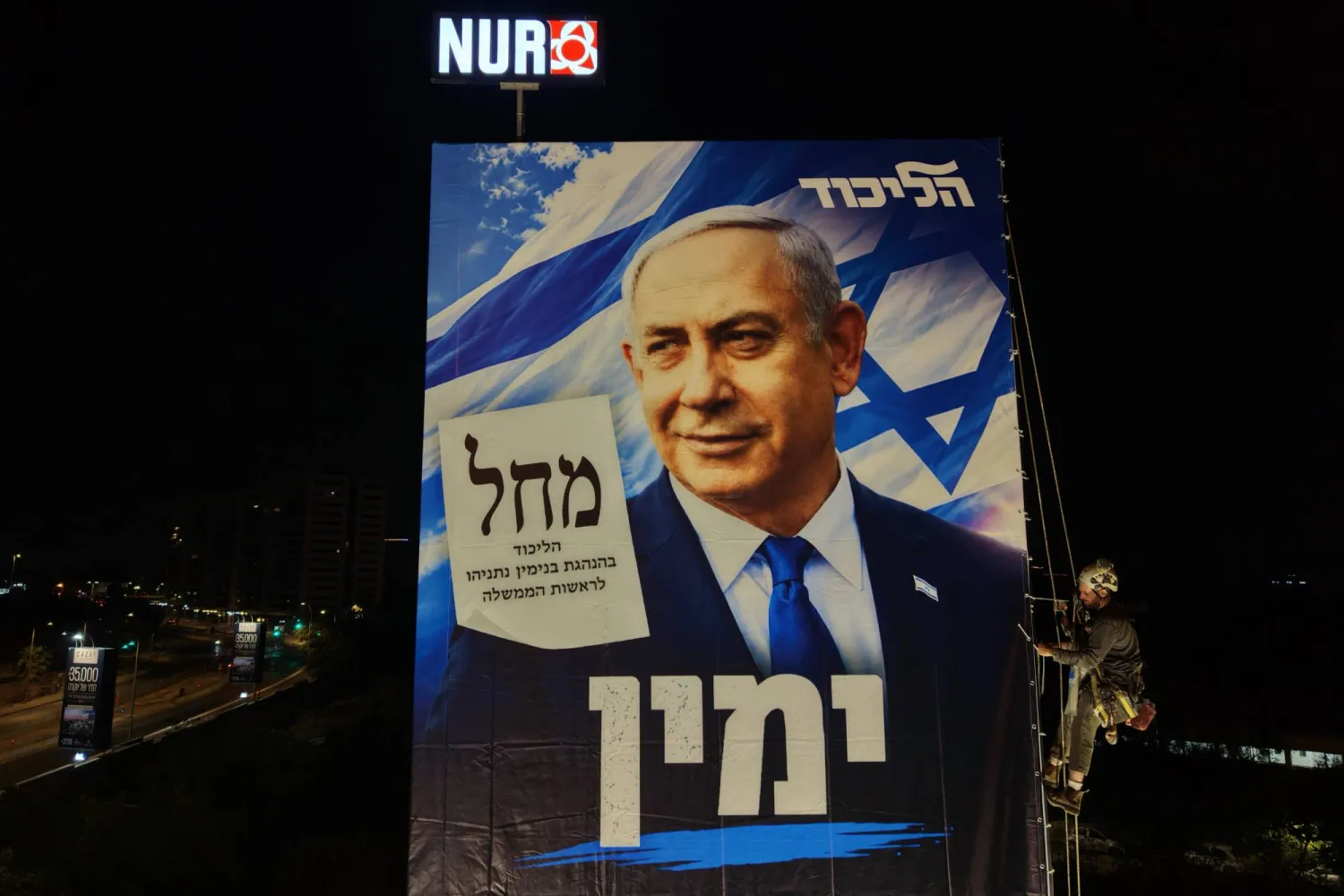
Rappelling workers install an election billboard featuring an image of Israeli Prime Minister Benjamin Netanyahu, and reading in Hebrew "It's either the Right or Palestine," in Ramat Gan near Tel Aviv, Israel, 18 October 2026. (EPA)
TT

In Shadow of War, Israelis to Decide if Hard-Right Turn Is Permanent

Rappelling workers install an election billboard featuring an image of Israeli Prime Minister Benjamin Netanyahu, and reading in Hebrew "It's either the Right or Palestine," in Ramat Gan near Tel Aviv, Israel, 18 October 2026. (EPA)

Three years after suffering their deadliest single attack, Israelis will deliver their verdict on veteran Prime Minister Benjamin Netanyahu in an October 27 election that could decide if the country moves definitively into hard-right nationalism.

The trauma of October 7, 2023 remains raw across Israel. Faded stickers bearing the smiles of young people killed by Hamas cover station walls and lampposts, and at bustling restaurants, no one bats an eye as patrons dine with their assault rifles, now liberally allowed.

Netanyahu, Israel's longest-serving prime minister who polls show is in a tight race, is seeking a new mandate after leading a multi-front regional war in response to October 7, with Israel reducing Gaza to rubble, occupying part of Lebanon and, with US help, bombarding Iran.

The relentless Gaza campaign has brought pariah status to Israel in many once-friendly Western countries, and Netanyahu himself faces an arrest warrant from the International Criminal Court.

Even if the public broadly has supported the war's aims, the effects at home have been much more divisive, including emboldening Netanyahu's far-right allies bent on reshaping Israel into a religious-nationalist Jewish state.

"I really think that these elections are about the future of the state in a literal sense," said Gideon Rahat, a political scientist at the Hebrew University of Jerusalem and the Israel Democracy Institute.

Netanyahu's government has ramped up settlements in the occupied West Bank where settlers armed with the blessing of far-right National Security Minister Itamar Ben-Gvir have been attacking Palestinians on their lands with only occasional pushback from authorities.

"The state without a monopoly on the use of force is a failed state," Rahat said.

Netanyahu, who turns 77 on October 21, has served as prime minister on and off for more than 19 years.

The wily political operator returned to power in December 2022 bringing in once-shunned ultra-nationalists and quickly tried to rein in the judiciary, which is examining corruption charges that could land him in jail.

The proposed reforms brought out some of the largest protests in Israel's history in the months before the Hamas attack.

"Everyone in the country has a strong opinion about Netanyahu. People either hate him or adore him," said Alon Yakter, a political scientist at Tel Aviv University.

"When you want to see who people vote for, the first question you have to ask is their emotional feelings about Netanyahu."

- Anti-Netanyahu in style, not stance -

Seeking to unseat Netanyahu is an informal bloc of parties united mostly around their distaste for him.

Netanyahu's most formidable rival, according to polls, is former military chief Gadi Eisenkot, who is in many ways his antithesis -- a political novice who wants to unite centrists rather than rally a base, and a phlegmatic speaker with halting English and none of the American-raised Netanyahu's flair for blistering, headline-grabbing speeches.

Eisenkot, as well as other opposition leaders, have zeroed in on why Netanyahu failed to prevent October 7.

Netanyahu has been rocked by reports he ignored warnings. He vehemently denies the charges, blaming security chiefs who he said failed to wake him up that morning.

Netanyahu "may have his perfect English, but even with perfect English he got us October 7", Eisenkot, in Hebrew, told a security conference at Reichman University.

Eisenkot's son died in the Gaza war -- offering an unspoken contrast to Netanyahu's son Yair, a globe-trotting social media provocateur.

The working-class son of Moroccan Jewish immigrants, Eisenkot would be the first prime minister of Middle Eastern ancestry, a watershed in a country politically dominated since its founding by an elite of European descent.

Opposition leaders have not criticized Netanyahu's decision to wage war, likely a losing stance in a country where a recent survey found that only 21 percent of the population identifies as anywhere left of center.

Eisenkot, as military chief during the 2006 Lebanon war, promoted the Israeli doctrine of using massive force even against civilian infrastructure when in areas used by militants, such as Hezbollah.

The opposition has instead heavily focused on social issues including Netanyahu's tight alliance with ultra-Orthodox Jews, a fast-growing segment of the population due to high birth rates that has promoted religious priorities, such as keeping public transit closed on Saturdays.

Netanyahu, while personally secular, has allowed religious students to remain exempt from military service, a source of particular resentment when stretched reservists have served multiple tours.

Opposition figure Naftali Bennett, prime minister in a short-lived 2021-22 government, has vowed to end all exemptions to military service and said that social divisions were putting Israel on a "slow-motion suicide mission".

- Hardline appeal -

While the opposition attacks Netanyahu over October 7, for some Israelis, the aftermath of the attack shows the government has brought stability.

While Israelis have died in Iranian and Hezbollah retaliatory attacks, fire has stopped from Gaza, even as Israel keeps striking the territory and Hamas remains.

Israel's economy has boomed since October 7, with construction sites dotting the major cities and the stock market soaring, led by the technology and defense sectors.

Neriah Yarchi, 19, a barber from Bat Yam near Tel Aviv, came of political age after October 7. He said he would vote for far-right Finance Minister Bezalel Smotrich, who wants the "voluntary" removal of Gaza's two million Palestinians.

"If Gaza had been ours, they wouldn't have had a place to infiltrate from and there wouldn't have been a massacre," Yarchi said.

Netanyahu has sought to seize on his international notoriety, with his Likud party putting up posters of leaders including New York Mayor Zohran Mamdani, an outspoken critic of Israeli policies, that read, "They want Netanyahu to lose. Don't let them win."

Netanyahu has also vowed loudly never to align with parties representing Arab Israelis, who make up around one-fifth of the population and who some expect to turn out in higher numbers after the intense anti-Arab stances of some of Netanyahu's ministers.

Arab lawmakers broke precedent to be kingmakers in the 2021-2022 government.

If the new election's results are as close as expected, it could take weeks or months to form a government. Eisenkot has said he would not ally with Arab parties or Netanyahu, but some critics do not believe he would refuse.

Uriel Reichman, a former lawmaker who founded the university bearing his name, told the conference addressed by Eisenkot that a Netanyahu triumph could permanently entrench Israel's right-wing turn.

He drew a parallel to countries where an elected populist packs the government with loyalists and transforms once-independent institutions.

"Experience shows that once such a system is put in place, it would be extremely difficult to dismantle it," he said.


‘It’s Family’: Lebanese Villagers Dread Looming UN Peacekeeper Pullout

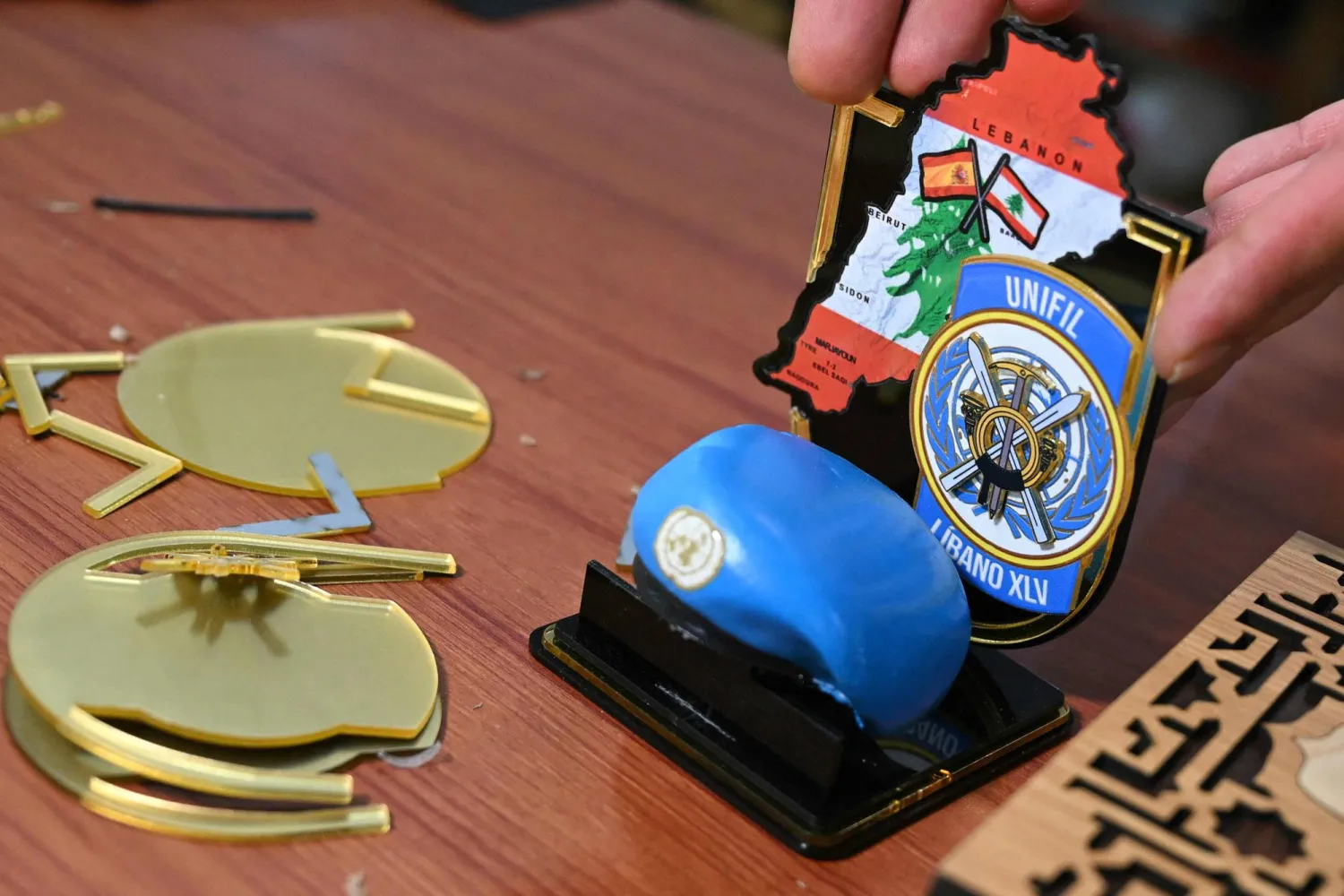
A worker arranges souvenirs made for personnel of the United Nations Interim Force in Lebanon (UNIFIL) at a factory showroom in Lebanon's southern border village of Ibl al-Saqi on October 13, 2026. (AFP)
TT

‘It’s Family’: Lebanese Villagers Dread Looming UN Peacekeeper Pullout

A worker arranges souvenirs made for personnel of the United Nations Interim Force in Lebanon (UNIFIL) at a factory showroom in Lebanon's southern border village of Ibl al-Saqi on October 13, 2026. (AFP)

From his shop in south Lebanon near the Israeli border, Mark Diab says life in his village will be turned upside down when a decades-long United Nations peacekeeping force pulls out next year.

"UNIFIL isn't just business, to us it's family," said Diab, 59, whose sister is among residents of Ibl al-Saqi who have married peacekeepers from the UN Interim Force in Lebanon over the years. She now lives in Spain.

"We're basically open because of the UN. We started when I was young," Diab said from his shop, just down the road from a UNIFIL base, selling clothes.

The force's withdrawal will hurt the local economy and "will impact our relationships... and we'll lose security and stability," he said, as the sound of an explosion rang out in the distance.

"I'm very sad they're leaving... We've spent a lifetime with them."

UNIFIL has served as a buffer since Israel first invaded Lebanon in 1978.

It has become part of the fabric of south Lebanese villages like Ibl al-Saqi after decades spent monitoring border hostilities and supporting local communities, including with humanitarian assistance.

But after pressure from Washington, the UN Security Council last year voted to end the force's mandate on December 31, 2026.

In a narrow garden in Ibl al-Saqi called Norway Square, tattered Norwegian and Lebanese flags flew near plaques paying tribute to peacekeepers from the Scandinavian country whose arrival decades ago forged ties that run deep.

A street sign points to a town in Norway about 5,200 kilometers (more than 3,200 miles) away.

Nearby, an Indian flag flew at Mahatma Gandhi Park close to a statue, posters and plaques set up by Indian peacekeepers.

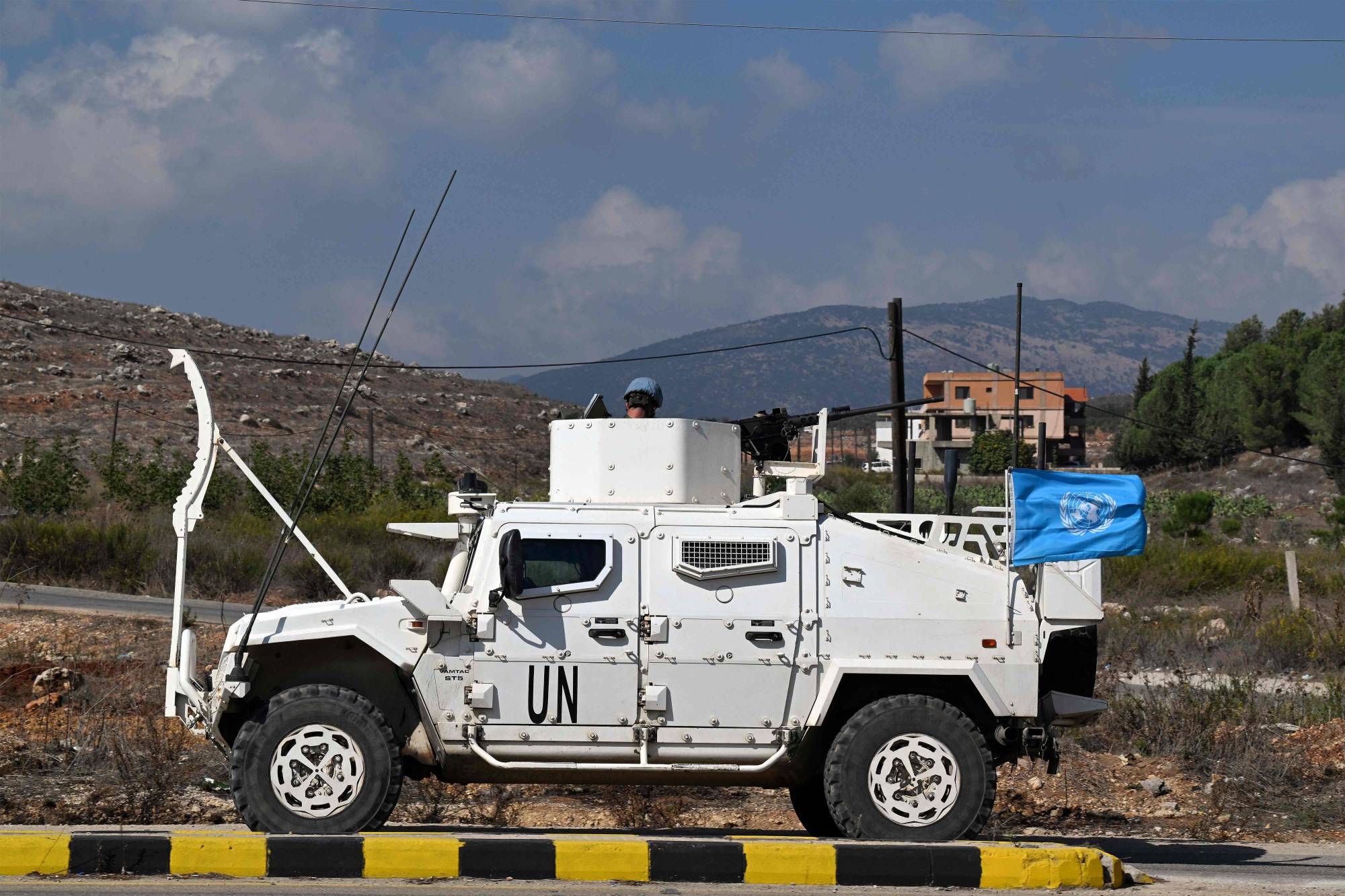
An armored vehicle of the United Nations Interim Force in Lebanon (UNIFIL) moves along a road in Lebanon's southern border village of Ibl al-Saqi on October 13, 2026. (AFP)

- 'Positive mark' -

Ibl al-Saqi is located just outside an Israeli-declared "security zone" which runs around 10 kilometers deep in Lebanese territory along the border. It was established after the latest war between Israel and the Iran-backed Hezbollah group erupted this year.

Israeli troops operate nearby, and locals advised AFP journalists to avoid southern parts of the otherwise quiet, peaceful village, nestled among hills covered in olive groves.

From his municipal office near framed UNIFIL pictures and paraphernalia, mayor George Rahhal said the peacekeepers had brought stability and reassurance to villagers over years of conflict and uncertainty.

"They've left a positive mark on everybody's hearts, firstly through security, then the economy, healthcare, supporting schools, the sick," said Rahhal, who like others in the village also has Norwegian citizenship and speaks the language.

"At some point the UN has to leave... but not in these circumstances."

Lebanon has called for UNIFIL's mandate to be extended, fearing a security vacuum at a time when hostilities prevent the Lebanese army, whose resources are limited, from deploying across the country's south.

Rahhal said many Ibl al-Saqi residents were UNIFIL employees or contractors.

Almost "the entire community will be impacted" economically by the withdrawal, directly or indirectly, he said.

"We can live after the international force (leaves), but how and where and who will be responsible for us?"

UNIFIL now counts about 7,500 personnel from nearly 50 countries.

Spokesperson Kandice Ardiel told AFP it also "has around 400 national staff" and works with numerous local companies providing contracted services.

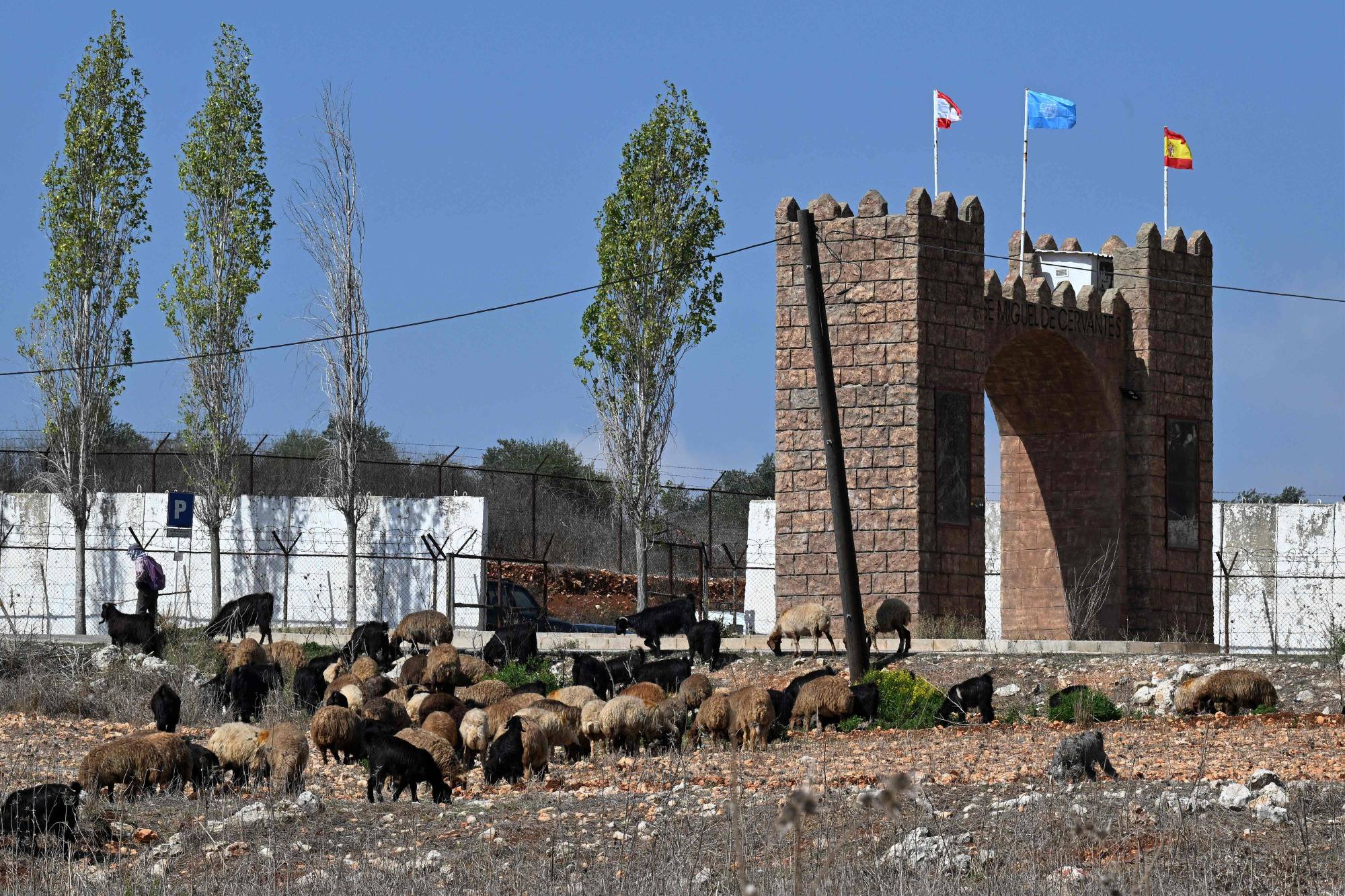
A shepherd tends to a flock near the base of the Spanish contingent of the United Nations Interim Force in Lebanon (UNIFIL), in Lebanon's southern border village of Ibl al-Saqi on October 13, 2026. (AFP)

- 'Stayed in our village' -

Peacekeepers are stationed in many Israeli-occupied areas now off-limits to most Lebanese after the most recent war. Many border villages have seen heavy destruction.

More than 4,300 people have been killed in Lebanon since March, including seven peacekeepers caught in the crossfire.

Israel still carries out strikes and demolitions despite a lull in hostilities since late June.

Andrea Tenenti, who served as UNIFIL spokesperson for almost 20 years, told AFP that the force's presence "was not simply about maintaining peace and security".

UNIFIL "has long been the second largest employer and economic contributor in southern Lebanon, after the Lebanese state", he said.

"Its economic footprint, however, extended far beyond its direct workforce," he added, with associated activities "supporting a much wider network of businesses and livelihoods".

Its withdrawal "risks creating a significant vacuum... at a particularly critical time".

At a workshop in Ibl al-Saqi, laborers supervised clattering embroidery machines sewing customized items including banners and tags for peacekeepers stationed nearby.

Shelves were packed with colorful souvenirs and keepsakes for UNIFIL personnel -- the business's main market after Lebanon's economy collapsed in 2019.

Co-owner Khaled Nahra, 48, said the workshop had been running for some 25 years and had around a dozen employees, but would be forced to close when UNIFIL leaves.

"We've stayed in our village... this was the best thing about working with the UN," he said.

"There are people who've been working here for 15... 20 years. They're like me. They don't know what to do."