
Sudan Sexual Violence: Systematic Abuse, Weapon of War

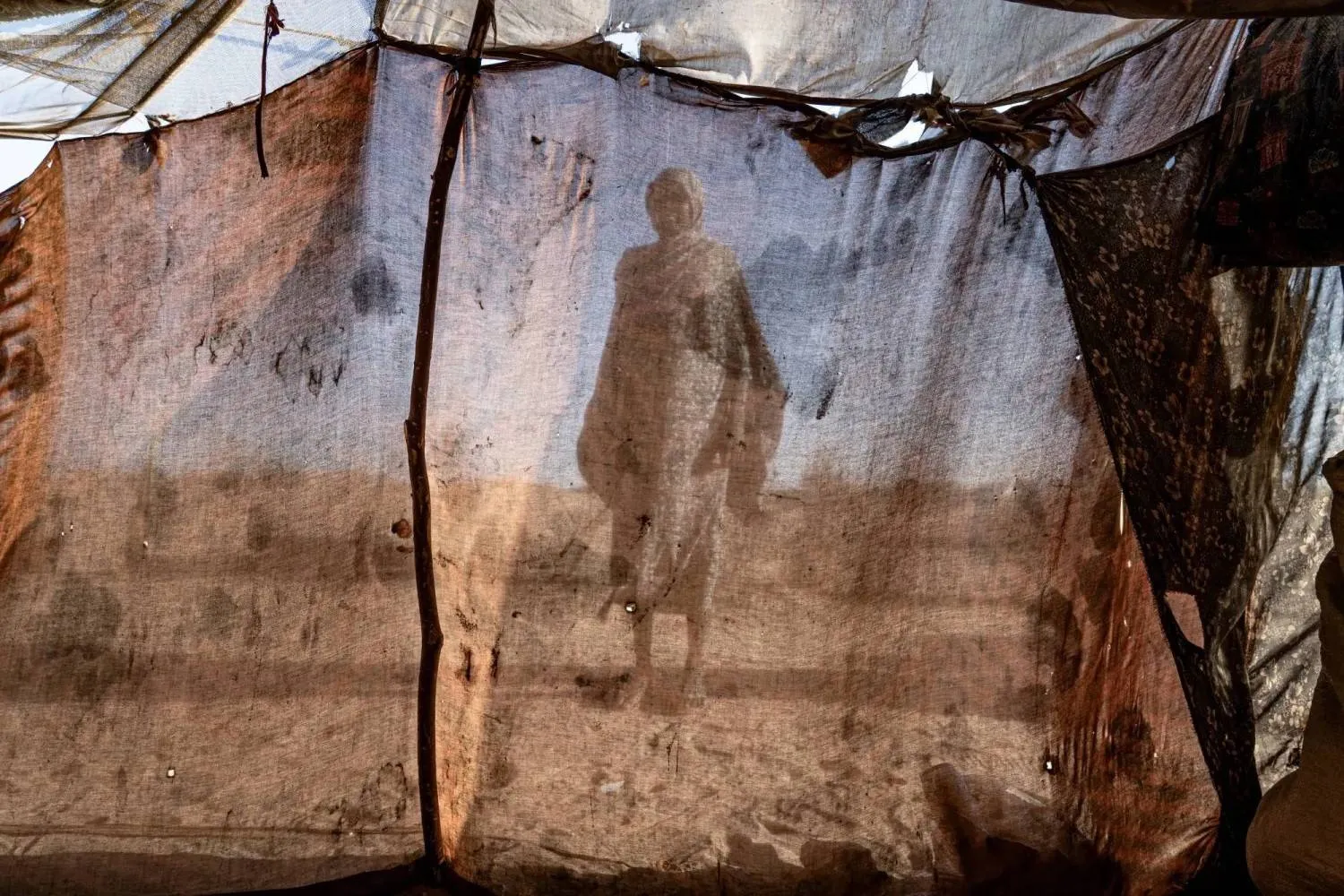
A Sudanese woman in a refugee camp. (Getty Images)
TT

Sudan Sexual Violence: Systematic Abuse, Weapon of War

A Sudanese woman in a refugee camp. (Getty Images)

As Sudan’s war enters its fourth year, the stories of women and girls who survived sexual violence remain hidden behind the walls of shattered homes and overcrowded displacement camps. But survival has not meant recovery.

Between trauma, stigma, and silence, survivors’ suffering has stretched far beyond the moment of assault, becoming a long ordeal of pain, isolation, and instability.

This investigation is based on interviews conducted by Asharq Al-Awsat with survivors of conflict-related sexual violence, alongside a review of UN reports and documents issued by international organizations, legal experts, and psychologists. The names of survivors and some identifying details have been withheld to protect their safety and privacy.

In a country where war has hollowed out health care and mental health support, the chances of recovery are limited and often nonexistent. Survivors are left to face layered wounds that reach from body to mind, from the individual to the family, and into the wider social fabric.

Sexual violence has therefore become more than an act committed in wartime. It has become a prolonged crisis in which crime meets silence, and violation meets the failure of justice, leaving survivors trapped between what happened to them and a society that has yet to fully acknowledge or contain it.

“My mother barely recognized me”

One testimony begins in El-Azhari, south of Khartoum, where the survivor had lived with her family since the war began. Like thousands of families, they were forced to move between several areas before settling temporarily in Dar al-Salam in Omdurman.

During that period, the woman helped support the family by selling goods brought from Sabrin Market. Her father also sold goods, giving the family a reasonable income.

Her life changed when she was stopped on her way back from the market with her brother during Ramadan 2024. On the way back, they boarded a vehicle heading toward their residential area. Some passengers began questioning them about where they lived and what their father did for work.

The young woman said the group later took them to Dar al-Salam for questioning. She tried to deny some information, but her brother had already given details about the family. She was then taken to the prosecution office in the Libya Market area, where she was questioned by a commander from the Rapid Support Forces, who ordered her detention.

She was held for two days. On the third day, she was transferred to the commander’s house, where she was raped for the first time. A few days later, she was moved to another site and forced to work, cleaning, ironing clothes and doing other tasks, while sexual assaults continued repeatedly.

“They used to come to us at night, and when we refused, we were beaten,” she said. “The marks of torture are still visible on my body today. They put out cigarette butts on our bodies, and my legs now carry permanent scars and disfigurement.”

She said the assaults were not isolated incidents. They were repeated almost daily for months. “Some victims were raped several times a day, sometimes by more than one person,” she said, adding that there was no point in complaining or seeking help when there was no authority to turn to.

According to the young woman, she was held for about four months, during which she did not know what had happened to her brother. She eventually came across a man known to her family.

At first, he did not recognize her because her appearance and physical condition had changed so dramatically. She managed to get his attention and asked him to contact her family. He helped her reach the last RSF security point, from where she was able to return to the Souq al-Hur area and then to her family.

Her family had believed they had lost her forever.

“Even my mother barely recognized me at first because of how thin I had become and the huge changes in my appearance and mental state,” she said.

After a few days of rest, her mother took her to the hospital for medical tests. She also found a way to tell the father what had happened, fearing the shock would overwhelm him.

The young woman ended her testimony by saying her story was not an exception. It resembled the stories of other girls who had been detained, she said. The experience had not only stripped her of freedom and security but also damaged her future. She had been engaged before she was abducted and has still not been able to meet her fiancé or speak to him about what she endured.

What stands out in this testimony is not only the scale of the violations, but the structure behind them: arbitrary arrest, movement between informal detention sites, lack of oversight, and then transfer to semi-official locations where systematic abuses took place inside a sealed space. That structure recurs in other accounts, reinforcing the impression of a pattern rather than an exception.

Nor does this account appear isolated. It overlaps with several testimonies gathered by Asharq Al-Awsat from different areas, revealing similar patterns of detention and abuse against women during Sudan’s war.

“A woman handed me over, and my pregnancy did not protect me”

A woman from Bant East in Omdurman recounted a harsh ordeal during the first months of the war, when she was living with her husband while their child was receiving treatment at the Military Medical Corps hospital.

She said living conditions were extremely difficult. The family suffered shortages of food and basic necessities, while the journey to the Libya Market in far western Omdurman was dangerous because of checkpoints and incidents of arrest, beating and humiliation targeting civilians on the move.

Her pregnancy did not protect her. She was accompanying her sick child to the hospital while two months pregnant. There, she met a woman who appeared to share the family’s circumstances. That woman informed on her and handed her over to the RSF, exploiting her knowledge that the victim’s husband was an officer in the Sudanese army.

“That woman handed me over to RSF members at the Al-Rashideen section and told them I was the wife of an officer,” the survivor said. “I was held there for about a full month.”

She said she told them from the beginning that she was married and pregnant, pleading with them not to torture or beat her. They told her they would take action after she gave birth.

After a period of detention, she was moved to another section known as “Section 18,” where she was held with about 15 wives of military personnel and 12 other civilian women, most of them from Bant.

She said pregnant women were sometimes spared direct beatings, while others were repeatedly abused. The mistreatment included sexual assaults and violations against young girls. Fear, she said, prevented the detainees from objecting or even asking what was happening.

She said the wives of military personnel were pressured and forced to marry RSF members without witnesses or legal procedures. Those in charge of their detention told them openly that since they had not been able to kill their husbands with weapons, they would hurt them this way.

The woman said she repeatedly tried to convince them that she was already married. Each attempt was rejected. In the end, she was forced to marry an RSF commander, who moved her to Dar al-Salam in western Omdurman.

During her time in Dar al-Salam, she was held in a room and denied food and water. She was also regularly drugged, leaving her unable to move or focus and making that period blurred in her memory. Even after she escaped her captors and returned to her family, she still lives with doubt and anxiety over whether she was sexually assaulted during her long detention. She said the drugs and injections she was forced to take left her unaware of much of what happened around her.

The justice gap and the struggle for support

Sexual violence is difficult to document for many reasons. Still, official statistics recorded since the start of the war in Sudan have reached about 2,200 cases, according to State Minister for Human Resources and Social Development Salima Ishaq. She said the figure does not reflect the true scale of the problem, especially in Darfur, where victims are difficult to reach.

Speaking to Asharq Al-Awsat, Ishaq said such cases are handled through partnerships with national and international organizations and UN agencies.

She said only three cases had reached the courts. All members of the Sudanese army were involved, after their immunity was lifted. Verdicts were issued in Al-Obeid and White Nile.

As for violations attributed to the RSF, Ishaq said legal prosecution is not currently possible. She called for violations to be documented to ensure that perpetrators do not escape punishment in the future.

A UN report said the Office of the High Commissioner for Human Rights documented more than 500 cases of sexual violence in 2025, including rape, gang rape, sexual torture and sexual slavery. Some of the violations led to death.

The latest report by Médecins Sans Frontières said the organization provided care to more than 3,396 survivors of sexual violence in North and South Darfur between January 2024 and November 2025.

The report cited officials working to combat gender-based violence as saying incidents had increased in several forms, including domestic violence, harassment, and sexual exploitation.

MSF has described these crimes as a “hallmark” of Sudan’s conflict. The World Health Organization has warned that available figures probably represent only the “tip of the iceberg.”

Ishaq said the Health Ministry provides medical and psychological support protocols as much as possible, while legal support is provided in coordination with the public prosecution. She said services and responses vary from state to state, especially as weak funding remains one of the main challenges, “although issues of violence against women are a matter of saving lives, not a secondary issue,” as she put it.

Ishaq also disclosed a plan to establish new protection and shelter centers by integrating services without exposing survivors to stigma or loss of privacy, in an attempt to avoid the failures of earlier efforts.

She said going to court remains a personal choice for survivors, amid social and security fears that obstruct reporting. She stressed the need to provide a safe environment that guarantees confidentiality and protection, especially in a conservative society such as Sudan.

“I will not give up my child”

At the heart of these fears is the story of a survivor from Bahri. She was arrested during the first months of the war and endured a brutal experience of detention, torture and mistreatment that ended in pregnancy and intense social pressure.

In her testimony, the survivor said her suffering did not end when she left detention. A new phase of psychological and social pressure began after she returned to her family. Her mother repeatedly demanded that she give up the child and hand the baby over to care homes. She refused, insisting on her right to keep her child and saying the child bore no blame for what had happened.

“How can I give up a piece of myself?” she said. “I will face my problem and defend my child with all the strength I have.”

The young woman said her decision to keep her child placed her in constant confrontation with her family, society and hurtful attitudes from some people close to her, at a time when she was trying to recover from the ordeal she had survived.

She said what weighs on her most is not only the memory of detention and violations, which keeps returning to her, but also the constant, desperate need to defend her child’s right to life and to stay beside her, while she herself continues trying to recover from a catastrophic war that has destroyed her life.

Sexual violence as a weapon of war

Asharq Al-Awsat asked Ahmed Togod Lisan, spokesman for the Sudan Founding Alliance, known as Tasis, about the rape of women in areas under RSF control and the alliance’s position on accusations that sexual violence has been used as a weapon of war.

The spokesman said he had “reviewed the question, but found no material evidence supporting these accusations and sees no reason to comment on them.”

According to an official definition on the website of the political alliance known as Tasis, the Sudan Founding Alliance is a coalition of Sudanese political factions, armed movements, professionals, trade unions and civil society organizations united by a firm common will to achieve lasting peace, establish democratic rule and build genuine and comprehensive unity across Sudan.

Legal expert Moez Hadra, however, said the four Geneva Conventions of 1949 clearly provide for the protection of civilians during armed conflicts and criminalize the use of sexual violence as a grave violation of international humanitarian law. He said these principles were also included in Sudan’s 1991 Criminal Act, which criminalizes sexual assaults and violations committed against civilians as war crimes and crimes against humanity.

Speaking to Asharq Al-Awsat, he said Sudan faces a real crisis in the path to justice, with no effective justice system capable of holding perpetrators accountable, alongside the collapse of judicial institutions and weak national justice tools. He also said the Human Rights Council had formed a fact-finding committee on violations, but the Sudanese government did not approve its entry, complicating prospects for investigation and accountability.

Hadra said current national and international mechanisms appear unable to fully perform their accountability role, while the domestic justice system is undergoing a broad collapse.

He said the jurisdiction of the International Criminal Court is currently limited to crimes committed in Darfur, calling for it to be expanded to cover all of Sudan so perpetrators of grave violations can be pursued wherever the crimes occurred.

The limited number of cases that have reached the courts, compared with the scale of reported violations, reflects the gap between documenting crimes and prosecuting perpetrators, amid the security, legal and institutional challenges imposed by the continuing war.

Shocking statistics

UN Women has estimated that 12.7 million people, most of them women and girls, will need support related to sexual and gender-based violence in 2026 alone. That is up from 3.1 million in 2023, an increase of more than 500,000 people since 2025. It is also nearly twice the number recorded in 2024 and four times the level before the conflict erupted in Sudan.

According to a study by the UN Population Fund in Sudan, 76% of women aged 25 to 49 feel unsafe, whether inside displacement sites or outside them.

In April, UN Women said sexual violence, which had risen steadily in 2025, had escalated sharply this year, amid rising incidents of harassment, exploitation and domestic violence.

The agency published an alert highlighting the disproportionate impact of three years of war on women and girls. It was based on survey data from 85 women-led and women’s rights organizations, along with two focus groups and reports from UN and other international agencies.

The agency said in its report that “two-thirds of women working on the front lines reported a noticeable increase in sexual violence during 2025, while half of participants said it had escalated during 2026.”

No sense of safety

“Women and girls across Sudan recount stories of constant danger. Gender-based violence has become part of their daily lives, whether along roads as they try to flee the ongoing conflict or when they arrive in displacement camps.”

That was the assessment of Fabrizia Falcioni, UNFPA’s representative in Sudan, during a briefing to reporters in New York on April 17, 2026, by video link from Khartoum. She highlighted the deteriorating conditions facing women and girls in the country, saying women “feel unsafe wherever they are.”

The assessment is based on a UNFPA study involving about 1,000 women and girls in 16 of Sudan’s 18 states. The findings showed that 76% of women aged 25 to 49 feel unsafe, whether inside or outside displacement sites, including in markets, at water points, in firewood collection areas and on roads, especially at night.

The UN official said insecurity also reaches into daily life, noting that the “sense of insecurity” is compounded by power cuts and cities going dark at night. She said reporting of gender-based violence remains limited because of stigma, fear of retaliation, financial constraints and the distance to service centers.

Deep psychological wounds

Psychologist Khadija Mohammed al-Obeid said survivors of sexual violence in armed conflicts and wars face strong and complex psychological effects. Trauma does not end with the assault itself. It is worsened by displacement, war, and the loss of safety.

Speaking to Asharq Al-Awsat, she said one of the most serious psychological effects survivors may suffer is post-traumatic stress disorder, marked by repeated flashbacks of the painful event, nightmares and disturbing dreams, as well as avoidance of people, places or situations that recall the incident.

Survivors may also suffer constant hypervigilance, fear and anxiety, directly affecting their daily lives and social relationships.

Al-Obeid stressed the importance of providing psychosocial support to survivors of sexual violence through safe spaces that preserve privacy and human dignity.

She said survivors must be connected to support networks and specialized services to ensure they receive appropriate care and treatment, helping them recover and resume normal life.

The void in mental health support

Conflict-related sexual violations are not passing incidents. They are lasting wounds that reshape survivors’ lives amid continuing struggles for support, protection and justice.

The testimonies reveal not only the scale of the violations, but the depth of the void they leave behind: a void in mental health support, legal protection and social response, which in many cases still leans toward silence rather than confrontation. While the actors in the war multiply, women remain at its most vulnerable center, and among those least able to reach justice.

Continued impunity does not threaten survivors alone. It entrenches the cycle of violence and turns the crime into a pattern that can be repeated. Confronting these violations is therefore not only about the past. It is also about the future: the future of justice, the credibility of institutions, and society’s ability to recover from the effects of war.

As the war continues to reshape the lives of millions of Sudanese, the suffering of survivors of sexual violence remains one of its harshest consequences, and one of the least visible to the public.
Syria’s New Army: Renaming Units or Institutional Restructuring?

A military parade during a graduation ceremony for personnel of the Syrian army’s 56th Division on June 1, 2025. (Defense Ministry)
TT

Syria’s New Army: Renaming Units or Institutional Restructuring?

A military parade during a graduation ceremony for personnel of the Syrian army’s 56th Division on June 1, 2025. (Defense Ministry)

Syria's drive to build a national army has entered its most difficult phase: dismantling the armed factions that were formally absorbed into the Defense Ministry after the fall of Bashar al-Assad but retained their commanders, local loyalties, and financial networks.

The first stage of the process grouped more than 100 former factions into about 22 army divisions, according to Syrian reporting. That created a formal chain of command without fully eliminating the organizations that had fought the war. In practice, some units remained closely tied to their former leaders, strongholds, and economic interests.

Damascus is now reassigning commanders and fighters, changing deployments, and placing divisions under a proposed five-corps structure divided by region. The objective is to prevent former factions from operating as power blocs inside the army and to make military decisions answerable to the state.

That arrangement, however, did not end factionalism. It was the first stage of a difficult integration process.

The factions adopted new labels, including divisions and brigades, within the ministry's new structure, but did not fully shed their old organizations or the networks of influence and loyalty they had built during the war.

In many cases, they remained tied to their former strongholds, loyal to their commanders and connected to economic, administrative, and social networks.

The process, therefore, resembled the grouping of factions under one umbrella more than the creation of a unified institutional army.

Dismantling factional blocs

Damascus later moved into a clearer second phase of rebuilding the military: reorganizing units, combining them into new formations, and dismantling factional blocs from within.

This more sensitive phase seeks to break up the power blocs inherited by the new army. Personnel have been reassigned across formations to limit groups’ ability to retain their old structures or to recreate separate centers of influence within the military.

Sources who spoke to Asharq Al-Awsat said this was among the most difficult stages of restructuring the army.

The challenge was no longer simply to bring factions into an entity called the army, but to "clip the factions' wings inside that army." Some factions that became Defense Ministry divisions after Assad's fall retained their organizational cohesion and regional character.

Loyalty to commanders also endured to varying degrees, alongside financial, administrative, and social networks built over more than a decade.

An unfinished transition

The process has not reached its final goal. Some army divisions still retain elements of their previous structures, while plans continue to redistribute them, appoint new commanders, and change their deployment areas and missions.

The Syrian army is therefore caught between two models: the limited administrative absorption of factions that followed Assad's fall, and an institutional army in which factional and regional loyalties disappear and the chain of command and military decisions are tied to the Syrian state.

An informed source told Asharq Al-Awsat that "the Syrian state is completing the compulsory integration of all factions and weakening the sources of power they enjoyed in recent years."

The source said the step was essential because Damascus could not establish a unified army or a stable state without it.

The source, who asked not to be named, said the recent dismantling of military blocs included Jaysh al-Islam, which was folded into the 70th Division, as well as the Sultan Suleiman Shah group, commonly known as al-Amshat, the Hamza Division and Ahrar al-Sharqiya.

Similar moves had already affected Ahrar al-Sham and the Levant Front, the source said. Those cohesive factions held economic and regional interests, but President Ahmed al-Sharaa's administration had gradually and quietly dismantled them, reducing their weight within the army.

Factions inside the state

The central task now is to restructure the security and military institutions after the factions joined them, and then dismantle factional structures within the Syrian state.

Some factions remain in the army, but most formations that belonged to the former Syrian National Army have been dismantled, the source said. The Syrian Free Army, a former key US ally based at al-Tanf near the Jordanian border, is also being dismantled, according to the source.

The source said al-Sharaa's administration was fully coordinating with Türkiye and the United States to break up factions within the new army.

Figures such as Abu Amsha, Hatem Abu Shaqra, and Saif Bakour Bolad were Turkish allies, and officials had once expected that sidelining them might prompt Ankara to object. The opposite occurred, the source said, with Türkiye now supporting the dismantling of groups it had previously backed.

HTS in the new structure

Despite efforts to integrate the factions and build a cohesive military, the source said the final structure of the army and security services was intended to keep officers and commanders from Hayat Tahrir al-Sham, as well as prominent former Nusra Front commanders, in key command and decision-making posts.

The source said defected officers and leaders of dissolved factions who were appointed to new positions would ultimately report to an HTS figure.

The source described the approach as logical during a sensitive period in which the state faced major internal and external challenges. Political action required a solid core and internal cohesion, the source said, arguing that institutions would remain vulnerable to infiltration and internal rivalry unless the authorities could rely on pivotal military and security decisions.

The commanders' account

Colonel Abdul Muti al-Halabi, a commander in the new Syrian army who was formerly among the Nusra Front's senior ranks, told Asharq Al-Awsat that dismantling the factions was "not aimed at anyone" but was "an existential necessity for building a real military institution."

Keeping factions together as cohesive blocs inside the army would preserve multiple loyalties within the institution, threatening military and security decisions and leaving the state fragile, he said.

"We cannot build a national army if every group continues to regard itself as an independent entity with its own economy and loyalties," Halabi said, adding that the state was reassigning commanders and personnel.

Halabi disputed reports that corps commanders were being selected exclusively from HTS. He said HTS was the first group to dissolve itself and merge into the state, and that it had more organizational, security and administrative experience than other factions. It had governed Idlib, managed complex security operations and developed the ability to control territory and institutions, he said.

"If we kept the previous arrangement, regional sensitivities and old loyalties would return," Halabi said. "At this stage, we want a unified, solid leadership that is not subject to rival pressures, with everyone taking part without discrimination."

Five corps and expected changes

Rashid Hourani, a military affairs specialist at the Jusoor Center for Studies, told Asharq Al-Awsat that the new structure would probably retain a five-corps model, although commanders, troop composition, deployment areas and operational duties could change.

The previous phase had shown the need to make the formations more mobile in responding to internal and external threats, he said. The next structure could therefore change commanders and adapt each corps' methods to its assigned mission.

Hourani said the reorganization was part of a broader effort to rebuild the Syrian army and develop its working methods for the state's next phase.

Syrian news outlets reported that the proposed arrangements would place the eastern corps under Brigadier General Ahmed Mohammed al-Jassem, known as Abu Mohammed Shoura, whose name had previously been associated with command of the 66th Division.

Other reports said Brigadier General Awad al-Jassem, known as Abu Qutaiba al-Shami and previously linked to the 60th Division, would command the northern region as its four divisions were reorganized.

Some sources named Brig. Gen. Haitham al-Ali, known as Abu Muslim Afes, as the prospective commander of the central corps. Other reports said the Damascus corps would be led by Brigadier General Omar Mohammed Jaftashi, known as Mukhtar al-Turki, who currently commands the Damascus Division.

Local platforms reported that Brig. Gen. Munir al-Sheikh, known as Abu Osama, would oversee the western region and the coast through a corps comprising four recently reorganized divisions.

The problem of more radical factions

Halabi said the state was dealing carefully with more radical factions and would distribute their personnel among the corps to prevent them from forming blocs inside the army.

"These factions have important combat experience, but they must operate within an institution, not with the mentality of a group or organization," he said. "They will therefore be distributed carefully among the corps so that they are absorbed into the new military structure."

The main challenge was to move from a factional mentality to a state mentality, Halabi said.

Hourani said foreign fighters, including Turkistanis and others, had joined the army, particularly the 84th Division, and were in principle subject to the same military rules and laws as other units.

"Foreign Islamist groups joined the army, particularly the 84th Division, and the rules that apply to all military units now apply to them," he said. "Any violations are handled under the military law in force."

Asked whether international demands could lead to further moves against radical factions inside military formations, Hourani said the issue would remain part of the army-building process and its effort to draw lessons from earlier phases. He said two main considerations governed the matter, but the source text did not specify them.

How the factions view restructuring

Hourani said factions that joined the Defense Ministry understood the difference between formations created during the campaign to overthrow Assad and the requirements of an army operating through state institutions.

The factions had largely accepted integration even though Western reports warned about the method and its effects, he said. Their shared objective had eased the task and allowed the army formation to proceed smoothly.

Hourani said the continued presence of some commanders associated with particular factions reflected the experience accumulated by HTS's military wing before Assad's fall.

HTS's military wing had developed substantially in training, organization and methods of warfare, and the leadership now wanted to use that experience, he said.

Syrian Turkish coordination and a US role

Hourani said Syrian-Turkish military coordination was public and included organization and training, as reflected in repeated visits by senior military officials from both countries.

He said Washington had accepted that cooperation. He also referred to US congressional scrutiny of the Syrian government's counterterrorism performance as part of the consideration of future security cooperation.

Türkiye's aims

Hourani said Türkiye's role in building the Syrian army served objectives tied to Turkish national security as well as Ankara's political and military position in Syria and the region.

He said the aims included building a unified Syrian army that would prevent separatist entities from threatening Türkiye, citing the former presence of the Kurdish-led Syrian Democratic Forces in eastern Syria.

He also cited Türkiye's desire to strengthen its political and military influence, draw on its experience training armed forces in African states and support a Syrian administration it had backed during the uprising.

Building an army rather than merely merging factions

Syria's military restructuring shows that Damascus faces a challenge that goes beyond merely placing former armed factions under the Defense Ministry. It must also end their ability to operate as independent blocs within the armed forces.

The first phase brought factions under the state umbrella. The current phase focuses on dismantling their internal structures, reassigning personnel and commanders, and adjusting deployments and missions to prevent regional and factional loyalties from re-emerging.

Military officials say the goal is a unified army for all Syrians. Questions remain, however, about the authority that figures drawn from HTS will retain, the doctrine of the new military and the limits of Turkish and international influence over its development.

The restructuring is ultimately a test of whether Syria's new state can move from an alliance of victorious factions to a military institution subordinate to the state. The process remains unfinished, and its outcome will help shape Syria's government and security.


US Air Force Pilot Recounts Survival After Jet Shot Down Over Iran Mountains

A US Air Force F-15E Strike Eagle aircraft. (US Air Force/Reuters)
TT

US Air Force Pilot Recounts Survival After Jet Shot Down Over Iran Mountains

A US Air Force F-15E Strike Eagle aircraft. (US Air Force/Reuters)

A US Air Force colonel recounted on Monday his story of survival after his F-15E fighter jet was shot down over Iran in April, in the early months of the US-Israeli conflict with Iran.

The aviator, who broke his back, an arm and a shoulder after hitting the ground at such high speed, hid and survived 50 hours behind enemy lines before his rescue.

He spoke on CBS News about the incident and was referred to as Bravo, his mission call sign, due to security threats.

Bravo was the backseater, the weapons-systems officer on a two-man crew with the mission call sign Dude 44. The pilot was Alpha.

CBS News asked Admiral Brad Cooper, US Central Command (CENTCOM) chief, what brought the fighter jet to a mountainous area south of the city of Isfahan, close to where Iran had been keeping much of its highly enriched nuclear material.

“Their mission that evening was to conduct a strike on industrial facilities related to both the drone and the missile program, not related to the Isfahan nuclear facility,” Cooper said.

The plane's mission call sign was DUDE 44. It was an F-15E, a type of two-seat fighter that's been a workhorse of US air combat operations for decades. The $30 million jet was brought down by a shoulder-fired missile that can cost around $100,000.

Moments of terror

In his first public account of what happened, Bravo said when the missile hit, it was as “getting hit by a freight train.”

He and Alpha did everything they could to try to save the fighter jet. It quickly became clear the plane couldn't be saved, so the pair ejected.

The US aviator free-fell to the ground at an estimated 110-160 kilometers per hour; the Iranian shoulder-fired missile had damaged his parachute.

“At one point when I looked up and saw no parachute, that was the most terrifying thing I've ever seen,” Bravo said in his first public account of what happened. “So I paused, right then, and I prayed, ‘Lord, your will be done. But if I'm getting through this, I need help.’”

Help took two days to come. Bravo hid and survived two days behind enemy lines before his rescue. He calls it a “modern-day miracle.”

Learning of the downed crew in the US

Back in the United States, Defense Secretary Pete Hegseth was woken in the middle of the night with the news. He said he immediately jumped to the next steps: asking if the crew was OK, and whether Iran knew what had happened.

“Whether they're alive or not, we're going to go get them,” he said.

Evidence of the wreckage was shared by Iranian media, and videos emerged online of armed groups hunting for the downed crew. According to US military sources, Iranians got to within a few hundred meters of Bravo.

Six hours in, the US was able to rescue Alpha in a risky daytime raid. American helicopters in the rescue force took fire.

“It was a gun fight all the way in and all the way out,” Hegseth said. “But they got Alpha back.”

The job was only half done. Alpha's rescue force was unable to find Bravo and withdrew.

But as night fell on that first day in Iran, Bravo was able to send a message back home.

A rescue force was almost sent in not long after, but Hegseth said “it just didn't line up.”

“That was a really tough decision,” he said. “I'll never forget, you know, being in the situation room and saying, ‘OK, I guess we're gonna roll 24,’ which means, ‘Hey, Bravo's going to be out there for basically 24 hours more.’”

CIA played pivotal role in rescue

The CIA played a pivotal role in Bravo's rescue. The agency launched a multi-pronged deception campaign to confuse Iranian forces looking for Bravo. It also used top-secret technology to pinpoint Bravo's location.

To clear the way for Bravo's rescue, newly declassified video shows American bombers and drones hit Iran's Revolutionary Guard forces nearby where he was hiding. Then it was time to go back in for Bravo.

There were over 90 US service members on the ground — the first US boots on the ground in Iran in 46 years, Cooper said. Several hundred people were in the air, and several thousand served as support in the rescue mission.

Bravo said it was “one of the greatest moments of my life” when he saw his rescuers.

But Bravo and the others on the ground were not yet out of danger. The rescue planes' landing gear was stuck in the desert sand of the makeshift airstrip. The planes could not take off, and more than 90 of what Cooper described as the military's “most elite service members” were stuck until a clandestine Air Force unit came to the rescue.

The US destroyed the two marooned aircraft, worth about $100 million each, as well as the Little Bird helicopters, so the technology wouldn't fall into Iranian hands.

Fifty hours after being shot down, Bravo was safe. Not long after leaving Iran, Bravo called his wife back home in the US.

“I was really proud of her and grateful for the strength that she showed,” Bravo said.

The officer says he wants the American people to know that the rescue is about more than what he went through.

Alpha, who ejected safely and was rescued before Bravo, is already back flying for the Air Force.

“I am still in awe of the professionalism and tactical prowess of the Combat Search and Rescue specialists and the Joint Force who executed the rescue missions of me and DUDE 44 Bravo, both those in theater and behind the scenes,” Alpha said in a statement. “Words cannot capture how thankful my family and I are and how proud I am to serve alongside each and every one of them.”


Where Does Israel’s Destruction of Underground Hezbollah Base Leave the Group?

Destroyed stones on the top of Ali al-Taher ridge, which Israeli forces captured after fighting with Hezbollah and where the Israeli military said it blew up a network of Hezbollah tunnels Thursday night near Nabatieh, southern Lebanon, Friday, Sept. 11, 2026. (AP)
TT

Where Does Israel’s Destruction of Underground Hezbollah Base Leave the Group?

Destroyed stones on the top of Ali al-Taher ridge, which Israeli forces captured after fighting with Hezbollah and where the Israeli military said it blew up a network of Hezbollah tunnels Thursday night near Nabatieh, southern Lebanon, Friday, Sept. 11, 2026. (AP)

Israel's demolition on Thursday of a tunnel network used by Hezbollah as a command center in southern Lebanon, near the border, represents a significant setback for the Iran-backed group.

Experts said that while Hezbollah is far from defeated, the group was now exposed after two fierce wars with Israel in which it suffered major blows including the loss of much of its top leadership and Israel's occupation of parts of southern Lebanon.

- How big of a blow is it? -

A week after capturing the site, the Israeli military on Thursday demolished the tunnels in the Ali al-Taher ridge with huge explosions. The United States Geological Survey reported a 4.1 magnitude tremor in the area.

Hezbollah never acknowledged losing the strategic highland, which lies around 10 kilometers (six miles) from the border with Israel and overlooks the major city of Nabatieh.

The Israeli military previously said that the network comprised tunnels containing dozens of Iranian-made rockets, missiles and drones, as well as other weapons.

Experts say the tunnels, built over two decades, connected a network of villages in the area, and that the Israeli military now had easy access to Nabatieh, where Hezbollah holds sway.

"This is a major loss, they cannot make another (headquarters) like it for decades to come," Khalil Gemayel, a retired Lebanese general told AFP.

"Hezbollah is now exposed in the area around the ridge," he added.

Reacting to the tunnels' destruction on Friday, Israeli Defense Minister Israel Katz said: "Now there is a strong security zone, stronger than ever before, which protects the communities from attack and direct fire, and enables us to maintain control and threaten Hezbollah deep inside the area".

- Is Hezbollah militarily defeated? -

While a significant moment, Gemayel believed that "losing Ali al-Taher does not mean Hezbollah is broken".

Israel occupies a swathe of southern Lebanon, where Hezbollah built a now-dismantled network of tunnels near the border.

The group still maintains its major positions in Iqlim al-Tuffah -- a higher-altitude part of the south further away from Israel -- in the Jezzine highlands elsewhere in the south and in the Bekaa region in Lebanon's east and northeast.

"The facilities present in Iqlim al-Tuffah are bigger than (Ali al-Taher)," according to Gemayel.

But Hezbollah no longer has a weapons supply route through Syria, where the new authorities there are hostile to the group.

Military expert Hassan Jouni also said that "the fact that Hezbollah did not carry out a major operation in Ali al-Taher to defend it is a sign of weakness".

Hezbollah has not claimed any attacks on Israel and its troops since June 20 while Lebanon reports regular, sometimes deadly Israeli strikes despite a months-long truce.

Israel has accused the group of attacks on its troops in that time.

- Where does the group stand now? -

Hezbollah twice sparked wars with Israel in recent years, the first time with its attacks in support of Hamas during the Gaza war, and the second in March in support of Iran.

Jouni said that while "Hezbollah lost a solid, fortified defensive base" when Israel took Ali al-Taher, "it is not a devastating setback".

"It has gone through unprecedented setbacks before the issue of Ali al-Taher, especially with the assassinations and the (Israeli army)'s ability to occupy a vast area" of southern Lebanon, he said.

During these wars, Hezbollah lost several of its top commanders, including its former chief, while an Israeli operation in September 2024 saw hundreds of Hezbollah pagers and walkie-talkies explode, paralyzing the group's communication systems while killing dozens and wounding thousands.

More than 8,900 people have been killed in Israeli attacks since 2023, according to Lebanon's health ministry. Hezbollah does not disclose how many fighters it has lost, but most people killed in the war have been adult men.

On top of these setbacks, Hezbollah is also dealing with a Lebanese president and prime minister who have vowed to disarm it.

The group's weapons have long been a point of contention in the country, with critics accusing it of using them to support Iran's regional agenda to the detriment of Lebanon.

Hezbollah is also facing some scrutiny from its core support base, the Shiite community.

In online petitions posted earlier this month, hundreds of Lebanese public figures, including legal experts and human rights advocates, called for Lebanon's army to be deployed in Nabatieh and Tyre, two of southern Lebanon's largest cities.

"This city does not belong to any political group," said the signatories in the Nabatieh petition, referring to Hezbollah.