
Floods, Drought Raise Questions over Türkiye’s Tigris, Euphrates Leverage

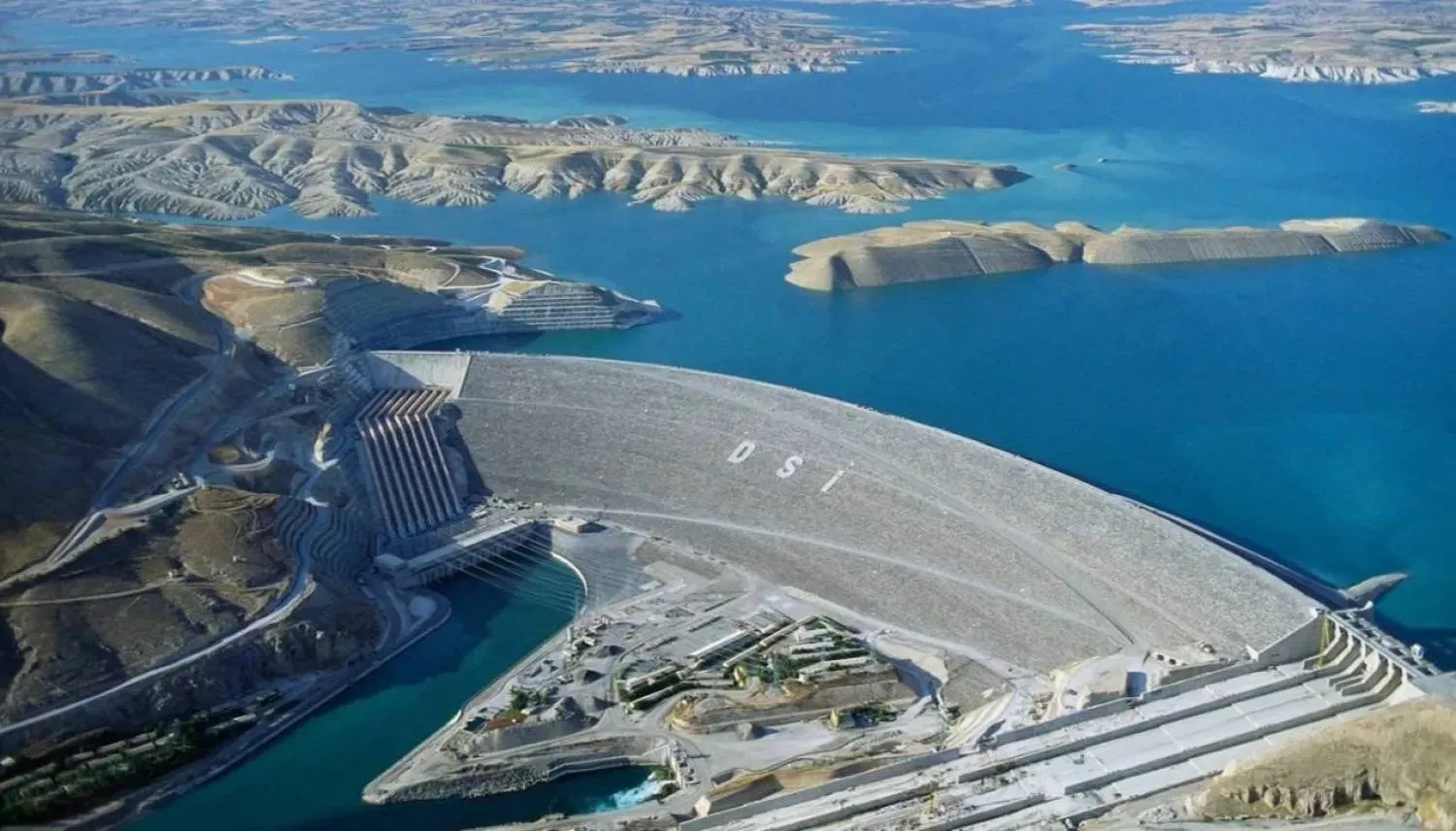
The Ataturk Dam on the Euphrates River sparked a Türkiye -Syria crisis in the 1990s. (Turkish State Hydraulic Works website)
TT

Floods, Drought Raise Questions over Türkiye’s Tigris, Euphrates Leverage

The Ataturk Dam on the Euphrates River sparked a Türkiye -Syria crisis in the 1990s. (Turkish State Hydraulic Works website)

Floods that swept northern and eastern Syria in early June, along with a rise in the Euphrates River after heavy rain and increased flows from Türkiye, have revived questions about the water crisis in Syria and Iraq, and whether Türkiye is using the Tigris and Euphrates as a political and security pressure card.

The crisis between Türkiye, Iraq and Syria centers on how to share the waters of the two rivers. Türkiye, the upstream state, controls the main tributaries. Its water policies and expanding dam network have sharply reduced flows, worsened drought and pushed water levels to near-catastrophic lows, especially in Iraq, which has faced its worst drought in more than 80 years.

Türkiye says the Tigris and Euphrates are transboundary rivers and that it has the right to manage them under its territorial sovereignty. Iraq and Syria want them classified as international rivers, with fair-sharing rules and international law applied under historic agreements, including the 1923 Treaty of Lausanne and joint cooperation protocols.

Mismanagement or resource depletion?

Türkiye has been accused of using water as leverage against Iraq and Syria for security reasons, mainly linked to the Kurdistan Workers Party, or PKK, and its extensions inside both countries. Those tensions later widened into Turkish air and ground operations in the two neighboring states, leaving a Turkish military presence that has long caused friction, especially between Ankara and Baghdad.

Several issues drive the crisis. The most important is Türkiye’s Southeastern Anatolia Project, designed to develop eastern and southeastern Türkiye. Under the project, Türkiye built major dams and reservoirs, including the Ataturk, Keban and Ilisu dams, to regulate irrigation and generate power. That sharply reduced the water reaching Syria and Iraq, the transit and downstream states.

The impact has been especially severe in Iraq. Water scarcity has battered agriculture, shrunk farmland, damaged the southern marshes listed as a World Heritage site and triggered repeated social and environmental crises.

Lower flows have also hit hydroelectric power generation and drinking water supplies for millions of people. In Syria, drought periods have raised the risks of pollution and disease.

Diplomatic efforts have surfaced from time to time. The countries have reached understandings, joint agreements and bilateral, and sometimes trilateral, memorandums of understanding to secure the minimum vital needs of each state. During severe droughts, Iraq and Syria have also tried to persuade Türkiye to increase flows. Türkiye insists it is a water-poor country and says Iraq’s crisis stems from local mismanagement and poor resource use, not from Turkish dams.

In Mesopotamia, water has rarely been just a natural resource. It has been a foundation of civilization, a source of conflict and, at times, a key to reconstruction and joint development. That was reflected in the Iraq-Türkiye framework agreement on water and development signed in November 2025.

What the Tigris brings together, the Euphrates drives apart

Turkish writer and water affairs researcher Bilgay Duman said the agreement, whose full terms have not been disclosed, marked an important development not only in Ankara-Baghdad relations, but also in redefining how shared resources are managed in the Middle East.

Duman said that after Türkiye, Iraq and Syria emerged as states, regulating the use of resources became a political and legal necessity. It also became a permanent source of dispute. The Euphrates turned into a three-way issue, while the Tigris became central to Turkish-Iraqi relations.

Early attempts were made to agree on water shares. The 1921 Ankara Agreement and the 1946 agreement between Türkiye and Iraq laid technical foundations for cooperation, including data sharing and flood control.

Later came the 1987 Syrian-Turkish agreement, a temporary deal to share Euphrates waters during the five-year filling of the Ataturk Dam reservoir.

Signed on July 17, 1987, the agreement committed Türkiye to provide an annual average of more than 500 cubic meters per second at the Turkish-Syrian border until a final arrangement was reached among the three Euphrates states.

On April 17, 1989, Syria and Iraq signed an agreement setting Iraq’s share at 9.106 billion cubic meters a year through the Syrian border, Syria’s share at 6.627 billion cubic meters and Türkiye’s at 15.700 billion cubic meters.

Syria registered its agreement with Türkiye at the United Nations in 1994 to secure its minimum share, and Iraq’s, of Euphrates waters. But that did not solve the problem.

Water for the PKK

As accusations grew that Türkiye was using water to pressure its neighbors, squeeze Kurds in Syria and push Iraq to act against the PKK and classify it as a terrorist organization, the 1997 UN Convention on the Law of the Non-Navigational Uses of International Watercourses set out the principles of no harm and equitable distribution.

It also required states to consider the water, economic and social needs of all riparian countries, as well as the needs of populations dependent on the watercourse and its direct and possible effects.

The convention strengthened Iraq and Syria’s legal position against Türkiye because both countries have large areas along the Tigris and Euphrates. Syria was among the first states to ratify it. Türkiye did not join, saying it harmed its interests and water rights, and voted against its adoption.

Syria, where the Euphrates irrigates more than 640,000 hectares, did not turn to international arbitration to secure its water rights from Türkiye. International law remains inconclusive in such cases, and arbitration requires both sides to agree.

Syrian support for the PKK, and its decision to allow the group’s fighters to use northern Syria as a rear base, pushed Türkiye into a harder position and led Ankara to link that support to the water dispute.

In 1993, Turkish-Syrian talks were held in Ankara to reach a final agreement on water shares. They produced nothing beyond the temporary 1987 arrangement, which was tied only to the filling of Lake Ataturk.

The same period saw Syria and Türkiye sign a joint development agreement on the Orontes River, which rises in Lebanon’s upper Bekaa Valley. Türkiye had been excluded from sharing the river with Syria and Lebanon in 1994. Giving up its share was a small price for greater benefit from the Euphrates.

Only 10% of the Orontes reached Türkiye’s Hatay province, and by then it was polluted and unusable. For decades, residents of the province bordering Syria, historically known as the Sanjak of Alexandretta, saw central government policies as unfair and blamed them for marginalizing the area and depriving it of a natural resource for political, ethnic and religious reasons.

Syrian revolution, Turkish opportunity

After the Syrian uprising against Bashar al-Assad began, Türkiye moved quickly to complete the Sanliurfa water canals project in 2012. The canals allowed water held at the Ataturk Dam to irrigate the border plains with Syria in Harran, Mardin and Ceylanpinar. The Silvan Dam was also filled in 2011. Syria took no countermeasure because Assad’s authorities were busy suppressing the uprising.

Syria’s approach to the water file showed that its main strategy against Türkiye had been to exploit internal security and the PKK threat, a strategy that ended with the Adana Agreement. Other options seemed impossible because of Türkiye’s military strength, external alliances and control of the Euphrates source.

Iraq: Drought and unrest

Iraq, which gets 60% of its water needs from Türkiye, has been the hardest hit by shortages. It faced successive severe crises across its territory, especially after the Ilisu Dam, built on the upper Tigris in Türkiye, began operating in 2020. Other dams on smaller tributaries added to the pressure. Tensions with Türkiye over water reached their peak.

Other environmental issues, including tree-cutting in northern Iraq during a Turkish military campaign against PKK militants, deepened tensions with Ankara. Pressure on the Turkish government produced little beyond a slight delay in filling Ilisu, postponing the problem rather than solving it.

In the summer of 2018, dwindling water resources and pollution caused fish to die in the Euphrates. Water shortages then became a major cause of social unrest across Iraq in the following years, culminating in the worst drought in 80 years in 2025.

The Ilisu Dam reduced Iraq’s share of Tigris waters to nearly 60% because of power generation.

In June 2025, Iraq called for water not to be used as a political pressure card and urged a joint regional vision based on fair distribution of transboundary waters. At the same time, it noted progress in negotiations and in the work of joint committees with Türkiye and Iran.

Despite this, Iraq and Türkiye kept positive relations, which expanded under Iraqi Prime Minister Mohammed Shia al-Sudani. The two sides reached understandings on security, the economy, trade, water and energy, while focusing on cooperation over the Development Road project.

Water disputes, also tied to security as in the Syrian case, became a route to cooperation after Iraq’s National Security Council declared the PKK a banned group in 2024.

Development Road runs through politics

On Nov. 2, 2025, Turkish Foreign Minister Hakan Fidan and Iraqi Foreign Minister Fuad Hussein signed a document establishing a mechanism to finance projects under a framework agreement for water cooperation. The mechanism implements the water cooperation framework agreement signed in 2024 during Turkish President Tayyip Erdogan’s visit to Iraq.

The agreement set a framework for water projects worth billions of dollars. Turkish companies will build new infrastructure to improve water-use efficiency and storage in Iraq. The projects will be financed from Iraqi oil revenues, in an attempt to turn crude exports into water security.

According to details that have emerged but have not been formally announced by either side, the first projects include water-collection dams and land-reclamation initiatives.

Ankara described the initiative as mutually beneficial for regional stability and economic cooperation.

“We in Türkiye are keen to support Iraq’s security, development and safety, and our support in this regard is absolute,” Fidan said at the signing ceremony.

Hussein said the agreement was needed to protect water security, food production and economic stability. He said Baghdad had long suffered from a weak position because of the absence of formal treaties regulating the use of Tigris and Euphrates waters.

Securing Erdogan’s presidency in 2028?

The agreement stirred doubts and fears among some Iraqi politicians and water experts. Some said it serves Türkiye more than Iraq and supports Erdogan’s effort to remain president after 2028.

Some Iraqi political forces reject the agreements with Türkiye, including those linked to the Development Road project and water cooperation. They say the deals could make Iraq dependent on Türkiye.

Allocating oil revenues to contracts with Turkish companies also raises legal and constitutional questions, along with concerns about corruption, weak transparency and possible obstacles caused by relying on one funding source, oil, which is exposed to global price swings.

Some opponents point to the absence of a final, binding legal framework agreed by both sides that defines the water share Türkiye must release to Iraq from the Tigris and Euphrates.

Although Türkiye and the PKK have begun a process to end the group’s activity, the PKK file and the presence of its members in northern Iraq, in areas beyond Baghdad’s control, could still obstruct implementation of the agreement.

The issue is not limited to Iraq’s domestic situation. It also touches the regional balance, with some parties seeing stronger Iraq-Türkiye ties as a source of pressure. That could turn Iraq into an arena for regional competition and influence struggles.

The Ottoman legacy

Duman said the agreement serves the interests of both Türkiye and Iraq. He said the water problem between the two countries did not emerge in recent decades, but dates back to the collapse of the Ottoman Empire, when the Tigris and Euphrates changed from internal rivers inside one political entity into transboundary rivers between independent states.

What marks the current phase in Turkish-Iraqi relations, he said, is the gradual shift from conflict over water shares to managing mutual benefit, and a broader rethinking of transboundary resources as a driver of integration, not a permanent source of tension.

He said the agreement’s most important new feature is the direct link between water and energy. Revenues from oil Türkiye imports from Iraq will finance water projects inside Iraq.

Turkish companies specializing in dams, modern irrigation networks, water treatment and waste reduction will carry them out. That bypasses one of Iraq’s biggest development obstacles, lack of funding, without turning to foreign loans or the conditions of international financial institutions.

In an article on the Turkish platform Fikir Turu, Duman said the model gives Türkiye a new role, not just as a state that controls water sources but as a partner in rebuilding Iraq’s infrastructure. That strengthens Türkiye’s regional influence through economic and development tools rather than hard-power tools.

The model could also expand regionally and become a practical reference for future cooperation with Syria, especially on Euphrates water management, if the right political conditions emerge.

Water diplomacy in the Levant could then shift from a source of fragility and chronic conflict into a platform for trust-building and regional integration, by linking natural resources to economic development rather than reducing them to sovereignty and conflict.

Prominent Turkish transboundary water researcher Dr. Tugba Evrim Maden told Asharq Al-Awsat that shared water resources need joint management based on technological solutions, not conflict or legal disputes.

She said the problems of downstream countries mostly stem from political instability, destroyed infrastructure, poor resource use and waste.

Türkiye is not rich in water

Contrary to common belief, Türkiye is not rich in water resources. It is not water-abundant compared with its region. It lies in a semi-arid climate zone and has less annual water per person than its neighbors, North America and water-rich northern Europe.

In water-rich countries, the annual per capita share of usable water exceeds 10,000 cubic meters. In Türkiye, it is about 1,350 cubic meters, according to Turkish Foreign Ministry data.

If the population reaches 100 million in 2030, Türkiye’s per capita water share is expected to fall to about 1,000 cubic meters. Because Türkiye’s water resources vary by region and season, they cannot meet current and expected needs everywhere. Some areas have abundant water that is not suitable for use, while densely populated industrial areas lack enough water.

Türkiye’s arid and semi-arid regions receive rain for only four or five months a year. That makes water development projects, including dams and reservoirs that store rainwater for year-round use, vital to sustainable social and economic development.

At the same time, Türkiye’s energy consumption is rising because of rapid urbanization and industrialization. Its per capita energy use is only one-sixth of the European Union average. Türkiye has no major oil or natural gas resources, so it is pursuing domestic resources to meet rising energy needs, including renewable, cheap and environmentally friendly hydropower.

The UN Convention to Combat Desertification’s report, “Global Drought Hotspots 2023-2025,” placed Türkiye among critical areas in the drought belt stretching from southern Europe to the Middle East.

The report warned that current trends could push Türkiye into severe water scarcity by 2030, with nearly 80% of its farmland potentially exposed to repeated and severe drought waves over the next decade.

As climate change intensifies, Türkiye is nearing a crisis that threatens its water security. Turkish and international experts say it is approaching the critical threshold of water poverty and could be officially classified as water-poor by 2030 if current conditions continue.

Türkiye’s per capita share of renewable water has fallen from about 1,650 cubic meters at the start of the millennium to below 1,300 cubic meters now, nearing the UN red line of 1,000 cubic meters a year.

The 19% decline in two decades reflects not only a resource crisis, but also an unsustainable consumption pattern and a water management system facing a serious structural challenge, water experts say.

Türkiye suffered severe drought in 2025, marked by scarce rain, record temperatures and dried-up lakes and water bodies. It recorded its hottest December in more than half a century, with rainfall more than 50% below seasonal averages, according to the Turkish State Meteorological Service.

Lack of response

Experts say that despite growing warnings about water poverty, the authorities’ response remains below the scale of the challenge.

Mustafa Chashmaz, a climate professor at Karadeniz Technical University, warned that evaporation caused by rising temperatures has become one of the main drivers of water loss. He said that storing water in broad-surface dams without accounting for climate conditions makes reservoirs more vulnerable to evaporation as heat waves intensify.

He called for urgent technical solutions, including deeper reservoirs less exposed to sunlight, covered basins in sensitive areas, and a ban on the use of freshwater in private swimming pools at coastal resorts, replacing it with treated saltwater.

He also said state institutions are part of the problem because public facilities consume large amounts of water without effective conservation systems or modern saving technologies.

Türkiye faces one of the most complex environmental challenges in its modern history: widening desertification, worsening drought and rising environmental stress. Recent years have brought repeated severe heat waves and forest fires, including about 3,000 fires in the summer of 2025.

Türkiye’s water crisis extends beyond its borders and affects regional water security, especially in Syria and Iraq. Türkiye controls about 90% of Euphrates waters and a large share of Tigris waters.

At the opening of water projects in October 2025, Erdogan said Türkiye was not water-rich, as some believe. Annual average rainfall does not exceed 574 millimeters, he said, far below the global average.

Experts say agriculture consumes 70% to 75% of total water withdrawals, while cities lose 20% to 35% through leaking networks. Dam efficiency is also weakened by evaporation and sediment buildup.

The Turkish government recently announced a program to restore shrinking or dried-up lakes, including Lake Marmara in western Türkiye. It also plans to invest in wastewater recycling plants for irrigation, agriculture and industry, and to build new desalination plants in areas with chronic freshwater shortages, especially western Anatolia and the Mediterranean coast.

Urgent priorities include cutting urban water losses to below 15%, expanding high-efficiency irrigation systems to save up to 30% of agricultural consumption, reducing evaporation by improving reservoir design and expanding underground storage, raising treated-water reuse to 20% of urban demand, adjusting water tariffs, shifting to less water-intensive crops and adopting mandatory drought management plans.


Weapon Technology in The Hands of Terrorist Groups

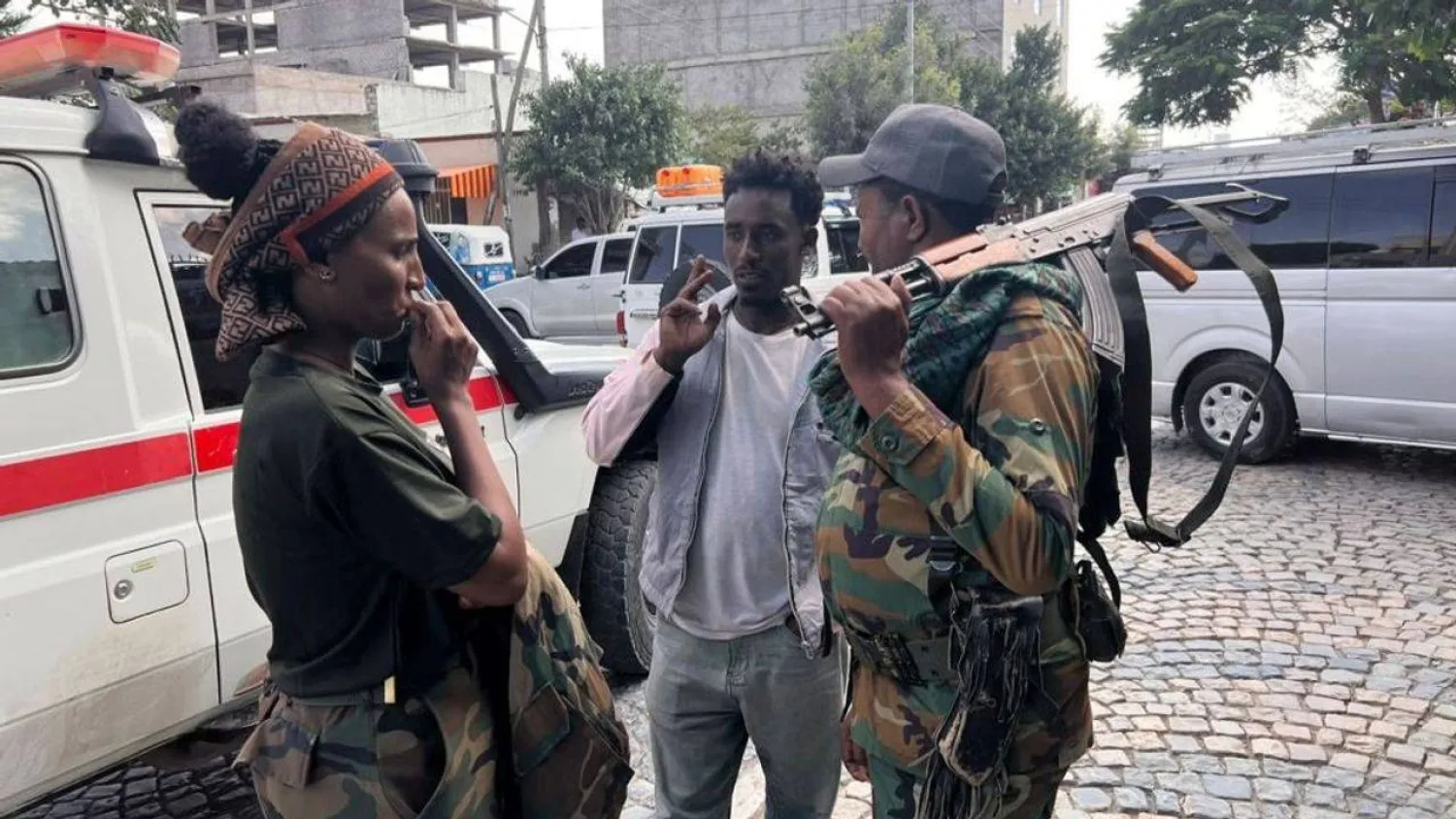
Weapons on the streets of cities in Ethiopia’s Tigray region. (AP) 
TT

Weapon Technology in The Hands of Terrorist Groups

Weapons on the streets of cities in Ethiopia’s Tigray region. (AP) 

By: Mohammed Al-Rayes

From the battlefield to the digital realm, terrorist and rebel groups across Africa are reshaping the security landscape, harnessing advanced technologies to expand their capabilities and transform warfare in ways scarcely imaginable a decade ago.

Military and strategic experts interviewed by Asharq Al-Awsat warned that the growing technological capabilities of rebel, separatist and extremist groups in Ethiopia, Somalia, Mali, Burkina Faso, Mozambique, Sudan and Libya pose mounting security threats that could push governments to strengthen their defense and offensive capabilities through modern technology and artificial intelligence.

The threat is unlikely to recede as armed groups continue to acquire advanced technologies, particularly low-cost drones.

On November 24, customs authorities in Burkina Faso announced the seizure of drones, military equipment and satellite communications devices worth more than 80 million CFA francs (122,000 euros) before they could be illegally brought into the country.

Customs Director General Yves Kafando said some of the confiscated drones were dual-use devices designed for civilian applications but could be repurposed in ways that threaten national security.

Drone warfare has become increasingly prevalent in Sudan and Ethiopia, while rebel groups in Mali, including the Azawad Liberation Front (FLA) and the Group for the Support of Islam and Muslims (JNIM), have made territorial gains against regular forces since 2023.

The technology has also featured in confrontations between Libya’s rival authorities in Benghazi and Tripoli and in attacks by rebels operating in North and South Kivu in eastern Democratic Republic of Congo (DRC).

An evolving threat

Drones, however, represent only one dimension of the growing technological threat.

Somalia’s representative to the UN Security Council, Ambassador Abukar Dahir Osman, known as Abukar Baale, warned in September that the terrorist threat was constantly evolving, with extremist groups increasingly exploiting modern technology, communications software and artificial intelligence.

Digital tools have also transformed how armed groups conduct surveillance, disseminate propaganda and disinformation, recruit fighters, communicate and secure funding.

Egyptian military and strategic expert Brigadier General Samir Ragheb told Asharq Al-Awsat that the danger lay not merely in armed groups acquiring sophisticated weapons but also in the imbalance in costs and the resulting attrition imposed on regular armies.

He attributed territorial gains by armed groups in Mali and Burkina Faso partly to their exploitation of technology and domestic instability, arguing that some national armies had become largely symbolic or were preoccupied with governing and military coups.

The challenge is compounded by porous borders, difficulties policing cyberspace, widespread weapons proliferation and the limited resources of several African militaries.

Ragheb also pointed to support and financing networks linked to the region’s natural resources and competing regional and international interests, including Russia’s presence in Africa and its indirect confrontation with Western and Ukrainian actors.

An open arms market

Major General Amin Ismail Majzoub, a Sudanese military and strategic expert specializing in crisis management and negotiations, attributed these developments to the emergence of an increasingly unregulated global arms market.

Illicit arms trading and the widespread availability of technical knowledge, he explained, have enabled terrorist organizations, particularly in Africa, and transnational organized crime networks to acquire weapons using illicit funds.

In several countries ravaged by insurgencies and wars, weapons and advanced technologies have fallen into the hands of terrorist groups, allowing them to develop combat capabilities and train personnel to operate them.

Mujahed Al-Sumaidaie, an expert at the European Center for Counterterrorism and Intelligence Studies, said technological advances had fundamentally altered the nature of confrontations between regular armies and terrorist organizations in Africa.

Affordable equipment, advances in satellite communications and navigation, and the proliferation of dual-use technologies have strengthened armed groups’ capabilities, imposing mounting security and military costs on the countries confronting them.

These developments, Al-Sumaidaie argued, are redefining asymmetric warfare, with numerical superiority and conventional military arsenals no longer sufficient to secure territorial control or military victory.

Weak government control over vast conflict zones, inadequate border security, expanding smuggling and organized crime networks, and political instability have all contributed to the spread of such technology.

The problem is exacerbated by inadequate legislation and oversight of dual-use equipment, poor coordination between security and intelligence agencies, corruption and the limited ability of some governments to trace terrorist financing.

Countering the threat

African governments are stepping up efforts to confront the growing challenge.

Ethiopian Prime Minister Abiy Ahmed told parliament on November 25 that his country had strengthened its defense forces through modern technology and was already seeing tangible results.

Majzoub argued that long-established African armies, dating back to their countries’ independence in the 1960s and 1970s, possessed the technical expertise, training infrastructure and skilled personnel needed to handle advanced technologies.

Fourth-generation warfare, he explained, has required greater technological proficiency and postgraduate education for military personnel.

Countries including South Africa, Nigeria, Egypt, Ethiopia and, to some extent, Sudan have made advances in domestic manufacturing, drone technology and counter-drone capabilities.

Security and military cooperation across the continent also encompasses joint training programs and coordination among military chiefs through the African Union, the Intergovernmental Authority on Development (IGAD) and regional military groupings in East, West and Central Africa.

These bodies facilitate exchanges of information and expertise to counter terrorist organizations and their evolving capabilities.

Majzoub also highlighted the role of the Committee of Intelligence and Security Services of Africa (CISSA), a continental intelligence body that holds annual meetings under a rotating presidency.

The organization has considerable experience in intelligence sharing, data analysis and efforts to contain conflicts. Regional and bilateral security alliances have further strengthened cooperation against terrorist threats.

Challenges requiring a comprehensive approach

Despite these advances, Al-Sumaidaie cautioned against treating African armies as a homogeneous military establishment, given the considerable disparities in their capabilities.

While Egypt, Algeria, Morocco and South Africa possess relatively advanced military, technological and intelligence capabilities compared with neighboring countries, many Sahel states face severe financial, technical and intelligence constraints.

They also lag in developing early warning, surveillance, electronic warfare and air defense systems, while their military personnel lack adequate training in modern warfare.

“The fundamental challenge facing some African armies is the transition from conventional military doctrine to a more flexible one capable of absorbing technological advances,” Al-Sumaidaie said.

He advocated establishing joint regional mechanisms for intelligence sharing, coordinating border surveillance, pursuing smuggling and financing networks, and adopting common legislation regulating sensitive technologies.

Ragheb stressed that confronting the threat required an integrated approach, beginning with improving the efficiency and training of regular armies.

Such a strategy must extend beyond military considerations to encompass ideological, cultural and development dimensions, alongside international efforts to halt foreign interference that fuels conflicts and supplies armed groups with technology, and to support the restoration of national institutions.

Majzoub identified another obstacle: Africa’s transformation into an arms market.

He accused arms dealers, manufacturers and suppliers of perpetuating instability across the continent, arguing that their commercial interests undermined prospects for peace.

As insurgencies and internal wars subside in one place, they erupt elsewhere, sustaining arms sales, maintenance services and the presence of military experts in new conflict zones, he said.

It is as though Africa were destined to see technology become a curse that transcends borders, he added.

From Somalia to the Sahel: Terrorism’s digital reach

Technological threats across Africa have grown at an unprecedented pace over the past decade as terrorist and rebel groups increasingly challenge regular armies.

From the Sahel and West Africa to the Lake Chad Basin and the Horn of Africa, several extremist, separatist and insurgent movements have emerged as prominent actors in this technological race.

Group for the Support of Islam and Muslims (JNIM)

Established in March 2017, the Al-Qaeda affiliate operates across the Sahel, particularly in Mali, Burkina Faso and Niger, with activities extending into neighboring countries such as Benin.

It has emerged as one of the most active armed groups using drone technology in the region, with attacks increasing significantly since 2023, particularly in Mali.

Boko Haram and ISIS West Africa Province (ISWAP)

Boko Haram and its splinter faction, ISWAP, operate across the Lake Chad Basin, encompassing Chad, Cameroon, Niger and Nigeria.

A 2025 report by a nongovernmental peace research center documented their growing reliance on technology for surveillance, propaganda and recruitment, followed by its increasing incorporation into combat operations.

That trend accelerated in late 2024 and early 2025 and continued into 2026.

Al-Shabaab in Somalia

Founded in 2004, Al-Shabaab pledged allegiance to Al-Qaeda in 2012 and has waged an insurgency against Somali authorities in a country plagued by weak central government since the overthrow of President Mohamed Siad Barre in 1991.

The group has increasingly incorporated drones into its activities and reportedly received military training from Iran-backed Houthi militants in 2026.

March 23 Movement (M23) in the Democratic Republic of Congo

The movement, reportedly renamed the Front for the Refoundation of the Nation in October, has seized vast stretches of mineral-rich eastern DRC since resuming its insurgency in 2021.

The rebels, who seek to overthrow the Congolese government, reportedly named former President Joseph Kabila as their leader.

A drone attack claimed by the movement against the airport in the strategic northeastern city of Kisangani in February 2026 highlighted its growing technological capabilities.


Iran’s Flogging of Singer Was Warning from Anxious Hardliners, Insiders Say

 Iranians shop at a street market in Tehran, Iran, 23 November 2026, as the country faces an economic crisis amid ongoing US-Iran tensions. (EPA)
Iranians shop at a street market in Tehran, Iran, 23 November 2026, as the country faces an economic crisis amid ongoing US-Iran tensions. (EPA)
TT

Iran’s Flogging of Singer Was Warning from Anxious Hardliners, Insiders Say

 Iranians shop at a street market in Tehran, Iran, 23 November 2026, as the country faces an economic crisis amid ongoing US-Iran tensions. (EPA)
Iranians shop at a street market in Tehran, Iran, 23 November 2026, as the country faces an economic crisis amid ongoing US-Iran tensions. (EPA)

Iran's flogging of a female singer this week for offending public decency was a display of force by an embattled clerical elite straining to uphold public obedience it once took for granted, Iranian insiders say.

Parastoo Ahmadi, 29, and four members of her production team received 74 lashes each on Monday for a livestreamed performance in a caravanserai near the city of Qom in which she had bare shoulders, no headscarf and male musicians, defying Iran's theocratic legal code.

Her punishment - which shocked many Iranians following years of looser enforcement of dress laws - came two years after footage of the concert first appeared online, underscoring the political nature of the decision to flog her, the sources said.

"I think the authorities are sending a message of fear through the flogging," said Saba Robatjazy, a London-based Iranian singer who performs under the stage name Emma and has known Ahmadi since they sang together as children.

AUTHORITIES ARE WARY OF HARD WARTIME WINTER, ANALYST SAYS

The timing, nine months into a war that has ravaged Iran's economy and nearly a year after nationwide protests, showed the heightened levels of concern in a ruling system determined to suppress any defiance of its rule, the sources said.

According to the sources - three officials and two other establishment insiders - the sentence was ‌a warning to potential dissidents ‌and a sop to hardline supporters of the system whose loyalty is critical to upholding its rule.

However, while ‌the decision ⁠was backed by ⁠hardliners within the hierarchy, more moderate officials did not support the move, fearing it would inflame public opinion and prove divisive at a difficult time, one of the people said.

The sources spoke to Reuters on condition of anonymity.

The Iranian government says its judiciary is independent and such punishments have nothing to do with politics.

Two of the officials said the approaching anniversary of last winter's protests had heightened concerns that mounting economic grievances worsened by the war could again spill over into anti-government protests that it was a priority to avert.

"They know it's going to be a hard winter. This war might go on for many more months to come, and they do worry about public protests and they sometimes take decisions like this one just to flex muscle," said Alex Vatanka of the Middle East Institute think tank.

Three of the sources also described what they called growing anger among hardliners over lax ⁠enforcement of dress codes which since the 1979 revolution have required women to cover their hair and wear a long, ‌loose coat over their clothes.

Those rules have been routinely ignored across Iran since mass protests in 2022 following ‌the death in custody of a woman who had been detained for breaking them - marking a rare success for a national protest movement in the country.

PUNISHMENT AIMED TO SEND MESSAGE ‌WHILE AVOIDING BACKLASH

However, while President Masoud Pezeshkian has cautioned authorities against pushing back on social and cultural issues through force, hardline politicians have demanded action against what ‌they see as subversive moral backsliding.

Since the US and Israel attacked Iran on February 28, hardliners have encouraged their supporters to flood Iran's streets in defense of the ruling system with rallies and other events aimed at maintaining a public display of unity and denying space to internal dissent.

Supporters of the hardline faction in Iran, those most fervently anti-Western and inflexible in enforcing the revolution's writ, remain an influential force, regularly winning more than a tenth of votes in national elections.

The role they have played has made it more important to placate them over issues such ‌as public morality, the sources have said, and there have been indications a crackdown may come.

Gholamali Haddadadel, a conservative politician and father-in-law of Supreme Leader Mojtaba Khamenei, said on September 9 that wartime conditions were preventing authorities from enforcing dress ⁠codes as emphatically as they would like.

However, ⁠by punishing Ahmadi and her team, the establishment may be seeking a way to reassure hardliners without risking the public backlash that a nationwide crackdown on women could provoke, said the two insiders.

While the punishment of Ahmadi may temporarily satisfy hardliners and intimidate opponents, the authorities must contend with an uncomfortable truth: the demands of their most hardline supporters are increasingly at odds with the changing aspirations of many Iranians.

"I do think that although we cannot see the light right now and how things will go moving forward, but we have always had and we always have faith that better days will come," Ahmadi's London-based childhood friend Robatjazy said.

Although she has not been in touch with Ahmadi for months with communications into Iran more difficult since the start of the year, she believes the singer and her team were aware of the risk they were taking by livestreaming their performance, she said.

There was no word on their condition or location following the flogging, which she said had not stamped out defiance.

"I think that the punishment that they gave Parastoo and her band members is only bringing up more anger from people," she said.

For hardliners, not punishing such open defiance of compulsory veiling would mean more than relinquishing control over women’s appearance. It would amount to acknowledging that decades of resistance had forced the regime to compromise on one of its founding ideological principles, one of the officials said.

Skylar Thompson, deputy director at Human Rights Activists News Agency, a US-based group, said the punishment was part of a broader push for control.

"The regime has made a clear and concerted effort to continue to police the way women express themselves in public and the way that they move about their daily lives," she said.


Israeli Veteran Soldiers Protect Palestinians from Settler Attacks

An Israeli soldier stands on the rear step of an army vehicle as troops block Palestinians from reaching the Hamsa area to protest settler attacks, property destruction and land confiscation, on the outskirts of the West Bank city of Dura, Friday, Nov. 27, 2026. (AP)
TT

Israeli Veteran Soldiers Protect Palestinians from Settler Attacks

An Israeli soldier stands on the rear step of an army vehicle as troops block Palestinians from reaching the Hamsa area to protest settler attacks, property destruction and land confiscation, on the outskirts of the West Bank city of Dura, Friday, Nov. 27, 2026. (AP)

The four Israeli soldiers stepped out of their car in the occupied West Bank, their faces masked, their uniforms unmarked and automatic weapons strapped across their shoulders.

They had entered a Palestinian olive grove but, little did they expect, the person there planning to tell them to leave could have once been issuing them orders.

A retired Israeli general, Eyal Ben Reuven, had come that day to the Palestinian town of As Sawiyah, on a mission to prevent some of the rampant violence against Palestinians by extremist Israeli settlers.

For the 72-year-old, joined by fellow battle-hardened veterans of the Israeli military, the violence is a stain on the institution in which they once served.

"I've fought in a number of wars. And unfortunately, I have reached the point where I have seen an evolution," said the former military man with piercing eyes, who spent much of his career driving tanks.

The army is failing to act, he said, even when the violence has reached a level "I never could have imagined".

Unrest has soared in the West Bank since the unprecedented October 7, 2023 attack by Hamas on Israel, which responded with a massive military campaign in the Gaza Strip.

More than 1,100 Palestinians have been killed by the army or settlers in the West Bank since then. More than 50 Israelis have died in the same time in the territory, which Israel captured in 1967.

The olive harvest has become a flashpoint, with settlers attacking or stealing from Palestinian farmers on a nearly daily basis.

With the other former soldiers, Ben Reuven has set up a protective presence, a tactic more common among leftist activists who put themselves in the way in a bid to stop attacks against Palestinians.

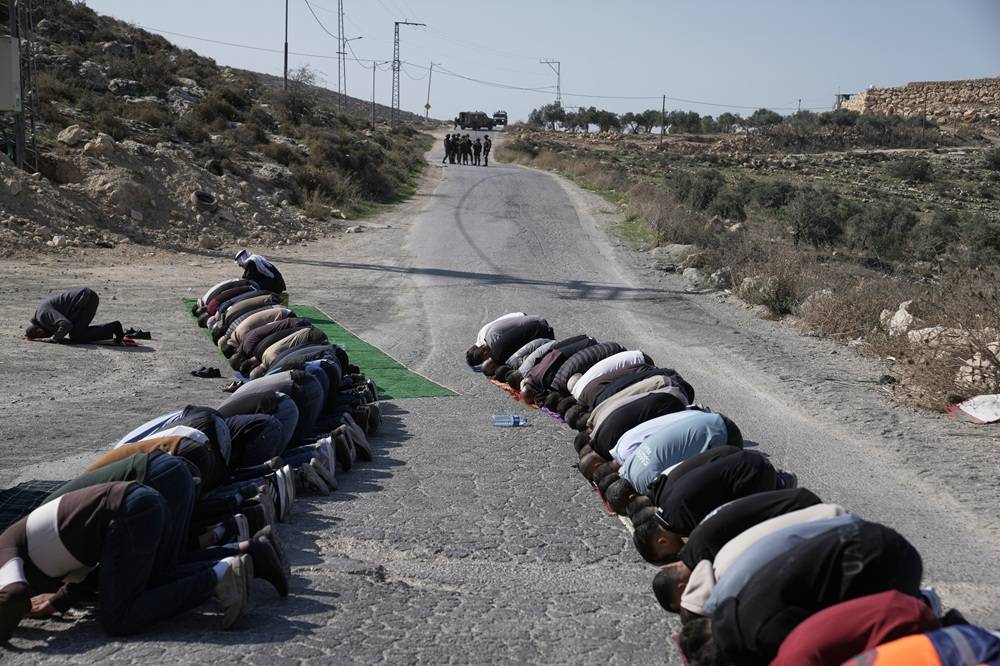
Palestinians pray on a road blocked by Israeli soldiers as they try to reach the Hamsa area to protest settler attacks, property destruction and land confiscation, on the outskirts of the West Bank city of Dura, Friday, Nov. 27, 2026. (AP)

- Army intervenes in harvest -

Clad in comfortable hiking attire and carrying walking sticks, it is difficult to imagine that some of the greying volunteers fought in intense combat.

Like good soldiers, they review instructions upon going out -- they are there to assist the olive harvest, not to confront the settlers, and they will obey the army's instructions.

A Palestinian human rights activist, Arafat Abu Ras, led the military men to a small olive grove. An old Palestinian woman was waiting to guide them and the soldiers, more accustomed to the battlefield than to farming, used sticks and small rakes to start knocking the olives off the trees, volunteering to do the work on the Palestinians' behalf.

Almost immediately a military vehicle arrived. Under the humming of a drone, one of the serving soldiers shoved aside an AFP team to prevent filming, while another checked Abu Ras's identity papers and ordered everyone to leave.

Abu Ras said that the olive farmers had coordinated with the army, which insists that Palestinians receive approval for their harvests in the occupied West Bank, arguing that it is for safety reasons.

"They say, 'yes, yes', and then the next day they come and force us to leave," Abu Ras said.

After the serving soldiers arrived, a second vehicle came, this time with Israeli settlers. An official from a neighboring settlement also ordered the olive pickers out, with troops saying it was a "closed military zone".

The Israeli veterans, in line with their guidance, complied. They instead moved elsewhere with the farmers, hoping to prevent attacks on them.

"Our army is a joke," fumed Yoel Feldschuh, a 77-year-old former air force brigadier general.

"Is it its role to shut an olive grove? What does the military have to do with that?"

Feldschuh made headlines when he was handcuffed and taken away by police in a similar action a month earlier.

Changing the behavior of the military, he said, "will take a generation".

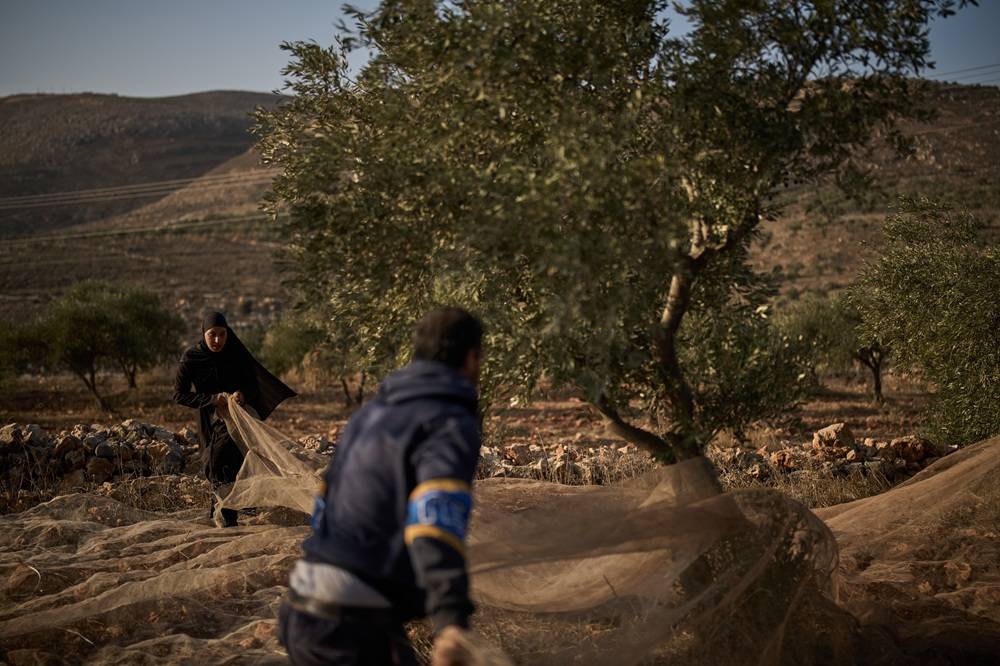
Salsabil, 16, left, and a Palestinian man spread a net under an olive tree to collect olives during the harvest with the support of Israeli activists in the West Bank village of Majdal Bani Fadil, Friday, Nov. 27, 2026. (AP)

- Rampant violence -

COGAT, the Israeli body responsible for civil affairs in the Palestinian territories, maintains that "security forces are deployed to ensure a safe olive harvest".

But since September, the harvest has been marked by nearly 500 attacks, some of them fatal, according to the Israeli human rights organization Yesh Din.

Amram Mitzna, an 81-year-old retired general, attributes the army's inaction to the young ages of the soldiers, who have grown up under now-caretaker Prime Minister Benjamin Netanyahu, Israel's longest-serving leader.

"They consider every Arab an enemy who must be treated as such," said Mitzna, who has also served as mayor of Haifa, Israel's third largest city.

Netanyahu has allied himself with the far-right and championed a rapid growth of West Bank settlements, which are considered illegal under international law.

Netanyahu is fighting for political survival after losing ground in elections. Gadi Eisenkot, a former general seeking to succeed him, supports many of Netanyahu's security policies but accuses him of yielding to "Jewish terrorism" in the West Bank and vowed to crack down on extremist settlers.

In As Sawiyah, the former soldiers eventually finished harvesting the olives in a nearby area alongside a school, putting them in bags to be taken by Palestinian villagers.

While no one was injured, Ben Reuven remained deeply disturbed by how the young soldier acted during the altercation.

"When I saw him arrive, masked, shouting, kicking sacks of olives, I was ashamed."