Mystery Over Who Targeted Egypt’s Damietta Port Raises Questionshttps://english.aawsat.com/features/5302246-mystery-over-who-targeted-egypt%E2%80%99s-damietta-port-raises-questions
Mystery Over Who Targeted Egypt’s Damietta Port Raises Questions
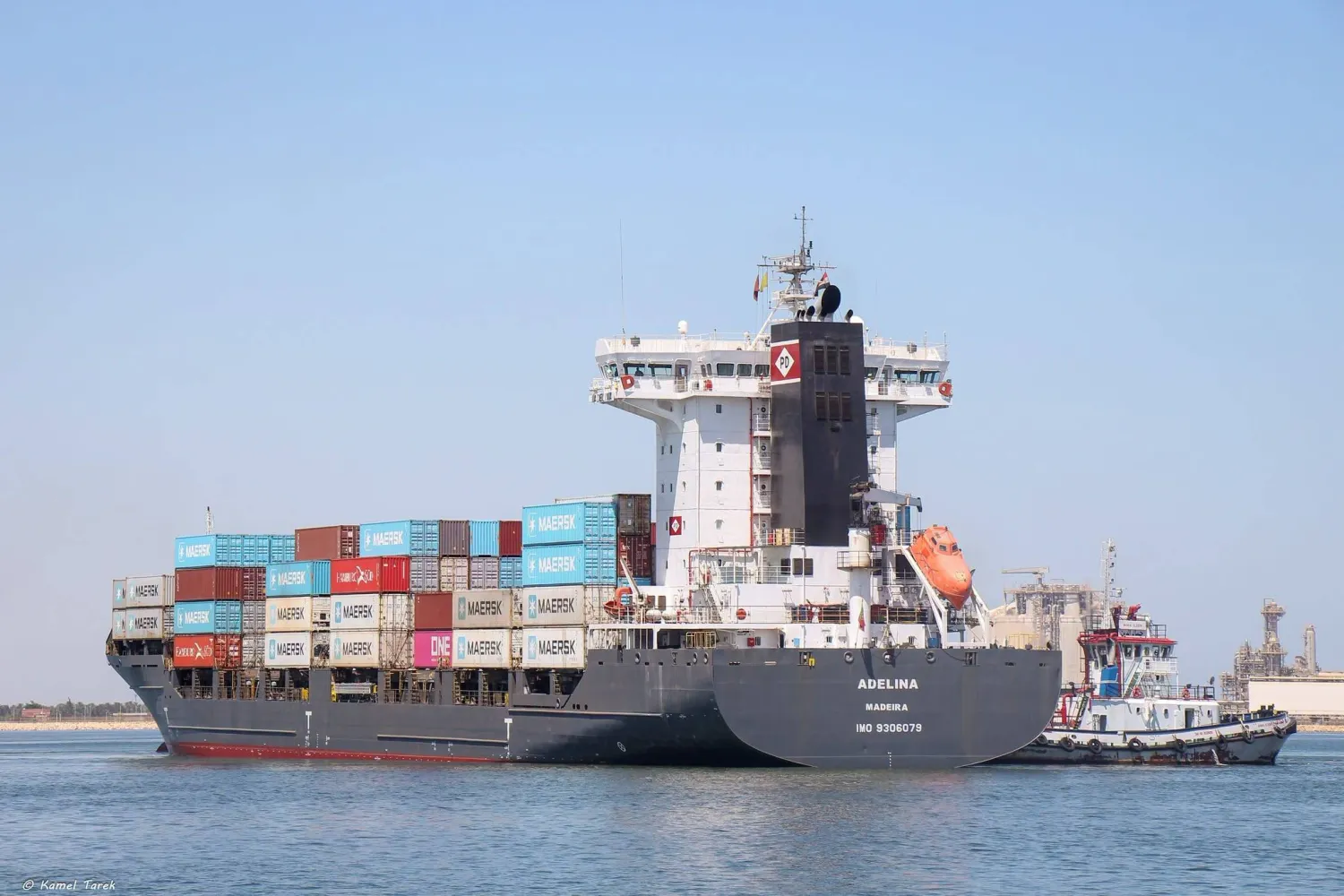
Cargo ship docked at Damietta Port (Damietta Port Authority on Facebook)
Cairo is pressing ahead with an investigation into a drone attack on two vessels at Egypt’s northern port of Damietta, as Iran, Israel, and Yemen’s Houthis deny any role in the incident.
An expert told Asharq Al-Awsat that security, political, and economic considerations could explain why no party had claimed responsibility.
He said any Egyptian response would “require preparations” and follow “an entirely different course away from the media,” adding that a forceful response would likely remain a secondary option.
Investigation continues
Egyptian President Abdel Fattah al-Sisi said the authorities were investigating the details and circumstances of the attack, according to a statement from the presidency issued after a telephone call with Spanish Prime Minister Pedro Sanchez on Thursday evening.
Sisi warned of the dangers posed by the escalating regional tensions and called for Egypt, Spain, Europe, and the wider international community to work together to contain them.
Prime Minister Mostafa Madbouly said Egypt had recovered debris from the drone used in Wednesday’s attack and was examining it as part of the security investigation.
Egypt’s position, he said, would be based “on facts, not speculation.”
Minister of State for Information Diaa Rashwan said no findings on the cause of the incident, those responsible, or Egypt’s planned response would be announced until the investigation was complete and a clear picture had emerged.
Ahmed Fouad Anwar, a member of the Egyptian Council for Foreign Affairs, said the absence of a claim of responsibility deepened the mystery but would not prevent investigators from identifying those responsible.
He said the perpetrators may have stayed silent to avoid an Egyptian response permitted under international law, as well as for political and economic reasons.
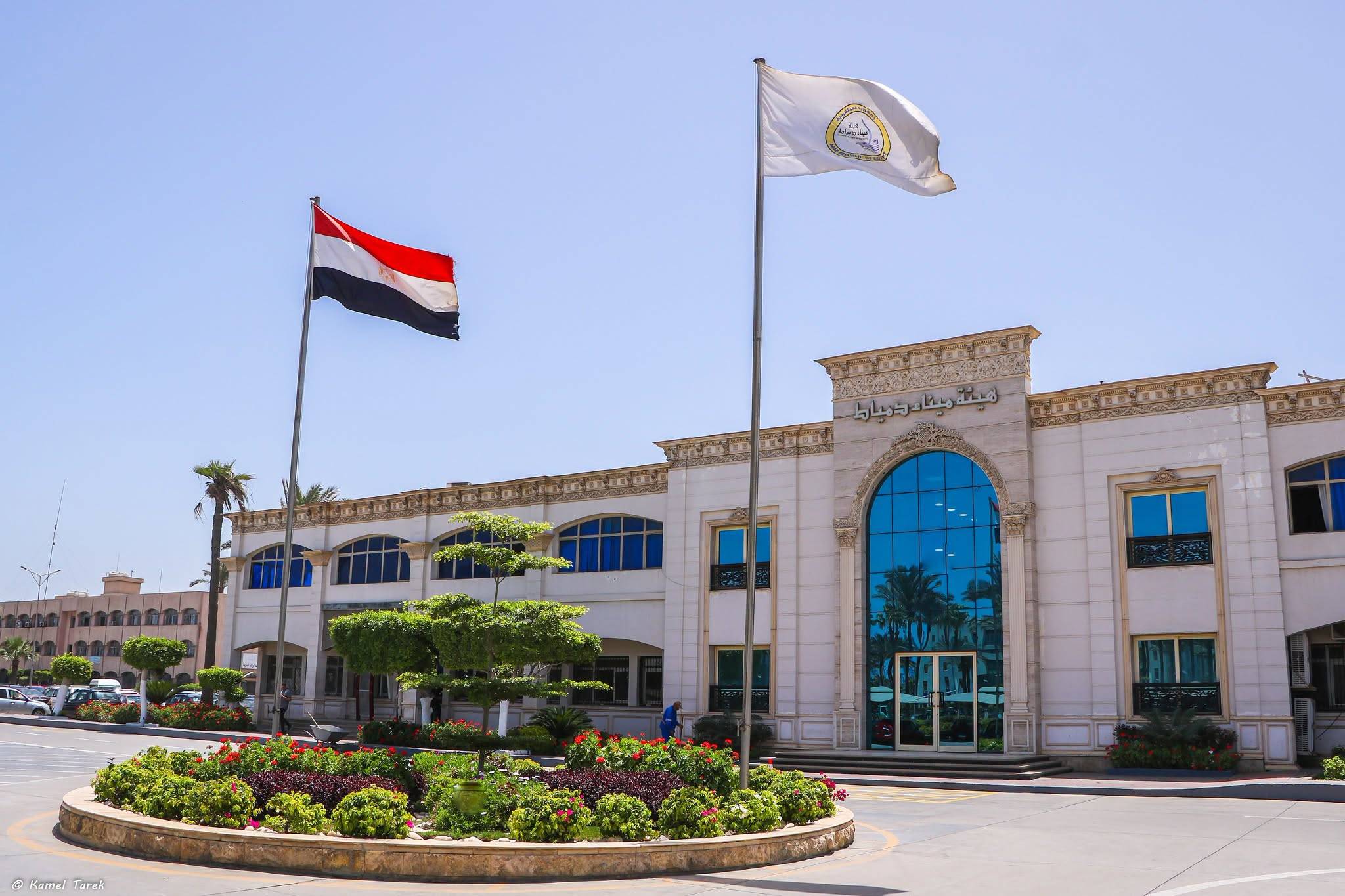
Damietta Port Authority headquarters (Authority's Facebook page)
Iran denies involvement
Iran’s mission in Egypt published several statements explicitly denying Tehran’s involvement.
It quoted a Foreign Ministry source as saying Iran “did not carry out this operation” and had no intention of conducting such an attack.
The source described relations with Egypt as firm and based on mutual respect and shared interests.
The mission also quoted Iranian Foreign Ministry spokesman Esmaeil Baghaei as saying the drone attack had no connection to Iran and accusing the United States of driving insecurity across the region.
Baghaei also cited the discovery of Ukrainian-linked cells in Iraq as a threat to regional security, raising the possibility that an unidentified party was behind the attack.
Iranian Foreign Minister Abbas Araghchi said in a post on X on Thursday evening that Egypt was an important regional partner and friend, and that Egypt's security was a top priority for Tehran.
“We must all remain vigilant against Israeli conspiracies,” he said.
The Israeli military also denied media reports linking it to the attack on Damietta port. The Houthis said on their website that it was not responsible.
Rashwan later said Araghchi’s denial deserved close attention, but stressed that Egypt’s official position would rest solely on the findings of the investigation.
Amid the uncertainty, Egyptian media outlets floated several scenarios.
Al-Masry Al-Youm published approximate direct distances to Damietta, based on Google Earth: Israel, 250-450 km; eastern Libya, 900-1,200 km; Syria, 550-750 km; Iraq, 950-1,200 km; Yemen, 1,700-2,200 km; and Iran, 1,500-1,900 km.
The newspaper did not accuse any party.
Anwar said Egypt would weigh its decisions carefully and would not be drawn into war or conflict.
Whoever was ultimately blamed — whether Iran and its proxies or Israel and its agents — any response would require preparation and would unfold away from the media, he said.
A forceful response, he added, would likely remain the second option.
Netanyahu Might Be Finished but His Policies Toward the Palestinians Will Largely Endurehttps://english.aawsat.com/features/5333685-netanyahu-might-be-finished-his-policies-toward-palestinians-will-largely-endure
A view of the Israeli settlement of Itamar from the village of Awarta, south of Nablus in the West Bank, 20 October 2026. (EPA)
TT
TT
Netanyahu Might Be Finished but His Policies Toward the Palestinians Will Largely Endure
A view of the Israeli settlement of Itamar from the village of Awarta, south of Nablus in the West Bank, 20 October 2026. (EPA)
Israel's elections Tuesday could mark the end of Prime Minister Benjamin Netanyahu's decades-long political career.
But his legacy in the Israeli-occupied West Bank — of massive settlement expansion, the displacement of tens of thousands of Palestinians and the empowerment of armed settler extremists — will likely endure, even if his opponents seek to rein it in.
Israelis are deeply divided over Netanyahu's leadership and moral character, but they largely support settlement expansion and are opposed to a Palestinian state. So, while Netanyahu's opponents have vowed to crack down on settler violence and remove the most contentious outposts, they are mostly against a two-state solution, seen internationally as the only realistic way to resolve the conflict.
“There shouldn’t be any illusions,” said Mairav Zonszein, senior Israel analyst at the International Crisis Group.
“At best, (a new government) would be able to slow down the extremely crazy acceleration that we’ve seen in the last four years of every aspect of Israel’s aggression in the occupied territories and inside Israel itself.”
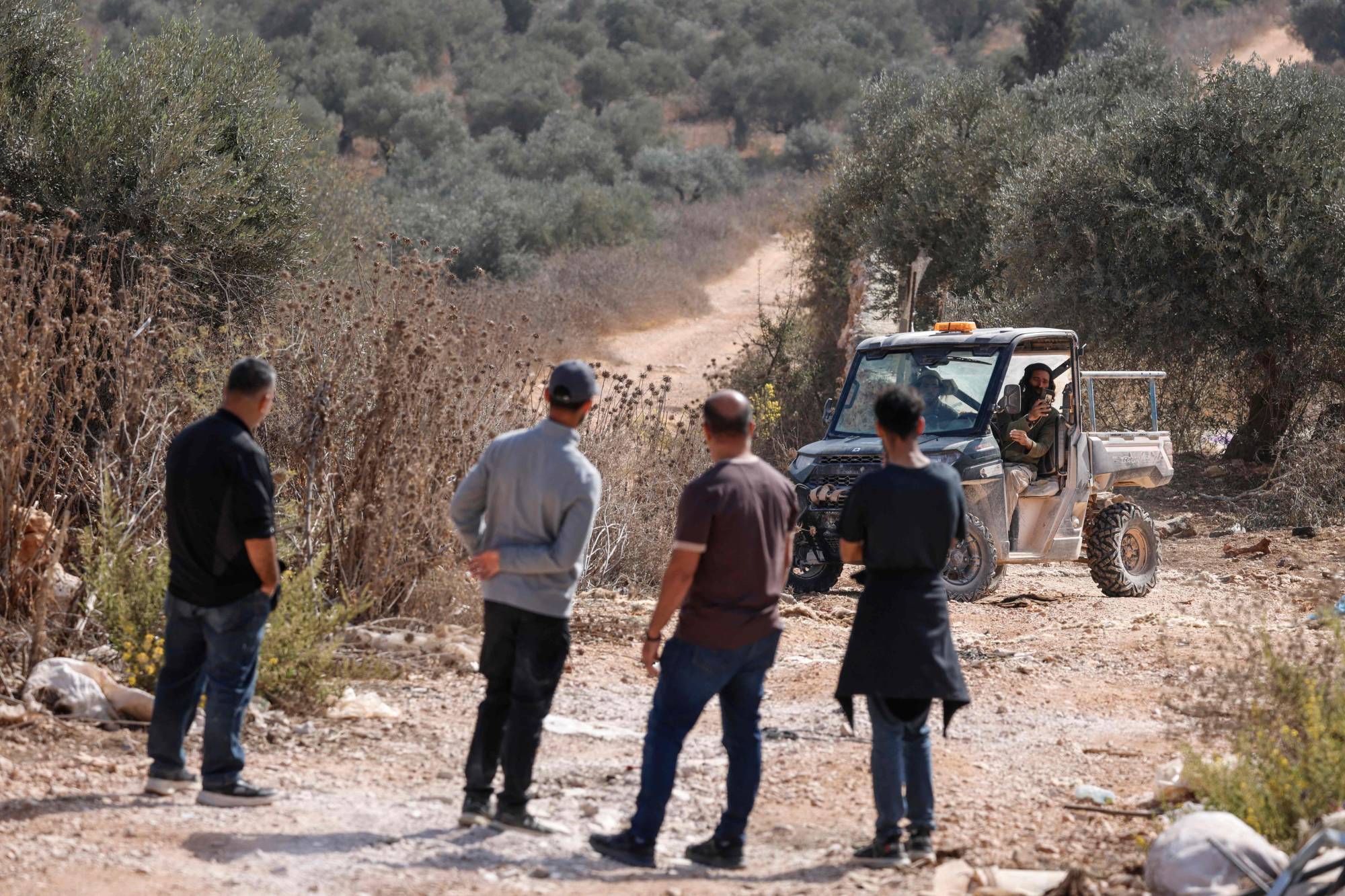
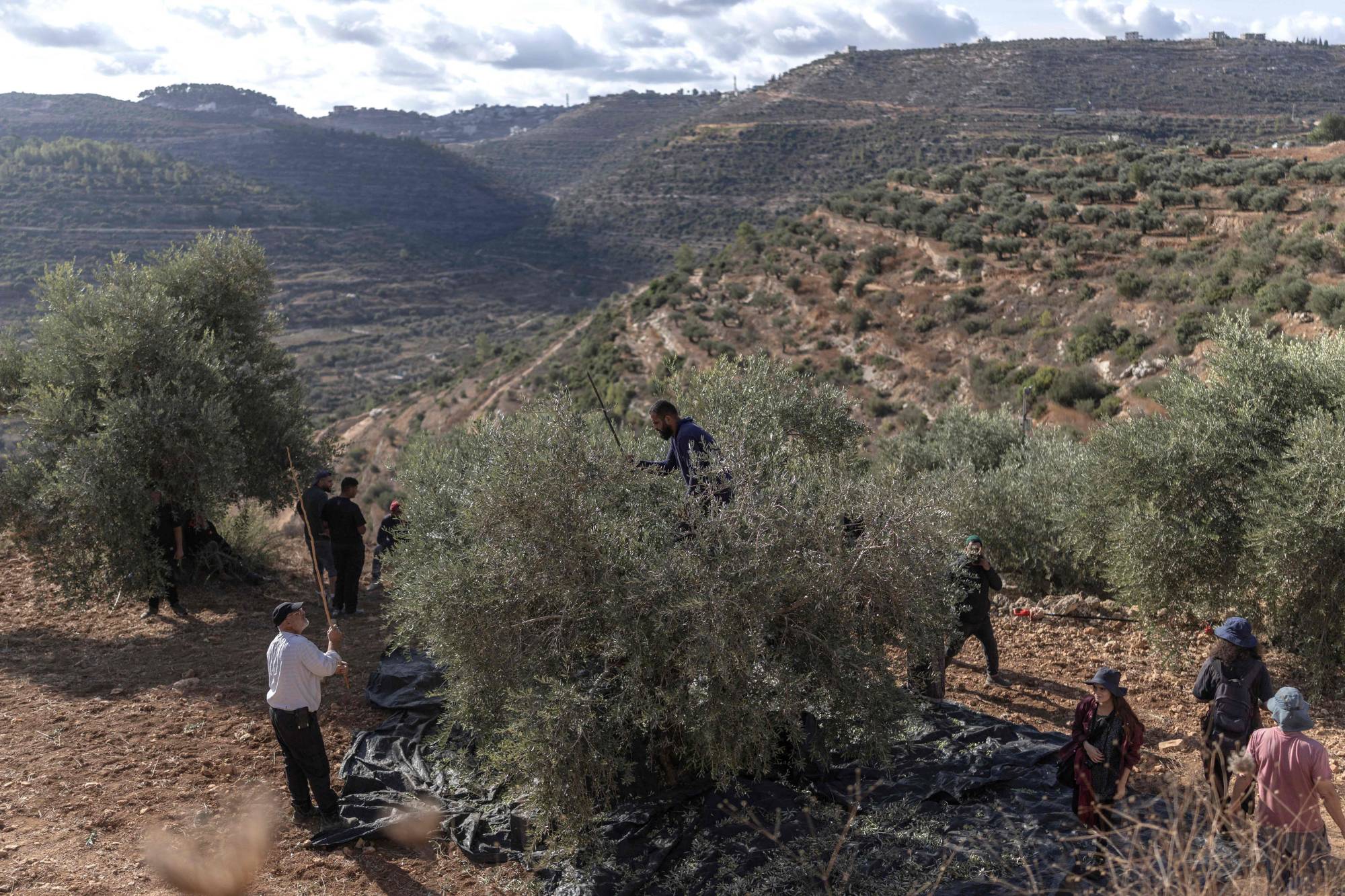
An Israeli settler takes photographs of Palestinian farmers and foreign activists gathered to pick olives in the village of Turmus Ayya, northeast of Ramallah in the Israeli-occupied West Bank, on October 21, 2026. (AFP)
The military stands down in the face of settler violence
One legacy of Netanyahu’s nearly unbroken 17-year rule — the longest of any Israeli leader — is that large groups of armed settlers now routinely defy the Israeli military as they rampage through Palestinian communities, drive people from their homes and seize ever larger swaths of their land.
Hamas' Oct. 7, 2023, attack out of Gaza turbocharged the process. Netanyahu's opponents could bring in more troops and authorize stricter measures, but the genie may already be out of the bottle.
Netanyahu's government has distributed thousands of firearms to the settlers, who have allies in the military and security forces. Some extremist settlers have become like sheriffs — making arrests, killing Palestinians they say posed a threat, summoning security forces and driving Palestinian families from their homes.
The Palestinian Tubasi family was forced out in July after settlers besieged their hilltop home in the West Bank village of Jalud for 19 days. The settlers cut off their water access and their electricity, and threatened to “barbecue” them if they didn’t leave, said Mahmoud Tubasi, 60, the patriarch.
An Israeli court ordered the military to bring the family back, but that hasn't happened. Troops aborted their latest mission soon after it began, when a mob of over 150 armed settlers quickly assembled, scaled the walls of the home and set a car on fire.
Troops threw Tubasi and his family into an armored jeep and drove them away as settlers torched the place. They now live in relatives' houses in the valley below their gutted and blackened home, around which settlers still roam.
Israel’s military did not respond to a request for comment.
“If they wanted to evacuate them, of course, 100%, they can do that,” Tubasi said. “This is an army that fights in Lebanon, Gaza and in Iran — they can’t control 150 or 200 settlers?”
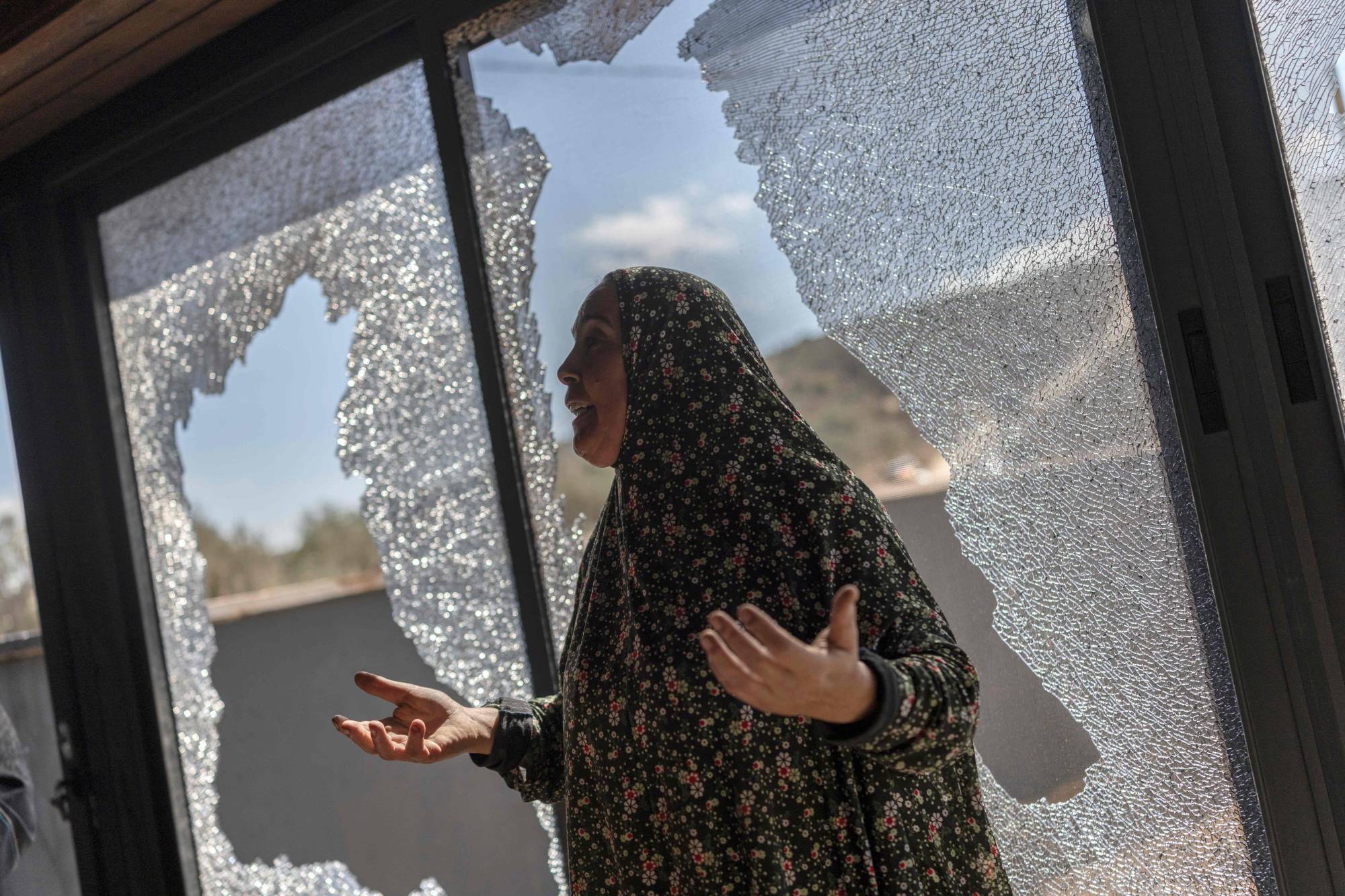
Palestinian Hanan Hamayei gestures as she stands near the shattered glass of her home following a reported attack by Israeli settlers, in the Israeli-occupied West Bank village of Turmus Ayya on October 19, 2026. (AFP)
The process is repeated across the West Bank
Under Netanyahu, settlers have established over 250 rustic camps across the territory, focusing particularly on areas where Palestinian herding communities have dwelled for decades.
The outposts allow the settlers to effectively run Palestinians off vast rural areas by attacking shepherds, taking over water resources and grazing their own herds, all under the eye of Israeli troops.
Dror Etkes, a researcher with an Israeli anti-settlement group, says the outposts have allowed the settlers to seize effective control of around a fifth of the West Bank. Israel captured the territory, along with Gaza and east Jerusalem, in the 1967 Middle East war. The Palestinians want all three territories for their future state.
Since 2023, the strategy has forced at least 127 Palestinian herding communities off their land, according to data gathered by Etkes' organization, known as Kerem Navot, and B'Tselem, another Israeli anti-settlement group.
The departures have cleared nearly the entire eastern flank of the West Bank, along the border with Jordan, of Palestinians. The settlers' explicit goal is to prevent the establishment of a viable Palestinian state.
Netanyahu’s opponents say they will go after the most violent settlers and dismantle outposts, which are illegal under Israeli law. But they will not evacuate the over 100 new settlements Netanyahu's government legalized, including 44 that were formerly outposts. Nor will they remove settlements dating back decades, many of which now resemble fully developed suburbs.
Most of the international community views all Israeli settlements as illegal and an obstacle to a two-state solution. Israel views the West Bank as the biblical and historical heartland of the Jewish people and says its future status should be decided by negotiations, which have not been held in over a decade.
Even if some outposts are removed, many Palestinians seeking to return would find their homes burned and looted, and would continue to face threats from nearby settlers.
“The story is over. There will be no massive dismantlement of settlement,” said Etkes. “It’s now a full and prouder-than-ever apartheid regime.”
Amnesty International and other major rights groups accused Israel of the international crime of apartheid even before the Oct. 7 attack and its aftermath. Israel denies the allegation.
Palestinians harvest their olive trees in the Israeli-occupied West Bank village of Deir Abu Mashal on October 19, 2026. (AFP)
Netanyahu's opponents promise modest change
The politician most likely to replace Netanyahu as prime minister is retired general Gadi Eisenkot, a political centrist. He hopes to form a majority coalition with three other parties spanning Israel's political spectrum and without Arab-led parties advocating a two-state solution.
Beth Oppenheim, an Israel analyst for the European Council on Foreign Relations, said the opposition has “struggled to formulate a convincing alternative" to the right's new security strategy of “aggressively preempting threats, maintaining complete freedom of operation and imposing buffer zones.”
Palestinian attacks, like a shooting on Friday that killed two Israeli soldiers, and efforts on the right to cast the Israeli left as enemy sympathizers, have taken their toll. “The net effect is that talk of ‘peace’ and compromise has become politically toxic,” Oppenheim said.
Eisenkot does not support a Palestinian state, but is open to limited self-rule in the 40% of the West Bank currently administered by the Palestinian Authority under agreements reached in the 1990s. He would allow settlement growth in the other 60% of the territory, which is under direct Israeli military rule.
He has also vowed to empower Israeli troops and paramilitary Border Police to crack down on settler violence.
Eisenkot “is interested in lowering the friction in the West Bank and interested in definitely lowering the sanctions and the intention for sanctions by European countries,” Zonszein said. “He’ll do kind of the minimum necessary to get the maximum effect.”
Eisenkot's prospective allies include left-wing politicians who oppose settlements and have favored a two-state solution, but they have agreed to set those positions aside to form a coalition to oust Netanyahu.
Israeli leaders have long balanced their ambitions in the occupied territories with demands from Washington aimed at resolving the conflict. But they are unlikely to face any significant pressure from US President Donald Trump, who endorsed Netanyahu and has long backed his policies.
Four Ways US Foreign Policy Could Change if Democrats Win in Novemberhttps://english.aawsat.com/features/5333381-four-ways-us-foreign-policy-could-change-if-democrats-win-november
24 October 2026, US, New York: Lower Manhattan residents cast their ballots at the Borough of Manhattan Community College polling site in Tribeca. (dpa)
TT
TT
Four Ways US Foreign Policy Could Change if Democrats Win in November
24 October 2026, US, New York: Lower Manhattan residents cast their ballots at the Borough of Manhattan Community College polling site in Tribeca. (dpa)
Nonpartisan analysts say Democrats stand a good chance of winning the US House of Representatives and possibly the Senate in the November 3 midterm elections, which would give them a slice of power in Washington after two years of Republican control.
Democrats argue that Republicans have allowed President Donald Trump's administration to declare war and control spending, even though the US Constitution reserves those powers for lawmakers.
Here are some ways a Democratic Congress could hem in Trump's foreign policy.
CURB THE IRAN WAR
Trump did not secure approval from Congress before he launched the war with Iran on February 28, and Democrats have voted repeatedly to end the fighting unless he does so. One of these resolutions passed with support from a handful of Republicans, but Trump's administration ignored it.
With control of the House or the Senate, Democrats could cut defense spending to pressure Trump to obtain permission from Congress to continue the war. They could also require administration officials to testify publicly about their plans.
FRESH SUPPORT FOR UKRAINE
Trump has largely halted direct US financial and military aid to Ukraine, despite broad support from Democratic and Republican lawmakers as it fights a Russian invasion.
Most recently, he has angered members of Congress, including many Republicans, by lifting sanctions on Russian diesel and waiving sanctions on Russian energy only weeks after signing them into law.
With a victory in both chambers in November, Democrats would be able to decide what gets voted on and when.
That could allow them to approve new aid to Ukraine, which likely would pass with the two-thirds majorities needed to overcome a Trump veto.
They could also target other Trump activities. For example, Representative Gregory Meeks of New York, who could head the House Foreign Affairs Committee if Democrats win control, has introduced bipartisan legislation to block Trump's plan to bring Russian diesel back into the global market.
END MILITARY AID TO ISRAEL
Support for Israel has plummeted among Democrats over its conduct in the Gaza war, which has killed tens of thousands of Palestinian civilians. The ongoing violence in the Israeli-occupied West Bank and Israeli Prime Minister Benjamin Netanyahu's close alliance with Republicans have also been factors.
Democrats could limit or end military aid to Israel, which amounted to $3.8 billion in the most recent fiscal year. That is more than was provided to any other country.
Nearly half of House Democrats voted this summer to cut off aid to Israel. Some of those who voted against that effort, such as Meeks, have backed limits on providing weapons like heavy bombs to Israel.
LIMIT MILITARY SPENDING AND RESTORE FOREIGN AID
Democrats are far more likely than Trump's Republicans to limit military spending. Trump asked for an unprecedented 67% increase in the military budget this year, to $1.5 trillion, but Democrats blocked it in the Senate, citing his refusal to consult Congress about the Iran war and his steep cuts to social programs.
Trump has also withheld or canceled billions of dollars in foreign aid approved by Congress. Many Democrats have been angered by the cuts and say they will try to restore funding.
Beirut’s $13 Chicken Sandwich Becomes Symbol of Lebanon Dividehttps://english.aawsat.com/features/5333379-beirut%E2%80%99s-13-chicken-sandwich-becomes-symbol-lebanon-divide
A chef prepares a chicken taouk sandwich at Glow Paradise restaurant in Beirut, Lebanon, October 16, 2026. (Reuters)
TT
TT
Beirut’s $13 Chicken Sandwich Becomes Symbol of Lebanon Divide
A chef prepares a chicken taouk sandwich at Glow Paradise restaurant in Beirut, Lebanon, October 16, 2026. (Reuters)
Seven years after Lebanon’s devastating financial meltdown, a debate over a chicken sandwich has exposed an increasingly stark divide between those who can still spend freely and those struggling to get by.
A trendy health restaurant wanted to offer its calorie-conscious customers a healthier take on the beloved Levantine wrap known as the shish taouk. So, The Glow Paradise launched the “Chic Taouk,” pricing it at around $13 -- nearly double what an un-chic chicken sandwich typically goes for in Beirut.
The pricey pun proved hard to swallow, with outraged critics accusing the restaurant of overcharging in a country where many households struggle to afford basic necessities.
Yet while the debate raged on social media, customers kept buying. The Glow Paradise sold more than 20,000 Chic Taouk sandwiches in just 11 days, according to managing partner Hrag Jeghalian, who described the online exchanges as "natural marketing".
The contrasting reactions touched a nerve in Lebanon, where years of financial turmoil, political dysfunction and conflict have reshaped the country's social landscape, hollowing out much of the middle class while leaving a smaller group of consumers able to sustain an affluent lifestyle.
DEBATE PULLS FOCUS AWAY FROM URGENT CRISES
Sami Nader, an economist at the Saint Joseph University of Beirut, said the throngs at The Glow Paradise belied another reality.
“So you see people in the restaurant, but what you don't see is that 22 restaurants closed last month,” Nader told Reuters.
Lebanon’s Instagram-active community was split between those accusing the restaurant of theft and others saying the sandwich was intended for those who could afford it.
Some questioned whether the dispute itself reflected misplaced priorities in a country grappling with urgent crises, from Israel’s occupation of large swaths of the country’s south to the endemic electricity and water crises.
Lebanon’s 2019 financial collapse was prompted by decades of corruption and profligate spending by the ruling elite, and several rounds of conflict since then have worsened the country’s economic outlook.
GDP has declined by nearly 40% since 2019 and inflation is expected to rise to 17.5% due to rising global energy and shipping prices eating away at people’s purchasing power, according to the World Bank. The figure is more than quadruple the global headline inflation rate flagged by the International Monetary Fund in July.
Four in five households in Lebanon struggle to afford basic necessities, the UN children’s agency said in September.
'PEOPLE CAN'T KEEP UP'
The country’s middle class has “disappeared,” Nader said, dismantled by a series of crises including the collapse of the financial system in 2019, the 2020 Beirut Port explosion and two wars in under two years.
Monthly bills from private generator operators, which provide electricity to many homes and businesses during outages on Lebanon's failing national grid, jumped by nearly 20% in August 2026 alone, bringing rates nearly 60% higher than they were in February of this year, according to the kilowatt-hour prices set by Lebanon’s energy ministry.
For many, that means paying for 24/7 electricity now costs several hundred dollars a month, in a country where the minimum wage is set at $400.
“Everything has become expensive, and people can’t keep up,” said Fouad Fakhreddine, a 53-year-old restaurant worker from nearby Hamra. “We are now getting paid, then getting in debt over that just to get by.”
The years of economic instability, he said, have produced “a class that is living, and a class that is not dead and waiting to die from the unbearable situation it is in.”
لم تشترك بعد
انشئ حساباً خاصاً بك لتحصل على أخبار مخصصة لك ولتتمتع بخاصية حفظ المقالات وتتلقى نشراتنا البريدية المتنوعة