


From War Amnesty to Prison Amnesty... What Has Changed in Lebanon in 35 Years?

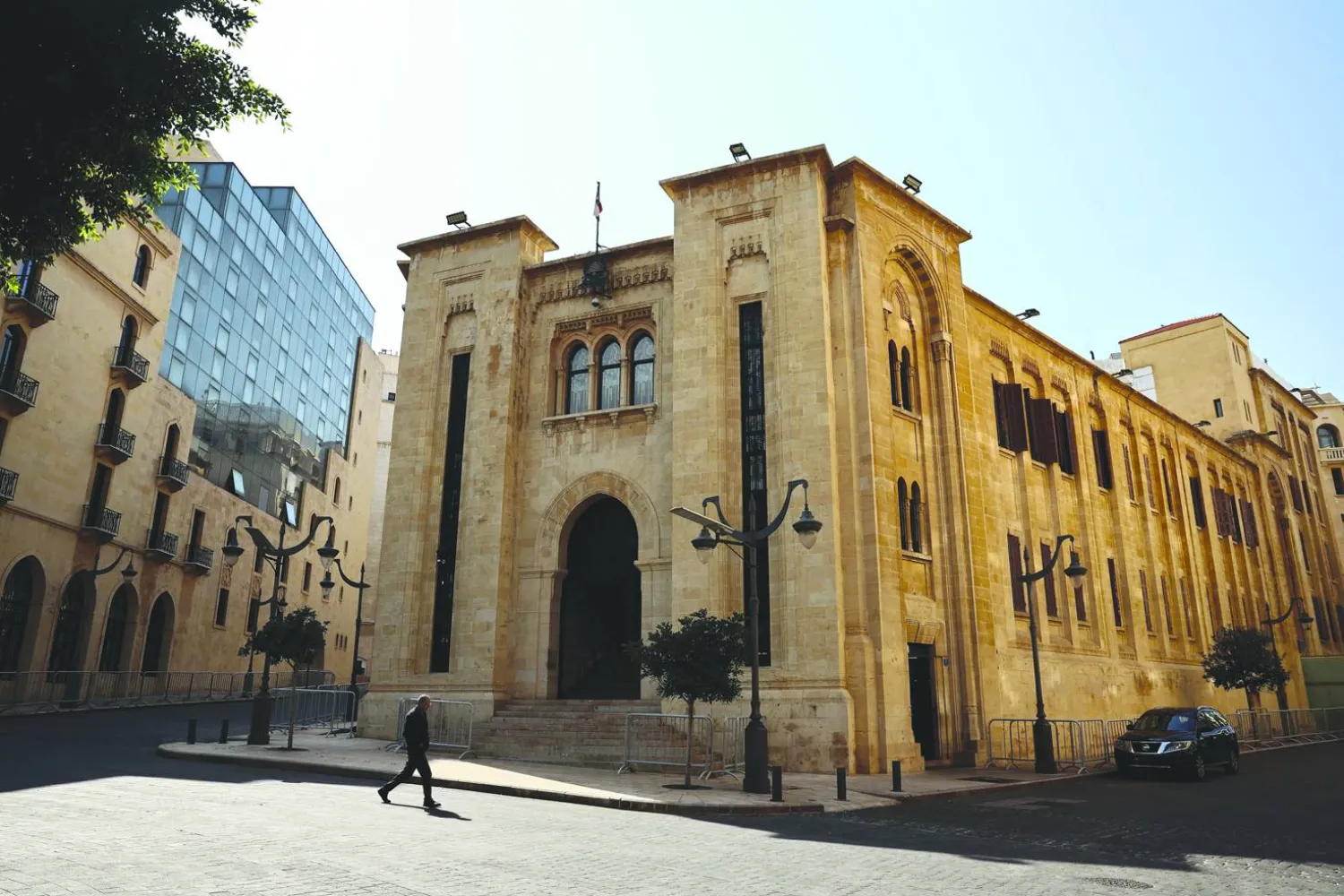
A general view of parliament building in Beirut, Lebanon, March 24, 2026. (Reuters)
TT

From War Amnesty to Prison Amnesty... What Has Changed in Lebanon in 35 Years?

A general view of parliament building in Beirut, Lebanon, March 24, 2026. (Reuters)

The Lebanese parliament's landmark approval of an amnesty law on Wednesday, 35 years after the 1991 amnesty, has revived debate on the different circumstances that prompted Lebanon to resort to amnesty twice.

While the first was enacted to turn the page on the 1975-90 civil war and kick off a new political chapter in the country, the 2026 law came to address the conditions of detainees and convicts, prolonged detentions, and the prison crisis, amid political considerations that led to parliament to ratify it.

‘Public oblivion’

Former Minister of Social Affairs Rashid Derbas brought the discussion back to the philosophy of amnesty itself, telling Asharq Al-Awsat that "the general amnesty issued in 1991 came following the civil war, in hopes of closing a chapter and entering a new era."

He explained that "the philosophy of general amnesty is fundamentally based on establishing public oblivion, meaning closing a page of the past and opening a new one."

Commenting on the current amnesty law, Derbas wondered: "Is it reasonable for a person to remain all this long time without a trial? Is it reasonable for certain accusations and cases to drag on to this extent? It was necessary to address this issue,” but unfortunately, it fell victim to political wrangling for years.

Former Justice Minister Ibrahim Najjar drew a legal and political distinction between the two experiences, telling Asharq Al-Awsat that "there is a very big difference between the law of August 26, 1991, and the law of August 12, 2026."

He explained that "from a political standpoint, the 1991 general amnesty law aimed to turn the page on the war and conclude all prosecutions associated with it. This is evidenced by the fact that it broadly covered crimes committed before March 28, 1991, specifically war-related crimes of a political nature, with some specific exceptions."

Najjar added that "the 1991 law therefore had a political, reconciliatory character, meaning it aimed to restore the smooth functioning of coexistence, which was its primary political goal."

As for the new legislation, he placed it in a different framework, stating that "the 2026 law has specific political dimensions in Lebanon and Syria, in addition to being related to prison conditions and the high number of detainees and convicts."

Najjar stressed that "the law issued on Wednesday is not a general amnesty for crimes committed before a specific date, because it targets specific categories and cases. It is closer to a socio-penal law concerned with addressing the conditions of detainees and convicts through an exceptional reduction of certain sentences."

He pointed out that "the 2026 law excluded many crimes and felonies, including the killing of military personnel, crimes referred to the Judicial Council, premeditated murder, money laundering, financial crimes, and drug felonies."

"This Lebanese law has clear Syrian dimensions, and it has also benefited some Lebanese who had sought refuge in Israel," he added.
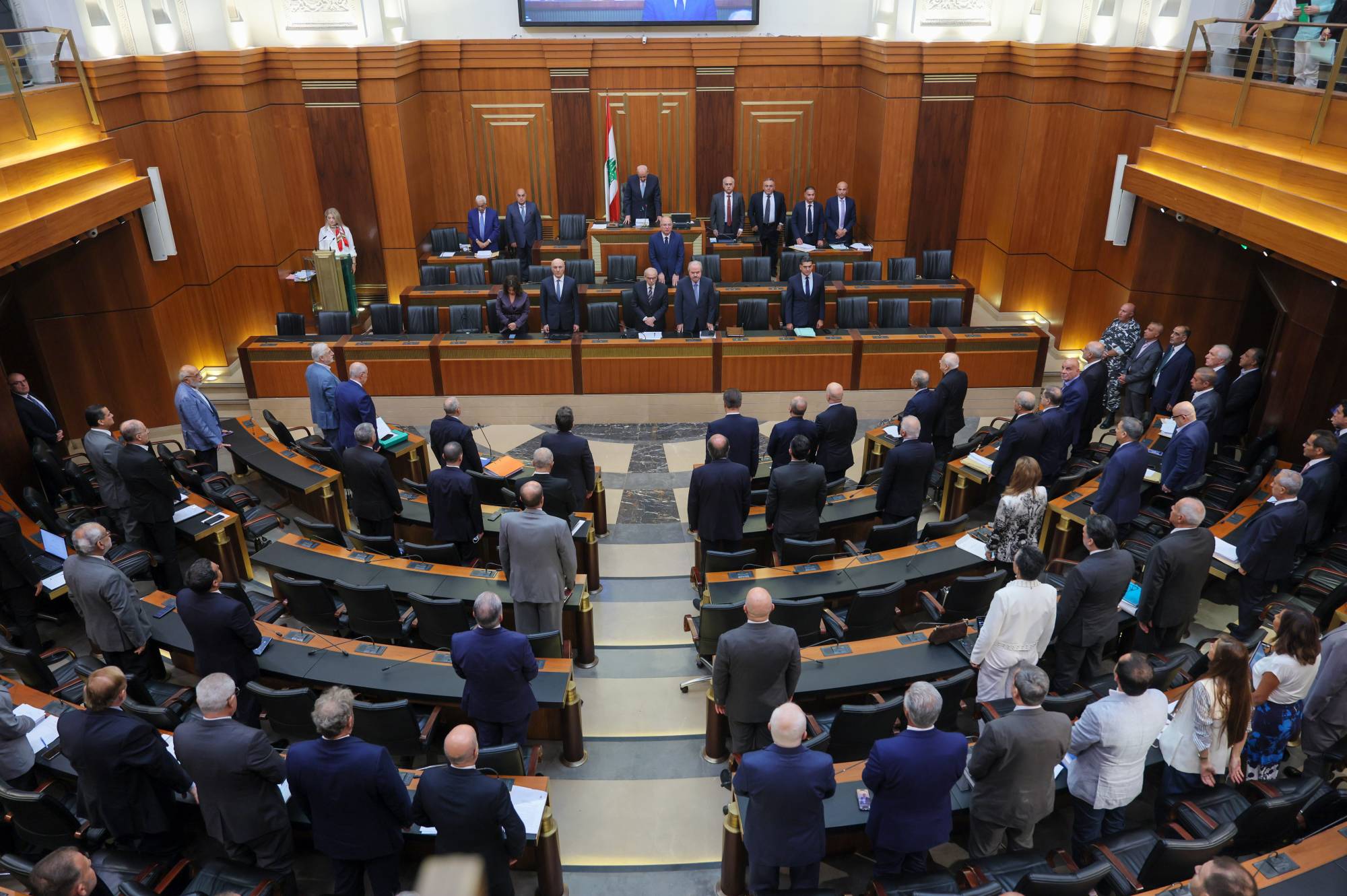
Lebanese lawmakers attend a parliamentary session to discuss a proposed general amnesty law, the abolition of the death penalty and the salaries of retired members of Lebanon's security forces in Beirut, Lebanon, 11 August 2026. (EPA)

Political settlement

Former MP and Minister Butros Harb interpreted the current law from an angle that combines politics and humanitarian considerations.

Speaking to Asharq Al-Awsat, Harb stated: "In part, the current amnesty is a political settlement more than a purely judicial move, even though it includes a humanitarian aspect that cannot be ignored."

At the same time, he stressed that addressing the conditions of prisoners should not lead to "overlooking the rights of the Lebanese Army and its victims, particularly in cases related to those who engaged in clashes with it."

He explained that "there is a humanitarian aspect that must be taken into account, because the Lebanese judiciary was influenced at certain stages and did not exercise its powers with the required speed, whether in terms of settling cases or issuing verdicts."

He noted that "there are individuals who spent long periods in prison that, in some cases, exceeded the sentence that could have been issued against them had they been tried within normal timeframes."

This "demands a humanitarian and legal solution to the problem," he remarked.

However, he noted that the amnesty file "has also unfortunately turned into a subject of sectarian debates, especially regarding the cases of Islamists who fought the army."

Harb criticized the double standards related to the army in the ongoing debate. "Some of those who today declare their concern for the army were, unfortunately, among the forces that helped inflict major losses on it, whether during the Lebanese civil war or in the clashes the country witnessed in later years."

The issue must not turn into fodder for political debates at the expense of the army or the rights of its victims, he urged.

‘Fundamentally different’

He said the 1991 and current amnesty are "fundamentally different."

He explained that the 1991 amnesty happened during "exceptional political circumstances that followed the Taif Agreement" and the end of the civil war.

"At that time, Lebanon was emerging from a long war, and it was necessary to turn the page on that chapter and enter a new era allowing the rebuilding of the state. Therefore, the amnesty was part of a broader national political settlement."

"Today, however, the problem is different even if it has a political aspect because it is primarily linked to a judicial and humanitarian failure that must be addressed," Harb stressed.

"The issue required a solution because it is unacceptable for individuals to remain in prison for years due to delayed trials or the failure to settle their cases," he said.



Iran's Hormuz Leverage Wanes as US Economic Squeeze Bites

Vessels in the Strait of Hormuz near the beach of Bandar Abbas, Iran, September 5, 2026. (Reuters)
TT

Iran's Hormuz Leverage Wanes as US Economic Squeeze Bites

Vessels in the Strait of Hormuz near the beach of Bandar Abbas, Iran, September 5, 2026. (Reuters)

Six months after a conflict that rattled markets and pushed the region to the brink of a wider war, the tide may be turning against Iran as Washington unleashes an unprecedented economic offensive to achieve what military force could not.

After years of surviving sanctions, Tehran is now confronting one of the harshest squeezes in the regime's history, according to Iranian insiders and regional sources cited by Reuters.

A US naval blockade and tougher sanctions are curbing oil exports, ‌restricting access to foreign currency and exposing growing strains in the economy.

The campaign has led US and regional officials to wager that mounting economic pressure can force Tehran to allow free passage through the Strait of Hormuz, which carries about a fifth of global oil and LNG supplies.

Their bet rests on a simple calculation: Iran is suffering more economic damage than it is inflicting. Efforts to choke off oil exports have cut state revenues, while attempts to disrupt shipping through Hormuz have not triggered the global economic shock Tehran hoped would force Washington to compromise. Energy markets have adjusted and alternative supplies have continued to flow.

Whether the pressure will force concessions remains unclear, the regional sources said. Tehran has failed to impose the costs it hoped would break Washington's resolve but has shown little sign of abandoning demands for sanctions relief, access to frozen assets and recognition of its security role in Hormuz.

Still, a new formula for resolving the standoff is now under discussion between mediators and Iran, the sources said.

Can Tehran outlast the squeeze?

Three senior Iranian sources acknowledged that Washington's campaign is becoming increasingly difficult to withstand. The latest measures have sharply restricted Tehran's ability to access foreign currency, import goods and tap global financing networks that have helped keep the economy afloat.

Iranian leaders fear a worsening economy, marked by surging prices, weaker trade and pressure on household incomes, could reignite nationwide unrest that has repeatedly challenged Tehran.

Shortages of key imports, including fuel and wheat, are becoming an increasing concern, officials said.

US Treasury Secretary Scott Bessent described the strategy as a “one-two punch” combining the blockade with “the toughest sanctions in history.”

“It is going to work in Iran and we are going to collapse this regime,” he told CNBC.

For some US, Israeli and regional officials, such ‌strains strengthen ⁠hopes that economic pressure could eventually carry political consequences inside Iran by triggering unrest, widening rifts within the leadership and weakening its grip on power.

Others remain skeptical that economic and military coercion will produce a political rupture, pointing to decades of failed efforts to destabilize the regime and Tehran's willingness to suppress dissent. They argue Iran's rulers may again prove more resilient than their adversaries expect.

Resilience test

Dennis Ross, a former US negotiator, said Washington may be interpreting Iran's economic distress as evidence of strategic success when the reality is more complicated. Tehran remains determined to demonstrate it can control Hormuz, but appears to be calibrating its use of force while keeping further escalation in reserve.

The Revolutionary Guards may believe Iran can absorb the economic pain and outlast the pressure rather than compromise, ⁠Ross said.

“The Iranians have consistently surprised us in terms of their resiliency,” he added, saying he doubted economic and military pressure alone would force a retreat. Hardliners, he said, may believe they can endure and ultimately secure what they want.

Resilience may depend as much on public tolerance as Tehran's ability to absorb economic hardship, said Burcu Ozcelik, a senior research fellow at the Royal United Services Institute.

“Of course, the economic squeeze raises the risk of public unrest, but for now, a wartime mentality appears to have a significant hold ⁠over the population,” said Ozcelik. “Foreign military intervention, civilian casualties and the perception of a wider civilization confrontation with a US-led order are sustaining a degree of 'Iran-first' patriotic support, tolerance or simply patience with the regime.”

The result is a more stubborn impasse than Washington may have anticipated. Economic pressure is deepening the pain, but Tehran's powerful Revolutionary Guards may see endurance, backed by the threat of escalation, as leverage rather than a reason to concede.

The key question is not whether Iran is ⁠hurting, but whether it is hurting enough to compromise before either side slips toward another confrontation, the regional sources said.

Ross said the clearest path to a deal may lie in the dispute over shipping fees through the Strait of Hormuz. Iran could abandon any demand for a toll while retaining the right to charge for legitimate navigational, security or environmental services, he said.

Such an arrangement could give both sides a claim to victory, allowing Tehran to step back without appearing to capitulate.

“If you could announce that the Strait were reopened,” Ross said, “I think Trump would do a deal.”


China's Memories of Mao Fade to Nostalgia 50 Years after His Death

The Great Helmsman, who died September 9 1976, is still very much a fixture in central Henan province's Nanjie -- often dubbed "China's last Maoist village". Pedro PARDO / AFP
TT

China's Memories of Mao Fade to Nostalgia 50 Years after His Death

The Great Helmsman, who died September 9 1976, is still very much a fixture in central Henan province's Nanjie -- often dubbed "China's last Maoist village". Pedro PARDO / AFP

The crimson flags on Nanjie village's "East is Red" Square hang limp in the sweltering summer heat as a trickle of tourists take photos with a towering statue of Chairman Mao Zedong, still gleaming white almost 50 years after he died.

The Great Helmsman, who died September 9 1976, is still very much a fixture in central Henan province's Nanjie -- often dubbed "China's last Maoist village", said AFP.

Nostalgia for Mao's egalitarian ideals is growing in China as memories of his turbulent rule fade and the country grapples with a slowing economy and inequality.

Mao, who led the 1949 communist revolution against the ruling nationalists, ushered in an era of collectivized ownership he argued would drive industry and unite the country, but his drastic policies are also blamed by historians for mass starvation and millions of deaths.

While the ruling Chinese Communist Party maintains Mao was a revolutionary hero, it publicly acknowledged after his death that his devastating Cultural Revolution was a "grave mistake" -- a verdict upheld by subsequent leaders.

In Nanjie, countless murals of the former Chinese leader are plastered around the village.

Residents still live under Maoist principles of shared ownership, while the rest of the country moved on from that economic model.

"I still revere him very much," Xie Kaiyue, a 22-year-old local university student, said of Mao, who died almost three decades before she was born.

"I think young people in the village and, actually, myself, aren't as strong-spirited as in the past... People were purer," she said.

Nearby, electric carts whisked visitors past uniform apartment blocks plastered with socialist slogans as guides explained how cooperative ownership in local enterprises funds free housing for residents.

- Party line -

Around 500 kilometers (310 miles) north, in the mountain village of Dazhai in Shanxi province, once promoted by Mao as a national model after locals terraformed its arid hills into irrigated fields, tourists reminisce about an era when the Great Helmsman dominated political and social life.

"(People) didn't have enough to eat or to wear," Li, a 64-year-old tourist from Xi'an, said of his childhood.

"But... the whole country was full of vigor, and there was a spirit of struggling with heaven, earth, and people to change every aspect of China," the retiree said.

"Of course I miss it."

Now, Dazhai is overflowing with shops selling items that support Mao's personality cult -- posters, playing cards, and crockery emblazoned with his image, and the "Little Red Book" of his quotations.

Still, references to dark chapters of his decades in absolute power are tightly censored in public discourse.

The decade-long episode instigated by Mao in 1966 saw intellectuals brutally targeted as "class enemies" and schools shuttered, setting China back for years in education and development.

Private property and land were collectivized, while economic management pushed the country to the Great Famine, which the government says killed around 15 million people, while historians estimate around 20-43 million.

In one museum, text mentioning the Cultural Revolution had been crudely scraped off signage.

"Everything you see in the public domain... is the party line. No one is allowed to deviate from this," said scholar Xu Chenggang, who was targeted as a child in Beijing during the Cultural Revolution because his father was labelled a "rightist".

Mao's face is printed on banknotes, his portrait overlooks Tiananmen Square, and his body is preserved in a mausoleum.

Every year new movies and TV shows dramatizing Mao's life beam the message of his great deeds to public.

Public discussion has been squeezed further under current leader Xi Jinping, who warns against "historical nihilism", or narratives contradicting the party's own.

"The Communist Party told people there were mistakes, but what's the meaning of 'mistake'? No one knows," Xu said.

- 'Great figure' -

The sanitized history has left space for romanticized interpretations among youths frustrated by long working hours and intense competition in education and the job market.

In December, a viral video series on Bilibili -- a platform popular with those under 30 -- argued that the 2017 movie 'Youth', which follows young performers in a military dance troupe during the 1970s, was a subtle ode to the Cultural Revolution.

The videos, which praised Mao and blamed capitalist elites for crushing the movement, were removed after gaining over 35 million views in less than a week.

"Today, there is more of a sense that the Cultural Revolution was a period of idealism, where society was fired by ideals and not by the relentless pursuit of money and material goods," said to Kerry Brown, head of the Lau China Institute in London and author of a recent book on Mao.

"This is, of course, a total fabrication," he said.

Many also credit Mao with laying the foundation for China to become a modern, technologically advanced nation, said Mobo Gao, professor of Chinese studies at Adelaide University.

"They ask, where did (today's China) come from? It came from the establishment of the PRC," said Gao, who lived through the Mao era in rural Jiangxi province.

"Who was the one who really established the PRC? It must be Mao."

In Shijiazhuang, an industrial city of seven million northeast of Dazhai, 20-year-old Wang Zhihao and his classmates posed with a giant Mao statue opposite the municipal government.

"We admire and revere Chairman Mao very much. He is a great figure," Wang said, as the sound of elderly residents singing songs praising the Communist Party drifted over from the nearby square.

"He led the founding of New China."


Is US Military Cooperation with Ethiopia Driven by Anger over Egypt-China Rapprochement?

US President Donald Trump during his meets with Egyptian President Abdel Fattah al-Sisi on the sidelines of the 73rd session of the UN General Assembly in September 2018. (Egyptian Presidency)
TT

Is US Military Cooperation with Ethiopia Driven by Anger over Egypt-China Rapprochement?

US President Donald Trump during his meets with Egyptian President Abdel Fattah al-Sisi on the sidelines of the 73rd session of the UN General Assembly in September 2018. (Egyptian Presidency)

A US defense agreement with Ethiopia was announced days before an important visit by Chinese President Xi Jinping to Cairo that saw agreements and memorandums of understanding signed in several fields and coincided with joint Egyptian-Chinese air exercises.

The timing raised questions over whether Washington’s military cooperation with Addis Ababa was driven by “US anger at Cairo” and what objectives it serves amid tensions in the Horn of Africa.

The United States and Ethiopia signed a defense agreement on Aug. 21 during an official visit by an Ethiopian military delegation to Washington. Both sides described it as a strategic framework aimed at strengthening military and security cooperation, protecting national interests and securing mutual benefits.

Raafat Mahmoud, head of the African Affairs Research Unit at the Egyptian Cabinet's Information and Decision Support Center (IDSC), told Asharq Al-Awsat that Washington was seeking to rebuild ties with Addis Ababa after years of tension, particularly over the Tigray war and US criticism of Ethiopia’s human rights record.

He argued that the agreement showed Ethiopia had become part of broader US calculations involving Red Sea security, countering Chinese and Russian influence and combating armed groups in the Horn.

Ethiopian lawmaker Mohammed Al-Arusi noted that Washington views the Horn as directly linked to Red Sea security, international trade and maritime routes, while also facing terrorist threats.

“Ethiopia lies at the heart of this geography, with its demographic, political and military weight across a broad region, and it hosts the permanent headquarters of the African Union,” he told Asharq Al-Awsat. Washington, he added, was not seeking a temporary stance but it is “rebuilding its position in a region where the balance of power is changing.”

US Republican and strategic affairs expert Adolfo Franco cautioned that the agreement lacks formally binding treaties and direct financial funding, adding that future defense exports remain subject to strict restrictions and case-by-case assessments, including human rights considerations.

Al-Arusi pointed to a US-Ethiopian dialogue launched in May covering economics, trade, investment, defense and security. The defense track advanced just three months later, a sequence he said showed Washington was approaching Ethiopia with long-term considerations.

Mahmoud said growing US support could strengthen Ethiopia’s negotiating position not only on water but also in its efforts to secure maritime access and expand its presence in the Red Sea region.

Recent media reports have portrayed the US-Ethiopian rapprochement as Washington’s response to Egypt’s growing ties with China, highlighted by Xi’s visit to Cairo this week.

Mahmoud countered that Egyptian-Chinese rapprochement was not new, although recent developments naturally raised sensitivities in Washington, particularly amid expanding economic and security cooperation.

In January 2026, Ethiopia and China elevated their relations to an “all-weather strategic partnership,” nearly two years after Egypt and China upgraded their ties to a “strategic partnership” in 2024.

Al-Arusi argued that Washington’s expanding partnership with Addis Ababa should not be viewed as replacing one partner with another, but rather as evidence of Ethiopia’s growing strategic value.

Former US diplomat Henry Ensher told Asharq Al-Awsat that Washington wants a security partner in the Horn and that Ethiopia is the best option given its capabilities.

While China and the United States compete in Africa, Egypt is the more important partner, he said, making it unlikely that Washington would use this approach to confront or punish Cairo.