

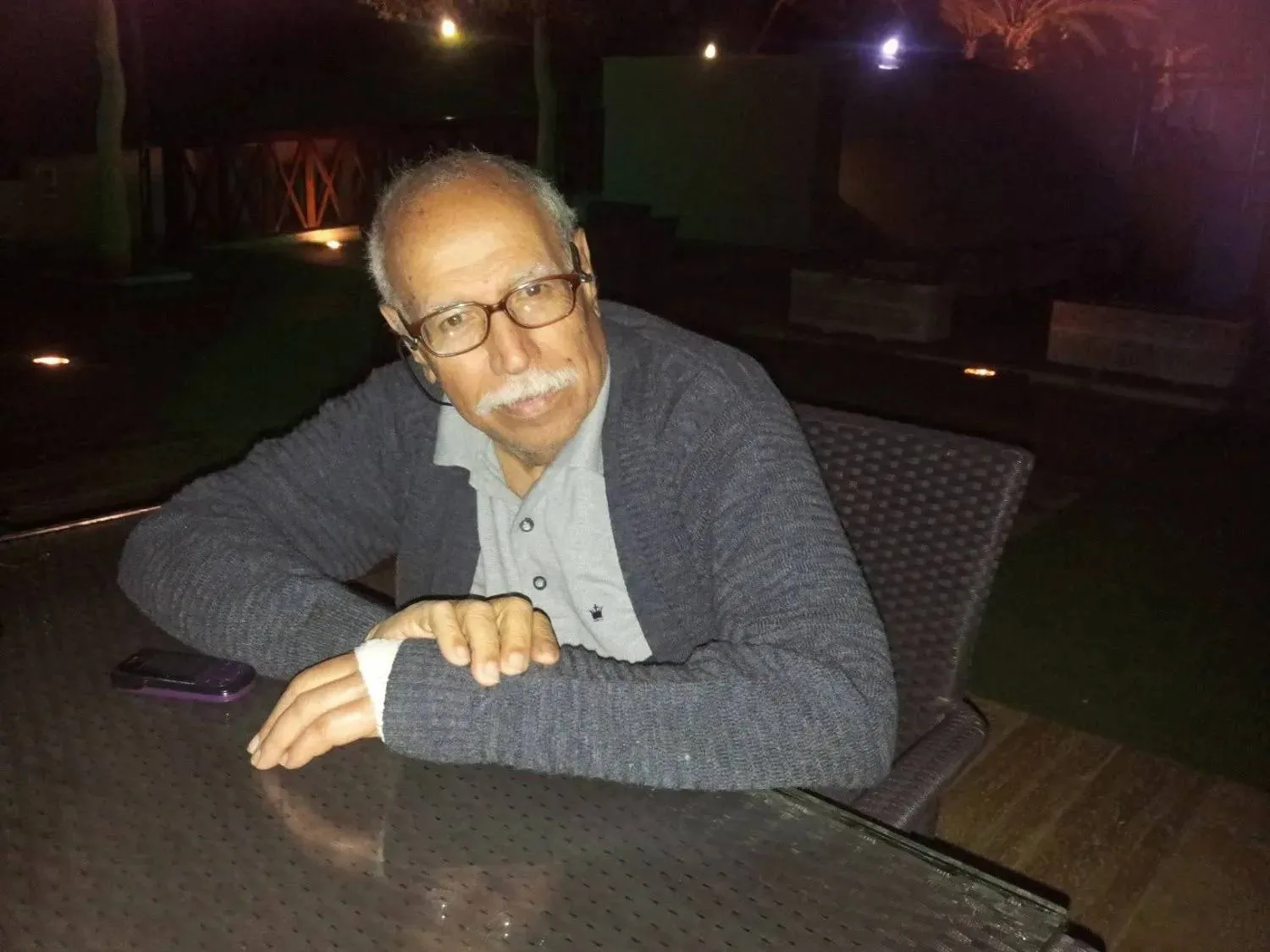

Lockerbie Specter Returns in Netflix Drama: Who Was Bombmaker Marwan Khreesat?

Marwan Khreesat (Facebook)
TT

Lockerbie Specter Returns in Netflix Drama: Who Was Bombmaker Marwan Khreesat?

Marwan Khreesat (Facebook)

In the shadow world of Palestinian factional operations and intelligence wars that defined the 1970s and 1980s, few names were as mysterious or controversial as Marwan Khreesat.

Linked to what became known as the “engineering of airborne death,” Khreesat was described in Western intelligence accounts as a skilled bombmaker for the Popular Front for the Liberation of Palestine-General Command, or PFLP-GC, led by Ahmed Jibril.

For decades, he remained an elusive figure, moving between world capitals. West Germany arrested him, then released him in circumstances that fueled speculation. Israel’s Mossad pursued him. He eventually died in Amman at about 70, taking many of his secrets with him.

To some, he was a fedayeen who used his electrical skills against the Israeli occupation. To Western investigators, he was linked to aviation attacks that shocked the world.

His death did not end the questions.

Khreesat’s fingerprints, at least in the investigative sense, continued to hover over the Lockerbie case. More recently, his name returned to international attention as a Netflix docudrama revisited the hidden battles, intelligence operations, and unresolved questions of that era.

The electronics expert inside the PFLP-GC

Khreesat’s story began with technical skill.

A talented electrician and technician, he became involved in armed activity early, driven by his nationalist background. As radical Palestinian factions expanded, he joined the PFLP-GC, which had split from the Popular Front for the Liberation of Palestine and focused on specialized cross-border military operations.

Ahmed Jibril, born in 1938 in a village in the Jaffa district, founded the faction in 1968 after breaking away from the Popular Front for the Liberation of Palestine.

He quickly recognized Khreesat’s ability to work with electrical circuits and plastic explosives such as C-4 and Semtex.

Khreesat was not a front-line fighter.

He worked instead in secret, specially equipped laboratories, designing sophisticated explosive devices triggered by changes in air pressure or by digital timers.

That technical skill turned ordinary objects into devices capable of defeating airport security systems.

From El Al to Operation Autumn Leaves

Khreesat’s expertise did not suddenly emerge in the 1980s. It had been developed years earlier in the laboratories of the region’s shadow wars.

One early episode came in Rome in the summer of 1972.

The PFLP-GC used what the source describes as an emotional deception involving two British women, who were persuaded to carry a household record player presented as a farewell gift before boarding an El Al flight to Tel Aviv.

Hidden inside the record player was a charge of powerful plastic explosives fitted with a barometric trigger.

The device was designed to detonate automatically when the aircraft reached a high altitude over the Mediterranean, sending the wreckage — and potentially the evidence — into the sea.

The bomb exploded about 20 minutes after takeoff, tearing a large hole in the aircraft.

But airport security had insisted the record player be placed in the baggage hold rather than the passenger cabin. That reduced the blast’s impact and allowed the pilot to make a safe emergency landing in Rome.

The incident became an early warning to international intelligence services: an engineer was turning ordinary household electronics into sophisticated airborne bombs.

The most serious threat to Khreesat’s operations came 16 years later.

In the autumn of 1988, West German authorities penetrated a PFLP-GC cell in Frankfurt led by Hafez Dalkamoni as part of what became known as Operation Autumn Leaves.

German police arrested Khreesat and seized explosives concealed inside modified Toshiba radios and cassette players.

The devices were designed to explode automatically once an aircraft reached a specific altitude, triggered by changes in atmospheric pressure.

Then came the mystery.

German authorities released Khreesat only days after his arrest.

The decision triggered years of speculation. Later Western intelligence reports and suspicions suggested he may have been acting as a “double agent,” passing sensitive information to Jordanian, US or other security services.

Lockerbie and the question that would not disappear

On Dec. 21, 1988, Pan Am Flight 103 exploded over the Scottish town of Lockerbie, killing 270 people.

The technical similarities drew immediate attention.

The bomb used in the attack had also been concealed in a Toshiba cassette player, echoing devices seized from Khreesat in Germany just two months earlier.

Although the international judicial process later convicted Libyan Abdelbaset al-Megrahi, Khreesat’s name never fully disappeared from the investigation.

Decades later, it returned to public view through The Bombing of Pan Am 103, a major docudrama produced by the BBC and Netflix.

The series examined the criminal investigation and the joint pursuit by Scottish investigators and the US Federal Bureau of Investigation.

It also revived the theory of an “Iranian-Palestinian connection.”

Khreesat appeared in that context through references to fragments linked to the bomb and comparisons with devices he had designed that were seized in Germany.

The old question returned with it:

Was Marwan Khreesat the man who actually built the bomb that destroyed Pan Am Flight 103 over Scotland?

The secret file left behind

Khreesat spent his final decades largely silent at his home in the suburbs of Amman, refusing repeated approaches from Western media.

In later years, however, he began publishing memoirs and documents online, attacking some Palestinian leaders and at times boasting about earlier operations against Israeli interests.

After his death, the story took another turn.

His daughter, Suha Khreesat, made claims to British media, again pushing his name into the headlines.

In a 2018 interview with Britain’s Daily Mirror, marking the 30th anniversary of the Lockerbie bombing, she said her father had played no part in the deaths of the victims.

But she also said he had left behind a “large secret file, documents and recordings” kept by her mother, his wife.

She said the material proved that Ahmed Jibril — who later died in Damascus at about 83 — had carried out the Lockerbie operation under a major direct financial deal with the Iranian government.

Marwan Khreesat died, leaving behind a legacy as murky as the intelligence wars in which he operated.

He was a bombmaker whose technical skills challenged security services across two continents, a figure whose story fused electronics, covert operations, and regional power struggles.

And decades later, his name still shadows the Lockerbie file — preserved in intelligence documents, revived in investigations and retold on screens, revisiting one of the era’s most enduring mysteries.



Fall of Mokha Leaves Humanitarian Crisis in Its Wake, Threatens Shipping

The Houthi escalation has forced thousands of Yemeni families to flee their homes. (AFP)
TT

Fall of Mokha Leaves Humanitarian Crisis in Its Wake, Threatens Shipping

The Houthi escalation has forced thousands of Yemeni families to flee their homes. (AFP)

Those who had not fled the southwestern Yemeni coastal city of Mokha awoke Thursday to a grim military and humanitarian reality after the Houthi group seized full control of the city and its strategic port and extended its reach toward the Bab al-Mandeb Strait.

As military developments accelerate, threatening international shipping, the humanitarian crisis is worsening, pushing tens of thousands of civilians to the brink.

With little time to consider their options, thousands of civilians in western Taiz and southern Hodeidah were forced to flee after the Houthis carried out raids and arrests in villages and communities they had entered, amid fears of reprisals and reports of looting targeting residents and their property.

Mokha endured a night of panic after residents and wounded fighters were told to evacuate their homes and flee following the Houthis’ announcement that they had seized the Khalid camp and Jabal al-Nar, east of the city. Houthi forces also continued advancing through the Mawza district, which borders the coastal strip to the east, making the city’s encirclement from all sides appear only a matter of time.

Warnings broadcast over loudspeakers and radio communications triggered widespread panic during the first hours of the night and continued into the morning.

Residents described harrowing scenes of thousands of families fleeing villages and areas in western Taiz and southern Hodeidah, some on foot and others in cars or on motorcycles. Some took whatever livestock and possessions they could save.

They told Asharq Al-Awsat that, for many families, displacement was not planned but an urgent flight from fear, forcing them to leave behind their homes, land and livelihoods.

Those unable to leave found themselves trapped amid fear and uncertainty as raids and arrests continued, according to residents, alongside reports of looting and theft.

Confusion and flight

Human rights activist Amina Mohammed told Asharq Al-Awsat that she was preparing dinner for her family when they learned of warnings to evacuate the city.

The news threw everyone in the house into confusion. Initially unable to believe the warnings, they went outside to check and were confronted by scenes of panic, with hundreds of people of all ages running south.

Mohammed and her family immediately returned home, gathered whatever belongings they could and joined the exodus. By sunrise, they had reached Yemen’s interim capital, Aden. The road between Mokha and Aden remained heavily congested until late Thursday.

Medical sources, who fled after the Houthi takeover, said armed fighters stormed hospitals and health facilities as soon as they took control of the city. They detained wounded patients and began questioning them as suspected fighters in an effort to obtain military information.

The fighters also searched records and documents and ordered administrative staff to disclose patients’ medical information.

The sources told Asharq Al-Awsat that doctors, nurses and other hospital workers were also detained and questioned, prompting many medical personnel, who were not on duty during the raids, to flee the city.

The Houthis also carried out a wave of arrests in streets, homes, shops and public facilities, prompting most remaining residents to stay indoors.

Humanitarian shock

Mohammed al-Zaghrouri was saying goodbye to the manager of his new motorcycle spare-parts shop, which he had opened only weeks earlier, and preparing to spend the evening with friends he had met since arriving in Mokha. The manager was heading home to spend the night with his family.

Suddenly, both men changed course and headed for Aden.

Al-Zaghrouri told Asharq Al-Awsat that they were stunned by the sight of frightened residents running through the streets. Within seconds, they realized they too had to join them.

They rushed back to the shop to retrieve whatever cash and small valuables they could carry. Within hours, al-Zaghrouri was driving out of the city with the manager and his family, lamenting the effort and money they had left behind.

Mokha’s fall was more than a military shift. It dealt a severe humanitarian blow reflected in immediate UN assessments.

According to the United Nations Population Fund, escalating fighting in Taiz and along Yemen’s West Coast displaced about 40,000 people. The International Organization for Migration said the sharp escalation had forced more than 18,500 people to flee within days, with the numbers rising by the hour.

The IOM also warned of dangerous “secondary displacement” affecting families that had previously settled in camps in districts, including Hays and Mawza, only to find themselves fleeing fighting once again.

Field reports by rights groups indicated that those escaping faced extremely harsh conditions, with more than 100 families forced to spend the night among rocky outcrops and rugged mountain areas in western rural Taiz without basic necessities.

The displacement coincided with stringent Houthi restrictions that prevented some residents in combat zones from leaving, amid accusations that civilians were being used as human shields.

Pledge to counter terrorist threats

As displacement continues, families who have fled need safety, shelter, food, water and fuel, as well as protection and assistance in reuniting relatives separated during their escape, particularly children and older people.

Separately, local authorities in the interim capital, Aden, and the governorates of Abyan and Lahj issued a joint statement saying the armed forces had overcome the initial shock and confusion, regained their balance and were fully prepared to confront any challenges.

The statement cited broad popular support and public momentum to confront the Houthis and thwart the ambitions of the “Iranian project in the region.”

The authorities said they continued to monitor security conditions and public services, while state institutions remained operational. They pledged to counter terrorist threats, protect citizens and property, and preserve security and stability in coordination with the relevant government, security and military bodies.

They urged residents to remain calm and vigilant, disregard rumors, obtain information from official sources, cooperate with the relevant authorities and report any suspicious movements or activities.


'Second Life': Nepal Tunnel Survivor Recalls Ordeal

A man carrying his belongings walks past a damaged house in the aftermath of flash floods at Trishuli in Nepal's Nuwakot district on September 11, 2026. (Photo by Prakash MATHEMA / AFP)
TT

'Second Life': Nepal Tunnel Survivor Recalls Ordeal

A man carrying his belongings walks past a damaged house in the aftermath of flash floods at Trishuli in Nepal's Nuwakot district on September 11, 2026. (Photo by Prakash MATHEMA / AFP)

For 10 days, Nepali hydropower worker Sanjay Sah survived in darkness inside a flooded tunnel, drinking muddy water and losing all sense of time as he desperately prayed for rescue.

When a disaster response team finally pulled him to safety on September 4, Sah's first question showed how deeply the ordeal had disoriented him, said AFP.

"When I was rescued I first asked, how many days has it been?" Sah, 30, told AFP in an interview, while on his way back home in Saptari district Sunday.

"He said that it has been 10 days. I thought it had been just a few days."

Sah was among hundreds of workers at a series of hydropower projects hit by the catastrophic August 26 flood, triggered by a glacial mountain collapse on the China-Nepal border.

Sah's extraordinary survival was a rare ray of hope after a disaster that killed at least 1,429 people and left more than 5,640 missing, the majority in Nepal.

Struggling to hold back tears as friends and family welcomed him with garlands and a cake, Sah recalled how the disaster struck with stunning speed.

"I was on duty, and then suddenly an unthinkable flood hit us, with tsunami-like waves that were several meters tall," he said.

Workers had received warnings that floodwaters were approaching, but did not get enough time to escape, he said.

"We did get information to stay alert, that a big flood is coming. As much as possible, we tried to be alert and evacuate our friends," Sah said.

"But the water did not give us much time... we shut down everything, and tried to rescue and evacuate our friends."

Within minutes, however, the tunnel was engulfed by raging waters.

The sheer scale of the flood was unlike anything witnesses had seen before, with the government pointing the finger at the dire impact of rising global temperatures on Nepal's Himalayan mountains.

- 'Divine energy' -

Separated from his colleagues, Sah found himself stranded with little idea whether anyone would ever reach him.

His Hindu faith helped carry him through the days of darkness and isolation.

"I survived because of my deep belief and confidence," he said.

"I was chanting Maha Mantra (Hindu prayers), and the divine energy I received because of that allowed me to not be scared or despair," he said.

"I was able to stay there."

With no clean water to drink, he survived on whatever he could find.

"There was water, but it was muddy," he said. "I only had that."

The darkness and isolation might have been overwhelming, but Sah was not entirely alone.

Another trapped worker, Kabir Maharjan, 45, had survived nearby.

"We were separated but speaking to each other."

The ability to hear another human voice offered a lifeline to Sah.

Eventually, after days of excavation and painstaking rescue efforts, search teams broke through to the trapped men and brought them out alive.

Sah's wife, Lakshmi Kumari Sah, said she never gave up hope of seeing her husband again.

"God has helped us, we had our hopes," she said, holding her daughter in her arms.

Sah, who spent several days recuperating in a Kathmandu hospital, says he has mixed emotions.

"I am happy, but I feel sad too," he said. "I was able to get a second life, to survive there. But many of our friends were there."

As rescuers continue searching through the tunnels, Sah urged authorities not to abandon the effort.

One Chinese worker was rescued on September 5, the day after Sah -- but no signs of life have been heard since.

"I hope the government continues its search and rescue. It is possible there might still be someone alive," he said.

"Or they will be able to find bodies of friends who have passed away and hand them over to their families."


Three Years Since ‘Daniel,’ Libya’s Derna Rebuilds as Families Await Redress

New homes built in Libya’s Derna after the storm (AFP)
TT

Three Years Since ‘Daniel,’ Libya’s Derna Rebuilds as Families Await Redress

New homes built in Libya’s Derna after the storm (AFP)

Three years after Storm Daniel devastated Libya’s Derna, sweeping reconstruction projects are reshaping the city. But some families are still waiting for housing and compensation, while court proceedings have yet to settle responsibility for the collapse of its two dams.

Authorities have begun handing new homes to survivors, but families left off beneficiary lists are renewing their appeals. Dilapidated houses still bear witness to the disaster, which killed or left missing thousands of people and destroyed large parts of the city.

Residents of the Al-Akwakh neighborhood in Derna’s eastern coastal area of Al-Istallat have repeatedly issued statements and video appeals demanding inclusion in housing and compensation projects.

They say their homes are crumbling and the infrastructure has deteriorated further since Storm Daniel. A committee had previously surveyed and numbered the houses, raising hopes that residents would receive new homes.

Civil society activist Nouh Oweiyan said the plight of Al-Akwakh residents should be reconsidered.

“The Libya Development and Reconstruction Fund has become a source of hope for many Libyans seeking solutions to long-standing housing and living problems,” he told Asharq Al-Awsat.

Storm Daniel struck Derna and several other areas of eastern Libya on Sept. 11, 2023. The collapse of the city’s two dams sent huge volumes of water surging into residential neighborhoods. Authorities issued varying figures for the dead and missing as the disaster response unfolded.

The Libya Development and Reconstruction Fund, headed by Belqasim Haftar, launched a sweeping rebuilding drive in Derna two years ago. Since the spring, it has distributed 2,500 fully equipped homes to survivors free of charge. Last month, it announced plans to build another 552 units under the “Mountain Apartment Blocks” project.

Among those still living with the disaster is the family of Marajea al-Ghazizi, whose brother Walid died inside the family home during the floods.

Al-Ghazizi said reconstruction had made visible progress outside the house, but his family was still living with the tragedy inside.

In a Facebook post, he shared a video showing the home’s dilapidated interior. He said court rulings issued in favor of some survivors had not been enforced and called for justice for families who had lost their homes.

“Appreciating the reconstruction effort does not diminish affected families’ right to receive their full entitlements,” he said.

In another account posted on a Facebook page under the name Abdelhalim Haf, a survivor said he received a message telling him his family was entitled to a new home, bringing joy to his children. He later discovered that his name was missing from the beneficiary lists.

The survey and compensation committee told him the message had been sent by mistake, he said, turning the family’s joy into shock. He questioned what would become of the property he had bought with his own money.

Abu Bakr al-Zawi, director of the fund’s Survey and Compensation Department, said in a video that a formal committee comprising Derna’s chief prosecutor and security director had opened a complaints process for anyone who believed they had suffered losses.

Official figures put reconstruction work in Derna at 80% complete.

In a statement on Friday, Belqasem Haftar said: “An even bigger surprise is coming to the city as it opens a new chapter in its history, with a major inauguration worthy of its achievements.”

The rebuilding drive has not closed the question of legal accountability, with victims’ families growing increasingly frustrated, according to local media reports.

A court convicted 12 officials and acquitted four others in July 2024, but the Supreme Court overturned the rulings. The convicted officials have been retried before the Benghazi Court of Appeal since October 2025.

At its latest public hearing on Aug. 9, the court adjourned the case until Oct. 4, leaving the proceedings without a final ruling.

Derna lawyer and activist Mohammed al-Lafi said the disaster was caused by “errors and negligence” under successive governments and political systems. He told Asharq Al-Awsat that he had represented victims seeking financial compensation for the harm suffered by their families.

The courts rejected those claims, al-Lafi said. He added that the interim Government of National Unity in western Libya, which controls the country’s financial decisions, had yet to propose an initiative to compensate victims’ families.

He praised the General Command of the Libyan National Army, however, for providing assistance and building homes for families whose houses were destroyed.

With compensation claims still unresolved, the disaster’s third anniversary was marked prominently at both official and public levels on Friday.

Presidential Council head Mohammed al-Menfi commemorated the victims of Storm Daniel, saying on Friday that “the tragedy united Libyans.”

He praised the rebuilding effort and the restoration of normal life in Derna and other affected areas.

House of Representatives Speaker Aguila Saleh said Derna’s reconstruction represented “a qualitative transformation that astonished everyone,” according to a statement issued on Friday.

Osama Hammad, the prime minister of the government appointed by parliament, said the city was moving toward recovery and reclaiming its role.

Residents and local institutions also marked the anniversary by sharing photographs and memories of victims on social media.