


Nepal Floods Expose Risks to Hydropower in a Warming Himalayas

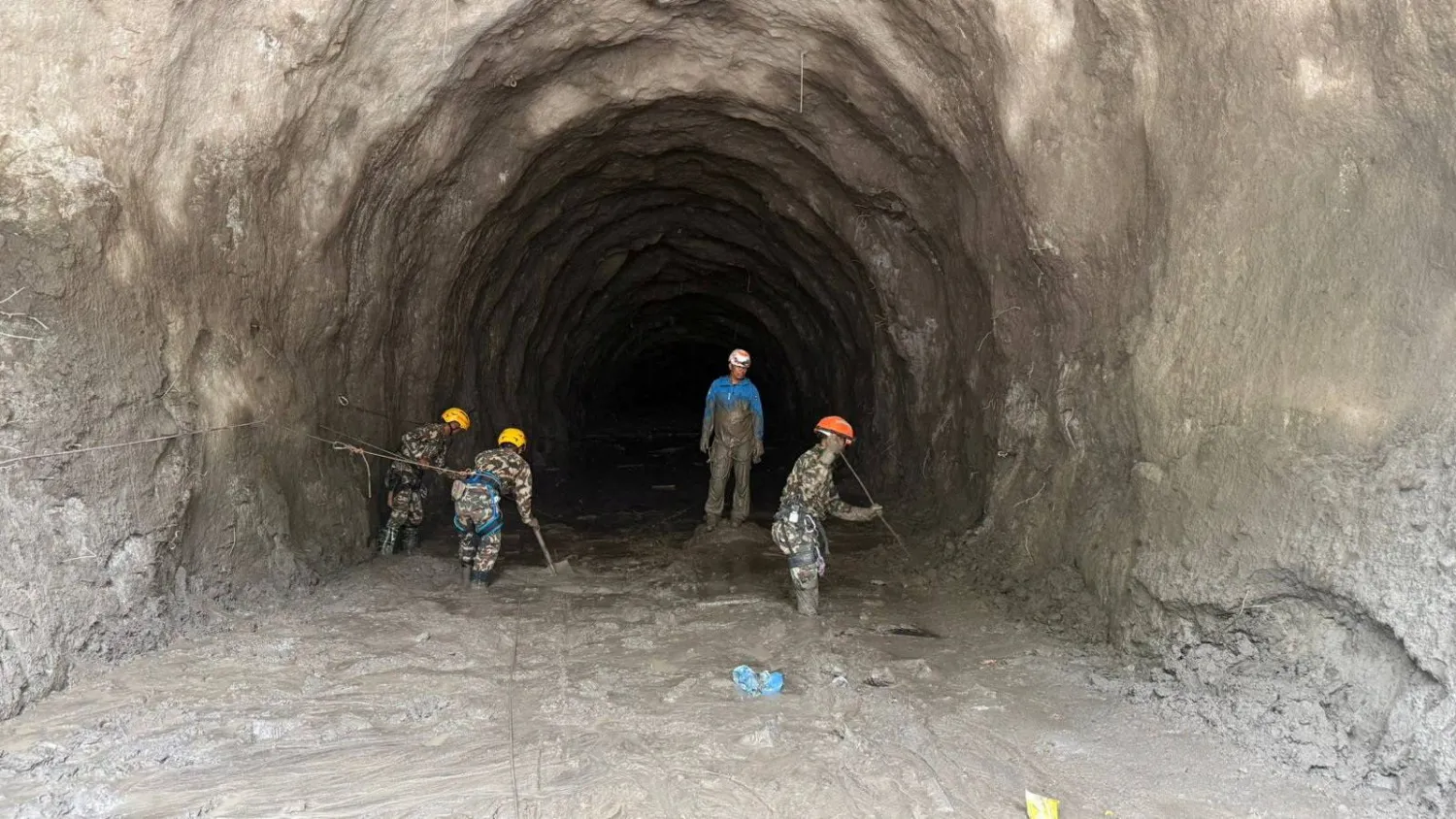
An undated handout photo of rescue workers taking part in a rescue operation near the tunnel of the Trishuli 3A Hydropower Project, following deadly flash floods and mudslides, in Rasuwa, Nepal. (Nepal Army/Handout via Reuters)
TT

Nepal Floods Expose Risks to Hydropower in a Warming Himalayas

An undated handout photo of rescue workers taking part in a rescue operation near the tunnel of the Trishuli 3A Hydropower Project, following deadly flash floods and mudslides, in Rasuwa, Nepal. (Nepal Army/Handout via Reuters)

Workers shoveled thick mud from a flood-ravaged power station in central Nepal this week, trying to restore electricity to more than 20,000 people.

The floods that swept through Nepal and China, killing hundreds and leaving thousands missing, have also overrun hydropower facilities, knocking out about 10% of Nepal’s power capacity.

Once the immediate aftermath of the disaster is dealt with, the question will be how to restore power plants, roads, bridges, schools and health facilities without exposing them to the same vulnerabilities, disaster experts said.

“Authorities have to take a hard look in the mirror now and ask how they will be rebuilding in these places. They will also have to take a close look at other projects in Nepal that have not been built yet, whether they’ll be approved after this event,” said Jakob Steiner, a geoscientist at the University of Graz in Austria, who is currently based in Dhaka, Bangladesh.

Rebuilding for resilience, not just replacement Hydropower projects that were operating or under construction were fully or partly destroyed across Rasuwa, Nuwakot and Dhading, among the worst-hit districts.

Hundreds of workers in Nepal are unaccounted for from a dozen hydropower projects, according to the Independent Power Producers’ Association, Nepal. Many had taken shelter in the tunnels but are stuck, waiting to be rescued, according to officials.

“The tunnels are built to access hydropower infrastructure and to divert water,” Steiner said, describing the tunnels as big enough for trucks to pass through.

Apart from the hydropower projects, tens of kilometers of roads, multiple bridges and essential buildings like schools and hospitals have been destroyed.

Ramraj Narasimhan, a senior director with the Coalition for Disaster Resilient Infrastructure, said rebuilding should focus on continuity of services rather than trying to make every structure indestructible.

“If it gets damaged, let it get damaged, but can we build in redundancy in the system?” he said.

That can mean choosing a better location for construction, alternate routes, backup power, improved early warning and financial tools such as insurance to speed recovery, Narasimhan said. Risk assessments should examine where a river bends, where slopes are unstable and where a single failure could cut off several communities.

Narasimhan’s organization estimates that $124 billion worth of Nepal’s infrastructure is exposed to climate-driven disasters, creating the potential for hundreds of millions of dollars in losses each year. A report by the coalition earlier this year found that Nepal’s average annual losses are nearly $760 million from various disasters, while the country’s national disaster funds is only a fraction of this amount.

Climate risks grow for Himalayan hydropower

Climate scientists said the Himalayan region, which is warming faster than many other parts of the world, is particularly at risk from increasing global warming as a result of human-caused climate change.

Climate experts said the flooding adds to evidence that infrastructure planning in the Himalayas should account for disasters that are increasing as the climate warms. Glaciers across the Hindu Kush Himalaya are losing ice at an accelerating rate, while permafrost degradation, unstable slopes, glacial lakes and increasingly erratic rainfall are raising the risks of floods, landslides and debris flows, according to reports by Kathmandu-based climate research group International Center for Integrated Mountain Development.

The stakes are particularly high for Nepal because hydropower is both a foundation of its electricity grid and an important source of economic growth and export revenue. Much of the country’s potential is run-of-river hydropower, Narasimhan said, meaning facilities are closely tied to steep river corridors where land is limited and hazards can cascade quickly.

Steiner said smaller floods can sometimes be managed with diversions that keep debris and high flows away from expensive infrastructure and tunnels. But for events as large as the latest flood, he said, physical defenses may be overwhelmed. In those cases, early warning becomes the critical protection for people.

He said the flood was detected at the China-Nepal border after moving rapidly from its source, leaving little warning time upstream. But there was still time as the flood traveled downstream toward hydropower sites, raising questions about whether warnings could have reached workers sooner.

The disaster is also likely to intensify scrutiny of where future projects are approved. Himanshu Thakkar, coordinator of the South Asia Network on Dams, Rivers and People, said environmental, social and disaster-risk assessments need to reflect the specific landscape and past hazards of each valley, backed by land-use rules and stronger accountability.

Hydropower projects can themselves become “force multipliers” when large structures, debris and altered river channels add to downstream damage, Thakkar said. He argued that Nepal should also consider more decentralized solar power as part of a broader energy mix.

Thakkar said the question now is not only how fast Nepal can rebuild, but what it chooses to put back in the path of the next flood.


The Secret Courage of Australia’s Bondi Shooting Hero, One Year On

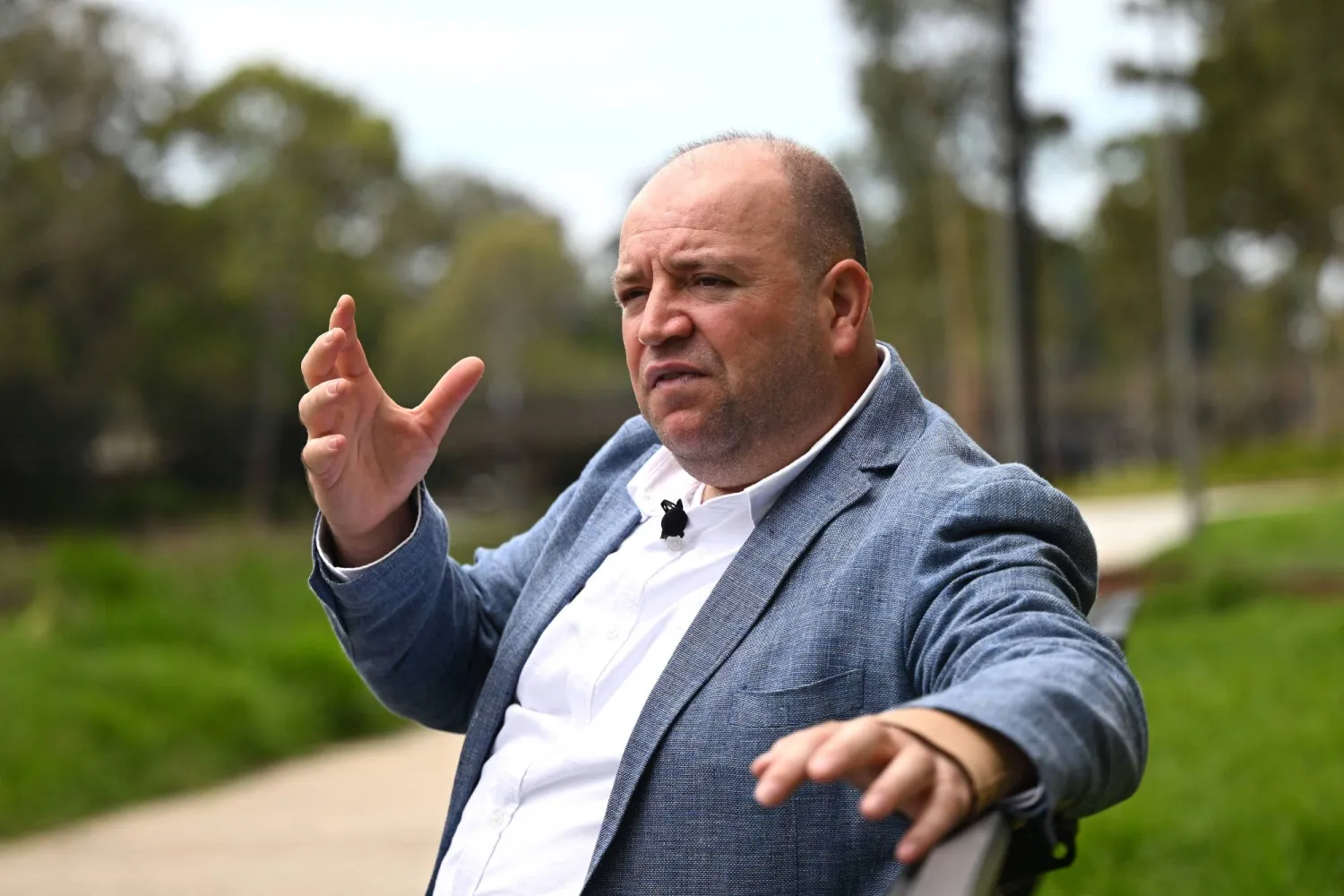
Ahmed al-Ahmed, who helped tackle and disarm one of the attacker during the Bondi terror attack, recalls the events of the day during an interview with AFP in Sydney on November 20, 2026, ahead of the first anniversary of the attack. (AFP)
TT

The Secret Courage of Australia’s Bondi Shooting Hero, One Year On

Ahmed al-Ahmed, who helped tackle and disarm one of the attacker during the Bondi terror attack, recalls the events of the day during an interview with AFP in Sydney on November 20, 2026, ahead of the first anniversary of the attack. (AFP)

A man who heroically tackled a gunman at a Jewish festival on Bondi Beach said his wounds still ache as he issued a plea for unity almost a year after Australia's worst mass shooting in decades.

Fruit seller Ahmed al-Ahmed, who was born in Syria and moved to Australia in 2006, was visiting the Sydney beach with his cousin on a Sunday afternoon last December when he heard shots ring out.

He rushed to tackle one of the gunmen as they fired round after round into a crowd of men, women and children.

"I didn't think about it," he told AFP.

"Because to save people's lives, there's no need to think, when you hear the kids and the women and old people and men and everyone asking for help."

"Every human has a secret courage in his heart. It comes in the time when needed, when it's asked.

"I heard people asking, and I did it."

Fifteen people were killed and dozens were wounded on December 14, 2025, as crowds gathered at the world-famous beach to celebrate Hanukkah.

An elderly woman also died this month from complications linked to her wounds.

Ahmed's actions have been credited with stopping many more from dying after video of his act of bravery taken by a bystander went viral.

The father of two was lauded as a "true Australian hero" by Prime Minister Anthony Albanese, and a fundraising campaign raised millions of dollars.

But Ahmed said much of the initial fame passed him by -- he was too focused on recovering from the devastating wounds he suffered.

- Face to face with a killer -

Tackling the gunman and wrestling the rifle from his hands, Ahmed said he found himself face to face with the killer -- a memory that still haunts him "day by day, night by night".

"He was thinking he's a god, and no one can touch him," he said.

In that moment Ahmed was aiming the gun at the shooter.

"I asked him: 'leave, leave'," he said.

"I don't wanna shoot."

The shooter retreated, leaving Ahmed to take cover behind a tree, where he came under fire.

"I start feeling my whole clothes get wet, you know, similar like someone taking a bucket of blood and threw it on you," he said.

"And then I start feeling: 'Oh, I'm gonna die. Oh my God, my kids, my family, my wife. What's happened?'"

The man he tackled, Sajid Akram, was killed by police at the scene.

His son, Naveed, remains in custody facing a total of 78 charges, including terrorism and murder. He has yet to enter a plea.

Two of the five bullets that struck Ahmed that day are still inside him.

He is on medication for nerve pain and to help him sleep, with the mobility of his left hand still limited.

"I'm still suffering," said Ahmed, who focused his energies on writing a book -- "Light Will Win" -- that was released this month.

He is also setting up a foundation to help women and children trapped in violence, inspired by his own difficult upbringing as the son of a police officer in Syria.

He told AFP he wouldn't do it any differently if he relived that fateful day, despite his wounds.

"I've been chosen. God chose me for that and to lead our community not to be divided," Ahmed said.

- 'We are human beings' -

The Bondi shooting -- one of the worst attacks on Jews worldwide since the October 7 killings by Hamas in Israel -- changed Australia forever.

The ruling Labor Party announced a crackdown on gun ownership and new laws allowing them to ban extremist political groups.

However, Australia has also since seen a surge in support for Pauline Hanson's far-right One Nation party, which has vowed sweeping cuts to immigration, especially from "radical Islamic countries".

For Ahmed -- a Muslim and an immigrant -- such politics have no place in the country he calls home.

"I'm a proud Aussie," he said.

"One Nation -- it's wrong, wrong, wrong, wrong."

"We have to respect each other. We have to care about each other."

"You know, we are human beings. No matter where you come from, no matter what your color, what you are, what's your religion, we have to treat each other with respect, and don't judge and blame others."

"Australia is multicultural."

Equating the actions of the two shooters at Bondi with his religion -- as many have -- is unthinkable for Ahmed.

"This is not a Muslim," he said. "I'm a Muslim, and I put my life in danger."

"I never heard my religion say to kill innocent people. That's not right."

"We are human beings. This is me, Ahmed al-Ahmed."


Xi-Putin-Trump Summit: What Comes Next?

19 November 2026, China, Shenzhen: (L-R) Russian President Vladimir Putin, Chinese President Xi Jinping and US President Donald Trump pose for a photo as they arrive for a trilateral meeting at Kylin Villa, on the sidelines of the APEC Summit. (Kremlin/dpa)
TT

Xi-Putin-Trump Summit: What Comes Next?

19 November 2026, China, Shenzhen: (L-R) Russian President Vladimir Putin, Chinese President Xi Jinping and US President Donald Trump pose for a photo as they arrive for a trilateral meeting at Kylin Villa, on the sidelines of the APEC Summit. (Kremlin/dpa)

An unprecedented summit between Chinese, US and Russian leaders this week in Shenzhen was light on substance but immensely symbolic, analysts say.

From nuclear weapons to reforming the United Nations and cancelling international arrest warrants, AFP looks at what was announced, its significance and what might come next:

- Substance or hot air? -

The three leaders jointly declared lofty goals to "reduce nuclear risks" and reform the United Nations, as well as commitments to immunity for state officials.

Their "Declaration toward Peace" also said the countries plan to boost oil supply and reaffirmed the importance of "stable energy flows".

The promise of dialogue on nuclear risks and non-proliferation "creates an opening for cooperation despite disagreements over arsenal reductions", said Sun Chenghao, senior fellow at the Center for International Security and Strategy at Tsinghua University.

"Implementation is now the main test," he told AFP.

Progress could be signaled by dates for nuclear talks or the appointment of designated officials.

Beijing previously rebuffed Trump's invitations to nuclear arms talks, arguing the US and Russia should first cut their giant arsenals before it agreed to discuss its smaller stockpiles.

The four-point declaration contains few details on future actions, with Germany's Chancellor Friedrich Merz calling the meeting a "photo op".

The "fairly sparse" points were "least common denominators" among the leaders, said Ryan Hass at the Brookings Institution.

Trump told reporters he would give a press conference on Friday, where he may provide more details.

- A new Yalta? -

The symbolism of three powerful leaders gathering to discuss global security issues -- including Putin's invasion of Ukraine and Trump's war with Iran -- had raised comparisons to the 1945 Yalta Conference.

Then-leaders of Britain, the United States and the Soviet Union met to hash out the post-World War II settlement and re-draw European borders.

Ukraine's Volodymyr Zelensky and European powers worried Thursday's summit would push for a peace settlement favorable to Moscow without them at the table.

The format "suggests the creation of conditions where Beijing, Moscow, and Washington call the shots for the rest of the world", said Chong Ja Ian, an associate professor at the National University of Singapore.

But "a functioning 'G3' would require much greater agreement among the three countries and cooperation from many other governments," Tsinghua University's Sun told AFP.

"The Yalta analogy also overlooks today's economic interdependence and the influence of regional actors," he said.

- Should Europe, others worry? -

Other US allies such as Japan, South Korea and Taiwan -- which unlike China and Russia are vibrant democracies -- will also have eyed the summit with unease.

"From South Korea's perspective, this inevitably raises questions about whether it can continue to rely on its alliance with the United States," said Lee Jae-mook, a political science professor at Hankuk University of Foreign Studies.

"The pillars of South Korea's foreign and security policy that it has long taken for granted are being shaken," Lee told AFP.

Japan, too, may reconsider its relationships with China and the US.

"If China and Russia really draw the United States together, I think Japan will have a huge pressure to... make a better relationship with China," said Tzeng Wei-feng, an associate research fellow at Taiwan's National Chengchi University.

However, Tokyo and Washington maintain a bilateral defense pact, so there will likely be "no substantial change" in their ties, he added.

The US has roughly 54,000 military personnel stationed in Japan -- whose relations with China are poor -- and 28,500 in South Korea.

Despite the bonhomie between Xi, Trump and Putin displayed in Shenzhen, major strategic differences remain between their countries.

Washington has curbed Beijing's access to US technologies, while Moscow is fighting a Ukraine that still relies in large part on American intelligence.

Diverging national interests between China, the US and Russia means the rest of Asia won't be "overly concerned" yet, according to Dylan Loh of Singapore's Nanyang Technological University.

The format may not stick, especially after Trump leaves office in two years, he said.

- What next? -

"Perhaps the most noteworthy aspect is the absence of any commitment to reconvene or continue meeting at the leader-level," said Brookings' Hass.

With no follow-up announced, eyes will turn to next month's G20 summit in Miami, where Xi and Trump are due to hold their fourth meeting of the year, and Putin could make his first appearance at the grouping since his war in Ukraine began.

He has been shunned by most Western leaders since Russia's full-scale invasion in 2022.

Still, "there is little chance that such a meeting will be held again", said Shen Dingli, a Shanghai-based scholar of international relations.

International Criminal Court (ICC) members -- which exclude the US -- are obliged to detain Putin if he travels to their territory after the court issued a warrant for him for war crimes associated with the Ukraine invasion.

"Putin has been ruled an international criminal by the ICC, and most APEC and G20 members are signatories to the Rome Statute. So, there are few opportunities for the three countries' leaders to convene," said Shen.


Turkish Investments in Egypt Strengthen Ties Despite Political Differences

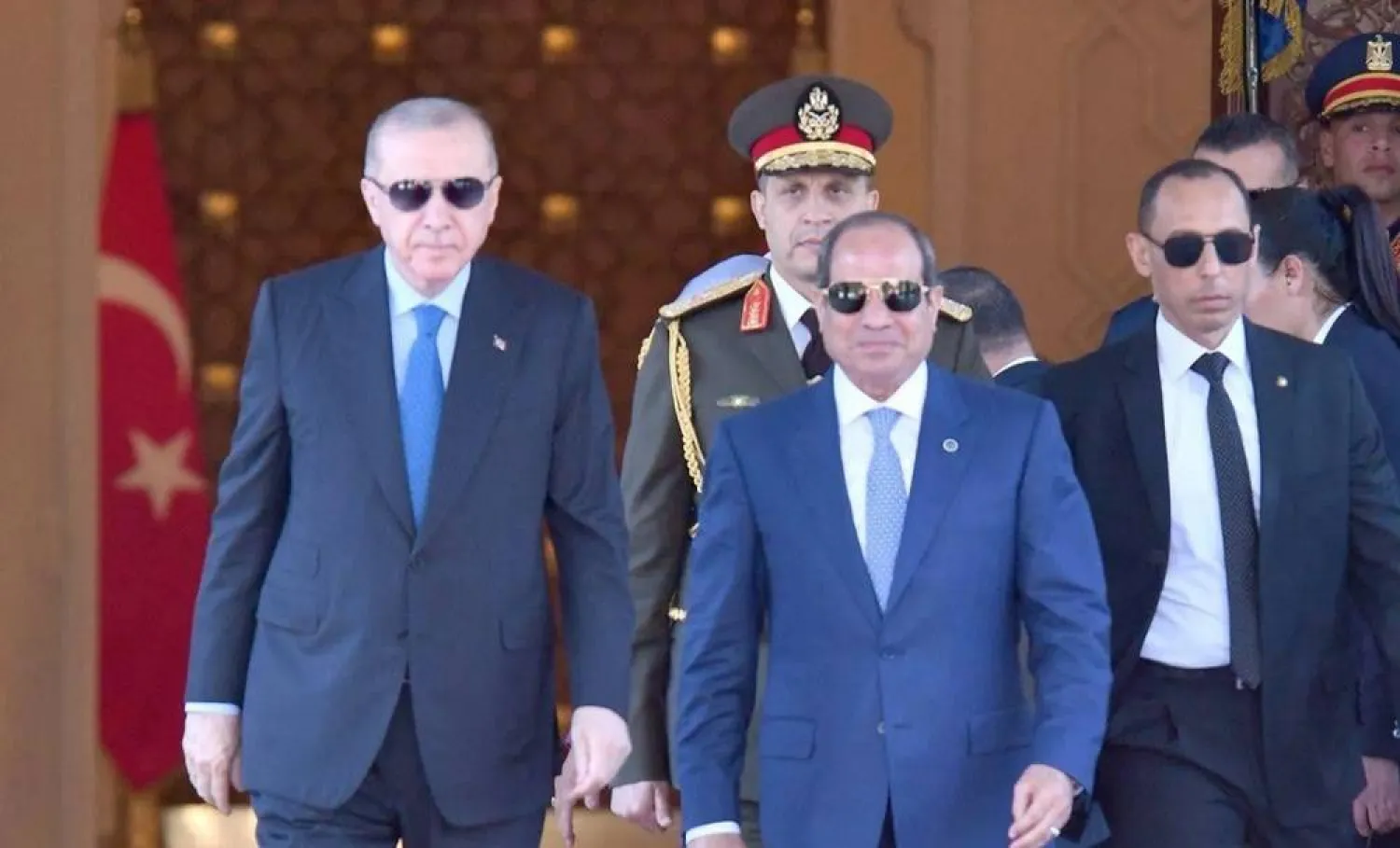
Egyptian President Abdel Fattah al-Sisi welcomes his Turkish counterpart Recep Tayyip Erdogan in Cairo last February. (Egyptian Presidency)
TT

Turkish Investments in Egypt Strengthen Ties Despite Political Differences

Egyptian President Abdel Fattah al-Sisi welcomes his Turkish counterpart Recep Tayyip Erdogan in Cairo last February. (Egyptian Presidency)

Growing Turkish investment in Egypt is strengthening economic ties between Cairo and Ankara despite ongoing disagreements over a maritime deal between Türkiye and Libya, according to analysts.

The Egyptian government highlighted the expanding Turkish business presence in the country on Wednesday, releasing figures that analysts interpreted as a sign of both sides’ determination to deepen economic cooperation while managing political disputes.

According to the Egyptian Cabinet’s Media Center, Turkish investment has expanded across manufacturing, trade, services and other economic activities in recent years. Turkish companies have contributed around $921.5 million in investment through 1,869 businesses established in Egypt, creating around 43,900 jobs.

Annual Turkish investment inflows surged 393.2% over eight years, reaching $175.1 million in the 2024-2025 fiscal year, compared with $35.5 million in 2016-2017.

The increase came despite a period of strained relations before Cairo and Ankara restored ambassador-level diplomatic ties in 2023.

Bilateral trade rose 44.7%, reaching $6.8 billion in 2025, up from $4.7 billion in 2016, according to the government figures, which highlighted major Turkish projects in the garment and food-processing industries.

Economic interests

Bashir Abdel Fattah, a Türkiye affairs specialist at the Al-Ahram Center for Political and Strategic Studies, said the growth in Turkish investment reflects Ankara’s determination to strengthen its strategic partnership with Cairo.

Speaking to Asharq Al-Awsat, Abdel Fattah described economic cooperation as a key component of the rapprochement, adding that Türkiye is seeking to capitalize on investment opportunities in Egypt while broadening the partnership across multiple sectors.

Egypt also provides Turkish companies with access to Arab and African markets through trade arrangements, including the free trade agreement with members of the Common Market for Eastern and Southern Africa (COMESA), enabling businesses to manufacture goods in Egypt for export across the continent.

Hani al-Gamal, deputy director of the Tafkir Center for Political Affairs, said that the government figures demonstrate how closely Turkish capital has become integrated into Egypt’s economy, particularly in manufacturing, employment and exports, generating benefits for both countries.

While acknowledging the importance of investment in strengthening bilateral cooperation, al-Gamal cautioned that economic ties alone could not resolve geopolitical disputes.

He attributed the broader improvement in relations to political and regional circumstances that have also facilitated closer military cooperation and notable progress in defense industries.

Military cooperation

Egyptian and Turkish naval forces participated in the Sea of Friendship exercises this month. The Egyptian military described the drills as part of growing cooperation between the two countries’ armed forces, aimed at sharing expertise and strengthening naval coordination.

The exercises took place despite Cairo’s repeated rejection of the Libyan parliament’s ratification in October of a maritime boundary agreement with Ankara.

Egypt and Türkiye have nevertheless continued consultations aimed at reducing regional tensions.

Abdel Fattah identified the separation of contentious political issues from areas of cooperation as a key factor behind the recent improvement in relations.

Disagreements over maritime boundaries and the Libyan crisis have not prevented Cairo and Ankara from developing ties in other sectors, he explained.

He viewed this approach as evidence of political maturity and a shared determination to avoid a return to tensions.

He said that rapprochement and cooperation could build confidence, narrow disagreements and create more favorable conditions for resolving outstanding issues.

Al-Gamal similarly emphasized that translating political rapprochement into tangible economic interests could deepen mutual trust and broaden the foundations of cooperation.