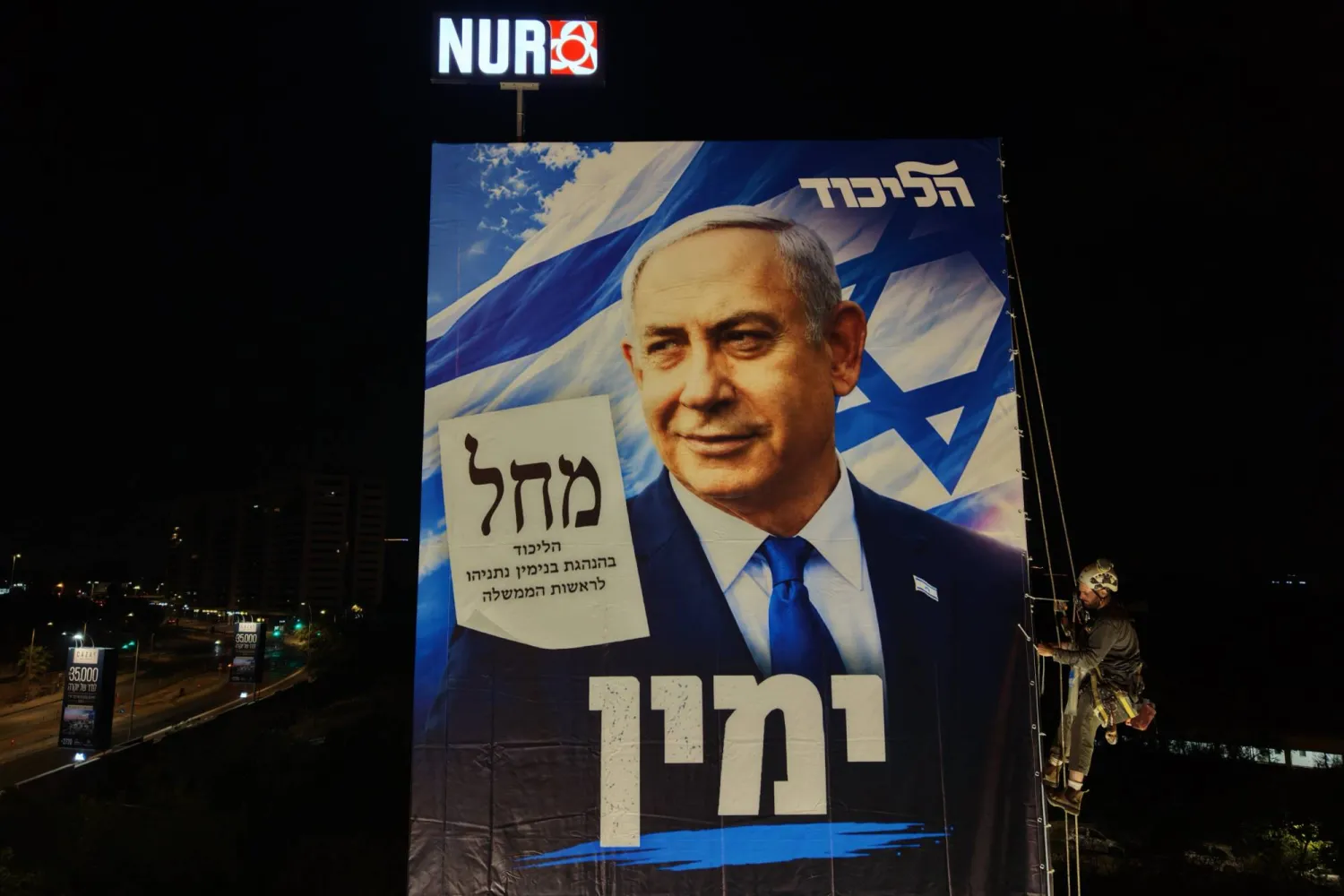
Three years after suffering their deadliest single attack, Israelis will deliver their verdict on veteran Prime Minister Benjamin Netanyahu in an October 27 election that could decide if the country moves definitively into hard-right nationalism.
The trauma of October 7, 2023 remains raw across Israel. Faded stickers bearing the smiles of young people killed by Hamas cover station walls and lampposts, and at bustling restaurants, no one bats an eye as patrons dine with their assault rifles, now liberally allowed.
Netanyahu, Israel's longest-serving prime minister who polls show is in a tight race, is seeking a new mandate after leading a multi-front regional war in response to October 7, with Israel reducing Gaza to rubble, occupying part of Lebanon and, with US help, bombarding Iran.
The relentless Gaza campaign has brought pariah status to Israel in many once-friendly Western countries, and Netanyahu himself faces an arrest warrant from the International Criminal Court.
Even if the public broadly has supported the war's aims, the effects at home have been much more divisive, including emboldening Netanyahu's far-right allies bent on reshaping Israel into a religious-nationalist Jewish state.
"I really think that these elections are about the future of the state in a literal sense," said Gideon Rahat, a political scientist at the Hebrew University of Jerusalem and the Israel Democracy Institute.
Netanyahu's government has ramped up settlements in the occupied West Bank where settlers armed with the blessing of far-right National Security Minister Itamar Ben-Gvir have been attacking Palestinians on their lands with only occasional pushback from authorities.
"The state without a monopoly on the use of force is a failed state," Rahat said.
Netanyahu, who turns 77 on October 21, has served as prime minister on and off for more than 19 years.
The wily political operator returned to power in December 2022 bringing in once-shunned ultra-nationalists and quickly tried to rein in the judiciary, which is examining corruption charges that could land him in jail.
The proposed reforms brought out some of the largest protests in Israel's history in the months before the Hamas attack.
"Everyone in the country has a strong opinion about Netanyahu. People either hate him or adore him," said Alon Yakter, a political scientist at Tel Aviv University.
"When you want to see who people vote for, the first question you have to ask is their emotional feelings about Netanyahu."
- Anti-Netanyahu in style, not stance -
Seeking to unseat Netanyahu is an informal bloc of parties united mostly around their distaste for him.
Netanyahu's most formidable rival, according to polls, is former military chief Gadi Eisenkot, who is in many ways his antithesis -- a political novice who wants to unite centrists rather than rally a base, and a phlegmatic speaker with halting English and none of the American-raised Netanyahu's flair for blistering, headline-grabbing speeches.
Eisenkot, as well as other opposition leaders, have zeroed in on why Netanyahu failed to prevent October 7.
Netanyahu has been rocked by reports he ignored warnings. He vehemently denies the charges, blaming security chiefs who he said failed to wake him up that morning.
Netanyahu "may have his perfect English, but even with perfect English he got us October 7", Eisenkot, in Hebrew, told a security conference at Reichman University.
Eisenkot's son died in the Gaza war -- offering an unspoken contrast to Netanyahu's son Yair, a globe-trotting social media provocateur.
The working-class son of Moroccan Jewish immigrants, Eisenkot would be the first prime minister of Middle Eastern ancestry, a watershed in a country politically dominated since its founding by an elite of European descent.
Opposition leaders have not criticized Netanyahu's decision to wage war, likely a losing stance in a country where a recent survey found that only 21 percent of the population identifies as anywhere left of center.
Eisenkot, as military chief during the 2006 Lebanon war, promoted the Israeli doctrine of using massive force even against civilian infrastructure when in areas used by militants, such as Hezbollah.
The opposition has instead heavily focused on social issues including Netanyahu's tight alliance with ultra-Orthodox Jews, a fast-growing segment of the population due to high birth rates that has promoted religious priorities, such as keeping public transit closed on Saturdays.
Netanyahu, while personally secular, has allowed religious students to remain exempt from military service, a source of particular resentment when stretched reservists have served multiple tours.
Opposition figure Naftali Bennett, prime minister in a short-lived 2021-22 government, has vowed to end all exemptions to military service and said that social divisions were putting Israel on a "slow-motion suicide mission".
- Hardline appeal -
While the opposition attacks Netanyahu over October 7, for some Israelis, the aftermath of the attack shows the government has brought stability.
While Israelis have died in Iranian and Hezbollah retaliatory attacks, fire has stopped from Gaza, even as Israel keeps striking the territory and Hamas remains.
Israel's economy has boomed since October 7, with construction sites dotting the major cities and the stock market soaring, led by the technology and defense sectors.
Neriah Yarchi, 19, a barber from Bat Yam near Tel Aviv, came of political age after October 7. He said he would vote for far-right Finance Minister Bezalel Smotrich, who wants the "voluntary" removal of Gaza's two million Palestinians.
"If Gaza had been ours, they wouldn't have had a place to infiltrate from and there wouldn't have been a massacre," Yarchi said.
Netanyahu has sought to seize on his international notoriety, with his Likud party putting up posters of leaders including New York Mayor Zohran Mamdani, an outspoken critic of Israeli policies, that read, "They want Netanyahu to lose. Don't let them win."
Netanyahu has also vowed loudly never to align with parties representing Arab Israelis, who make up around one-fifth of the population and who some expect to turn out in higher numbers after the intense anti-Arab stances of some of Netanyahu's ministers.
Arab lawmakers broke precedent to be kingmakers in the 2021-2022 government.
If the new election's results are as close as expected, it could take weeks or months to form a government. Eisenkot has said he would not ally with Arab parties or Netanyahu, but some critics do not believe he would refuse.
Uriel Reichman, a former lawmaker who founded the university bearing his name, told the conference addressed by Eisenkot that a Netanyahu triumph could permanently entrench Israel's right-wing turn.
He drew a parallel to countries where an elected populist packs the government with loyalists and transforms once-independent institutions.
"Experience shows that once such a system is put in place, it would be extremely difficult to dismantle it," he said.