
Syrian Official to Asharq Al-Awsat: Integration Process Following SDF Dissolution Is Moving Toward Completion

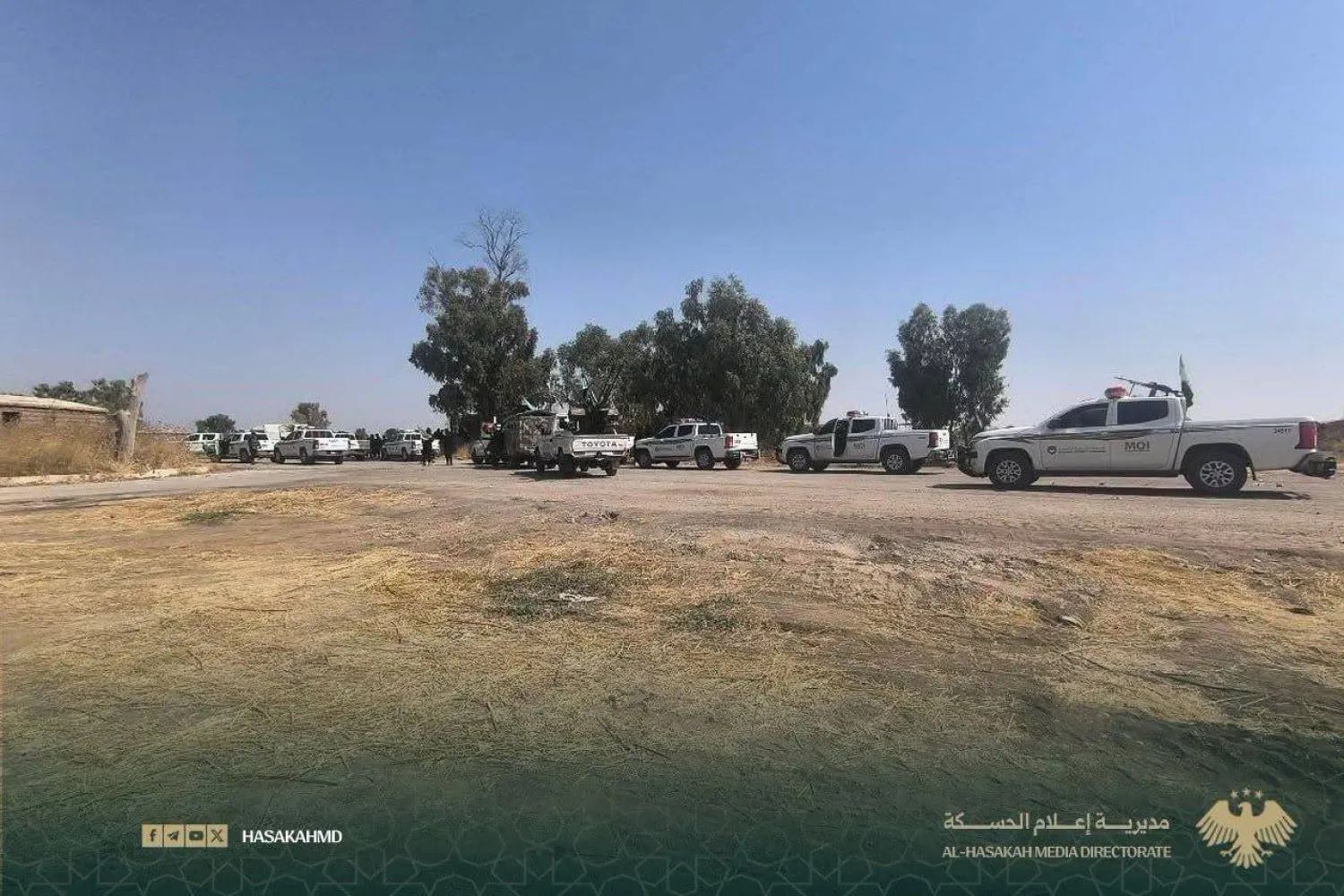
A convoy of Syrian security forces and Special Operations Forces enters the headquarters of the “Vanguards Camp” Regiment in Hasakah (Hasakah Media)
TT

Syrian Official to Asharq Al-Awsat: Integration Process Following SDF Dissolution Is Moving Toward Completion

A convoy of Syrian security forces and Special Operations Forces enters the headquarters of the “Vanguards Camp” Regiment in Hasakah (Hasakah Media)

Ahmad al-Hilali, deputy governor of Hasakah, told Asharq Al-Awsat on Friday that the integration process stipulated in the “January 29, 2026 Agreement” has moved, following the dissolution of the Syrian Democratic Forces (SDF) and the former Kurdish Autonomous Administration, from “the stage of understandings and negotiations to actual implementation, whether in civilian institutions or in the security and military sectors.”

He described the security situation as “much better” and said “stability is gradually strengthening,” stressing that the process “is moving toward completion, and what we want is for it to take place calmly.”

Since SDF commander Mazloum Abdi announced from the presidential palace in Damascus on August 25 the dissolution of the SDF and the Autonomous Administration, Hasakah has witnessed a series of developments and changes signaling the emergence of a new phase in the governorate. Its defining features are the restoration of state authority across all sectors, stronger security and stability, the unification of institutions, and the end of administrative duplication, in accordance with the January 29 Agreement.

In his remarks, al-Hilali said that “the integration process is not simply a matter of transferring buildings or changing names. It is about reunifying institutional authority, administrative decision-making, and security and military command under the umbrella of the Syrian state.”

He said significant steps had already been completed in this direction, while work was underway to address the remaining files in an orderly manner that would prevent any institutional or security vacuum and preserve stability in the governorate.

Before the announcement of the SDF's dissolution, most cities and areas in Hasakah had experienced security disorder involving the Revolutionary Youth. Such incidents increased after the signing of the January 29 Agreement, when members of the group prevented the handover of institutions to the government. That situation, however, has now disappeared.

Al-Hilali attributed the disappearance of the previous unrest primarily to the fact that “the phase has changed.”

“Previously, there were attempts to obstruct the process of transferring state institutions, and some activities emerged aimed at disrupting this course. But as implementation of the agreement progressed and the direction toward ending institutional and security duplication became clear, these manifestations declined significantly,” he said.

According to al-Hilali, “There is now a growing conviction among everyone that state institutions should not be a subject of conflict or confrontation, and that the integration process is moving toward completion.”

“What we want is for this process to take place calmly, away from provocation and tension, and for all residents of the governorate to feel that the return of state institutions means the return of services, the rule of law and stability, and is not directed against any component of society,” he said.

Asked when the integration of military, security and civilian institutions would be fully completed, the deputy governor said: “I do not want to set an artificial date for a process of this scale and complexity, because some files require technical, administrative and security procedures before they can be formally closed.”

He added: “But I can say that we are at a very advanced stage and that the overall direction is clearly toward completing the integration as soon as possible.”

He noted that “the bulk of the work is now in the implementation phase, while what remains consists of detailed files requiring the completion of arrangements, verification and coordination among the ministries and relevant authorities.”
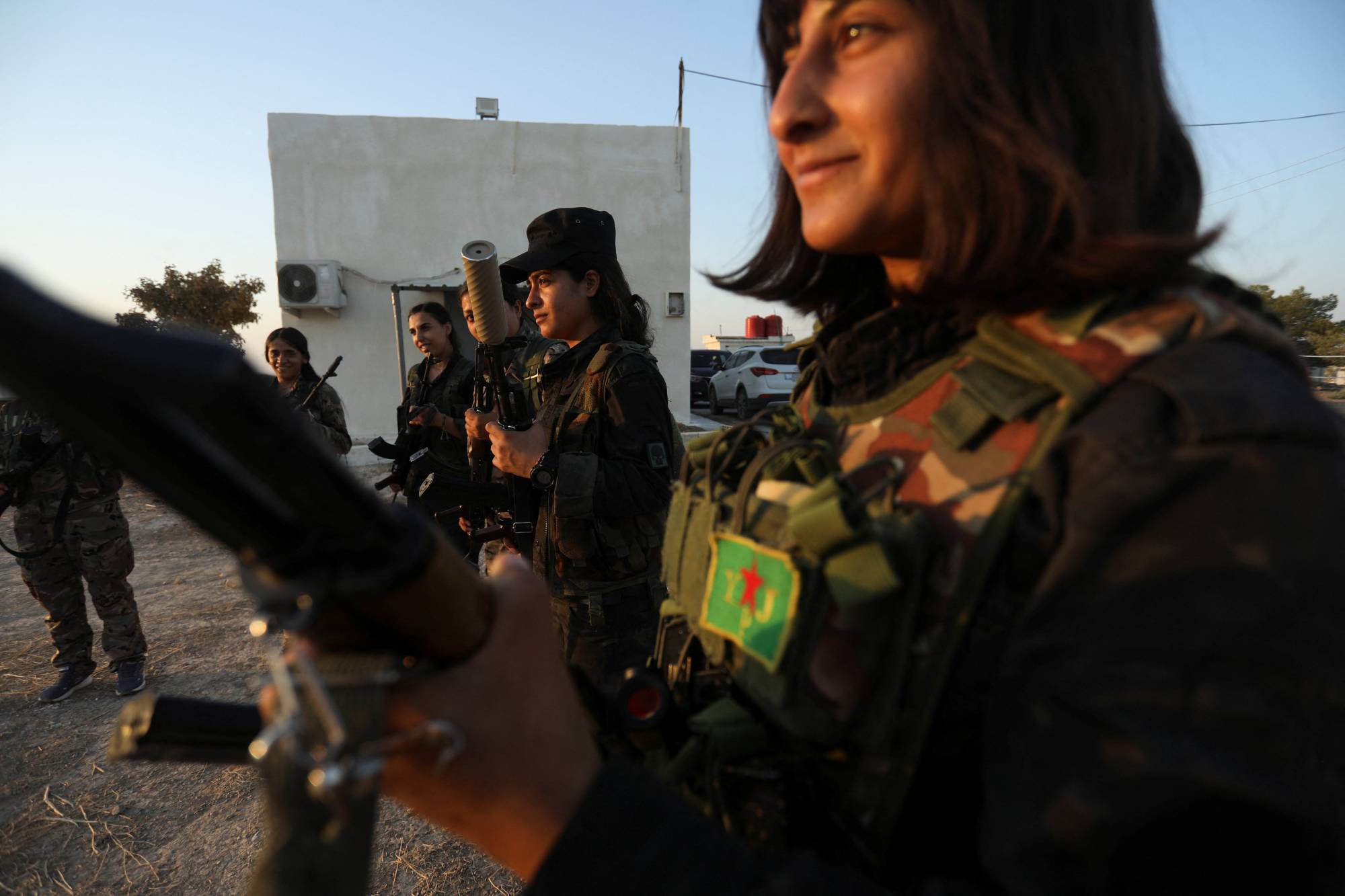
Women fighters from the Women's Protection Units (YPJ) take part in military traning in Hasakah, Syria, August 22, 2026. REUTERS/Orhan Qereman

Pending Files

Al-Hilali said: “What matters most to us is that the integration be complete, genuine and sustainable, rather than merely a political announcement whose impact fades after a short period.”

Asked about the main outstanding issues preventing the completion of the integration process, al-Hilali said the remaining files could be divided into three main tracks.

“First is the military and security file, involving the completion of the restructuring of personnel and cadres and the integration of those who meet the requirements into the Ministries of Defense and Interior in accordance with the established procedures,” he said.

“The second is the administrative and civilian file, particularly the status of employees and staff, the mechanisms for confirming their positions and paying their entitlements, and the integration of institutions and departments whose transfer to the state has not yet been completed.”

“The third involves a number of service-related, technical and administrative files linked to the transfer of powers and the reunification of operating systems, databases and resources.”

Al-Hilali said these issues “do not represent an obstacle to the integration process so much as they are implementation files that need to be completed.”

“The political decision is clear and the overall direction has been settled: state institutions will be unified, authority will rest with the Syrian state, and the rights of all citizens and components of the governorate will be preserved,” he said.

The rise of the Autonomous Administration

The first foundations of the Kurdish Autonomous Administration, which sought to establish a “Kurdish project in Syria,” emerged through the formation of the Kurdish Supreme Committee. It was established by Syria's Kurdish Democratic Union Party (PYD) and the Kurdish National Council following the signing of the Erbil Agreement on July 12, 2012.

A military wing was subsequently established for the committee, comprising the People's Protection Units (YPG), the Women's Protection Units (YPJ) and the Asayish security forces. The SDF was later formed in 2015, under predominantly Kurdish leadership.

The geographic footprint of the Autonomous Administration expanded from three cantons in 2014 to six in 2016 and seven by 2023. This territorial expansion was accompanied by the growth of its military and security apparatus and civilian institutions, which collectively included tens of thousands of personnel.

The SDF subsequently lost a significant portion of its territory during armed clashes that erupted between its fighters and the Syrian army in late 2025 and early 2026. The fighting lasted about two weeks and was followed by the signing of the January 29, 2026 Agreement.

The agreement between the Syrian government and the SDF called for a ceasefire and the gradual integration into Syrian state institutions of the military and civilian institutions established by the Kurds during the years of conflict. It also called for the handover of border crossings and oil and gas fields, as well as the withdrawal of foreign fighters from the region.



Lebanon's Ali Al-Taher Ridge, Strategic Hezbollah Position Israel Says It Seized

31 August 2026, Lebanon, Arnoun: Smoke billows after an Israeli detonation on Arnoun, not far from the strategic hill of Ali al-Taher ridge. (dpa)
TT

Lebanon's Ali Al-Taher Ridge, Strategic Hezbollah Position Israel Says It Seized

31 August 2026, Lebanon, Arnoun: Smoke billows after an Israeli detonation on Arnoun, not far from the strategic hill of Ali al-Taher ridge. (dpa)

Southern Lebanon's Ali al-Taher ridge, which the Israeli army on Thursday said it captured, was a strategic position for Iran-backed Hezbollah, where it was believed to have established a command center.

Hezbollah did not confirm losing the highland, which is around 10 kilometers (six miles) from the border with Israel and was targeted by several Israeli strikes in recent weeks despite a ceasefire.

The ridge, a flashpoint since Hezbollah drew Lebanon into the Middle East war in March, lies close to the major city of Nabatieh and the Litani River.

It is just a few kilometers from UNESCO-listed Beaufort castle, another strategic site that Israel captured in recent months and continues to occupy.

Ali al-Taher ridge, on the edge of the Israeli-proclaimed occupied "security zone", overlooks surrounding areas and key districts further north, and sits atop a network of tunnels.

During US-mediated negotiations between Lebanon and Israel, Washington proposed the Lebanese military take over the ridge, but Hezbollah refused, according to a source close to the talks.

Military expert Riad Kahwaji told AFP that the ridge is "in between several villages and adjacent to the city of Nabatieh" with a "web of tunnels (that) connects these villages around it".

On Friday, Israeli Defense Minister Israel Katz said the capture "marks the completion of the phase of securing control in the security zone in southern Lebanon", meaning the Lebanese territory Israel occupied during the war.

- 'Command centers' -

The Israeli military on Thursday said that the tunnel network included "command centers (and) weapons storage rooms".

"The infrastructure is a strategic underground network that was built over two decades and funded and planned by the Iranian terror regime," it added.

Kahwaji, who heads the INEGMA military analysis institute, said the hilltops overlook Iqlim al-Tuffah, an area further from the border where Hezbollah holds sway, as well as part of the country's east.

Control of the area would therefore "give the Israelis an easy passage to move on both sides".

Speaking to journalists including AFP last month, Hezbollah spokesman Youssef al-Zein refused to say how many of the group's fighters were at the Ali al-Taher position. He denied any Iranian personnel were there, as had been reported in some media outlets.

He claimed that Israel had "exaggerated the importance of Ali al-Taher" as a military objective but also vowed that Hezbollah would "defend this position as much as it can".

The ridge is located right above the Litani. Hezbollah agreed to disarm in areas south of the river under a 2024 ceasefire that sought to end its previous war with Israel.

Two years later, Hezbollah dragged Lebanon into the broader Middle East war by attacking Israel in support of Iran.

Israel responded with airstrikes and a ground invasion that Lebanon says have killed more than 4,300 people.

The conflict has calmed since a US-Iran memorandum of understanding and a framework agreement between Lebanon and Israel agreed in June. But Israeli strikes continue and violence persisted around Ali al-Taher.

On August 15, Israel's army launched its deadliest strikes in weeks in response to what it said was a Hezbollah attack against its soldiers in the area.

In June, Israel's army published an updated map showing the parts of south Lebanon it considers within its "security zone" where its troops are operating, expanding the area to include the Ali al-Taher ridge.


Thousands of Lebanese Students Still Displaced by War as School Year Nears

Displaced children play during an activity organized by the NGO Save the Children at a school turned into a shelter for displaced families in Tyre, southern Lebanon, August 27, 2026. (Reuters)
TT

Thousands of Lebanese Students Still Displaced by War as School Year Nears

Displaced children play during an activity organized by the NGO Save the Children at a school turned into a shelter for displaced families in Tyre, southern Lebanon, August 27, 2026. (Reuters)

The schoolyard in southern Lebanon echoed with the squeals of playing children despite the beating sun and distant booms of Israeli airstrikes. But for most of the youth there, the public school isn't where they learn. It's where they live.

Thousands of children remain displaced from their hometowns in Lebanon's south six months after a new war erupted between Israel's military and armed group Hezbollah. Many still live in schools-turned-shelters, while others are squeezed into rented apartments with their extended families.

As schools gear up for a new academic year beginning on September 15, families who sought shelter in public schools are wondering where they will go — and how their children can pick up schooling amid so much uncertainty.

Najah Ammar, a grandmother of four school-aged children, hails from the coastal village of Mansouri, but fled Israeli strikes to the public school in the city of Tyre, about ‌10 km (6 miles) north. ‌About 200 other families now live in the school.

Ammar, 62, has two worries: where ‌she'll ⁠live if the ⁠school reopens, and how her grandchildren can catch up after losing years of schooling during repeated conflicts between Israel and Hezbollah since 2023.

"They’ve been out of school for two years — the last war and this war. My son’s daughter, the poor girl is eight years old. She was a second year and she’s still a second year," said Ammar.

DISPLACED FEAR COSTS OF NEW SCHOOL YEAR

Since March 2, Israeli strikes have killed more than 4,300 people in Lebanon, including more than 250 children, and wounded another 12,000, including 1,000 children, according to Lebanon's health ministry.

At the fighting's peak, more than one million people — nearly a quarter of the population — were displaced. Most have returned home but more ⁠than 340,000 remain displaced, because their hometowns are destroyed or fall within territory occupied by Israel's ‌military.

Rula al-Awad, a 27-year-old mother of two also displaced from Mansouri, said she lacked ‌the education to help her daughter through online classes, but brings her pen and paper so she can at least keep writing.

Awad is ‌staying in an apartment but brings her two children to the Tyre school to play and wants to enroll them ‌for the new year. Yet she fears she won't be able to afford schoolbooks or uniforms.

"I hope we can look ahead to a future that is beautiful for the kids – then we can consider having hope, so that when we tell our kids that things are beautiful, they believe us instead of feeling that we're lying to them," she said.

Zeinab Moussa, 56, who lives in tents in the school hall with her sons ‌and grandchildren, says the children can only snatch brief moments of happiness.

"An NGO will come, they play a little bit. The NGO goes away, they despise everything," she said. "I just ⁠wish that the children could live ⁠their childhoods. But there’s no childhood now."

DOZENS OF LEBANESE SCHOOLS DAMAGED, DESTROYED

Out of nearly 80 public schools still used as shelters as the school year approached, almost half have been emptied and will reopen as schools, Lebanon's education ministry told Reuters. About 30 will partially reopen while continuing to serve as shelters, leaving nine schools still fully used as shelters.

Another 50 Lebanese public schools have been destroyed or severely damaged in the war, and more than 200 others have suffered moderate or minor damage, the ministry said. The United Nations said the impact on schools would jeopardize the new school year for at least 100,000 children.

Last month, the Lebanese army said Israeli troops had blown up a public school and a kindergarten in the southern village of Zawtar al-Sharqiyeh. The Israeli military did not immediately respond to Reuters questions on the school.

Lebanon's Education Minister Rima Karami said this week she aimed to ensure as many students as possible from the south could continue their education, whether in their hometowns, if safe, or in displacement.

Save the Children, which is supporting the Tyre school, said only a durable ceasefire could resolve the crisis.

"Children we spoke to over the past few days know what the solution is. It's a political solution. There's no humanitarian solution here," said Danny Glenwright, president of Save the Children Canada.


Russia Shifts Tactics with Round-the-clock Attacks on Kyiv, Disrupting Daily Life

A resident Nataliia and her daughter Elia, 6, sit at a site of an apartment building damaged by a Russian missile strike, amid Russia's attack on Ukraine, in the town of Borispil, Ukraine September 1, 2026. REUTERS/Stringer
TT

Russia Shifts Tactics with Round-the-clock Attacks on Kyiv, Disrupting Daily Life

A resident Nataliia and her daughter Elia, 6, sit at a site of an apartment building damaged by a Russian missile strike, amid Russia's attack on Ukraine, in the town of Borispil, Ukraine September 1, 2026. REUTERS/Stringer

For much of the war, Russian drone and missile attacks in Kyiv followed a particular rhythm. They almost always came at night.

The warnings would begin on monitoring channels on Telegram in the late evening. They announced drones moving south, missiles being launched, air defenses working. Ukrainian civilians judged whether it was prudent to stay indoors or make for shelter in the metro based on the severity of the threat, The Associated Press said.

Now, Russia has changed tactics with the use of fast-flying, jet-powered drones, and the expectation that daylight brings a return to normal life has been shattered. Since last week, attacks have come day and night, compounding the terror of overnight strikes with the exhaustion of constant daytime disruption.

In Kyiv, the recurring wail of air-raid sirens has become part of daily life. It has interrupted commutes, shopping trips and children’s school, intruded on life’s biggest moments, from weddings to funerals, and, as these attacks always have, taken lives. The relentless alerts are exhausting residents, leaving some wondering how long they can stay.

Air raids are woven into the routine of daily life

An alert sounds. People look at their phones or up at the sky. Moments later, in the distance, the familiar sounds of air defenses intercepting drones resound.

Plumes of smoke can often be seen rising in the distance. Photos quickly spread across Telegram channels, showing where the destruction has occurred.

An hour or two later, another siren echoes.

In malls, banks and other businesses, air-raid protocols require customers and staff to leave when an alert sounds. A bank transaction can be interrupted midconversation; a shopping trip can become a cycle of entering a store, evacuating, returning and evacuating again.

Getting the shopping done has become a nightmare for Volodymyr Bovsunovskyi, who recounts a recent family trip to a mall to buy clothes for his nearly 4-year-old daughter. They had been inside for about 20 minutes when the alert sounded. They rushed out and saw smoke rising nearby.

They never got to purchase the clothes.

“A lot has changed in the last seven days,” he said. Like many residents, he hopes the attacks will relent. But, they have not yet, as Ukraine struggles to find an effective way to counter them.

Train journeys that would normally take a few hours have stretched much longer. In some cases, passengers have found themselves walking for hours through grassy fields after trains stopped on the tracks, carrying their belongings while one air-raid alert followed another.

The same uncertainty extends to getting around the city.

When GPS signals are disrupted to jam drones, using a taxi app becomes an absurd process. A car that appears to be nearby can suddenly appear to be on the other side of the world.

A pickup that seemed imminent suddenly shows an arrival time of thousands of minutes.

Life’s biggest moments are interrupted

One Kyiv couple went ahead with their wedding despite the sirens. On Wednesday morning, when Iryna Baranova, 38, returned home from hair and makeup to finish getting ready, explosions were sounding across the city.

“We heard two explosions, the alarm ended, we got together and went to the registration ceremony," she said, wearing a white satin gown with strands of pearls draped around her neck.

Afterward, she and Evhen Mytsyk walked hand in hand in a botanical garden in the city.

Mytsyk, 40, said the attacks did not diminish the day.

“If you wake up in the morning, you have to make the most of that day, because there might not be another chance," he said. "At a time like this, you appreciate life and the love of your family more, and you give love more openly yourself."

In the same garden, Tetyana Shevchenko meditated inside a small wooden gazebo modeled on a Buddhist prayer space. She has practiced for years, and she says it helps her remain calm even as air raids sound around her.

“When the air raids first started, we couldn’t stand the sound at all. It was very loud, disturbing, depressing," she said. "The body works in a way, it gets used to everything, including nighttime attacks, spending the night on the floor in the corridor, and insomnia.”

Meditation has also helped her stay calm as she navigates the tedium of bureaucracy, made even more difficult by the attacks.

Shevchenko has been trying to obtain documents to recover state funds owed to her mother, who died last year. While she waited in a long line for an appointment on a recent day, an air-raid alert sounded, causing her to miss her slot. She was sent to the back of the line and forced to start the process again.

“In this period of adjustments and grieving all of us are united, united in our suffering,” she said.

As she spoke, a siren blared. Moments later a thud was heard in the distance.

A week of relentless attacks has some considering leaving the city Ivan Datsiv, an IT worker, was in his apartment in Kyiv’s Podil district when a Russian drone tore through the floor on Tuesday, charring the ceilings and walls of his apartment and completely destroying the one next door.

Datsiv tries to joke about it, saying he had been meaning to repaint the walls anyway.

The alerts have become so frequent that he no longer sees the point of repeatedly going to a shelter. At this rate, he said, the only alternative would be to live in the basement.

“The alarms sound constantly,” he said. “You don’t even have time to go down and come back up. It’s just a waste of time running back and forth."

He is thinking of leaving Kyiv. “I’m thinking of living in another city, somewhere quiet and without this danger,” he said.

From the blown-out apartment next door, the view looks down onto a playground and basketball court where children are still playing.

Then a siren sounds again. Minutes later, the white zigzagging trail of an intercepted drone can be seen against the sky.

Bovsunovskyi is also considering leaving the city for a while, hoping to give his family — including his pregnant wife — a chance to rest.

The kindergarten his daughter attends must move the children to a shelter whenever an air-raid alert sounds. The alerts have become so frequent that he now simply picks her up halfway through the day.

“There is no stability,” he said.