
Iran's Postponed War: Who Holds the Power to Ignite It?

Experts Tell Asharq Al-Awsat: War Draws Closer, Elections Unlikely to Change Washington's or Tel Aviv's Calculations

A US F-15E Strike Eagle fighter jet refuels from a KC-135 tanker aircraft during an aerial patrol over the Middle East (CENTCOM)
TT

Iran's Postponed War: Who Holds the Power to Ignite It?

A US F-15E Strike Eagle fighter jet refuels from a KC-135 tanker aircraft during an aerial patrol over the Middle East (CENTCOM)

With Israel preparing for possible military strikes against Iran, and Washington showing restraint ahead of the US midterm elections, questions are mounting over whether the region is experiencing a temporary pause dictated by electoral calculations or a final opportunity for a political settlement.

While one strategic affairs expert expects a major confrontation by the end of November, two others downplay the influence of election results on decisions by US President Donald Trump and Israeli Prime Minister Benjamin Netanyahu, arguing that strategic considerations will ultimately prove decisive.

The question in Washington and Tel Aviv is no longer simply whether war with Iran will resume, but when, on what scale and with what objectives.

Reports that Israel prepared a large-scale bombing campaign against Iranian targets before postponing it following Trump's objections have revived a sensitive question: Is the war awaiting the conclusion of the US and Israeli elections, or does its postponement reflect deeper disagreements over the merits of escalation?

These questions are gaining urgency as elections approach in both countries. Assessments by three American experts reveal differing expectations about military developments and political calculations, but converge on one central point: Election results alone will not determine the outcome of the confrontation.
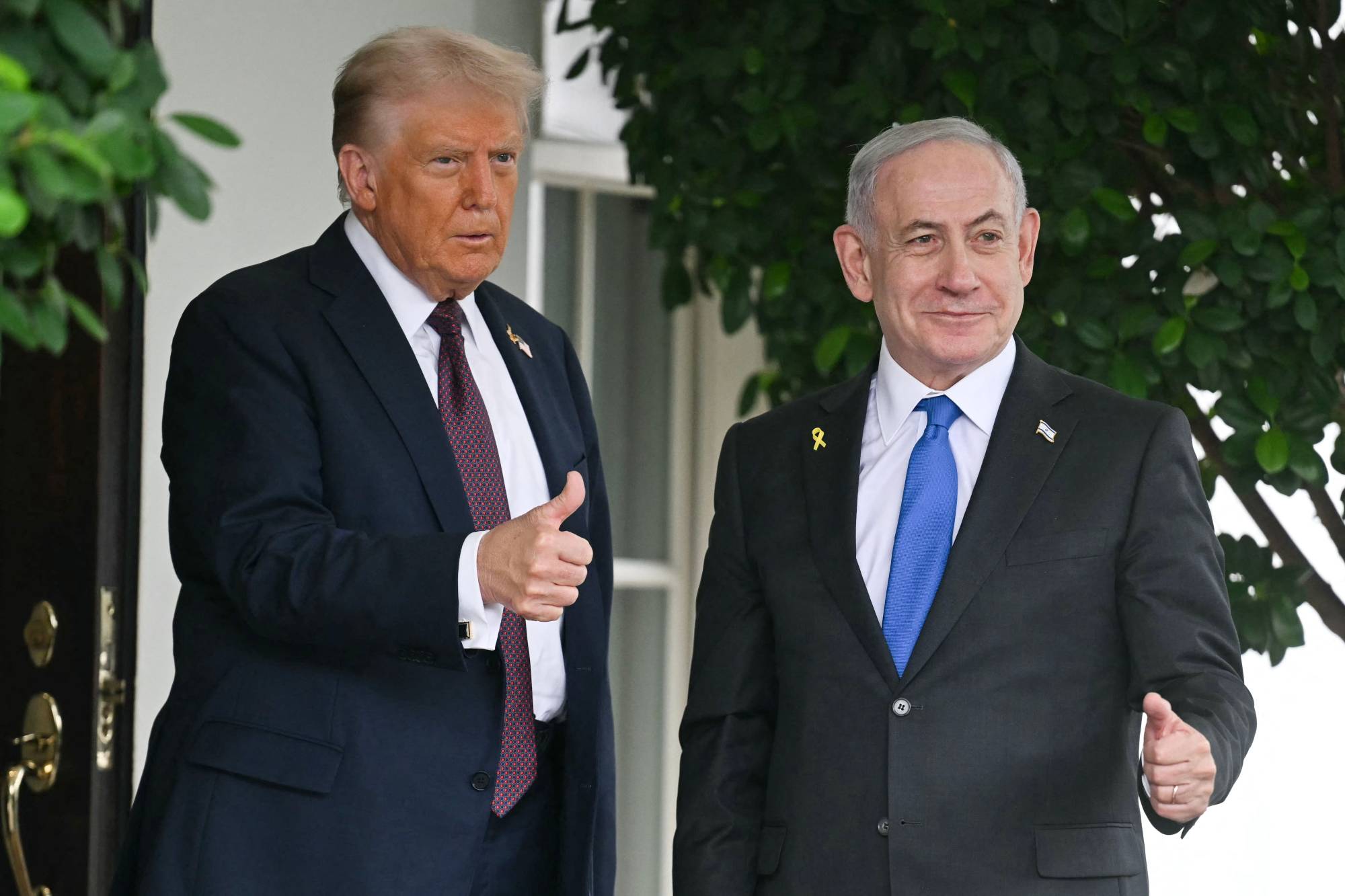
US President Donald Trump greets Israeli Prime Minister Benjamin Netanyahu as he arrives at the West Wing of the White House in Washington, DC on September 29, 2025. (Photo by Jim WATSON / AFP)

A War Awaiting Its Moment

The Financial Times reported Wednesday that Netanyahu had instructed the Israeli military to prepare a large-scale bombing campaign against Iran, initially scheduled for October 10, before the operation was canceled after Trump objected to resuming military action ahead of the US elections.

According to the newspaper, the plan included strikes on nuclear facilities, civilian infrastructure and sites associated with the Iranian regime.

Israeli officials also presented US Defense Secretary Pete Hegseth with a list of targets based on new intelligence during his unannounced visit to Israel on Monday.

Axios had previously reported that the Pentagon requested the completion of preparations for extensive military operations without setting a date for their execution.

The outlet cited officials as saying that Hegseth and US military commanders in the region were pushing for renewed strikes, while most of Trump's advisers favored continuing sanctions and economic pressure.

These developments suggest that the disagreement concerns the timing and necessity of military force more than the ultimate objectives.

Washington wants to secure Iranian concessions on Tehran's nuclear program and the Strait of Hormuz, while Israel fears that continued negotiations could allow Iran to rebuild its military capabilities.

Scenarios for Escalation

Offering a more pessimistic assessment, Farzin Nadimi, an expert on Iranian military and security affairs at the Washington Institute for Near East Policy, told Asharq Al-Awsat that all indicators point toward a major military confrontation involving the United States, Israel and Iran, and potentially other regional countries, by the end of November.

Nadimi did not rule out the possibility that intensive diplomatic efforts could prevent escalation, but considered the chances of success extremely slim.

He outlined a scenario beginning with a renewed wave of strikes targeting senior leaders and command-and-control centers, followed by attacks on nuclear and missile facilities and air defense systems, eventually escalating into a comprehensive bombing campaign against Iranian military and security installations.

Whether the campaign would expand to infrastructure, oil and gas facilities, and petrochemical plants would depend on the nature of Iran's response, he said.

Nadimi warned that Tehran might make a more determined effort this time to sink US warships and shoot down manned aircraft, while also deploying longer-range, medium-range ballistic missiles.

He raised an even more dangerous possibility: a ground incursion into Kuwait or Saudi Arabia from Iraq, carried out by Shiite factions linked to the Popular Mobilization Forces.

This remains a hypothetical scenario proposed by the researcher, rather than confirmed evidence of an Iranian plan to carry out such an operation.

At the same time, Nadimi ruled out a US ground invasion of Iran, suggesting that the next confrontation would more closely resemble the previous 39-day war.

Washington's Calculations

Brian Katulis, a foreign policy and regional affairs expert at the Middle East Institute, downplayed the significance of election results in determining the course of the war.

He told Asharq Al-Awsat that the US midterm elections were unlikely to substantially affect decisions by the Trump administration or Israel regarding Iran, because the threats posed by Tehran would remain the primary factor shaping their next steps.

Katulis noted that Trump is experiencing his weakest political position across his two presidential terms, amid declining approval ratings and the possibility that Republicans could lose seats in Congress.

In his view, however, that does not mean the election results will constrain the president's ability to take military action, given the executive branch's broad national security powers relative to those of Congress.

Katulis identified two more consequential factors in the administration's calculations.

The first is a shortage of certain types of ammunition and military equipment following the previous phase of the war, which has left US forces more exposed in the region and elsewhere. The second is the economic cost of another confrontation.

These concerns are particularly significant amid continuing tensions surrounding the Strait of Hormuz and global energy markets, as renewed operations against Iranian facilities could cause further disruptions to oil supplies.

As for Israel, Katulis argued that disagreements among political leaders tend to diminish when the perceived Iranian threat is at issue.

Beyond the Ballot Box

Michael Rubin, director of policy analysis at the Middle East Forum, went further, dismissing the possibility that the elections would fundamentally change the political dynamics governing decisions about war.

He told Asharq Al-Awsat that Trump would remain the ultimate decision-maker regardless of developments in Congress.

Indeed, Rubin suggested that Trump might feel greater freedom to make military decisions after the elections, given that he would not face another presidential election.

In Israel, Rubin argued that widespread opposition to Netanyahu does not necessarily translate into comparable divisions over Iran.

In his assessment, there is broad agreement among Israeli candidates on both the right and left regarding the nature of the threats posed by Iran, Hamas and Hezbollah.

Rubin also pointed to a striking possibility: Another Israeli prime minister might be able to act more effectively than Netanyahu because some objections from members of Congress, diplomats and foreign ministers are directed more at Netanyahu personally than at Israel itself.

Consequently, Netanyahu's electoral defeat would not necessarily reduce the likelihood of confrontation, just as Republican losses in Congress would not automatically give lawmakers the power to prevent Trump from resuming military operations.

Ultimately, the elections appear more likely to influence the timing of a confrontation than to determine its objectives.

Trump's decision to postpone military action does not mean the military option has been abandoned, just as Israel's preparations do not mean that a final decision to go to war has been made.

Negotiations remain the alternative path, despite continuing disagreements over nuclear concessions and the conditions for ending the war.

The conclusion of the elections could remove one reason for postponement, but it would not eliminate the military, economic and political obstacles.

The central question remains whether Washington will use its military preparations to secure a negotiated settlement or view the failure of diplomacy as justification for resuming the war.

In either case, Trump's decision, rather than election results alone, will be the most influential factor in determining the direction of the crisis.



Alice Huang, Who Reportedly Had an Affair with Nvidia CEO, Is a Chinese Banker Turned Tech Exec

This screengrab from video footage by CTI obtained via AFPTV on November 9, 2026 shows Alice Huang (2nd R in pink), a Chinese executive linked to the data center company called Megaspeed, attending a dinner hosted by Nvidia's chief executive and co-founder Jensen Huang (2nd L in black back facing camera) at a restaurant in Taipei on May 22, 2025, during Computex, the island's top tech expo. (AFP photo / CTI via AFPTV)
TT

Alice Huang, Who Reportedly Had an Affair with Nvidia CEO, Is a Chinese Banker Turned Tech Exec

This screengrab from video footage by CTI obtained via AFPTV on November 9, 2026 shows Alice Huang (2nd R in pink), a Chinese executive linked to the data center company called Megaspeed, attending a dinner hosted by Nvidia's chief executive and co-founder Jensen Huang (2nd L in black back facing camera) at a restaurant in Taipei on May 22, 2025, during Computex, the island's top tech expo. (AFP photo / CTI via AFPTV)

She was building a career in Chinese finance before turning to tech with a leadership role at a data center company in Singapore. He is the high-profile CEO of Nvidia, the California-based company that makes computer chips relied upon by advanced artificial intelligence systems.

An affair between Nvidia's Jensen Huang and Alice Huang, who reportedly was suspected of working as a spy for Beijing, has rocked the tech and political worlds.

The Chinese businesswoman, also known as Huang Le, had a close relationship with Jensen Huang, according to reports over the past month by the New York Times. The newspaper also reported that top policymakers were informed in a memo that intelligence indicated she was a spy for China’s Ministry of State Security, recruited to influence Nvidia to make its most advanced chips more available in China.

In one widely shared photograph of the pair, Jensen Huang and people surrounding him are holding drinks in Taipei, while Alice Huang sits behind him, apparently watching him in conversation. The picture was posted in 2024 by software company NetThunder to its LinkedIn page.

It remains unclear how long the affair lasted, and when exactly the relationship might have ended. The Associated Press was unable to reach Alice Huang for comment.

Who is Alice Huang?

Publicly available information about Alice Huang is scant.

She was a Chinese finance executive before becoming involved in artificial intelligence, data centers and computer chips.

In 2023, she became a director at Singapore-based Megaspeed, which describes itself as an “NVIDIA cloud partner.” Last year, Megaspeed faced scrutiny from the US over its alleged skirting of US export restrictions and routing of a large amount of advanced Nvidia chips for Chinese users.

Megaspeed was incorporated in 2015 in Singapore with the name 7Road International, after being spun off as the overseas arm of a Chinese video game developer, according to corporate registration records.

Filings show that in March 2023, it renamed itself Megaspeed International, with all of the shares transferred to Huang Le Limited, a company registered in the British Virgin Islands.

That same month, Alice Huang became Megaspeed’s controlling shareholder, according to research by the C4ADS, a Washington-based nonprofit focused on global security.

But by November 2023, she was no longer listed as a director at Megaspeed, and all her shares were transferred to a Singaporean businessman, Tan Yong Pong, who also is known as James Tan.

While public records suggest Alice Huang left Megaspeed, short seller Culper Research issued a report in May this year that cited a Megaspeed employee saying Huang was “actually still our boss” and was still involved in the company’s daily operations.

Before Megaspeed, Alice Huang previously held senior positions at the Chinese firm Shanghai Hexi Investment Co. from around 2015 to 2017, according to social media posts and records from Simuwang, a Chinese private equity database.

Her roles at Hexi included deputy general manager, executive director and member of the investment committee, according to Hexi's social media posts, among possible other roles.

Hexi's founder Kang Wei, who appeared on some records alongside Alice Huang, was fined in 2018 by China's securities regulator 400,000 yuan ($60,000) over financial misconduct behaviors while Hexi was fined 17.7 million yuan ($2.7 million).

Before that, Alice Huang worked at HSBC’s Hong Kong private banking arm and at CITIC Securities, a Chinese investment bank.

HSBC and CITIC did not immediately respond to a request for comment on her employment history.

Taiwan’s Interior Minister Liu Shyh-fang told lawmakers and reporters this week when asked about Megaspeed and Alice Huang that authorities, including national security officials, are “actively” looking into the matter. She would be blocked from setting foot in Taiwan again, Liu said.

Beijing has rebutted claims that Alice Huang was a Chinese spy. Its Foreign Ministry said this week that the “Chinese spy allegation is unsubstantiated. It is nothing but smears against China.”

Why Megaspeed is at the center of the controversy

With the emergence of the latest scandal, Singapore-based AI computing company Megaspeed, where Alice Huang was a senior executive, is once again under the spotlight.

Megaspeed, an Nvidia customer, was originally incorporated in 2015 before changing its name to Megaspeed International in 2023. Nvidia lists Megaspeed as a partner on its website, while Megaspeed says on its website it's “a core business partner of NVIDIA’s computing power cloud business in the Asia-Pacific region.”

It was the overseas gaming arm of Shenzhen-based developer 7Road Holdings Ltd.

Late last year, Megaspeed denied accusations following reports that it was routing Nvidia chips to China, saying in a statement on its website that “there has been no evidence of any violations concerning the illicit transfer of chips or any illegal activities.”

Singapore’s government said in late October, after fresh reports that Alice Huang was accused of being a Chinese intelligence source, that authorities were investigating Megaspeed and that Singapore “does not condone businesses” circumventing or violating other countries’ export controls. However, it said, there were no investigations conducted in respect to Alice Huang.

Megaspeed did not immediately respond to a request for comment.


How Israel’s New Parliament Can Make Netanyahu’s Life Difficult

A combination picture shows Israeli Prime Minister Benjamin Netanyahu as he attends a memorial service held for Ran Gvili, an off-duty police officer who was killed fighting militants that had infiltrated Israel during the deadly October 7, 2023, attack by Hamas, and the last hostage recovered from Gaza, in Meitar, Israel, January 28, 2026, and Israeli opposition leader and former military chief, Gadi Eisenkot, as he launches an election campaign for Yashar, his new political party, at an event near Hod Hasharon, Israel, June 30, 2026. (Reuters)
TT

How Israel’s New Parliament Can Make Netanyahu’s Life Difficult

A combination picture shows Israeli Prime Minister Benjamin Netanyahu as he attends a memorial service held for Ran Gvili, an off-duty police officer who was killed fighting militants that had infiltrated Israel during the deadly October 7, 2023, attack by Hamas, and the last hostage recovered from Gaza, in Meitar, Israel, January 28, 2026, and Israeli opposition leader and former military chief, Gadi Eisenkot, as he launches an election campaign for Yashar, his new political party, at an event near Hod Hasharon, Israel, June 30, 2026. (Reuters)

Benjamin Netanyahu remains Israel's prime minister when the new parliament takes office Tuesday but its new, less friendly composition could make his life much more difficult.

Gadi Eisenkot, a former military chief seeking to move Israel to the center, was given the mandate Sunday by President Isaac Herzog to form a new government, a complicated task as neither he nor Netanyahu command a majority.

Until then Netanyahu, Israel's longest-serving leader, remains caretaker prime minister -- but the new 120-member parliament can still go to battle against him.

The lack of a new government "does not infringe upon the Knesset's prerogatives", said Assaf Shapira, a political expert at the Israel Democracy Institute.

Eisenkot has also warned military chiefs that Netanyahu does not have a mandate to resume war against Iran -- although the statement was more about politics than the law, with Netanyahu still in charge of national security.

Netanyahu's bloc slipped to 53 seats in the new parliament, down from the decisive 68 it commanded previously.

Eisenkot's core opposition bloc has fewer seats than Netanyahu at 48 but the new parliament also has a record 19 lawmakers from Arab-majority parties that are vehemently opposed to Netanyahu and his hard-right government -- although it remains unclear if Eisenkot will seek to work with Israeli-Arabs directly.

Here are ways in which the new parliament could turn on Netanyahu:

- Commission on October 7 attacks -

One of the opposition's main campaign promises has been to set up a commission of inquiry to probe failures in the famously high-security country that allowed Hamas's October 7, 2023, attack, the deadliest ever day for Israel.

While Netanyahu denies any wrongdoing on his part, his government has consistently opposed the creation of a national, independent commission of inquiry that would have broad investigative authority, with Netanyahu instead supporting a review by political appointees.

Even before a new government is formed, the incoming parliament could set up a special committee on the attack which would hand over its findings to an eventual commission of inquiry, Shapira said.

Eisenkot declared after the election that forming a commission would be an immediate priority.

- Repealing Netanyahu-era laws -

The new parliament could also move quickly to repeal some of the most controversial laws under Netanyahu, including his efforts to revamp the judiciary -- seen by the prime minister as an enemy after he was charged with corruption.

The judicial revamp triggered some of Israel's largest ever protests, with liberals worried about the future of democracy, although the Hamas attack and subsequent wars quickly shifted public attention.

The new parliament could aim to repeal the last coalition's laws that limited the powers of the Supreme Court and made it easier to remove the country's attorney general.

Lawmakers could also roll back exemptions for ultra-Orthodox Jews from serving in the military. The exemption has angered many Israelis at a time that the military is stretched thin, although the laws did not go far enough for ultra-Orthodox parties, who are being wooed by at least one opposition figure.

Shapira said repealing Netanyahu-era laws was as simple as calling a vote and reverting to previous policies. But the process to pass new laws could take weeks as the opposition coordinates its priorities.

- Electing new speaker -

The first political clash will concern electing a new parliament speaker. The incumbent is Amir Ohana, a Netanyahu loyalist from his Likud Party.

According to parliamentary rules, the vote for speaker can take place as early as during the inaugural session and must happen before a new government is sworn in.

An initial clash took place Thursday when three parties in the Eisenkot bloc sent letters to the outgoing speaker requesting that his successor be elected at the opening session -- a timing that Shapira agreed was more common.

Ohana responded that it was customary to elect the speaker on the day a new government is sworn in.

Naftali Bennett, a key opposition figure, vowed to act "urgently" on the bloc's priorities.

"We will take control of the Knesset as quickly as possible."


Two Years in, Women Leaving Top Roles in Trump Admin

Susie Wiles has left the powerful chief of staff role inside the White House. Kent NISHIMURA / AFP
TT

Two Years in, Women Leaving Top Roles in Trump Admin

Susie Wiles has left the powerful chief of staff role inside the White House. Kent NISHIMURA / AFP

The abrupt exit of White House Chief of Staff Susie Wiles, one day after Republicans were stomped in midterm elections, adds her to a growing list of women who have departed top roles in President Donald Trump's administration since the year began.

At the beginning of his second term, the 80-year-old Republican boasted that he was "thrilled to say that we have more women in our cabinet than any Republican president in the history of our country."

At that point, there were eight women in top roles, out of more than 20 such positions.

Eighteen months later, there are only three left: Agriculture Secretary Brooke Rollins, Education Secretary Linda McMahon and Kelly Loeffler, who heads the Small Business Administration.

Half the women were pushed out over three months in the spring, AFP said.

First went Homeland Security Secretary Kristi Noem, who became the face of Trump's violent anti-immigration offensive.

She was followed by Trump's top federal prosecutor Pam Bondi, Labor Secretary Lori Chavez-DeRemer and Tulsi Gabbard, director of national intelligence.

Most recently, one day after Republicans lost in the midterms, Wiles announced her departure.

- Double standard -

"Is he out of women?" Democrat Alexandria Ocasio-Cortez said last spring, after being asked who would be next to meet that fate.

"Trump only seems to have the capability to fire female secretaries," the congresswoman said, adding: "If you're a man in the Trump administration, it seems that they reward misconduct."

For Trump, a former beauty pageant organizer, women are about appearances, Colorado State University professor Karrin Vasby Anderson told AFP.

"Trump hires and appoints women who he thinks will make him look good. The minute they don't, they are gone," she said.

"He continues to defend (Defense Secretary) Pete Hegseth, despite the fact that nearly everyone agrees that the Iran war has been a catastrophe," Anderson said.

"I think it's telling that the men he defends most vociferously are those who promote a particular kind of sexist MAGA masculinity. It's clear that Trump feels comfortable surrounding himself with that type of man."

Trump has stood by men in his administration despite national outcry against chief of staff Stephen Miller's vocal support for the violent immigration policy and the taint of scandal dogging FBI Director Kash Patel over allegations of a taxpayer-funded slush fund to reward loyalists and other missteps.

- Male successors -

The only man not spared was Mike Waltz, who was removed from his post as national security adviser in May 2025 after he inadvertently added a journalist to a leadership discussion group where they chatted about US strikes in Yemen.

But Waltz rebounded quickly and was appointed to be ambassador to the United Nations soon after.

In every case where a woman was sidelined, a man invariably replaced her.

Todd Blanche took over Bondi's role at the Justice Department after working as Trump's personal lawyer.

And Wiles -- the first woman to hold the strategic position of White House chief of staff -- has just been replaced by hard-right ideologue Miller, a longtime Trump loyalist.

Anderson said Wiles was a rare hire for Trump because she was recruited for her expertise.

But after Democratic blue wave's crushing victory in the midterm elections, the Republican president may think "Stephen Miller will defend Trump better than Susie Wiles would."

Trump, however, appears to be struggling to replace one prominent female face of his presidency: Karoline Leavitt, the youngest White House press secretary ever who left her post at the end of August.

The president jokingly called on UFC chief Dana White to take on the role instead, but the fighting executive demurred on Monday, saying: "I do not want to be in politics."