


Kuwait Election Results: Opposition, Islamists Prevail Once Again

Kuwaiti National Assembly elections witnessed a 24% change (KUNA)
TT

Kuwait Election Results: Opposition, Islamists Prevail Once Again

Kuwaiti National Assembly elections witnessed a 24% change (KUNA)

Recent Kuwaiti National Assembly elections have revealed a notable transformation emerging within the parliamentary makeup.

Election results, announced on June 7, indicate a relative progression of opposition factions and a notable representation of the youth.

However, a disheartening setback is evident for women, as their parliamentary representation has dwindled to a mere single seat.

As of this report’s writing, the official voter turnout percentage for these elections has not been officially announced. However, observers have estimated it to be between 50% and 56% based on reports from delegates in the constituencies.

The opposition has once again repositioned itself within the newly elected National Assembly, as its affiliated members, representing multiple blocs, have secured 29 out of 50 seats. This number is lower than the previous Assembly, where the opposition held onto 38 seats.

Moreover, the rate of change in the 2023 parliament compared to the 2022 Assembly - which was invalidated by the Constitutional Court - stands at approximately 24 %.

Ten new deputies, mostly young individuals, have seized their first opportunity to enter the parliamentary sphere.

Additionally, 25 former deputies have returned to the Assembly, while 12 newly elected deputies from the nullified 2022 Assembly have retained their seats.

One of the most significant surprises of these elections was the resurgence of the opposition, reclaiming its position in the parliamentary landscape, accompanied by the rise of young representatives in the new Assembly.

With the youth achieving prominent positions in terms of votes within their respective constituencies, the elections witnessed a significant decline in the popularity of prominent deputies, some of whom garnered less than half of the votes they received in the previous term.

In the electoral process conducted under a single voting system, the eligible voters, numbering 793,646 individuals, have chosen 50 deputies out of a pool of 207 candidates, including 15 women.

The religious currents of the Salafists and the Muslim Brotherhood have maintained their position within the parliament, while the populist, liberal, and Shiite Islamist forces have experienced a decline.

It is nearly certain that the seasoned parliamentarian Ahmed Al-Sadoun will become the Assembly’s speaker, as the former speaker has suffered losses among many of his allies.

Deputy Saud Al-Asfour, who received the highest number of votes nationwide, told Asharq Al-Awsat that the upcoming Assembly will be more challenging for Prime Minister Ahmed Al-Nawaf than the nullified 2022 Assembly, due to the “different nature of the elected deputies.”

“The previous council was entirely aligned with Sheikh Al-Nawaf, whereas the upcoming council is expected to include some elements believed to be in disagreement with him,” Al-Asfour explained.

Al-Asfour believes that the premier bears a significant responsibility, which is “to form a strong government that is able to deal with the Assembly by establishing a cohesive team with a clear and capable plan and vision, capable of achieving some popular achievements that resonate with the people.”

Likewise, Al-Asfour contends that the members of the 2023 Assembly hold a substantial obligation to prevent the recurrence of past errors made by the legislative body in 2022. These errors primarily revolved around the absence of prioritization and the lack of coordination among the members.



Makkah Deputy Governor Carries Out Field Inspection of Grand Mosque Readiness for Ramadan 

Deputy Governor of the Makkah Region Prince Saud bin Mishaal bin Abdulaziz is seen during his inspection tour at the Grand Mosque in the holy city of Makkah. (SPA)
TT

Makkah Deputy Governor Carries Out Field Inspection of Grand Mosque Readiness for Ramadan 

Deputy Governor of the Makkah Region Prince Saud bin Mishaal bin Abdulaziz is seen during his inspection tour at the Grand Mosque in the holy city of Makkah. (SPA)

Deputy Governor of the Makkah Region Prince Saud bin Mishaal bin Abdulaziz inspected the readiness of the Grand Mosque and its facilities, conducting a field tour to review operational and service preparations for receiving worshippers and Umrah performers during the holy month of Ramadan, reported the Saudi Press Agency on Tuesday.

Prince Saud was briefed on the operational plans implemented by the relevant authorities, including crowd management mechanisms, service enhancements, and facility preparations aimed at ensuring smooth movement and enhancing comfort and safety levels for visitors to the Grand Mosque, particularly during peak times.

He reviewed developmental initiatives and smart services supporting the operational system, notably electric mobility carts for transporting the elderly, persons with disabilities, and those in need of assistance within the Grand Mosque.

The tour also included an overview of the efforts of guidance teams deployed across the corridors and courtyards of the Grand Mosque, providing multilingual assistance and direction.

Prince Saud reviewed the interactive map and digital mobility platform, which allows visitors to plan their routes in advance and identify service locations, entrances and exits, and less crowded pathways.

He was briefed on crowd management systems, including the visitor density sensor platform that measures human density in real time, and the Tawaf and Sa’i crowd status display service, which allows worshippers to select appropriate times to perform rituals with ease. Models of the modern multilingual guidance system were also reviewed.

Prince Saud also visited the Smart Engineering Command and Control Center, which serves as an advanced central platform linking operational systems and monitoring performance in real time, boosting operational efficiency and raising readiness levels during Ramadan.


Saudi Leadership Provides Two Donations Worth SAR150 Mln Through Jood Eskan Platform

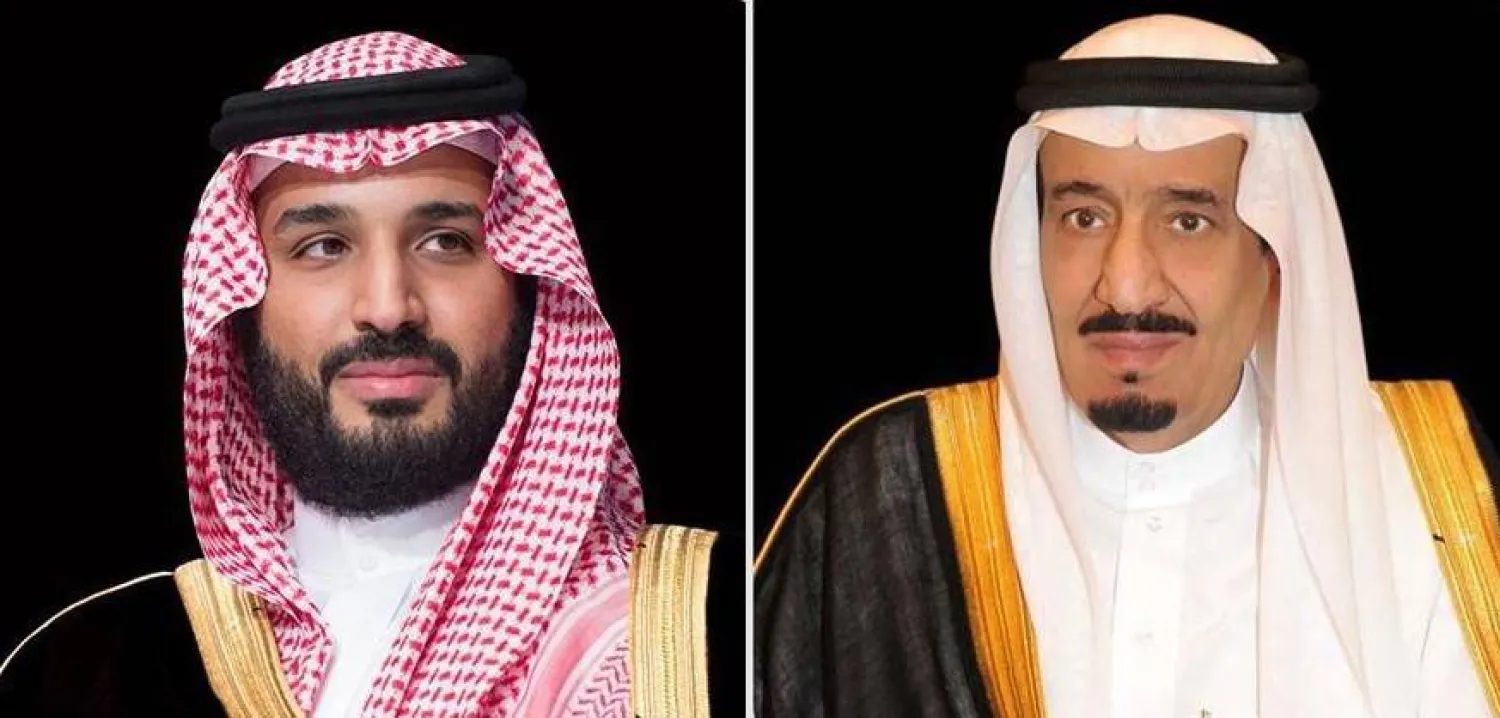
Custodian of the Two Holy Mosques King Salman bin Abdulaziz Al Saud and Prince Mohammed bin Salman bin Abdulaziz Al Saud, Crown Prince and Prime Minister. (SPA)
TT

Saudi Leadership Provides Two Donations Worth SAR150 Mln Through Jood Eskan Platform

Custodian of the Two Holy Mosques King Salman bin Abdulaziz Al Saud and Prince Mohammed bin Salman bin Abdulaziz Al Saud, Crown Prince and Prime Minister. (SPA)

Custodian of the Two Holy Mosques King Salman bin Abdulaziz Al Saud and Prince Mohammed bin Salman bin Abdulaziz Al Saud, Crown Prince and Prime Minister, have provided two generous donations amounting to SAR150 million through the Jood Eskan platform.

The move aligns with the leadership's commitment to supporting all national efforts and initiatives to provide suitable housing for deserving families.

Minister of Municipalities and Housing and Chairman of the Board of Trustees of the Developmental Housing Foundation (Sakan) Majed Al-Hogail expressed his deep gratitude to the leadership for its unwavering support to all national efforts and initiatives aimed at providing suitable housing for eligible families across the Kingdom.

He noted the effective impact of previous generous donations in achieving the goals of housing development, and motivating individuals and institutions to donate through the Jood Eskan platform that is based on community giving that helps provide decent housing and boosts stability and quality of life for deserving families.


Saudi Crown Prince Receives Message on Bilateral Ties from President of Kazakhstan

Prince Mohammed bin Salman bin Abdulaziz Al Saud, Saudi Crown Prince and Prime Minister. (SPA file)
TT

Saudi Crown Prince Receives Message on Bilateral Ties from President of Kazakhstan

Prince Mohammed bin Salman bin Abdulaziz Al Saud, Saudi Crown Prince and Prime Minister. (SPA file)

Prince Mohammed bin Salman bin Abdulaziz Al Saud, Saudi Crown Prince and Prime Minister, received on Tuesday a written message from President of Kazakhstan Kassym-Jomart Tokayev on bilateral relations between their two countries.

The message was received by Minister of Foreign Affairs Prince Faisal bin Farhan bin Abdullah during a meeting with his Kazakh counterpart Yermek Kosherbayev in Riyadh.