


Saudi Riwaq Accommodates 394,000 Worshippers, Pilgrims Per Hour

Prayers being performed around the Holy Kaaba in the Grand Mosque of Makkah, Saudi Arabia (AFP)
TT

Saudi Riwaq Accommodates 394,000 Worshippers, Pilgrims Per Hour

Prayers being performed around the Holy Kaaba in the Grand Mosque of Makkah, Saudi Arabia (AFP)

The Saudi Riwaq (Mataf) has contributed to increasing the Tawaf capacity (circumambulation of the Holy Kaaba) during this year’s Hajj season.

Extending to an area of 210,000 square meters, the four-floor Saudi Riwaq can accommodate 287,000 worshippers and 107,000 pilgrims per hour. It features high-quality services, sound and lighting systems.

The Riwaq extends to the west part of the edifice following extension orders by the late King Fahd bin Abdulaziz when 1500 white marble-covered columns carrying several domes were erected, thus expanding the Riwaq to 365,000 square meters with the capacity to accommodate about 1 million worshipers.

After that extension, the Saudi Riwaq included a new gate named after King Fahd.

The Riwaq grew larger from the northern side under the new expansion project, which started during the reign of the late King Abdullah bin Abdulaziz and was completed during the reign of King Salman bin Abdulaziz.

Under the Mataf expansion project, the area of the Grand Mosque grew to 1 million square meters, accommodating around 2 million worshippers.

Several columns were erected by the new expansion project to the Grand Mosque in addition to a new gate named after King Abdullah bin Abdulaziz.

Masjid al-Haram, also called the Grand Mosque being the largest mosque in the world, witnessed several expansion projects, including the Saudi Riwaq.

The expansion projects in the Grand Mosque began when Saudi King Abdulaziz began the initiative in 1955. He ordered the expansion of the Grand Mosque to accommodate the increasing number of pilgrims.

The building’s expansion continued during the eras of kings Saud, Faisal, and Khalid. It was in its completion phase during the reigns of kings Fahd and Abdullah as well as King Salman.

The Founder found a need to build a new “Saudi Riwaq” encompassing the Mataf expansion project behind the Abbasid courtyard and surrounding the Holy Kaaba’s courtyard.

The Saudi Riwaq is considered one of the prides of Saudi Arabia and an architectural success to the Grand Mosque.



Makkah Deputy Governor Carries Out Field Inspection of Grand Mosque Readiness for Ramadan 

Deputy Governor of the Makkah Region Prince Saud bin Mishaal bin Abdulaziz is seen during his inspection tour at the Grand Mosque in the holy city of Makkah. (SPA)
TT

Makkah Deputy Governor Carries Out Field Inspection of Grand Mosque Readiness for Ramadan 

Deputy Governor of the Makkah Region Prince Saud bin Mishaal bin Abdulaziz is seen during his inspection tour at the Grand Mosque in the holy city of Makkah. (SPA)

Deputy Governor of the Makkah Region Prince Saud bin Mishaal bin Abdulaziz inspected the readiness of the Grand Mosque and its facilities, conducting a field tour to review operational and service preparations for receiving worshippers and Umrah performers during the holy month of Ramadan, reported the Saudi Press Agency on Tuesday.

Prince Saud was briefed on the operational plans implemented by the relevant authorities, including crowd management mechanisms, service enhancements, and facility preparations aimed at ensuring smooth movement and enhancing comfort and safety levels for visitors to the Grand Mosque, particularly during peak times.

He reviewed developmental initiatives and smart services supporting the operational system, notably electric mobility carts for transporting the elderly, persons with disabilities, and those in need of assistance within the Grand Mosque.

The tour also included an overview of the efforts of guidance teams deployed across the corridors and courtyards of the Grand Mosque, providing multilingual assistance and direction.

Prince Saud reviewed the interactive map and digital mobility platform, which allows visitors to plan their routes in advance and identify service locations, entrances and exits, and less crowded pathways.

He was briefed on crowd management systems, including the visitor density sensor platform that measures human density in real time, and the Tawaf and Sa’i crowd status display service, which allows worshippers to select appropriate times to perform rituals with ease. Models of the modern multilingual guidance system were also reviewed.

Prince Saud also visited the Smart Engineering Command and Control Center, which serves as an advanced central platform linking operational systems and monitoring performance in real time, boosting operational efficiency and raising readiness levels during Ramadan.


Saudi Leadership Provides Two Donations Worth SAR150 Mln Through Jood Eskan Platform

Custodian of the Two Holy Mosques King Salman bin Abdulaziz Al Saud and Prince Mohammed bin Salman bin Abdulaziz Al Saud, Crown Prince and Prime Minister. (SPA)
TT

Saudi Leadership Provides Two Donations Worth SAR150 Mln Through Jood Eskan Platform

Custodian of the Two Holy Mosques King Salman bin Abdulaziz Al Saud and Prince Mohammed bin Salman bin Abdulaziz Al Saud, Crown Prince and Prime Minister. (SPA)

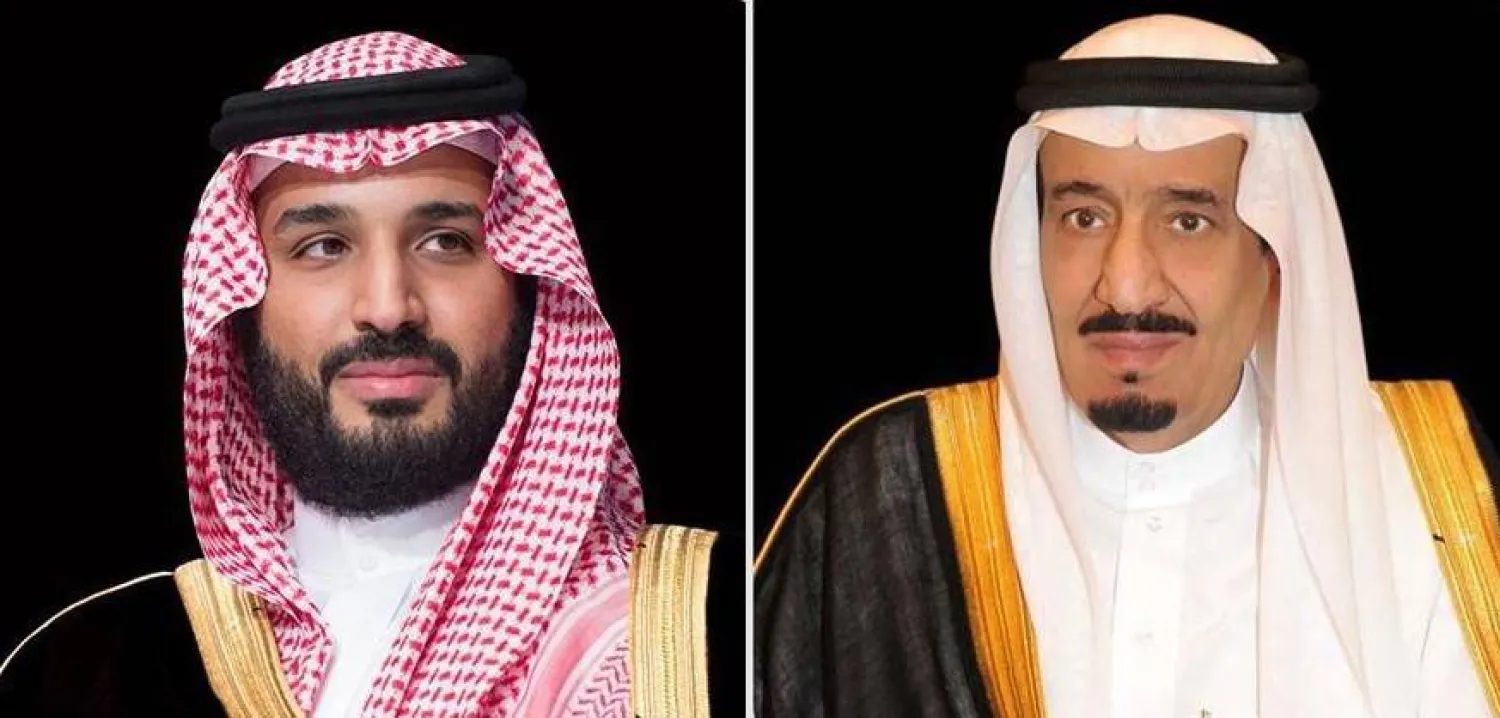
Custodian of the Two Holy Mosques King Salman bin Abdulaziz Al Saud and Prince Mohammed bin Salman bin Abdulaziz Al Saud, Crown Prince and Prime Minister, have provided two generous donations amounting to SAR150 million through the Jood Eskan platform.

The move aligns with the leadership's commitment to supporting all national efforts and initiatives to provide suitable housing for deserving families.

Minister of Municipalities and Housing and Chairman of the Board of Trustees of the Developmental Housing Foundation (Sakan) Majed Al-Hogail expressed his deep gratitude to the leadership for its unwavering support to all national efforts and initiatives aimed at providing suitable housing for eligible families across the Kingdom.

He noted the effective impact of previous generous donations in achieving the goals of housing development, and motivating individuals and institutions to donate through the Jood Eskan platform that is based on community giving that helps provide decent housing and boosts stability and quality of life for deserving families.


Saudi Crown Prince Receives Message on Bilateral Ties from President of Kazakhstan

Prince Mohammed bin Salman bin Abdulaziz Al Saud, Saudi Crown Prince and Prime Minister. (SPA file)
TT

Saudi Crown Prince Receives Message on Bilateral Ties from President of Kazakhstan

Prince Mohammed bin Salman bin Abdulaziz Al Saud, Saudi Crown Prince and Prime Minister. (SPA file)

Prince Mohammed bin Salman bin Abdulaziz Al Saud, Saudi Crown Prince and Prime Minister, received on Tuesday a written message from President of Kazakhstan Kassym-Jomart Tokayev on bilateral relations between their two countries.

The message was received by Minister of Foreign Affairs Prince Faisal bin Farhan bin Abdullah during a meeting with his Kazakh counterpart Yermek Kosherbayev in Riyadh.