Oman Economy Minister: Promising Opportunities for Saudi Investors in Energy, Green Hydrogen Sectors

Omani Economy Minister Dr. Said Mohammed Al-Saqri.
TT

Oman Economy Minister: Promising Opportunities for Saudi Investors in Energy, Green Hydrogen Sectors

Omani Economy Minister Dr. Said Mohammed Al-Saqri.

Dr. Said Mohammed Al-Saqri, Oman’s minister of economy, emphasized that economic cooperation between Saudi Arabia and the Sultanate has witnessed significant progress over the past two years since the establishment of the coordination council between the two Gulf nations and the opening of the land border connecting them.

In an interview with Asharq Al-Awsat, Al-Saqri stated that the collaborative partnership between Saudi Arabia and Oman has experienced substantial growth, reflected in the volume of their non-oil trade.

In 2022, Omani non-oil exports to Saudi Arabia increased by approximately 33.9%, reaching around $2.4 billion, compared to about $1.68 billion in 2021.

Saudi Arabia accounted for 10.5% of Oman’s non-oil exports in 2022.

Al-Saqri further noted that Oman presents more investment opportunities for the Saudi private sector, particularly in the oil and gas sector, including exploration and production, support services, and oil and gas-related industries.

Additionally, there are strategic investment opportunities in the field of clean and renewable energy, such as solar and wind energy, as well as green hydrogen, aimed at promoting sustainable energy solutions and reducing carbon emissions.

When asked to assess economic cooperation between Saudi Arabia and Oman, Al-Saqri said: “Economic cooperation has witnessed significant advancement over the years. This cooperation has unfolded through a series of stages and agreements that reflect the depth of the relationship between the two nations.”

“The most pivotal milestones in the economic collaboration between Saudi Arabia and Oman include the establishment of the Saudi-Omani Coordination Council in July 2021.”

“This council aims to formulate a shared vision for deepening and sustaining the bilateral ties while elevating cooperation in political, economic, security, military, and human development domains,” explained Al-Saqri.

The minister added that the council also sets the framework for agreements and joint projects to enhance investment and oversee the implementation and facilitation of initiatives and projects.

The council has played a pivotal role in accelerating the pace of economic and trade cooperation between the Kingdom and the Sultanate.

The council is grounded in the common factors between Oman’s Vision 2040 and Saudi Vision 2030.

While looking to diversify the two countries’ economies, the two visions promote reducing reliance on oil and creating conditions conducive to greater private sector and investor involvement in economic activities.

Additionally, they seek to attract foreign direct investments and capital as key drivers for sustainable economic growth.

As for cooperation projects between Saudi Arabia and Oman, Al-Saqri said: “They have collaborated extensively in the oil and gas sector, embarking on joint projects and exchanging experiences and expertise.”

“As two of the region's most significant oil and gas producers and exporters, this partnership holds great significance. Furthermore, both nations have actively encouraged mutual investments across various vital economic sectors, including infrastructure, manufacturing, technology, and tourism,” added the minister.

Numerous agreements and memoranda of understanding have been signed between the public and private sectors of both the Kingdom and the Sultanate, aiming to broaden the horizons of cooperation.

The agreements encompass a wide range of areas and aim to reduce production and export costs, thereby enhancing sustainable economic growth in the two nations.

Regarding setting up a Saudi-funded company in Oman, Al-Saqri referred to the allocation of $5 billion from Saudi Arabia’s Public Investment Fund (PIF), under the directives of Crown Prince Mohammed bin Salman, Crown Prince and Prime Minister, to establish a company in Oman for the purpose of investing in available and promising opportunities and strategic joint projects between the two countries.

Al-Saqri moved on to note that the allocation “resulted in numerous joint economic projects being realized, spanning a wide range of economic sectors, including oil, gas, industry, infrastructure, and tourism.”

“The strong collaborative ties between Oman and the Kingdom of Saudi Arabia have significantly boosted the volume of trade between the two nations,” affirmed Al-Saqri.

“Available data indicates a substantial increase in Oman's non-oil exports to Saudi Arabia in 2022, rising by approximately 33.9% to reach around 922 million Omani rials ($2.4 billion), compared to about 650 million Omani rials ($1.68 billion) in 2021.”

“Consequently, Saudi Arabia holds the second position, accounting for 10.5% of Oman’s non-oil exports in 2022.”

“Moreover, imports from Saudi Arabia to Oman increased by about 12% in 2022, reaching approximately 1.8 billion Omani rials ($4.6 billion), compared to about 561 million Omani rials ($1.45 billion) in 2021.”

It is expected that the acceleration and expansion of trade between the two countries will continue through joint strategic projects and increased investment opportunities.

According to Al-Saqri, this includes the launch of more collaborative projects and mutual investments in diverse sectors, especially following the opening of the land route directly connecting Oman to Saudi Arabia.

Talking about opportunities that Oman offers to Saudi investors, Al-Saqri said: “Oman’s investment environment is characterized as encouraging and attractive to foreign investments in general, thanks to its strategic location, economic, political, and security stability, a clear and transparent legal and institutional framework, advanced infrastructure, and simplified procedures and incentives for investment and business.”

“All these factors make Oman a reliable and ideal investment destination, especially given the abundance of investment opportunities for investors in general and Saudi investors in particular,” he added.

Delving into energy sector investment opportunities, the Omani minister said that one of the most significant investment opportunities is provided by the oil and gas sector, offering vital prospects in areas such as oil and gas exploration and production, support services, and oil and gas-related industries for the petroleum sector.

“Additionally, there are strategic investment opportunities in the field of clean and renewable energy, such as solar and wind energy, as well as green hydrogen,” said Al-Saqri.

Opportunities mentioned by the minister aim to promote sustainable energy solutions and reduce carbon emissions.


UAE Announces Travel Ban on Nationals to Iran, Lebanon and Iraq

The flag of the UAE. (Asharq Al-Awsat)
TT

UAE Announces Travel Ban on Nationals to Iran, Lebanon and Iraq

The flag of the UAE. (Asharq Al-Awsat)

The United Arab Emirates foreign ministry on Thursday announced a travel ban on Emirati nationals going to Iran, Lebanon and Iraq, citing regional developments including the Middle East war.

Iran has targeted the Gulf nation throughout the Middle East conflict sparked by a US-Israeli attack before a fragile ceasefire was announced, including missiles fired at civilian and energy infrastructure.

"In light of current regional developments, the Ministry of Foreign Affairs (MoFA) announces a travel ban on UAE nationals travelling to the Islamic Republic of Iran, the Lebanese Republic, and the Republic of Iraq," state news agency WAM reported.

It said the ministry called on "all UAE nationals currently in these countries to expedite their immediate return" to the UAE.


Saudi Foreign Minister Meets with French Counterpart in Riyadh

Photo by SPA
Photo by SPA
TT

Saudi Foreign Minister Meets with French Counterpart in Riyadh

Photo by SPA
Photo by SPA

Saudi Minister of Foreign Affairs Prince Faisal bin Farhan bin Abdullah met Thursday in Riyadh French Minister for Europe and Foreign Affairs Jean-Noël Barrot, SPA reported.

During the meeting, they reviewed relations and discussed regional and international developments and their implications for security and stability.


How Did the Jeddah Summit Support Joint Gulf Action?

The flags of Gulf countries are raised in Jeddah ahead of the summit (SPA)
TT

How Did the Jeddah Summit Support Joint Gulf Action?

The flags of Gulf countries are raised in Jeddah ahead of the summit (SPA)

Gulf leaders meeting in Jeddah this week urged faster progress on joint projects and deeper military integration, seeking to reinforce collective security and economic coordination amid heightened regional tensions.

In a statement after the consultative summit on Tuesday, GCC Secretary-General Jasem Albudaiwi said leaders called for accelerating completion of requirements to link all shared Gulf projects, including transport and logistics. They stressed speeding up implementation of the Gulf railway, advancing electricity interconnection, and taking prompt steps toward oil and gas pipeline and water-link projects.

The statement also pointed to studying strategic Gulf stockpiles, while emphasizing intensified military integration and faster completion of a joint early warning system against ballistic missiles.

The direct wording - repeating terms such as “accelerate” and “urgency” - reflected a push for concrete outcomes and highlighted Saudi Arabia’s initiative in convening the summit amid complex regional conditions.

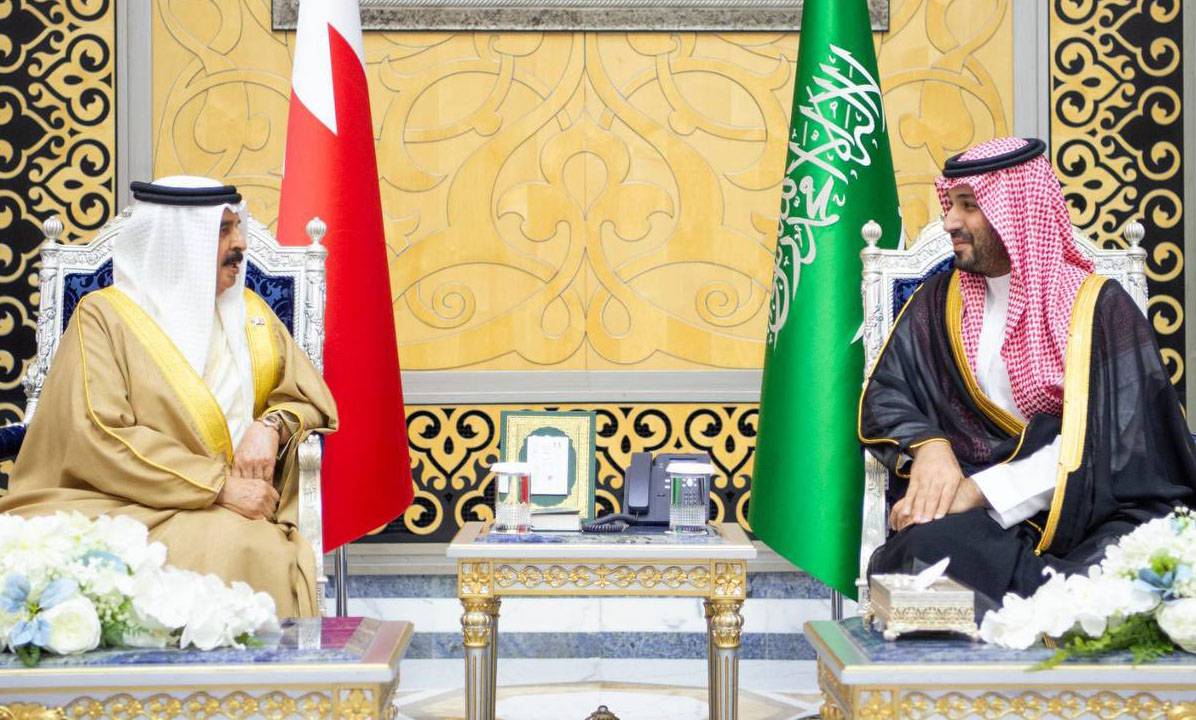
28 April 2026, Saudi Arabia, Jeddah: Saudi Crown Prince Mohammed bin Salman meets with Bahrain's King, Hamad bin Isa bin Salman, on the sidelines of the Gulf Cooperation Council Consultative Summit. Photo: Saudi Press Agency/APA Images via ZUMA Press Wire/dpa

Qatar’s Emir, Sheikh Tamim bin Hamad Al Thani, said the meeting reflected Gulf unity. “Our consultative summit today in Jeddah embodies a unified Gulf position toward current developments and the need to intensify coordination and consultation,” he stated, adding that this would strengthen diplomatic efforts, safeguard regional security and stability, and support development and prosperity.

Extending Gulf leadership efforts

Abdulaziz Sager, chairman of the Gulf Research Center, told Asharq Al-Awsat that the summit was convened in response to conditions facing the Gulf region following the US-Israeli-Iranian war, aiming to coordinate GCC positions and contain its repercussions.

The goal is to enhance efforts to address this crisis and its consequences - security, economic and otherwise - to stabilize the region, safeguard GCC interests and strengthen collective security, he underlined.

Sager added that the summit builds on efforts led by Saudi Crown Prince Mohammed bin Salman and other Gulf leaders, within the broader vision of King Salman bin Abdulaziz to strengthen joint Gulf action, deepen economic unity, and develop defense and security systems toward more sustainable integration.

He revealed that these discussions also addressed reinforcing Gulf unity to better manage current challenges and anticipate future crises.

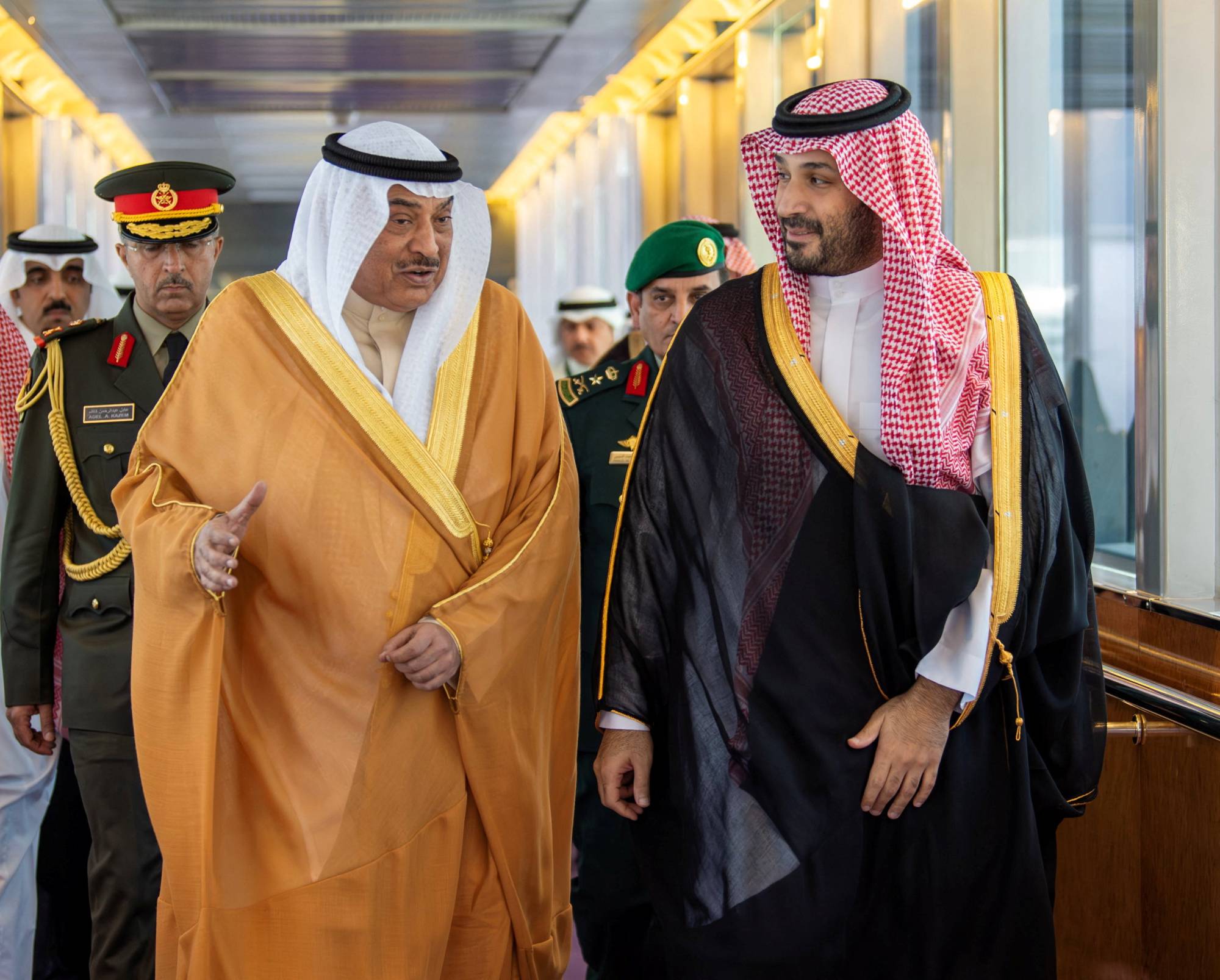
Saudi Crown Prince Mohammed bin Salman receives the Kuwaiti Crown Prince Sheikh Sabah Khaled Al-Hamad Al-Sabah ahead of an exceptional meeting of the Gulf Cooperation Council (GCC), In Jeddah, Saudi Arabia, April 28, 2026. Bandar Algaloud/Courtesy of Saudi Royal Court/Handout via REUTERS

Toward independent Gulf decision-making

Sager said the summit is expected to build on the GCC success in confronting Iranian missile and drone attacks, using that experience to develop a comprehensive defense strategy, which would focus on modern armament suited to evolving warfare, training, and external defense partnerships, while reinforcing self-reliance.

Leaders reaffirmed the right of GCC states to self-defense, individually or collectively, under Article 51 of the United Nations Charter, and to take all measures to protect sovereignty, security and stability. They stressed full solidarity among member states and that their security is indivisible, with any attack on one considered an attack on all, in line with the joint defense agreement.

Albudaiwi said leaders praised the “courage and high readiness” of GCC armed forces in defending against Iranian attacks, noting their ability to intercept missiles and drones with professionalism and efficiency while safeguarding national assets.

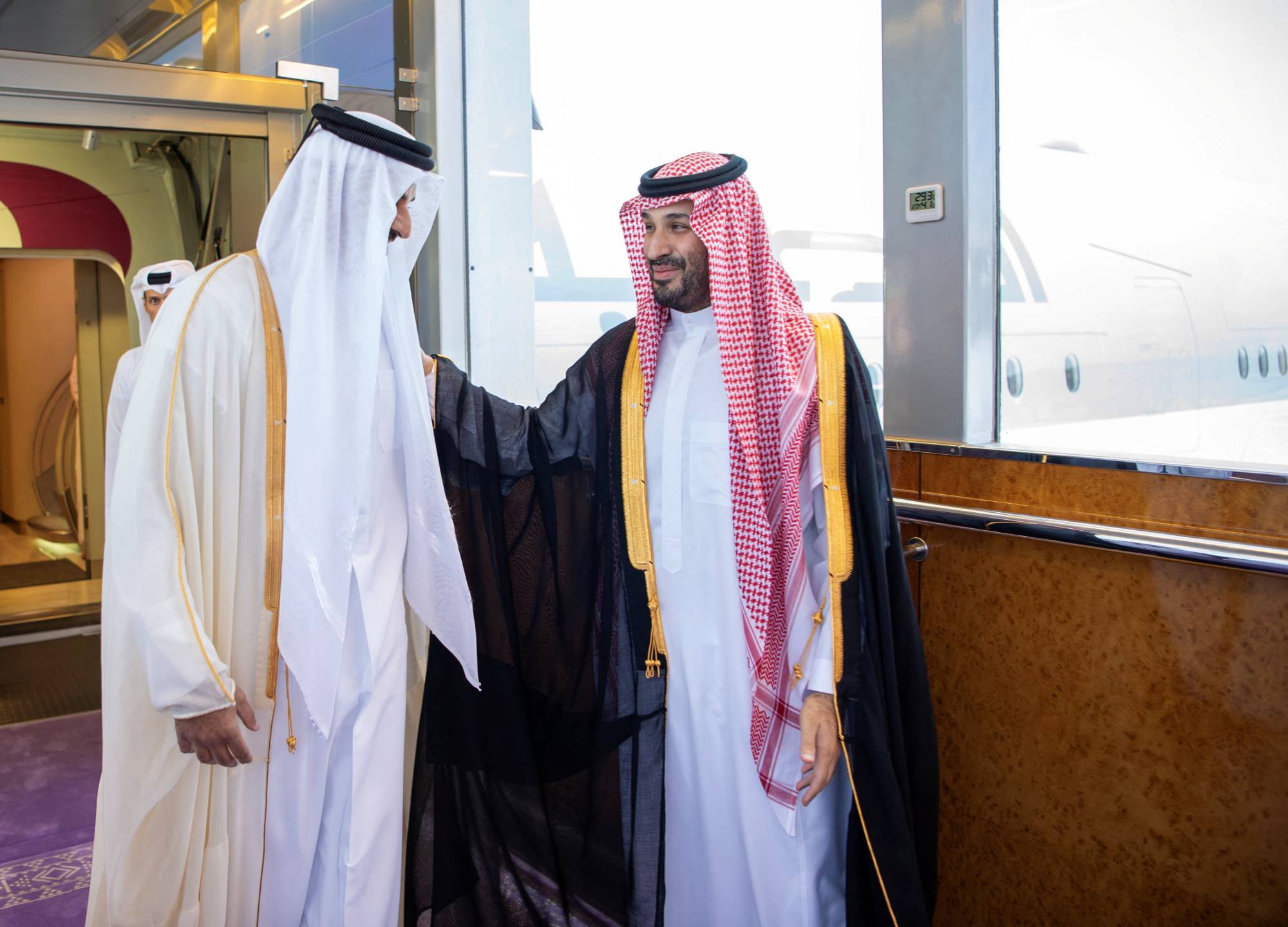
Saudi Crown Prince Mohammed bin Salman receives The Emir of Qatar, Sheikh Tamim bin Hamad Al Thani ahead of an exceptional meeting of the Gulf Cooperation Council (GCC), In Jeddah, Saudi Arabia, April 28, 2026. Bandar Algaloud/Courtesy of Saudi Royal Court/Handout via REUTERS

Alternative routes on the agenda

Sager noted that developing alternative corridors to secure energy supply chains will likely be a key focus in the coming period, reflected in leaders’ directives to move ahead with pipeline projects and transport infrastructure.

Political analyst Ahmed Alibrahim agreed, saying the summit statement underscored Saudi Arabia’s role in securing supply chains during the crisis and working on alternative energy routes, including through the East-West pipeline, as part of addressing risks linked to the Strait of Hormuz.

He described the statement as unusually direct. “This is one of the rare times we see a clear and explicit communiqué with firm directives, especially regarding future requirements and open-ended scenarios,” he said, citing uncertainties including potential setbacks in US-Iran negotiations or other serious developments.

For his part, political analyst Mohammed Al-Dossary believes that the importance of the GCC lies in its ability to navigate many crises, including the Iraq-Iran War and Iraq's occupation of Kuwait.

He stressed that the collective consciousness of Gulf citizens recognizes the importance of unifying the Gulf stance to overcome crises, including the current one and the implications of the Strait of Hormuz closure.