Saudi Govt Reiterates Support to Palestinian People

Custodian of the Two Holy Mosques King Salman bin Abdulaziz chairs the cabinet meeting in Riyadh on Tuesday. (SPA)
TT

Saudi Govt Reiterates Support to Palestinian People

Custodian of the Two Holy Mosques King Salman bin Abdulaziz chairs the cabinet meeting in Riyadh on Tuesday. (SPA)

The Saudi government underlined on Tuesday its position at the extraordinary Arab-Islamic summit during which it stressed its continued efforts to bolster collective work to stop the barbaric war on Gaza and lift the siege on the Palestinian enclave.

Custodian of the Two Holy Mosques King Salman bin Abdulaziz chaired the cabinet meeting that was held in Riyadh.

The cabinet held Israeli authorities responsible for the crimes committed in Gaza, reiterating the Kingdom’s support for the Palestinian people so that they can achieve their legitimate rights, starting with the establishment of their independent state with East Jerusalem as its capital.

The ministers were briefed on the two messages King Salman received from Burkina Faso’s interim president and Mali’s transitional president. They were briefed on the message received by Prince Mohammed bin Salman bin Abdulaziz, Crown Prince and Prime Minister, from the Sultan of Oman.

The cabinet reviewed the talks and consultations held by the Crown Prince with leaders of several brotherly and friendly countries, at bilateral and multilateral levels, as part of the Kingdom's efforts to boost its international partnerships, continue its leading role to achieve peace and security in the region, and mobilize collective action toward achieving more global stability, progress and prosperity.

The cabinet praised the positive outcome of the Saudi-African Summit held in Riyadh last week. They hoped it will lead to a significant leap in cooperation and partnerships between Saudi Arabia and African countries, mainly through development projects, programs initiated by King Salman in Africa, other agreements and memorandums of understanding, and new investments and funds offered to various sectors.

The cabinet reiterated the Kingdom's declaration at the Gulf Cooperation Council interior ministers' meeting that it is important to intensify cooperation and joint security coordination given the challenges facing the region and world that have led to a spike in violence, terrorism, extremism, instability, and cross-border organized crime.

The cabinet reviewed the outcomes of the inaugural meeting of the Saudi-Omani Coordination Council, which was held in Muscat on Monday. It praised the strong relations between the two countries and the continuous progress and development in various fields.

Moreover, the cabinet highlighted the Kingdom's active role in bolstering the goals of the Organization of Islamic Cooperation (OIC) and its efforts to safeguard women's rights while encouraging their engagement in development initiatives in member nations.

It underlined Saudi Arabia’s hosting of the International Conference on Women in Islam that adopted the Jeddah Document on Women's Rights in Islam. The document serves as a vital legislative and intellectual framework aimed at advancing the empowerment of women in Islamic societies.
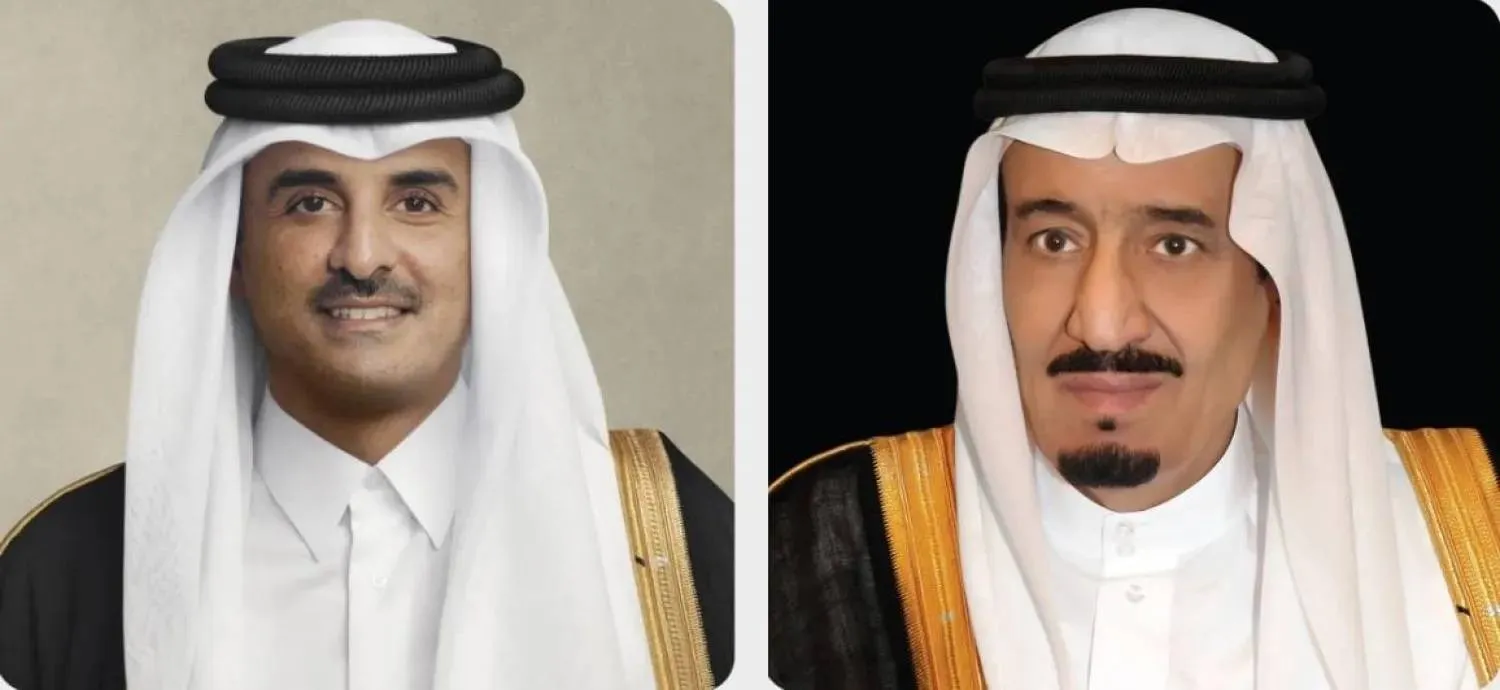

Custodian of the Two Holy Mosques Receives Written Message from Emir of Qatar

Custodian of the Two Holy Mosques King Salman bin Abdulaziz Al Saud and Emir of Qatar Sheikh Tamim bin Hamad Al Thani. (Asharq Al-Awsat)
TT

Custodian of the Two Holy Mosques Receives Written Message from Emir of Qatar

Custodian of the Two Holy Mosques King Salman bin Abdulaziz Al Saud and Emir of Qatar Sheikh Tamim bin Hamad Al Thani. (Asharq Al-Awsat)

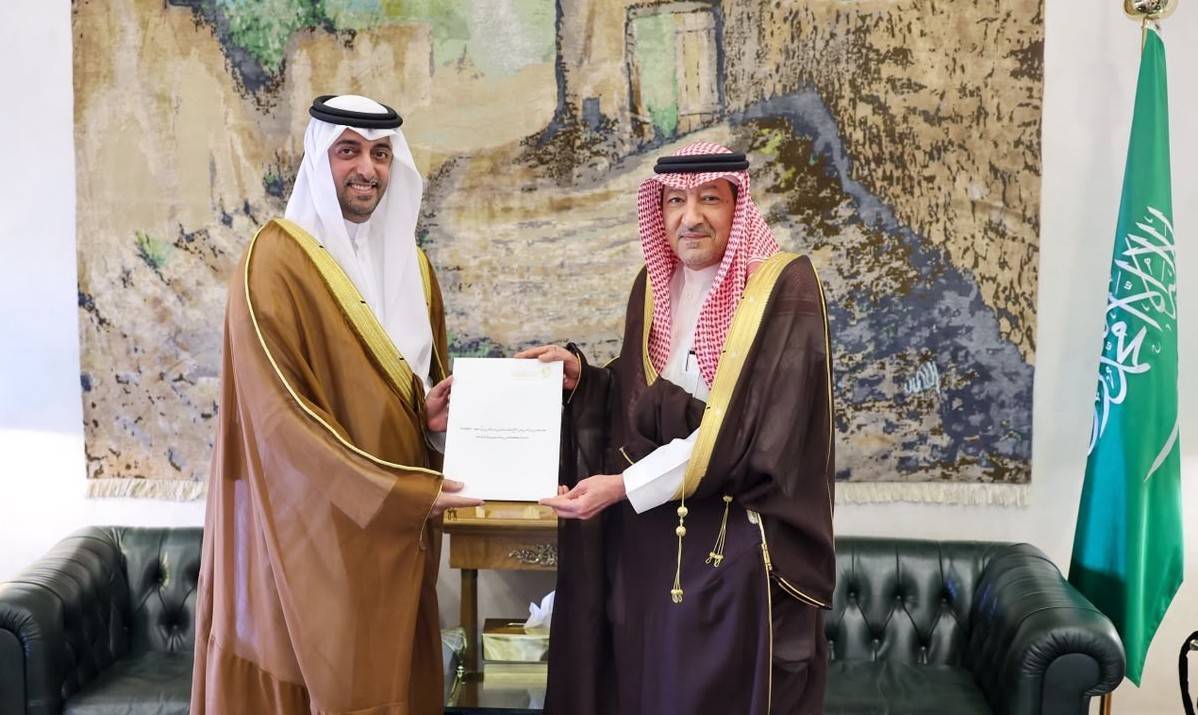
Custodian of the Two Holy Mosques King Salman bin Abdulaziz Al Saud received on Monday a written message from Emir of Qatar Sheikh Tamim bin Hamad Al Thani on bilateral relations between their countries.

The message was received by Vice Minister of Foreign Affairs Waleed Elkhereiji during a meeting with Ambassador of Qatar to Saudi Arabia Bandar bin Mohammed Al Attiyah at the ministry's headquarters in Riyadh.

Vice Minister of Foreign Affairs Waleed Elkhereiji meets with Ambassador of Qatar to Saudi Arabia Bandar bin Mohammed Al Attiyah in Riyadh on Monday. (SPA)

The meeting reviewed bilateral relations between their countries, ways to boost them in various fields. They also discussed issues of common interest.


Qatar Calls for Non-Aggression Pact with Iran, Announces Plans to Strengthen Defense Industry

Qatari Deputy Prime Minister and Minister of State for Defense Affairs Sheikh Saoud bin Abdulrahman Al Thani attends the opening of the eighth Global Security Forum in Doha on Monday.
TT

Qatar Calls for Non-Aggression Pact with Iran, Announces Plans to Strengthen Defense Industry

Qatari Deputy Prime Minister and Minister of State for Defense Affairs Sheikh Saoud bin Abdulrahman Al Thani attends the opening of the eighth Global Security Forum in Doha on Monday.

Qatar has called for a regional dialogue involving the Gulf Cooperation Council (GCC) states and Iran, with the participation of Türkiye and Pakistan, aimed at reaching security understandings based on confidence-building measures and a non-aggression agreement.

The proposal comes as Doha prepares to unveil new defense partnerships and plans to establish a domestic military production center, part of efforts to strengthen its ability to counter missile threats, drones and cyberattacks.

The announcements were made by Sheikh Saoud bin Abdulrahman Al Thani, Qatar's Deputy Prime Minister and Minister of State for Defense Affairs, during the opening of the eighth Global Security Forum in Doha on Monday.

The forum, which runs through October 21 under the theme "The Future of Alliances", brings together officials and experts in international security and politics.

The Qatari minister said achieving lasting peace with Iran would require addressing mutual security concerns and building economic relationships that could help prevent renewed conflict.

He stressed that Qatar continues to maintain contact with Tehran despite the attacks it has suffered and supports mediation efforts led by Pakistan, in cooperation with Oman and other partners, to seek a settlement to the conflict between the United States and Iran.

On defense security, Sheikh Saoud revealed that Qatar is preparing to announce a partnership with regional parties to develop its air defense, counter-drone and cybersecurity capabilities.

He also announced plans to establish a domestic defense production center in cooperation with a regional partner and countries including the United States, the United Kingdom and France, either by localizing certain military industries or investing in specialized companies.

The minister explained that a defense review conducted by Qatar had identified air defense, cybersecurity and electronic warfare as priorities, following the threats witnessed across the region during the recent conflict.

He said Doha would soon announce the establishment of the domestic defense production center, explaining that Qatar is working with a regional partner, alongside the United States, Britain and France, to develop local defense capabilities or invest in companies operating in the sector.

Asked about the threats facing Qatar and other Gulf countries, particularly ballistic missiles, drones and cyberattacks, Sheikh Saoud said a new partnership with regional parties would be announced soon to launch an initiative aimed at building capabilities in those three areas and others.

The minister emphasized the importance of Qatar's military partnership with the United States, noting that defense cooperation and exchanges of expertise had helped intercept more than 90 percent of attacks during the conflict.

He also reaffirmed Qatar's commitment to the continued development of Al Udeid Air Base, describing it as a Qatari facility that hosts allied forces and supports multiple missions, including counterterrorism operations.

On energy security, Sheikh Saoud warned that the economic repercussions of disruptions to oil and gas supplies had not yet reached their peak, and that their effects on prices and consumers could continue over the coming months.

He also rejected the imposition of fees on vessels transiting the Strait of Hormuz, stressing the need for an agreement guaranteeing freedom of navigation and stability in energy markets.

The minister addressed the Israeli attack on Qatar, arguing that targeting a country engaged in mediation undermines confidence in diplomatic efforts.

He also referred to the apology issued by the Israeli prime minister following the attack.

Discussing Iranian attacks on Qatari facilities and interests, Sheikh Saoud said Doha had drawn lessons from the incidents to strengthen its defense preparedness, without abandoning dialogue with Tehran.

He stressed that mediation and military readiness are not mutually exclusive, explaining that preventing wars requires sustained diplomatic engagement alongside the development of capabilities necessary to protect national sovereignty.

The Global Security Forum, organized by the Soufan Center and the Qatar International Academy for Security Studies, is being held under the patronage of Sheikh Mohammed bin Abdulrahman Al Thani, Qatar's Prime Minister and Minister of Foreign Affairs.

The forum is examining the future of alliances and defense partnerships, maritime security and supply chains, cybersecurity challenges, and de-escalation diplomacy amid ongoing shifts in international relations.


Saudi Arabia, France Discuss Relations and Regional Developments

Saudi Minister of Foreign Affairs Prince Faisal bin Farhan bin Abdullah holding talks with Minister for Europe and Foreign Affairs of the French Republic Jean-Noël Barrot - SPA
TT

Saudi Arabia, France Discuss Relations and Regional Developments

Saudi Minister of Foreign Affairs Prince Faisal bin Farhan bin Abdullah holding talks with Minister for Europe and Foreign Affairs of the French Republic Jean-Noël Barrot - SPA

Saudi Minister of Foreign Affairs Prince Faisal bin Farhan bin Abdullah met with Minister for Europe and Foreign Affairs of the French Republic Jean-Noël Barrot.

During the meeting, they reviewed bilateral relations and the existing partnership across various fields, exploring ways to further strengthen them to serve mutual interests and support the aspirations of both friendly nations.

The ministers also discussed regional developments and efforts to mitigate the repercussions of ongoing events. Barrot expressed his country’s condemnation of the terrorist attacks carried out by the Houthi militia and affirmed France’s solidarity with Saudi Arabia.

The two sides also underscored the importance of intensifying diplomatic efforts to ensure the security and safety of regional waterways and freedom of navigation, as well as supporting diplomatic efforts to achieve comprehensive and sustainable solutions to ongoing regional crises, thereby enhancing security and stability across the region.