Emir of Kuwait Outlines Features of New Phase, Focuses on Fight against Corruption

The Emir of Kuwait, Sheikh Meshal Al-Ahmad Al-Jaber Al-Sabah, receives Prime Minister Sheikh Mohammad Sabah Al-Salem Al-Sabah (KUNA)
TT

Emir of Kuwait Outlines Features of New Phase, Focuses on Fight against Corruption

The Emir of Kuwait, Sheikh Meshal Al-Ahmad Al-Jaber Al-Sabah, receives Prime Minister Sheikh Mohammad Sabah Al-Salem Al-Sabah (KUNA)

The Emir of Kuwait, Sheikh Meshal Al-Ahmad Al-Jaber Al-Sabah, called on the new government, headed by Sheikh Mohammad Sabah Al-Salem Al-Sabah, to fight corruption in the country and diversify sources of income, stressing that the government should develop “a targeted action plan with a specific timetable.”
Addressing the newly-formed government on Wednesday, Sheikh Meshal stressed the importance of adhering to the constitution, enforcing the law, combating corruption and nepotism, and promoting justice and equality across all ministries and institutions.
The Emir also urged the government to work on other files, including strengthening the country’s economy and investments, diversifying sources of income, enhancing financial sustainability and the role of the private sector, protecting public funds, and accelerating the implementation of vital and development projects.
Pointing that the slogan of the new phase is “reform and development,” he said that the new government’s work must be focused on “supervision, control, and accountability,” within the framework of safeguarding national duties and rights.
Addressing the ministers, he said: “Set the priorities, unify efforts according to an action plan with specific objectives and committed to a timetable, and seek the help of thinkers and opinion-makers to reach the right decisions that lead to achieving the desired goals.”
He also encouraged the ministers to adopt an “open door” policy, actively engage with the public, utilize media tools effectively, and address citizens’ needs within legal and regulatory frameworks, which he said would enhance public services in education, health, and housing.
The Emir also called on the government to consolidate “cooperation with the legislative authority in order to approve and implement legislation and laws,” and emphasized that the two legislative and executive authorities must “adhere to the provisions of the Constitution that govern the relationship between them.”
Sheikh Meshal pointed to a number of pressing issues that require careful attention and planning by the government. Those include appointing skilled top officials, focusing on youth and women, ensuring equal appointment opportunities, diversifying income resources, seeking to achieve financial sustainability and enhancing the private sector’s role, as well as safeguarding public funds, expediting vital and developmental projects, promoting digital transformation.
The new government is headed by Prime Minister Dr. Sheikh Mohammad Sabah Al-Salem Al-Sabah and includes 13 ministers holding key ministerial positions.



Saudi FM Discusses Regional Developments in Phone Calls with Counterparts

Saudi Foreign Minister Prince Faisal bin Farhan (Asharq Al-Awsat)
TT

Saudi FM Discusses Regional Developments in Phone Calls with Counterparts

Saudi Foreign Minister Prince Faisal bin Farhan (Asharq Al-Awsat)

Saudi Foreign Minister Prince Faisal bin Farhan bin Abdullah discussed the latest regional developments on Saturday in separate phone calls with his counterparts from Iraq, Jordan, Türkiye and Spain.

Prince Faisal received phone calls from Iraqi Deputy Prime Minister and Foreign Minister Fuad Hussein; Jordanian Deputy Prime Minister, Minister of Foreign Affairs and Expatriates Ayman Safadi; Turkish Foreign Minister Hakan Fidan; and Spanish Foreign Minister José Manuel Albares.

Prince Faisal and Safadi also reviewed coordinated efforts aimed to promote security and stability in the region.


With Saudi Backing, Yemen Moves to Forge Southern Consensus and Restore State Authority in the North

Members of Yemen’s Presidential Leadership Council meet with the Saudi Defense Minister. Saba
TT

With Saudi Backing, Yemen Moves to Forge Southern Consensus and Restore State Authority in the North

Members of Yemen’s Presidential Leadership Council meet with the Saudi Defense Minister. Saba

Yemen’s Presidential Leadership Council took a series of far-reaching decisions on Thursday, including changes to its membership and the appointment of a new prime minister tasked with forming a new government, in a move aimed at reshaping power dynamics within the anti-Houthi camp and strengthening unified sovereign decision-making under declared Saudi support.

In a rapid sequence of decisions, the council revoked Faraj Al-Buhsani's membership, filled the resulting vacancies by appointing Lieutenant General Mahmoud Al-Subaihi and Dr. Salem Al-Khanbashi, accepted the resignation of Prime Minister Salem bin Braik’s government, and named Shaea Mohsen Al-Zandani to form a new cabinet.

The steps, which officials said were taken with Saudi Arabia playing a “decisive” role, are intended to normalize conditions in southern provinces, particularly Hadhramaut, and pave the way for a comprehensive south-to-south dialogue to be hosted in Riyadh.

The decision to strip Al-Buhsani of his membership in the Presidential Leadership Council was not merely a change in personnel, according to the legal reasoning published by official media, but a firm political and legal message.

The decision accused him of “breaching the principle of collective responsibility” and “challenging sovereign decisions.”

It said Al-Buhsani had “exploited his constitutional position to provide political and legal cover for illegal military movements” carried out by what it described as the dissolved Southern Transitional Council, including justifying the mobilization of forces from outside Hadhramaut to attack the province.

He was also accused of endorsing “unilateral measures” led by Aidarous al-Zubaidi, who has been referred to the public prosecutor on charges of high treason, actions that the decision said had contributed to undermining national unity.

The language of the ruling framed those actions as an “armed rebellion outside the framework of the state,” shifting the southern dispute from a political disagreement into a question of allegiance to state institutions and legitimacy.

The move was seen as a heavy blow to the dissolved Transitional Council and its supporters, reaffirming that southern demands must be pursued through constitutional and legal channels and through negotiations under Saudi sponsorship, rather than unilateral military action.

Rebalancing power

The appointment of Dr. Salem Al-Khanbashi, the governor of Hadhramaut, as a member of the Presidential Leadership Council while retaining his local post underscored the priority placed on stability in the oil-rich province.

In a previous interview with Asharq Al-Awsat, Al-Khanbashi said the Saudi position had been “decisive” in the rapid withdrawal of Southern Transitional Council forces from Hadhramaut.

His elevation to the council is seen as recognition of his recent efforts and is expected to strengthen the government camp’s ability to manage political and security conditions in Hadhramaut and across southern Yemen.

The appointment of Lt. Gen. Mahmoud Al-Subaihi, a veteran military commander, was viewed as bolstering the representation of the professional military establishment within the council and sending a reassuring message to forces fighting on the front lines against the Houthis.

Officials said it could also be a step toward unifying military formations under the Ministry of Defense, a key Saudi and international demand.

Accepting the government's resignation and appointing Al-Zandani to form a new cabinet was aimed at renewing government performance to meet the demands of a new phase, shifting from crisis management to rebuilding institutions and improving services.

The move coincided with Saudi Arabia’s announcement of $90 million in financial support to pay salaries, in addition to covering military wages starting Sunday.

Broader context

The latest Yemeni moves cannot be separated from Saudi Arabia’s regional role. Alongside the internal decisions, Riyadh announced a new development package for Yemen worth 1.9 billion Saudi riyals, or about $500 million, and preparations to host a south-to-south dialogue conference, while continuing efforts to reunify military forces.

The Saudi strategy, according to officials, centers on supporting Yemen’s legitimate authority to impose control, unify armed forces, end armed activity outside the state, and facilitate inclusive southern dialogue under its sponsorship to reach a unified vision addressing the southern issue.

Saudi Arabia has also continued its development and humanitarian efforts, linking political stability in Yemen to improved services and living conditions to restore public confidence in state institutions.

These developments come as UN envoy Hans Grundberg has warned of the truce's fragility, stressing that the future of the south cannot be imposed by force.

The changes appear aimed at forging a more cohesive and unified southern leadership capable of entering decisive negotiations over the shape of Yemen’s future state, before turning to the long-delayed settlement in the north, where the Houthis continue to obstruct regional and international efforts to end the conflict and re-enter a peace process to restore stability across Yemen.


Saudi King Leaves Hospital after Reassuring Medical Tests

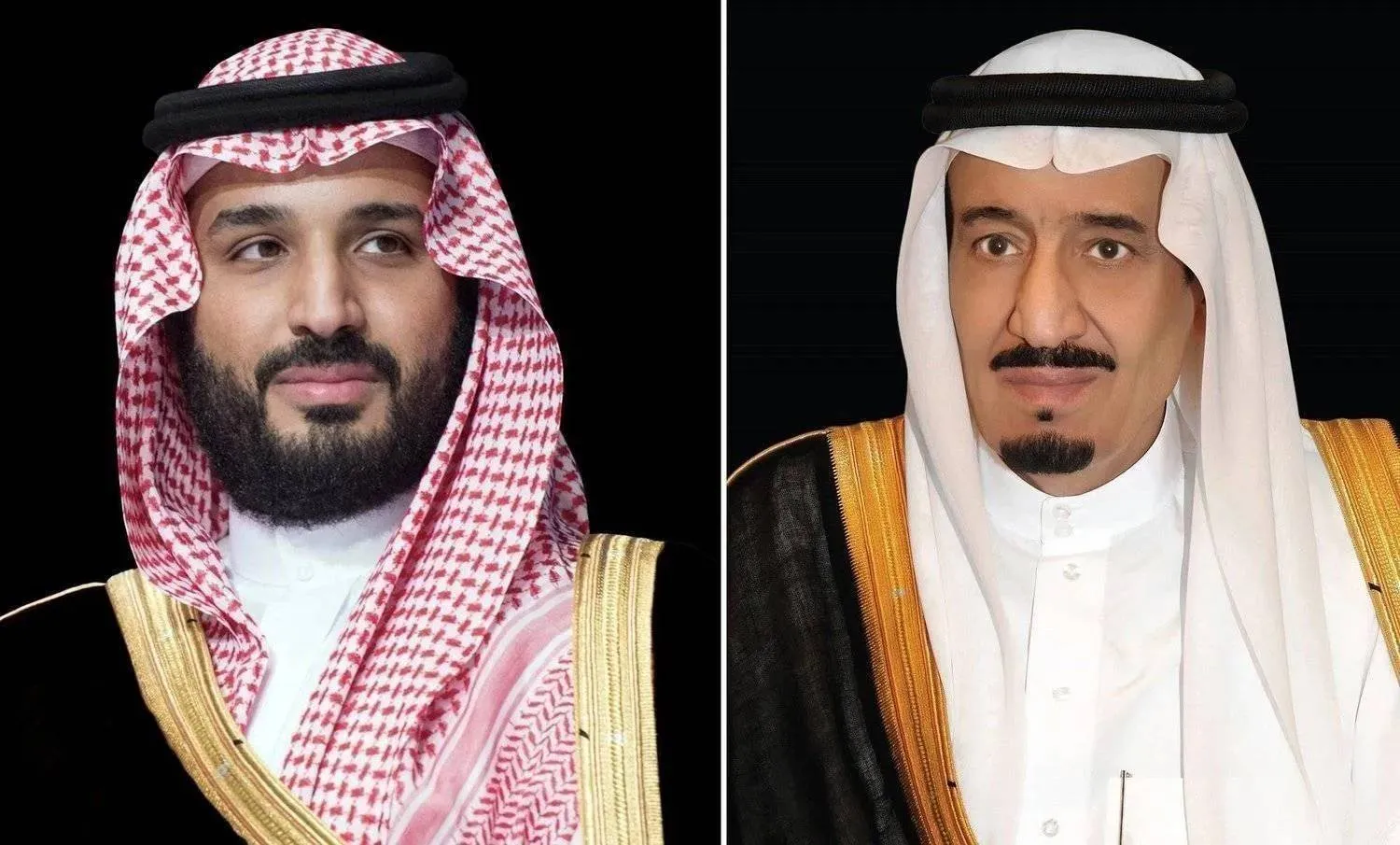
Custodian of the Two Holy Mosques King Salman bin Abdulaziz Al Saud. SPA
TT

Saudi King Leaves Hospital after Reassuring Medical Tests

Custodian of the Two Holy Mosques King Salman bin Abdulaziz Al Saud. SPA

The Royal Court said on Friday that Custodian of the Two Holy Mosques King Salman bin Abdulaziz Al Saud left King Faisal Specialist Hospital in Riyadh after completing medical examinations.

“The results were reassuring,” it said.

“May Allah protect the Custodian of the Two Holy Mosques and grant him continued health and well-being,” the statement added.