Qatari Mission Searches for Bodies of Americans Killed by ISIS in Syria

A photograph of US journalist James Foley taken on November 5, 2012, in the northern Syrian city of Aleppo. (AFP)
TT

Qatari Mission Searches for Bodies of Americans Killed by ISIS in Syria

A photograph of US journalist James Foley taken on November 5, 2012, in the northern Syrian city of Aleppo. (AFP)

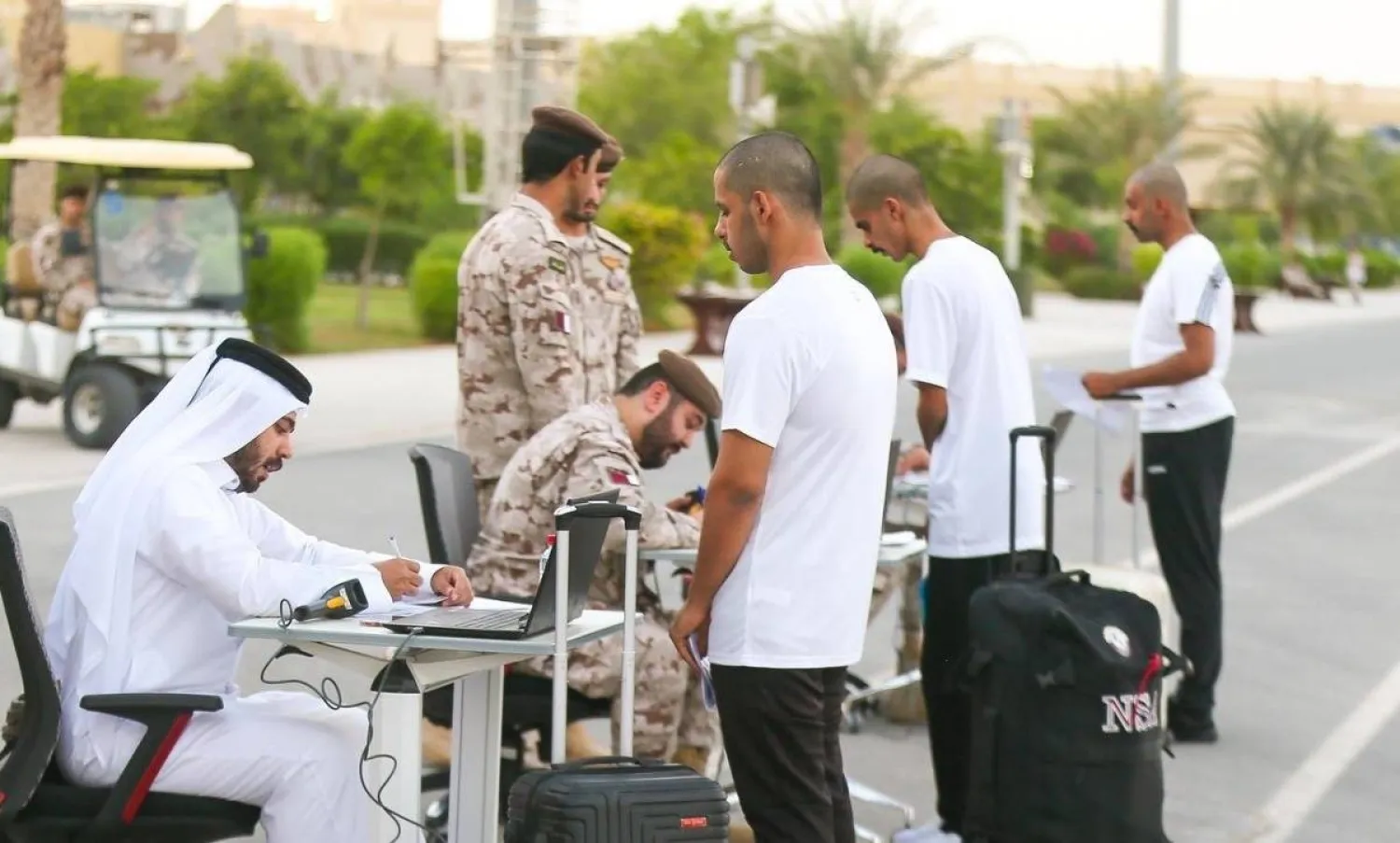
A Qatari mission has begun searching for the remains of US hostages killed by ISIS in Syria a decade ago, two sources briefed on the mission told Reuters, reviving a longstanding effort to recover their bodies.

ISIS, which controlled swathes of Syria and Iraq at the peak of its power from 2014-2017, beheaded numerous people in captivity, including Western hostages, and released videos of the killings.

Qatar's international search and rescue group began the search on Wednesday, accompanied by several Americans, the sources said. The group, deployed by Doha to earthquake zones in Morocco and Türkiye in recent years, had so far found the remains of three bodies, the sources said.

One of the sources - a Syrian security source - said the remains had yet to be identified. The second source said it was unclear how long the mission would last.

The US State Department had no immediate comment.

The Qatari mission gets under way as US President Donald Trump prepares to visit Saudi Arabia, the United Arab Emirates and Qatar next week and as Syria's new rulers seek relief from US sanctions.

The Syrian source said the mission's initial focus was on looking for the body of aid worker Peter Kassig, who was beheaded by ISIS in 2014 in Dabiq in northern Syria. The second source said Kassig's remains were among those they hoped to find.

US journalists James Foley and Steven Sotloff were among other Western hostages killed by ISIS. Their deaths were confirmed in 2014.

US aid worker Kayla Mueller was also killed in ISIS captivity. Her death was confirmed in 2015.

"We’re grateful for anyone taking on this task and risking their lives in some circumstances to try and find the bodies of Jim and the other hostages," said Diane Foley, James Foley's mother. "We thank all those involved in this effort."

Two ISIS members, both former British citizens who were part of a cell that beheaded American hostages, are serving life prison sentences in the United States.


Somali Foreign Minister: Any Unilateral Recognition of Breakaway Regions Is Unviable

Somali Foreign Minister Abdisalam Abdi Ali (Somali Foreign Ministry)
TT

Somali Foreign Minister: Any Unilateral Recognition of Breakaway Regions Is Unviable

Somali Foreign Minister Abdisalam Abdi Ali (Somali Foreign Ministry)

At a highly sensitive regional juncture, Somali Foreign Minister Abdisalam Abdi Ali issued a clear warning against any unilateral recognition of breakaway regions, describing such moves as unviable and politically irresponsible, with negative repercussions for bilateral relations and regional stability.

In an interview with Asharq Al-Awsat, Ali stressed the alignment between Mogadishu and Riyadh on the need to shield the Red Sea and the Gulf of Aden from militarization, illicit activities and geopolitical rivalries.

He said his second visit to Saudi Arabia within two weeks reflects the depth of coordination with the Kingdom amid rapidly evolving regional developments, particularly those related to maritime security and the Horn of Africa.

Objectives of the Saudi visit

Ali said the primary aim of his visit was close consultation with Saudi Arabia on accelerating regional developments, notably those affecting the Red Sea, the Horn of Africa and maritime navigation security.

He added that discussions also focused on strengthening bilateral cooperation across political, economic, security and development fields, while ensuring full coordination on issues touching on Somalia’s sovereignty, unity and stability.

He noted that the visit — his second to Riyadh in less than two weeks — underscored the intensity of engagement with the Kingdom at a delicate moment, saying that his previous meeting with Saudi Foreign Minister Prince Faisal bin Farhan featured frank and constructive talks aimed at preventing escalation, maintaining regional balance and upholding international law.

Ali also highlighted the convening of an emergency meeting of foreign ministers of the Organization of Islamic Cooperation (OIC) to address what he described as the “illegal violation of Somalia’s sovereignty, unity and territorial integrity,” calling it further evidence of Saudi Arabia’s pivotal role in supporting regional stability.

Historic relations

The foreign minister described relations between Somalia and Saudi Arabia as “strong, historic and strategic,” grounded in shared faith, longstanding people-to-people ties and converging regional interests.

He said Somalia views the Kingdom as a key partner in national recovery, security-sector reform, economic stabilization and regional diplomacy, adding that current discussions are focused on translating this partnership into tangible outcomes that benefit both countries and reinforce wider regional stability.

Firm rejection of recognition of “Somaliland”

Ali stressed that the Somali federal government “categorically rejects” any declaration or action aimed at recognizing any part of Somalia as a separate entity. Such steps, he said, lack any legal basis, violate Somalia’s sovereignty and territorial integrity, and contravene international law, the UN Charter, the OIC charter and African Union principles.

He expressed Somalia’s appreciation for Saudi Arabia’s principled stance in support of Somali unity, as well as for regional and international partners that have voiced solidarity with Mogadishu.

He warned that unilateral recognition would not merely be a political position but a “destabilizing precedent” threatening the regional order. He added that Somalia is addressing the issue through balanced diplomacy and close coordination with regional and international partners.

A pivotal and constructive Saudi role

Ali said Saudi Arabia plays a “pivotal and constructive” role in promoting stability and security in the Arab world, the Red Sea region and the Horn of Africa, noting that its leadership in diplomacy, de-escalation and maritime security is widely recognized and appreciated.

Potential repercussions

The foreign minister warned that any unilateral recognition of Somaliland would be “legally and practically null and void,” further exacerbating fragility in a region already facing serious security, humanitarian and climate challenges. He said that such moves encourage fragmentation, fuel proxy conflicts and open the door to external interference, undermining the security of the Horn of Africa and international maritime navigation.

Militarization of the Red Sea

Ali said Mogadishu and Riyadh share a vital interest in protecting one of the world’s most strategic maritime corridors, stressing the need to keep the Red Sea and the Gulf of Aden free from militarization and illegal activities.

“We agree on the necessity of keeping the Red Sea and the Gulf of Aden away from militarization, illicit activities and geopolitical brinkmanship,” he underlined.


New KSrelief Aid Convoy Crosses Rafah to Deliver Food Baskets to Gaza

The latest KSrelief convoy was carrying food baskets for the people of Gaza. (SPA)
TT

New KSrelief Aid Convoy Crosses Rafah to Deliver Food Baskets to Gaza

The latest KSrelief convoy was carrying food baskets for the people of Gaza. (SPA)

A new humanitarian aid convoy from the King Salman Humanitarian Aid and Relief Center (KSrelief) crossed the Rafah border into Gaza on Friday with essential food baskets for Palestinians affected by the ongoing crisis, as part of the Saudi fundraising campaign to aid the Palestinian people.

The Saudi Center for Culture and Heritage, KSrelief’s implementing partner, has established several new camps in Al-Qarara area of southern Gaza and Al-Mawasi area of Khan Younis in preparation for winter.

Through these efforts, KSrelief aims to alleviate the severe suffering caused by the dire living conditions in Gaza, ensuring that vital food and shelter reach those in the most vulnerable areas.


Joint Military 'Gulf Shield Exercise 2026' Concludes in Saudi Arabia

Flags of the Gulf Cooperation Council countries at an event (AFP)
TT

Joint Military 'Gulf Shield Exercise 2026' Concludes in Saudi Arabia

Flags of the Gulf Cooperation Council countries at an event (AFP)

The joint military "Gulf Shield Exercise 2026" concluded in Saudi Arabia on Friday, with the participation of the air forces and air-defense forces of the Gulf Cooperation Council (GCC) countries, alongside the GCC Unified Military Command, the Saudi Press Agency reported.

The exercise was conducted as part of ongoing efforts to strengthen regional defense cooperation and enhance combat readiness.

Its maneuvers included advanced operational scenarios featuring simulations of multidimensional air and missile threats, joint air maneuvers, and integrated field exercises, with a focus on improving operational integration, strengthening command-and-control systems, and enhancing operational efficiency within a joint operational environment.
The exercise seeks to develop qualitative military capabilities, bolster combat readiness to confront current, emerging, and future threats, and entrench the concepts of collective defense and flexible deterrence, thereby contributing to the region's security and stability.

Gulf Shield Exercise 2026 is regarded as one of the key pillars of military cooperation among GCC countries, reflecting ongoing efforts to enhance defense integration and strengthen the capacity to respond to regional and international challenges.

At the conclusion of the exercise, the participating forces carried out a joint aerial display that demonstrated a high level of harmony and operational integration, as well as their ability to plan and execute in accordance with unified operational concepts and advanced professional standards.