
Saudi SDRPY, UNDP Sign MoU on Joint Development Projects in Yemen

Saudi SDRPY, UNDP Sign MoU on Joint Development Projects in Yemen
TT

Saudi SDRPY, UNDP Sign MoU on Joint Development Projects in Yemen

Saudi SDRPY, UNDP Sign MoU on Joint Development Projects in Yemen

The Saudi Development and Reconstruction Program for Yemen (SDRPY) and the United Nations Development Program (UNDP) signed a memorandum of understanding (MoU) on Wednesday to implement joint development projects and initiatives and promote the exchange of experience and building institutional capacity in Yemen.

SDRPY Assistant Supervisor General Eng. Hassan Al-Attas and UNDP Resident Representative for Yemen Zena Ali Ahmad signed the memorandum, which complements SDRPY contribution to the international community's development work and to the reconstruction and development of Yemen under the leadership of the Yemeni government.

The endeavor is carried out through over 40 active partnerships SDRPY reached with Yemeni, regional and international institutions as part of a comprehensive strategy to support peace and development efforts in Yemen.

These partnerships, which carried out sustainable development projects and programs by involving the private sector and in constant cooperation with the Yemeni government and local authorities, have had a positive impact on Yemenis' lives.

So far, SDRPY has executed 229 development projects and initiatives in various Yemeni governorates, serving Yemenis in seven key sectors: education, healthcare, water, energy, transportation, agriculture, and fisheries.

Building the capacity of government institutions is one other project among the many others.


Makkah Pact Committee to Meet in Riyadh on Monday

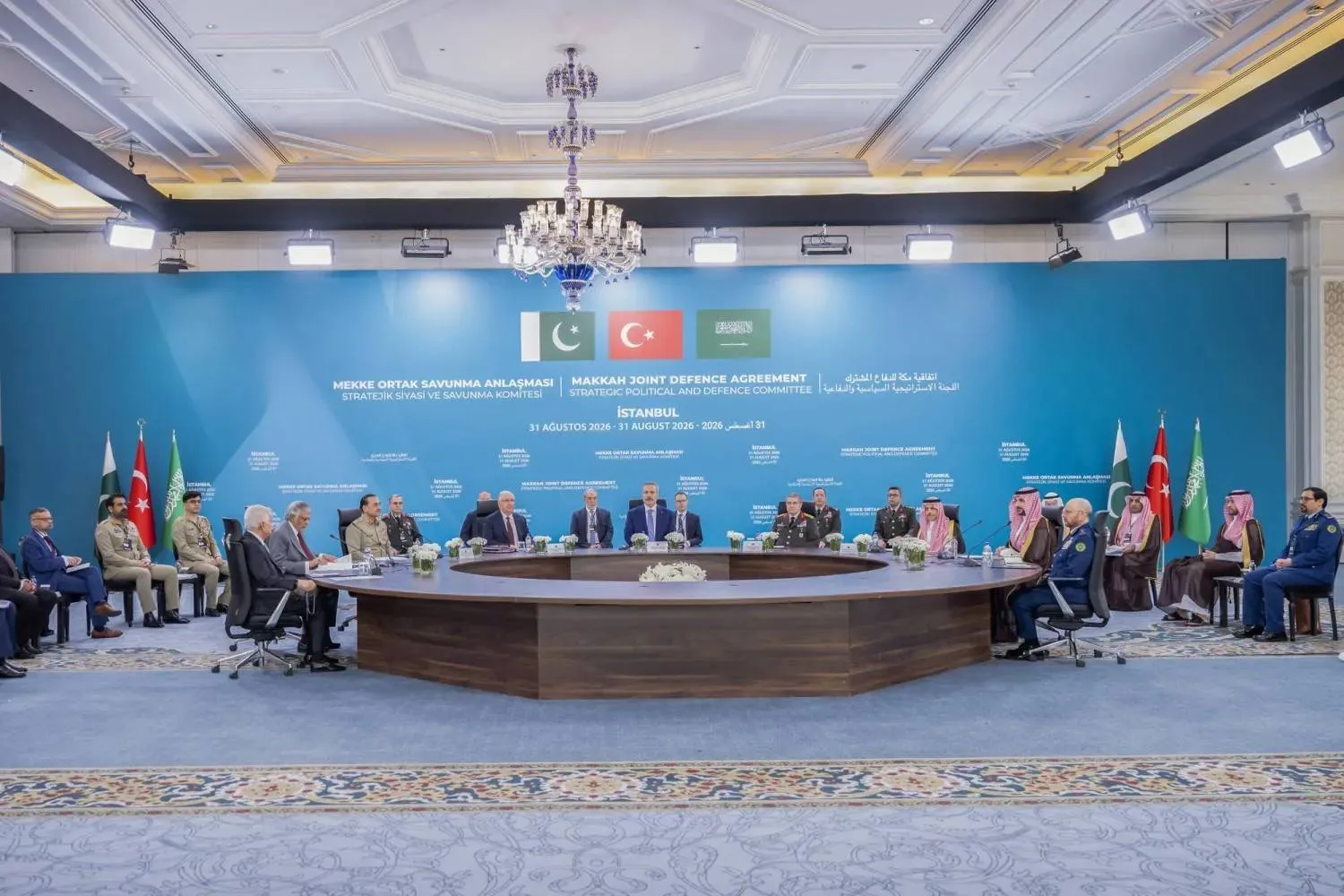
The first meeting of the Makkah Joint Defense Agreement’s Strategic Political and Defense Committee met in Istanbul on Aug. 31. Photo: Saudi Defense Ministry
TT

Makkah Pact Committee to Meet in Riyadh on Monday

The first meeting of the Makkah Joint Defense Agreement’s Strategic Political and Defense Committee met in Istanbul on Aug. 31. Photo: Saudi Defense Ministry

A committee of the Makkah Defense Pact between Saudi Arabia, Türkiye and Pakistan will hold talks in Riyadh on Monday.

The meeting is expected to bring together the defense and foreign ministers as well as the army chiefs of staff of the three countries.

The official Turkish Anadolu Agency, citing sources in the Turkish Foreign Ministry, reported that the Turkish side is scheduled to present its vision during the meeting regarding the institutionalization process of the alliance and future steps.

It will also offer an assessment of the threats facing peace and stability in the Middle East and emphasize the importance of the progress made in the alliance's work within a short period as an important factor toward achieving lasting stability in the region, in addition to expressing Ankara's stance supporting Riyadh in facing Houthi attacks.

Istanbul hosted the first meeting of the agreement’s Strategic Political and Defense Committee on Aug. 31, bringing together the foreign and defense ministers and military chiefs of staff of Saudi Arabia, Türkiye and Pakistan.

During the meeting, the three countries reaffirmed their determination to work together under the Makkah agreement to achieve sustainable peace and stability in their region and continue supporting efforts to promote de-escalation and restraint.

They encouraged peaceful solutions to crises in line with their commitment to fulfilling their regional responsibilities.

Political analyst specializing in international affairs, Ahmed Al-Ibrahim, says holding the second meeting of the Strategic Political and Defense Committee in Riyadh less than two weeks after the first meeting in Istanbul clearly demonstrates the transition of coordination among the three countries into a phase of joint action.

Political analyst Faisal Al-Shammeri expects that, in light of new developments - specifically the announcement by Yemeni Presidential Leadership Council Chairman Rashad Al-Alimi on the launch of military operations to liberate the remaining Yemeni territories - the meeting will form a real foundation for the upcoming phase.


King Salman Invites Qatar’s Emir to Participate in Second GCC-EU Summit

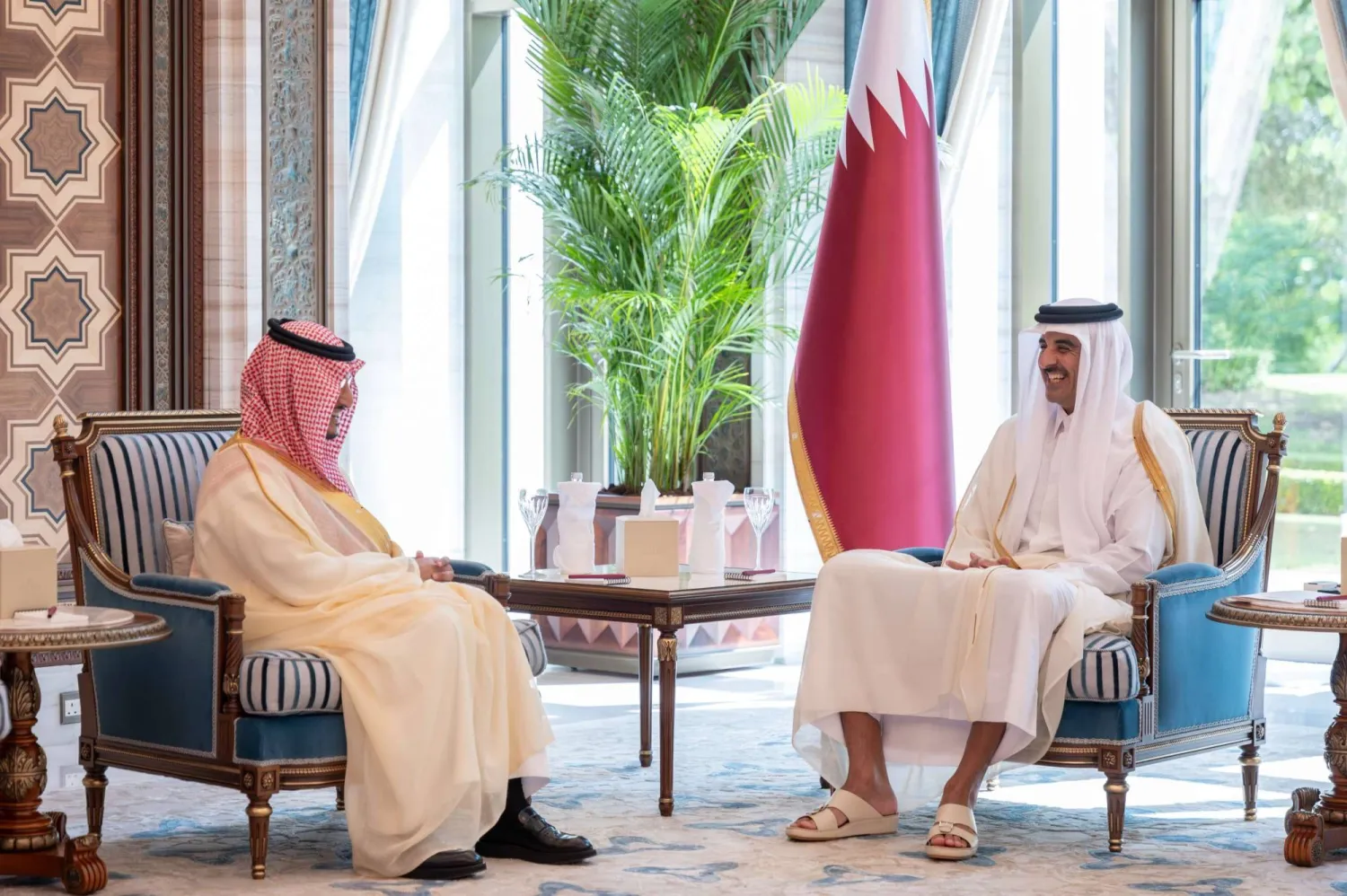
Qatar's Emir Sheikh Tamim bin Hamad Al Thani receives the Saudi ambassador in Doha (QNA).
TT

King Salman Invites Qatar’s Emir to Participate in Second GCC-EU Summit

Qatar's Emir Sheikh Tamim bin Hamad Al Thani receives the Saudi ambassador in Doha (QNA).

Custodian of the Two Holy Mosques King Salman bin Abdulaziz Al Saud sent a written message to Emir of Qatar Sheikh Tamim bin Hamad Al Thani, inviting him to participate in the second Gulf Cooperation Council (GCC)-European Union (EU) Summit, which Saudi Arabia will host in October.

The message was delivered by Saudi Ambassador to Qatar Prince Saad bin Mansour bin Saad during the Emir's reception of him at his office at Lusail Palace, SPA reported.

The ambassador conveyed to the Emir the greetings of the Custodian of the Two Holy Mosques, along with his wishes for continued health and happiness and for the Qatari people to enjoy further progress and prosperity.

For his part, the Qatari Emir asked the ambassador to convey his greetings to his brother, the Custodian of the Two Holy Mosques, along with his wishes for continued health and well-being and for the Saudi people to enjoy continued prosperity and progress.

During the reception, the two sides reviewed the fraternal relations between the two countries and ways to develop and strengthen them.


Saudi Arabia Provides $59.7 Million to Support Yemen's Budget, Salaries

Custodian of the Two Holy Mosques King Salman bin Abdulaziz Al-Saud and Prince Mohammed bin Salman, Crown Prince and Prime Minister. (SPA)
TT

Saudi Arabia Provides $59.7 Million to Support Yemen's Budget, Salaries

Custodian of the Two Holy Mosques King Salman bin Abdulaziz Al-Saud and Prince Mohammed bin Salman, Crown Prince and Prime Minister. (SPA)

Under the leadership's directives, the Kingdom of Saudi Arabia, through the Saudi Development and Reconstruction Program for Yemen (SDRPY), has provided a new financial installment of more than $59.7 million to support the Yemeni state budget.

The funding is designated to cover operational expenses and salaries, reflecting the Kingdom's ongoing commitment to supporting stability and development for the brotherly Yemeni people.

The support aims to ensure the regular flow of government funds and salary payments and to improve the efficiency of fiscal policy, putting economic and social development on a more sustainable path. It is also expected to boost purchasing power, stabilize household incomes, and revive commercial markets.

Saudi Arabia is Yemen's largest supporter across the humanitarian, development, and economic fields. Its development and economic interventions totaled more than $12.6 billion between 2012 and 2026. These interventions include deposits and grants to the Central Bank of Yemen aimed at achieving fiscal balance and supporting macroeconomic stability. They have been a cornerstone in strengthening Yemeni institutions' capacity to continue delivering services and easing economic and social pressures.

To date, SDRPY has implemented 300 development projects and initiatives across eight vital sectors in Yemen, upgrading infrastructure, improving public services, building local institutional capacity, and creating job opportunities.