


Saudi Arabia Urges End to Israel’s Assault on Gaza, Holding it Accountable

Prince Mohammed bin Salman, Crown Prince and Prime Minister, chairs the cabinet meeting in Riyadh. (SPA)
TT

Saudi Arabia Urges End to Israel’s Assault on Gaza, Holding it Accountable

Prince Mohammed bin Salman, Crown Prince and Prime Minister, chairs the cabinet meeting in Riyadh. (SPA)

The Saudi government stressed on Tuesday the importance of ending the Israeli assault on Gaza and activating international accountability mechanisms to hold Israel responsible for its actions.

It also underlined the need for delivering humanitarian aid to Gaza to ease the suffering of the Palestinian people.

Prince Mohammed bin Salman, Crown Prince and Prime Minister, chaired the cabinet meeting that was held in Riyadh.

The government welcomed the outcomes of the ministerial meeting held in Madrid aimed at coordinating efforts on the situation in Gaza and steps to implement the two-state solution.

Crown Prince Mohammed briefed the cabinet on the message he received from Angola’s President Joao Manuel Goncalves Lourenco. He also briefed them on the separate meetings he held with Egypt’s Prime Minister Mostafa Madbouly and Chinese Premier Li Qiang during their visits to the Kingdom.

The cabinet highlighted the outcomes of the Fourth Meeting of the High-Level Saudi-Chinese Joint Committee, which it said embodied the comprehensive strategic partnership between the two countries. It emphasized the mutual interest in bolstering bilateral cooperation across various fields, including political, security, military, energy, trade, investment, financial, scientific, technical, cultural, and tourism sectors.

After the cabinet session, Minister of Media Salman bin Yousef Al-Dossary said the government praised the discussions held by Madbouly with senior Saudi officials during his visit.

The talks underscored the strength of the unique fraternal relations that bind Riyadh and Cairo and reflect a joint will to deepen cooperation in various fields.

The cabinet reviewed Saudi Arabia’s participation at international and regional meetings and its ongoing efforts to cooperate with countries and organizations across the globe to achieve regional security and stability.

The cabinet reviewed the Kingdom's speech at the 68th session of the General Conference of the International Atomic Energy Agency. It emphasized the ongoing implementation of the national nuclear energy project and the construction of the first nuclear power plant to achieve sustainable development in line with national requirements and international obligations.

Additionally, it highlighted Saudi Arabia’s plans to host an international conference on nuclear emergencies in cooperation with the International Atomic Energy Agency at the end of 2025, reflecting the Kingdom's commitment to preparing for nuclear and radiological emergencies and strengthening the capacity to address them.

The cabinet reiterated the Kingdom's emphasis, during the G20 meetings, on the importance of deepening international cooperation and joint efforts to achieve global food security and support the benefits of the space economy through adopting strategic transformations and providing sustainable solutions in these two areas.

The government reviewed the outcomes of the international conferences and events recently hosted by the Kingdom, which align with national visions and aspirations to strengthen the country's position and leadership in various fields while opening new horizons to boost its present and future role on the global stage.

Moreover, the cabinet praised the third Global AI Summit, which included the launch of initiatives and programs and signing of over 80 local and international agreements, which will help in boosting technological innovation and developing modern technologies that serve sustainable development goals and support the digital economy.

Furthermore, the ministers deemed the Kingdom's classification as a Tier 1—Role-modelling in the United Nations Global Cybersecurity Index (GCI) 2024 as a reflection of its advanced position in relevant international indicators, along with a series of accomplishments and successes achieved over the past years at all levels.

The cabinet also reviewed the most prominent statistics related to the national economy, including the stability of inflation rates at 1.6% over the past three months and the 4.9% annual growth of non-oil activities in the second quarter of this year on an annual basis. It underlined the strength of the Kingdom's economy and the effectiveness of the procedures and measures taken to address global economic variables.


Saudi-Tunisian Joint Committee Kicks Off 12th Session in Riyadh

Alkhorayef stressed that the convening of the 12th session comes at an important time that requires intensified coordination in growth-driving sectors - SPA
TT

Saudi-Tunisian Joint Committee Kicks Off 12th Session in Riyadh

Alkhorayef stressed that the convening of the 12th session comes at an important time that requires intensified coordination in growth-driving sectors - SPA

The 12th session of the Saudi-Tunisian Joint Committee kicked off Sunday in Riyadh, organized by the Ministry of Industry and Mineral Resources and bringing together representatives from government entities of both countries to discuss opportunities for expanding cooperation and developing strategic partnerships across various economic and development sectors.

The committee session was co-chaired by Minister of Industry and Mineral Resources Bandar Alkhorayef and Tunisian Minister of Economy and Planning Dr. Samir Abdelhafidh, attended by official delegations and government sector representatives from both countries, SPA reported.

In his opening remarks, Alkhorayef emphasized the strength of Saudi-Tunisian relations and the brotherly and economic ties between the two countries, which span more than 70 years. He noted that these ties are reflected today in shared visions and ambitious work programs that align with the aspirations of both countries’ leaderships and peoples, as well as their mutual interests.

He pointed out that the Saudi-Tunisian Joint Committee, launched in 1998, represents an institutional framework aimed at translating cooperation into executable programs and initiatives. He expressed his hope that this session would serve as a new starting point for joint strategic projects and more impactful agreements that contribute to the economic development of both countries.

Alkhorayef stressed that the convening of the 12th session comes at an important time that requires intensified coordination in growth-driving sectors. The minister called on companies in both countries to build practical partnerships in promising industries and value chains. He also highlighted the outcomes of the third meeting, held in Tunisia in July 2025, namely the agreements on mutual recognition of product conformity certificates, which positively contributed to a 38% growth in trade exchange through September 2025 compared with the same period last year.

The committee’s current session focused on boosting cooperation mechanisms, discussing investment opportunities, and exchanging expertise in key sectors, including industry, mining, tourism, transport and logistics, and the judiciary and justice sectors. These efforts aim to enhance trade efficiency, support the access of Saudi products to international markets, and strengthen economic and investment cooperation.


77th Saudi Relief Plane for Palestinian People in Gaza Arrives in Egypt

This assistance is part of the Kingdom’s ongoing humanitarian support to alleviate the difficult living conditions faced by the Palestinian people in Gaza - SPA
TT

77th Saudi Relief Plane for Palestinian People in Gaza Arrives in Egypt

This assistance is part of the Kingdom’s ongoing humanitarian support to alleviate the difficult living conditions faced by the Palestinian people in Gaza - SPA

The 77th Saudi relief airplane, operated by the King Salman Humanitarian Aid and Relief Center in coordination with the Ministry of Defense and the Kingdom’s Embassy in Cairo, arrived Sunday at El Arish International Airport in Egypt.

The airplane carried food baskets and shelter kits destined for those affected in the Gaza Strip, SPA reported.

This assistance is part of the Kingdom’s ongoing humanitarian support, provided through the center, to alleviate the difficult living conditions faced by the Palestinian people in Gaza.


Saudi Defense Minister: Time for STC to Withdraw from Yemen's Hadhramaut and Al-Mahra

Saudi Defense Minister Prince Khalid bin Salman. (Asharq Al-Awsat)
TT

Saudi Defense Minister: Time for STC to Withdraw from Yemen's Hadhramaut and Al-Mahra

Saudi Defense Minister Prince Khalid bin Salman. (Asharq Al-Awsat)

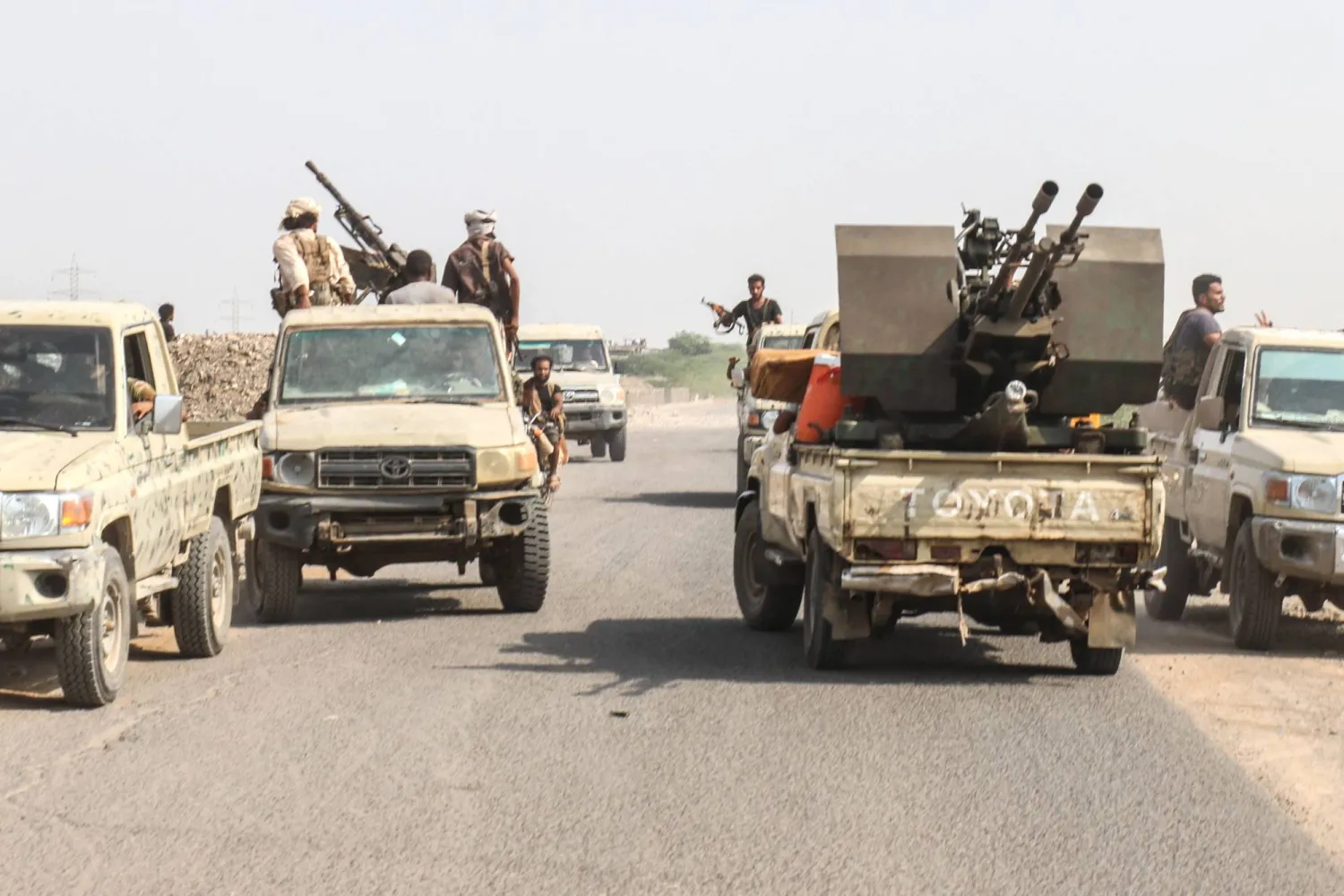
Saudi Defense Minister Prince Khalid bin Salman said on Saturday it “was time for the Southern Transitional Council in Yemen to listen to reason and prioritize public interest and unity of ranks and respond to the Saudi-Emirati mediation to end the escalation.”

In a post on the X platform, he called on the STC to withdraw its forces from the eastern Hadhramaut and al-Mahra provinces and restore control to the National Shield and local authorities.

Prince Khalid said Saudi Arabia formed the Arab coalition to restore legitimacy in Yemen to help the country reclaim control over all of its territories.

The liberation of southern provinces was a pivotal development towards that goal, he stressed.

Saudi Arabia “views the southern issue as fundamental” to Yemen and it will not “exploit it in conflicts that do not serve” the nation, he added.

The Kingdom had brought together all Yemeni components to the Riyadh conference to come up with a clear path for a comprehensive political solution, including the southern issue, he went on to say.

The conference paved the way for a “just solution to their cause through dialogue and without the use of forces.”

“Saudi Arabia approved the decision to move the base of power so that the southerners could have a greater role in state institutions. It consolidated partnership instead of elimination or imposing a status quo through forces. Saudi Arabia also presented Yemen with economic support, as well as development and humanitarian initiatives that helped ease the suffering of the people,” Prince Khalid added.

“Saudi Arabia and its partners in the coalition offered sacrifices with their Yemeni brothers in liberating Aden and other provinces,” he noted. “The Kingdom has always sought that these sacrifices be made in the name of reclaiming territories and restoring the state, not as a path towards new conflicts.”

It had hoped that these sacrifices would have been “invested in the security of all Yemeni people, not exploited for petty gains, whereby the unfortunate developments in Hadhramaut and al-Mahra since the beginning of December 2025 have led to the division in ranks that should be united against the enemy.”

“The developments have laid waste to the sacrifices of our sons and Yemeni people and have harmed the just southern issue,” stressed Prince Khalid.

He noted that several southern leaderships and figures have exhibited “awareness and wisdom in supporting efforts to end the escalation in Hadhramaut and al-Mahra and prevent the secure southern provinces from being dragged into futile conflicts.”

“They are aware of the major challenges facing Yemen and will not allow saboteurs to achieve their goals in the country and the region,” he remarked.

He declared that the “southern issue will remain part of any comprehensive political solution. The cause will not be neglected or marginalized. It should be resolved through consensus, adhering to commitments and building trust between all Yemeni segments, not through adventures that only serve everyone's enemy.”