


Riyadh Meeting: Sanctions Are Obstructing Growth, Syria’s Future Will Be Decided by Syrians

Officials pose for a family photo at the Riyadh meeting on Syria on Sunday. (Saudi Foreign Ministry)
TT

Riyadh Meeting: Sanctions Are Obstructing Growth, Syria’s Future Will Be Decided by Syrians

Officials pose for a family photo at the Riyadh meeting on Syria on Sunday. (Saudi Foreign Ministry)

Saudi Arabia urged top European diplomats at a gathering Sunday to lift sanctions against Syria to boost rebuilding the country and its economy after last month’s overthrow of President Bashar al-Assad.

European and Middle Eastern diplomats met in the Saudi capital Riyadh to discuss Syria’s future. The US and European countries have been wary over the roots of Syria’s new rulers — the former insurgents who drove Assad out of power — and have said ending sanctions depends on the progress of the political transition.

The interim government led by the former opposition factions has vowed to move to a pluralist, open system. It is looking for international support as the country tries to recover from nearly 14 years of civil war that killed an estimated 500,000 people and displaced half the prewar population of 23 million. The new Syrian foreign minister, Asaad al-Shaibani, attended Sunday’s gathering.

Saudi Foreign Minister Prince Faisal bin Farhan bin Abdullah said international and unilateral sanctions on Syria should be lifted.

Continuing them “will hinder the aspirations of the brotherly Syrian people to achieve development and reconstruction,” he said. He praised steps so far by the interim government, including promises to start a political process “that includes various components” of the Syrian people.

Tackling any challenges or sources of concern should take place through dialogue and in a way that respects Syria’s independence and sovereignty, he added. “Syria’s future will be decided by the Syrian people,” he declared.

Saudi Arabia believes that the people have the right to determine their own fate through internal dialogue that ends all of their crises, he went on to say.

The United States, European Union and some Arab nations began imposing sanctions after Assad’s brutal crackdown on the 2011 uprising against his rule and tightened them as the conflict spiraled into war. Some are on individuals in Assad’s government, including freezing of assets. But many target the government in general, including bans on many financial and banking dealings, on oil purchases and on investment or trade in some sectors, crippling the wider economy.

There are exemptions when it comes to humanitarian aid, but relief organizations have said that overcompliance by financial institutions hinders their operations.

At the gathering, German Foreign Minister Annalena Baerbock said sanctions against “Assad’s henchmen who committed serious crimes” must remain in place.

But she called for “a smart approach to sanctions, providing rapid relief for the Syrian population. Syrians now need a quick dividend from the transition of power.” She did not elaborate but announced an additional 50 million euros ($51.2 million) in German aid for food, emergency shelters and medical care.

EU foreign policy chief Kaja Kallas, who also attended the meeting, said European countries want to see a government that includes all of Syria’s religious and ethnic communities. “We want to see inclusivity of women also in the process, so these are the things that we are going to discuss,” she said.

Turkish Foreign Minister Hakan Fidan said his country, which was a strong supporter of the Syrian opposition to Assad, would try to help Syria in normalizing ties with the international community.

He said it was important to establish “a balance between the expectations of the international community and the realities faced by the new administration in Syria.”

He pledged Turkish support to the new government, especially in combating threats from the ISIS group. “As Türkiye, we are ready to do our part to ease the difficult path ahead for the Syrian people,” he said in comments carried by Türkiye’s state-run Anadolu Agency.

Last week, the United States eased some of its restrictions on Syria, with the US Treasury issuing a general license, lasting six months, that authorizes certain transactions with the Syrian government, including some energy sales and incidental transactions.

The US has also dropped a $10 million bounty it had offered for the capture of Ahmad al-Sharaa, a Syrian rebel leader formerly known as Abu Mohammed al-Golani, whose forces led the ouster of Assad last month. Al-Sharaa was a former senior al-Qaeda fighter who broke with the group years ago and has pledged an inclusive Syria that respects the rights of religious minorities.

The opposition led a lightning insurgency that ousted Assad on Dec. 8 and ended his family’s decades-long rule.

Much of the world severed ties with Assad and imposed sanctions on his government — and its Russian and Iranian allies — over alleged war crimes and the manufacturing of the amphetamine-like stimulant Captagon, which reportedly generated billions of dollars as packages of the little white pills were smuggled across Syria’s porous borders.

With Assad out of the picture, Syria’s new authorities hope that the international community will pour money into the country to rebuild its battered infrastructure and make its economy viable again.

Sunday’s meeting brought together foreign ministers and representatives from Bahrain, Egypt, France, Germany, Iraq, Italy, Jordan, Kuwait, Lebanon, Oman, Qatar, Spain, Syria, Türkiye, the United Arab Emirates, the United Kingdom, the United States, as well as the Secretary-General of the Arab League, the High Representative of the European Union for Foreign Affairs and Security Policy, the Secretary-General of the Gulf Cooperation Council, and the UN Special Envoy for Syria.

The meeting also addressed concerns over Israel's incursions into the buffer zone and neighboring sites in Mount Hermon and Quneitra Governorate. Participants underscored the need to respect Syria's unity, sovereignty, and territorial integrity.

Prince Faisal reiterated the Saudi Arabia’s strong condemnation of Israel's incursions into Syrian territories, calling them violations of international law and the 1974 disengagement agreement. He demanded the immediate withdrawal of Israeli forces and renewed the Kingdom's rejection of such actions as acts of aggression and occupation.

Saudi-Omani Coordination Meeting Consolidates Joint Cooperation

Saudi Minister and his Omani counterpart co-chaired the third meeting of the Saudi-Omani Coordination Council. (SPA)
TT

Saudi-Omani Coordination Meeting Consolidates Joint Cooperation

Saudi Minister and his Omani counterpart co-chaired the third meeting of the Saudi-Omani Coordination Council. (SPA)

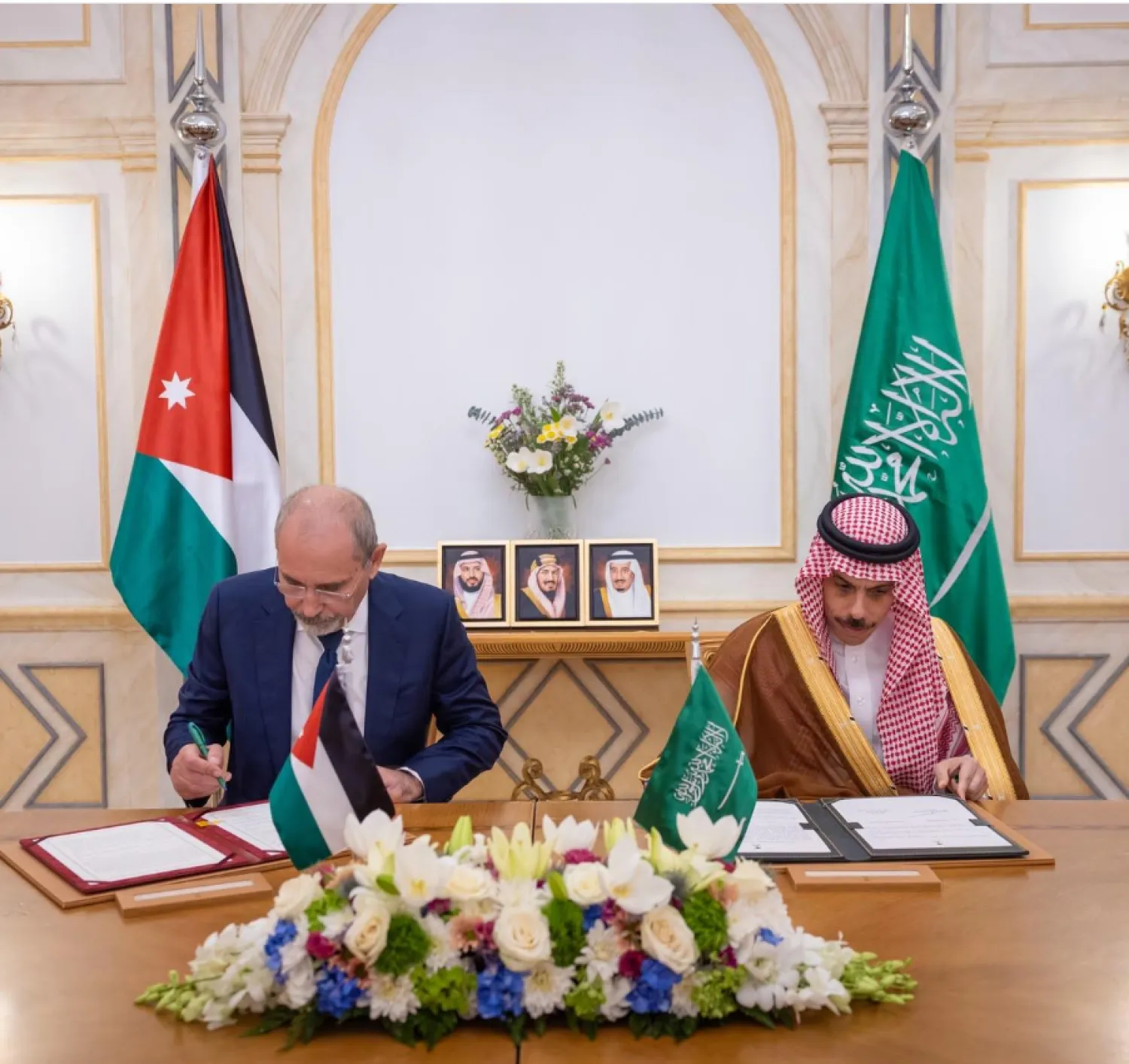
Saudi Minister of Foreign Affairs, Prince Faisal bin Farhan bin Abdullah, met on Monday in Muscat with Minister of Foreign Affairs of Oman, Sayyid Badr bin Hamad bin Hamoud Al Busaidi, where they reviewed the fraternal relations between the two countries and ways to develop them across various fields.

The two sides also discussed regional and international developments, and the efforts addressed in this regard.

Following their meeting, the Saudi Minister and his Omani counterpart co-chaired the third meeting of the Saudi-Omani Coordination Council with the participation of the heads of the Council’s subsidiary committees and the two heads of the Council’s General Secretariat teams.

The meeting of the Coordination Council comes as an affirmation of the keenness of the Saudi and Omani leaderships to strengthen fraternal ties and advance them toward broader horizons that achieve greater prosperity for the two countries and peoples.

In his remarks during the meeting, Prince Faisal affirmed that the meeting builds on the second meeting of the Saudi-Omani Coordination Council, which was held in AlUla on 12 December 2024, and on its positive and fruitful outcomes within the framework of the approved recommendations and initiatives.

Prince Faisal stressed the importance of continuing the work of the Council’s subsidiary committees to complete the necessary procedures to implement the remaining initiatives, and of the General Secretariat’s role in follow-up and in addressing any challenges that may hinder implementation.

The Saudi minister underscored the importance of developing and enhancing trade relations, stimulating investment, and strengthening cooperation between the public and private sectors. He commended the signing of the minutes facilitating mutual recognition of rules of origin between the two countries and the acceptance of certificates of origin issued by the competent authorities, as well as the launch of the second phase of industrial integration initiatives between the two countries.

This, Prince Faisal highlighted, reflects the strength of economic ties and underscores the commitment to enhancing economic and trade cooperation in a manner that serves the interests of both countries and peoples.

He also praised the ongoing work to establish and launch the Coordination Council’s electronic platform, which aims to connect all committee work and initiatives to facilitate follow-up on the Council’s progress. The Foreign Minister further welcomed the progress achieved between the two countries in the fields of economy, trade, industry, energy, investment, and other vital sectors, and efforts to expand cooperation opportunities in ways that yield positive outcomes and benefits for the two peoples.

For his part, the Omani Minister of Foreign Affairs affirmed in his remarks the qualitative progress in relations between the two countries and the notable development witnessed across numerous sectors toward achieving economic integration and enhancing intra-trade and joint investments.

He also highlighted deeper cooperation in security and judicial fields, as well as cultural and tourism sectors, noting the advanced and continuous political cooperation, consultation, and coordination on regional and international issues—reflecting the shared commitment to aligning visions and objectives between the two countries.

The Omani foreign minister expressed his aspiration to continue advancing joint cooperation and achieving integration across all fields that bring further benefits to the two peoples, emphasizing the activation of agreed initiatives and the implementation of joint programs and projects in a manner that fulfills the aspirations of the leaderships and peoples of both countries.

At the conclusion of the meeting, the two sides signed the minutes of the third meeting of the Saudi-Omani Coordination Council.

The meeting was attended by Assistant Minister of Interior Dr. Hisham Al-Falih; Deputy Minister for Political Affairs Ambassador Dr. Saud Al-Sati; Saudi Arabia's Ambassador to Oman Ibrahim bin Bishan; Assistant Minister of Investment Dr. Abdullah Al-Dubaikhi; Deputy Minister for International Economic Affairs at the Ministry of Economy and Planning Rakan Tarabzoni; Head of the Secretariat's working group by from the Saudi side Engineer Fahd Al-Harthi; and Director General of International Cooperation at the Ministry of Culture Abdullah Al-Raddadi; and Advisor to the Director of the Strategic Management Office Eng. Abdulrahman Maghrabi.


Arab League Condemns Israeli Decision to Establish New Settlements in West Bank

A general view shows the opening session of the meeting of Arab foreign ministers at the Arab League Headquarters (Reuters)
TT

Arab League Condemns Israeli Decision to Establish New Settlements in West Bank

A general view shows the opening session of the meeting of Arab foreign ministers at the Arab League Headquarters (Reuters)

Secretary-General of the League of Arab States Ahmed Aboul Gheit condemned the decision by the Israeli occupation’s ministerial committee to approve the establishment of 19 new settlements in the occupied West Bank, considering it a blatant challenge to the international will rejecting settlement activity and a violation of international law, which affirms the illegitimacy of settlements.

In a statement issued Monday, the secretary-general said the continued expansion of illegal settlement activity aims to prevent the establishment of a geographically contiguous Palestinian state and reflects the nature of the Israeli government, which he said is controlled by extremists and settlers, SPA reported.

Aboul Gheit stressed that settlement expansion will not make it legitimate under any circumstances.


He highlighted that the violence practiced by extremist settlers against Palestinians in the West Bank constitutes a form of terrorism carried out under the watch and with the protection of the official institutions of the occupying power.


Saudi FM Arrives in Muscat for Meeting of Saudi-Omani Coordination Council 

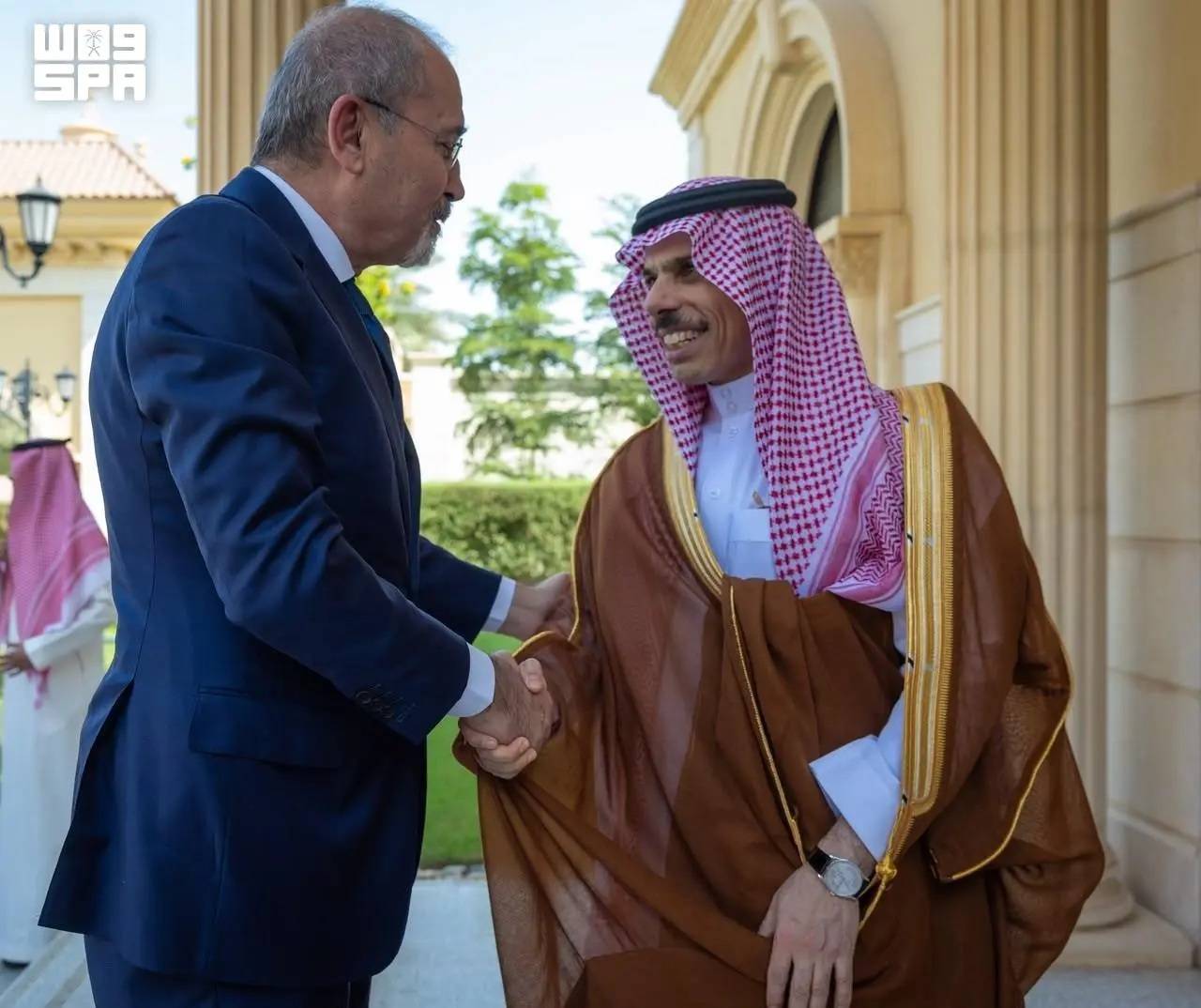
Omani FM Sayyid Badr bin Hamad bin Hamood Albusaidi welcomes his Saudi counterpart Prince Faisal bin Farhan bin Abdullah upon his arrival in Muscat. (SPA)
TT

Saudi FM Arrives in Muscat for Meeting of Saudi-Omani Coordination Council 

Omani FM Sayyid Badr bin Hamad bin Hamood Albusaidi welcomes his Saudi counterpart Prince Faisal bin Farhan bin Abdullah upon his arrival in Muscat. (SPA)

Saudi Minister of Foreign Affairs Prince Faisal bin Farhan bin Abdullah arrived in Muscat on Monday.

He was received by his Omani counterpart Sayyid Badr bin Hamad bin Hamood Albusaidi upon his arrival at Muscat International Airport.

The two sides are scheduled to hold the third meeting of the Saudi-Omani Coordination Council.
