


Crown Prince Mohammed bin Salman Expands Saudi Arabia’s Pioneering Role in Global Politics

Crown Prince Mohammed bin Salman welcomes Russian President Vladimir Putin in Riyadh in December 2023. (SPA)
TT

Crown Prince Mohammed bin Salman Expands Saudi Arabia’s Pioneering Role in Global Politics

Crown Prince Mohammed bin Salman welcomes Russian President Vladimir Putin in Riyadh in December 2023. (SPA)

Since Custodian of the Two Holy Mosques King Salman bin Abdulaziz appointed Prince Mohammed bin Salman bin Abdulaziz as crown prince in June 2017, citing the need to “safeguard the state’s structure and future, ensure its continuity on the principles it was founded upon to serve religion, the nation, and its people, and secure the well-being of its loyal citizens,” the Kingdom has entered a new era marked by ambitious aspirations.

Over the following eight years, Saudi Arabia underwent significant economic and social transformations, while its regional and global influence expanded.

The Kingdom assumed a leading political role, earning the trust not only of international and regional rivals but also of allies during times of tension.

Boosting global stability

Crown Prince Mohammed has led efforts to strengthen the Kingdom’s openness to the world across economic, cultural, and political fronts. In recent years, political outreach has expanded to unprecedented regions in Saudi and regional history, including the Caribbean and ASEAN countries.

The push aims to foster partnerships and open new avenues for cooperation, particularly in economy, investment, trade, and tourism.

Crown Prince Mohammed bin Salman welcomes Ukrainian President Volodymyr Zelenskyy in Saudi Arabia. (Reuters file)

Saudi Arabia has also expanded its foreign policy to support peace, development, and stability.

As the second anniversary of the Saudi-Iranian “Beijing Agreement” approaches, the Kingdom - under the direction of Crown Prince Mohammed - has hosted US-Ukraine talks as part of its efforts to mediate the conflict, leveraging its balanced ties with all sides.

Recent meetings in Diriyah and Jeddah between the United States, Russia, and Ukraine highlight Saudi Arabia’s credibility with both allies and rivals, as it continues to promote dialogue as a core solution to the Russia-Ukraine crisis while providing humanitarian aid and brokering prisoner exchanges.

Crown Prince Mohammed’s mediation previously secured the release of 10 prisoners from various nationalities fighting with Ukrainian forces, facilitating their transfer to Saudi Arabia before returning them home.

Russian President Vladimir Putin also praised the Crown Prince’s role in brokering a US-Russia prisoner exchange last year.

Saudi Arabia has also intensified efforts on the Palestinian issue, leading to a wave of international recognition for the Palestinian state.

According to the Palestinian Foreign Ministry, 149 countries now recognize Palestine, a milestone driven by Riyadh’s diplomatic push. Crown Prince Mohammed has reiterated that Saudi normalization with Israel is contingent on the establishment of a Palestinian state.

In a bid to unite Arab and Islamic positions and pressure the international community, Saudi Arabia hosted two consecutive summits in Riyadh and chaired the follow-up committee emerging from the meetings.

The Kingdom convened the first meeting of the International Coalition for Implementing the two-state solution, reinforcing its commitment to advancing Palestinian statehood.

Many analysts argue that Saudi policies under Crown Prince Mohammed in recent years have helped ease the impact of global crises.

By leveraging the Kingdom’s influence on complex issues and bringing all parties to the negotiating table, Riyadh has positioned itself as a key player in promoting peace through dialogue.

Crown Prince Mohammed bin Salman welcomes Chinese President Xi Jinping in Saudi Arabia. (SPA) file)

Hub for peaceful solutions

US-Ukraine negotiations in Jeddah this month resulted in an American-backed proposal for an immediate 30-day ceasefire and steps toward lasting peace in Ukraine.

The talks followed US-Russia negotiations - the first of their kind since the war began - held three weeks earlier, where senior delegations from Washington and Moscow agreed to form high-level teams to negotiate an end to the conflict and work toward reopening diplomatic channels.

Saudi Arabia’s diplomatic influence extends beyond Ukraine. The Kingdom’s “Initiative to End the Yemeni Crisis” supported a ceasefire between warring factions and led to a UN-announced roadmap for resolving the conflict.

In 2018, Saudi Arabia brokered the historic Jeddah Peace Agreement between Ethiopia and Eritrea under the auspices of King Salman bin Abdulaziz, ending years of hostilities. Djibouti’s President Ismail Omar Guelleh credited the agreement with cementing Saudi Arabia’s status as a pillar of regional peace.

In Sudan, Riyadh played a key humanitarian role during the civil war between the Sudanese army and the Rapid Support Forces, facilitating a large-scale evacuation of civilians in April 2023. Saudi Arabia also hosted the Jeddah talks, providing a platform for warring parties to negotiate a peaceful resolution.

Bridging Washington and Beijing

Over the past decade, Saudi Arabia has emerged as the only Middle Eastern country to host leaders from the United States, China, and Russia within months, despite escalating global tensions.

From the Ukraine war and trade disputes to the Gaza conflict and broader Middle East unrest, Riyadh’s diplomatic outreach has positioned it as a key player on the world stage.

The Kingdom’s growing influence is underscored by the volume, frequency, and seniority of visits and consultations - particularly since the Gaza war erupted - and the series of international summits held on Saudi soil aimed at advancing peace.
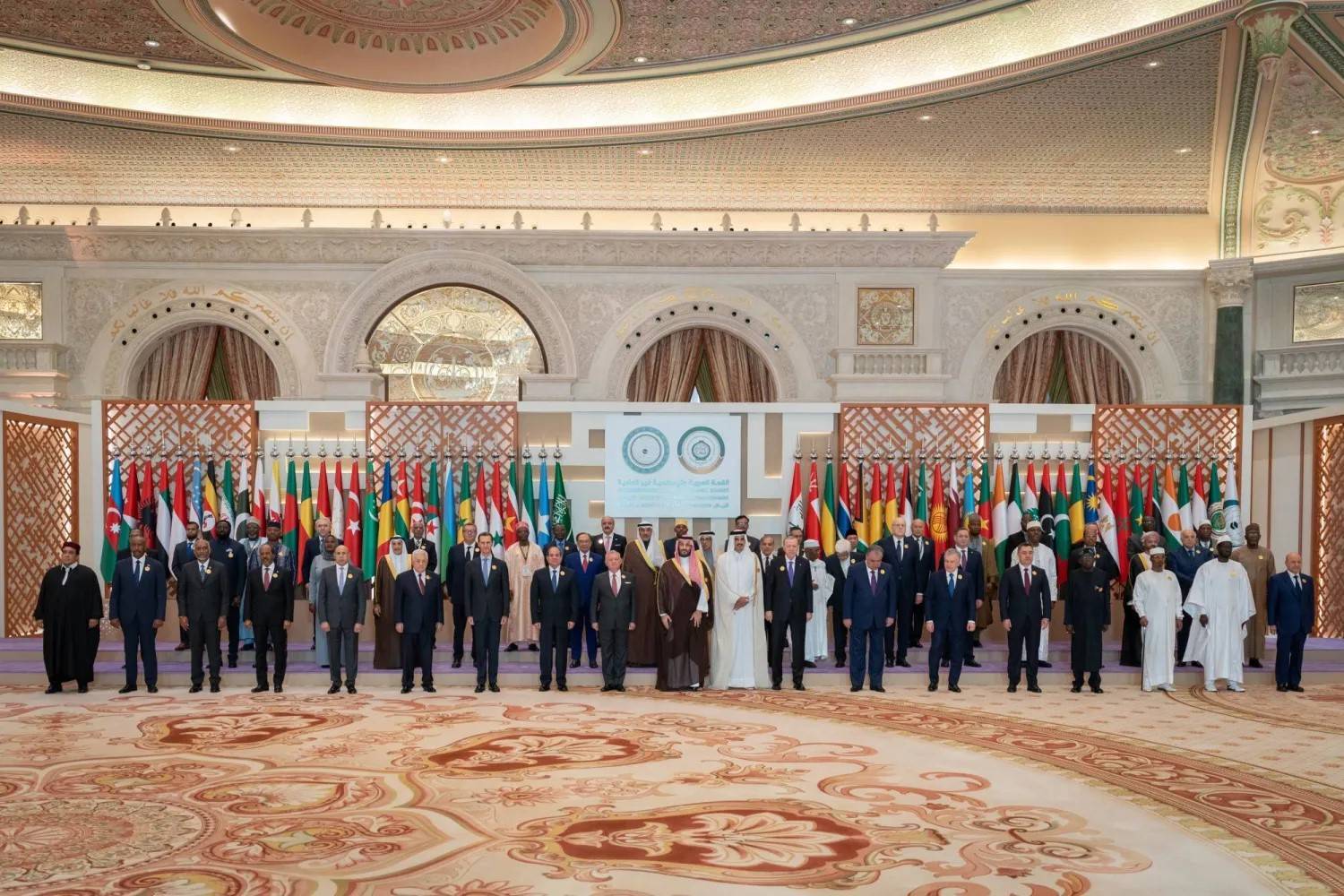
Leaders taking part at the Arab and Islamic Summit in Riyadh in November. (dpa)

Alongside its rising regional and global influence, Saudi Arabia has played a pivotal role in Arab and Islamic affairs over the past eight years under the leadership of Crown Prince Mohammed.

Following his directives, the Kingdom has hosted seven major Arab and Islamic summits between 2018 and 2024: The Dhahran Arab Summit in April 2018 ; the Makkah Summit to Support Jordan in June 2018; the Emergency Arab Summit in Makkah in May 2019; the Arab-China Summit in December 2022; the Jeddah Arab Summit in May 2023; the Extraordinary Joint Arab-Islamic Summit in November 2023; and the Follow-up Summit in November 2024.

These summits reflect Saudi Arabia’s deepening commitment to shaping Arab and Islamic unity, with the Kingdom emerging as a key diplomatic hub under the Crown Prince’s leadership.

Saudi Arabia hosts 12 of 45 Gulf summits

Since Crown Prince Mohammed’s appointment, Saudi Arabia has also hosted 12 Gulf Cooperation Council (GCC) summits out of a total of 45, reflecting its central role in regional diplomacy.

These high-level gatherings underscore Saudi Arabia’s leadership within the GCC and its efforts to strengthen ties with global and regional partners.

Under Crown Prince Mohammed’s leadership, Saudi Arabia has become the leading Gulf nation for hosting regular GCC summits. Of the 45 regular sessions held, the Kingdom has hosted 12, followed by Kuwait with eight, Bahrain and Qatar with seven each, the United Arab Emirates with six, and Oman with five.

In recent years, Saudi Arabia has also hosted several high-profile international summits.

It chaired the G20 Summit in November 2020 - held virtually due to the COVID-19 pandemic - when much of the world was under lockdown.

The Kingdom also hosted key gatherings with major international blocs, including the Saudi-Africa Summit and the Saudi-CARICOM Summit in November 2023, reinforcing its role as a global diplomatic hub.



Saudi Leadership Offers Condolences to Emir of Qatar over Victims of Ras Laffan Gas Facility Explosion

Custodian of the Two Holy Mosques King Salman bin Abdulaziz Al Saud and Prince Mohammed bin Salman, Crown Prince and Prime Minister. (Asharq Al-Awsat)
TT

Saudi Leadership Offers Condolences to Emir of Qatar over Victims of Ras Laffan Gas Facility Explosion

Custodian of the Two Holy Mosques King Salman bin Abdulaziz Al Saud and Prince Mohammed bin Salman, Crown Prince and Prime Minister. (Asharq Al-Awsat)

Custodian of the Two Holy Mosques King Salman bin Abdulaziz Al Saud sent on Tuesday a cable of condolence and sympathy to Emir of Qatar Sheikh Tamim bin Hamad Al Thani following the explosion at a gas-processing facility in Ras Laffan industrial zone that resulted in deaths and injuries.

He extended his deepest condolences to the emir, the families of the deceased, and the people of Qatar, and wished the injured a speedy recovery.

Prince Mohammed bin Salman, Crown Prince and Prime Minister, sent Sheikh Tamim a similar cable.

A huge blast at a Qatar gas hub killed 13 people and injured 66 others, the state's energy minister said on Monday.

Authorities are investigating the cause of the explosion, which Saad al-Kaabi said was "an accident and not sabotage or hostile in nature", despite earlier Iranian attacks targeting energy facilities in the Gulf during the Middle East war.

He announced "the tragic loss of 13 lives of our people who hold Indian and Pakistani nationalities. 66 people have been reported injured and are receiving medical treatment, none of whom are in life-threatening condition".


Saudi Arabia Reiterates its Firm Stance in Supporting Int’l Security and Stability

Custodian of the Two Holy Mosques King Salman bin Abdulaziz Al Saud chairs the Cabinet meeting in Jeddah on Tuesday. (SPA)
TT

Saudi Arabia Reiterates its Firm Stance in Supporting Int’l Security and Stability

Custodian of the Two Holy Mosques King Salman bin Abdulaziz Al Saud chairs the Cabinet meeting in Jeddah on Tuesday. (SPA)

The Saudi government reiterated on Tuesday the Kingdom’s firm and steadfast stances in support of efforts to establish security and stability in the region and the world.

It highlighted its contribution to responding to humanitarian calls and extending assistance to those in need and the affected around the world.

Custodian of the Two Holy Mosques King Salman bin Abdulaziz Al Saud chaired the Cabinet session that was held in Jeddah.

The Cabinet was briefed on the telephone calls Prince Mohammed bin Salman bin Abdulaziz Al Saud, Crown Prince and Prime Minister, received from Bahrain’s King Hamad bin Isa Al Khalifa and Pakistan’s Prime Minister Muhammad Shehbaz Sharif, as well as the message he received from Chechen President Ramzan Kadyrov.

The Cabinet also reviewed regional and international developments.

The Cabinet commended Saudi Arabia's progress in the IMD World Competitiveness Yearbook 2026, reaching 13th place globally and third among G20 countries, in addition to advancing across all main pillars and ranking in the top ten in 74 sub-indicators, reflecting the effectiveness of the Saudi model in competitiveness-related fields.

The Cabinet noted that the Kingdom’s retention of the top position in the Global Cybersecurity Index for the third consecutive year reflects its leadership in this critical sector. It attributed this achievement to the Kingdom’s progress at the local, regional, and international levels, as well as its efforts to support digital transformation, localize priority technologies, and strengthen cooperation and partnerships with countries and organizations around the world.

The Cabinet commended the achievements of the Health Sector Transformation Program in developing a more integrated and efficient healthcare ecosystem centered on improving the well-being of individuals.

The program has helped in expanding access to healthcare services, enhancing their quality, strengthening comprehensive medical care across all levels, increasing the number of healthy cities, and advancing preventive healthcare initiatives, while encouraging communities to adopt sustainable and healthy lifestyles.

The Cabinet reviewed the advanced performance of the National Industrial Development and Logistics Program in 2025, stressing its pivotal role in driving non-oil economic growth. It has strengthened the appeal of strategic sectors, including industry, mining, and logistics, while contributing to higher levels of investment, export growth, and local content, in line with the Kingdom’s broader economic diversification objectives.


Saudi Aid to Refugees and Displaced People Worldwide Approaches $24 Billion

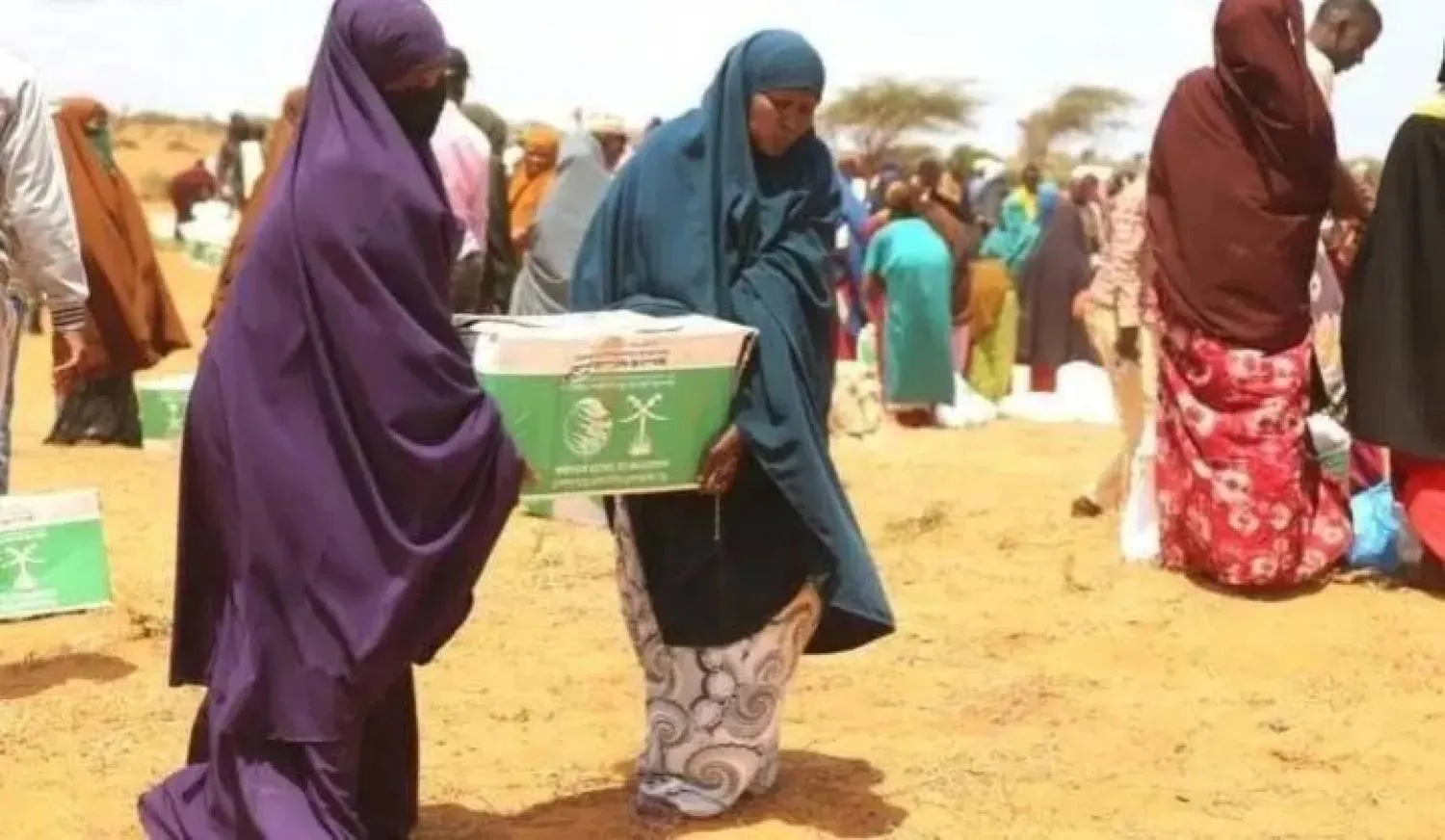
Projects implemented by the King Salman Humanitarian Aid and Relief Center have benefited 113 countries worldwide (SPA). 
TT

Saudi Aid to Refugees and Displaced People Worldwide Approaches $24 Billion

Projects implemented by the King Salman Humanitarian Aid and Relief Center have benefited 113 countries worldwide (SPA). 

Saudi Arabia’s support for refugees, displaced persons, and temporary residents around the world has reached unprecedented levels, according to newly released figures that highlight the Kingdom’s expanding humanitarian role.

The assistance reflects Saudi Arabia’s commitment to supporting vulnerable populations, rooted in its humanitarian values and dedication to preserving human dignity wherever it is threatened.

The figures were released as the King Salman Humanitarian Aid and Relief Center (KSrelief) announced Sunday the establishment of a new camp for displaced Palestinians north of Khan Younis in the southern Gaza Strip.

The facility is intended to provide safe shelter for families who have lost their homes amid the ongoing humanitarian crisis and is part of the Saudi public fundraising campaign to assist the Palestinian people in Gaza.

Coinciding with World Refugee Day, the data show that Saudi Arabia has provided more than $23.7 billion in humanitarian assistance to refugees, displaced persons, and temporary residents, both within the Kingdom and through relief, humanitarian, and development programs implemented across the globe.

The total reinforces Saudi Arabia’s standing as one of the world’s largest humanitarian donors.

Support for Refugees Living in Saudi Arabia

According to the data, refugees account for approximately 5.5 percent of Saudi Arabia’s population. The Kingdom has devoted considerable attention to those residing within its borders by providing free healthcare and education, facilitating access to employment opportunities, and promoting their integration into society across all regions of the country.

By 2026, assistance provided to visitors and refugees from Yemen, Syria, the Rohingya minority, and Sudan had exceeded $20.43 billion.

International Relief Efforts

Internationally, KSrelief continues to implement relief programs designed to ensure aid reaches those most in need. Its efforts include establishing and equipping refugee camps, operating mobile medical clinics, distributing food baskets and shelter supplies, and implementing water and sanitation projects.

Syria topped the list of beneficiary countries, receiving 254 KSrelief projects valued at $290 million. These included the management and operation of KSrelief clinics in Jordan’s Zaatari Refugee Camp at a cost exceeding $2 million; the distribution of winter clothing vouchers in Lebanon under the Kanaf program, valued at $700,000; and the distribution of more than six million loaves of bread through the Al-Amal Charitable Bakery at a cost of more than $3 million.

In Yemen, KSrelief implemented 49 humanitarian projects worth more than $145 million. The initiatives included the operation and maintenance of the Saudi Village for Yemeni Refugees in Obock, Djibouti, as well as the operation of medical clinics providing primary and emergency healthcare services and early-stage medical intervention.

In Palestine, the center carried out 41 projects valued at more than $17 million, focusing on strengthening food and agricultural security, supplying essential inputs for bread production, and distributing vouchers for basic food commodities.

Joint Programs with International Organizations

As part of broader efforts to support refugees and displaced populations, KSrelief has signed joint implementation agreements with the United Nations High Commissioner for Refugees (UNHCR) and other international organizations.

Among these initiatives is a program to strengthen protection services for displaced and refugee families in Yemen, benefiting 44,722 individuals at a cost exceeding $3 million.

The center has also funded an emergency relief program for people affected by the humanitarian crisis in Ukraine. The initiative serves more than 23,000 beneficiaries and aims to improve living conditions while reducing the risks associated with harsh winter weather.

In Burkina Faso, KSrelief launched a separate project to procure and distribute 3,400 shelter kits to the most vulnerable families, benefiting approximately 17,000 people.

Since its establishment in 2015, the King Salman Humanitarian Aid and Relief Center has implemented 4,394 projects in 113 countries, with a total value exceeding $8 billion.