


How the Holy Sites Welcomed 122 Mn Visitors this Ramadan

The millions who visited the Grand Mosque reflect decades of dedicated effort and meticulous care (SPA)
TT

How the Holy Sites Welcomed 122 Mn Visitors this Ramadan

The millions who visited the Grand Mosque reflect decades of dedicated effort and meticulous care (SPA)

Following a highly successful 2025 Ramadan season (1446 AH), during which more than 122 million pilgrims and visitors were received at Islam’s two holiest sites, attention has turned to the factors behind this unprecedented achievement — and the decades of effort that made it possible.

The massive turnout at the Grand Mosque in Makkah is not a coincidence but the result of long-term planning and sustained investment.

Since the era of King Abdulaziz, the founder of modern Saudi Arabia, the Kingdom’s rulers have regarded their custodianship of the holy sites as a sacred duty.

Each monarch has contributed to the development and expansion of the holy cities, leaving behind a legacy that has shaped the pilgrim experience for generations.

Their commitment reflects Saudi Arabia’s role as guardian of Makkah and Madinah — the birthplace of Islam and the site of its most revered rituals — and underscores a national vision that places the service of pilgrims at the heart of state policy.

King Salman once summed it up succinctly: “The title of Custodian of the Two Holy Mosques is a great honor and a tremendous responsibility.” His words reflect a legacy that dates back to the Kingdom’s founder, King Abdulaziz, who famously declared, “We, the Al Saud, are not merely kings — we are bearers of a message.”

That message - rooted in the spiritual and historical significance of Makkah and Madinah - has deeply shaped the outlook of Saudi Arabia’s monarchs. It has imbued their rule with a sense of purpose and legitimacy, reinforcing their unique role in the Muslim world and positioning them as leaders of the global Islamic community.

King Abdulaziz’s commitment to the Grand Mosque in Makkah went far beyond construction and infrastructure - it extended to the very heart of its religious, educational and administrative affairs.

His comprehensive vision reshaped the Haram into a unified spiritual and intellectual center for Muslims around the world.

Among his most transformative reforms was the unification of prayer leadership. For centuries, prayers at the Grand Mosque were held separately according to the four Islamic schools of thought - Shafi‘i, Hanafi, Maliki and Hanbali - each with its own imam and designated prayer space.

King Abdulaziz abolished this system, dismantled the physical markers that separated the sects, and instituted a single imam for all, reinforcing unity among worshippers.

He also revitalized the mosque’s scholarly tradition by appointing a dedicated committee to oversee education.

New regulations were introduced to improve the conditions of teachers and ensure instruction across all four Sunni schools of thought.

At its peak, the Grand Mosque hosted more than 120 learning circles, covering subjects such as Islamic jurisprudence, Arabic language, literature, logic — and even astronomy — in a variety of languages.

More than 700 teachers from different ethnic and sectarian backgrounds contributed to this intellectual revival, restoring the Haram’s historical role as one of the Islamic world’s earliest and most important centers of learning.

To streamline operations, King Abdulaziz also established an administrative council to oversee services and day-to-day management of the mosque, delegating maintenance and construction responsibilities to the Ministry of Endowments.

King Abdulaziz passed away before he could oversee the first major expansion of the Grand Mosque in Makkah, but his sons carried the vision forward, launching a strategic project that spanned nearly a quarter of a century.

This foundational expansion—supervised by Kings Saud, Faisal and Khalid—marked a turning point in the development of the Haram and involved more than 55,000 engineers, experts, technicians, staff and laborers.

The expansion increased the mosque’s built-up area and surrounding plazas to nearly 200,000 square meters - more than six times its original size. At peak capacity, it could accommodate up to 400,000 worshippers. The project came at a cost of one billion Saudi riyals and signaled the beginning of a modern era in the mosque’s architectural and spiritual evolution.

As pilgrim numbers continued to grow, King Fahd bin Abdulaziz initiated a second phase of expansion, completed in 1993 (1413 AH).

The mosque’s total area, including surrounding courtyards, doubled to approximately 400,000 square meters, raising capacity to around 800,000 worshippers. The project, which also included upgraded infrastructure and services, cost more than 30 billion riyals.

A third and most ambitious expansion followed under the orders of King Abdullah bin Abdulaziz. It included the enlargement of the mosque itself, the Masa’a (the running area between Safa and Marwa), and the Mataf (the circumambulation area around the Kaaba).

This phase continued under King Salman and brought the total area of the mosque and its courtyards to 750,000 square meters, with total built-up space exceeding 1.4 million square meters.

Today, the Grand Mosque can host up to 2.5 million worshippers. The expanded facilities accommodate 105,000 pilgrims performing Tawaf (circumambulation) around the Kaaba and 120,000 people performing Sa’i between Safa and Marwa, setting new benchmarks in scale, design, and operational efficiency.

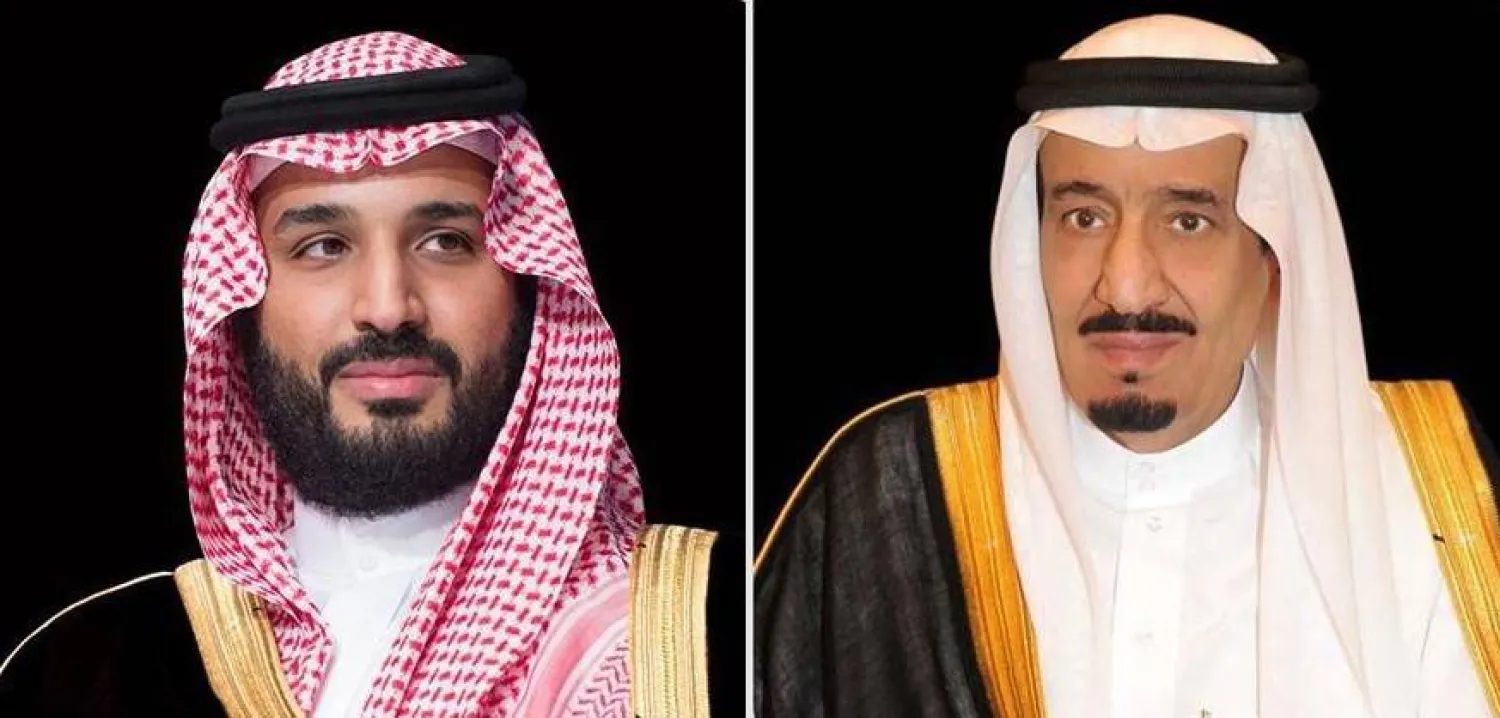


Erdogan: Saudi Arabia, Türkiye Eye Joint Investment in KAAN Fighter Jet

Saudi Crown Prince Mohammed bin Salman met Turkish President Recep Tayyip Erdogan in Riyadh (Turkish Presidency). 
TT

Erdogan: Saudi Arabia, Türkiye Eye Joint Investment in KAAN Fighter Jet

Saudi Crown Prince Mohammed bin Salman met Turkish President Recep Tayyip Erdogan in Riyadh (Turkish Presidency). 

Turkish President Recep Tayyip Erdogan said work has begun on a defense cooperation agreement between Türkiye and Saudi Arabia that includes joint investment in the production of the fifth-generation KAAN fighter jet.

Erdogan said Türkiye’s progress in defense industries is being closely followed by Saudi Arabia, as well as by other countries, adding that Ankara is preparing to conclude significant agreements with Riyadh in this field.

Speaking to a group of Turkish journalists on his return from a regional tour that included Saudi Arabia and Egypt, with his remarks published on Thursday, Erdogan said: “We have received many positive comments on the Turkish fighter KAAN, and discussions are under way on joint investment with Saudi Arabia in this regard.”

He stressed that KAAN is not merely a combat aircraft but a symbol of Türkiye’s engineering capabilities and its determination to maintain an independent defense posture. He added that cooperation with Saudi Arabia in this area is likely to expand, including through joint investments.

In February 2024, Türkiye announced the successful first flight of its domestically produced fifth-generation fighter jet, KAAN, manufactured by Turkish Aerospace Industries. With this milestone, Türkiye became one of only five countries capable of producing fifth-generation fighter aircraft and aims to export the jet.

KAAN is designed to carry out air-to-air combat missions and conduct precision strikes from internal weapons bays at supersonic speed.

Erdogan said he held “highly productive” talks with Saudi Crown Prince Mohammed bin Salman during his visit to Riyadh on Tuesday, noting that Saudi Arabia holds a special place for Türkiye in defense industries, transport, healthcare, investment, and construction services. Bilateral trade reached $8 billion in 2025, while Turkish contractors have completed more than 400 projects in the Kingdom worth a total of $30 billion.

He added that Saudi Arabia and Türkiye share aligned views on regional issues, stressing that both countries oppose any new war in the region and favor peace, stability, and calm, which he said would benefit all parties.


Saudi Crown Prince Receives Letter from Maldives President

Saudi Crown Prince Mohammed bin Salman bin Abdulaziz (SPA)
TT

Saudi Crown Prince Receives Letter from Maldives President

Saudi Crown Prince Mohammed bin Salman bin Abdulaziz (SPA)

Prince Mohammed bin Salman bin Abdulaziz Al Saud, Saudi Crown Prince and Prime Minister, received a letter from Maldives President Dr. Mohamed Muizzu on bilateral relations between their countries.

Vice Minister of Foreign Affairs Waleed Elkhereiji received the letter on Thursday during a meeting with Maldives Ambassador to Saudi Arabia Ahmed Sareer at the ministry’s headquarters in Riyadh.

Discussions during the meeting addressed bilateral relations and topics of mutual interest.


Albudaiwi: 'Arabian Gulf Security 4' Exercise Enhances GCC Security Integration

Secretary General of the Gulf Cooperation Council Jasem Mohamed Albudaiwi. GCC
TT

Albudaiwi: 'Arabian Gulf Security 4' Exercise Enhances GCC Security Integration

Secretary General of the Gulf Cooperation Council Jasem Mohamed Albudaiwi. GCC

Gulf Cooperation Council (GCC) Secretary-General Jasem Mohamed Albudaiwi affirmed that the "Arabian Gulf Security 4" tactical exercise serves to bolster Gulf security integration and embodies the unity and shared destiny of member states.

The statement was made Wednesday during Albudaiwi’s participation in the closing day of the exercise, held in Qatar. The event was attended by Qatari Interior Minister Shaikh Khalifa bin Hamad bin Khalifa Al Thani along with the GCC Ministers of Interior.

"This fourth edition of the drill, conducted by the GCC Ministries of Interior with the participation of specialized units from the friendly United States of America, is of paramount importance in supporting the collective Gulf security framework," the secretary-general said.

He stressed its role in enhancing coordination and integration among the respective ministries and elevating joint readiness and response to security challenges, thereby contributing to the consolidation of security and stability across the GCC.

He further highlighted that the "Arabian Gulf Security 4" exercise reflects a mutual commitment to advancing security operational mechanisms, exchanging expertise and best practices, as well as unifying efforts to counter transnational risks and threats. He pointed out that such maneuvers constitute a fundamental pillar for strengthening institutional integration and security cooperation pathways among member states.

The secretary-general expressed his appreciation for the efforts of the Ministry of Interior of Qatar in hosting and organizing the exercise, noting that the extensive resources and capabilities provided were instrumental to its success.

Closing his remarks, he voiced his aspiration that the exercise achieves its strategic objectives, fulfilling the visions of leaders of the GCC states, and ensuring sustained security and stability for the peoples of the GCC.