


Saudi Military Personnel Graduate from US THAAD Missile Defense Training Program

Royal Saudi Air Defense Forces Graduate Second Unit at Fort Bliss Base in the US. (Asharq Al-Awsat)
TT

Saudi Military Personnel Graduate from US THAAD Missile Defense Training Program

Royal Saudi Air Defense Forces Graduate Second Unit at Fort Bliss Base in the US. (Asharq Al-Awsat)

The Royal Saudi Air Defense Forces have announced the graduation of the second unit trained to operate the US-made Terminal High Altitude Area Defense (THAAD) missile defense system. The training was completed at Fort Bliss Military Base in El Paso, Texas.

This latest graduation follows the completion of training for the first unit several months ago and is part of a broader initiative to build a fully qualified Saudi operational and maintenance crew for the THAAD system- one of the world’s most advanced and precise missile defense technologies. The system is considered a key pillar of Saudi Arabia’s air defense capabilities.

During their training, the Saudi personnel underwent an intensive program that included technical and operational instruction, combat simulation, and advanced field exercises. The course was conducted under the supervision of experts from the system’s manufacturing company, in cooperation with the United States as part of ongoing military collaboration agreements between the two nations.

This training initiative is aligned with the Saudi Ministry of Defense’s strategic objective to enhance the operational readiness and technical proficiency of its forces through advanced and specialized training. The goal is to equip Saudi forces with the skills required for modern military operations, in line with Vision 2030’s focus on military modernization and technological localization.

The Royal Saudi Air Defense Forces continue to implement comprehensive plans to qualify national cadres capable of managing and operating advanced defense systems, strengthening national security and protecting Saudi airspace against potential threats.

The graduation ceremony was held at Fort Bliss in the presence of Major General Abdullah Al-Rubaie, Commander of the Air Defense Forces Institute, representing Lieutenant General Mazyad Al-Amro, Commander of the Royal Saudi Air Defense Forces. The event was also attended by US counterparts and representatives from relevant training bodies.


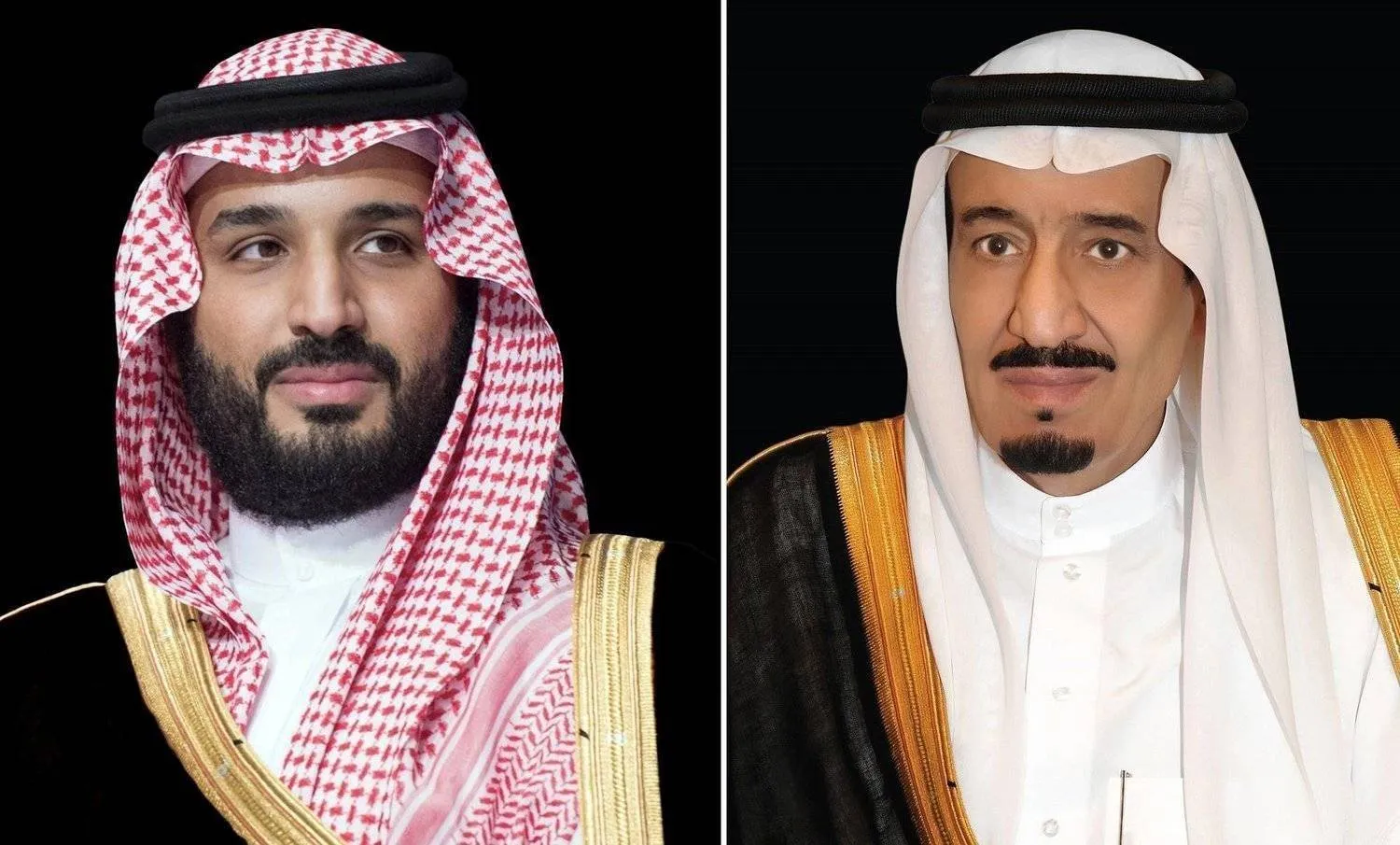

Saudi Govt: Escalation in Yemen Not Aligned with UAE’s Pledges

Custodian of the Two Holy Mosques King Salman bin Abdulaziz chairs the cabinet meeting in Riyadh. (SPA)
TT

Saudi Govt: Escalation in Yemen Not Aligned with UAE’s Pledges

Custodian of the Two Holy Mosques King Salman bin Abdulaziz chairs the cabinet meeting in Riyadh. (SPA)

The Saudi government reiterated on Tuesday that the Kingdom “will not hesitate in taking the necessary steps and measures to confront any violation or threat to its national security.”

Custodian of the Two Holy Mosques King Salman bin Abdulaziz chaired the cabinet meeting that was held in Riyadh.

The cabinet “reiterated its commitment to the security, stability and sovereignty of Yemen and its full support to Chairman of the Presidential Leadership Council Dr. Rashad al-Alimi and his government.”

It regretted that “Saudi Arabia’s efforts to restore calm in Yemen were met with unjustified escalation that go against the foundations of the coalition to support legitimacy in Yemen.”

“The escalation does not serve efforts to achieve security and stability in Yemen and goes against all the pledges Saudi Arabia had received from the United Arab Emirates,” added the cabinet.

The cabinet expressed Saudi Arabia’s hope that “wisdom would prevail and that priority would be given to the principles of fraternity and good neighborliness and close relations between Gulf Cooperation Council (GCC) members.”

It hoped that “the UAE would comply with the Yemeni republic’s demand that it withdraw its forces from the country withing 24 hours and that it would cease all military and financial support to the Southern Transitional Council and any other party in Yemen.”

It hoped that “the UAE would take the desired step to maintain bilateral relations between the two countries, which Saudi Arabia is keen on bolstering.”

The cabinet also reviewed regional and international developments.

It hailed the role of the coalition to restore legitimacy in Yemen in protecting civilians in the Hadhramaut and Mahra governorates.

The cabinet renewed Saudi Arabia’s support to Somalia’s sovereignty and territorial unity, rejecting Israel’s recognition of Somaliland and warning that the move encourages separatist agendas that violate international law.

King Salman also briefed the cabinet on the message he received on Tuesday from Russian President Vladimir Putin that tackled bilateral ties between their countries.


UAE to Pull Forces Out of Yemen

The UAE flag. (WAM)
The UAE flag. (WAM)
TT

UAE to Pull Forces Out of Yemen

The UAE flag. (WAM)
The UAE flag. (WAM)

The United Arab Emirates’ Defense Ministry announced on Tuesday that it was pulling its remaining forces out of Yemen.

In a statement, it said: “In light of recent developments and their potential implications for the safety and effectiveness of counterterrorism missions, the Ministry of Defense announces the termination of the remaining counterterrorism personnel in Yemen of its own volition, in a manner that ensures the safety of its personnel and in coordination with the concerned partners.”

It added that the UAE “has participated as part of the Arab Coalition since 2015 in support of legitimacy in Yemen, in backing international efforts to combat terrorist organizations, and in pursuit of security and stability for the brotherly Yemeni people. The UAE has made great sacrifices in achieving these objectives.”

“The UAE Armed Forces concluded their military presence in Yemen in 2019 after completing the assigned missions within the agreed official frameworks,” it noted. “The remaining presence was limited to specialized personnel as part of counterterrorism efforts, in coordination with relevant international partners.”

It stressed that “this measure comes within the context of a comprehensive assessment of the requirements of the current phase, and in line with the commitments of the UAE and its role in supporting security and stability in the region.”


Muslim World League Affirms Support for Saudi Measures to Preserve Yemen's Sovereignty

Muslim World League Affirms Support for Saudi Measures to Preserve Yemen's Sovereignty
TT

Muslim World League Affirms Support for Saudi Measures to Preserve Yemen's Sovereignty

Muslim World League Affirms Support for Saudi Measures to Preserve Yemen's Sovereignty

The Muslim World League (MWL) has affirmed its full support for the supplementary statement issued by the Kingdom of Saudi Arabia regarding recent escalatory actions by the Southern Transitional Council in Yemen's Hadramout and Al-Mahara governorates.

The league expressed its support for the statement from the Coalition to Restore Legitimacy in Yemen concerning the unauthorized movement of ships carrying weapons and heavy vehicles from the Port of Fujairah to the Port of Mukalla, SPA reported.


These shipments were reportedly transported without the necessary official permits from the coalition’s Joint Forces Command. The MWL emphasized its unwavering solidarity with the Kingdom and its support for all measures taken to safeguard its national security.

In an official statement by General Secretariat, MWL Secretary-General and Organization of Muslim Scholars Chairman Sheikh Dr. Mohammed bin Abdulkarim Al-Issa commended the decisive and wise content of the Saudi statement.


Speaking on behalf of the league’s global assemblies and councils, Al-Issa noted that these measures are vital to ensuring peace, security, and the unity of the Yemeni people under their internationally recognized leadership.

Al-Issa highlighted that the priority remains preserving stability in Yemen and the broader region. He noted that outstanding issues, including the Southern cause, must be resolved through dialogue within established legal and legitimate frameworks.

Furthermore, he warned that supporting illegitimate practices only deepens internal divisions and serves those who do not have Yemen’s best interests at heart. He cautioned that any further steps deviating from the legitimate path would only ignite sedition, the heavy cost of which would be borne by the Yemeni people.

Concluding the statement, Al-Issa called upon all Yemeni parties to prioritize wisdom and the national interest. He urged them to unite under their legitimate leadership to preserve the country's sovereignty, independence, and territorial integrity, paving the way for a secure and prosperous future for Yemen.